Where to buy
Finding the best outdoor security camera for small homes under $300 is about covering everything with less — fewer cameras, closer range, kinder light. Check the latest price, availability and delivery on Amazon. Orders are placed on Amazon. We may earn a commission from qualifying purchases. Every pick below is a complete outdoor camera or a complete camera kit that can be bought on its own — check the listing carefully so the box, mount and any hub in the title match what the review describes.
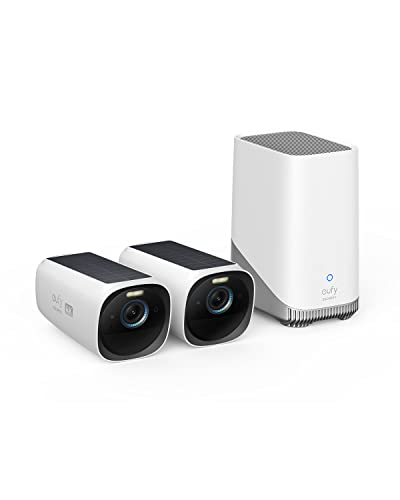
- Best complete coverage in one box: eufy Security eufyCam S330 (eufyCam 3) 2-Cam Kit — Check on Amazon
- Best one-camera start: Blink Outdoor 4 Floodlight Camera — Check on Amazon
- Best single viewpoint, premium picture: Arlo Pro 5S 2K Spotlight Camera — Check on Amazon
- Best manners on a tight plot: Google Nest Cam with Floodlight — Check on Amazon
- Best for a small home with a real driveway: Ring Floodlight Cam Wired Pro — Check on Amazon
- Best for a small home with a big dark garden: Wyze Cam Floodlight Pro — Check on Amazon
Read the full guide ↓
Disclosure: As an Amazon Associate, dailyhomedecorating.com earns from qualifying purchases. Links to Amazon on this page are affiliate links; they cost you nothing extra. Listing details such as price and availability change often, so check the current Amazon listing before you buy.
A small home changes the camera maths in your favour. The distances are short, so modest resolution identifies well. The approaches are few, so one or two cameras genuinely cover the property instead of sampling it. And the budget that would buy a single viewpoint on a large plot can buy complete coverage — front, back and the side door — with change left for the memory card everyone else forgets. The best outdoor security camera for small homes under $300 is therefore not a cut-down flagship. It is the system that covers a compact plot completely, behaves well at close quarters with your neighbours, and does not bring large-house problems — ladder rotas, light spill, subscription sprawl — into a small-house life.
Two small-home truths shape this ranking. First, closeness is a feature: when the furthest subject is twenty paces away, a wide lens stops being a compromise and becomes the correct tool, 1080p reads faces perfectly well, and a gentle floodlight is all the light a small frontage needs — the yard-scale fixtures in this list must justify their output against the windows across your narrow street. Second, completeness beats excellence: on a small plot, the second viewpoint is affordable, and a home whose back door is watched beats a home whose front door is watched in 4K. That is why a two-camera kit leads this guide, why an inexpensive one-camera start follows it, and why the big wired deterrents sit lower here than in our general ranking — not worse cameras, just more camera than most small plots can use politely.
The subscription honesty from our other guides applies unchanged, and on a small budget it matters more, because a plan kept for years can rival the hardware. The eufy kit records to its own hub with no fee. A Wyze with a memory card records locally the same way. The Nest detects people, animals and vehicles free and charges only for long memory. The Blink and Arlo keep cloud recording and smart detection behind their plans — the Arlo alternatively records through a separate hub — and the Ring records nothing at all without its plan. Each review states its terms before its praise. If your plot is not small, our main guide Best Outdoor Security Camera Under $300 ranks the same six for the general case.
In this guide
Quick Picks
Compact plot? This list is ordered for you: complete coverage first, neighbour manners second, spectacle last.
| Buyer type | Pick | Why it stands out | Link |
|---|---|---|---|
| Best complete coverage in one box | eufy Security eufyCam S330 (eufyCam 3) 2-Cam Kit | Two 4K solar cameras and a hub: front and back of a small home covered in one purchase, with no plan | Check on Amazon |
| Best one-camera start | Blink Outdoor 4 Floodlight Camera | One battery floodlight camera over the door covers most of a small home’s story, and a second can join it later | Check on Amazon |
| Best single viewpoint, premium picture | Arlo Pro 5S 2K Spotlight Camera | A 160° wire-free view from one corner can genuinely watch two sides of a compact house at once | Check on Amazon |
| Best manners on a tight plot | Google Nest Cam with Floodlight | Accurate free detection and a discreet fitting suit close neighbours, where every false alert and stray light beam is shared | Check on Amazon |
| Best for a small home with a real driveway | Ring Floodlight Cam Wired Pro | Radar zones drawn tight to a small boundary give driveway-grade tracking without alerting for the whole street | Check on Amazon |
| Best for a small home with a big dark garden | Wyze Cam Floodlight Pro | A 180° view and serious light for the small home whose garden is bigger than its floor plan | Check on Amazon |
How we chose
We verified the hardware as in our other guides — manufacturer specifications, official support pages and current Amazon listings, complete systems only — then applied a small-home filter. Could the pick, alone or as a kit, plausibly cover a compact plot’s real approaches? Does its light and lens suit distances measured in paces, and volumes measured against the neighbour’s bedroom window? Is its upkeep sized for a household that chose a small home partly to have less to maintain? And does its whole cost — plan, card, hub — stay proportionate to a small-home budget across the years, not just at checkout?
Specifications are maker specifications throughout. Battery intervals are the manufacturers’ claims under their assumed conditions and shrink on busy, cold viewpoints; weather ratings are the makers’ laboratory ratings; light outputs are maker figures useful for comparing fixtures against each other and against your frontage. Kit prices move with promotions, and where a kit lives at the top of the tier we say so and tell you to confirm the live listing, rather than printing a price that will age. Small homes reward honest sizing in every category, and cameras are no exception.
- Complete-the-plot test: Picks were judged on covering a compact home’s two or three real approaches, not on winning a single-viewpoint shootout. Kits and affordable seconds score; lone flagships must justify leaving the back door bare.
- Close-range truth: At small-home distances, wide lenses and 1080p identify well. We scored identification at ten paces, not across a field, and weighted light manners alongside light output.
- Neighbour factor: Tight plots share everything: light spill, alert noise, overlooked windows. Picks with good zones, masking and right-sized light rose; picks needing careful aiming say so.
- Upkeep proportion: A small home should mean a small rota. Solar assistance, long battery intervals and wired fit-and-forget all scored; anything demanding frequent attention lost ground.
- Whole-cost proportion: Plans, cards and hubs were priced into the judgement qualitatively, because on a small budget the running cost is a design feature, not a footnote.
The result inverts the flagship order on purpose. On a small plot, the best security is complete, close and calm — and the systems below are ranked by exactly that, with their conditions printed where they belong.
The 6 best outdoor security cameras for small homes under $300
eufy Security eufyCam S330 (eufyCam 3) 2-Cam Kit
On a small plot, the eufyCam S330 kit is not the premium option; it is the complete one. Two 4K cameras in the box map exactly onto a compact home’s geography — front door and drive on one, back door and garden on the other — and the included HomeBase 3 stores every recording on memory inside your house, with room to expand later. Person and face recognition run on that hub, so the system needs no subscription at any point: no plan to keep, no trial to expire, no archive held hostage by a lapsed card. For a household that bought a small home to simplify its life and its bills, a security system with a permanent monthly line item is a contradiction this kit simply avoids.
The solar panels suit small homes particularly well. Compact plots usually offer at least one genuinely sunny wall or fence line per side, and a camera sipping a few hours of sun a day — the maker’s stated assumption — stretches its charging interval from weeks to seasons, shrinking the upkeep rota to nearly nothing. Shaded mounts still need occasional manual charging, and we will not pretend otherwise, but small homes rarely force both cameras into shade. The cameras themselves carry the strongest weather rating in this guide, maker-rated IP67, and their 4K detail at small-home distances is frankly luxurious: at ten paces, identification is not a challenge, it is a given.
Two ownership notes complete the picture. The kit’s price moves with promotions and sits at the top of this tier, so check the listing and buy when the kit is at or under your ceiling; and two wide-awake cameras on a tight plot will see your neighbours unless you aim and mask them properly — the app provides the zones, and a small-home owner should use them like the fence line matters, because it does. Do those two things and this is the most complete, calmest and most fee-free way to watch a small home in this guide, full stop.
Who it suits: Small-home owners who want the whole plot — front and back — covered in one purchase, with no subscription and minimal upkeep.
- Two cameras match a small home’s two approaches exactly
- Local hub storage and recognition with no monthly fee, ever
- Solar assistance fits sunny small-plot walls and shrinks the charging rota
- 4K detail at close range makes identification effortless
Honest limitation: The kit price hovers at the ceiling with promotions, and two cameras demand careful aiming and masking on a tight plot. Shaded mounts weaken the solar benefit, as with any solar camera.
Choose it if you want complete coverage, no plan and a system sized to finish the job in one box. Skip it if you only need one doorway watched and prefer the cheapest possible start — the Blink below exists for you. Check on Amazon
Blink Outdoor 4 Floodlight Camera
Sometimes a small home needs exactly one camera: over the front door, watching the path, the gate and the slice of street that matters. The Blink Outdoor 4 Floodlight Camera is the best version of that one camera for a small plot. It is battery powered throughout — AA lithium cells in the camera, D cells in the floodlight mount — mounts in minutes with no wiring, and carries a maker battery claim of up to two years under default settings that, on a quiet small-home doorway, has a fighting chance of being approached. Its 700-lumen floodlight is honestly sized for a small frontage: enough to light a door and path properly, not enough to flood the bedroom windows across a narrow street, which on a tight plot is a virtue with a wattage.
Blink’s terms, in plain words: cloud recording and person detection require the Blink Subscription Plan, and without it you keep live view, motion alerts and two-way talk but no saved cloud clips. Local storage exists in Blink’s range but not through the Sync Module Core in this box, which lacks a USB socket — local clips need a different Sync Module, bought separately. For a one-camera small home the sums are gentle either way, but choose deliberately: plan for simplicity, or the right module for local clips, rather than discovering the distinction later.
What makes it sing on a small plot is proportion. The 143° view at doorway distance covers the frontage without swallowing the neighbours, infrared night vision plus that modest light handles the hours honestly, and when the back door eventually asks for a witness, a second camera joins the same module at small-home money. It is the starter that does not need replacing when the system grows — and for the many small homes where one watched door is genuinely enough, it may never need to grow at all.
Who it suits: Small-home owners who want one good camera over the main door, fitted in minutes, with the option to add a second later.
- One-camera completeness for a small frontage, at a gentle position in the tier
- Battery power and long maker-claimed intervals mean near-zero upkeep
- Right-sized light that respects close neighbours
- Grows to the back door later on the same module
Honest limitation: Cloud clips and person detection need the plan, and the included module cannot store clips locally. One camera also means one viewpoint: the back door waits until you add the second.
Choose it if your small home’s story happens at one door and you want it watched simply and cheaply. Skip it if you already know the back door needs watching too — start with the eufy kit and finish the job at once. Check on Amazon
Arlo Pro 5S 2K Spotlight Camera
The Arlo Pro 5S 2K is the single-viewpoint connoisseur’s pick for a small home, because its 160° field of view does a trick no other single camera here matches: mounted on a front corner, it watches the front door and the side path in one frame — two of a small home’s three approaches from one battery, one mount and one charging rota. The 2K HDR picture at small-home distances is superb, holding faces in shade against bright little gardens without flinching, and the integrated spotlight returns colour footage after dark at the ranges a compact plot actually has. It connects directly to Wi-Fi on either band, needs no hub in the house, and its battery swaps out in moments when charging day arrives.
The plan paragraph, as always with Arlo, is the price of admission and we print it before the encore: cloud recording and person, vehicle, animal and package detection live in the Arlo Secure plan; without it you have live view and basic alerts but no saved clips, and local recording requires a compatible SmartHub bought separately. A small-home owner has the same two honest routes as anyone — keep the plan, or fit the hub — plus one dishonest route, neither, which leaves a beautiful camera that remembers nothing. Choose one of the honest ones at checkout and the ownership is as premium as the picture.
Battery life is a maker claim keyed to typical event counts; a corner camera over a busy little street will ask for a charge sooner than the headline suggests, while a quiet close may let it coast. On a small plot the mount is rarely far from a door, so the rota is short either way. If your small home’s layout gives one corner command of two approaches — many do — this is the most elegant one-camera answer in the guide: no wires, no hub, no second purchase, just the right wide eye in the right corner.
Who it suits: Small-home owners whose corner viewpoint can see two approaches at once and who want the finest wire-free picture, with the plan or hub budgeted.
- 160° corner view can cover front and side approaches in a single frame
- Excellent 2K HDR at the close ranges small homes offer
- No hub, no wires, swappable battery: upkeep stays tiny
- Spotlight colour night vision suits short garden distances
Honest limitation: Recording and smart labels need Arlo Secure, or local recording needs the separate SmartHub. Without one of them it saves nothing — decide which you are buying before it goes on the wall.
Choose it if one good corner commands your plot and you want it watched beautifully by a single camera. Skip it if you want recording with no plan and no extra hub — that is the eufy kit’s design brief, not this one’s. Check on Amazon
Google Nest Cam with Floodlight
The Google Nest Cam with Floodlight is the small home’s good-neighbour camera, and on a tight plot good manners are a technical specification. Its person, animal and vehicle detection runs on the device, free, so the alerts that reach you — and only you — are accurate, while the camera itself minds its business with a discreet fitting and lights that serve a doorstep rather than a runway. In a terrace or a close, where your camera’s false alarms become your problem at the school gate and its light spill becomes your neighbour’s complaint, the Nest’s judgement and restraint are worth real money. A short recent event window is included free, which suits small-home life: incidents here are noticed quickly because everything is close.
The terms are the fairest split in this guide after the fee-free picks: Nest Aware buys memory — weeks of history, familiar faces — while the intelligence itself is never rented. There is no local storage, so footage lives in Google’s cloud, and the camera must be hardwired into an existing light fitting, which on a small home is often exactly where the story is: the porch light by the only front door. Installation is one wiring job, best done by an electrician if the phrase ‘junction box’ gives you pause, and after it there is nothing to charge, top up or think about — a small rota for a small home.
The picture is 1080p HDR with a 130° view, which specification shoppers may sniff at until they remember the distances: across a small frontage, everyone is close, and close is where 1080p with good light and good detection beats 4K with neither. If your household already lives in the Google Home app, the Nest also removes an account, an inbox and an app from your life. On a compact plot with close neighbours and a Google-centred home, it is frequently the wisest buy here — the camera nobody on the street has ever had a problem with.
Who it suits: Small-home owners on tight plots, especially in Google Home households, who value accurate alerts and neighbourly restraint.
- Free on-device detection sorts people, animals and vehicles without a plan
- Discreet fitting and doorstep-scale light suit close neighbours
- Hardwired fit-and-forget: no charging rota at all
- Free recent-history window matches small-home checking habits
Honest limitation: Needs an existing light fitting and a wiring install, and long history requires Nest Aware. Resolution is modest on paper, redeemed by the short distances of a small plot.
Choose it if your plot is tight, your neighbours are close and your home already speaks Google. Skip it if you have no fitting where you need the camera, or you want the archive kept at home — battery and hub picks answer that. Check on Amazon
Ring Floodlight Cam Wired Pro
Most small homes do not need the Ring Floodlight Cam Wired Pro. The ones with a real driveway — a small house on a proper plot, a cottage with parking, an end-of-terrace with a side drive — should read on, because for that layout this is the strongest single camera in the guide. Its radar-based 3D Motion Detection draws zones to your boundary line and tracks a visitor’s path across the drive with Bird’s Eye View, which on a small plot means something precious: precision. The camera can watch a driveway that borders the pavement and alert for your tarmac only, ignoring the parade of neighbours, dogs and delivery vans that a lesser camera would report all day. Add Retinal 2K video, 2,000-lumen floodlights as rated by Ring, a siren and always-awake hardwired power, and a small home’s one big approach is covered at flagship level.
The subscription rule is the strictest here and a small budget feels it most, so it goes in writing again: no local storage exists, and without a paid Ring plan the camera records nothing — no history, no clips, no person or package alerts. The plan is not an accessory to this camera; it is half the product, permanently. Households content with that own a superb system. Households that resent it should buy the eufy or Wyze and never think about it again. There is no third reading of Ring’s terms, and small-home buyers, whose whole cost matters, deserve that clarity before the fitting is swapped.
Installation needs an existing floodlight junction box over the drive, and the lights need aiming with the street in mind: 2,000 lumens across a small frontage is generous, and the app’s schedules and motion-only settings exist to keep it neighbourly. Do those things and the Ring gives a small home with a driveway the same tracked, lit, archived approach that large homes buy flagships for — which is the only claim this review makes, and it is enough.
Who it suits: Small homes with a genuine driveway or parking approach and an existing light fitting, whose owners accept the plan as permanent.
- Radar zones fit a small boundary precisely, ignoring the street beyond it
- Path tracking shows how a visitor crossed your drive, not just that one did
- Flagship light, siren and always-on wired power for the main approach
- Cloud archive survives anything that happens to the camera
Honest limitation: No plan means no recordings at all, and the plan is forever — the heaviest running commitment here for a small budget. Overkill, in size and light, for plots without a driveway.
Choose it if your small home has a driveway worth flagship coverage and you accept the plan as part of the purchase. Skip it if your plot is doors and garden only — the kit and battery picks cover it completely for less commitment. Check on Amazon
Wyze Cam Floodlight Pro
The Wyze Cam Floodlight Pro is the answer to a specific small-home shape: the house is compact but the garden is not — the cottage with the long back plot, the small bungalow on a big corner, the little house whose darkness is all behind it. Three floodlight heads rated by Wyze at 3,000 lumens and a 180° camera view turn that whole rear expanse into one watched, lit room, and a microSD card in the camera records it all with no plan required. On-device processing can fire the lights for people and vehicles rather than weather, and the 2.5K detail at garden distances is more than the footage will ever be asked for. For the small-home-with-big-garden, nothing else here is remotely as complete per fitting.
The conditions are the familiar Wyze pair. The memory card is not in the box — buy a generous one in the same order or your fee-free system records nothing on day one — and without the optional Cam Plus plan, alerts arrive as thumbnails while person and package labels stay off, though the card keeps recording regardless. It hardwires into an existing floodlight fitting, so it needs that fitting at the back of the house, and Wi-Fi is 2.4 GHz only, which at the far end of a long garden deserves a signal check before the ladder comes out.
Aiming is the small-home courtesy that matters most here: 3,000 lumens is a lot of light to share with the houses behind your fence. Aim the heads down into your own ground, lean on motion-only behaviour and schedules, and the Wyze becomes the good kind of obvious — a garden that lights itself when entered and records the entry without renting you the privilege. If your small home’s risk and darkness live at the back, this is your pick; if your plot is small in every direction, the gentler systems above will serve you better.
Who it suits: Owners of small homes with disproportionately large or dark gardens, who have a rear fitting and want it all lit and recorded without a plan.
- Widest view and most light in the guide (maker figure) for one big rear space
- Card recording with no plan required keeps running costs at zero
- 2.5K detail covers garden distances with room to spare
- Person and vehicle light-triggering aims the brightness intelligently
Honest limitation: Needs a fitting, a memory card bought separately and careful aiming to stay neighbourly. For a plot that is small in every direction, its scale is more than the job asks.
Choose it if your house is small but your garden is a field of darkness with a fence round it. Skip it if your whole plot is compact — the eufy kit or a single Blink will cover it more proportionately. Check on Amazon
Comparison table
For a small home, compare coverage-per-purchase first: how much of your actual plot does each box watch, and what does its light do to the neighbours?
| Product | Video and view | Power | Storage and subscription | Link |
|---|---|---|---|---|
| eufy Security eufyCam S330 (eufyCam 3) 2-Cam Kit | 4K video, integrated solar panel, HomeBase 3 local storage; 135° field of view per camera | Battery with an integrated solar panel | Local storage on the included HomeBase 3 (built-in memory, expandable with a user-supplied drive); recordings stay in your home, not on a rented server | Check on Amazon |
| Blink Outdoor 4 Floodlight Camera | 1080p HD video, 700-lumen floodlight, battery power; 143° diagonal field of view | Battery powered: AA lithium cells in the camera and D cells in the floodlight mount | Cloud recording requires the Blink Subscription Plan. The Sync Module Core in this box does not take a USB drive, so local clip storage needs a different Sync Module bought separately | Check on Amazon |
| Arlo Pro 5S 2K Spotlight Camera | 2K HDR video, 160° view, wire-free battery power; 160° diagonal field of view | Rechargeable battery, wire-free | Cloud recording sits in the paid Arlo Secure plan; local recording is only possible through a compatible Arlo SmartHub or base station bought separately | Check on Amazon |
| Google Nest Cam with Floodlight | 1080p HDR video, smart floodlight, wired power; 130° diagonal field of view for the camera | Hardwired to an existing floodlight junction box | Cloud-based through the Google Home app; there is no memory-card slot and no local hub storage | Check on Amazon |
| Ring Floodlight Cam Wired Pro | Retinal 2K HDR video, 2,000-lumen floodlights, hardwired; 140° horizontal field of view | Hardwired (100-240V) or plug-in variant | Cloud only with a paid Ring plan; no local storage and no memory-card slot | Check on Amazon |
| Wyze Cam Floodlight Pro | 2.5K video, 3,000-lumen floodlights, 180° view; 180° field of view, the widest in this guide | Hardwired to an existing floodlight junction box | Local recording to a microSD card you supply (card not included), plus optional cloud recording through the paid Cam Plus plan | Check on Amazon |
How to choose the best outdoor security camera for small homes under $300
Count approaches, not square feet
A small home’s security map is short: the front door, the back door, and sometimes a side gate or a driveway. Walk them and count honestly — most compact plots have two approaches that matter. Then shop for that number: a two-camera kit if both matter equally, one good camera if the front door is the whole story, one camera plus a planned second if the back door is a someday. The expensive mistake on a small plot is not buying too little camera; it is buying one magnificent viewpoint and leaving the other door to luck, when completeness was affordable all along.
Distances on your walk matter as much as the count. Pace the furthest subject from each planned mount. If nobody in frame will ever be more than twenty paces away, wide lenses and modest resolutions are fully identifying, and light manners outrank light output. Save the narrow, sharp, long-range thinking for driveways — if your small home has one, it is the exception that deserves it.
Size the light to the street you live on
Light is the spec small-home buyers most often overbuy. A floodlight is a shared experience on a tight plot: your 3,000 lumens are your neighbour’s 3 a.m. alarm clock if the heads are aimed at their windows. Match output to area — a doorstep wants the Blink’s gentleness or the Nest’s restraint; a small drive earns the Ring’s output; only a genuinely large garden justifies the Wyze at full flood — and then aim down, schedule sensibly and use motion-only firing so the light works when it should and sleeps when it should not.
Do the neighbour test on installation night: stand in the street and in the adjoining garden if you can, trigger the light, and look at your own house the way the street sees it. Ten minutes of aiming saves the conversation every over-lit small home eventually has, and a camera that the street accepts is a camera that stays up.
Keep the rota small on purpose
People choose small homes to own less and maintain less; the camera should honour that. Rank your tolerance honestly: wired picks need nothing after installation day, solar-assisted picks need a glance per season, battery picks need a charge on an interval the maker’s claim only estimates — your real interval depends on how busy the view is and how cold the winter gets. If the honest answer is that nobody will climb, charge or check, choose the system whose neglect curve is gentlest: a hub kit that records regardless, a wired fitting, a solar mount in real sun.
The same logic applies to money. A plan is a rota too — a small monthly one that outlives the hardware warranty. On a small-home budget, price the system across three years in your head: hardware plus plan, or hardware plus a card, or hardware alone. The fee-free picks in this guide are not winning a philosophy contest; they are winning a proportionality one.
Use closeness as your superpower
Everything a camera struggles with at range — faces in shade, plates at distance, detail in darkness — is easy at small-home range. Exploit it: mount for the close, clear shot rather than the heroic overview; prefer the corner that sees two doors over the height that sees the whole street; let a wide lens be wide, because at ten paces wide is detailed. Small homes also forgive a learning curve: if the first mount disappoints, the second mount is a short walk away, and adding the other door’s camera is a small decision, not a project.
Finally, share the system with the household and set the zones like a resident, not a warden: your boundaries in, the pavement out, the neighbours masked. A small home’s camera succeeds when the whole street forgets it is there — except the one person, on the one night, who needed to know.
Terraces, cottages and closes: small-plot placement notes
The terrace problem
A mid-terrace has no side approach at all, which simplifies the map to front and back — and complicates the manners, because both cameras live inches from someone else’s wall. Front cameras here should be door-height witnesses, not street scanners: tight aim on your own path and door, zones ending at your gate posts, light that serves your step. Back cameras overlook gardens that are other people’s evenings; mask generously and prefer detection zones drawn to your own fence line. The eufy kit’s two viewpoints and the Nest’s discretion both suit terraces well, for opposite reasons: completeness and restraint.
The cottage and corner-plot exception
Some small homes sit on plots that belie them: the cottage with the long garden, the corner house with two street frontages. These are the small homes that should borrow from the big-house playbook — a wired deterrent on the parking approach, the Wyze’s flood over the long garden, a second viewpoint where the second street runs. The rule is to size the system to the plot you have, not the floor plan: measure the land, count its approaches, and let the house’s modesty argue only for proportionate cost, not for under-watching a large piece of ground.
Common mistakes
- One flagship, one bare door: On a small plot, completeness is affordable. A superb front camera and an unwatched back door is a worse system than two good cameras, every time.
- Yard-scale light on a doorstep plot: Over-lighting a tight frontage annoys neighbours and can get a camera resented, restricted or removed. Match lumens to area and aim like you live across the street.
- Paying a plan that outgrows the house: Price the plan across the years, not the trial. On a small budget, a fee-free hub or card system often wins on arithmetic alone.
- Ignoring the corner trick: A wide camera on the right corner can watch two approaches at once. Walk the corners before buying a second camera — the plot may only need one, well placed.
- Forgetting the card in the ‘no-plan’ plan: The Wyze’s local recording needs a memory card that is not in the box, and hub expansion needs a drive. Fee-free only works if the storage is actually fitted.
- Zones drawn to the whole street: On a tight plot the pavement is two paces away and full of other people’s lives. Clip zones to your boundary or your alerts — and your neighbours’ patience — will not survive the month.
Final recommendation
- Complete coverage: The eufyCam S330 kit watches front and back, stores everything at home and never bills you — the small-home system in one box. Check on Amazon
- One door, simply: The Blink floodlight camera covers a small frontage in minutes, with light sized for close neighbours. Check on Amazon
- One corner, two approaches: The Arlo Pro 5S 2K’s wide corner view is the elegant one-camera answer, with its plan or hub chosen on purpose.
- Tight plot, good manners: The Nest Cam with Floodlight brings free, accurate detection and a discreet fitting to the closest quarters.
A small home does not need a smaller ambition for its security — it needs a proportionate one. Cover both doors, light your own ground, keep the rota and the bills small, and aim like a neighbour. Do that, and a compact plot becomes the easiest kind of home to watch well.
Frequently Asked Questions
How many cameras does a small home actually need?
Usually two, sometimes one. If your front door is the only real approach — a mid-terrace front, say, with a secure rear — one well-placed camera can be complete. Most small homes have a back door or garden gate that deserves a witness too, which is why a two-camera kit leads this guide. Count approaches on a walk around the property, not rooms inside it, and buy for that number.
Is one camera enough if it has a very wide view?
It can be, where one viewpoint genuinely sees the approaches — the Arlo’s 160° corner view and the Wyze’s 180° garden view both exist for this. The test is identification, not visibility: at small-home distances a wide view still identifies well, so a corner that sees your front door and side path in one frame is a legitimate one-camera system. If the back door is around a corner no lens can bend, it needs its own camera.
Will a floodlight camera annoy my neighbours on a small plot?
Only if it is oversized or badly aimed. Doorstep-scale light — the Blink, the Nest — is a courtesy light as much as a security light. The powerful wired fixtures need aiming down at your own ground, motion-only firing and sensible schedules; done that way, neighbours usually welcome the lit frontage. Stand in the street on installation night and check what the street sees.
What is the cheapest way to run a camera system on a small home?
In whole-cost terms, the systems that record locally with no plan: the eufy kit to its hub, or a Wyze to a memory card you buy once. Cloud systems can be inexpensive to buy but carry a plan for as long as you want recordings — on the Ring, recording itself depends on it. Across a few years, the fee-free systems usually cost least, which is why they lead a small-home guide.
Do small homes need 4K or 2K cameras?
Need is too strong a word at these distances. When subjects are within twenty paces, 1080p identifies people well, and light, angle and detection matter more than pixel count. Higher resolution earns its place across a driveway or a long garden. The 4K kit leads this guide for its completeness and fee-free hub, not because a small plot demands 4K — at your distances, it is a luxury the kit happens to include.
Can I start with one camera and add the second later?
Yes, and it is a sensible small-home path. Blink and Arlo systems add cameras to the same setup, and a wired floodlight can be joined later by a battery witness at the back door. Start with the approach that matters most, learn your plot’s traffic for a season, then complete the coverage with evidence rather than guesswork. Just choose a first system whose family you are happy to grow into.


