Where to buy
Check the latest price, availability and delivery on Amazon. Orders are placed on Amazon. We may earn a commission from qualifying purchases.
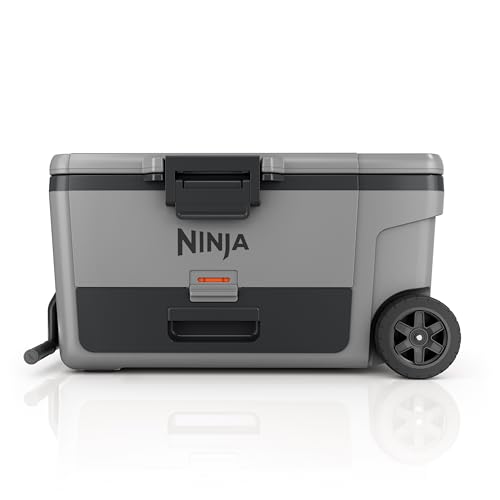
- Best overall for outdoor entertaining: Ninja FrostVault 65QT Cooler with Wheels and Dry Zone Drawer (FB265GY) — Check on Amazon
- Best for wine and tall bottles: YETI Roadie 48 Wheeled Cooler with Retractable Periscope Handle — Check on Amazon
- Best mobile drink station: YETI Tundra Haul Portable Wheeled Cooler (Navy) — Check on Amazon
- Best for weekend-long events: Engel 65 High Performance Hard Cooler (ENG65) — Check on Amazon
- Best for food safety and precise temperatures: BougeRV CRPRO 30QT 12V Portable Refrigerator — Check on Amazon
The entertainer’s dream pick, honestly over budget: the EcoFlow GLACIER, a fridge-freezer that makes its own ice cubes, is reviewed below as a prose-only pick — it currently sells above this guide’s ceiling, so it carries no purchase link.
Read the full guide ↓
Disclosure: As an Amazon Associate, dailyhomedecorating.com earns from qualifying purchases. Links to Amazon on this page are affiliate links; they cost you nothing extra. Listing details such as price and availability change often, so check the current Amazon listing before you buy.
Entertaining outdoors exposes a cooler’s weaknesses faster than any camping trip, which is why the best outdoor cooler for outdoor entertaining under $700 is judged by different rules than a camping box. On a trip, a cooler is opened by two people who know where everything is. At a party, it is opened forty times an hour by guests who do not — every opening dumping cold air, every rummage letting the ice shift and the meltwater rise, until by hour three the salads are swimming, the ice is slush, and the host is doing an emergency ice run instead of talking to anyone. When you shop for the best outdoor cooler for outdoor entertaining under $700, you are not really shopping for ice retention. You are shopping for a serving system: a cooler whose layout separates food from drink ice, whose lid a guest can work one-handed with a plate in the other, whose position can change as the gathering moves, and whose ice lasts the event rather than the expedition. That is a different brief from our main flagship roundup, and it produces a different winner.
The six picks below were judged as event equipment. The leader is a cooler with a fridge-temperature dry drawer, because the single biggest quality-of-party upgrade in this category is food that never touches meltwater. Two wheeled rotomolded picks follow — one tall enough to stand wine bottles upright like a cellar, one built to roll a full drink station across a lawn to wherever the evening settles. Then come the specialists: a maximum-insulation chest for events that run all weekend, a compressor fridge that holds raw ingredients at exact food-safe temperatures beside the grill, and — honestly labelled as over this budget — the one machine that manufactures its own ice. Every linked pick is a verified model with manufacturer-confirmed specifications and an Amazon price we have seen at or below $700, and all passed a CPSC recall check.
Our short answer: buy the Ninja FrostVault 65QT if you host more than you camp. Its dry drawer changes what a cooler does at a party, and its wheels and honest 65 quarts cover the rest of the brief. Add the YETI Roadie 48 when wine and tall bottles are central, the Tundra Haul when the party moves, and read the drink-station section before your next event — the setup around the cooler matters almost as much as the cooler, and most of it is free.
In this guide
Quick Picks
In a hurry before guests arrive? This table matches each cooler to the entertaining job it does best.
| Entertaining job | Pick | Why it stands out | Link |
|---|---|---|---|
| Best overall for entertaining | Ninja FrostVault 65QT | Dry Zone drawer keeps food cold and dry; 65 qt; wheeled | Check on Amazon |
| Wine and tall bottles | YETI Roadie 48 | Tall interior stands bottles upright; rolls like luggage | Check on Amazon |
| Mobile drink station | YETI Tundra Haul | Rotomolded cooler that one person can roll anywhere, loaded | Check on Amazon |
| Weekend-long events | Engel 65 (ENG65) | Six-sided insulation and the longest ice claim in the guide | Check on Amazon |
| Food safety at the grill | BougeRV CRPRO 30QT | Exact set temperatures for raw ingredients; no ice, no slush | Check on Amazon |
| Dream splurge (over budget) | EcoFlow GLACIER | Makes its own ice cubes — currently priced above $700 | Prose-only pick |
How we chose the best outdoor cooler for outdoor entertaining under $700
Entertaining criteria reorder the usual cooler virtues. First came serving design: can food and drinks coexist without contaminating each other’s experience — separate dry storage, baskets, dividers, a layout a guest can understand at a glance. Second came guest ergonomics: lids that open easily and stay open or close softly, handles and latches that do not fight a person holding a plate, and interiors where the drink someone wants is visible rather than buried. Third came event mobility: gatherings migrate — from patio to lawn to fire pit — so wheels and one-person moves scored heavily. Fourth came event-length ice performance, which is a different test from trip performance: not “how many days in a sealed box” but “how cold at hour six after two hundred openings,” where gasket quality, insulation margin and sheer ice mass decide. Underneath it all, the standing rules of this batch applied unchanged: verified real models, specifications confirmed from the manufacturer, Amazon prices sighted at or under $700 for anything carrying a link, and a CPSC recall screen that excluded a major rolling-cooler family outright.
One more criterion deserves naming, because hosts feel it and spec sheets ignore it: how a cooler looks and behaves as furniture. An entertaining cooler sits in the middle of your event, in your photos, next to your guests. Clean lines, a lid that doubles as a side table or a seat, and a drain that does not weep onto the deck are worth real money in this category — and they are part of why the flagship tier, judged honestly, earns its keep here more than in almost any other lens in this series.
The six best coolers for outdoor entertaining under $700, reviewed
1. Ninja FrostVault 65QT — best overall for entertaining
Who it suits: Hosts, first and always. If your cooler serves crowds — backyard parties, pool days, tournaments, holiday gatherings — this is the pick designed around your actual problem.
The FrostVault’s Dry Zone drawer is the most useful entertaining feature any cooler in this price class offers. It is a separate compartment beneath the main chest that draws cold from the ice above and holds food at fridge-like temperatures while keeping it completely dry. Think about what that removes from a party: no cheese sweating in meltwater, no salad dressing leaking into the drink ice, no guest holding the main lid open for a minute while they dig for the dip. Food lives in the drawer, at fridge temperature, in its own clean space; drinks live in the 65-quart chest above; each gets opened on its own rhythm. The rest of the package supports the role — all-terrain wheels for positioning, premium insulation good for multi-day events, a build that reads as an appliance rather than a storage tub. Ice retention is party-grade rather than expedition-grade, and that is the correct allocation: nobody’s barbecue needs ten days of ice, but every barbecue needs the potato salad to survive the afternoon in dignity.
- Pros: Dry food storage transforms party service; full 65-quart drink capacity; wheeled and easy to position; guest-friendly in a way rotomolded lids are not.
- Honest limitation: Not rotomolded, so it is not the pick for rough travel or week-long trips, and the drawer is one more surface to wipe down after the event.
Choose it if your cooler is a serving station at gatherings of six to thirty. Skip it if your cooler mostly travels — the wheeled YETIs below are built for the road.
2. YETI Roadie 48 — best for wine and tall bottles
Who it suits: Wine drinkers, cocktail hosts, and anyone whose drinks come in bottles that refuse to lie down. Also hosts whose venue is a rooftop, a park shelter or a friend’s garden — anywhere the cooler has to commute.
Most coolers force wine bottles to lie on their sides in the ice, labels dissolving, corks and caps at rummage depth. The Roadie 48’s tall interior stands standard wine bottles and two-liter mixers upright, which changes the drink station completely: bottles are visible, grabbable, and presentable, and the cooler reads as a cellar rather than a dig site. Around that party trick sits a serious cooler — rotomolded construction, a freezer-style gasket, thick insulation — on solid NeverFlat wheels with a retractable Periscope handle that pulls like good luggage through hallways, across decks and over grass. At roughly twenty-eight pounds empty it is the easiest premium cooler here for one person to bring to the event, and its included dry goods basket keeps garnishes and snacks above the meltwater line. You pay flagship money for 48 quarts; at an event, where presentation and access beat raw volume, that trade makes sense.
- Pros: Upright bottle storage is a genuine entertaining advantage; rotomolded durability; rolls anywhere one-handed; dry basket included.
- Honest limitation: Forty-eight quarts is the smallest ice chest here — for a big drinks crowd it wants a partner cooler or a mid-party restock from the kitchen.
Choose it if wine, prosecco and tall mixers anchor your gatherings. Skip it if your events are can-and-bottle-cap affairs for forty people — take the FrostVault’s volume.
3. YETI Tundra Haul — the mobile drink station
Who it suits: Hosts whose party moves: patio to lawn, lawn to fire pit, driveway tailgate to backyard. Also anyone entertaining at a park, a beach house or a rented pavilion, where the drink station has to arrive under its own power.
The Tundra Haul takes YETI’s rotomolded formula — thick insulation, freezer gasket, T-latches, a lid that serves as seating — and mounts it on solid, puncture-proof wheels with a welded aluminum handle shaped to keep a full load balanced over the axle. The result is a drink station one person can reposition all evening without asking for help or spilling anything: roll it to the grill for the cooking hour, to the shade for the afternoon, to the fire pit for the nightcap. Capacity sits in the 45-quart class, the deliberate price of the wheel hardware, and for a drinks-focused station that is ample — this is the cooler equivalent of a bar cart, and it should be loaded like one: drinks, ice, a basket for citrus and openers, and nothing that belongs in a fridge. Hosts who entertain in one fixed spot will not use its gift; hosts whose evenings flow will wonder how they managed without it.
- Pros: One-person mobility with a full load, over grass and gravel; rotomolded cold performance; doubles as seating and side surface; YETI support and accessories.
- Honest limitation: Mid-size capacity at flagship money, and as a pure drinks station it has no dry food storage — pair it with the kitchen or a second box for food.
Choose it if your gatherings migrate or your venue varies. Skip it if your cooler has one permanent home — the FrostVault serves better from a fixed spot.
4. Engel 65 (ENG65) — best for weekend-long events
Who it suits: Hosts of the long format: the lake-house weekend, the three-day holiday gathering, the tournament that runs Friday to Sunday. When the event outlasts a single ice load’s dignity, insulation margin becomes hospitality.
The Engel is the insulation maximalist of this guide: two inches of high-density polyurethane on every side — lid and floor included — an airtight silicone gasket, and recessed compression latches, behind a manufacturer rating of up to ten days of ice retention. At a weekend event that hardware translates into a specific luxury: load once, properly, on Friday, and the cooler simply does not become a topic again. Drinks are still properly cold on Sunday, the food ice has not collapsed into a swamp, and the host has made zero ice runs. Two honest notes from our other reviews in this series bear repeating: the ENG65 is a 58-quart cooler despite its name, so plan quantities by the number; and it has no wheels, so it belongs in a chosen station spot — which, for a weekend event, is usually the right model anyway. Its ten-year warranty and clean, hose-friendly interior also make it the easiest premium pick to return to service after a big event.
- Pros: Deepest insulation margin here — load once for a long weekend; ten-year warranty; light for a rotomolded box; flush latches suit tight station setups.
- Honest limitation: Named 65, holds 58 quarts; no wheels, so mid-event repositioning is a two-person decision.
Choose it if your events run two days or longer and ice logistics are the enemy. Skip it if your gatherings are single afternoons — the FrostVault serves them better for similar money.
5. BougeRV CRPRO 30QT — the food-safety specialist at the grill
Who it suits: Serious cooks who entertain: the brisket host, the raw-bar enthusiast, anyone staging ingredients outdoors for hours and thinking — correctly — about temperature.
Every ice chest holds food at “cold, probably.” The CRPRO holds it at a number. This 30-quart compressor fridge-freezer sets and keeps any temperature from −8°F to 50°F, runs from a patio outlet or vehicle power, and gives an outdoor cook the one thing ice cannot: certainty. Raw chicken waits at a true fridge temperature until its moment; the ice cream stays actually frozen until dessert; the leftovers go straight into a verified-cold box instead of a melting one. Around a grill station it functions as the cook’s fridge — close, exact, and out of the guests’ traffic — while a drinks cooler handles the crowd. Thirty quarts is a supporting-actor size, and we recommend it in that role honestly: this is not your party’s main drink capacity. It is the pick that makes the food half of entertaining safer and calmer, quietly, at a fraction of the flagship budget.
- Pros: Exact, settable temperatures for genuine food safety; freezer capability for desserts; no ice or meltwater near raw ingredients; quiet and efficient.
- Honest limitation: Needs power and a sheltered spot near the action; 30 quarts supports a party rather than carrying one.
Choose it if you cook seriously outdoors and food temperature is a real variable in your events. Skip it if your entertaining is drinks-and-snacks only — the FrostVault’s drawer covers that ground.
6. EcoFlow GLACIER — the dream pick (prose-only, over this budget)
Who it suits: The host who has stood in a kitchen at 7 p.m. shaking a freezer’s worth of ice trays and sworn there must be a better way. There is. It is this — and at current pricing it costs more than this entire guide’s budget, which is why it appears here without a link.
The GLACIER is a 38-liter dual-zone fridge-freezer whose 120W compressor also drives an integrated ice maker that produces a batch of solid cubes in roughly twelve minutes. For entertaining, that combination is close to a superpower: the cabinet holds drinks and ingredients at two exact temperatures while the machine manufactures cocktail ice on demand, ending the host’s oldest logistics problem — ice is the one supply that cannot be bought in advance and stored in a small freezer. App control, an optional plug-in battery for unplugged venues, and optional wheels complete a specification that reads like it was written by someone who hosts. The honest arithmetic: the base unit sits above $700 at the time of writing, and the battery and wheel kit that an entertainer most wants are sold on top of that. If a promotion ever brings the package within reach, it is the one splurge in this guide we would not argue with. Until then, the FrostVault plus a freezer rotation delivers most of the experience for far less.
- Pros: On-demand ice making ends the host’s ice logistics; dual-zone exact temperatures; battery option for venue flexibility.
- Honest limitation: Priced above this guide’s ceiling before its most desirable accessories — the reason it carries no link here.
Choose it if you find it genuinely discounted and host constantly. Skip it if the $700 ceiling is real — the FrostVault and BougeRV pairing covers the same party for less.
Prose-only pick: no purchase link, because we could not verify a price at or under $700 for this model.
Comparison table
| Cooler | Type | Capacity | Wheels | Entertaining standout | Best for |
|---|---|---|---|---|---|
| Ninja FrostVault 65QT | Insulated wheeled chest | 65 qt | Yes | Dry Zone food drawer | Most hosts |
| YETI Roadie 48 | Rotomolded, wheeled | 48 qt | Yes, solid | Stands wine bottles upright | Wine and cocktail gatherings |
| YETI Tundra Haul | Rotomolded, wheeled | ~45 qt class | Yes, solid | Drink station that moves with the party | Flowing, multi-spot events |
| Engel 65 (ENG65) | Rotomolded ice chest | 58 qt (named 65) | No | Load-once insulation for long events | Weekend-long gatherings |
| BougeRV CRPRO 30QT | Compressor fridge-freezer | 30 qt, all usable | No | Exact temperatures at the grill | Serious outdoor cooks |
| EcoFlow GLACIER | Fridge-freezer + ice maker | 38 L | Optional kit | Makes its own ice cubes | Splurge — currently over $700 |
How to run a drink station guests can actually use
Separate the flows. The single highest-impact entertaining habit costs nothing: drinks and food should not share one opening. A guest fetching a soda should never have to excavate past the salads, and the cook’s ingredients should never sit in the guests’ traffic. The FrostVault’s drawer builds this separation into one box; with any other pick, fake it with two stations — the cooler for drinks, a smaller box, a tray on ice, or the BougeRV for food — placed a few steps apart so the crowds do not collide.
Stage for the first hour, refill at the lull. Parties drink fastest at the start. Load the station for the first hour’s demand with the most-wanted drinks on top and visible, keep the reserve cold in the kitchen fridge, and do the restock during the natural lull rather than mid-rush. A cooler opened calmly six times keeps its cold; a cooler held open while someone digs for the last grapefruit soda does not. Hosts planning the wider setup will find the yard-side view in our Best Outdoor Cooler For Backyards Under $700 guide, and the same station logic at lower budgets in the Best Outdoor Cooler For Outdoor Entertaining Under $500 roundup.
Ice is two products, not one. Ice for chilling and ice for glasses are different supplies with different standards. The cooler gets the chilling ice — cubes, blocks or frozen bottles, in quantity — while drink ice lives in the freezer or a clean insulated bucket and never meets a guest’s hand-scooping. Hosts who internalize this one distinction stop running out of the ice that matters and stop serving the ice that shouldn’t be served.
Position is a hosting decision. Put the station where guests naturally gather but never in a doorway, a grill’s working zone or full sun; give it a side surface for cups and a bin for empties within reach, because a bottle opener hunt is a lid-open event. As the evening moves, a wheeled station moves with it — this is the Tundra Haul and Roadie 48’s entire reason for existing, and it is worth more at a real party than a day of theoretical ice retention.
Matching the cooler to the format of the event
The wine-and-dinner evening. Eight adults, a long table, courses arriving over hours. The cooler here is a cellar and a fridge, not a drinks tub: the Roadie 48 stands the bottles upright and keeps the whites at temperature between pours, while the BougeRV — set to a true fridge temperature — holds the salads, the cheese course and the dessert in a way no ice chest honestly can. Ice demand is modest; temperature correctness is everything. This is the format where the flagship tier’s refinement shows most and brute capacity least.
The kids’-party and pool format. High traffic, small hands, constant openings, juice boxes and ice pops in continuous rotation. Volume and forgiveness win: the FrostVault 65QT, with drinks in the chest and the party food sealed in its dry drawer away from the splash-and-grab traffic, is built for this day. Expect ice to work hard; pre-chilling and shade placement matter more than any spec, and a cooler whose lid children can open and close without pinching, slamming or needing two hands is a safety feature as much as a convenience.
The tournament and game-day format. Hours long, drinks-led, with food arriving in waves — wings at half-time, burgers off the grill. The Tundra Haul earns its keep as the mobile station that starts by the grill and ends by the screen, while the Engel, parked at the food end, quietly holds the second half’s supplies at temperature without an ice top-up. This is the two-cooler format in its natural habitat, and hosts who run it regularly are the readers most likely to end up owning both shapes eventually.
The long holiday weekend. Multiple events, one long occupation of the yard. Here the calculus swings back toward insulation and capacity: the Engel as the household’s cold anchor, loaded once and trusted, with the FrostVault or Roadie deployed per-event as the serving layer. The pattern to copy is anchor-and-satellite — one cooler whose job is storage, one whose job is service — because a single box asked to do both gets opened for both, and pays for it in ice.
What to do with the rest of the $700
Notice that this guide’s winner costs a fraction of its ceiling, and that is a feature of the entertaining lens: parties are systems, and the system around the cooler is where the remaining budget earns its return. The highest-value additions, in the order hosts actually feel them: a second, smaller drinks tub or box for the satellite-station pattern described above; a proper set of reusable ice packs and a stock of frozen bottles, so chilling ice stops being a day-of purchase; a side table or cooler-top cushion that turns the station into furniture; an outdoor-rated extension solution and cable cover if an electric joins the setup, so power reaches the station without a trip hazard; and a fitted cover, because an entertaining cooler that lives outside ages from weather, not from parties. Spend in that order and a mid-priced pick inside a well-built system will outperform a flagship standing alone — the most useful sentence in this guide, and the one the budget was designed to let us say.
There is a corollary worth stating for hosts at the start of their setup: buy the cooler for the parties you already throw, not the ones in the photographs. A household that hosts eight friends monthly and forty relatives once will be happiest with the FrostVault and a borrowed second box in December; a household whose signature event is the weekend-long lake gathering should start with the Engel. The $700 ceiling accommodates either truth comfortably. What it should not accommodate is the fantasy purchase — the expedition flagship bought for a life of garden parties, standing as a monument to a mismatch. Entertaining is this guide’s lens, and through it, the right cooler is the one your guests benefit from without ever noticing it. That is the standard the final recommendation applies.
Food safety at outdoor events, without the lecture
A cooler guide is not a food-safety manual, but entertaining is the one lens where the two genuinely overlap, because the failure mode of an outdoor event is rarely warm soda — it is the potato salad that spent five hours in the danger zone while everyone assumed the cooler had it covered. Three habits, all of them cooler habits, prevent nearly all of it. First, cold food must start cold and stay in a genuinely cold place: a fridge-temperature drawer, a compressor fridge at a set temperature, or the well-iced heart of a chest — not balanced on top of the drinks where every opening warms it. Second, the clock matters more than the temperature guess: perishable food that has been out for about two hours — about one hour in serious heat — should be retired, and the host who plans quantities so that food comes out in waves, rather than all at noon, wastes less and risks nothing. Third, raw and ready-to-eat never share a space, a meltwater or a pair of tongs; the two-station pattern this guide keeps recommending is a food-safety pattern as much as a convenience one.
This is also where the picks’ honest differences deserve one more pass. An ice chest’s temperature is a range that drifts upward all day; a compressor fridge’s temperature is a fact. For drinks, the difference is taste. For the chicken marinating until its turn on the grill, the difference is the whole question — which is why the BougeRV, the least “party” product in this guide, may be the most responsible purchase a serious outdoor cook makes, and why the FrostVault’s fridge-temperature drawer is a safety feature wearing a convenience feature’s clothes. Hosts do not need to be anxious about any of this; they need a setup where the safe thing is also the easy thing. Building that setup is, in the end, what this entire guide is for.
Common entertaining mistakes
One cooler, everything in it. The classic. Food swims, drinks hide, the lid never closes. Separate flows — by drawer, by second box, by station — before you spend a cent on a bigger cooler.
Chilling warm drinks at party o’clock. A case of room-temperature drinks loaded at four o’clock will consume a cooler’s ice advantage by six. Pre-chill everything the night before; the cooler maintains cold brilliantly and creates it slowly.
Buying expedition specs for a six-hour event. Ten-day ice retention is wasted on a Saturday party; serving design, access and mobility are what guests experience. Match the cooler to the event’s actual duration and traffic — which is the entire editorial line of this guide.
Forgetting the morning-after state. A cooler sealed at midnight with meltwater and leftovers is a grim Sunday surprise. Drain it, wipe the drawer and gasket, and store it dry and cracked open; the five minutes is the difference between an appliance and an odor.
Skipping the recall check. A major rolling-cooler family was recalled in 2025 for a handle hazard — over a million units — and party gear gets bought secondhand and borrowed constantly. Every pick here passed a CPSC screening; give any cooler joining your event the same minute of diligence.
The host’s test: what guests never notice
There is a simple way to know whether an entertaining cooler is doing its job, and it has nothing to do with specifications: at a well-run event, nobody thinks about the cooler at all. The drinks are cold when reached for, the food is where it should be and tastes the way it should, nobody has watched the host perform an ice emergency, and the cooler has quietly doubled as a seat, a table and a landmark — “drinks are by the big cooler” — without once becoming a topic. Every pick in this guide was judged against that invisibility standard. The FrostVault reaches it through layout, the drawer quietly removing the food-versus-drinks conflict that makes lesser coolers conspicuous. The Roadie reaches it through presentation, bottles standing like a cellar instead of hiding like a dig site. The Haul reaches it through position, always being where the party currently is. The Engel reaches it through margin, never once making ice a subject of conversation across a three-day weekend. The BougeRV reaches it through certainty, holding the cook’s ingredients at a number rather than a hope.
It is worth saying plainly that this standard is achievable well inside the budget — indeed, it is barely related to the budget at all beyond the quality threshold these picks clear. A host who buys the FrostVault, separates the flows, pre-chills the drinks, parks the station in shade and retires food on schedule will run a better event than a host who buys the most expensive expedition chest on earth and loads it warm at four o’clock. That is the real content of this guide, and it is why our final recommendation spends its confidence on a serving design rather than on a specification. Buy the cooler that disappears into your parties. Then go and enjoy them — that, after all, is what the cooler was for.
Final recommendation
For hosts, the Ninja FrostVault 65QT is the entertaining pick of this entire series: its dry drawer solves the problem every party actually has, and its size, wheels and build cover the rest of the brief without expedition overkill. Hold every candidate to the host’s test from the section above — will guests notice this cooler, and if so, will it be for the right reasons? The FrostVault is noticed, briefly, for the drawer that hands someone a dry, cold sandwich tray while the drinks stay undisturbed; then it disappears into the event like the rest of the picks on their best days. A cooler that passes that test at a third of the budget ceiling is not a compromise purchase. It is the correct one, and the money it leaves behind is better spent on the chairs, the shade and the second station that make the next party easier than the last. Pair it with the BougeRV if you cook seriously, choose the Roadie 48 if wine is the center of your gatherings, the Tundra Haul if the party refuses to sit still, and the Engel when the event runs all weekend. The EcoFlow GLACIER remains the dream — file it under promotions worth watching. Readers building the same station at smaller budgets will find our Best Outdoor Cooler For Outdoor Entertaining Under $300 guide applies this exact logic for less, and the main Best Outdoor Cooler Under $700 roundup covers the flagship field for buyers whose coolers travel more than they host.
FAQ
How much cooler capacity does a party of twenty need? Plan on roughly a quart of drink capacity per guest as the anchor — so a 65-quart-class station — with food held separately in a drawer, a second box or the kitchen fridge. In serious heat or with an all-afternoon format, add ice margin rather than box size: restocking a cold cooler beats buying a bigger one.
How do I keep food safe outdoors for hours? Keep cold food genuinely cold: a fridge-temperature dry drawer, a compressor fridge at a set temperature, or a well-iced chest that stays closed. The two-hour rule is the host’s friend — food that has sat warm through an afternoon should be retired, not refrigerated for tomorrow. The BougeRV exists in this guide precisely because exact temperatures remove the guesswork.
Is a wheeled cooler worth it for entertaining at home? Yes, more than for camping, arguably. Home events involve the kitchen-to-station run, repositioning for shade, and the end-of-night return — all with a full, heavy box. Wheels turn each of those from a two-person chore into a one-person shrug.
What do I do about ice for a big event? Buy chilling ice in quantity the day of, keep serving ice separate and clean in the freezer, pre-chill every drink, and freeze water bottles in the preceding days as free, tidy reinforcements. If ice logistics are your recurring nightmare, that is the EcoFlow GLACIER’s entire pitch — at a price above this guide’s ceiling, which we flag rather than hide.
Can one cooler really serve as a seat and side table? The rotomolded picks can — their lids are built to be sat on, and a cushion accessory turns them into proper overflow seating, which small patios and lawns always need. Keep the entertaining cooler in that furniture role in mind when you place it: a seat people use is a lid that stays closed.
How far in advance should I load the cooler? The night before for drinks (pre-chilled, in a pre-chilled box, in the coolest spot you have), the morning of for food, and the hour before for anything delicate. Loading order matters too: reserves at the bottom, first-hour drinks on top, food in its drawer or its own box, so the event’s traffic pattern matches the layout instead of fighting it.
Should the entertaining cooler live inside or outside between events? Inside, if you have the choice — a garage or a cool corner keeps the gasket clean, the body out of UV, and the cooler ready to load without a preliminary wash. If it must live outside, a fitted cover and a shaded, off-the-ground spot are the minimum, and the interior should be stored dry with the lid cracked. The exception is the electric in daily service: a fridge that is working as your patio drinks fridge should simply stay in its covered station, plugged in and earning its place, rather than being stored like seasonal gear.
Two mid-priced coolers or one flagship for a serious host? For entertaining specifically, two complementary mid-priced coolers — a serving chest and an electric for food, or a wheeled station and a fixed anchor — usually outperform one flagship asked to do everything, because the two-station pattern is worth more at a party than any single product’s specifications. The flagship-first logic of our main roundup applies to coolers that travel and camp; the host’s logic is a system logic. Buy the pair in sequence if the budget asks you to: the serving cooler first, the specialist second, and let a season of real parties confirm which specialist your events actually need.
What is the best cooler setup for a wedding or a once-a-year big event? Resist buying for it. A once-a-year event is a rental, borrowing and systems problem: your everyday entertaining cooler anchors the main station, a borrowed or inexpensive second box takes the overflow, and the kitchen fridge works as the reserve it already is. Hosts who buy a giant cooler for one annual Saturday spend fifty-one weekends storing their decision. The picks in this guide are sized for the parties you actually throw — which is precisely why they will still serve the big day adequately when it comes, with one mid-event ice top-up and no regrets in the garage.
How early should the drink station be set up before guests arrive? Give it an hour. Set the station’s position while the cooler is still light enough to move without thinking, load it in its final spot so the ice settles where it will serve, and let the box and its contents reach temperature together before the first guest tests it. A station assembled in the last ten minutes is a station assembled warm, in the wrong place, with the opener missing — the three small failures that make a good cooler look like a bad one.
Do I need a separate cooler for kids’ drinks? Not a separate purchase — a separate zone. At mixed gatherings, one end of the main chest (or the dry drawer’s corner, or a simple drinks tub beside the station) stocked with the kids’ options saves the main event from forty extra lid openings and keeps the adult bottles out of the small-hands traffic. It is the two-station principle of this guide applied at tabletop scale, and it costs nothing but a moment’s thought while loading.


