Disclosure: As an Amazon Associate, dailyhomedecorating.com earns from qualifying purchases. Links to Amazon on this page are affiliate links; they cost you nothing extra. Prices and availability change often, so check the current Amazon listing before you buy.
Strip away every specialty — the pains, the positions, the temperatures — and one question remains, the one underneath all the others: what are the best mattresses for sleep itself? Not for a diagnosis or a body type, but for the plain human project of falling asleep faster, staying asleep longer, and waking as if the night had done its work. This guide answers that general question with the pool’s most sleep-complete mattresses: beds whose balance of comfort, support, temperature, and quiet serves the widest range of ordinary sleepers on ordinary nights.
The criteria for pure sleep are worth stating, because they differ subtly from every specialty list. A mattress for sleep must disappear: no pressure point lobbying for a position change, no heat building a case for wakefulness, no partner’s turn arriving as a tremor, no sag rewriting the spine’s intentions by 4 a.m. The six picks below were ranked on that disappearance — how completely each removes itself from the night’s story — across the positions and preferences of a general household. Specialty needs have their own guides on this site; this is the one for everyone else, and for everyone first.
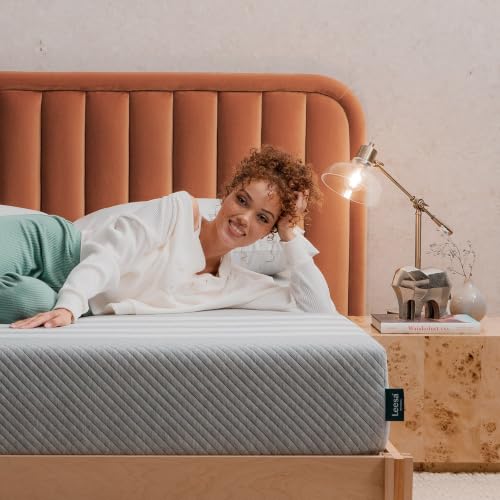
Where to Buy
All six mattresses are sold on Amazon, with current pricing and sizes on each listing. Start with our top pick, the Leesa Original 10″ Mattress, Queen Size, Cooling Foam & Memory Foam — Check on Amazon. The other five are the Tuft & Needle Original Legacy Mattress — Check on Amazon; the Casper Sleep Original 11″ Memory Foam Queen Mattress — Check on Amazon; the Purple Mattress — Check on Amazon; the Layla 10” Copper Infused Memory Foam Mattress — Check on Amazon; and the GhostBed Classic 11 Inch Mattress — Check on Amazon. Read the trial terms on your finalist’s listing before ordering.
In this guide
Quick Picks
| Pick | Badge | Why it earns its place |
|---|---|---|
| Leesa Original 10″ Mattress | Best Overall | The most complete disappearance act: cooling foam, contour, support, and quiet in one balanced build |
| Tuft & Needle Original Legacy Mattress | Best Simple Comfort | Adaptive foam with gel and graphite, GREENGUARD Gold certified — sleep, simplified and certified |
| Casper Sleep Original 11″ Memory Foam Queen Mattress | Best for Combination Sleepers | Zoned support that re-levels the body at every position change, all night |
| Purple Mattress | Best for Hot Sleepers | The GelFlex Grid sleeps temperature-neutral and still — sleep’s two rarest gifts in one surface |
| Layla 10” Copper Infused Memory Foam Mattress | Best for Couples | Flippable firmness ends the household’s oldest sleep argument without a return |
| GhostBed Classic 11 Inch Mattress | Best Responsive Feel | Gel foam over aerated latex: sleep that lets you move without waking yourself doing it |
Key Takeaways
- Great sleep is mostly subtraction: pressure, heat, motion, and sag removed from the night.
- Medium to medium-firm balances serve the widest range of sleepers and positions.
- Temperature neutrality is the most underrated sleep feature — warm sleepers wake; neutral sleepers continue.
- Motion isolation decides couples’ sleep quality more than any firmness number.
- Judge a sleep mattress by unbroken stretches and morning restoration, not by first-touch feel.
- The mattress is the largest term in the sleep equation, not the only one: darkness, cool air, and schedule complete it.
How These Picks Were Chosen
From our verified pool we selected for sleep itself: balanced feels that serve multiple positions, temperature management appropriate to unbroken sleep, motion behavior suitable for shared beds, support that maintains alignment without demanding attention, and certifications fitting a product used a third of every day. We ranked by disappearance — the degree to which each mattress removes itself from the night’s interruptions — rather than by any single specification, because sleep is an outcome, not a feature list.
Method honesty: sleep quality is partly subjective and partly environmental, and this guide claims only the mattress’s contribution, assessed from verified construction and listing materials. Readers with specific conditions — pain, heat, a partner’s schedule — will find deeper treatments in this site’s specialty guides, several linked below; this guide is the generalist foundation those specialties build on. Our Best Mattresses For Hot Sleepers guide, for instance, takes the temperature criterion further than a general ranking can.
The 6 Best Best Mattresses for Sleep — Reviewed
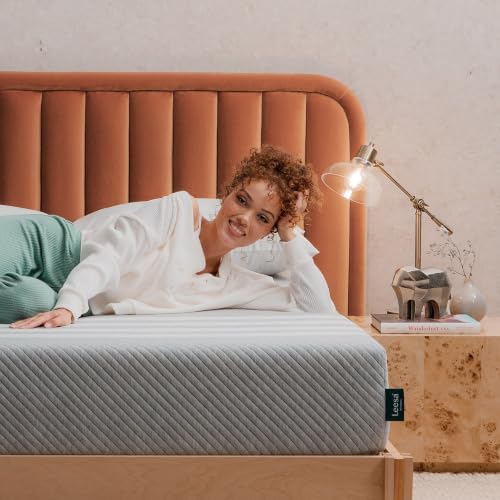
Leesa Original 10″
Our badge: Best Overall
The Leesa Original 10″ Mattress leads the generalist ranking because it is the pool’s most complete answer to the disappearance brief: a cooling foam layer that keeps the surface from hoarding heat, memory foam that relieves pressure without swallowing the sleeper, and a supportive core that holds alignment quietly underneath both. Nothing about the Leesa shouts; that is precisely the point. Sleep is not improved by a mattress with a personality — it is improved by one whose personality is reliability.
Strengths
- Balanced three-part construction serves back, side, and combination sleepers
- Cooling top layer addresses the commonest cause of mid-night waking
- Motion-absorbing foams suit shared beds
Trade-offs
- Ten-inch profile is moderate for sleepers wanting maximum depth
- Medium balance may read soft to firm devotees, firm to plush devotees
- Foam edges are unremarkable for sitting
| Color | Grey |
| Size | Queen |
| Dimensions | 80 x 60 x 10 inches |
| Weight | 71 pounds |
The Leesa’s construction reads like a checklist of sleep’s requirements in order: temperature first (the cooling layer), pressure second (the contour), alignment third (the core) — and a sleeper who never notices any of the three has experienced the design working. Its medium balance is the generalist’s honest center: not a compromise that serves no one, but a calibration that serves most people on most nights, which is the only definition of “best for sleep” that survives contact with real households.
For couples, the foam stack’s quiet is the sleeper feature: turns stay local, exits stay silent, and the night’s second half — where the deepest sleep lives — goes undisturbed by the first half’s restlessness.
For the general sleeper with no specialty complaint, this is where the search can honestly end.
Best for: general sleepers and couples wanting balanced, quiet sleep / Not suited for: firmness extremists at either end
Choose the Leesa if you want sleep’s fundamentals in one bed. Skip it if you have a specialty need — those guides are linked throughout. Check on Amazon

Tuft & Needle Original Legacy
Our badge: Best Simple Comfort
The Tuft & Needle Original Legacy Mattress is sleep reduced to its essentials and then certified: proprietary adaptive foam infused with gel and graphite for cooling and support, a medium feel that serves the general sleeper, GREENGUARD Gold certification for the air of the room it sleeps in, and a stated 100-night trial. There is no zoning diagram to decode and no grid to believe in — just a well-judged foam doing the whole job evenly.
Strengths
- Gel and graphite infusion manages heat inside a simple, even foam
- GREENGUARD Gold certification suits sensitive households and kids’ rooms
- Uniform medium feel is predictable — what you trial is what you keep
Trade-offs
- No zoning for sleepers whose bodies need differentiated support
- Ten-inch profile is moderate
- Simplicity means fewer specialty answers (heat extremes, heavy loads)
| Color | White |
| Size | Queen |
| Dimensions | 80 x 60 x 10 inches |
| Weight | 72 pounds |
The Tuft & Needle’s sleep argument is consistency: a uniform adaptive foam behaves the same at the shoulder and the hip, in January and July, in year one and year five — and sleep, which is a habit the body keeps, thrives on surfaces that keep their habits too. Sleepers whose nights are disrupted by novelty itself — the guest-bed effect, the hotel adjustment — often do best on the mattress that changes least, and this is the pool’s most even-keeled option.
The graphite deserves its sentence: beyond cooling conduction, it firms the foam’s response under load, giving the simple stack a support character that belies its two-layer description. Simple, here, is an engineering choice, not a budget one.
For sleepers who want the fundamentals without the diagrams, this is the pick.
Best for: consistency seekers, sensitive households, guest-to-primary upgrades / Not suited for: sleepers needing zoning or maximum depth
Choose Tuft & Needle if even and certified is your brief. Skip it if your body needs differentiated support. Check on Amazon

Casper Sleep Original 11″
Our badge: Best for Combination Sleepers
The Casper Sleep Original serves the sleeper who uses the whole bed’s repertoire in one night — back at midnight, side at two, three-quarter prone by dawn — with Zoned Support that re-levels the body at every landing: firmer foam receiving the pelvis, softer foam releasing the shoulders, perforated layers keeping the journey ventilated. Combination sleepers are the majority of sleepers, and this is the generalist pick engineered for their actual nights rather than their stated position.
Strengths
- Zoning serves every position the night invents
- Breathable perforated foam keeps a moving sleeper cooler
- Medium-firm center is the generalist’s honest middle
Trade-offs
- Position-loyal sleepers may prefer a specialist’s tuning
- Eleven inches is mid-depth
- No coil bounce for spring nostalgists
| Color | Light Gray |
| Size | Queen |
| Dimensions | 80 x 60 x 11 inches |
Sleep science’s least glamorous finding is that position changes are not failures — they are the night’s maintenance, redistributing pressure and circulation. A mattress for sleep should therefore be judged partly on how gracefully it hosts movement, and the Casper’s combination of zoning and responsive-enough foam makes each repositioning a non-event: no excavation from a crater, no perch on a board, just a new position competently supported. Sleepers wake from disturbances, not from movement itself, and this design understands the difference.
The 100-night trial and decade warranty frame the generalist’s experiment with appropriate confidence.
For the all-positions sleeper, this is the night’s best host.
Best for: combination sleepers and restless-but-healthy backs / Not suited for: single-position specialists
Choose the Casper if your nights use every position. Skip it if you sleep like a statue in one. Check on Amazon

Purple Mattress
Our badge: Best for Hot Sleepers
The Purple Mattress earns its sleep ranking on the two properties unbroken sleep loves most: temperature neutrality and stillness. The GelFlex Grid’s open channels exchange air with every movement, so the surface never accumulates the night’s heat; the grid’s point-flexing cradles pressure without the slow sink that makes sleepers feel processed rather than rested. The maker’s listing cites third-party sleep-study support for the feel — recorded as the maker’s claim — and the construction makes its own case nightly.
Strengths
- Temperature-neutral surface protects the night’s second half
- Instant, complete response: no waiting for foam to react
- Pressure cradling without envelopment suits light sleepers
Trade-offs
- The grid feel polarizes — trial it as the experiment it is
- Heaviest pick here per pool specs, at 100 pounds in queen
- Premium positioning within the guide
| Color | White |
| Size | Queen |
| Dimensions | 80 x 60 x 11 inches |
| Weight | 100 pounds |
Heat is sleep’s most mechanical enemy: the body must cool to descend into deep sleep, and a surface that returns the body’s own heat to it taxes that descent every cycle, all night. The Purple removes the tax architecturally rather than chemically — there is simply less material touching you, and what touches you does not hold heat. Sleepers who have “tried everything” for warm nights often find the grid is the first intervention that works at the level of physics rather than of gel marketing.
Its stillness serves partners too: the grid localizes disturbance by flexing at points instead of transmitting across a slab.
For warm sleepers and light sleepers generally, this is the disappearance artist’s most radical act.
Best for: hot sleepers, light sleepers, foam skeptics / Not suited for: traditionalists wanting a familiar hug
Choose the Purple if heat fragments your nights. Skip it if you love memory foam’s embrace. Check on Amazon

Layla 10″ Copper Memory Foam
Our badge: Best for Couples
The Layla 10” Copper Infused Memory Foam Mattress protects couples’ sleep at its most common fracture point: the firmness disagreement. One mattress, two feels — soft on one side, medium-firm on the other — with copper-infused foam that cools the surface and firms under load, two memory foam pillows included in the queen listing, and a stated 120-night trial long enough to run both sides honestly. Sleep is a shared project in a shared bed; the Layla is the pick that treats the sharing as the design brief.
Strengths
- Two firmnesses in one purchase — the argument ends without a return
- Copper infusion cools and supports simultaneously
- Foam motion isolation protects the lighter sleeper’s night
Trade-offs
- Flipping 69 pounds to test sides is a two-person ritual
- Neither side is extra-firm
- Solo sleepers with settled preferences pay for flexibility they will not use
| Color | Natural |
| Size | Queen |
| Dimensions | 80 x 60 x 10.5 inches |
| Weight | 69 pounds |
The copper’s dual behavior is worth understanding as a sleep feature rather than a material story: heat conducted away from the surface protects the night’s continuity, while variable firmness — softer at light loads, firmer at deep ones — means the same side of the bed can cradle a shoulder and support a hip. That is a zoning effect achieved by physics rather than geography, and it serves combination sleepers as well as couples.
Made in the USA and made to order per the listing, the Layla also suits households whose sleep needs drift across years: the flip is a firmness adjustment that never expires, long after the trial does.
For couples, this is the peace treaty with a trial period.
Best for: couples with divergent or drifting firmness needs / Not suited for: solo sleepers with one settled preference
Choose the Layla if your household negotiates firmness. Skip it if your preference is singular and fixed. Check on Amazon

GhostBed Classic 11″
Our badge: Best Responsive Feel
The GhostBed Classic serves the sleeper whom foam’s slow response wakes up: gel memory foam over aerated latex over a dense base gives contour that arrives instantly and releases instantly, so turning over is a movement, not a project. Medium-firm balance, cooling gel and latex aeration, and US/Canada manufacture per the listing complete a build for sleepers who move a lot and wake easily — a larger population than the industry admits.
Strengths
- Responsive surface ends the wake-yourself-turning problem
- Gel plus aerated latex manages heat actively
- Balanced feel serves the general sleeper across positions
Trade-offs
- Less motion isolation than the deepest foam picks
- Shallower cradle than pure memory foam
- Livelier feel will read restless to stillness seekers
| Color | White |
| Size | Queen |
| Dimensions | 80 x 60 x 11 inches |
| Weight | 50 pounds |
The GhostBed’s sleep logic is about the micro-awakenings nobody remembers but everybody pays for: each position change that requires effort — heaving out of a foam crater, fighting a surface’s grip — risks surfacing the sleeper into wakefulness they will not recall but will feel at noon. A responsive surface keeps those transitions below the waking threshold. Sleepers who “sleep fine” but wake unrefreshed are this pick’s natural audience, and its trial is where the hypothesis gets tested.
The dense base keeps the responsiveness honest — buoyancy with a floor under it — and the medium-firm center holds alignment through the night’s choreography.
For movers and light sleepers, this is the frictionless night.
Best for: restless sleepers and the unrefreshed-but-unexplained / Not suited for: deep-cradle devotees
Choose the GhostBed if turning wakes you. Skip it if stillness is your love language. Check on Amazon
Comparison Table
| Pick | Sleep specialty | Construction | Size listed | Profile | Check price on Amazon |
|---|---|---|---|---|---|
| Leesa Original | Balanced disappearance | Cooling foam + memory foam | Queen | 10 inches | Check price on Amazon |
| Tuft & Needle Original | Consistency + certification | Adaptive foam, gel/graphite | Queen | 10 inches | Check price on Amazon |
| Casper Original | Combination positions | Zoned foam | Queen | 11 inches | Check price on Amazon |
| Purple Mattress | Temperature neutrality | GelFlex Grid | Queen | 11 inches (specs) | Check price on Amazon |
| Layla Copper | Couples’ firmness peace | Flippable copper foam | Queen | 10.5 inches | Check price on Amazon |
| GhostBed Classic | Frictionless movement | Gel foam + aerated latex | Queen | 11 inches | Check price on Amazon |
How to Choose the Best Mattress for Sleep
Name your night’s actual interruption
Waking hot, waking sore, waking when your partner turns, waking to turn yourself — each interruption has a pick in this guide engineered against it. Diagnose the interruption honestly (a week of noting the hour and the cause beside the bed) and the shortlist builds itself. Sleepers with no single interruption should start at the balanced top of the ranking.
Respect the medium center
For general sleep, medium to medium-firm is not a lack of opinion; it is where the population’s sleep actually lives. Extremes serve specialties. If you have no specialty, buy the center and let the trial confirm it — and complete the system around it: darkness, cool air, and bedding that breathes, refreshed sensibly in seasons like Black Friday Bedding Deals 2026 with extras such as Best Throw Pillows Under $500 for the reading hour.
Trial for restoration, not sensation
Judge the trial by mornings: restoration, mood, the hour of the first yawn. A mattress can feel wonderful at minute five and sleep poorly at hour five; the generalist’s metric is the unbroken stretch and the waking state, logged across three weeks.
Buy for the household that sleeps, not the shopper who clicks
Partners’ motion, warmth, and firmness votes are sleep variables. The Layla exists for the firmness vote, the foams for the motion vote, the Purple for the warmth vote. Count every sleeper in the bed as a voter.
How Can You Tell If a Mattress Is Improving Your Sleep?
Watch the proxies that do not lie: the number of remembered awakenings, the position you wake in versus the one you chose, the snooze count, and the afternoon’s energy cliff. A sleep-improving mattress moves all four within three weeks — fewer awakenings, waking nearer your chosen position (because the surface stopped evicting you), fewer snoozes, a later cliff. Track them in a line a day; sleep improvement is a trend, and trends need data.
Protect the experiment from confounders: keep the schedule, the room, and the bedding constant during the trial, and be suspicious of verdicts rendered during travel weeks, illness, or deadline seasons. The mattress is being measured; do not let the calendar shout over it. Specialty overlays — a new pain, a partner’s new shift — reroute to their own guides, such as Best Mattresses For Back Problems when mornings start filing complaints.
Problem: you fall asleep fine but wake at 3 a.m. — suspect temperature first, then pressure; the Purple and Leesa reviews address the two causes in that order.
Problem: your partner’s alarm ends your night early — motion and exit noise are the variables; foam isolation (Leesa, Layla) is the fix the guide offers.
Problem: you wake in a different position, sore — the surface is evicting you; zoning (Casper) or response (GhostBed) usually owns the answer.
Problem: sleep is fine, mornings are not — check the last hour: light, schedule, and the mattress’s edge-of-morning support as foams warm; log before concluding.
Problem: everything improved except restoration — the mattress may have done its part and revealed the next term in the equation (schedule, light, a clinical question). Believe the data and follow it.
The Science-Shaped Idea of a Sleep Surface
Without pretending a product guide is a journal, the principles that organize sleep research translate cleanly into mattress terms. Sleep deepens when the body cools — hence temperature neutrality’s outsized role in this ranking. Sleep consolidates when disturbances stay below the arousal threshold — hence motion isolation and frictionless turning. Sleep restores when the spine rests in its neutral geometry under no muscular guard duty — hence support that aligns without being felt. And sleep repeats best on a consistent surface, because the body habituates to its bed the way it habituates to a time zone. Every pick in this guide is one of those principles made purchasable; the ranking is simply the order in which an average household needs them.
Sleep as a Household System
The mattress is the largest term, not the equation. Darkness that is actually dark, air that is actually cool, a schedule the body can predict, and a wind-down that tells the nervous system the day is over — these multiply whatever mattress lies beneath them, and their absence divides it. Households shopping this guide should budget a little of the project’s attention for the free terms: blackout for the streetlight’s window, the thermostat’s nightly setback, the phone’s exile from the pillow. The picks above will do their third of the work superbly; the system decides whether the work becomes sleep.
Age changes the sleep equation in ways a generalist guide should acknowledge, because the mattress that disappears under a thirty-year-old may announce itself under a sixty-year-old. Older sleepers change position more deliberately, feel pressure more keenly, regulate temperature less forgivingly, and rise from lower surfaces with more negotiation. The picks here were weighted with that arc in mind — responsive surfaces that assist exits (the GhostBed), pressure-distributing ones that forgive lighter, bonier frames (the Leesa, the Purple), and support that stays honest as the body’s own margin narrows. A household buying for its next decade, not its last one, will find the generalist center of this ranking holds remarkably well across it.
Children and teenagers sit at the other end of the same arc, and their sleep — deeper, longer, growth-critical — deserves the household’s second-best mattress at worst, a folk rule with real physiology beneath it. The generalist picks here scale down in size without scaling down in honesty, and a teen graduating to a Leesa or a Tuft & Needle is receiving an adult sleep surface for the years when sleep does its most consequential work. Households sequencing purchases across generations will find the budget logic in our Best Mattresses Under $1000 guide applies cleanly to the family version of this ranking.
Common Buying Mistakes
Buying sensation instead of sleep
The showroom minute rewards plush and novelty. The night rewards neutrality and consistency. Trial for restoration, logged across weeks.
Ignoring the interruption diagnosis
A mattress chosen for a generic “better sleep” misses the specific thief — heat, motion, pressure, turning. Name the thief first.
Forgetting the second sleeper
Couples’ sleep is a joint product. Count both bodies’ votes — motion, warmth, firmness — before the click, not during the argument after.
Changing everything at once
New mattress, new pillows, new schedule, same week: the improvement, when it comes, will be unassignable and the failure unfixable. Sequence the variables.
Neglecting the room
Light, heat, and noise tax every mattress equally. Spend the free fixes first and let the mattress be judged in a room that cooperates.
Shift workers and irregular schedulers — a larger share of this keyword’s readers than the industry designs for — should read the ranking with their own weights: blackout and room discipline matter more, but the mattress’s contribution shifts toward rapid sleep onset and depth under daylight conditions. The responsive and cooling picks (GhostBed, Purple) earn extra credit there, because a body that must descend into sleep on command, at noon, in a warm room, needs a surface that cooperates instantly rather than eventually. Whatever your schedule, the trial metrics hold: awakenings, restoration, the energy cliff — measured against your shift’s clock, not the calendar’s.
And a last generalist truth, saved for the end because it governs all the others: sleep is a skill the body practices nightly, and the mattress is the practice surface. Consistency — of surface, schedule, and room — is what practice builds on, which is why this guide ultimately ranks dependable balance above spectacular specialty. The sleeper who buys the honest center, keeps it for its full service life, and protects its consistency with boring maintenance will out-sleep the connoisseur who chases novelty across a decade of mattresses. Choose for the practice, and the performance follows. Dual-position readers will find the same philosophy applied to their repertoire in our Best Mattresses For Side And Stomach Sleepers guide.
Napping deserves a paragraph in a sleep guide, because the mattress serves the day’s second shift too and the two shifts have different physics. A nap is a descent arrested early — the goal is the light stages and an easy return — and a surface that swallows the sleeper into deep-sleep geography makes the twenty-minute restoration into an hour’s grogginess. Responsive and medium surfaces (the GhostBed, the Tuft & Needle) host naps most gracefully; deep contour hosts them most reluctantly. Households that nap seriously should count the nap in the trial’s log as its own line, because a mattress can win the night and lose the afternoon, and both verdicts are data.
Reading and screen habits in bed are the other waking use the mattress silently serves, and they are worth a design note: an hour propped against pillows asks the surface for sitting support its sleeping self never needs — edges that hold, a head zone that does not swallow the reader into a slump. The picks here with honest edges and responsive heads (the Leesa, the GhostBed) serve the reading hour best, and households whose evenings live in bed should weight that hour in the trial as deliberately as the sleeping ones. Sleep quality begins before sleep; the mattress is present for the whole overture.
Guest sleep is the generalist ranking’s third shift: the mattress in the spare room decides whether your house is remembered as a place people rest. The balanced picks travel to guest duty without translation — a visitor’s body, unknown positions, one or two nights to make the impression — and the household that puts its second-best generalist in the guest room rather than its retired worst is practicing the hospitality this site’s guest guides preach. If this purchase demotes your current mattress to the spare room, let the demotion be honest: a bed you would not sleep on is a message you should not send.
Finally, the mattress and the mind: sleep is partly a conditioned response, and the bed is the condition’s strongest cue. A consistent surface, in a consistent room, at a consistent hour, teaches the nervous system its fastest lesson — this is where the day ends. Novelty is the enemy of that conditioning, which is the last and deepest reason this guide ranks dependable balance over spectacular specialty: the best mattress for sleep is the one that becomes, as quickly as possible, completely unremarkable to the body that trusts it. Buy for the disappearance, maintain the consistency, and let the nights accumulate into the only metric that finally matters — mornings that feel like the night did its work.
One more sleeper hides inside this keyword and deserves naming: the person who sleeps badly for reasons they have already investigated — schedule audited, room darkened, health checked — and arrived at the mattress as the last unexamined variable. For that reader, this guide’s advice compresses to a sentence: buy the balanced center, trial it on restoration metrics for three honest weeks, and believe the log either way. If the log convicts the old mattress, the new one will feel like a plot twist; if it acquits it, you will have spent a trial to purchase certainty about where the problem is not — which, in a long investigation, is also progress.
And for the reader at the opposite pole — the one who has never thought about their mattress at all and arrived here because sleep simply became a topic — welcome to the cheapest insight in this entire category: the surface you spend a third of your life on is worth one deliberate purchase per decade, made by the method in these pages. Everything after that is maintenance and mornings.
Sleep’s relationship with the seasons deserves the generalist’s attention, because a mattress is judged in the season of its purchase and sentenced to serve in all of them. Summer tests cooling and rewards the grid and the coils; winter tests whether a surface can feel welcoming at first contact and rewards the foams’ embrace; the shoulder seasons test nothing and forgive everything, which makes them the dangerous months to render a verdict in. Where the trial allows, stretch it across a weather change; where it does not, weight the specifications for the season your sleep finds hardest, and let the ranking’s cooling and consistency picks argue their cases with your climate in the room.
The mattress also sits inside the household’s economics of attention: it is the one furnishing whose quality is experienced with the whole body, every night, in the dark, without distraction — which is why its failures are felt so personally and its successes so completely disappear. A household deciding where the furnishing budget earns its keep should start from that phenomenology: the sofa is seen, the table is used, but the mattress is inhabited. The generalist picks here were ranked for inhabitation — for the thousandth night as much as the first — and the trial’s three weeks are merely the down payment on that judgment.
And a closing note on the much-advertised alternative to all of this — the perfect sleep system, the app, the tracker, the protocol stack: measurement has its place, and this guide prescribes a log of its own. But the body’s oldest sleep technology is a surface it trusts in a room it knows, and no dashboard has yet improved on the combination. Buy the surface carefully, keep the room boring, log lightly, and let the nights do what they have done for every sleeper who ever kept a consistent bed: accumulate, quietly, into health.
The generalist ranking also has a use beyond the purchase: it is the household’s reference shelf. When a specific complaint organizes a future search — a back that starts filing reports, a partner whose warmth becomes the household’s climate issue, a child graduating to a real bed — the specialty guides on this site each begin from one of this ranking’s criteria and take it to depth. Bookmark the logic rather than the list: disappearance, temperature, motion, alignment, consistency. A household that knows which criterion its nights are failing can find its next mattress in an evening, because it already owns the diagnostic.
And if the purchase must be made tonight, under deadline, with no trial of the finalists possible beforehand — the move, the guest arriving Friday, the old bed’s sudden failure — the generalist’s emergency rule is simple: buy the top of this ranking that fits the room and the frame, protect it, and let its trial do the deliberating your calendar could not. The Leesa was placed first precisely for the household that cannot specialize its way out of a deadline. Emergencies are a legitimate way to buy a mattress when the exit rights are this good; they are only a bad way to keep one.
Sleep well is the whole assignment — for the mattress, for the room, and for the household that finally stops negotiating with its nights. The six surfaces above are where the negotiation ends.
There is a generational note to close the generalist’s case: the sleep your household models is the sleep its children will consider normal. A home where the bed is chosen deliberately, maintained on a calendar, and talked about as equipment for living — rather than as a mysterious source of good or bad luck — raises sleepers who buy their own first mattresses with a tape measure and a log instead of a hunch and a hope. The ranking above is a fine first text for that education; the method is the inheritance.
And for the reader who arrived here at the end of a long night, reading buying guides at the hour when the current bed has made its argument one time too many: the distance between tonight and a genuinely better night is shorter than the research makes it feel. One verified mattress, one honest trial, three logged weeks. Begin with the top of this ranking and let the evidence accumulate — sleep, unlike most things worth having, starts paying back the very first night.
And the generalist’s benediction for the household still deliberating: perfection is not on any menu in this category, and waiting for it is the one choice guaranteed to keep tonight’s bed in service. Very good, verified, and trialed beats hypothetical indefinitely. The six above are very good. Choose one, log three weeks, and join the households whose mattress has disappeared — which is to say, whose sleep has finally become the main event again.
The last generalist truth is that sleep is the household’s foundation expense disguised as furniture: it underwrites the workdays, the patience, the immune system, and the mood at breakfast. Foundations are not where a household experiments with the cheapest available option or the loudest advertised one. They are where it buys verified quality once and builds upward for a decade — which is, in one sentence, the entire philosophy of the ranking above.
Buy once, buy verified, and let the bed disappear — the nights that follow are the entire point of every page above.
Sleep is the one purchase the whole household uses every single night — buy it like it matters, because nothing else in the home is audited as often or as honestly.
Good nights, compounded nightly, are the closest thing a household owns to a guarantee — and they start with a surface chosen this carefully.
Final Recommendation
For the general sleeper, the Leesa Original 10″ Mattress is this guide’s answer: cooling, contour, support, and quiet in one balanced build that disappears under the widest range of ordinary nights. If your household’s firmness politics need a treaty, take the runner-up path — Check on Amazon for the Layla and its two-sided peace. Consistency seekers belong with Tuft & Needle, combination sleepers with the Casper, hot sleepers with the Purple, and movers with the GhostBed. Whichever you choose, run the trial on restoration metrics — awakenings, snoozes, the afternoon cliff — and let three weeks of mornings confirm what this guide suspects: the best mattress for sleep is the one you stop thinking about, nightly, for years.
Frequently Asked Questions
What firmness is best for sleep in general?
Medium to medium-firm serves the widest population across positions. Specialties — heavy loads, specific pains, strong preferences — move the answer; the absence of a specialty is itself the case for the center.
Does mattress material matter for sleep quality?
Through its effects, yes: temperature behavior, motion behavior, pressure distribution, and response speed are material properties before they are sleep properties. This guide ranks by those effects rather than by material tribe.
How much of sleep is the mattress, really?
The largest single equipment term — and still one term. Schedule, darkness, temperature of the room, and health all share the equation. The mattress is where the equation’s biggest purchasable improvement lives.
How long before a new mattress improves sleep?
Allow two to three weeks: the body adapts to a new surface while the surface settles, and the trend across that window — awakenings, restoration, energy — is the honest measure. Judge no mattress by its first three nights.
Is a more expensive mattress better for sleep?
Not reliably. Sleep responds to the match between a sleeper’s interruptions and a mattress’s mechanisms, and excellent matches exist at several positions in this guide. Buy the mechanism your nights need.
When should I look beyond a generalist mattress?
When a specific complaint organizes your nights — pain with a geography, heat that rules the room, a condition under care. This site’s specialty guides take the general foundation here and tune it; start there when the general answer stops being enough.


