Disclosure: As an Amazon Associate, dailyhomedecorating.com earns from qualifying purchases. Links to Amazon on this page are affiliate links; they cost you nothing extra. Prices and availability change often, so check the current Amazon listing before you buy.
The best mattresses for side and stomach sleepers have to negotiate a contradiction, because the two positions ask opposite things of a mattress. The side sleeper needs the surface to give — shoulder down, hip cradled, spine level. The stomach sleeper needs the surface to refuse — pelvis held up, lumbar curve unbent, no hammock pulling the spine into extension. If you are shopping for the best mattresses for side and stomach sleepers, you are either one person who rotates between the two across the night, or two people who divide them between partners — and either way, you need a mattress that negotiates the contradiction instead of choosing a side in it.
The negotiation has a known shape: a medium-firm center of gravity, a surface that yields at concentrated points without collapsing under distributed load, and — in the best designs — zoning or responsiveness that treats the shoulder and the pelvis as the different problems they are. The six picks below were ranked on exactly that negotiation. Pure plush fails the stomach; pure firm fails the side; everything ranked here lives in the engineered middle, for different mechanical reasons the reviews make plain. Combination sleepers with back complaints will find the deeper differential analysis in our Best Mattresses For Lower Back Pain Side Sleeper guide; this guide covers the side-stomach axis specifically.
Where to Buy
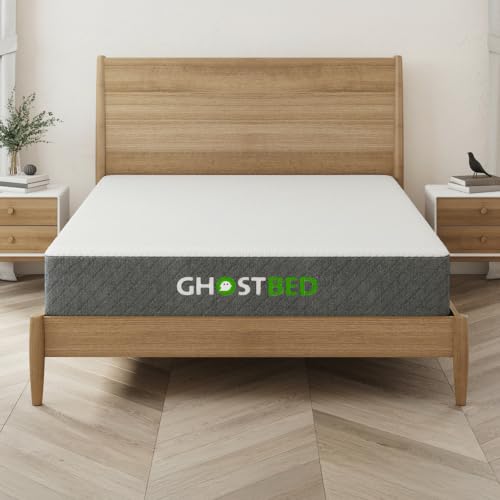
All six mattresses are sold on Amazon, with current pricing and sizes on each listing. Start with our top pick, the GhostBed Classic 11 Inch Mattress — Cooling Gel Memory Foam, Aerated Latex, Medium Firm — Check on Amazon. The other five are the Casper Sleep Original 11″ Memory Foam Queen Mattress — Check on Amazon; the Nectar 12” Memory Foam Mattress — Check on Amazon; the Layla 10” Copper Infused Memory Foam Mattress — Check on Amazon; the Sealy Dreamlife 12” Hybrid Mattress-in-a-Box — Check on Amazon; and the Tuft & Needle Original Legacy Mattress — Check on Amazon. Trial your finalist in both positions before the verdict — this category demands it.
In this guide
Quick Picks
| Pick | Badge | Why it earns its place |
|---|---|---|
| GhostBed Classic 11 Inch Mattress | Best Overall | Medium-firm buoyancy that cradles the shoulder without letting the pelvis sink — the rotation-friendly feel |
| Casper Sleep Original 11″ Memory Foam Queen Mattress | Best Zoned | Softer at the shoulders, firmer at the hips: the contradiction, answered by geography |
| Nectar 12” Memory Foam Mattress | Best for Stomach-Leaning | Firm-leaning contour that holds the pelvis highest of the foam picks |
| Layla 10” Copper Infused Memory Foam Mattress | Best for Couples | Flippable: the side sleeper’s soft face or the stomach sleeper’s firmer one, by household vote |
| Sealy Dreamlife 12” Hybrid Mattress-in-a-Box | Best Hybrid | Coils hold the stomach sleeper’s pelvis while the gel surface forgives the side sleeper’s shoulder |
| Tuft & Needle Original Legacy Mattress | Best Even Feel | Uniform medium adaptive foam — the predictable middle for rotators who dislike surprises |
Key Takeaways
- The side-stomach negotiation is won in the medium-firm middle, by mechanism rather than by compromise softness.
- Stomach sleeping’s non-negotiable is the pelvis: any surface that lets it sink will bend the lumbar curve all night.
- Side sleeping’s non-negotiable is the shoulder: it must descend, or the neck pays for the perch.
- Zoning and responsiveness resolve the contradiction better than uniform feels at either extreme.
- Trial in both positions, on separate nights, with mornings logged for each — this category’s verdict needs both datasets.
- Stomach sleepers should use the thinnest pillow that keeps the neck tolerable; side sleepers need the loft the shoulder creates.
How These Picks Were Chosen
From our verified pool we selected for the dual-position brief: medium to medium-firm calibrations, surfaces that yield at points while supporting across spans (responsive latex-feel, zoned foam, independent coils, flippable dual firmness), and support cores that hold the pelvis against stomach sleeping’s extension force. We excluded the pool’s plushest and firmest extremes regardless of their other virtues, because in this category the extremes are the failure modes. Ranking favors mechanisms that resolve the contradiction structurally over those that merely average it.
Method honesty: position guidance here is comfort guidance, drawn from the mechanics of each verified construction. Sleepers whose stomach sleeping is entangled with breathing or reflux concerns, or whose backs file regular complaints in either position, should treat those as clinical conversations and use this guide for the surface decision only. The companion analysis for back-pain combinations lives in Best Mattresses For Side Sleepers With Back Pain.
The 6 Best Best Mattresses for Side and Stomach Sleepers — Reviewed

GhostBed Classic 11″
Our badge: Best Overall
The GhostBed Classic leads because its feel is the negotiation embodied: gel memory foam over aerated latex gives a surface that yields promptly at the shoulder’s point load — no perching, no pressure protest — while the latex’s buoyancy and the dense base refuse the pelvis the deep sink that bends a stomach sleeper’s spine. The response speed matters doubly here: rotators change positions often, and a surface that releases and re-supports instantly makes each landing competent in either posture.
Strengths
- Buoyant medium-firm feel serves both positions without a compromise mush
- Instant response makes rotation between side and stomach frictionless
- Gel and aerated latex manage the warmth stomach sleeping traps against the surface
Trade-offs
- Shallower cradle than deep memory foam for side-dominant sleepers
- Livelier surface transmits more partner motion
- Pure stomach sleepers wanting maximum pelvis lift may prefer the Nectar’s firmer lean
| Color | White |
| Size | Queen |
| Dimensions | 80 x 60 x 11 inches |
| Weight | 50 pounds |
The GhostBed’s stomach case deserves precision: prone, the body’s weight centers on the pelvis and ribs, and a surface that distributes that load across a buoyant span — rather than letting the pelvis drop between the ribs and thighs — keeps the lumbar curve near neutral. The aerated latex does that distributing with spring rather than with sink, which is why the same surface can turn around and cradle a shoulder an hour later. Two mechanics, one material personality: responsiveness.
Made in the USA and Canada per the listing, with a high-density base that keeps the buoyancy honest, the GhostBed is the rotator’s mattress in this pool.
For the genuine side-stomach rotation, this is the guide’s answer.
Best for: rotators and mixed-position couples / Not suited for: deep-cradle devotees or motion-sensitive partners
Choose the GhostBed if your nights use both positions. Skip it if you are a side-only sleeper wanting maximum sink. Check on Amazon

Casper Sleep Original 11″
Our badge: Best Zoned
The Casper Sleep Original answers the contradiction with geography: Zoned Support puts softer foam where the side sleeper’s shoulder lands and firmer foam where the stomach sleeper’s pelvis rests — the two demands, assigned to different territories of the same mattress. It is the most literal resolution in the guide, executed in breathable perforated foam with CertiPUR-US certification and a stated 100-night trial.
Strengths
- Regional firmness matches each position’s home territory
- Foam motion isolation serves the two-position couple
- Breathable layers keep a warm category cooler
Trade-offs
- Rotators cross zones mid-journey; the map suits position-loyal sleepers best
- Eleven-inch profile is mid-depth for side cradle
- No coil response for spring seekers
| Color | Light Gray |
| Size | Queen |
| Dimensions | 80 x 60 x 11 inches |
The zone-crossing caveat is the honest one for this design: a sleeper who migrates the bed’s length will sample every zone in every position, diluting the mapping. But most side-stomach sleepers rotate in place — the shoulder and pelvis stay in their home bands while the body’s orientation changes — and for them the Casper’s geography aligns with the rotation’s actual footprint. Trial it with your real migration pattern in mind; the log will show whether the map fits your territory.
The zoning also future-proofs the purchase against preference drift: a sleeper whose stomach habit fades with the years still owns a mattress whose side-sleeping territory was designed, not defaulted.
For position-loyal dual sleepers, this is the mapped answer.
Best for: side-stomach sleepers who rotate in place / Not suited for: length-migrating sleepers or coil loyalists
Choose the Casper if your positions have home addresses. Skip it if you roam the whole bed. Check on Amazon

Nectar 12″ Memory Foam
Our badge: Best for Stomach-Leaning
The Nectar 12” Memory Foam Mattress serves the household whose rotation leans stomach: its firm-leaning contour holds the pelvis higher than any other foam pick here, while the therapeutic memory foam still distributes the side sleeper’s shoulder and hip pressure across the widest contact area in the guide. A dynamic support layer firms as the body travels deeper — the anti-hammock mechanism — and the maker’s stated one-year trial gives the dual-position experiment its longest possible runway.
Strengths
- Firmest pelvis support among the foam picks — the stomach sleeper’s priority
- Maximum pressure distribution for the side position’s points
- A year to trial both positions across every season
Trade-offs
- Side-dominant sleepers may find the shoulder’s welcome firmer than ideal
- Slow response taxes frequent rotators
- Contour warmth is moderated, not eliminated
| Color | White |
| Size | Queen |
| Dimensions | 80 x 60 x 12 inches |
| Weight | 78 pounds |
The Nectar’s negotiation strategy is asymmetry of depth: the surface yields enough for side pressure, but the support layer’s progressive firmness sets a floor the pelvis cannot cross — which is precisely the stomach sleeper’s requirement stated as engineering. Side sleepers with lighter frames will feel the floor sooner and should weigh the Casper or GhostBed first; heavier or stomach-leaning sleepers will find the floor is the feature.
The cooling top layer addresses the prone position’s warmth trap, where the body’s front insulates the surface it lies on.
For stomach-leaning rotators, this is the foam answer.
Best for: stomach-dominant dual sleepers and heavier frames / Not suited for: light side-dominant sleepers wanting deep cradle
Choose the Nectar if your rotation leans prone. Skip it if your side is your home position. Check on Amazon

Layla 10″ Copper Memory Foam
Our badge: Best for Couples
The Layla 10” Copper Infused Memory Foam Mattress resolves the contradiction by refusing to resolve it in foam: one side soft for the side sleeper, one side medium-firm for the stomach sleeper, flippable by household decision. For the couple divided by position — the commonest form of this keyword — the Layla converts an impossible specification into a calendar event: trial the soft face, flip, trial the firm face, keep the winner up. Copper infusion cools both faces and firms under load, and two memory foam pillows are included in the queen listing.
Strengths
- Two firmnesses: the couple’s negotiation ends by experiment, not argument
- Copper’s load-firming behavior helps the stomach face hold the pelvis
- A stated 120-night trial fits the two-sided experiment
Trade-offs
- Flipping 69 pounds is a two-person, twice-a-trial ritual
- A solo rotator gets one face at a time, not both at once
- Neither face is extra-firm for the strictest stomach sleepers
| Color | Natural |
| Size | Queen |
| Dimensions | 80 x 60 x 10.5 inches |
| Weight | 69 pounds |
The couple’s version of this keyword is really two keywords sharing a bed, and the Layla is the only pick that admits it in the construction. Its copper behavior deserves note for the stomach face specifically: the foam firms as load deepens, so the pelvis meets rising resistance — a progressive floor similar in spirit to the Nectar’s, in a flippable package.
Made in the USA and made to order per the listing, the Layla also suits the solo sleeper whose position loyalty itself drifts across years: the flip is a firmness revision that never expires.
For divided couples, this is the peace treaty.
Best for: couples split by position or firmness / Not suited for: solo rotators wanting both feels nightly
Choose the Layla if the bed hosts two positions in two bodies. Skip it if one body hosts both. Check on Amazon

Sealy Dreamlife 12″ Hybrid
Our badge: Best Hybrid
The Sealy Dreamlife 12” Hybrid negotiates by division of labor: individually encased coils hold the stomach sleeper’s pelvis with proportional spring force, while the gel memory foam surface relieves the side sleeper’s shoulder and hip points. The coils’ independent response adds a quiet zoning effect — each region’s support drawn by its load — and the core’s airflow serves the prone position’s trapped warmth better than any all-foam pick.
Strengths
- Coil pelvis support with foam point relief — both positions’ first needs
- Airflow answers stomach sleeping’s heat trap
- Steel aging keeps the negotiation’s terms stable for years
Trade-offs
- Motion transfer exceeds the foam picks — a light partner will feel rotations
- Just over 80 pounds to install
- Medium feel may read soft to the strictest stomach purists
| Color | Dreamlife |
| Size | Queen |
| Dimensions | 80 x 60 x 12 inches |
| Weight | 80.604164 pounds |
The hybrid’s dual-position logic is load-based rather than geography-based: wherever the body concentrates weight — pelvis prone, shoulder lateral — the local coils answer proportionally, so the same surface calibrates itself to the position without zones or flips. For the rotator whose positions arrive unpredictably across the night, that automatic recalibration is the most robust form of the negotiation.
CertiPUR-US foams and Surface-Guard antimicrobial technology complete a build meant for the long term, in the room where two positions’ worth of warmth and wear will test it.
For the set-and-forget dual sleeper, this is the hybrid answer.
Best for: unpredictable rotators and warm sleepers / Not suited for: motion-sensitive partners
Choose the Sealy if you want the negotiation automated. Skip it if your partner sleeps lightly. Check on Amazon

Tuft & Needle Original Legacy
Our badge: Best Even Feel
The Tuft & Needle Original Legacy Mattress closes the guide with the uniform strategy: a medium adaptive foam, infused with gel and graphite, that treats every position with the same even hand. For the rotator whose body dislikes transitions between feels — who wakes at a zone boundary or a firmness surprise — uniformity is not a lack of engineering but a philosophy: one predictable surface, GREENGUARD Gold certified, with a stated 100-night trial.
Strengths
- Perfectly predictable feel in every position and place
- Gel and graphite manage heat and support inside a simple stack
- Certification stack suits sensitive households
Trade-offs
- Uniform medium may under-serve both extremes of the dual brief
- No zoning or flip to revise the negotiation later
- Ten-inch profile is moderate for side cradle
| Color | White |
| Size | Queen |
| Dimensions | 80 x 60 x 10 inches |
| Weight | 72 pounds |
The Tuft & Needle’s dual-position case is the moderate’s: its graphite-firmed foam holds the pelvis competently without a board’s cruelty, and its even surface gives the shoulder a consistent, if not luxurious, welcome. Rotators who have been annoyed by cleverer mattresses — who feel every zone change as a small betrayal — often sleep best on the surface that never changes its story. Consistency is this pick’s mechanism, and for the right nervous system it outperforms differentiation.
Its simplicity also ages predictably: what you trial is what you keep, with no geography to fatigue unevenly.
For the even-keeled rotator, this is the calm pick.
Best for: feel-consistency seekers and sensitive households / Not suited for: sleepers needing strong differentiation
Choose Tuft & Needle if predictability is your comfort. Skip it if your positions need opposite answers. Check on Amazon
Comparison Table
| Pick | Negotiation strategy | Construction | Size listed | Profile | Check price on Amazon |
|---|---|---|---|---|---|
| GhostBed Classic | Responsive buoyancy | Gel foam + aerated latex | Queen | 11 inches | Check price on Amazon |
| Casper Original | Zoned geography | Zoned foam | Queen | 11 inches | Check price on Amazon |
| Nectar Memory Foam | Progressive firm floor | Memory foam | Queen | 12 inches | Check price on Amazon |
| Layla Copper | Flippable dual firmness | Copper memory foam | Queen | 10.5 inches | Check price on Amazon |
| Sealy Dreamlife Hybrid | Load-proportional coils | Hybrid | Queen | 12 inches | Check price on Amazon |
| Tuft & Needle Original | Uniform medium | Adaptive foam | Queen | 10 inches | Check price on Amazon |
How to Choose the Best Mattress for Side and Stomach Sleeping
Weigh your rotation honestly
Count a week’s nights: the position you start in, the one you wake in, the one you spend the deep middle in. Stomach-leaning rotations buy pelvis support first (Nectar, Sealy); balanced rotations buy responsiveness or zoning (GhostBed, Casper); divided couples buy the flip (Layla). The census is unglamorous and decisive — take it before the shortlist, not after the return.
Set the pelvis rule as a hard filter
Whatever else a candidate offers, if the pelvis sinks below the ribs in the prone position, the lumbar curve pays for it nightly. Test this in the trial’s first week deliberately: five prone minutes at bedtime will tell you more than a specification sheet. Any pick failing the test exits the shortlist regardless of its side-sleeping charms.
Fit two pillow heights to one bed
The side position needs loft — the shoulder’s width, filled. The stomach position needs nearly none. Dual sleepers solve this with two pillows (a standard and a slim) swapped by position, or a compromise medium that serves both adequately. Budget the second pillow with the mattress; it is part of this category’s equipment, like the protector. Bedding refreshes can ride along in seasons like Black Friday Bedding Deals 2026, with Best Throw Pillows Under $500 covering the propped reading hour.
Trial both positions as separate experiments
Log side nights and stomach nights in distinguishable lines for three weeks. A mattress can win one position and lose the other, and an averaged verdict hides both facts. This category’s trial discipline is the strictest in our mattress guides because its question is genuinely double.
How Do You Transition Away From Stomach Sleeping?
Many dual sleepers are stomach sleepers in recovery — the position is a habit the body keeps after its reasons fade. The mattress can help the transition rather than merely host it: a surface whose side position is genuinely comfortable (the GhostBed’s responsive cradle, the Casper’s shoulder zone) gives the body somewhere better to go, and a body pillow or a pillow hugged at the chest can make the three-quarter position — side-leaning, stomach-flavored — a stable compromise the spine prefers. Change one variable at a time across the trial, and let the mornings arbitrate whether the transition is working.
If stomach sleeping is entangled with snoring or breathing concerns, that conversation belongs with a clinician, and it outranks any surface decision in this guide. The mattress’s job is to make whichever positions you and your clinicians settle on as comfortable and aligned as a surface can — a real job, honestly bounded. Our Best Mattresses For Sleep guide covers the general restoration metrics that tell you whether the whole arrangement is working.
Problem: the pelvis sinks prone but the shoulder is happy lateral — the surface’s floor is too deep; the Nectar’s progressive support or the Sealy’s coils raise the floor without removing the welcome.
Problem: the shoulder aches while the stomach is perfect — the surface is calibrated prone-first; add side travel via the Casper’s zoning or the GhostBed’s responsive give.
Problem: you wake prone regardless of intention — the body votes at 3 a.m.; choose the mattress that serves the waking position, not the intended one, and work on the habit separately.
Problem: your partner is the other position — that is the Layla’s design brief, or a split-twin arrangement; do not average two bodies into one compromise neither chose.
Problem: neck pain in both positions — suspect the pillow system before the mattress: two heights for two positions is this category’s standard equipment.
The Prone Position’s Real Cost — and Its Real Appeal
Stomach sleeping persists because it works for its devotees: the pressure across the body’s front is calming in a way side sleeping never replicates, and many prone sleepers report falling asleep fastest in the position their spines like least. Honesty about the appeal is what makes guidance about the cost credible. The cost is mechanical — a pelvis free to sink extends the lumbar curve for hours, and a head turned ninety degrees taxes the neck’s rotation nightly. The picks in this guide do not moralize about the position; they engineer its cost down — pelvis held, surface responsive, warmth managed — while serving the side position the same body will visit by morning. That is the most a mattress can do for a prone sleeper, and it is not a small thing.
Rotation as a Sleep Style
Step back and the dual-position sleeper is not a problem case but the human norm: bodies redistribute pressure, temperature, and circulation across the night, and position change is the mechanism. The side-stomach rotator simply spans the widest range of the normal repertoire, which is why this category’s engineering — responsive surfaces, zoned maps, proportional coils — reads like a catalogue of the industry’s best ideas rather than its compromises. Choose the mechanism that matches your rotation’s geography, trial it in both postures with the strict logging this guide prescribes, and the mattress that wins will have earned both halves of your night.
Warmth deserves a fuller treatment in this category than it usually gets, because the two positions manage heat oppositely and the rotator inherits both problems. Side sleeping exposes the body’s flank to the room’s air and concentrates contact at two points; stomach sleeping presses the body’s whole front — its warmest surface — into the mattress and holds it there. A rotator therefore needs a surface that neither traps the prone hour’s heat nor chills the lateral hour’s exposed side, which is why the cooling constructions here — aerated latex, gel layers, coil airflow — were weighted as dual-position features rather than as garnish. Our Best Mattresses For Hot Sleepers guide takes the temperature problem to its own depth for readers whose nights are ruled by it in any position.
Weight shifts this category’s ranking the same way it shifts every category’s, and dual sleepers should apply the correction honestly: heavier bodies sink the pelvis further prone and load the shoulder harder lateral, pushing the shortlist toward the coil and progressive-floor picks (Sealy, Nectar); lighter bodies float on those same surfaces and get more from the responsive and zoned ones (GhostBed, Casper). The rotation census this guide prescribes should therefore record three facts, not two — starting position, waking position, and the body doing the rotating — because the mattress is being fitted to all three.
Common Buying Mistakes
Averaging the two positions into a mush
A uniformly soft-medium mattress serves neither position’s non-negotiable. Choose a mechanism — zoning, response, coils, a flip — that answers both specifically.
Trialing only your starting position
You will wake in the other one. Log both positions’ mornings separately, or the verdict is fiction.
Forgetting the two-pillow system
One pillow cannot serve a shoulder’s width and a prone neck. Budget the slim second pillow with the mattress.
Buying for the position you intend
Bodies vote overnight. If you wake prone daily, you are a stomach sleeper for purchasing purposes, whatever your intentions.
Ignoring the warmth of prone sleeping
The body’s front insulates the surface. Cooling constructions — aeration, gel, coil airflow — matter more in this category than their billing suggests.
Dual-position households should also plan the mattress’s maintenance with the rotation in mind, because a bed slept on in two orientations wears in two geographies — and the standard head-to-foot rotation, faithfully kept, is what evens them into one long, consistent service life. Mark the calendar at purchase, note which face or orientation is up (the Layla’s owners have a second axis to track), and let the trial log’s discipline become the ownership habit. The mattresses in this guide are engineered negotiations; maintenance is how the treaty stays in force.
And a closing note for the sleeper who has been told — by articles, by partners, by their own back at 3 a.m. — to simply pick a position and keep it: bodies do not take instruction well at that hour, and the evidence of every sleep laboratory is that movement is the night’s normal metabolism. You are not a failed side sleeper or a stubborn stomach sleeper; you are a rotator, a category with its own engineering, its own shortlist, and now its own guide. Buy for the rotation you actually perform, and the night stops being a negotiation you lose.
The dual-position brief also has a travel corollary worth packing: hotel beds, which run medium-firm on rigid bases, are an accidental laboratory for rotators, and a trip’s mornings often reveal which half of the negotiation your body cares about more. If you return from hotels praising your shoulders and cursing your lower back, your home purchase should weight the pelvis floor (Nectar, Sealy); if the reverse, the shoulder’s welcome (GhostBed, Casper) owns the budget. Keep the trip’s data in the trial log’s margin — it is the only free mattress testing you will ever be given, and rotators, whose question is double, need data twice as much as anyone.
Age rotates the rotation itself, and dual sleepers should buy with the drift in view: stomach sleeping fades for many bodies across the decades, as necks stiffen and midsections change the position’s arithmetic, while side sleeping absorbs the refugees. A mattress whose side game is strong and whose stomach game is adequate will therefore out-serve, across a decade, the reverse calibration — a quiet argument for this ranking’s order, in which the responsive and zoned all-rounders lead the prone specialists. Buy for the rotation you have, weighted toward the one you are becoming.
Pregnancy is the dual-position story told in fast-forward — a body whose position permissions change by the trimester, ending in a side-sleeping mandate with a stomach sleeper’s habits — and while this guide is not a pregnancy guide, its logic is the one those households end up using: responsive surfaces that forgive experimentation, zoning that supports a changing load map, and pillows redeployed nightly as the geometry shifts. The mattress that serves a rotator serves a changing body for the same reason: both need a surface whose answer does not depend on the question being asked the same way twice.
And a last practical word on the two-pillow system, since it is this category’s cheapest upgrade and its most commonly skipped: label them. The slim pillow migrates to the couch, the lofted one gets claimed by a guest, and the rotator wakes at 3 a.m. holding the wrong tool for the position they are in. A pillowcase color code — one shade for side nights, one for stomach — sounds like a small domestic absurdity until the first week it works, after which it is simply how the bed is run. Dual sleepers live by systems; the mattress is the largest of them, not the only one.
Rotators should also know that their category quietly predicts the industry’s direction: as sleep tracking has made position data ordinary, the mattress that serves a repertoire rather than a posture has become the design brief behind the best new constructions — responsive surfaces, zoned maps, proportional coils, all of them rotation technologies wearing different names. The dual sleeper is not the edge case the catalogue apologizes to; you are the median sleeper the next decade is being designed for. Buy like it, with the confidence of a majority of one body that uses the whole night.
And when the trial ends and the winner is installed, give the rotation a month of unlogged, unjudged nights before the final verdict hardens into household lore. Adaptation has a long tail, positions drift toward the surface they trust, and the mattress that merely passed its exams in week three may be the one your body has fully moved into by week eight. The log got you the evidence; time gets you the truth.
The dual-position household should also think about its second bed — the guest room, the partner’s retreat during illness or shift work — because a rotator exiled to a single-position mattress discovers within one night how completely their sleep had come to depend on the negotiation their own bed performs. If the household’s life includes regular second-bed nights, the second bed deserves a dual-position pick of its own, or at least a responsive all-rounder from this ranking’s top half. Consistency across beds is a sleep feature no tracker measures and every rotator feels.
There is a deeper comfort available to this category’s readers, worth stating as the guide closes its argument: the rotation is not a flaw in your sleep to be trained away, but your body’s own maintenance program, running exactly as designed — pressure redistributed, circulation served, temperature regulated by exposure and cover in turn. A mattress that serves the rotation is therefore not accommodating a problem; it is cooperating with a system. Choose the cooperation that fits your geography, maintain it by the calendar, and let the night’s choreography proceed with the floor held level beneath every step of it.
And keep the two-line log habit even after the purchase settles, at least seasonally: positions drift, bodies change, and the first sign that a mattress is aging out of the negotiation is a log line that changes its story. The rotator who notices in a season what others notice in a crisis replaces mattresses as plans rather than as emergencies — the final form of every discipline this guide has prescribed.
The dual-position sleeper’s household should also retire one piece of inherited furniture wisdom explicitly: the notion that a “good mattress” is a firm mattress, full stop, inherited from an era when firmness was the only variable the industry could manufacture reliably. Your two positions are the living refutation — the shoulder needs the give the slogan forbids, the pelvis needs the hold the slogan promises, and any rule that serves only one of them is half a rule. The modern category, at its best, is the slogan’s replacement: support as a property of mechanisms, not of hardness. Buy the mechanism, and let the slogan rest.
There is a patience note specific to this category’s trial that deserves the penultimate word: dual sleepers adapt asymmetrically. The side position usually renders its verdict within a week, because its feedback — shoulder pressure, neck angle — is immediate; the stomach position’s verdict accumulates more slowly, in the lumbar curve’s morning reports across a fortnight. Do not let the faster dataset close the trial early. The mattress that wins the side in week one and loses the stomach in week three is a mattress half-judged, and this category’s whole discipline exists to prevent exactly that premature celebration.
Two positions, one bed, no apology owed to either: that is the purchase this category makes possible when the mechanism is chosen well and the trial is run honestly. Your rotation is not a problem to be solved — it is a repertoire to be served.
The dual-position sleeper’s checklist, compressed for the listing page, runs in the order the night itself runs: give at the shoulder you can test in ten seconds, hold at the pelvis you can test in ten more, response fast enough that position changes cost nothing, a waist zone that keeps the two halves honest, and a pillow system zoned as deliberately as the mattress. Five tests, two minutes, and most of the category’s wrong answers are eliminated before the trial even begins — the six above are what remains when the tests are applied without sentiment.
And a last word for the rotator’s partner, whose sleep is the negotiation’s other party: your patience with a partner who moves is repaid by the right mattress in the currency you actually spend — unbroken hours. The motion behavior ranked throughout this guide was scored with your nights in the ledger too.
And the household that shares the bed with a rotator should retire one more reflex: apologizing for the movement, or asking the mover to suppress it. Suppressed rotation is fragmented sleep wearing a polite mask. The mattress exists to absorb the choreography so neither sleeper has to — buy the absorption, and let the night’s dancing proceed with both partners’ blessings.
Travel teaches the dual sleeper what home should feel like: after enough hotel nights on single-personality mattresses, the returning rotator knows their own bed’s negotiation the way a musician knows an instrument. If your current bed fails that homecoming test — if the hotel’s compromise felt no worse than home’s — the category above is your remedy, and the trial’s log will confirm the homecoming within three weeks of the new mattress’s arrival.
Give at the shoulder, hold at the pelvis, answer every turn — the dual sleeper’s whole specification, and the standard the six above were ranked against from the first pick to the last.
Two positions, one standard: neither gets the leftover engineering. The rotator who buys by that rule stops choosing which half of the night to sacrifice — and discovers, usually within the first logged fortnight, how much sleep the sacrifice had been costing.
Side and stomach, shoulder and spine, one surface fluent in both — the dual sleeper’s brief is demanding, and for the first time in this category’s history, it is also entirely buyable.
The night is long and the positions are two; a mattress fluent in both is not a compromise but a specialization — yours.
Buy the negotiation, log both positions, and let the bed serve the whole night — every turn of it, in both of its languages, for years.
That fluency — practiced nightly, maintained by calendar, proven in the log — is what the dual sleeper is actually buying, and it is worth every bit of the care this guide took to specify it.
Final Recommendation
For the true side-and-stomach rotator, the GhostBed Classic is this guide’s answer: responsive buoyancy that cradles the shoulder, refuses the pelvis, and makes every rotation between them frictionless. If your rotation leans prone, take the runner-up — Check on Amazon for the Nectar and its progressive floor. Position-loyal dual sleepers belong with the Casper’s map, divided couples with the Layla’s flip, set-and-forget rotators with the Sealy’s coils, and consistency seekers with Tuft & Needle’s even hand. Whichever you choose, trial it as the double experiment it is — both positions, logged separately, three weeks — and let the mattress that serves your whole night, not just its first position, win.
Frequently Asked Questions
What firmness suits both side and stomach sleepers?
Medium-firm, achieved by mechanism rather than by mush: responsive, zoned, or coil-supported surfaces in that family hold the pelvis prone while yielding at the shoulder lateral. Every pick here lives in that family for that reason.
Is stomach sleeping bad for you?
It taxes the lumbar curve (if the pelvis sinks) and the neck’s rotation, which is why this guide engineers the pelvis support so carefully and prescribes a slim pillow prone. Sleepers with breathing or pain concerns should discuss the position with a clinician.
Can one mattress really serve both positions?
Yes — when its design answers both positions’ non-negotiables specifically, as the zoned, responsive, and hybrid picks here do. What cannot serve both is a uniform extreme: plush fails prone, board-firm fails lateral.
What pillow should a side-and-stomach sleeper use?
Two: a standard loft for side nights (filling the shoulder’s width) and a slim one for prone. Swapping by position is this category’s standard practice, and it costs less than any mattress upgrade.
Which pick is best for a couple split between side and stomach?
The Layla, whose flippable faces let the household trial both calibrations and keep the winner; or the Sealy, whose coils recalibrate by load automatically. The comparison table maps the strategies.
How should I trial a mattress for two positions?
Three weeks, with side nights and stomach nights logged in separate lines — mornings rated per position. A mattress must pass both datasets; an averaged score conceals exactly the failure this category exists to avoid.


