Disclosure: As an Amazon Associate, dailyhomedecorating.com earns from qualifying purchases. Links to Amazon on this page are affiliate links; they cost you nothing extra. Prices and availability change often, so check the current Amazon listing before you buy.
Living with scoliosis means your spine has a geometry of its own, and your mattress meets that geometry every night for a third of your life. If you are searching for the best mattresses for scoliosis, the honest starting point is what a mattress can and cannot do: it cannot change a curve, and no honest guide will suggest otherwise. What it can do is support your spine as it is — evenly, without sagging into twists, without pressure points at the ribs and pelvis where your body’s contact map is asymmetric — and let you sleep in comfort while your clinical care does its own work.
That framing shapes every choice in this guide. We favored mattresses with zoned support that responds differently along the body’s length, constructions that resist the sag which can leave a curved spine unsupported at its apex, and feels in the medium-firm family that most scoliosis sleepers — back and side — report working with rather than against their bodies. Comfort framing only, throughout: where your curve, your symptoms, or your treatment plan raises questions a mattress cannot answer, this guide will say so and point you to the people who can. Sleepers whose situation overlaps our Best Mattresses For Back Problems guide will find the general chronic-back discussion there complementary.
Where to Buy
All six mattresses are sold on Amazon, with current pricing and sizes on each listing. Start with our top pick, the Casper Sleep Original 11″ Memory Foam Queen Mattress — Check on Amazon. The other five are the Sealy Dreamlife 12” Hybrid Mattress-in-a-Box — Check on Amazon; the Nectar 12” Memory Foam Mattress — Check on Amazon; the Serta Perfect Sleeper 14.5″ Ultimate Hybrid Pillow Top Mattress — Check on Amazon; the Sweetnight CoolNest 14 Inch Queen Mattress — Check on Amazon; and the Zinus 12 Inch Green Tea Memory Foam Mattress — Check on Amazon. If you are under clinical care for your curve, consider mentioning your finalist to your clinician before the trial begins.
In this guide
Quick Picks
| Pick | Badge | Why it earns its place |
|---|---|---|
| Casper Sleep Original 11″ Memory Foam Queen Mattress | Best Overall | Zoned Support holds the pelvis level while the shoulders settle — even support for an asymmetric back |
| Sealy Dreamlife 12” Hybrid Mattress-in-a-Box | Best Coil Support | Individually encased coils respond point by point — support that adapts to your geometry, nightly |
| Nectar 12” Memory Foam Mattress | Best for Back Sleepers | Firm-leaning contour that fills curves without collapsing, plus a year to judge it |
| Serta Perfect Sleeper Ultimate 14.5″ Pillow Top Mattress | Best Zoned Hybrid | A zoned coil unit with a center lumbar band, under a pressure-forgiving pillow top |
| Sweetnight CoolNest 14 Inch Queen Mattress | Best Cooling | Five-zone ergonomic support with PCM and gel cooling for the sleeper who runs warm |
| Zinus 12 Inch Queen Green Tea Memory Foam Mattress | Best Value | Patented zoned pressure relief with full certifications at a friendly position |
Key Takeaways
- A mattress supports the spine you have; it does not correct a curve, and claims otherwise are a reason to distrust a seller.
- Even, sag-resistant support matters more for scoliosis than for almost any other sleeper — a valley twists what it should hold.
- Zoned and point-responsive constructions adapt to asymmetric contact maps better than uniform slabs.
- Medium-firm is the usual center of gravity; your curve’s direction and your position refine the answer from there.
- Pillows are part of the system: side sleepers especially should fit pillow loft to the shoulder and the curve together.
- New or changing symptoms, numbness, or weakness are clinician conversations, not mattress conversations.
How These Picks Were Chosen
From our verified pool we selected for the scoliosis brief: support that is differentiated (zoned foam, independently responding coils, multi-zone ergonomic builds), resistance to sag (dense cores, steel, support-layer engineering), medium-firm centers that serve both back and side sleeping, and certifications appropriate to a bed used nightly for years. We excluded nothing on softness alone, but every pick had to answer the same question: does its support adapt along the body’s length, or does it merely receive the body uniformly? Only the adaptive answers are ranked here.
Claims discipline: this guide makes comfort and support claims only, drawn from the pool’s verified listing materials. It does not evaluate any product as a treatment for scoliosis, and it recommends — in the buying section and the FAQ — that sleepers under active clinical care involve their clinician in significant sleep-surface changes. Where a maker cites ergonomic recognition, we record it as the maker’s claim. Readers managing related lower-back symptoms may also consult Best Mattresses For Lower Back Pain for the lumbar-focused discussion.
The 6 Best Best Mattresses for Scoliosis — Reviewed

Casper Sleep Original 11″
Our badge: Best Overall
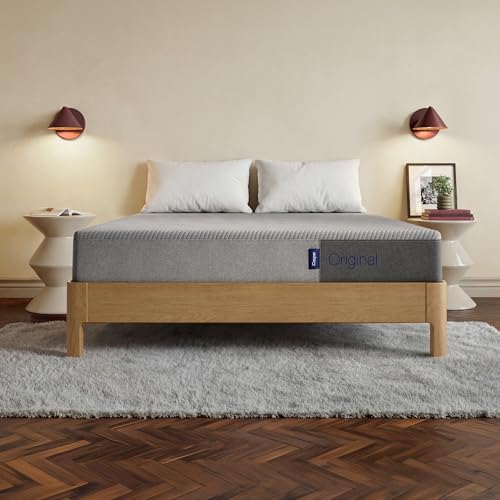
The Casper Sleep Original leads because its Zoned Support answers the scoliosis sleeper’s central need with geography: firmer foam beneath the hips and spine holds the pelvis — the foundation every curve builds on — level and stable, while softer foam at the shoulders lets the upper body settle without being pushed into the mattress’s idea of straight. The design does not impose a shape; it supports different regions differently, which is as close as a flat surface can come to respecting an asymmetric one. Perforated breathable foam keeps the medium-firm feel from sleeping warm.
Strengths
- Zoned firmness supports the pelvis firmly while accommodating the shoulders
- Medium-firm balance serves both back and side sleeping — the scoliosis sleeper’s usual rotation
- CertiPUR-US foams engineered against sinking and sagging
Trade-offs
- Eleven-inch profile is moderate; very deep-cradle seekers may want more
- Zoning is fixed geography — an unusual curve pattern may not map perfectly onto it
- No coil option for steel loyalists
| Color | Light Gray |
| Size | Queen |
| Dimensions | 80 x 60 x 11 inches |
The fixed-geography caveat deserves expansion, because it is this guide’s most important honesty: a zoned mattress zones for the average body’s load map, and a scoliosis sleeper’s map is not average. The Casper’s zones are broad — a firmer central band rather than a precise prescription — which is why they adapt usefully to many curve patterns without pretending to fit any one exactly. The 100-night trial exists for the mapping question: lie on it, in your positions, for three weeks, and let your own geometry deliver the verdict no specification can.
For back sleeping, the firmer hip band keeps the pelvis from rotating the lower spine; for side sleeping, the shoulder zone’s give reduces the pressure that asymmetric rib contact can concentrate. Both are comfort properties, stated plainly, and both are the kind this guide exists to compare.
For the general scoliosis brief, this is the most considered foam answer in the pool.
Best for: mixed-position sleepers wanting zoned, even support / Not suited for: sleepers whose clinicians have prescribed a specific firmness outside the medium-firm family
Choose the Casper if zoned foam support fits your clinician’s general guidance. Skip it if you want point-by-point coil response. Check on Amazon

Sealy Dreamlife 12″ Hybrid
Our badge: Best Coil Support
The Sealy Dreamlife 12” Hybrid makes the scoliosis case for independently encased coils: each coil answers its own load, so the surface’s support map is drawn by your body nightly rather than imposed by a fixed design. For an asymmetric contact map — one shoulder blade loading more than the other, a pelvis that meets the bed at an angle — point-by-point response is the most literal form of adaptation a mattress offers. A transition layer and gel memory foam surface grade the feel and relieve pressure, and CertiPUR-US foams with Surface-Guard technology complete the build.
Strengths
- Independent coils adapt support to your actual contact map, point by point
- Steel’s aging curve resists the sag that leaves curves unsupported
- Gel surface relieves the pressure points asymmetric contact concentrates
Trade-offs
- Just over 80 pounds — a two-person installation
- Livelier motion transfer than foam for partners
- Medium feel may read soft where a clinician has advised firmer
| Color | Dreamlife |
| Size | Queen |
| Dimensions | 80 x 60 x 12 inches |
| Weight | 80.604164 pounds |
The anti-sag argument carries special weight for this population: a uniform foam that softens unevenly will soften most where load concentrates — for a scoliosis sleeper, exactly at the asymmetric points — gradually building a surface that mirrors and amplifies the body’s asymmetry instead of supporting it. Coils fatigue more evenly and more slowly, and rotation extends their evenness further. For a mattress that must serve a curved spine faithfully for years, that evenness is a clinical-grade virtue in a consumer product.
Airflow is the hybrid’s secondary gift: a sleeper whose positions are partly dictated by comfort rather than preference benefits from a bed that does not add heat to the negotiation.
For point-responsive, sag-resistant support, this is the guide’s coil answer.
Best for: sleepers wanting adaptive support with a decade-grade aging curve / Not suited for: motion-sensitive partners or solo installers
Choose the Sealy if adaptation by mechanism appeals. Skip it if you need foam’s stillness. Check on Amazon

Nectar 12″ Memory Foam
Our badge: Best for Back Sleepers
The Nectar 12” Memory Foam Mattress serves the scoliosis sleeper who sleeps mostly on their back and wants the surface to meet their curves without swallowing them: therapeutic memory foam contours into the body’s hollows — including the asymmetric ones — while a dynamic support layer keeps the pelvis from sinking the spine out of its resting line. The feel is firm-leaning, the top layer is cooling, and the maker’s stated one-year trial and forever warranty give this population the longest, lowest-pressure evaluation in the guide.
Strengths
- Contouring that fills hollows evenly instead of bridging them
- Firm-leaning support keeps the pelvis honest through the night
- A year-long trial suits a condition whose comfort varies by season
Trade-offs
- Slow-response foam makes position changes deliberate
- Deep contour can hold warmth despite the cooling top
- Seventy-eight pounds makes rotation a planned task
| Color | White |
| Size | Queen |
| Dimensions | 80 x 60 x 12 inches |
| Weight | 78 pounds |
The trial length deserves its emphasis here: scoliosis comfort is not a constant — it moves with growth (for younger sleepers), with activity, with the seasons of a condition’s management. A verdict rendered in three good weeks can be reversed by a bad month. Nectar’s year lets the mattress be judged across the condition’s own variability, which is the only sample that means anything. Log mornings in a line; note the curve-relevant variables (a long drive, a new exercise) in the margin; let the year’s trend decide.
For side-sleeping nights within a mostly-back pattern, the contour’s pressure relief at the rib and hip contact points is the property to test deliberately during the trial — spend full nights on your side early, while the return window is widest.
For back-dominant scoliosis sleepers, this is the patient pick.
Best for: back sleepers wanting contour with support and time to judge / Not suited for: frequent position changers or heat-sensitive sleepers wanting maximum airflow
Choose the Nectar if contour and a long trial lead. Skip it if you want spring response. Check on Amazon

Serta Perfect Sleeper Ultimate 14.5″ Pillow Top
Our badge: Best Zoned Hybrid
The Serta Perfect Sleeper Ultimate combines the guide’s two support strategies — a zoned coil unit with a center lumbar band — beneath a genuine pillow top that forgives the pressure points an asymmetric body presents. For the scoliosis sleeper whose ribs or pelvis protest at firmer surfaces, that layering is the reconciliation: architecture below, mercy above. Cool Twist gel memory foam moderates the top’s warmth, BestEdge encasement keeps the perimeter honest, and the listing includes adjustable-frame compatibility and a stated 100-night trial.
Strengths
- Zoned coils with lumbar emphasis under a pressure-forgiving pillow top
- Point-responsive support with a plush first impression
- Substantial 14.5-inch build with full edge support
Trade-offs
- The plush top may read too soft where firmer support was advised
- Tall profile needs deep-pocket bedding and a strong installation plan
- At 82 pounds, the heaviest rotation in the guide
| Color | Dark Blue |
| Size | Queen |
| Dimensions | 79.5 x 60 x 14.5 inches |
| Weight | 82.26 pounds |
The Serta’s relevance sharpens for sleepers whose curve makes one side’s contact markedly firmer than the other’s: the pillow top equalizes the interface, spreading the concentrated load, while the zoned coils underneath continue to support by geography. It is the guide’s most forgiving surface over its most deliberate support — a combination worth trialing for the pressure-sensitive, with the honest caveat that softness at the surface is a comfort property, not a support strategy, and the coils must be allowed to do their work on a rigid, gap-free foundation.
Households should also weigh the profile practically: a tall mattress on a tall frame changes transfer heights, which matters for sleepers with mobility considerations alongside their curve.
For pressure-sensitive scoliosis sleepers, this is the cushioned answer with architecture beneath.
Best for: pressure-sensitive sleepers wanting zoned support with plush comfort / Not suited for: firm-prescribed sleepers or low frames
Choose the Serta if pressure points protest at firmer beds. Skip it if your guidance says firm and means it. Check on Amazon
Sweetnight CoolNest 14″
Our badge: Best Cooling
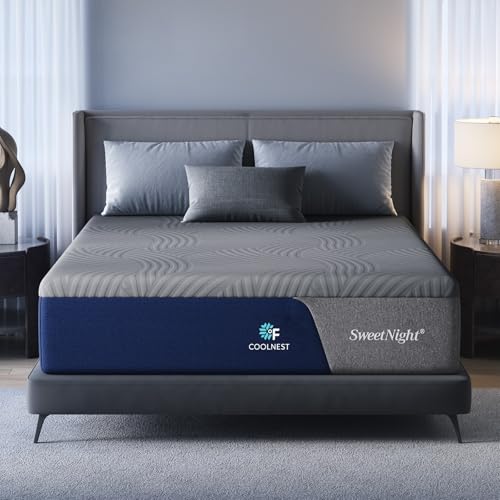
The Sweetnight CoolNest 14 Inch Queen Mattress brings a five-zone ergonomic support design to the scoliosis brief — more zones than any other pick here — with PCM and gel cooling layers for the sleeper whose nights run warm. Fourteen inches of profile gives the zoning depth to express itself, and the maker cites ergonomic recognition from the American Chiropractic Association for the design, recorded here as the maker’s claim.
Strengths
- Five-zone support: the most differentiated geography in the guide
- PCM plus gel cooling serves warm sleepers and warm rooms
- Deep profile with substantial, even support
Trade-offs
- Allow the full stated expansion window (up to 72 hours) before judging
- Fixed five-zone geography may not map every curve pattern — trial honestly
- Tall profile changes bedding and transfer heights
| Color | Grey & Blue |
| Size | Queen |
| Dimensions | 80 x 60 x 14 inches |
| Weight | 68.67 pounds |
More zones is a promise that deserves the trial’s scrutiny: each boundary between zones is a place where an individual curve either finds its support or finds a transition. Sleepers should test their actual positions across the bed’s geography — including the less-favored side — during the first weeks, and judge the zoning by their own map rather than by the diagram. Where the map agrees, five zones offer the most tailored support in this guide; where it disagrees, the Casper’s broader zoning or the Sealy’s point response may serve better, and the guide’s structure lets you choose with that logic explicit.
The cooling stack is not a garnish for this population: a sleeper whose positions are constrained by comfort cannot simply roll to the cool side as freely as others, so a surface that manages its own temperature protects the positions that work.
For warm sleepers wanting maximum zoning, this is the differentiated pick.
Best for: warm sleepers and zone-seekers wanting the most mapped support / Not suited for: sleepers wanting a simple, uniform feel
Choose the Sweetnight if zoning depth and cooling lead. Skip it if your curve prefers uniform support. Check on Amazon

Zinus 12″ Green Tea Memory Foam
Our badge: Best Value
The Zinus 12 Inch Green Tea Memory Foam Mattress makes zoned support accessible: patented zoned pressure relief in a medium-firm twelve-inch profile, with CertiPUR-US certified foams, an OEKO-TEX certified cover, and fiberglass-free construction at the guide’s friendliest position. For younger sleepers furnishing a first room, or households whose budget is as real as the diagnosis, the Zinus puts the relevant mechanism — zoning — within reach without asking anyone to compromise on materials paperwork.
Strengths
- Zoned pressure relief at a value position
- Full certification stack for a bed used nightly for years
- Medium-firm center suits the scoliosis sleeper’s usual range
Trade-offs
- Foam edges are soft
- Support aging will trail the coil picks across a long horizon
- Fresh-foam ventilation window on arrival
| Color | White |
| Size | Queen |
| Dimensions | 80 x 60 x 12 inches |
| Weight | 62.3 pounds |
The value argument has a specific dignity in this category: scoliosis is often diagnosed young, and the sleeper’s first serious mattress may be bought by parents on a family budget or by a young adult on a first salary. A zoned, certified option at this position means the support conversation does not wait for a flagship budget. Maintained with a rigid foundation, protector, and rotation, the Zinus serves the medium-term faithfully while the household’s longer plan takes shape.
Its freshness system also suits the smaller, warmer rooms younger sleepers often occupy — a detail that matters when the sleeper cannot simply move to a cooler room.
For budget-bound scoliosis households, this is the credible door.
Best for: value shoppers needing real zoning and certifications / Not suited for: decade-horizon buyers wanting coil aging
Choose the Zinus if budget and mechanism must coexist. Skip it if steel’s longevity is the priority. Check on Amazon
Comparison Table
| Pick | Support approach | Construction | Size listed | Profile | Check price on Amazon |
|---|---|---|---|---|---|
| Casper Original | Zoned foam | Foam | Queen | 11 inches | Check price on Amazon |
| Sealy Dreamlife Hybrid | Point-responsive encased coils | Hybrid | Queen | 12 inches | Check price on Amazon |
| Nectar Memory Foam | Firm-leaning contour | Memory foam | Queen | 12 inches | Check price on Amazon |
| Serta Perfect Sleeper | Zoned coils + pillow top | Pillow top hybrid | Queen | 14.5 inches | Check price on Amazon |
| Sweetnight CoolNest | Five-zone ergonomic | Foam | Queen | 14 inches | Check price on Amazon |
| Zinus Green Tea | Zoned pressure relief | Memory foam | Queen | 12 inches | Check price on Amazon |
How to Choose the Best Mattress When You Have Scoliosis
Start with your clinician’s general guidance
If you are under care for your curve, ask the general questions a mattress can answer: firmer or softer family, positions to favor, anything to avoid. Clinicians rarely prescribe brands, but their general guidance narrows this guide’s six to two or three immediately — and it keeps the purchase inside your care plan rather than beside it.
Prioritize even, sag-resistant support
Whatever the feel, the support must stay level for years: a surface that develops a valley will hold a curved spine in the valley’s twist. Steel cores, dense support foams, and support-layer zoning age most evenly; rotation and a rigid foundation protect whichever you choose. Bedding and protector discipline belong to the same system — fit them when the mattress lands, using sensible sourcing like Black Friday Bedding Deals 2026 and position aids such as Best Throw Pillows Under $500 for the knee and lumbar support roles pillows play for this population.
Fit the pillow to the curve and the position
Side sleepers with scoliosis often need more pillow height than average on one side’s geometry and a knee pillow to keep the pelvis from rotating; back sleepers need a thinner pillow that does not push the head into the curve’s conversation. Fit pillows after the mattress, in the trial’s second week, against the new surface’s actual sink.
Trial with a log, across your real life
Three weeks minimum, mornings in a line, activities in the margin. Scoliosis comfort fluctuates with the day’s loads; the trend across varied days is the only verdict worth the purchase. Every pick here offers a window long enough — use all of it before deciding.
How Should You Sleep With Scoliosis?
Positions that keep the spine’s resting line supported tend to serve best: back sleeping with the pelvis level and the knees’ angle softened by the surface or a slim pillow; side sleeping on a surface whose shoulder zone and waist support keep the spine’s lateral line as even as your curve allows, with a pillow between the knees. Stomach sleeping asks the neck to rotate and the lumbar curve to extend, and many scoliosis sleepers find it the hardest position to sustain comfortably — if it is your habit, a firmer, thinner-pillow setup limits the tax while you consider transitioning.
The mattress’s role in all of this is supportive in the literal sense: it holds the position you choose without sagging it into a different one by morning. Judge finalists by that holding — photograph your side-lying line in week one and week three, as our Best Mattresses For Side Sleepers With Back Pain guide also recommends for asymmetric sleepers — and by whether pressure at the ribs and pelvis fades earlier in the night as the weeks pass.
Problem: one side is comfortable, the other is not — common with asymmetric curves; favor point-responsive or broadly zoned picks, and trial both sides deliberately before the verdict.
Problem: pressure at the ribs or pelvis wakes you — the interface needs spreading: the Serta’s pillow top or the Nectar’s contour are the guide’s answers; a clinician should hear about pressure that persists regardless.
Problem: mornings feel twisted — check for sag first (straightedge across the hip zone), then pillow geometry; a valley twists more than any firmness can correct.
Problem: new numbness, weakness, or changing symptoms — stop shopping and seek care; those are clinical signals, and this guide’s remaining pages can wait.
Problem: your curve is managed with a brace or therapy schedule — bring the mattress question to that team; sleep surfaces interact with treatment plans in ways a product guide should not improvise around.
What a Mattress Can and Cannot Do for a Curved Spine
It is worth gathering the boundary in one place, because this keyword attracts both hope and marketing in excess. A mattress can: support your spine’s resting position evenly, resist the sag that distorts that position, relieve the pressure points your contact map concentrates, and improve the sleep quality on which all recovery and management depends. A mattress cannot: change a curve’s degree, substitute for monitoring, bracing, therapy, or any prescribed care, or diagnose why a symptom changed. Sellers who blur that line are selling the blur. This guide’s picks were chosen entirely on the first list — support, evenness, pressure, sleep — and the sleepers who benefit most from them are the ones whose expectations were set by the same list.
Sleep as Part of the Management System
Scoliosis management is a system — monitoring, movement, strength, professional care — and sleep is its longest daily shift. Eight hours of even support will not appear on any chart, but it underwrites the energy, pain resilience, and consistency that the visible parts of the system run on. That is the mattress’s real place in this condition’s life: not a treatment, but the foundation shift, worked nightly, in the only hours when the spine is unloaded and the body is free to simply rest in the shape it has. Choose the surface that honors that shift — zoned, even, sag-resistant, trialed on evidence — and let the rest of the system do its work on a rested body.
Parents buying for a child or teenager with scoliosis face a version of this decision with extra moving parts: a growing body, a curve under monitoring, and a bed that may also host the occasional parent during a rough night. The principles hold — even support, sag resistance, medium-firm family — with two additions. First, the clinician’s voice weighs more, not less, for a developing spine; bring the shortlist to the care team. Second, buy for the monitoring horizon: a mattress whose support will stay honest across the growth years being watched, rotated and audited on the same schedule as the check-ups themselves. The Zinus’s certified value and the Casper’s zoning are the usual finalists in that family conversation, for the reasons their reviews give.
There is also the matter of the curve’s direction and the bed’s geography, which thoughtful sleepers in this population learn to exploit: a zoned mattress has a head and a foot, and some sleepers find their curve better matched by rotating the mattress 180 degrees — sleeping with the zoning’s map flipped against their asymmetry. It costs nothing to test during the trial, it harms nothing, and for a minority of sleepers it is the difference between a good fit and a personal one. Note it in the log like any other variable; this population’s trials reward exactly that kind of systematic curiosity. Sleepers whose curves come with hip-dominant discomfort will also find our Best Mattresses For Hip Pain guide’s pressure analysis relevant, since the contact-point logic overlaps.
Common Buying Mistakes
Believing a mattress can correct a curve
It cannot, and the claim is a disqualifier. Buy support and comfort; pursue correction, if it is pursued, with clinicians.
Choosing uniform softness for an asymmetric body
Uniform slabs receive; zoned and point-responsive surfaces adapt. For this population the difference is the purchase.
Ignoring sag until it is structural
A valley twists nightly. Audit with a straightedge twice a year, rotate on schedule, and let the trial catch early softening while remedies exist.
Fitting the pillow by habit
Your curve changes the pillow math on both back and side. Refit after the mattress lands, against its real sink, in the trial’s second week.
Shopping through a symptom change
New numbness, weakness, or escalating pain reorders priorities: care first, commerce second. The guide and its picks will keep.
A word about partners and shared beds belongs here too, because scoliosis sleepers rarely sleep alone and their needs can read as eccentric to a straighter spine: the firmer zone, the extra pillow, the side of the bed claimed for the curve’s comfort. The picks in this guide were partly weighted for shared life — zoned and point-responsive surfaces that give each body its own support map on the same mattress, motion behavior that keeps one sleeper’s adjustments from becoming the other’s alarm clock. Brief your partner on the trial like a collaborator: two logs, one verdict, and a mattress chosen for the bed as it is actually slept in. A support system that only works solo is a system that will be renegotiated nightly, and renegotiation is the enemy of the consistency this population’s sleep depends on.
Finally, keep the long view that this condition itself teaches: management is measured in years, and the mattress is one of the few management tools that works every single night without asking for effort, appointments, or willpower. That reliability is worth buying carefully — mechanism over marketing, evenness over novelty, trial evidence over testimony — and worth maintaining once bought, with the protector, rotation, and audit habits this guide repeats until they sound like a refrain. They are a refrain, deliberately: for a curved spine, the boring disciplines are the treatment’s best friends, and the bed is where they compound.
Adult-onset and degenerative curves bring their own version of the mattress question, distinct from the adolescent case this population often pictures: the curve arrives with company — arthritis in the same spine, a hip with its own opinions, shoulders that have carried decades. The mattress for that household must negotiate several comfort briefs at once, which is why the point-responsive and layered picks (the Sealy’s coils, the Serta’s pillow-topped zoning) earn their places beside the foam maps: they answer different joints differently without asking the sleeper to choose which complaint gets the bed. Trial with each complaint logged in its own line; a mattress that serves the curve but starves the hip has only moved the problem’s address.
Bracing and therapy schedules interact with sleep surfaces in practical ways a guide can responsibly note without prescribing: a body that spends its days in prescribed positions arrives at night needing the bed to be the one place no position is prescribed at all — only supported. That is the deepest argument for the comfort-first framing of this entire guide. The mattress is the management system’s rest shift, and its evenness, pressure relief, and reliability are how it clocks in. Sleepers should feel no guilt about optimizing the bed purely for rest; rest is the job, and the clinical team owns the rest of the chart.
There is also the matter of the bed’s height and the daily logistics around it — transfers, dressing, the sit-to-stand that a curved and sometimes painful spine performs at the mattress’s edge every morning. The deeper picks here (the Serta’s 14.5 inches, the Sweetnight’s 14) change those logistics materially, for better or worse depending on the frame beneath and the legs doing the standing. Include the exit in the trial as deliberately as the entrance: a mattress that sleeps beautifully and strands its owner at the edge has failed a daily test no specification sheet mentions. This population, of all populations, should trial the whole choreography.
And keep the care team inside the purchase’s paperwork loop in the simplest way: note the mattress, its firmness family, and its trial start in the same file as your management records. If a symptom pattern changes across a season, the bed’s timeline becomes one of the variables your clinicians can actually reason about — when it arrived, how the mornings trended, what else changed. Data you keep casually becomes evidence you are grateful for; this population learns that lesson about every other part of management, and the mattress is no exception.
Sleepovers, travel, and the geography of a life lived with a curve deserve one practical paragraph: your home mattress, chosen by this guide’s method, becomes your reference surface — the known quantity against which every other bed is measured. Note what the strange beds teach (firmer helped, softer hurt, the pillow was the whole problem) and file the lessons with your trial log; over years, that file becomes a personal specification no clinician or catalogue can write for you, because it is your curve’s own data. When the home mattress eventually needs replacing, the file shortens the search from a research project to a verification exercise.
And a closing word on dignity, because this population earns it: a body with a curve is not a problem to be solved by a purchase, and this guide has tried to write that way throughout — support for the spine you have, comfort for the life you live, and honesty about the line where commerce stops and care begins. The mattress that respects that line, and the household that buys it with clear eyes, will get the best of each other for years.
The scoliosis household’s long experience with measurement — degrees, dates, growth charts — gives it one advantage in this purchase that other shoppers must borrow: comfort with verdicts rendered in trends rather than in moments. Apply the same literacy to the mattress. A single night’s report is a data point; three weeks of mornings are a curve; a season of them is a conclusion. The picks in this guide were chosen to reward that literacy with surfaces stable enough to measure against — coils that hold their calibration, zones that stay where they were drawn, trials long enough for a trend to form. Few purchases in this condition’s life offer so clean an experiment; run it like one.
There is also the future to buy for, gently: curves are monitored across years, bodies change across them, and the mattress that serves the next chapter should be chosen with the chapter in view — the adolescent becoming an adult, the adult whose management is settling into maintenance, the older sleeper whose curve gains company. The finalists here span that arc deliberately, from the Zinus’s accessible start to the Sealy’s decade-grade hold, and the household that names its chapter honestly will find its pick waiting at the right point on it.
And if the trial ends in a return, treat the data as the purchase: you will know your curve’s answer to zoning, to contour, to steel — knowledge no catalogue sells — and the second choice, made with that map in hand, is the one this whole process exists to enable. In a condition managed by measurement, even a returned mattress has done its work, provided the log was kept.
One more shared-bed scenario is common enough in this population to deserve its sentence: the partner whose straighter spine finds your zoned, medium-firm choice unremarkable — which is, on inspection, the highest compliment a shared mattress can earn in this category. A surface that serves an asymmetric back specifically while serving a typical back adequately is the whole design problem of the scoliosis household, and the finalists here were ranked with both sleepers’ mornings in the log. If your partner’s line reads “fine” for three straight weeks while yours trends toward comfort, the mattress has done something genuinely difficult, and it has done it quietly.
Support the spine you have, evenly and without sag, and let the clinical care you trust do the rest — that division of labor, honored by every pick in this guide, is the whole of the mattress’s promise, and it is enough.
And keep the perspective this category most needs: the mattress is one night-shift worker in a care system that also includes your clinician, your movement practice, and your own attention to how you sit, lift, and rest. Ask it to do its shift well — level, responsive, sag-free — and no more. A bed that keeps its promises lets the rest of the system keep theirs.
Level support, honest limits, clinical partnership — the mattress that respects all three is the one worth your nights.
Final Recommendation
For most scoliosis sleepers, the Casper Sleep Original is the most considered starting point in this guide: zoned support that holds the pelvis level, a medium-firm balance that serves back and side positions, and a trial long enough for your own geometry to judge the mapping. If you want support that adapts point by point with a decade-grade aging curve, take the runner-up — Check on Amazon for the Sealy Dreamlife. Back-dominant sleepers belong with the Nectar, pressure-sensitive sleepers with the Serta, warm zone-seekers with the Sweetnight, and budgets with the Zinus. Whichever you choose, keep the boundary bright: let your clinical care manage the curve, and let the mattress do its honest work — even support, relieved pressure, and sleep that leaves you rested for everything else.
Frequently Asked Questions
What type of mattress is best for scoliosis?
One with differentiated, sag-resistant support — zoned foam, independently responding coils, or multi-zone builds — in a medium-firm family feel. The mechanism matters more than the category label; this guide’s six all qualify by that standard.
Should a scoliosis mattress be firm?
Firm-leaning support with a pressure-relieving surface serves most sleepers in this population better than either board-hard or plush extremes. Your clinician’s general guidance and your trial’s evidence should arbitrate the final degree.
Can a mattress make scoliosis worse?
A badly sagging mattress can leave a curved spine unsupported and twisted for hours nightly, which is why this guide weights sag resistance so heavily. A level, even surface is the safety property; audit yours with a straightedge if mornings feel twisted.
What is the best sleep position with scoliosis?
Back sleeping with support under the knees’ angle, or side sleeping with the waist supported and a pillow between the knees, are the positions most often found sustainable. Individual curves vary — your clinician’s advice governs where it exists.
Should I tell my doctor I am changing mattresses?
If you are under active care for your curve, yes — a brief mention keeps your care team informed, and their general guidance (firmness family, positions) will sharpen this guide’s shortlist immediately.
How long should I trial a mattress with scoliosis?
At least three weeks of logged mornings across varied days, and longer where the trial allows — comfort with a managed condition fluctuates, and the trend across fluctuation is the only verdict worth keeping.


