Disclosure: As an Amazon Associate, dailyhomedecorating.com earns from qualifying purchases. Links to Amazon on this page are affiliate links; they cost you nothing extra. Prices and availability change often, so check the current Amazon listing before you buy.
Hip pain writes its own sleep schedule: you fall asleep fine, and somewhere around 2 a.m. the hip you are lying on starts to ache — a deep, bruised soreness that sends you rolling to the other side, where the countdown simply restarts. If you are searching for the best mattresses for hip pain, that pattern will be familiar, and it has a mechanical logic. Side sleeping concentrates a large share of your body weight onto the small, bony point of the hip, and a mattress that does not yield there — or that yields everywhere and lets the hip drop out of line — turns that pressure into pain by compression or by angle.
The fix is a balancing act that this guide takes seriously: enough cushion at the surface for the hip to sink in and spread its load, enough support at the waist and core to keep the spine straight while it does, and enough responsiveness that your nightly rolling does not become an excavation project. The six picks here solve that balance with different technologies — a pressure-flexing grid, zoned foam, deep gel contouring, load-responsive copper foam, and a five-zone ergonomic build. None of this is medical treatment: hip pain that persists, worsens, follows an injury, or limits walking belongs with a clinician. But when the pattern is “fine all day, sore all night,” the mattress is the first variable to interrogate. Side sleepers whose hips arrive with back pain in tow should also read Best Mattresses For Side Sleepers With Back Pain, and our broader Best Mattresses For Back Pain guide covers the back-first version of this search.
Where to Buy
Every pick here is sold on Amazon, where the listing carries current pricing, sizes, and trial terms. Start with our top pick, the Purple Mattress — Check on Amazon. The other five picks are the Casper Sleep Original — Check on Amazon; the Novilla Bliss Queen Size Mattress — Check on Amazon; the Layla 10” Copper Infused Memory Foam Mattress — Check on Amazon; the Leesa Original 10″ Memory Foam Mattress — Check on Amazon; and the Sweetnight CoolNest Queen Mattress — Check on Amazon. Confirm current pricing on the listing itself.
In this guide
Quick Picks
| Pick | Badge | Why it earns its place |
|---|---|---|
| Purple Mattress | Best Overall | The GelFlex Grid flexes deeply at the hip point while holding the spine’s line — pressure relief without the hammock |
| Casper Sleep Original 11″ Memory Foam Queen Mattress | Best for Side Sleepers | Zoned foam gives at the shoulder and hip while staying firm at the waist, keeping the side posture straight |
| Novilla Bliss Queen Size Mattress | Best Cloud-Like Cushion | Deep gel contouring spreads hip load across the widest area in this guide |
| Layla 10” Copper Infused Memory Foam Mattress | Best Adjustable Firmness | Flippable soft side for maximum hip give, firmer side in reserve, copper that supports where you press |
| Leesa Original 10″ Memory Foam Mattress | Best Premium Foam Feel | Graded premium foam cushions the hip while targeting lower back relief |
| Sweetnight CoolNest Queen Mattress | Best Cooling Zoned Design | Five-zone support plus serious cooling for hip sleepers who also run hot |
Key Takeaways
- Hip pain at night is usually a pressure problem or an angle problem — the best picks solve both at once.
- The surface must yield at the hip point; the waist must not follow it down. Zoning is the technology that separates those jobs.
- Too soft is as dangerous as too firm: a hip that sinks below the spine’s line strains the joint from the other direction.
- A pillow between the knees is a free alignment tool that multiplies any good mattress’s benefit.
- Judge a hip mattress by your 2 a.m. self, not your 10 p.m. self — pressure pain is a slow-build verdict.
- Persistent hip pain, pain after a fall, or pain that limits walking needs medical evaluation, not a mattress.
How These Picks Were Chosen
We filtered a verified product pool for the hip’s specific mechanics. Every pick had to offer deep, localized pressure relief — a surface that yields at a bony point — paired with a support story that keeps the pelvis from dropping out of alignment: zoned densities, a flexing grid over a stable base, load-responsive foam, or multi-zone layouts. We favored medium and medium-soft feels with structure, weighed cooling because pressure points are also heat points, and checked motion isolation since hip sufferers roll often and partners pay for it. Trials mattered: hip verdicts take weeks.
Filtered out: firm and extra-firm designs with no pressure story, thin profiles that bottom out at the hip, and products whose verified specifications we could not confirm. Method honesty: this is a research guide from manufacturer-verified specifications and documented features, not a clinical evaluation, and comfort framing is all we offer — no pick here treats any condition. Readers deciding between foam and coil versions of this brief should see Best Hybrid Mattresses For Side Sleepers, where the same hip logic is applied to hybrids.
The 6 Best Best Mattresses for Hip Pain — Reviewed

Purple Mattress
Our badge: Best Overall
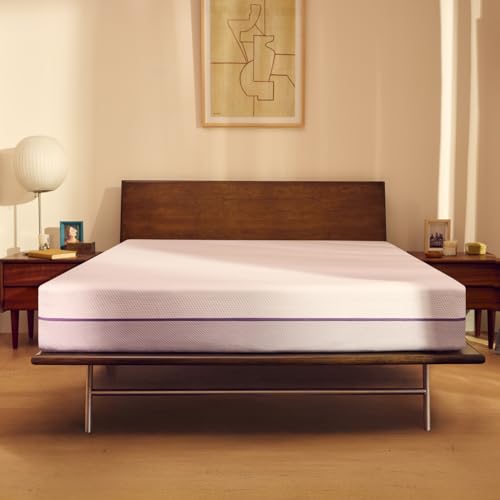
The Purple Mattress leads this guide because its GelFlex Grid is, mechanically, a pressure-point machine. The two-inch polymer lattice flexes and buckles locally where a bony point presses — your hip sinks into a cradle that forms around it — while the surrounding grid stays supportive and the spine keeps its line. Foam approximates this behavior by compressing; the grid performs it by geometry, and it resets instantly when you roll, so the other hip gets a fresh cradle instead of a pre-warmed mold.
Strengths
- Grid flexes precisely at the hip point while supporting alignment elsewhere
- Temperature-neutral, breathable surface — pressure points stop being heat points
- Instant response makes the nightly roll-over painless to execute
Trade-offs
- The grid feel is distinctive and not for everyone — the trial matters
- Heaviest pick here per pool specs, at 100 pounds in queen
- Premium tier within this guide
| Color | White |
| Size | Queen |
| Dimensions | 80 x 60 x 11 inches |
| Weight | 100 pounds |
Purple’s materials cite a 2025 SleepScore Labs study in which most participants felt more supported on the grid; we record that as the maker’s claim. The construction case stands on its own: medium-firm overall feel, edge support foam for a stable perimeter, and a base that keeps the whole system level. For back sleepers with hip sensitivity, the grid cradles the sacrum and hip bones without the sinking that foam allows by hour six; for stomach sleepers it is firmer than the foam picks here and should be trialed carefully.
The cooling is a genuine secondary benefit for this audience. The hip you lie on is your warmest contact point, and heat amplifies the perception of soreness at 3 a.m.; a surface that exchanges air through open channels removes that amplifier. Breathable bedding is essential to let it work.
Durability is the quiet third benefit: the grid does not fatigue like foam cells, so the pressure behavior you trial is close to the pressure behavior you keep — important when the whole purchase is about a sensation as specific as hip give. Plan a two-person setup and minimal future moves.
Best for: side sleepers whose hips ache from pressure and who also sleep warm / Not suited for: shoppers devoted to memory foam’s slow hug or needing a light mattress
Choose the Purple if pressure is the whole story. Skip it if you know foam is your feel. Check on Amazon

Casper Sleep Original 11″ Memory Foam Queen Mattress
Our badge: Best for Side Sleepers
The Casper Sleep Original is the zoned answer to the hip’s dilemma. Its Zoned Support uses softer foam where shoulders and hips need to sink and firmer foam under the waist and lower back, so the side-sleeping spine stays straight instead of sagging into a banana or bridging across a hard surface. That waist support is the detail most hip mattresses miss: relieve the hip without supporting the waist and you have traded compression pain for angle pain.
Strengths
- Zoned give at hip and shoulder with firm waist support — the full side-sleeping geometry
- Breathable open-cell foam keeps the pressure zones from overheating
- Strong motion isolation for partners of frequent rollers
Trade-offs
- Medium-firm overall may still be assertive for very light side sleepers
- Foam edges compress when sitting
- Strict stomach sleepers get less hip lift than they need
| Color | Light Gray |
| Size | Queen |
| Dimensions | 80 x 60 x 11 inches |
In practice, the Casper’s hip behavior is graded rather than deep: you sink enough to spread the load, then the firmer zones arrive and hold the line. Roll to your back and the same zoning supports the lumbar curve; roll to the other side and the mirror-image zones do the same work. For hip sufferers who also change positions hunting for a pain-free angle, that consistency is the product. The foams are CertiPUR-US certified, the listing includes a 100-night trial and 10-year limited warranty, and Casper positions the build against sinking and sagging — with the firmer foam placed exactly where fatigue would recreate the problem.
Pair it with a pillow between the knees, which keeps the top leg from dragging the pelvis into rotation, and check your main pillow’s loft: on a surface that lets the shoulder sink correctly, a too-tall pillow bends the neck and shoulders into the very tension you are escaping.
Rotate without flipping, support it evenly, and the Casper serves hip sleepers who also need one bed to handle every position they rotate through.
Best for: side sleepers who need hip give plus waist support, and combination sleepers / Not suited for: strict stomach sleepers
Choose the Casper if your hip pain comes with position restlessness. Skip it if you sleep only on your stomach. Check on Amazon

Novilla Bliss Queen Size Mattress
Our badge: Best Cloud-Like Cushion
The Novilla Bliss Queen Size Mattress maximizes the other half of the hip equation: contact area. Its gel memory foam contours deeply — Novilla describes a cloud-like experience — spreading the hip’s load across the widest possible surface so no single point carries the night. For sleepers whose hip ache is pure pressure, the bruised feeling of a point bearing weight it cannot spread, this maximal contour is the most direct relief in the guide.
Strengths
- Deep gel contouring spreads hip load across a wide contact area
- Reinforced edges keep the full surface stable and usable
- Motion isolation absorbs the rolling that hip pain provokes
Trade-offs
- Deep contour can let lighter-framed alignment drift if the base feels too soft — trial honestly
- Full expansion can take up to 72 hours
- Foam sleeps warmer than the Purple or hybrid designs
| Color | Bliss |
| Size | Queen (U.S. Standard) |
| Dimensions | 80 x 60 x 12 inches |
| Weight | 61.5 pounds |
The three-layer build is arranged to keep the cloud honest: contouring on top, then comfort and support layers that distribute weight and hold spinal alignment beneath. The breathable knitted cover and gel infusion moderate surface temperature, the plant-infused comfort foam helps freshness, and the foams are CertiPUR-US certified with a 100-day trial and 10-year protection listed.
Who should be careful: back sleepers who prefer a level, on-top feel may find the Novilla’s embrace more than they want, and anyone whose hip pain is angle-driven — a pelvis dropping too far — should weight the zoned picks above it. The trial exists for exactly this discrimination: log which hip wakes you, and how often, across two weeks on each candidate surface you try.
At 61.5 pounds the Novilla is a manageable queen, and its reinforced edges make sitting and standing easier than plush foam usually allows — relevant for hips that protest the bed-exit twist.
Best for: pressure-driven hip pain and side sleepers who want maximum cushion / Not suited for: sleepers who need a firm, level, on-top surface
Choose the Novilla if your hip feels bruised by morning. Skip it if your pain is about alignment angles. Check on Amazon

Layla 10” Copper Infused Memory Foam Mattress
Our badge: Best Adjustable Firmness
The Layla 10” Copper Infused Memory Foam Mattress hedges the hip shopper’s biggest risk — choosing the wrong softness — with a flippable design: soft on one side for maximum hip give, medium-firm on the other when support needs win. The copper-gel particles in the foam add a load-responsive twist: they condense under your hip and push back with increasing firmness, so the soft side supports more than it first feels like it will.
Strengths
- Two firmness levels in one purchase — the hip experiment is built in
- Copper particles firm under load, cushioning without collapsing
- Copper conduction cools the deep-contact zones where hips press
Trade-offs
- Flipping 69 pounds is a two-person, planned event
- Soft side remains too soft for strict stomach sleepers
- Premium material at a premium tier
| Color | Natural |
| Size | Queen |
| Dimensions | 80 x 60 x 10.5 inches |
| Weight | 69 pounds |
The strategy writes itself: start soft, log two weeks of hip wake-ups, flip if the count does not improve, and keep the side your data prefers. The 120-night trial accommodates the full experiment, and two memory foam pillows are included in this queen listing. Because hip pain fluctuates — with activity, weight, and season — the flippable design keeps serving after the trial ends: a firmer month is a flip away, not a purchase away.
The mattress is made in the USA and made to order per the maker, which they credit for fresher foam. Pair the soft side with a knee pillow to control pelvic rotation, and expect the copper’s cooling to be most noticeable exactly at the hip contact patch.
For couples where one partner’s hips demand soft and the other’s back demands firm, the Layla does not solve the geometry — one side is up at a time — but across months it lets a household alternate priorities without owning two mattresses.
Best for: hip sleepers unsure of their softness prescription, and fluctuating pain patterns / Not suited for: shoppers with a settled, firm preference
Choose the Layla if you want the firmness question to stay open. Skip it if you already know your answer. Check on Amazon
Leesa Original 10″ Memory Foam Mattress
Our badge: Best Premium Foam Feel
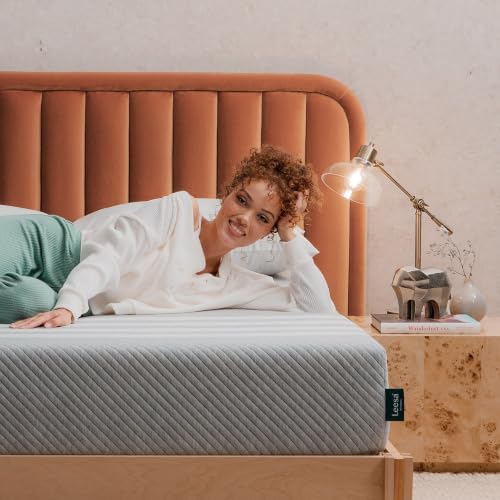
The Leesa Original 10″ Memory Foam Mattress delivers hip relief with a tailored hand: premium foam layers graded for cooling, contouring, and pressure relief, with design attention to lower back comfort as well. The hip sinks into a controlled gradient rather than a uniform softness, which keeps the pelvis nearer the spine’s line than deep-plush designs manage — a premium take on the pressure-versus-angle balance.
Strengths
- Graded foam cushions the hip without losing the pelvis to deep sink
- All-position design serves households with mixed sleep styles
- Breathable signature cover and refined finish
Trade-offs
- Ten-inch profile is slimmer than the deepest-cushion picks
- Premium tier pricing
- Less dramatic pressure cradle than the Purple’s grid
| Color | Grey |
| Size | Queen |
| Dimensions | 80 x 60 x 10 inches |
| Weight | 71 pounds |
Leesa assembles in the USA, certifies its foams through CertiPUR-US, and donates a mattress to nonprofits for every ten sold. The all-position design makes it the diplomatic household pick: a hip-sensitive side sleeper and a back-sleeping partner both get a workable surface, and motion isolation keeps the diplomacy quiet at night.
Where the Novilla maximizes cushion and the Purple mechanizes it, the Leesa moderates: enough give for most hips, enough structure for most backs, in the guide’s most polished foam package. Hip sufferers whose pain is moderate rather than severe will find that balance the sweet spot, particularly if a partner’s preferences share the bed.
At 71 pounds, plan help for setup and rotations, protect the surface from day one, and give it a rigid foundation worthy of the foam.
Best for: moderate hip sensitivity in mixed-position households / Not suited for: severe pressure pain needing maximum cradle
Choose the Leesa if your household needs one bed to please two backs and a hip. Skip it if your hip demands the deepest relief available. Check on Amazon
Sweetnight CoolNest Queen Mattress
Our badge: Best Cooling Zoned Design
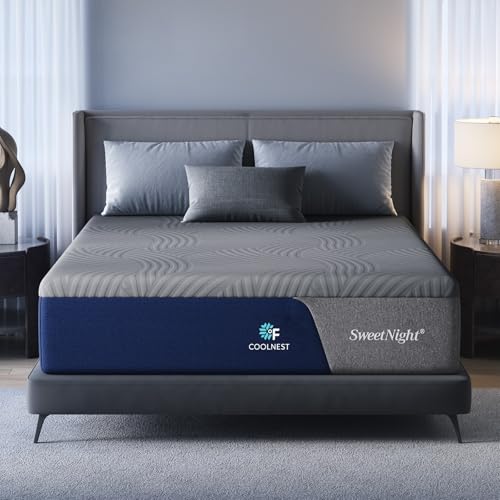
The Sweetnight CoolNest Queen Mattress closes the guide for hip sleepers who also sleep hot — a common pairing, since the loaded hip is the warmest point on the bed. Its five-zone ergonomic support redistributes pressure head to toe, while the CoolNest system layers phase-change foam and gel memory foam under a ventilated cover to keep the contact zones composed through the night.
Strengths
- Five-zone layout targets pressure relief along the whole body, hips included
- Layered cooling addresses the heat that amplifies hip soreness
- Strong motion isolation for rolling-prone sleepers’ partners
Trade-offs
- Fourteen-inch profile needs deep-pocket sheets and a height check
- Expansion can take up to 72 hours
- Medium feel may be soft for stomach sleepers
| Color | Grey & Blue |
| Size | Queen (U.S. Standard) |
| Dimensions | 80 x 60 x 14 inches |
| Weight | 68.67 pounds |
The zone design, recognized by the American Chiropractic Association per the listing, is the support argument: pressure redistributed rather than merely cushioned, with stability maintained at the lumbar region while the hip zone gives. The cooling claims are quantified by the maker against standard fabrics; we credit the layered mechanism — ventilate, absorb, dissipate — rather than the figures. Foams and cover are CertiPUR-US certified, with a 10-year protection plan listed.
Bed height needs respect: fourteen inches plus frame can make the exit twist — the movement sore hips hate most — harder for shorter sleepers. Measure, and consider a low-profile frame to compensate.
For the hip sleeper whose nights are a negotiation between soreness and heat, the CoolNest is the only pick here engineered for both at full strength.
Best for: hot sleepers with hip pressure pain who want zoned support / Not suited for: low bed setups and strict stomach sleepers
Choose the Sweetnight if heat and hips share your complaint list. Skip it if your frame already sits high. Check on Amazon
Comparison Table
| Pick | Hip-relief mechanism | Feel | Size listed | Profile | Check price on Amazon |
|---|---|---|---|---|---|
| Purple Mattress | GelFlex Grid flex | Medium-firm | Queen | 11 inches (specs) | Check price on Amazon |
| Casper Sleep Original | Zoned foam | Medium-firm | Queen | 11 inches | Check price on Amazon |
| Novilla Bliss | Deep gel contour | Medium | Queen | 12 inches | Check price on Amazon |
| Layla Copper | Load-responsive copper foam | Soft / Medium-firm | Queen | 10.5 inches | Check price on Amazon |
| Leesa Original | Graded premium foam | Medium | Queen | 10 inches | Check price on Amazon |
| Sweetnight CoolNest | 5-zone foam + cooling | Medium | Queen | 14 inches | Check price on Amazon |
How to Choose the Best Mattress for Hip Pain
Name your pain pattern first
Bruised, point-specific soreness that builds through the night is pressure. A deep ache with a sense of the leg being pulled out of line is angle. Pressure wants maximum contact area and give; angle wants zoning and waist support. Most hips have some of both, which is why zoned and grid designs dominate this guide — but your dominant pattern should pick your top two candidates.
Test the waist, not just the hip
Any soft surface relieves a hip for an hour. The question is whether the waist stays supported at hour six, keeping the spine straight while the hip rests in its cradle. Zoned designs answer this structurally; uniform plush answers it with hope. When you trial, photograph your side posture or have a partner check the line from shoulders to hips.
Add the knee pillow to the system
A pillow between the knees keeps the upper leg from rotating the pelvis forward, which unloads the hip joint’s angle more than any mattress feature can. It costs almost nothing, works with every pick here, and its effect size surprises most people. Tune your main pillow’s loft afterward, since a correctly sinking shoulder changes the neck’s geometry. Whole-room refreshes pair well with bedding events like Black Friday Bedding Deals 2026 and restful extras such as Best Throw Pillows Under $500.
Respect body weight in the softness math
Heavier sleepers compress comfort layers further and reach support sooner — a medium can feel medium-firm, and deep plush can bottom out. Lighter sleepers may never sink enough to engage a firm bed’s comfort layer at all. Shop your actual load, and let the trial arbitrate.
Do not overlook what you wear and warm
It sounds minor until you have lived it: sleepwear and bedding change hip pressure at the margins, and hip pain is a margins problem. Thick seams, bulky waistbands, and anything that bunches at the hip point add a ridge of pressure exactly where you are trying to eliminate it — sleep in smooth, light layers and let the mattress do its work unopposed. Warmth matters in the other direction: many hip sleepers find the joint complains less in a warm bed, because cold, stiff soft tissue tolerates pressure worse. That is a bedding adjustment, not a mattress specification — a warmer duvet or a heated layer used before sleep rather than all night — but it interacts with your pick: the Purple’s cool neutrality is a virtue for hot sleepers and something a cold-sensitive hip may want to offset with bedding. Treat the mattress as the foundation of a system and tune the small variables around it before concluding the foundation is wrong.
Position aids beyond the knee pillow belong in the same toolkit. A small pillow or folded towel under the waist when side sleeping can rescue a mattress that is a half-step too soft at the middle, buying time during a trial to decide whether the bed or the aid is doing the work. A body pillow gives restless hip sleepers something to drape the top leg over, controlling pelvic rotation through the night rather than only at lights-out. These are inexpensive experiments with immediate data, and a mattress that needs none of them is ideal — but a mattress that works beautifully with one is still a mattress that works.
Give the verdict two weeks minimum
Hip pain patterns are nightly lotteries influenced by the day’s activity. Log wake-ups and morning soreness for two weeks on the new surface before judging; a single bad night after a long hike is weather, not climate.
How Should You Set Up and Sleep to Protect Your Hips?
Set the bed height so your feet rest flat when you sit on the edge — the exit twist is a hip event, and height is its lever. Expand any foam mattress fully before judging it, fit a breathable protector, and arrange the knee pillow where your hand finds it without thinking. During the trial, keep your activity level as normal as possible and log the nights: which hip, what time, how the morning felt. Patterns in that log are the most useful diagnostic a mattress shopper can own.
Rotate the mattress seasonally to even the hip zones’ workload — both sides of the bed carry a hip, and rotation shares the fatigue. If you share the bed, agree on the experiment in advance: two weeks, logged, then a joint verdict. Guest and convertible beds follow the same principles, as our Best Mattresses For Sleeper Sofas guide covers for occasional sleepers.
Problem: the new mattress relieves one hip but not the other — check for a foundation difference beneath each side and rotate the mattress; also confirm you are not favoring a side out of habit the bed cannot fix.
Problem: hip pain moved to your lower back — the surface may now be too soft at the waist; a zoned design or the firmer side of a flippable pick is the correction.
Problem: you wake on your stomach with a sore hip — position drift defeats side-sleep engineering; a body pillow to block the roll, or a firmer overall pick, addresses the drift.
Problem: the ache builds only after 4 a.m. — deep-night foam softening with heat can drop the hip out of line late; grid, zoned, or hybrid designs hold their geometry more consistently.
Problem: sitting on the edge to stand hurts the hip — lower the total bed height or choose a reinforced-edge pick; the exit is part of the prescription.
The Side-Sleeper’s Geometry, Drawn in Words
Lie on your side and imagine a plumb line from your ear through your shoulder, hip, and ankle. On the right mattress, that line stays nearly straight: the shoulder sinks just enough, the hip sinks just enough, and the waist — narrower than both — is held up by support that does not sag away. Every failure mode is a bend in that line. Too firm: the hip rides high, the waist bridges unsupported, and the spine bows upward. Too soft: the hip plunges, the waist follows, and the spine bows downward. Both bends load the hip joint and the lumbar spine in opposite costumes, which is why “soft versus firm” is the wrong question and “straight versus bent” is the right one. Zoning, grids, and load-responsive foams are all technologies for keeping the line straight across different bodies — and why two sleepers of different builds can need different picks from this same guide.
Body shape moves the line as surely as mattress choice does. Broad hips relative to the waist — a very common build — concentrate more load on the hip point and need deeper, more localized give; a straighter build distributes load and can thrive on the medium zoned picks. This is why firmness advice from a friend with a different skeleton is nearly worthless, and why your own trial, in your own posture, is the only review that counts. If you are between two picks in this guide, choose by your build: pronounced curves argue for the Purple’s point-flexing grid or the Novilla’s deep contour; straighter builds argue for the Casper’s or Leesa’s graded support.
The shoulder deserves a footnote in a hip guide, because the two points work as a pair. If the shoulder cannot sink, the whole torso tilts and the hip’s angle changes no matter what the mattress does at the pelvis. When you evaluate a candidate bed, check both ends of the line in the same lying test — a mattress that solves the hip by sacrificing the shoulder has merely moved the complaint upstairs, and your log will show it within the week as a new ache with a familiar schedule.
Hip Pain Has Seasons: Planning for Fluctuation
Anyone who lives with hip soreness knows it is not a constant. Activity spikes, cold weather, weight changes, and new exercise routines all move the baseline, sometimes within a single month. A mattress chosen at your worst week may be more cushion than your average week needs, and one chosen at your best may abandon you in a flare. The resilient strategies in this guide are the adjustable ones: the flippable Layla that changes firmness on demand, the zoned designs that forgive a range of nightly needs, and the trial discipline that lets you buy for your typical night rather than your most recent one. If your pattern includes predictable flares — after long drives, say, or heavy training weeks — note them in your sleep log during the trial, because a mattress that handles your flare nights adequately and your normal nights well is worth more than one optimized for either alone.
Daytime loading writes the night’s script more than most mattress guides admit. A long drive compresses the hip flexors for hours; a heavy training session leaves the joint and its surrounding muscles irritable; a day on your feet loads the hip in ways a desk day never does. None of that makes the mattress less important — it makes the mattress the recovery shift for whatever the day did, and it explains why the same bed can feel perfect on Tuesday and inadequate on Saturday. When your log shows that pattern clearly, the answer is rarely a different mattress; it is the adjustable levers around it — the knee pillow, a position change, the flippable side — deployed on the nights the day was hard. Buy a mattress with levers, and learn which lever belongs to which kind of day.
Finally, give your hips the same honesty you would give any joint that has served you for decades: some nights will be sore on any surface, because the variable is the hip, not the bed. The goal of this purchase is a better average and a better worst night, not a guarantee. Shoppers who hold that standard judge their trials fairly and end up keeping mattresses that genuinely help — which is, in the end, the only metric this guide is trying to move.
Hip-pain sleepers should also audit the geometry above the mattress, because the hip does not sleep alone: the knee and the neck complete the side-sleeping chain, and a mattress that perfectly cradles the hip can still leave the chain kinked at its ends. The pillow between the knees keeps the top leg from dragging the pelvis into rotation; the pillow under the head must fill the shoulder-to-neck gap the mattress’s shoulder zone creates. When hip comfort improves but mornings still feel twisted, adjust the chain’s ends before indicting its middle — the picks in this guide provide the cradling center, and two inexpensive pillows finish the alignment they start.
Give the new surface its honest adaptation window, too. A hip that has spent years braced against a hard point or hammocked in a sag has organized its muscles around that insult; a correctly cradling mattress changes the assignment, and the first nights can feel oddly effortful in the new geometry. Trend is the judge: pressure that fades earlier in the night across two weeks, position changes that grow less frequent, mornings that start closer to neutral. Hip sleepers who log that trend keep good mattresses; hip sleepers who judge by night two return them and keep the pain.
Common Buying Mistakes
Buying the softest bed in the store
Maximum plush drops the hip below the spine’s line and trades compression pain for angle pain. Cushion with support, always.
Ignoring the waist
Hip relief without waist support is half a posture. Zoned designs exist because uniform foam cannot do both jobs.
Skipping the knee pillow
The cheapest alignment tool in sleep is routinely left in the closet. It multiplies every pick in this guide.
Judging on night two
Hip verdicts are statistical. Two weeks of logged nights or the trial is theater.
Assuming the mattress must be the whole answer
Persistent, worsening, or injury-related hip pain needs a clinician. A mattress is comfort engineering, not diagnosis.
One more distinction belongs in every hip-pain purchase: the difference between pressure pain and joint pain, because the mattress can only address the first. Pain that is worst at the contact point, that eases when you shift position, and that fades after rising is the mattress’s jurisdiction — cradle, zoning, and cooling all speak to it. Pain that is deep, constant, present in the day’s walking as much as the night’s lying, or accompanied by weakness or reduced range of motion belongs to a clinician’s examination, not a product comparison. Buy the mattress for the pain it can plausibly relieve, pursue the rest with professional help, and let each do its own work without asking either to do the other’s.
Hip-pain shoppers who share the bed should negotiate the trial as a household experiment rather than a solo verdict, because the cradling that rescues one hip can leave a back-sleeping partner under-supported, and a mattress returned by committee after one partner’s bad week serves neither. Alternate the log: each partner records mornings in a word or two, the couple reviews at week three together, and the pick that wins is the one whose combined mornings improved. The finalists in this guide were chosen with that negotiation in view — grids and zoning that cradle locally rather than globally, hybrids whose support does not depend on the surface’s softness — because a hip rarely sleeps alone, and its mattress should not be chosen as if it does.
Hip-pain shoppers who exercise — and many should, under guidance — will notice the mattress’s role in the training loop: a night of true pressure relief is what makes the next day’s strengthening work possible, and a night of point-loading undoes it before it starts. Coaches call sleep the cheapest recovery modality; for the hip-pain sleeper it is also the most neglected, because the bed is furniture in the mind rather than equipment. Reframing the purchase as equipment — specified, trialed, logged, maintained — is often the moment the category starts working. The finalists above are the equipment this guide would issue.
Keep one more tool in the hip sleeper’s kit: the photograph. A partner-shot image of your side-lying line on the new mattress, taken in week one and again in week three, shows what mornings only feel — whether the hip settles level, whether the waist holds its fill, whether the shoulder’s sink matches the hip’s. Bodies are unreliable narrators of their own geometry, and the camera is the cheapest objective witness a trial can hire. If the line straightens as the weeks pass, the mattress and the adaptation are working together; if it does not, you have evidence, not vibes, to act on while the trial still can act.
One last calibration for the hip-pain reader: expect the first improvement to arrive as absence — the 3 a.m. repositioning that stops happening, the morning that begins without the usual negotiations. Absences are easy to miss in a trial judged by feel, which is why the log matters. Record the absences; they are the mattress’s signature.
Final Recommendation
For most hip-pain shoppers, the Purple Mattress is the most direct answer: a grid that cradles the hip point by geometry, holds the spine’s line, and never turns the contact patch into a heat trap. Zoning fans and combination sleepers should take the runner-up — Check on Amazon for the Casper Sleep Original. Maximum-cushion seekers will prefer the Novilla, the uncertain the flippable Layla. Whichever you choose, add the knee pillow on night one, log two honest weeks, and let your 2 a.m. self cast the deciding vote.
Frequently Asked Questions
Should a mattress for hip pain be soft or firm?
Neither extreme. The surface must yield at the hip while the waist stays supported — a medium or zoned medium-firm usually achieves that line. Uniformly soft beds drop the hip out of alignment; uniformly firm beds compress it.
Is memory foam good for hip pain?
It can be excellent for pressure relief, especially in zoned or graded builds like the Casper and Leesa here. Plain, uniformly soft memory foam risks letting the pelvis sink too far by morning.
Does a pillow between the knees really help hips?
Yes — it stops the upper leg from rotating the pelvis forward, improving the hip’s angle all night. It is the highest-value, lowest-cost adjustment a side sleeper can make.
How long should I trial a mattress for hip pain?
At least two weeks, with a simple log of wake-ups and morning soreness. Hip pain fluctuates with daily activity, so trends matter more than single nights.
Can a mattress help hip pain from sleeping on my back?
Back sleeping loads the sacrum and hip bones differently; a surface that cradles without sagging — the Purple’s grid or a zoned foam — helps many back sleepers too. A thin pillow under the knees is worth testing.
When is hip pain a medical issue rather than a mattress issue?
When it follows a fall or injury, limits walking, worsens steadily, includes groin pain or clicking with stiffness, or persists for weeks on a supportive bed. Those patterns deserve evaluation.


