Disclosure: As an Amazon Associate, dailyhomedecorating.com earns from qualifying purchases. Links to Amazon on this page are affiliate links; they cost you nothing extra. Prices and availability change often, so check the current Amazon listing before you buy.
The best mattresses for chronic pain are chosen by a different logic than other mattresses, because chronic pain changes what a bed is for. When pain is persistent and multi-site — a back that aches, a shoulder that joins in, hips that keep their own schedule — the mattress is not a comfort luxury; it is the eight-hour environment in which an already-sensitized body either gets genuine rest or accumulates more of the load it is trying to recover from. Let us be plain at the outset, because this keyword deserves it: no mattress treats chronic pain, and this guide makes no medical claims. What a well-chosen mattress does is remove itself as an aggravating factor — no sagging trough twisting the spine, no pressure points waking you hourly, no heat building until you thrash — and give sleep, the body’s own recovery process, an unobstructed run. People managing chronic pain consistently describe the right mattress not as a cure but as the absence of a nightly tax.
The picks below were screened for the properties that matter to that brief: even, durable support that does not fade; pressure relief at multiple sites rather than one showcase zone; motion isolation, because fragmented sleep and pain amplify each other in everyday experience; temperature management, because overheating fragments sleep too; and long trials, because chronic pain fluctuates and a fair test must span good weeks and bad ones. Pair this guide with your clinician’s ongoing care — the mattress is equipment for comfort, chosen alongside treatment, never instead of it.
Where to Buy
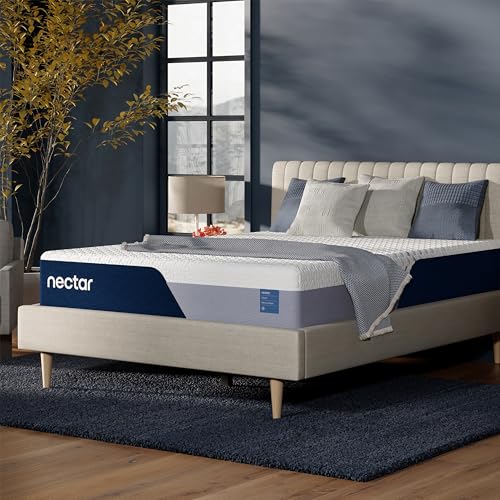
All six picks are sold on Amazon — verify current price, size, and trial terms on the listing before buying. Start with the Nectar 12″ Memory Foam Mattress, whose year-long trial is uniquely suited to a fluctuating condition; confirm it through this Check on Amazon link. The remaining picks: Casper Sleep Original 11″ Memory Foam Mattress — Check on Amazon; Purple Mattress — Check on Amazon; Layla 10″ Copper Infused Memory Foam Mattress — Check on Amazon; Sealy Dreamlife 12″ Hybrid Mattress-in-a-Box — Check on Amazon; Sweetnight CoolNest Queen Mattress — Check on Amazon.
In this guide
Quick Picks
| Pick | Badge | Why it earns its place |
|---|---|---|
| Nectar 12″ Memory Foam Mattress | Best Overall | Firm contouring support, pressure relief at hips and back, motion isolation, and a 365-night trial that spans flare cycles. |
| Casper Sleep Original 11″ Memory Foam Mattress | Best Balanced | Zoned support and deep motion isolation in a medium-firm feel that offends the fewest pain sites. |
| Purple Mattress | Best for Pressure Points | The GelFlex Grid unloads shoulders and hips precisely while staying cool and responsive for painful position changes. |
| Layla 10″ Copper Infused Memory Foam Mattress | Best Adjustable | Flippable soft and medium-firm faces let the mattress adapt to good weeks and flare weeks without replacement. |
| Sealy Dreamlife 12″ Hybrid Mattress-in-a-Box | Best Hybrid | Encased coils hold support for years while gel foam cushions — for sleepers whose foam mattresses kept going soft. |
| Sweetnight CoolNest Queen Mattress | Best Cooling | Five-zone cushioning inside a deep cooling build, for pain that worsens in a hot, restless bed. |
Key Takeaways
- For chronic pain, the mattress’s job is neutrality: support that does not sag, pressure relief at every site, and nothing that fragments sleep.
- Motion isolation and temperature control are pain features, because broken sleep lowers next-day comfort more than almost any surface detail.
- Fluctuating symptoms demand long trials — judge a mattress across a flare cycle, not a good week.
- Adjustability (a flippable mattress, an adjustable base) is worth real money when your needs change week to week.
- Medium-firm with genuine pressure relief is the most common landing spot; both extremes — plank and plush — fail multi-site pain.
- Keep the clinician in charge of the condition and the mattress in charge of the night; the two decisions support each other, as Best Mattresses For Degenerative Disc Disease discusses for spine-specific cases.
How These Picks Were Chosen
We screened the verified pool for five chronic-pain-relevant properties: support durability (coil systems, high-density cores, strong warranties), multi-site pressure relief (zoning, grids, deep contouring), motion isolation, cooling, and trial length. Any mattress whose listing leaned on a single gimmick, or whose build promised softness without a support story, was excluded. We deliberately diversified mechanisms — foam, zoned foam, grid, flippable, hybrid, zoned-cooling — because chronic pain is not one condition and no single surface philosophy serves everyone living with it.
Method and limits, stated plainly: this is desk research from verified listings. We make no efficacy claims, repeat brand comfort language only as framing, and advise readers to treat the trial period — with notes, across weeks — as the real evaluation. If pain is new, changing character, or accompanied by other symptoms, medical evaluation comes before mattress shopping, in this guide’s explicit recommendation.
The 6 Best Mattresses for Chronic Pain — Reviewed

Nectar 12″ Memory Foam Mattress
Our badge: Best Overall
The Nectar 12″ Memory Foam Mattress earns the lead on the combination chronic pain shoppers need most: dependable support and time. Its contouring memory foam relieves pressure and reduces stress on high-tension areas like the hips and back while an adaptive support layer promotes spinal alignment, in a firm-with-comfort feel that suits back, stomach, and combination sleepers. The 365-night trial and forever warranty are not marketing garnish here — they are the only evaluation window in this guide long enough to cover seasonal changes, treatment adjustments, and multiple flare cycles.
Strengths
- Firm contouring support that stays consistent through the night and the year
- A full year to evaluate across your own symptom patterns
- Cooling top layer and deep motion isolation protect sleep continuity
Trade-offs
- Firm lean can under-cushion a flaring shoulder in side sleeping
- Slow foam response makes position changes deliberate rather than effortless
- Seventy-eight pounds; rotations need a partner or a plan
| Color | White |
| Size | Queen |
| Dimensions | 80 x 60 x 12 inches |
| Weight | 78 pounds |
The Nectar’s nightly character is steadiness. It does not change its mind at 3 a.m., does not develop a hip trough by month four, and does not transmit a partner’s restlessness into your already-fragmented sleep. For a body that budgets its comfort carefully, that predictability is itself therapeutic in the everyday sense: one less variable. The cooling cover keeps the foam from the warmth buildup that makes sensitive sleepers shift constantly, and every avoided shift is an avoided negotiation with a painful joint.
Use the trial like the instrument it is. Keep a simple log — sleep quality, morning state, flare days — for the first two months; patterns will emerge that no single night reveals. If the firm feel proves wrong for your dominant pain site, the Layla’s two faces below exist for exactly that discovery. But start here: in a category full of promises, a year-long trial is the most honest sentence a mattress brand can say.
Best for: back and combination sleepers with persistent discomfort who need support plus evaluation time / Not suited for: side sleepers whose dominant site is a pressure-sensitive shoulder
Choose it for steadiness and time; skip it if you need a plush, instantly soft surface. Check on Amazon

Casper Sleep Original 11″ Memory Foam Mattress
Our badge: Best Balanced
The Casper Sleep Original 11″ Memory Foam Queen Mattress is the diplomat of this guide: medium-firm, zoned, and calm. Zoned Support firms the foam under hips, waist, and lower back while keeping the surface forgiving elsewhere; open-cell Flex Foam breathes so the bed sleeps cooler than traditional memory foam; and the motion isolation is the deep, partner-erasing kind. For multi-site discomfort, that balance — nothing extreme in any direction — is often the surface that the widest range of painful bodies can share and keep.
Strengths
- Zoned alignment with a universally agreeable medium-firm feel
- Excellent motion isolation protects fragile sleep from a partner’s night
- Breathable foam and a hundred-night trial with CertiPUR-US materials
Trade-offs
- Balance means no single feature is best-in-guide; specialists beat it on their turf
- Eleven inches may under-serve very heavy sleepers’ support needs
- No verified weight in the pool data
| Color | Light Gray |
| Size | Queen |
| Dimensions | 80 x 60 x 11 inches |
Chronic pain rarely respects categories — it migrates, combines, and changes its mind — and a mattress that demands you declare a single sleep identity will eventually be wrong. The Casper’s answer is a surface that is supportive enough for the back, cushioned enough for the hip, cool enough for the restless, and still enough for the light sleeper, simultaneously. Couples where both partners carry some discomfort will find it the easiest shared decision in this guide.
Its foams are designed against sinking and sagging, which protects the investment across years of nightly service. If your pain pattern is “a bit of everything, varying by week,” start the trial here and let the log decide. Shoppers whose pain is dominated by joints specifically should cross-read Best Mattresses For Joint Pain, where the pressure mechanisms are ranked for shoulders, hips, and knees alone.
Best for: multi-site, variable discomfort and couples needing one diplomatic surface / Not suited for: sleepers with one dominant site needing a specialist mechanism
Choose it for balance that endures; skip it if a single pressure point rules your nights. Check on Amazon

Purple Mattress
Our badge: Best for Pressure Points
The Purple Mattress serves the chronic pain profile dominated by pressure: the shoulder that wakes you, the hip that aches by 2 a.m. Two inches of GelFlex Grid cradle pressure points at the hips and shoulders by flexing away locally while the surrounding grid holds the spine aligned — relief and support at different points of the same surface, at the same moment. The grid is temperature-neutral with air channels throughout, and its instant responsiveness matters more than it sounds: when every position change hurts, a surface that releases you immediately instead of holding you in a foam crater reduces the nightly cost of moving.
Strengths
- Point-precise pressure relief without sacrificing alignment
- Instant response makes painful repositioning as easy as it can be
- Sleeps cool — no heat-driven restlessness layered onto pain-driven restlessness
Trade-offs
- Premium tier positioning within this guide
- One hundred pounds demands setup help — arrange it before delivery day
- The grid feel is unusual; some sleepers need the full trial to acclimate
| Color | White |
| Size | Queen |
| Dimensions | 80 x 60 x 11 inches |
| Weight | 100 pounds |
For the sleeper whose pain map is drawn in points rather than regions, the Purple’s mechanism is the most precise tool in this pool. Foam spreads load by compression and eventually bottoms; the grid’s collapse is local and immediate, and it resets instantly when you move — there is no waiting for material to recover, no second point punished while the first is relieved. Edge support foam keeps the bed’s perimeter trustworthy for the careful sitting and standing that sore bodies perform at its edge.
It is also the pick for pain compounded by heat: many chronic pain sleepers run hot from medication, inflammation-adjacent restlessness, or simple sensitivity, and a temperature-neutral surface removes one entire category of waking. If your nights are a negotiation between pressure and temperature, this mattress ends the negotiation.
Best for: pressure-point-dominant pain, hot sleepers, and anyone who finds foam’s grip painful / Not suited for: shoppers who love deep contouring or cannot manage a heavy setup
Choose it for precision relief and cool responsiveness; skip it if you want to be hugged by your bed. Check on Amazon

Layla 10″ Copper Infused Memory Foam Mattress
Our badge: Best Adjustable
The Layla 10″ Copper Infused Memory Foam Mattress is the chronic pain pick built for fluctuation. It is flippable — soft on one side, medium-firm on the other — because a body whose needs change between a good week and a flare week should not need two mattresses. Its copper-gel memory foam adds a second layer of adaptation: the copper particles condense under load and firm in response, supporting more where you press hardest. Copper’s thermal conductivity pulls heat away efficiently, the trial runs 120 nights, and two memory foam pillows are included.
Strengths
- Two firmness faces — the only pick that can change with your symptom week
- Copper-gel foam adapts its resistance to load, point by point
- Strong cooling for a deep-contouring foam mattress
Trade-offs
- Flipping sixty-nine pounds during a flare is unrealistic — flip in good weeks, plan ahead
- The soft face may under-support the pelvis for back sleepers in pain
- Variable-response foam takes nights to learn; use the trial fully
| Color | Natural |
| Size | Queen |
| Dimensions | 80 x 60 x 10.5 inches |
| Weight | 69 pounds |
The Layla reframes the mattress from a fixed bet into a small system. Most chronic pain shoppers are forced to optimize for their average night and suffer their worst nights; the flip lets you optimize for the week you are actually in. The copper foam’s load response quietly handles the within-night variation — deeper support arriving under a hip that settles hard — while the face choice handles the across-week variation. Made to order in the USA, it also arrives without months of warehouse compression behind it.
Practical counsel: establish your default face first (most back-dominant sleepers start medium-firm), keep the flip for genuine pattern changes rather than nightly experimentation, and recruit help for flip day. For couples, the two faces offer a compromise mechanism no other pick here has: when preferences diverge, the calendar can alternate. In a guide about adapting to a changing body, the Layla is the thesis statement.
Best for: fluctuating symptoms and couples with diverging needs / Not suited for: solo sleepers who cannot arrange help to flip a heavy mattress
Choose it for adaptability; skip it if you want one fixed, forgettable feel. Check on Amazon

Sealy Dreamlife 12″ Hybrid Mattress-in-a-Box
Our badge: Best Hybrid
The Sealy Dreamlife 12″ Hybrid Mattress-in-a-Box is the durability answer for chronic pain: two inches of gel memory foam for tailored pressure relief, a high-density transition layer, and seven inches of encased coils providing targeted support that does not fatigue the way foam cores do. For the sleeper whose history is a sequence of mattresses that felt supportive for eight months and then developed a trough — each trough taxing the same painful back — coil-backed consistency is not a preference, it is the lesson of experience. Surface-Guard antimicrobial technology and CertiPUR-US foams complete the file.
Strengths
- Coil support holds its profile for years — no foam-trough relapse
- Gel foam surface cushions pressure points without plushness
- Ventilated core sleeps neutral and dries fast
Trade-offs
- Motion isolation is a step below the all-foam picks
- Heaviest-feeling setup here at just over eighty pounds
- Supportive, on-the-bed feel may read firm to contouring devotees
| Color | Dreamlife |
| Size | Queen |
| Dimensions | 80 x 60 x 12 inches |
| Weight | 80.6 pounds |
Chronic pain punishes inconsistency, and inconsistency is foam’s long-term failure mode. The Dreamlife’s coils keep the support map stable season after season, so the bed your body calibrated to in month one is the bed it gets in year three. The independent coil movement localizes support — the pelvis is held where it presses, not by dipping the whole midsection — and the transition foam keeps that engineering from feeling mechanical through the gel comfort layer.
It is also the pragmatic pick for sleepers who get in and out of bed with care: the responsive surface and supportive edges make those transitions — the day’s most painful moments for many — as mechanically kind as a mattress can make them. If your pain story includes a foam mattress that betrayed you by softening, the Sealy is the structural reply.
Best for: long-term support consistency, foam-trough veterans, careful bed exits / Not suited for: couples needing maximum motion isolation
Choose it for support that stays; skip it if deep contouring is your comfort language. Check on Amazon
Sweetnight CoolNest Queen Mattress
Our badge: Best Cooling
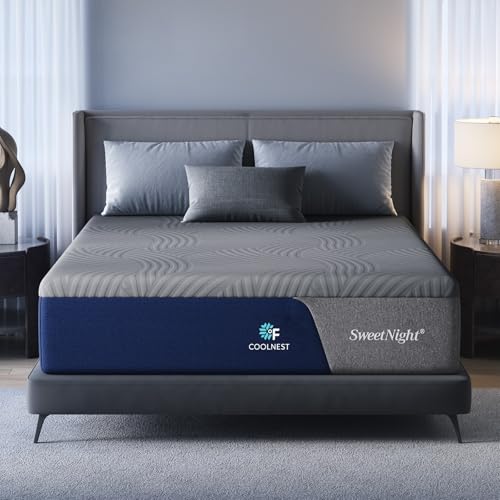
The Sweetnight CoolNest Queen Mattress closes the guide for the pain-and-heat sleeper: a fourteen-inch, medium-feel build whose five-zone ergonomic design cushions pressure areas from head to toe, wrapped in a CoolNest cooling system of PCM foam, gel memory foam, and a ventilated 3D-woven cover. Heat fragments sleep; fragmented sleep worsens next-day pain perception in everyday experience; a mattress that keeps a sensitive sleeper cool and settled is therefore doing pain-relevant work even though it never claims to.
Strengths
- Five-zone cushioning answers pressure along the whole body
- The most thorough cooling stack among the foam picks
- Deep fourteen-inch profile gives sensitive bodies maximum material to work with
Trade-offs
- Tall profile needs deep-pocket sheets and a lower frame
- Expansion can take up to seventy-two hours
- Medium feel may not satisfy firm-support devotees
| Color | Grey & Blue |
| Size | Queen (U.S. Standard) |
| Dimensions | 80 x 60 x 14 inches |
| Weight | 68.67 pounds |
The CoolNest’s zoning deserves its chronic-pain framing: multi-site discomfort meets a surface that has a planned answer at the shoulders, the lumbar, the hips, and the legs, rather than one uniform response. The layered foam absorbs a partner’s motion thoroughly, and the cooling system keeps the deep stack breathable — the usual tax on thick foam, refused. CertiPUR-US certification and ten-year protection back the purchase.
If your pain diary correlates with hot, restless nights — many do — this is the pick whose mechanism matches your data. Set it up with its full expansion window, pair it with breathable bedding rather than heavy covers, and let the trial span at least one warm spell and one flare. The mattress cannot treat anything; it can absolutely stop making hot nights worse.
Best for: hot sleepers with multi-site discomfort wanting zoned, deep, cool cushioning / Not suited for: high frames or firm-bed loyalists
Choose it for cool, zoned depth; skip it if your frame cannot take the height. Check on Amazon
Comparison Table
| Pick | Primary Mechanism | Sleep-Protection Feature | Profile | Check price on Amazon |
|---|---|---|---|---|
| Nectar 12″ Memory Foam | Firm contouring + adaptive support | 365-night trial, motion isolation | 12 inch | Check price on Amazon |
| Casper Original 11″ | Zoned foam | Motion isolation, breathability | 11 inch | Check price on Amazon |
| Purple Mattress | GelFlex Grid flex | Temperature-neutral, instant response | 11 inch | Check price on Amazon |
| Layla 10″ Copper | Copper-gel load response | Two firmness faces | 10.5 inch | Check price on Amazon |
| Sealy Dreamlife 12″ | Encased coils + gel foam | Support durability | 12 inch hybrid | Check price on Amazon |
| Sweetnight CoolNest | Five-zone cooling foam | Cooling system | 14 inch | Check price on Amazon |
How to Choose the Best Mattress for Chronic Pain Comfort
Protect Sleep Continuity First
Ask anyone managing chronic pain what a bad night costs the next day and you will understand this guide’s priorities: uninterrupted sleep is the currency. Motion isolation, temperature neutrality, and a surface that does not force position changes are therefore pain features, ranked alongside support. When comparing picks, score them on “what wakes me?” as rigorously as “what supports me?” — for many chronic pain sleepers, the waking list is longer and more fixable.
Support Must Be Durable, Not Just Present
A sensitized body notices small changes: the half-inch of sag a healthy back ignores can be a painful back’s whole complaint. That is why this guide weights coil systems, high-density cores, and warranty strength so heavily. When you read a listing, look for the support’s longevity story — coil gauge, foam density language, warranty terms — and discount any mattress whose support is described only in the present tense.
Build Adjustability Into the Purchase
Chronic pain is a moving target, so prefer systems that can move with it: a flippable mattress, an adjustable-base-compatible build, a pillow wardrobe rather than a single pillow. The goal is a bed you can re-tune in a flare without a purchase order. Several picks here are adjustable-base compatible; if elevation helps your comfort, keep that option open from the start rather than retrofitting it later.
Trial Across a Flare Cycle, With Notes
A good week proves nothing to a chronic pain shopper. Use the longest trial you can get — the Nectar’s year is the extreme, the Layla’s 120 nights the next best — and keep a minimal log: sleep quality, morning state, notable flare days. Decide on the trend across at least one full flare cycle. This discipline converts the trial from a return window into a diagnostic instrument, and it is the closest thing mattress shopping has to evidence.
Coordinate With Your Care Team
Tell your clinician or physical therapist you are changing mattresses; they often have position and firmness guidance specific to your condition that outranks any guide, and they will want to know about a major sleep-surface change when assessing your progress. The mattress is one input among many — medication timing, daytime ergonomics, activity pacing — and it works best as part of the plan rather than a secret experiment. Our arthritis-specific sibling, Best Mattresses For Rheumatoid Arthritis, shows how this coordination looks when the condition has a name and a care team already attached.
How Should You Set Up a Bed for a Body in Chronic Pain?
Think in systems and in reach. Bed height should let you sit on the edge with feet flat and stand without a twisting heave — adjust frame or foundation height to your body, not to furniture fashion. Keep the night’s necessities within arm’s reach so a painful 3 a.m. does not require a full expedition: water, medication your clinician has placed on your night schedule, a light you can operate without fumbling. Choose bedding that is warm without weight — heavy covers are a real load on painful legs and shoulders — and keep the room cool, since most sensitive sleepers settle faster in cool air. If you use an adjustable base, set your preferred positions before a flare, not during one. Finally, make the bed easy to remake: fitted systems you can manage on a bad morning get remade; complicated ones stay stripped, and an unmade bed is a small daily defeat nobody needs.
Problem: every position becomes uncomfortable within an hour — your surface is failing at pressure distribution; a different mechanism (grid, zoning, flippable faces) rather than a firmer or softer version of the same mechanism is the honest next step.
Problem: a partner’s movement wakes you nightly — prioritize foam-grade motion isolation in the next pick, and consider separate blankets to decouple the surface disturbance.
Problem: you overheat and thrash — treat temperature as a primary spec: grid or PCM/gel cooling builds, breathable bedding, and a cooler room before any firmness change.
Problem: getting out of bed is the worst moment of the day — check total bed height and edge support; a responsive hybrid with strong edges and a correctly set height reduces the mechanical insult of that transition.
Problem: a new mattress helped for a month, then stopped — suspect the foundation or a softening comfort layer; rotate, inspect the base, and document early while warranty and trial remedies exist.
Sleep and Pain: Why the Mattress Is a Legitimate Part of the Conversation
Every chronic pain clinician asks about sleep, because the relationship runs in both directions in everyday clinical experience: pain fragments sleep, and fragmented sleep lowers the next day’s comfort, energy, and coping. That loop is why a mattress — a pure comfort purchase, making no medical claims — still belongs in a serious pain-management household’s budget. You are not buying treatment. You are buying the removal of obstacles between a tired body and the restorative sleep that everything else in the plan depends on. Judged that way, the features this guide prioritizes — continuity, neutrality, durability, adjustability — are not luxuries. They are the difference between a bed that participates in the problem and a bed that stays out of the way.
The Partner Problem: Two Bodies, One Surface, Different Needs
Chronic pain rarely sleeps alone, and couples face a doubled equation: one partner’s ideal surface is the other’s nightly complaint, and one partner’s restlessness is the other’s fragmentation. The tools in this guide answer in layers. Motion isolation (deepest in the foam picks) decouples the mechanical disturbance. Medium-firm zoned diplomacy (the Casper) minimizes the feel disagreement. Flippability (the Layla) lets the calendar arbitrate. And where none suffices, the honest escalation is two twin XL mattresses on one king frame — a common clinician-adjacent suggestion that lets each body have its surface while sharing a bed. Do not let the romance of one mattress outrank two people’s sleep; the bed serves the sleepers, not the reverse.
The Long Game: Living Well Around Persistent Pain
Chronic pain management, as its practitioners describe it, is a portfolio: medication reviewed with a clinician, movement dosed like medicine, sleep defended like a job, and stress treated as a symptom multiplier rather than a character flaw. The mattress belongs in that portfolio as infrastructure — the platform the sleep position runs on — and infrastructure thinking changes how you buy. You do not ask infrastructure to be exciting; you ask it to be reliable, to fail slowly and visibly, and to never become the emergency. That is why this guide weighted warranties, trial lengths, and support longevity alongside comfort: a mattress that declines in year two is not a comfort disappointment for a chronic-pain household, it is a care-plan disruption. The households that manage best also plan the replacement before the failure — watching for the trough, the returning morning pattern, the partner’s fresh complaints — and they keep the paperwork (order confirmations, warranty terms, the trial log from the original purchase) in one folder, because a warranty claim filed with documents beats a warranty claim filed with memories.
There is also a social architecture to long-term pain that the bedroom quietly hosts. Partners become witnesses, advocates, and sometimes fellow sufferers of the same fractured nights; the couples’ diplomacy built into several of this guide’s picks — motion isolation, zoned compromise, dual firmness — is a recognition that the condition sleeps in a household, not a body. Visiting family, overnight caregivers, and the guest-room question all belong to the same planning — and a household that runs hot at night on top of everything else will find the thermal half of the portfolio in Best Mattresses For Night Sweats. And when pain’s pattern expresses itself as pressure sensitivity above all, Best Mattresses For Pressure Relief takes the same portfolio approach to its narrower, mechanism-first brief. The mattress will never be the whole answer. Bought as infrastructure, maintained as infrastructure, it can be the part of the answer that never has to be thought about — which, in a life that requires so much thinking about pain, is its own form of relief.
Sleep Hygiene for the Chronic Pain Household: The Routine Around the Mattress
Clinicians who treat persistent pain return to the same unglamorous territory: the regularity of the sleep schedule itself. A nervous system that hurts is a nervous system on alert, and alertness follows predictability — the same wake time daily, a wind-down that begins before the bedroom, light exposure in the morning that anchors the whole cycle. The mattress supports that routine in ways beyond comfort. A bed that is easy to get into and out of lowers the activation cost of keeping the schedule on bad days, when every step of the routine is negotiated against pain. A surface that does not need to be fought — no wrestling out of foam wells, no sliding off failed edges — keeps the night’s interruptions physical rather than emotional. Even the trial log this guide prescribes doubles as routine infrastructure: the act of recording mornings gives the sleeper a daily moment of observation that clinicians recognize as the beginning of self-management, the shift from enduring the pattern to reading it.
The household’s other sleepers belong in the routine too. A partner whose schedule, snoring, or restlessness fragments the patient’s night is not a villain but a variable, and the variables have engineering answers — motion isolation, separate duvets, staggered bedtimes on the worst nights, a guest-room option used without guilt when a flare needs the whole bed’s geometry. Chronic pain already taxes a relationship’s reserves; a sleep plan that protects both partners’ rest is care for the household, not selfishness by either party. Build the routine around the mattress, let the mattress do its infrastructural work inside it, and the nights become one of the managed parts of the condition — which, in a life with so many unmanaged parts, is no small territory to hold.
Talking to Family About Sleep Needs: The Household Conversation
Chronic pain households run on accommodations that are rarely negotiated out loud, and sleep is where the silence costs most. The partner who “doesn’t mind” the 3 a.m. restlessness minds by October; the patient who declines the guest-room option out of guilt sleeps badly and apologizes for it, which helps no one’s pain. The conversation this guide quietly recommends is logistical rather than emotional: what does each sleeper need the night to do, which of those needs can the equipment meet — motion isolation, dual firmness, separate bedding, staggered hours — and which need a rota rather than a product. Households that hold this conversation once, kindly and in daylight, report that the mattress purchase itself becomes the easiest part of it, because the specification sheet writes itself from the answers.
Children and visiting family belong in the same conversation at their own scale: a household where pain is present does better when its rhythms are explained plainly — quiet hours that are real, a guest bed that is genuinely comfortable rather than apologetic, mornings that start gently because the night was hard. None of this requires the condition to dominate the home. It requires the home to stop pretending the condition is not there, which is, in the end, what every guide in this cluster is asking of a mattress as well.
When the Mattress Is Not the Variable: A Diagnostic Discipline
There is a point in every chronic-pain household’s mattress journey where honesty requires the opposite advice from a buying guide: stop shopping. The signal is a pattern — two good mattresses trialed properly, logs kept, foundations verified, and the nights unchanged — and its meaning is that the mattress variable has been controlled and the problem lives elsewhere: in the condition’s own progression, in medication timing, in sleep disorders that share pain’s symptoms and steal its sleep, in the hundred unglamorous factors a sleep clinician exists to sort. Continuing to buy mattresses past that signal is not persistence; it is the most expensive available way to avoid a consultation.
The discipline cuts the other way as well: one mattress, trialed badly — no log, sagging foundation, pillow chaos — proves nothing in either direction, and abandoning the category on that evidence wastes a variable that might genuinely have helped. Run one trial properly, then a second if the first was promising-but-flawed, and then take the logs to a professional and let the search change venue. The mattress will keep; the years will not.
The Good Night’s Anatomy: Recognizing Success When It Arrives Quietly
Success in this category rarely announces itself as a great night; it accumulates as the absence of bad ones — a week in which the log shows no 3 a.m. entries, a morning routine that stops requiring negotiation, a partner who mentions sleeping through. Chronic pain trains its owners to scan for symptoms, and the scan can miss improvement that arrives as silence. Read the log monthly rather than nightly once the trial ends, and let the trend — fewer interruptions, faster mornings, steadier ratings — carry the verdict the daily scan cannot see. The mattress that produces that trend has done everything a mattress can honestly promise, and recognizing it is the last skill this guide can teach.
Common Buying Mistakes
Shopping on a Good Day
Chronic pain shoppers often buy during a good spell and optimize for it, then meet the mattress again during a flare and feel betrayed. Shop for your pattern — the average and the bad week — and trial across both before deciding.
Believing Treatment Language
Any mattress marketed as treating, curing, or clinically fixing pain is telling you it will say anything. The honest category language is comfort, support, and relief of pressure — the language this guide uses — and brands that stay inside it are the ones to trust with your money.
Changing Everything at Once
New mattress, new pillow, new routine, new medication timing in the same week makes every result unreadable. Change the mattress, hold the rest steady through the trial’s first month, and your log will tell you the truth.
Ignoring the Exit and Entry
Shoppers test how a mattress sleeps and forget to test how it releases them in the morning. Edge support, bed height, and surface responsiveness decide the day’s first painful moment — include getting in and out in your trial evaluation.
Letting the Trial Expire Undecided
Calendar the trial’s end the day the mattress arrives, and schedule your decision a week before it. Indecision is a decision — the one that keeps a wrong mattress.
Final Recommendation
For most people managing chronic pain, the Nectar 12″ Memory Foam Mattress is the safest start: firm, steady support with pressure relief, deep sleep protection, and a full year to judge it across your own patterns. Pressure-point-dominant sleepers should look hard at the Purple, fluctuating symptoms at the Layla — Check on Amazon for its flippable design — and foam-trough veterans at the Sealy’s coils. Keep your clinician informed, keep your log honest, and let the trend across weeks — not any single night — make the decision. For the daytime half of the comfort system, Best Mattresses For Sleeper Sofas is worth a look if a rest-friendly daybed or sofa bed is part of your pacing strategy.
Frequently Asked Questions
What mattress firmness is best for chronic pain?
Medium-firm with genuine pressure relief is the most common landing spot for multi-site discomfort, because it holds alignment without punishing pressure points. Individual patterns vary — which is why this guide emphasizes adjustability and long trials over any universal firmness answer.
Can a mattress reduce chronic pain?
A mattress cannot treat a chronic pain condition, and you should distrust claims that one can. What it can do is stop aggravating: no sag, no pressure punishment, no sleep fragmentation from heat or a partner’s motion. Removing those nightly taxes is a real, if modest, contribution to how you feel — and it belongs alongside, never instead of, your clinical care.
How long should I trial a mattress if my pain fluctuates?
Across at least one full flare cycle — typically a month or more. The long trials in this guide (120 nights, 365 nights) exist for exactly this evaluation pattern. Keep brief notes; memory alone will lie to you about trends.
Is memory foam or a hybrid better for persistent discomfort?
Foam isolates motion and contours closely, suiting couples and pressure-sensitive sleepers; hybrids hold support longer and make position changes and bed exits easier. Your dominant complaint should choose: fragmentation points to foam, support fade and difficult transitions point to coils.
Should I use an adjustable base?
Many people with persistent discomfort find elevation options valuable for reading, resting, and sleeping positions. Several picks here are adjustable-base compatible. Whether elevation suits your condition is a clinician question; if the answer is yes, buying a compatible mattress from the start keeps the option open.
When is pain a reason to skip mattress shopping and see a doctor?
When it is new, rapidly worsening, changes character, follows an injury, or arrives with numbness, weakness, fever, or unexplained weight loss. Mattress shopping is for optimizing comfort around a managed condition — evaluation of the condition itself always comes first.


