Disclosure: As an Amazon Associate, dailyhomedecorating.com earns from qualifying purchases. Links to Amazon on this page are affiliate links; they cost you nothing extra. Prices and availability change often, so check the current Amazon listing before you buy.
The best hardwood floor protectors for chairs are, honestly, decided at the chair first and the accessory second — and this guide is built on that honesty. The verified product pool behind this article contains chairs, not protector pads, so no pad product is ranked or invented here. Instead, this guide does the two things that actually protect hardwood: it ranks the pool’s chairs by the floor protection built into their feet — the adjustable footpads, plastic pads and non-marring caps that listings verify — and it gives you the complete protector method: which pad type for which foot, how to fit them so they stay on, and the maintenance routine that keeps a floor unmarked for years. Buy the chair with the right feet, fit the right protector to the feet it has, and the floor question is closed.
Every specification below comes from verified listing data — dimensions, weights, stated features and capacities exactly as listed, nothing estimated or invented, and no prices printed anywhere, per this site’s standing rule. Where a chair’s listing names its foot treatment, the review quotes it; where it does not, the review says so and treats the chair as one that needs protectors fitted from day one. The dining-room companion to this guide is Best Material For Dining Chairs, where the chairs themselves are compared by build.
Where to Buy
All six picks are sold on Amazon. Check the current listing for the exact variant, colour options, delivery timing and availability before you buy — and read the listing’s own description of the chair’s feet before it arrives.
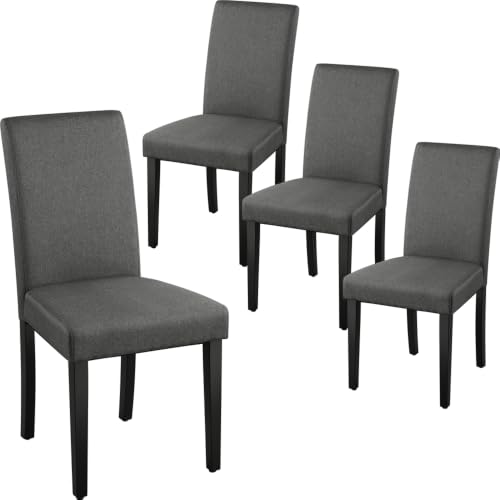
- Yaheetech Dining Chairs Set of 4 Upholstered Kitchen Chair Fabric Dark Gray — our first choice for built-in floor protection. Check on Amazon
- Yaheetech Mid Century Accent Chair — Check on Amazon
- LSSPAID Modern Accent Chairs — Check on Amazon
- VASAGLE Accent Chair — Check on Amazon
- Karl home Mid-Century Accent Lounge Chair — Check on Amazon
- Walker Edison Douglas Faux Leather Armless Dining Chairs, Set of 2 — Check on Amazon
In this guide
Quick Picks
| Pick | Badge | Why it earns its place |
|---|---|---|
| Yaheetech Dining Chairs Set of 4 Upholstered Kitchen Chair Fabric Dark Gray | Best Built-In Protection | Adjustable footpads level the chair and spare the floor, as listed. |
| Yaheetech Mid Century Accent Chair | Best Padded Feet | Rubberwood legs with plastic foot pads, named in the listing. |
| LSSPAID Modern Accent Chairs | Best Anti-Slip | Anti-slip foot pads that protect and hold position. |
| VASAGLE Accent Chair | Best Light Footprint | A 22-pound chair whose modest load is gentle on floors. |
| Karl home Mid-Century Accent Lounge Chair | Best Wide Stance | Splayed legs spread the load across more floor. |
| Walker Edison Douglas Faux Leather Armless Dining Chairs, Set of 2 | Most in Need of Protectors | Steel legs — the feet that most demand pads from day one. |
Key Takeaways
- No protector pads are ranked here — the pool holds chairs; this guide ranks their built-in feet and teaches the pad method.
- Adjustable footpads (Yaheetech Dining) are the gold standard: level contact, no rocking, no point loads.
- Steel-legged chairs like the Walker Edison set must be padded before first use on hardwood.
- Grit is the real abrasive: clean feet and clean pads protect more than any material choice.
- Every pick is specified from verified data only; check the current price on Amazon.
- Desk chairs bring a second floor threat — casters — audited in Best Ergonomic Desk Chairs For Home Office.
How These Picks Were Chosen
The pool for this guide was fixed before writing began: chairs with Amazon listings whose titles, brands and specifications could be verified. Shortlisting for a floor-protection brief ranked the pool by what touches the floor. First, named foot treatments in the listing — adjustable footpads, plastic foot pads, anti-slip pads — because verified built-in protection beats any aftermarket hope. Second, leg material and geometry: wood legs with pads, splayed stances that spread load, light chairs whose total load is modest. Third, the honest negative: chairs whose listings name no foot protection and whose legs are steel — included deliberately, badged for what they are, because dining sets like them are exactly the chairs readers most need to pad, and a guide that omitted them would fail the keyword it serves.
The method section must state the pool boundary as plainly as the introduction did: there are no protector-pad products in this pool, so this guide invents none, links none and ranks none. What it offers instead is the complete method — pad types matched to foot types, fitting that stays fitted, and the cleaning rhythm that does most of the real protecting — wrapped around the six chairs whose feet best illustrate the spectrum from protected-by-design to pad-before-use. Readers who need pads themselves will find them on the same Amazon listings’ aisles; this guide’s job is to make sure they buy the right type, fit them once, and keep the floor.
Badges name each chair’s floor story and follow it into its review. Prices appear nowhere, by standing rule. Dimensions and weights are quoted exactly as listed, because load per foot — the number that decides whether a floor dents — is arithmetic on exactly those figures.
The 6 Best Hardwood Floor Protectors For Chairs — Reviewed

Yaheetech Dining Chairs Set of 4 Upholstered Kitchen Chair Fabric Dark Gray
Our badge: Best Built-In Protection
The Yaheetech Dining Chairs Set of 4 Upholstered Kitchen Chair Fabric Dark Gray lead a floor guide for one listed feature: adjustable footpads. Each of the four chairs — polyester upholstery over high-density foam, solid wood legs, each rated to 298 pounds — stands on footpads that adjust, which does two kinds of floor work at once: the pad material itself separates wood leg from wood floor, and the adjustment eliminates rocking, and rocking is what turns a static load into a grinding one. A level chair is a gentle chair; this set is level by design.
Strengths
- Adjustable footpads protect floors and stop wobble, as listed
- Solid wood legs spread load better than thin steel
- Four matching chairs protect the whole dining set at once
Trade-offs
- Footpads still need the grit check — pads trap abrasive dirt if ignored
- Fabric upholstery needs prompt spill attention
- Sold only as a set of four
| Color | Fabric- Dark Gray |
| Size | Set of 4 |
| Dimensions | 22.5 x 18 x 36.5 inches |
| Weight | 55.45 pounds |
| Product Group | Furniture |
| Binding | Kitchen |
The ownership routine is short: adjust each footpad at assembly until the chair stands dead level with no rock, then check the pads monthly for embedded grit — a pad with a stone in it is a stamp that prints the floor at every sit. Add felt over the pads only if your floor’s finish is unusually soft; for most hardwood, the listed pads plus clean floors close the question. As dining chairs they rotate to desks in small homes, and the footpads travel with them — protection that moves rooms is protection that survives real life.
For a dining set on hardwood, this is the brief’s easiest recommendation: the protection is built in, adjustable and verified in the listing itself.
Best for: Dining sets on hardwood, and households that hate wobble / Not suited for: Buyers needing single chairs
Choose it for the footpads alone; keep them grit-free. Check on Amazon

Yaheetech Mid Century Accent Chair
Our badge: Best Padded Feet
The Yaheetech Mid Century Accent Chair is the accent chair whose listing does the floor work for you: rubberwood legs fitted with plastic foot pads, under a retro-brown faux-leather seat with sinuous springs and a 300-pound stated capacity. Plastic pads on wood legs are the classic protector arrangement — sacrificial, replaceable, and gentle on finishes — and having them fitted from the factory, sized to the leg, beats any aftermarket pad’s fit.
Strengths
- Plastic foot pads on the legs, named in the listing
- Rubberwood legs are sturdy and load-spreading
- Sinuous-spring seat comfort suits long sits
Trade-offs
- Pads are wear parts — inspect and replace as they thin
- Faux leather needs gentle cleaning only
- Fixed accent chair, not a dining or desk seat
| Color | Retro Brown |
| Size | 29″D x 28.5″W x 33″H |
| Dimensions | 29 x 28.5 x 33 inches |
| Weight | 38.27 pounds |
| Product Group | Furniture |
The pad-wear point deserves emphasis because it is this chair’s whole maintenance story: a plastic pad protects by sacrificing itself slowly, and the owner who checks pads at the quarterly tightening — the rhythm this series applies to every chair — will never let one wear through to bare wood. When a pad thins or cracks, replace the set, not the chair. On soft finishes, a felt disc over the pad adds a second sacrificial layer in seconds.
As a reading or conversation chair on hardwood, it arrives already dressed for the floor — a small listing detail that saves a real floor, which is exactly the kind of detail this guide exists to reward.
Best for: Accent seating on hardwood with zero setup / Not suited for: Anyone who will never inspect a wear part
Choose it for factory-fitted protection; keep the pads on the quarterly check. Check on Amazon

LSSPAID Modern Accent Chairs
Our badge: Best Anti-Slip
The LSSPAID Modern Accent Chairs protect hardwood by a second route: anti-slip foot pads, named in the listing, under a charcoal chenille chair with a 7-inch cushion, spring base, 115-degree back and a 350-pound stated capacity. Sliding is the floor’s enemy as surely as load — a chair that travels an inch at every sit is sanding its finish in slow motion — and anti-slip pads stop the travel at the source while cushioning the contact.
Strengths
- Anti-slip foot pads protect the finish and hold position
- Thick 7-inch cushion over a spring base for long sits
- Lumbar pillow included for reading posture
Trade-offs
- Anti-slip pads make deliberate repositioning a lift, not a slide
- Chenille needs prompt spill care
- 24.8-inch seat depth swallows shorter legs
| Color | Charcoal |
| Size | Medium |
| Dimensions | 30.5 x 29.5 x 31.5 inches |
| Weight | 33 pounds |
| Product Group | Furniture |
The trade-off is the honest one: a chair that will not slide must be lifted to move, and at 33 pounds that lift is easy but deliberate — which, for the floor, is the point. In reading corners and therapy-style seating arrangements where the chair’s position is chosen once and kept — the arrangement logic in Best Chairs For Therapy Office applies the same thinking to waiting rooms — anti-slip is the right protection philosophy. Check pads for grit on the same quarterly rhythm; anti-slip material grips dirt as happily as it grips floors.
For a stay-put chair on a good floor, this is the protection pattern to copy even if you buy a different chair: cushion the contact, stop the travel, clean the interface.
Best for: Fixed reading corners and stay-put seating on hardwood / Not suited for: Chairs that must glide to a table daily
Choose it where the chair stays; lift, never drag, when it must move. Check on Amazon

VASAGLE Accent Chair
Our badge: Best Light Footprint
The VASAGLE Accent Chair protects floors by physics: at 22 pounds total, its load per foot is the gentlest in this guide, spread under a 6.3-inch spring-supported seat in wipe-clean brown PU leather with a 300-pound stated capacity. Its listing does not name a specific foot treatment, so this review’s instruction is plain: fit protectors at assembly — felt or silicone caps sized to the legs — and the combination of light load plus fitted pads makes it one of the kindest chairs a hardwood floor can host.
Strengths
- Light 22-pound build means low load on every foot
- Thick spring-supported seat stays comfortable for long sits
- PU leather wipes clean in seconds
Trade-offs
- Foot treatment is not specified — fit protectors from day one
- Light chairs can be pushed off position by heavy sitters
- Synthetic leather can feel warm in hot rooms
| Color | Brown |
| Size | 29.5″D x 24.6″W x 28.7″H |
| Dimensions | 29.5 x 24.6 x 28.7 inches |
| Weight | 22 pounds |
| Product Group | Furniture |
| Binding | Kitchen |
The fitting method, stated once here and used across this guide: measure the leg’s foot, choose a pad or cap that matches its shape exactly, clean the foot before fitting, and press or slip the protector on fully — a half-fitted pad walks off within a week and leaves the floor to the bare leg it was meant to cover. Recheck at the first week’s end, when new fittings settle. For this chair, silicone caps suit its modern lines; felt suits softer finishes; either, fitted properly, closes the floor question for years.
As the call-and-reading chair of a home office — the role the home guides give it — its light footprint also makes it the chair least likely to dent its way across a room’s life.
Best for: Light, kind seating once pads are fitted / Not suited for: Use unpadded on soft finishes
Choose it and fit protectors at assembly; the pair is the product. Check on Amazon

Karl home Mid-Century Accent Lounge Chair
Our badge: Best Wide Stance
The Karl home Mid-Century Accent Lounge Chair spreads its load the architectural way: a splayed mid-century stance in green linen, with a lumbar pillow included and a 330-pound stated capacity, at 33.3 pounds. Splayed legs widen the footprint and reduce the pressure each foot applies — the same load over more geometry — and the chair’s modest weight keeps the total gentle. Its listing does not name foot pads, so fit protectors at assembly as with the VASAGLE; angled legs want caps shaped for the angle, a detail the fitting section below covers.
Strengths
- Splayed stance spreads load across a wider footprint
- Lumbar pillow included for lounge posture
- Modest weight keeps per-foot loads low
Trade-offs
- Foot pads are not specified — fit angled caps from day one
- Linen upholstery needs prompt spill attention
- Pool lists two dimension sets for this chair; verify on the listing
| Color | Green |
| Size | 28.3″D x 31.5″W x 29.5″H |
| Dimensions | 39.5 x 36.3 x 37.5 inches |
| Weight | 33.3 pounds |
| Product Group | Furniture |
Angled feet are the one fitting that defeats generic pads: a flat felt disc on a splayed leg contacts at an edge, wears at that edge, and walks off. The correct protector is a cap or cup that matches the leg’s angle, fitted so its base sits flat on the floor when the chair stands. Test by standing the chair and sighting each foot — the protector’s base should meet the floor across its whole face. Ninety seconds of attention at assembly; years of quiet floors after.
As a lounge chair it suits reading corners and low tables; as a floor citizen, properly capped, it is gentler than its mid-century silhouette suggests.
Best for: Lounge corners on hardwood, with angled caps fitted / Not suited for: Flat pads or unpadded use
Choose it for stance and style; fit the caps to the angle. Check on Amazon

Walker Edison Douglas Faux Leather Armless Dining Chairs, Set of 2
Our badge: Most in Need of Protectors
The Walker Edison Douglas Faux Leather Armless Dining Chairs, Set of 2 close this guide as its cautionary pick — included deliberately, badged honestly. Navy faux leather over steel legs, at 13 pounds per chair, they are handsome, light dining chairs whose steel feet are precisely the hardwood hazard this keyword exists to solve: hard, narrow, and unforgiving of grit. Unpadded, they will mark a floor. Padded before first use — with caps or cups sized to the steel foot — they become perfectly good citizens, which is the entire lesson of this guide in one product.
Strengths
- Light 13-pound chairs move easily and store compactly
- Steel legs are strong and slim for tight dining spaces
- Armless profile tucks fully under tables
Trade-offs
- Steel feet will mark hardwood without protectors — pad before use
- Armless design gives no support for long, relaxed sits
- Sold as a set of two
| Color | Navy Blue |
| Size | 31.12 inches x 22 inches x 18.87 inches |
| Dimensions | 22 x 18.87 x 31.12 inches |
| Weight | 13 pounds |
| Product Group | Furniture |
For steel feet, the protector hierarchy is: silicone or rubber cups that wrap the foot (best grip, stays fitted through daily sliding to the table), then adhesive felt (good, but re-check monthly — dining chairs slide constantly, and adhesive pads migrate). The daily slide to and from the table is the highest-wear motion in any home; whatever you fit, inspect it at the monthly rhythm rather than the quarterly one this guide gives calmer chairs. Their lightness helps: 13 pounds over four padded feet is a gentle load once the interface is right.
Every household with steel-legged chairs on hardwood should read this entry as addressed to them personally. The chairs are fine. The interface is the product. Fit it before the first meal.
Best for: Slim dining spaces — with protectors fitted before first use / Not suited for: Unpadded use on hardwood, ever
Choose them for the dining room; pad them in the same hour you assemble them. Check on Amazon
Comparison Table
| Pick | Dimensions | Weight | Colour | Check price on Amazon |
|---|---|---|---|---|
| Yaheetech Dining Chairs Set of 4 Upholstered Kitchen Chair Fabric Dark Gray | 22.5 x 18 x 36.5 inches | 55.45 pounds | Fabric- Dark Gray | Check price on Amazon |
| Yaheetech Mid Century Accent Chair | 29 x 28.5 x 33 inches | 38.27 pounds | Retro Brown | Check price on Amazon |
| LSSPAID Modern Accent Chairs | 30.5 x 29.5 x 31.5 inches | 33 pounds | Charcoal | Check price on Amazon |
| VASAGLE Accent Chair | 29.5 x 24.6 x 28.7 inches | 22 pounds | Brown | Check price on Amazon |
| Karl home Mid-Century Accent Lounge Chair | 39.5 x 36.3 x 37.5 inches | 33.3 pounds | Green | Check price on Amazon |
| Walker Edison Douglas Faux Leather Armless Dining Chairs, Set of 2 | 22 x 18.87 x 31.12 inches | 13 pounds | Navy Blue | Check price on Amazon |
Read the table by feet, not by furniture: adjustable pads, factory pads, anti-slip pads, then three chairs whose protection you fit yourself. Confirm the current price for each on Amazon.
How to Choose the Best Hardwood Floor Protectors For Chairs
Match the Protector to the Foot
Protectors fail by mismatch more than by material. Round feet take round caps or discs; square feet take square ones; splayed legs take angled cups; steel tube feet take wrap-around silicone or rubber cups that grip the tube. Measure the foot — width, and for angled legs the angle — before ordering anything, and buy the shape that matches, not the shape that was on offer. A protector that fits stays fitted; one that nearly fits walks off by Friday and leaves the floor to improvise.
Choose the Material by the Motion
Chairs that slide daily — dining chairs — want grippy cups that travel with the foot and felt that is checked monthly. Chairs that stay put want anti-slip pads or plain felt. Chairs on very soft finishes want the largest contact area you can fit, because pressure, not friction, is their threat. Casters are their own category: soft hard-floor wheels or a mat, covered in this series’ desk guides including Best Desk Chairs For Home. Name the chair’s motion honestly, and the material chooses itself.
Level Is Protection
A rocking chair — the furniture kind is fine; the defective kind is not — concentrates its load on two feet and grinds them at every sit. Adjustable footpads like the Yaheetech Dining set’s are the engineered answer; for fixed feet, a pad of uneven thickness, trimmed to kill the rock, is the honest improvisation. Test every chair for rock on the actual floor at assembly and after any move. The floor cannot tell the difference between a heavy chair and a rocking light one; the rocking one does more damage, sooner.
Grit Is the Real Abrasive
Most hardwood damage blamed on chairs is done by grit — sand and dust trapped between foot and floor, ground in by ordinary sitting. The protector system therefore includes the floor’s hygiene: sweep or vacuum the chair’s territory weekly, wipe pads when you dust, and lift — never drag — any chair whose pads you have not inspected lately. A premium pad over grit is a stamp; a cheap pad on a clean floor is a cushion. Households that internalise this paragraph can relax about almost every other choice in this guide.
Inspect on a Rhythm
Pads thin, felt migrates, cups crack, grit embeds. Put the feet on the maintenance rhythm the chair already has: monthly for daily-sliding dining chairs, quarterly for calm seating, and at every house move without exception. Replacement protectors are among the cheapest objects in a home; the floor they protect is among the most expensive. The arithmetic argues for generosity with pads and ruthlessness about worn ones.
How Do You Fit Chair Protectors So They Stay On?
Clean first: wipe the foot free of dust and old adhesive, because protectors bond to dirt and then leave with it. Dry-fit every protector before committing adhesive anywhere. For adhesive felt: warm the pad in your hand, press it centred on the foot, hold firm pressure for a slow count of ten, and let the chair stand unoccupied for some hours before use — adhesive that cures under patience outlasts adhesive loaded instantly. For cups and caps: push or stretch them fully home until the foot seats at the cup’s depth; a cup half-on is a cup already leaving. For angled legs, orient the cup so its base sits flat with the chair standing, not with the leg held vertical. Then the proof: slide the chair its normal daily motion ten times and re-inspect every foot. Anything that shifted gets refitted now, in the calm of assembly day, rather than discovered by the floor in month two.
Keep the spares with the chair’s tools. Protectors are consumables; the household that must order and wait will sit on a bare foot meanwhile, and bare feet keep their own schedule of damage.
Problem: Felt pads keep falling off my dining chairs — The daily slide defeats adhesive. Switch to wrap-around cups that grip the foot mechanically, clean the foot with a degreasing wipe before fitting, and re-check after the first week. If the foot is very narrow, a cup plus a felt disc inside it is the belt-and-braces answer.
Problem: My chair left a ring of fine scratches — That is grit’s signature, not the pad’s. Clean the floor and the pads, replace any pad with embedded grit you cannot wash out, and add the weekly sweep of the chair’s territory. The scratches are in the finish’s surface; a floor professional can advise whether they polish out.
Problem: One foot has dented the floor — A dent means pressure concentration: check for a lost pad, a rocking chair loading two feet, or a very heavy sitter on a narrow foot. Fix the cause, spread the load with a larger protector, and ask a floor professional about steam-raising the dent — many shallow dents respond, none respond to ignoring them.
Problem: Protectors squeak on the floor — Hard plastic on a hard finish can squeak as it micro-slides. A felt disc between pad and floor, or a switch to rubber cups, ends it. Squeak is also information: something is moving that should not, and the fix list starts with levelling.
Bar stools and counter chairs — close cousins that share the keyword’s intent — deserve their ruling: they slide more than any chair in the house, pivot on their feet as sitters mount and dismount, and concentrate a household’s whole social life onto eight small feet. Everything in this guide applies to them doubled: cups with mechanical grip, monthly inspection without exception, and a sweep rhythm for the kitchen floor that assumes grit as a permanent resident. If the stools in your home currently stand barefoot on hardwood, they are the first feet to dress after you finish this article — before the dining set, before the desk, today.
What About Rugs and Mats Under Chairs?
A rug under a dining set or a mat under a desk chair is the maximal protector — it removes the interface entirely — and it changes the room to do it. Rugs suit dining sets whose chairs slide within a defined territory; the rug must extend beyond the pulled-out chair position on every side, or its edge becomes the new damage line. Low, dense piles let chairs slide without fighting; deep piles trap chair legs and invite the drag-and-twist that breaks both legs and tempers. Desk mats are covered in this series’ office guides. Choose rug-or-pads by room: pads preserve the floor’s look, rugs redefine it, and households that love their hardwood usually choose pads for dining and a rug only where the traffic truly demands it.
Seasonal movement matters too: wood floors expand and contract across the year, chairs migrate toward radiators in winter and windows in summer, and every migration is a chance for an unpadded foot to write on a new patch of floor. Fold the foot check into the seasonal rearrangement itself — the furniture is already being lifted, the pads are already visible, and the inspection costs nothing but attention at the one moment attention is free. Households that run their rhythms on existing rituals keep them; households that schedule new rituals abandon them by spring.
The Floor-First Way to Arrange a Room
Arrange furniture the way the floor would ask: heavy pieces on the largest feet or on pads from day one, walking routes kept off the finest boards where the room allows, chair territories swept on the weekly rhythm, and every new arrival — chair, table, guest’s suitcase with wheels — met at the door with the same question: what touches the floor, and is it dressed for it? The evening version of the same discipline appears in the sofa rankings — Best Orthopedic Sofas for support-first seating and Best Sofas For Older Adults for the seat-height audit — because sofas, the heaviest sitters of all, obey exactly the physics this guide teaches. Floors do not ask for perfection. They ask for interfaces, kept clean, on a rhythm. Everything in this article is a footnote to that sentence.
Renters should read this guide with deposit eyes: floor damage is the most common and most photographable deduction, and it is also the most preventable. The renter’s kit is a set of cups for every chair foot in the flat, a mat for the desk chair, and a dated photograph of each room’s floor taken at move-in — the photograph being the protector of the deposit rather than of the floor, and worth as much. Landlords’ own furniture deserves the same fitting discipline; a chair provided unpadded is a liability handed over, and the tenant who pads it protects both the floor and the record.
Historic and softwood floors raise the stakes once more: old pine and soft finishes dent under loads that modern oak shrugs off, and the answer is area — the largest protectors that fit, rugs under the busiest sets, and a stricter no-drag rule for everyone in the house, guests included. When in doubt, protect for the softest floor you might ever own; the protectors cost the same, and the habit transfers.
Finally, know when the problem stops being protectors. A floor already deeply scored in a chair’s territory will not be saved by pads — pads prevent, they do not repair — and the honest sequence is: protect everything now to stop the spread, then take the floor’s case to a professional with the territory photographs, and let refinishing, if it comes, reset the clock that your new protector rhythm then keeps. Households sometimes delay pads while debating the refinish; that ordering is backwards, and floors keep the receipts of every week it persists.
One more interface hides in plain sight: the chair mat’s own edge and the rug’s own border, both of which concentrate traffic at a line — and lines are where finishes wear first. Feather the transitions where you can (a mat fully under the chair’s territory, a rug sized past the pull-out line), and add those edges to the inspection rhythm. Protection is a system of edges, and the system’s failures gather exactly where one protection ends and the bare floor resumes. Walk your own rooms once with that sentence in mind and you will see your floors as they actually are: a map of interfaces, most dressed, a few bare, every one of them keeping a slow and honest account of how the household treats it.
Common Buying Mistakes
Assuming the Chair Arrives Protected
Some do — this guide’s first three picks say so in their listings. Most do not say, and silence means unprotected. Read the listing’s foot description before the chair arrives, and have protectors waiting with the tools on assembly day.
One-Size Pads for Every Foot
Shape mismatch is the first cause of protector failure. Measure each foot type in the house — dining, accent, desk — and fit each correctly, even when it means three different protectors in the drawer.
Dragging Chairs to Test Them
The drag test is how floors get their first scratches — performed, with bitter irony, while checking whether the chair scratches floors. Lift chairs until their feet are proven; slide them only after.
Forgetting the Pads After the Move
House moves shed protectors like trees shed leaves. The post-move foot inspection is non-negotiable: every chair, every foot, before the first sit in the new room.
Polishing the Floor and Ignoring the Interface
A gleaming floor with gritty pads is a damage report waiting for a date. The interface — pad, grit, level — is where protection lives; the polish is only the witness.
Children and pets write their own floor chapter: chairs get climbed, dragged to build forts, and raced across kitchens, and pet claws and grit arrive together in quantities adult households never see. The family specification is therefore mechanical grip over adhesive everywhere — cups that small hands and hard play cannot migrate — plus a household rule that chairs are lifted, taught the same week the protectors are fitted, while both are new enough to be interesting. Floors in family homes do not need perfection; they need the interface maintained by a rhythm the whole household can run, and the two-minute inspection is sized exactly for that.
And a word for the hosts of gatherings, when chairs multiply and migrate: party seating borrowed from every room lands on the best floors in the house, often unpadded, often dragged. Keep a party set of universal cups in the protector box and dress borrowed chairs at the door — thirty seconds each, while the guests are still arriving. The morning-after floor inspection is a ritual nobody enjoys; the door-side cup is how it gets cancelled, permanently, for the price of a small box kept by the entrance.
And teach the rhythm to whoever cleans the house, professionally or otherwise, because cleaners move chairs more than owners do — chairs lifted for mopping return to the floor wherever they land, pads included or lost in transit. A word and a labelled spare box convert the cleaning routine from a protector risk into a second inspection: the person who lifts every chair weekly sees failing pads before anyone. Brief them once, kindly, with the box in hand. The floor’s best ally is the person who touches the chairs most.
Final Recommendation
For most hardwood households, start with the Yaheetech Dining Chairs Set of 4 Upholstered Kitchen Chair Fabric Dark Gray: their adjustable footpads are the brief’s gold standard, built in and verified. The runner-up is the Yaheetech Mid Century Accent Chair — Check on Amazon — with factory-fitted pads on its legs. Whichever chairs you own, fit the protector to the foot, keep grit out of the interface, inspect on a rhythm, and confirm the current price on the Amazon listing before you buy. Floors forgive almost everything except neglect; this guide is the alternative to neglect, in six chairs and one method.
One closing inventory discipline: keep a small labelled box — spare cups, felt discs, one mat’s worth of edging tape, the chairs’ Allen keys — in the room where the chairs live, not in a distant cupboard. Protection fails by friction more than by ignorance; the household that can re-pad a foot in ninety seconds does it the day the pad fails, and the household that must find the box re-pads it eventually, which on hardwood is another word for late.
The guide’s last word is for the person who has read all of this and owns exactly one chair on one small patch of rented hardwood: you are the reader this method serves best. One set of cups, one weekly sweep, one photograph at move-in — an afternoon’s total effort across a tenancy, against the most common deposit deduction there is. Protection scales down as gracefully as it scales up, because it was never about the products. It is about the interface, and every chair has one.
One more room deserves the method before the questions: the home office’s rolling chair is covered elsewhere in this series, but the guest chair, the reading chair and the kitchen stools in that same house obey this guide’s law without exception — every foot dressed, every interface clean, every rhythm kept. Floors do not distinguish between the chair you researched for a month and the stool you bought in an afternoon; they record both with the same fidelity. Walk the whole house once with the protector box in hand, room by room, foot by foot, and the method becomes what it was always meant to be: not a project, but a property of the household.
Frequently Asked Questions
What is the best type of protector for dining chairs?
For chairs that slide daily, wrap-around silicone or rubber cups that grip the foot mechanically outlast adhesive felt, which migrates under daily sliding. Whichever type you fit, clean the foot first, fit it fully, and inspect monthly. The Yaheetech Dining set in this guide sidesteps the question with adjustable footpads built in.
Do felt pads really protect hardwood?
Yes — when they are clean, correctly sized and still attached. Felt fails by grit embedding and by adhesive fatigue, both of which the inspection rhythm in this guide catches. Treat felt as a consumable with a service life, not as a permanent fitting, and it protects exactly as promised.
How often should chair protectors be replaced?
When they thin, crack, migrate or hold grit that will not wash out — monthly checks for dining chairs, quarterly for calm seating, and always after a house move. There is no calendar answer; there is an inspection answer, and the inspection takes two minutes per chair.
Are chair casters safe on hardwood?
Only the soft hard-floor type, or any caster over a mat — standard hard casters track grit and score finishes. The Aeron in this series’ desk guides includes hardwood-floor casters as standard, which is the pattern to copy: swap the wheels or add the mat before the first roll, not after the first mark.
Can a rug replace protectors?
Under a defined chair territory, yes — provided the rug extends beyond the pulled-out position on every side and its pile lets chairs move without dragging. Most households combine both: rug where the traffic is heavy, pads everywhere else. The interface principle is the same either way: nothing hard meets the floor unmediated.
What is the best first choice for best hardwood floor protectors for chairs?
The Yaheetech Dining Chairs Set of 4 is the first choice in this guide, because their adjustable footpads build the protection into the chair itself. Check the full review above for the strengths and trade-offs, and confirm the current price on Amazon before buying.


