Where to buy
Check the latest price, availability and delivery on Amazon. Orders are placed on Amazon. We may earn a commission from qualifying purchases.
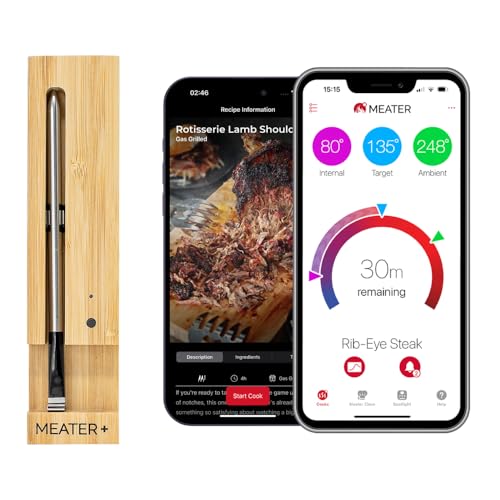
- Best for hands-free hosting: MEATER Plus Smart Wireless Meat Thermometer — Check on Amazon
- Best second-probe value: ThermoPro TempSpike 500 ft Wireless Meat Thermometer — Check on Amazon
- Best centerpiece upgrade: OneGrill 3WSS40 Stainless Steel Rotisserie Kit — Check on Amazon
- Best tools for a crowd: Napoleon Executive 3-Piece Toolset — Check on Amazon
- Best for evening parties: Cuisinart CGL-330 Grilluminate Expanding LED Grill Light — Check on Amazon
- Best for verifying a full grate: ThermoWorks Thermapen ONE Instant-Read Thermometer — Check on Amazon
Disclosure: As an Amazon Associate, dailyhomedecorating.com earns from qualifying purchases. Links to Amazon on this page are affiliate links; they cost you nothing extra. Listing details such as price and availability change often, so check the current Amazon listing before you buy.
Entertaining outdoors is a different sport from grilling for yourself, and it fails in different places. When you cook for guests, the food is only half the job — the other half is timing, presence and confidence. The classic host failure is not a bad recipe; it is the cook vanishing to the grill for twenty anxious minutes while the party happens without them, then returning with food that is somehow both late and rushed. The best grill accessories for outdoor entertaining under $150 are the ones that attack that failure directly: monitoring that lets the host leave the grill without leaving the cook, capacity that lets one centerpiece carry the menu while the grate stays free, tools that keep up with a full grate at full pace, and light that keeps the party cooking after the sun gives up.
The budget frame is the same as throughout this series — under $150 per item or per complete kit — and for entertaining it is a well-aimed number. It buys the wireless thermometer that turns the host into a guest at their own party, the rotisserie kit that produces the turning, self-basting centerpiece guests photograph, and the supporting cast that keeps a dozen servings moving without drama. What it should not buy is novelty: the singing spatula and the novelty apron are gifts guests bring, not tools a host depends on. Every pick below had to answer one question — does this make the evening go better for the people eating, not just the person cooking?
Verification followed the standard for this batch: each linked pick is a specific model tied to a specific Amazon listing checked during research, with a sighted price at or below the ceiling for that exact item, specifications from the maker or the listing, and a screening against current federal recall records. That screening matters double when you feed guests. Millions of wire-bristle grill brushes were recalled in 2026 because loose bristles can contaminate food and be swallowed; no host should learn that from a guest’s emergency. This guide recommends no wire-bristle brush, and its cleaning guidance is bristle-free throughout.
In this guide
Quick Picks: The Best Grill Accessories for Outdoor Entertaining Under $150
| Pick | Best for | Key verified spec | Where to check |
|---|---|---|---|
| MEATER Plus | Monitoring the main event from the table | Wire-free probe; 165 ft via repeater block; time estimates | Check price on Amazon |
| ThermoPro TempSpike | A second protein on a second timeline | Bluetooth 5.2 booster; up to 500 ft rated range | Check price on Amazon |
| OneGrill 3WSS40 Rotisserie Kit | The self-basting centerpiece | 13-watt motor; 3/8-inch square stainless spit | Check price on Amazon |
| Napoleon Executive 3-Piece Toolset | Moving a full grate at pace | Cast stainless steel; heat-safe grips | Check price on Amazon |
| Cuisinart CGL-330 Grilluminate | Parties that run past sunset | 9 LEDs on expanding panels; clamp mount | Check price on Amazon |
| ThermoWorks Thermapen ONE | Verifying every guest’s portion | About 1-second readings; IP67 waterproof | Check price on Amazon |
Read the list as a division of labor. The two wireless probes run the schedule, the rotisserie carries the menu’s headline, the tools and the instant-read handle the rush when everything finishes at once, and the light extends the whole production into the evening. A host equipped this way spends the party at the table with a phone in a pocket, not at the grill with a worried expression.
How the Picks Were Chosen
Research for this guide started from party post-mortems — the evenings that went wrong and why. The recurring causes were consistent: the main protein finished forty minutes after everything else (a scheduling failure), chicken was served on faith rather than temperature (a verification failure), the cook missed their own party (a monitoring failure), and the last batch of burgers was grilled in the dark by phone light (a lighting failure). Candidate accessories were scored against those four failures, in that order, before any specification was compared.
Survivors then faced the verification bar used across this batch: exact model, exact Amazon listing checked during research, sighted price at or below $150 for that item, specs from the manufacturer or listing, and recall screening against current CPSC records — the step that removed the entire wire-bristle brush category and kept the tool set pick’s brush silicone. Capacity claims were read skeptically: a rotisserie kit’s value to a host depends on its motor handling a real bird for two hours, so motor wattage and spit construction were weighted over marketing language, and fit limits are stated plainly wherever a pick only suits certain grills.
The Best Grill Accessories for Outdoor Entertaining Under $150, Reviewed in Detail
1. MEATER Plus — The Host’s Remote Control for the Main Event
Who it suits: Any host whose main protein is a roast, a whole bird or anything that cooks for more than half an hour — which is to say, any host who wants to be at their own party. It is the single highest-leverage entertaining accessory in this guide.
The MEATER Plus is a wire-free probe: one sensor reads the meat’s internal temperature, the other reads the grill’s ambient temperature, and the app converts both into a running estimate of when the food will be done, with alerts as it approaches target and a rest period built into the plan. For a host, those estimates are the evening’s schedule. You know at six o’clock whether the pork shoulder lands at seven or seven-forty, which is when the sides need to start, when guests should be called to the table and when you can relax. The probe charges in a bamboo block that doubles as a Bluetooth repeater rated to 165 feet — grill to patio table to kitchen and back, without you. And because there is no cable, it is the only practical continuous monitor for a rotisserie bird, the most theatrical main course in the backyard repertoire.
Pros: Time-remaining estimates turn hosting into scheduling; wire-free design works on rotisserie and any grill; repeater block keeps the signal alive across the yard; alerts free the host from grill-side hovering; equally useful for ordinary family roasts between parties.
Honest limitation: The probe’s ceilings — internal sensor to 212°F, ambient to 527°F — confine it to indirect cooking; it is not a sear monitor. It watches one piece of food, so a menu with two mains on two timelines needs the second probe below. And estimates are estimates: a stall in a big shoulder will move the predicted finish, which the app reflects but cannot prevent.
Choose it if you host more than a couple of times a season. Skip it if your entertaining is a single fast protein grilled to order — the instant-read further down covers that style.
2. ThermoPro TempSpike — The Second Probe That Saves Two-Main Menus
Who it suits: Hosts running two proteins on two timelines — the brisket that started at noon and the chickens that went on at five, the turkey on the grill and the ham in the oven — and hosts whose grill sits far from the house, at the end of a big yard or a detached patio.
Every experienced host learns the same lesson: one probe is a plan, two probes is a party. The TempSpike is the natural second unit because its architecture complements the MEATER rather than duplicating it. A wire-free dual-sensor probe talks to a booster base, and the system is rated for up to 500 feet over Bluetooth 5.2 — an open-air figure that walls and distance will reduce, but the relay design is what matters, because it holds a connection across the distances entertaining actually involves. The probe is waterproof, the app provides targets and alerts, and the price sits in the middle of this budget, which is exactly where a second probe should sit: capable enough to trust with the turkey, affordable enough to justify for the dozen times a year it saves the schedule.
Pros: Booster relay built for distance; dual sensors for food and grill temperature; waterproof probe; app alerts; mid-range price makes the two-probe system realistic.
Honest limitation: The booster is another component to place, power and remember at cleanup — at a party’s end, small electronics are easily left outside overnight. Range through structures will be well under the headline figure. And a second probe still leaves the mixed grill of burgers and sausages to spot-checking, which is the Thermapen’s department.
Choose it if two-main menus or a distant grill are your reality. Skip it if you entertain with one protein at a time — one good probe plus an instant-read is the leaner kit.
3. OneGrill 3WSS40 Rotisserie Kit — Dinner and a Show
Who it suits: Weber Genesis, Genesis II and Spirit three-burner owners who entertain — hosts who understand that a chicken turning slowly over the fire, skin bronzing and self-basting, is not just a cooking method but the visual center of the whole evening.
Rotisserie earns its place at a party three ways. First, quality: the constant rotation bastes the bird in its own juices, producing the even, crisp skin and juicy interior that static grilling rarely matches on whole birds and roasts. Second, capacity: the spit occupies the air above the grate, leaving the cooking surface free for vegetables, potatoes and bread — one grill runs the whole menu. Third, theater: guests gather where the food turns, drinks in hand, and the cook becomes a presenter rather than a servant. The 3WSS40’s hardware supports all three: a 13-watt electric motor with the torque to turn a real load for hours, a 3/8-inch square stainless spit rod that the forks grip without slipping, a counterbalance for imperfect trussing, and brackets matched to the Weber three-burner cookbox. Pair it with the MEATER Plus and the centerpiece monitors itself while it performs.
Pros: Self-basting results guests remember; frees the grate for sides; strong 13-watt motor and square spit built for real birds; stainless hardware stores in the grill cabinet; turns dinner into the evening’s focal point.
Honest limitation: Fit is Weber three-burner only — other grills need their own kits. The motor needs an electrical outlet within cord reach of the grill. Price has historically drifted near the top of this budget through third-party sellers, so verify the live figure. And rotisserie rewards a little technique: truss tightly, center the load, and test the spin before lighting.
Choose it if you own a compatible Weber and host whole-bird occasions. Skip it if your parties run on grilled-to-order steaks and skewers — spend on the second probe and the light instead.
4. Napoleon Executive 3-Piece Toolset — Pace Tools for a Full Grate
Who it suits: Hosts cooking volume: two dozen burgers, a grate paved with chicken pieces, ribs that need turning in rotation for an hour. When the grate is full and the queue is hungry, tool quality stops being a preference and becomes throughput.
The Executive set is three cast stainless tools — tongs, spatula, silicone basting brush — and the cast construction is the story. Stamped tongs twist when they lift the far corner’s chicken quarter while your other hand holds a tray; cast tongs simply lift it. A thin spatula buckles under a loaded double burger at the exact moment a guest is watching; the Napoleon’s blade does not. The handles are full-length with heat-safe grips, sized for working across a deep, crowded grate without your knuckles entering the heat column, and the basting brush is silicone — made for the glazes and mop sauces of party cooking, and easy to wash completely clean afterward, which matters when the same brush serves a crowd. This is also the set to hand a volunteer helper: its competence is obvious in the hand, and a party always drafts a helper eventually.
Pros: Cast steel keeps pace with a full grate; full-length handles for deep grills; silicone brush handles sauces and washes clean; no filler — three tools, all load-bearing; inspires confidence in whoever is handed them.
Honest limitation: Three pieces means carving still happens with kitchen knives, and there is no case for storage. The cast weight, welcome during heavy lifting, is noticeable during a long session of constant small turns, such as a mountain of shrimp.
Choose it if your parties max out the grate. Skip it if you entertain small and cook light — mid-weight tools will feel friendlier across a quiet evening.
5. Cuisinart CGL-330 Grilluminate Light — Because Parties Run Past Sunset
Who it suits: Every host whose gatherings drift into the evening — which, outside of high summer, is every host. The second seating, the late burgers, the “one more round” skewers: all of them happen in the dark, and all of them deserve better than a phone flashlight.
The Grilluminate clamps to the grill handle and spreads nine LEDs across expanding side panels, lighting the full grate evenly. Evenness is the critical quality: doneness is judged by color, and a single bright puck light creates a glare spot surrounded by guesswork. With the whole surface lit, the host can see which chicken piece is bronzing and which is merely near the flame, without moving food around to check it. The glass-reinforced nylon housing tolerates heat and weather, the unit runs on three AAA batteries with a very long rated LED life, and it unclips in seconds — useful, because at a party the same light gets borrowed for the cooler, the steps and the mysteriously dark corner where the extra chairs are stacked.
Pros: Full-grate even lighting for accurate color judgment; clamps to most grill handles; no wiring or charging routine; doubles as the party’s utility light; inexpensive to run.
Honest limitation: Batteries are not included — buy them with the light. The clamp needs a compatible handle shape. And it lights the grill, not the yard: pair it with whatever ambient and string lighting your entertaining space already uses rather than expecting one light to carry the scene.
Choose it if your parties regularly outlast daylight. Skip it if you entertain at lunch, or your grill already sits under strong, well-aimed patio lighting.
6. ThermoWorks Thermapen ONE — The Answer to “Is Mine Done?”
Who it suits: Hosts serving mixed grills to mixed preferences — one steak rare, one medium-well, chicken that must be fully cooked, a guest who asks, reasonably, “are you sure this one’s done?” The Thermapen is how a host answers with a number instead of a shrug.
Its virtue is speed: full readings in about one second. At the climax of a party cook, when twelve pieces finish within the same few minutes, that speed is the difference between verifying everything and verifying the first three pieces and hoping about the rest. The accuracy is reference-grade, so a chicken thigh’s reading can be trusted at face value in front of the guest who will eat it. The display rotates and lights itself for the evening finish; the body is waterproof to IP67 for the sauce-splashed reality of party service; and the probe folds away into an apron pocket between checks. For a host, it is also a confidence instrument: nothing settles a table like a cook who checks, nods and serves without cutting a single piece open to peek.
Pros: One-second verification across a whole grate; reference-grade accuracy guests can be told about; backlit and waterproof; pocketable between checks; ends the cut-and-peek era at your table.
Honest limitation: It verifies; it does not monitor, alert or schedule — that is the probes’ job, and the Thermapen complements rather than replaces them. It is the premium end of this budget, and Amazon stock often comes through third-party sellers, so check the seller and live price.
Choose it if mixed grills and doneness requests define your parties. Skip it if your entertaining is a single roast each time — the MEATER covers it and the savings buy the light.
Comparison Table
| Accessory | Party job | Standout verified spec | Watch out for |
|---|---|---|---|
| MEATER Plus | Scheduling the main event | Wire-free; 165 ft via repeater; finish estimates | One probe; indirect-heat ceilings |
| ThermoPro TempSpike | Second protein, second timeline | Booster relay; up to 500 ft rated | Booster to manage; real range lower |
| OneGrill 3WSS40 | Centerpiece + freed grate space | 13-watt motor; square stainless spit | Weber 3-burner only; needs outlet |
| Napoleon Executive 3-Piece | Full-grate pace | Cast stainless steel | Three pieces; heavier tools |
| Cuisinart CGL-330 | Evening visibility | 9 LEDs, expanding panels | Batteries not included |
| Thermapen ONE | Verifying every portion | ~1-second readings; IP67 | No monitoring; premium price |
How to Choose Grill Accessories for Entertaining
Buy back your own attendance first. The scarcest resource at a party is the host. Any accessory that converts grill-side vigilance into phone-glance confidence — a wireless probe with finish estimates above all — is worth more to an entertainer than any improvement in the food itself, because the food was probably fine and the host’s absence was the real cost. Rank monitoring gear first, capacity second, refinement third.
Plan for two timelines. Parties fail on scheduling more than on seasoning. If your menus regularly pair a long main with a shorter second protein, two probes are not redundancy; they are the plan. Match probe architecture to your space: repeater and booster systems hold signal across yards and through walls, which is why both wireless picks here use one. If your grill is close to the house and your menus simple, one probe plus an instant-read achieves the same calm with less gear.
Let one centerpiece carry the menu. A rotisserie bird or roast does triple duty for a host: it cooks largely unattended, it frees the grate for sides, and it gives the party a visual anchor. If you go this route, judge kits on motor wattage, spit construction and exact fit for your grill — and confirm an outlet is within reach before the day, not during it. Hosts with other grill families should buy the kit made for their cookbox rather than forcing a fit.
Feed guests with verified temperatures and bristle-free grates. Entertaining raises the safety stakes: you are responsible for other people’s dinners. Verify poultry and mixed grills with a thermometer rather than color and habit, and keep the grate free of the one contamination risk that has made national news — wire brush bristles. In 2026 the U.S. Consumer Product Safety Commission announced recalls covering millions of metal wire-bristle grill brushes from several major brands, because detached bristles can stick to grates and food and be swallowed, causing injuries that can require surgery. The agency urges switching to non-wire alternatives. Clean with a bristle-free coil brush or wooden scraper, or a nylon brush on a cool grate, and look the surface over before the first guest’s food touches it.
Light for the finish, not the start. Parties begin in daylight and end in the dark, and the cooking usually climaxes after sunset. Judge a grill light on evenness across the grate — color judgment depends on it — and on mounting that suits your grill’s handle. Then think one step beyond the grill: the path to the door, the cooler, the steps. The grill light in this guide handles the cooking surface; your existing patio and string lighting should handle the rest, and a quick pre-party walk at dusk will show you the gaps.
Stage like a caterer, briefly. Ten minutes of staging multiplies every accessory’s value: raw and cooked trays separated, tools laid in order of use, probes charged and paired before guests arrive, the light clamped and tested, a landing zone cleared for finished food. Caterers are not better cooks than you; they are cooks whose gear was ready. Entertaining accessories pay off fastest in a staged space.
Common Mistakes Hosts Make
Cooking the whole menu on the grill, in sequence. One grill, four courses, serially, is a schedule designed to serve everything lukewarm. Use the rotisserie to parallelize, hold finished items in a low oven, and let the probes tell you what actually needs the grate next.
Hovering. Checking the roast every five minutes drops the grill’s temperature, stretches the cook and removes you from the party — the triple cost a wireless probe exists to eliminate. Set the alert, close the lid, go be a host.
Serving chicken on confidence. Color lies, juices lie, and the cost of being wrong lands on a guest. A one-second thermometer check is the cheapest insurance in entertaining; use it on every piece of poultry, every time, without apology.
Forgetting the dark. Hosts test their setup at setup time — midday — and discover the lighting gap at the worst moment. Clamp the light and check the sightlines during your dusk walk, not during service.
Handing a helper your worst tools. The drafted volunteer gets the flexing tongs and drops the asparagus. Capable tools — or a strict no-help-needed plan — keep delegation from becoming damage control.
Scrubbing the grate with a wire brush before guests arrive. Of all cooks, the host has the least excuse: the recall record is public, the alternatives are cheap, and the person harmed would be someone who trusted your cooking. Bristle-free, inspected, every time.
Final Recommendation
If entertaining is your grill’s main purpose, build in this order: the MEATER Plus first, because a host who knows the schedule is a host who attends the party; the TempSpike when your menus grow a second timeline; the OneGrill rotisserie when you are ready for a centerpiece that cooks itself and frees the grate; the Napoleon tools when volume exposes your current set; the Grilluminate before the first party that will run past sunset; and the Thermapen ONE as the verification layer that lets you serve a crowd with a straight face. No single item here is the party. Together, they are the difference between a host who cooks and a cook who occasionally glimpses a party through the smoke.
Frequently Asked Questions
What is the single best accessory for someone who hosts a lot?
A wireless leave-in thermometer with finish-time estimates — the MEATER Plus in this guide. It converts the main course from a source of anxiety into a schedule, alerts you instead of requiring attendance, and works on the rotisserie centerpieces that entertaining favors. More parties are saved by timing than by any other factor.
Do I really need two wireless probes?
Only if your menus do. One main protein at a time: one probe plus an instant-read is complete. Two proteins on different timelines — the classic brisket-and-chicken party — is where a second probe stops being a luxury and becomes the difference between a plan and a hope. Buy the second when the menu demands it, not before.
How do I keep a rotisserie bird and sides finishing together?
Work backward from the bird. Its probe gives you a live finish estimate; start sides so they complete inside the bird’s rest window, since a rotisserie bird rests happily while vegetables take the freed grate over high heat. The rest period is the host’s buffer — plan to use all of it.
Is it safe to let guests serve themselves straight off the grill?
Yes, with two disciplines: verify temperatures before food leaves the cooking zone — poultry above all — and keep raw and cooked items on separate trays with separate tools. The grate itself should have been cleaned bristle-free and inspected before the cook; wire-bristle brushes have been recalled in the millions because loose bristles can contaminate food.
What lighting does an outdoor party actually need at the grill?
Even, front-facing light across the whole cooking surface, so color can be judged accurately — the expanding-panel design of the Grilluminate pick exists for exactly this. Beyond the grill, ambient light for paths and serving areas comes from your patio and string lighting; do a dusk walk before guests arrive to find the dark spots while they are still free to fix.
Does the $150 ceiling apply per item?
Yes — per item or per complete kit, as throughout this series. A host’s full kit from this guide can be staged across a season: probe first, then light and tools, then the rotisserie, with no single purchase breaking the per-item frame.
A Host’s Timeline: The Accessories at Work
Morning of the party. The rotisserie bird is brined or seasoned and goes into the refrigerator uncovered to dry its skin. The probes charge — both of them, even if you think you will only use one, because menus change at noon. The tool set is washed and hung by the grill, the light is clamped and its batteries checked in daylight, and the grate gets its bristle-free clean and inspection while there is no audience and no hurry. None of this takes twenty minutes, and it is the difference between a host who performs calmly and one who improvises publicly.
Two hours out. The bird is trussed — tightly, wings tucked, legs tied, load centered on the spit — and the spit is test-spun by hand before the grill is lit, because a wobble found now is a wobble fixed with string, while a wobble found over the fire is a problem with an audience. The MEATER probe goes into the breast’s thickest point, clear of bone. The grill lights, the bird starts turning, and the app begins building the estimate that will run the rest of your day.
One hour out. The estimate says the bird lands at a specific time, so the sides schedule themselves around it: potatoes onto the freed grate space at the forty-minute mark, vegetables in the last twenty. If a second protein joins — sausages, a second bird, a ham steak — the TempSpike goes in and the second timeline appears on your phone beside the first. Guests begin arriving to a grill that looks theatrical and a host who is holding a drink, because nothing currently requires their hands.
Thirty minutes out. This is when unmonitored parties wobble: everything finishing at once, the cook guessing. Your version is administrative. The probes say what is done and what is not; the Thermapen verifies the bird at a second spot and sweeps the mixed items; finished food moves to the warm oven in the order the probes release it. The light goes on as the sun drops — clamped since morning, so this is a switch, not a search.
Service. The bird rests its full term — the probes accounted for it — while the grate, now empty and ripping hot, takes the bread and the last vegetables. Carving happens with kitchen knives at a board, not at the grill with tongs and hope. The host eats with the guests. Later, when someone asks how the chicken came out so evenly, the honest answer is a spit, a probe and a schedule — three accessories doing exactly the jobs this guide chose them for.
Menus That Play to This Gear
The rotisserie classic: one or two spit-roasted chickens, grate-grilled potatoes and corn in the space below and beside, a chopped salad made indoors. The bird is the show and the schedule; everything else is a supporting act with forgiving timing. This menu is the OneGrill and MEATER combination operating exactly as designed.
The two-timeline barbecue: a pork shoulder that started in the morning under the TempSpike’s watch, chicken pieces and sausages grilled to order at party time and verified piece by piece with the instant-read. The shoulder pulls when its probe says so, not when the host panics, and the fast items never wait on it.
The steakhouse evening: thick steaks seared hot and fast — instant-read territory, checked at the thick end and never cut open — with a rotisserie leg of lamb or a probe-monitored roast as the table’s second anchor for the guests who prefer it. The light carries this menu, because steak nights drift late by design.
The long afternoon: ribs in rotation, turned with the cast tongs across hours, glazed with the silicone brush in the final stretch, while the probes watch the one item — a whole fish, a turkey breast — that punishes inattention. This is the menu where tool quality stops being abstract: three hours of turning is a workout that cheap tools turn into a grievance.
Notice that none of these menus requires a gadget beyond this guide’s six picks. Entertaining menus fail on logistics, not on missing novelty equipment — and logistics is precisely what monitoring, capacity, pace tools, light and verification solve.
Guest-Proofing: The Entertaining Details Nobody Lists
Ask about doneness before the food goes on, not after. A thirty-second poll at drinks — who wants their steak where, who needs their chicken well past done, who is vegetarian and quietly hoping for more than a side salad — converts the Thermapen from a safety tool into a service tool. You will check anyway; checking against a stated preference is what makes guests feel cooked for rather than cooked at.
Keep a second, clean pair of tongs for cooked food. The Napoleon set anchors the cooking, but the raw-to-cooked handoff deserves its own discipline: the tongs that placed raw chicken do not serve cooked chicken. A spare mid-weight pair from your kitchen drawer is the entire investment, and it is the food-safety detail experienced guests notice and appreciate.
Put the thermometer where your hand already goes. An instant-read in an apron pocket gets used on every piece; the same instrument in a drawer inside the house gets used on the first piece and remembered fondly thereafter. Entertaining accessories obey the same rule as kitchen tools: proximity is usage. Stage the probe block on the prep table, the instant-read in the apron, the light already clamped.
Have a rain and darkness plan that is not optimism. Parties get one weather surprise per season on average, and the hosts who shrug it off are the ones whose gear is indifferent to it: probes that report through a closed lid and a dash inside, a light that does not care about drizzle, a rotisserie bird that can finish in a low oven if the sky truly opens — a transfer the wire-free probe survives without missing a reading, since it works in the oven exactly as it works on the grill.
End the night with a two-minute reset. Probes back on their chargers, tools washed rather than soaking, the grate scraped while it is still warm enough to clean easily — with the bristle-free tools, as always — and the light unclipped and indoors. The reset is what makes the next party start at the timeline above instead of at a search for missing forks. Entertaining gear is a system, and systems are kept by rituals, not by purchases.
How Much Grill Is Enough? Sizing Accessories to Your Party
Parties of four to six are the forgiving case. One probe, one good tool set and an instant-read will run almost any menu, and the light matters only in the dark months. If this is your ceiling, buy in the order given in the final recommendation and stop when the schedule feels calm — extra capacity you never use is storage, not insurance.
Parties of eight to twelve are where this guide’s full kit assembles itself. Two timelines become common because the main alone cannot feed the table; the rotisserie stops being theater and becomes logistics, carrying a bird while the grate handles everything else; and verification stops being a virtue and becomes a workload — a dozen chicken pieces is a dozen individual answers, which is precisely the workload a one-second thermometer was built for. Hosts in this band should also think hardest about the dusk walk: twelve guests generate more trips, more trays and more chances to discover a dark step.
Parties beyond twelve are catering problems wearing a party’s clothes, and honesty requires saying so. This budget tier still helps — the probes, the rotisserie and the verification layer all scale — but the binding constraint becomes grill area and holding capacity rather than accessories. The right moves are menu design (one rotisserie centerpiece, one batch-cooked main, cold sides), a warm oven as the holding zone, and service in waves. Buy the six picks here for the cooking you can control, and design the menu around the physics you cannot.
Across all three bands, the same principle holds: accessories should be sized to the largest party you host regularly, not the largest you have ever hosted. The once-a-year graduation crowd can be fed with a borrowed second grill and a simpler menu; the monthly table of eight deserves gear bought for exactly it.
What should I buy first if my parties are only twice a year?
Buy for the cooking between the parties. The MEATER Plus and the Thermapen ONE both work every week in an ordinary kitchen and on an ordinary grill, so they justify themselves fifty weeks a year and happen to be party-saving twice a year. The rotisserie kit is the opposite profile — magnificent at the party, idle between them — so it should be the later purchase, made when you are sure the party pattern is permanent. Entertaining gear that only entertains is a rental you store; gear that cooks daily and entertains brilliantly is an investment.
How do I handle a guest who wants everything well done — or everything rare?
Gratefully, because they have made your job easier: a stated preference is a target, and targets are what thermometers are for. Cook their portion to its number and verify it in front of them if they like — the instant-read turns a preference from a negotiation into a measurement. The failure mode to avoid is cooking the whole batch to one guest’s specification, or worse, to nobody’s. Mixed grills exist because tables are mixed; the verification layer in this guide is what makes serving a mixed table feel like hospitality instead of compromise.
What do I do when the main course is running an hour late?
Communicate early, feed people something, and do not rush the grill. The probes in this guide exist partly for this moment: you will know the delay at the halfway point, not at serving time, which means you can tell guests the real schedule while it is still a plan rather than an apology. Put out the grilled bread and any no-cook starter, open the next bottle, and let the rest window absorb what it can. What never works is raising the heat to catch up — a rushed roast trades an hour of schedule for a worse dinner, and guests forgive a late excellent meal far more readily than a punctual mediocre one.
Related Guides on This Site
- Best Grill Accessories For Outdoor Entertaining Under $75
- Best Grill Accessories For Outdoor Entertaining Under $300
- Best Outdoor String Lights For Outdoor Entertaining Under $150
- Best Outdoor Cooler For Outdoor Entertaining Under $150
- Best Patio Heater For Outdoor Entertaining Under $150
- Best Fire Pit For Outdoor Entertaining Under $150


