Chainsaw fuel storage guide
The best gas cans for chain saws make it easier to carry the correct fuel, identify what is inside, and refill equipment without confusing gasoline, two-cycle mix, and bar-and-chain oil. A chainsaw’s needs depend on its engine and the manual: many gas models use a specified gasoline-and-two-cycle-oil blend, while a separate reservoir takes bar oil. A can that looks convenient is not automatically approved for every fuel blend or compatible with every cap and spout.
This guide compares four fuel-storage options: a Husqvarna-style dual-chamber combi can for separating fuel and chain oil, compact one- and two-gallon Scepter gasoline cans, and the No-Spill 2.5-gallon can. The first is specifically built around chainsaw refueling; the others are gasoline containers whose manufacturer instructions should be checked before putting premixed fuel inside. We focus on capacity, handling, spouts, labeling, and routine storage rather than claiming to have tested these products in the field.
Affiliate disclosure: Daily Home Decorating participates in the Amazon Services LLC Associates Program. As an Amazon Associate, we earn from qualifying purchases.
Quick picks
| Can | Best fit | Capacity / type | Key consideration |
|---|---|---|---|
| Husqvarna Combi Can 5L + 2.5L | Chainsaw operators carrying fuel and bar oil together | Separate fuel and chain-oil chambers | Check exact model, spouts, and whether the listing is an original or compatible replacement |
| Scepter SmartControl 1 gal | Small quantities and light carry loads | 1 gallon gasoline container | Manufacturer positions it for small outdoor equipment; verify premix compatibility |
| Scepter SmartControl 2 gal | General-purpose gasoline storage for equipment | 2 gallons | Squeeze-controlled spout; check local rules and fuel-blend compatibility |
| No-Spill 1405 | Users who prefer a larger 2.5-gallon reservoir | 2.5 gallons | Confirm current cap/spout instructions and compatibility before storing mixed fuel |
If you want one can designed to carry both chainsaw fuel and bar oil, a true combi can is the closest match. A standard gasoline can can be useful, but it does not include the separate bar-oil chamber and its manufacturer may not have approved it for storing gasoline mixed with two-cycle oil. Check the exact can’s label or contact the manufacturer rather than assuming all gasoline cans behave alike.
Know which liquid goes where before you buy a can
Fuel handling becomes confusing because a gas chainsaw can have two separate liquid systems. A two-stroke engine typically uses fuel mixed with a specific two-cycle oil at the exact ratio required in that model’s manual. The chain and guide bar use a separate bar-and-chain lubricant supplied through the saw’s oiling system. These liquids are not interchangeable. Putting bar oil in the fuel tank or two-cycle oil into the bar-oil reservoir can cause equipment damage and a service problem.
Some four-stroke equipment uses straight gasoline, but do not infer that a gas-powered saw does. Confirm the engine type and fuel requirements in the operator’s manual for the exact model. Follow its instructions for fuel grade, ethanol limits, oil type, mix ratio, and how much fuel to prepare. The mix ratio can vary by brand and product. Never use a ratio from a different tool simply because the engines look similar.
A dual-chamber combi can stores fuel in one compartment and chain oil in the other. That does not mean the fuel chamber contains ready-to-use two-cycle premix. Operators still need to prepare the fuel blend required by the chainsaw, and should follow the can’s labeling instructions so the contents are unmistakable. Some operators instead transport gasoline and mix only in a separate approved container. Each method has tradeoffs in labeling, measuring, storage life, and risk of selecting the wrong liquid.
Before purchase, determine whether your saw needs a premixed blend, manufacturer-branded alkylate fuel, or another specified fuel product. A compatible container should have clear labeling for the actual contents and should remain dedicated to that liquid. If the container is sold for gasoline only and the manual or can manufacturer does not say it accepts a gasoline-and-oil blend, ask before using it for premix. Do not rely on material appearance or online reviews to settle chemical compatibility.
For a refresher on selecting the engine oil itself, see our guide to two-cycle oil for saws. Our bar-and-chain oil guide addresses the separate lubricant used at the cutting attachment. These are different products, even when a combi can carries both.
How to choose the best gas can for a chainsaw
Match capacity to a realistic day of work
A one-gallon can is easier to carry and can be a practical choice for a homeowner who runs a chainsaw occasionally. Smaller volumes also make it easier to avoid preparing more two-cycle mix than the manufacturer recommends for the storage period. A two-gallon container can reduce refill trips for a property owner or crew with several small engines. Larger cans make sense for regular work, but they add weight, take more storage space, and can be harder to control while pouring.
Do not calculate capacity by looking only at the volume number. A dual-chamber container can carry a specific amount of fuel and a separate amount of bar oil; these capacities are independent and do not indicate the fuel-to-oil mix ratio. Decide how much chain oil you use on a typical day and compare that with the can’s second chamber. A container that is oversized for the job can sit with old fuel or invite unnecessary transfer between containers.
For commercial work, estimate consumption from the number of saws and hours of use, then keep the working inventory aligned with the engine manual and company storage rules. Smaller daily batches may make labeling and rotation easier. A large can may be convenient as a bulk source, with fuel transferred only into approved smaller containers where permitted. Follow local fire codes and the fuel manufacturer’s instructions.
Choose the right spout and cap style
A controlled-flow spout can help reduce spills, but check how it opens, locks, and vents. Some designs require a particular hand position or cap sequence. A spout that fits an automotive tank may not be convenient for a small chainsaw filler neck. Look for an included extension or compatible nozzle only if the manufacturer lists it for that can. Replacement spouts can have compatibility limits across product generations.
A chainsaw combi can usually has separate outlets for fuel and bar oil. Separate caps reduce mix-ups, while an overfill stop may help limit spills. Check whether the spouts remain attached or need to be stored separately, and whether the lock is easy to operate while wearing work gloves. Avoid forcing a spout, modifying its tip, or removing a safety feature to make it fit a saw tank.
Before going into the field, practice handling the empty container and review its own directions. Make sure the cap can be tightened, the spout can be secured, and the fuel markings can be read. In a vehicle, loose caps or a missing spout can create a leak or allow dirt to enter. Keep small caps and fittings together in a dedicated storage pouch or manufacturer-provided holder.
Prioritize clear labels and dedicated containers
Use containers designed for the liquid they hold, with the labeling required by the manufacturer and your worksite. Keep gasoline, two-cycle premix, chain oil, diesel, and cleaning liquids in separate, clearly marked containers. Color can be an extra cue but should never replace a readable label. A sticky label should include the contents and, when relevant, the mix ratio and preparation date. Replace it if oil, fuel, or weather makes it unreadable.
Dedicated cans reduce confusion when several workers share equipment. The fuel can should not become an all-purpose jug for water, solvent, or another liquid. Do not reuse a fuel container for drinking water or household use. If a container is cracked, swollen, leaking, has a damaged seal, or has an unreliable cap, remove it from service and follow local disposal rules. Do not try to patch a fuel container with general-purpose tape or glue.
Check construction, handle, and stability
Most portable gasoline cans use molded plastic, while some specialty containers use other materials. For chainsaw work, consider whether the handle offers a stable grip when the can is full, whether its base sits securely, and whether it fits the transport compartment. A can may feel light when empty but become awkward at capacity. The right size is the largest volume the operator can carry and pour in a controlled way, not necessarily the largest one available.
Look at the handle and balance together. A rear handle can make a larger can easier to control as it tilts. The cap should not interfere with the grip. If the saw is used in a remote area, a dual-chamber can with a toolbox may keep common items together, but it can be bulky. Consider how the can will be secured while driving and how it will be separated from passengers and equipment.
Verify transport and storage requirements
Gasoline is flammable and produces vapors. Follow the can manufacturer’s warnings, local regulations, and any applicable workplace policy for storage and transport. Keep containers closed, upright, protected from damage, and away from heat, sparks, flames, living areas, and ignition sources. Do not leave a fuel can in a hot vehicle or store it where vapors can build up. Transport requirements may differ for personal use and commercial quantities; consult the relevant authority or safety officer when needed.
A container’s product-page compliance statement is not a substitute for understanding where and how you are allowed to store or carry fuel. If the can will be used for a business, check company procedures and the rules that apply to the vehicle, jobsite, and volume. Local fire authorities can answer questions about storage limits and approved locations. Do not infer legal requirements from a marketplace listing.
Best gas cans for chain saws: four options to compare
The product cards below use ASIN and primary image information retrieved through Amazon Creator API. Listings, sellers, bundles, prices, and availability can change. Verify the product label and exact model before ordering. These recommendations are based on stated capacity and design; we have not conducted hands-on spill or durability testing.
1. Husqvarna-style 5L + 2.5L Combi Can — best dual-chamber layout for saw work

Amazon listing references Husqvarna part 580754201; verify seller, authenticity, and fit.
View on Amazon
A two-chamber can is the most chainsaw-specific format in this comparison because it carries fuel and bar oil in separate compartments. The Amazon API listing for this ASIN describes a 5-liter fuel chamber and a 2.5-liter chain-oil chamber, references the Husqvarna 580754201 model, and includes two spouts. Husqvarna’s own product material also lists a 5/2.5-liter combi can with an integrated toolbox and overfill protection. The marketplace item linked here may be a compatible or replacement product rather than an original Husqvarna item, so check the seller and labeling carefully.
Do not mistake the larger fuel chamber for ready-to-use two-cycle mix. The operator still has to prepare the fuel the saw requires, using the exact ratio and oil specified by its manual, unless the chamber already contains a compatible premix purchased ready to use. The separate chain-oil compartment is for bar lubrication, not two-cycle oil. Mark the fuel contents and mix date where applicable, and confirm the supplied spouts match your equipment.
This format may suit forestry or property work where a saw and its chain oil travel together. The tradeoff is size, weight when both chambers are full, and the need to verify compatibility and authenticity for a marketplace item that uses a manufacturer part reference in its title. Check the official Husqvarna combi-can description for the manufacturer’s concept and features.
2. Scepter SmartControl 1-gallon can — best compact gasoline can

Confirm the current spout and manufacturer-approved fuel use.
View on Amazon
The 1-gallon SmartControl can is the smallest conventional container in this group. Scepter describes its 1-gallon model as a compact gasoline can for small outdoor power equipment, including chainsaws and trimmers. The brand lists a squeeze-controlled flow, flame-mitigation device, and dimensions intended for a small carry load. That can make the size useful for a homeowner who wants to transport a limited amount of gasoline rather than lift a full large container.
Its small volume also means it requires more trips for a crew with multiple saws or a long day of cutting. The linked listing identifies the can as gasoline-only; a chainsaw fuel blend contains two-cycle oil, so check the can manufacturer’s guidance before storing premixed fuel in it. If compatibility is not clear, use a container explicitly intended for that blend. Do not fill it with premix simply because the size is convenient.
Consider this model if a small conventional can is right for your storage setup and you can confirm it is approved for the intended fuel. Scepter’s official product page describes its flow control and safety features, but the linked ASIN is a seller listing; inspect the exact item and current spout. See the manufacturer’s 1-gallon SmartControl page for current product details.
3. Scepter SmartControl 2-gallon can — best general-purpose middle size
Check current labeling, seller, and premix compatibility.
View on Amazon
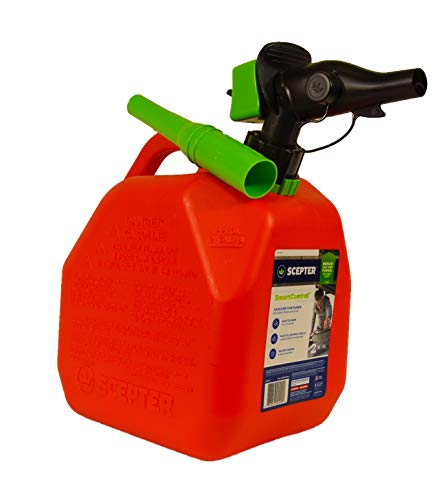
The 2-gallon size gives more reserve than a compact 1-gallon can without the weight of a five-gallon model. Scepter positions its SmartControl gasoline container for refilling outdoor power equipment and lists a squeeze-controlled spout and flame-mitigation device. The larger handle and body can be useful when filling several small engines at a property, but full capacity weighs more than many homeowners expect. Test how the can feels when full before committing to carrying it over uneven ground.
Like the 1-gallon SmartControl, this can is marketed as gasoline-only. If your chainsaw needs a gasoline-and-oil blend, do not assume this container’s instructions permit storing it. Check the can label and contact Scepter if necessary. One safe arrangement may be to store gasoline here and prepare the required mix in a separate approved, clearly labeled container; whether that arrangement is appropriate depends on your equipment manual and the can maker’s guidance.
The official Scepter 2-gallon product page lists the FR1G201 size and describes its squeeze-controlled flow. Note that the Amazon ASIN in the product card corresponds to the SmartControl 2-gallon can listing, but marketplace titles may include dimensions or vary in stated model suffix. Verify the exact part number when checking compatibility.
4. No-Spill 1405 2.5-gallon can — best larger conventional can to compare

Review the current label and fuel-blend limitations before use.
View on Amazon
The No-Spill 1405 offers a 2.5-gallon capacity. Its name highlights a dispensing approach intended to limit spills, but no fuel can can guarantee zero spills in every situation. The current Amazon API title describes a 2.5-gallon gasoline can, so it should be treated as a conventional gasoline container unless the manufacturer’s current instructions explicitly permit a premixed fuel blend. Check how the nozzle is released, how it closes, and whether replacement parts are available.
This can may make sense when a user values a larger reserve and has a stable, approved storage location. It may be less convenient for chainsaw field work than a dual-chamber forestry can because of its size and the lack of a dedicated bar-oil compartment. It is also easier to over-purchase fuel with a larger can. Match its capacity to your use and the storage-life guidance for the fuel you use, rather than filling it simply because it is available.
Before ordering, confirm the product is the 1405 gasoline can rather than a different No-Spill model or replacement spout. Verify seller information, label photos, and the manufacturer’s instructions. If the product listing does not clearly answer whether two-cycle premix is acceptable, ask the manufacturer. The saw’s requirements and the can’s compatibility both need to be satisfied.
Safe fuel storage and handling for chainsaw users
Fuel storage involves fire, vapor, and environmental risks. Follow the instructions printed on the container and the chainsaw’s manual. Store only the type of fuel approved for the can, close the cap and spout after use, and keep the container upright in a location approved by local rules and your workplace policy. Keep gasoline away from heat, flame, sparks, living areas, and ignition sources. Do not store fuel in an occupied room or leave an unsecured container where children or pets can access it.
Transport cans upright and secure them so they cannot tip, slide, or be struck by tools. Do not leave containers in a hot vehicle, in direct sun, or near a running machine. If you detect a leak or strong fuel odor, do not start the chainsaw or operate electrical equipment nearby. Move away from ignition sources, follow the container’s spill directions, and contact appropriate local emergency or hazardous-material guidance if a spill is not safe to handle. Never pour spilled fuel into a drain or onto soil.
Before refueling, follow the saw’s manual. For example, STIHL’s current chainsaw manual instructs users to shut down and allow the saw to cool, refuel away from flames or sparks, and open the fuel cap cautiously because a warm or pressurized tank can spray fuel. Model-specific steps differ, so use the directions for your exact saw rather than copying a procedure from another brand. The STIHL MS 182/MS 212 manual provides one manufacturer example.
Keep the fuel blend fresh according to the saw manufacturer. STIHL notes specific time limits for its products and recommends preparing a quantity appropriate to near-term use; other manufacturers may set different instructions. Write the preparation date and ratio on the container when you mix fuel. If the fuel is old, contaminated, cloudy, or of uncertain composition, do not pour it into a chainsaw. Follow local requirements and the fuel maker’s disposal instructions.
Use a clean funnel only if the manufacturer permits it, and keep the filling area free of dirt and chips. Fuel contamination can obstruct a small engine’s fuel system. Do not use a beverage bottle or a container that once held another chemical. If a can’s spout, seal, or cap is damaged, replace it with the exact approved part or retire the can. A makeshift repair is not a safe substitute for a functioning closure.
Labeling a can so the next person knows what is inside
Label the contents clearly and keep the label visible after the can is placed in a vehicle or storage rack. If it contains premix, state the ratio and date prepared. If it contains gasoline only, say so explicitly. Mark the bar-oil chamber separately. Do not depend on the container color, shape, or operator memory. Use labels that remain readable when exposed to oil, moisture, and ordinary handling; replace them as soon as information is unclear.
When several workers share equipment, have a consistent process for checking the label before fueling. A second person should not have to guess whether a can holds gasoline, premix, bar oil, or another liquid. Keep different fuels in separate compartments and do not fill a chain-oil compartment with fuel. If the container has lost its label and nobody can verify its contents, treat the liquid as unidentified and follow the applicable disposal procedure rather than taking a chance.
Plan a compact field kit without mixing up liquids
For a remote property, a combi can may reduce the number of separate containers carried, but the crew still needs the correct fuel and chain-oil quantities for each saw. A one-gallon gasoline can may suit a short maintenance task but leave a professional crew short. A larger can can meet the day’s need while making handling more difficult. Consider the operator, terrain, saw count, travel distance, and rules for transporting fuel. Keep fuel secured separately from passenger areas where required.
A practical kit can also include a manufacturer-approved small fuel container, a dedicated bar-oil container, readable labels, the correct measuring method, a clean rag, and the manual or a saved copy. The can does not need to carry every spare part; a bulky kit can be harder to handle. Choose a system the crew can use consistently and inspect it regularly.
Compare can types at a glance
| Can style | Good fit | Tradeoff | Check before purchase |
|---|---|---|---|
| Dual-chamber combi can | Chainsaw fuel and bar oil carried together | Larger and may cost more; marketplace authenticity varies | Separate chamber labels, spout fit, model compatibility, exact listing |
| 1-gallon gasoline can | Small load and occasional equipment use | Limited reserve; not a bar-oil container | Whether premixed fuel is allowed by the can maker |
| 2-gallon gasoline can | Middle-size gasoline storage | Heavier when full; can be awkward on rough terrain | Fuel type, safe pouring, spout instructions, transport rules |
| 2.5-gallon gasoline can | More fuel reserve for approved storage and transport | More weight and greater risk if mishandled | Compatibility, condition, labeling, local storage quantity limits |
There is no universally best capacity. For a homeowner, the easiest can to lift and store may be the best choice. For a crew, an integrated combi container may simplify separation of fuel and chain oil, while the right fuel container depends on whether the operator mixes fuel ahead of time and what the can manufacturer permits. Choose based on your chain saw’s manual, your work pattern, and the can’s actual labeling.
Our guides to gas chain saws and lightweight chain saws help match the tool to the job. For routine maintenance questions, see the separate guide to chainsaw carburetor cleaners. These topics are related, but they do not replace the fuel and storage instructions for the specific saw and container you own.
Frequently asked questions
Can I store two-cycle premix in any gas can?
No. Use a container whose maker approves it for the exact fuel blend and follow the saw manual. The fact that a container is sold for gasoline does not prove that its manufacturer permits storing gasoline mixed with two-cycle oil. If instructions are unclear, ask the can manufacturer or use a purpose-designed, clearly labeled premix container.
Does a combi can hold premixed fuel and bar oil?
A combi can has separate fuel and chain-oil compartments. It does not necessarily arrive with the fuel chamber pre-mixed. Prepare or purchase the engine fuel required by your saw and label it as directed. The other compartment holds bar-and-chain oil, not two-cycle engine oil. Check the product’s manufacturer instructions and the chainsaw manual.
Is a 1-gallon can enough for a chainsaw?
It can be enough for occasional homeowner work, depending on saw size and how long it runs. It may not provide enough reserve for several saws or an extended workday. Use the saw’s fuel consumption and your normal workload to estimate volume, while respecting fuel freshness and storage guidance.
Can I use one can for gasoline and chain oil?
Use a dual-chamber container designed to hold both liquids separately. Do not put bar oil and gasoline into the same chamber. Keep both outlets labeled and do not transfer liquids between chambers. A combi can’s fuel chamber and chain-oil chamber have different purposes.
How long can chainsaw fuel be stored?
There is no single storage period for every fuel and saw. Gasoline formulation, oil blend, temperature, container, and equipment brand matter. Follow the fuel and saw manufacturer’s current instructions. If the mix is old or its age is unknown, do not guess that it is still suitable.
Should I keep a gas can inside my truck?
Follow local transport rules, your vehicle guidance, workplace policy, and the can manufacturer’s instructions. Keep fuel containers secured, upright, closed, away from heat and ignition, and isolated from passengers where required. Do not leave gasoline in a hot vehicle or an enclosed passenger area. Ask your safety officer or local authority about business quantities and transport.
Which can is best for professional chainsaw work?
A dual-chamber forestry combi can is purpose-built for carrying fuel and bar oil separately. Professionals should also consider capacity, approved fuel compatibility, spout condition, ease of cleaning, secure transport, replacement parts, and local regulations. Confirm that the product listing is authentic and fits the saw system before buying.
What should I do if I cannot identify what is in a can?
Do not pour it into a saw or mix it with another liquid. Keep it away from ignition sources, mark it as unidentified, and follow local hazardous-waste guidance for safe identification or disposal. Do not rely on smell or appearance to determine its contents.
Final recommendation
For a chainsaw owner who wants one carry system for fuel and bar oil, start by comparing a genuine, correctly sized combi can with compatible spouts and separate chambers. For users choosing a conventional gasoline can, the Scepter one- and two-gallon cans and the No-Spill 1405 offer different capacities, but their labels must be checked before storing a two-cycle blend. The safest purchase is the can that is approved for the intended liquid, easy to label and secure, and sized for realistic use. Follow your saw manual and local storage rules every time.
Certain content that appears on this site comes from Amazon. This content is provided “as is” and is subject to change or removal at any time. Product examples and images are supplied through Amazon Creators API; confirm specifications, seller, and availability on the current listing.