Disclosure: Daily Home Decorating participates in the Amazon Services LLC Associates Program. As an Amazon Associate, we earn from qualifying purchases.
Chainsaw care and buying guide
Best Bar and Chain Oil for Electric Chainsaws: How to Choose
Electric chainsaws still need dedicated bar and chain oil. A corded or battery saw may have fewer engine maintenance tasks than a gas saw, but the chain and guide bar still move at high speed under load. The right lubricant helps reduce friction and wear, stays on the cutting assembly, and flows through the saw’s oiling system as the manufacturer intended. The wrong substitute can sling off, fail to protect the bar, or create maintenance problems.
For most owners, a quality all-season bar and chain oil from a known tool or saw-chain brand is the sensible starting point. Oregon Premium Bar & Chain Oil is our best all-around pick for electric chainsaws because Oregon explicitly lists it for both gas and electric saws and offers practical quart and gallon sizes. Husqvarna X-Guard is a strong premium alternative with a cold-weather rating from its manufacturer, while STIHL bar and chain oil is a straightforward choice for owners who prefer a saw-brand product. Always follow the manual for your exact saw, especially if it specifies a particular oil type or approved biodegradable option.
Affiliate disclosure: Daily Home Decorating may earn a commission from qualifying purchases through links on this page, at no extra cost to you. Product availability and prices can change. Specifications and recommendations are based on the cited manufacturer information; we do not claim laboratory testing of these oils.
Quick picks
- Best all-around: Oregon Premium Bar & Chain Oil, quart or gallon. Oregon says its all-season formula is suitable for gas and electric chainsaws and is designed to resist throw-off.
- Best for colder conditions: Husqvarna X-Guard All Season Bar and Chain Oil. Husqvarna lists use down to 15°F (-9°C) and describes a tackifier intended to help the lubricant remain on the cutting equipment.
- Best saw-brand option: STIHL Bar and Chain Oil. A practical choice if you use a STIHL electric saw and want the manufacturer’s own lubricant line.
- Best for small storage needs: Oregon’s quart bottle or STIHL’s quart-size listing, depending on availability. Smaller containers are easier to handle and help avoid storing more oil than you need.
These are use-case recommendations based on manufacturer descriptions and verified Amazon catalog listings. They are not the result of side-by-side performance testing. Confirm your saw manual, bottle size, seller, and current price before ordering. If you are still choosing a tool, compare our corded electric chainsaws guide and battery chainsaws guide; both explain saw features that affect oil capacity and maintenance.
Best bar and chain oils for electric chainsaws
1. Oregon Premium Bar & Chain Oil — best all-around
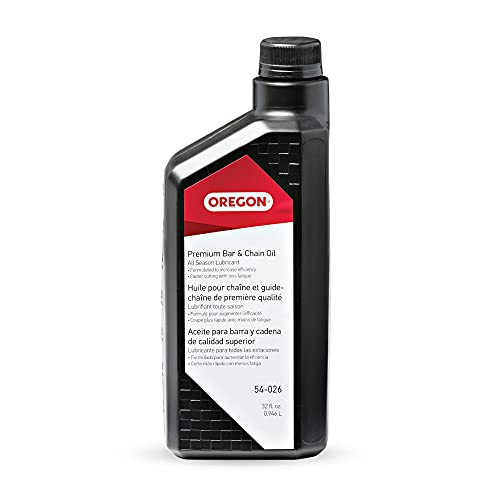
Best for: most corded and battery chainsaw owners who want a widely compatible, all-season product in a practical size.
Why it stands out: Oregon’s product page explicitly identifies the oil for electric as well as gas chainsaws, pole saws, and other equipment using a chain or slide bar. Oregon describes its formula as tacky to help resist throw-off and as a lubricant that helps reduce friction and wear.
View Oregon bar and chain oil on Amazon — quart bottle
Oregon is a natural first choice because the manufacturer spells out electric-saw compatibility rather than leaving the buyer to infer it from a generic “chainsaw oil” label. Its official description says the oil is designed to adhere to the bar and chain, resist throw-off in adverse weather, and protect metal parts. The range of sizes also makes it easy to buy a smaller bottle for occasional pruning or a gallon for frequent work. The quart is easier to lift and store; the gallon can be more convenient for a busy property or several compatible tools.
Choose Oregon if you want a straightforward general-purpose oil and your saw manual allows conventional bar and chain lubricant. Check the listing details carefully: similar labels and bottle sizes can look alike, so match the ASIN, brand, and volume. If you work in a sensitive outdoor area, check whether your manual recommends or permits a biodegradable product instead of assuming that ordinary mineral oil is suitable for the site.
2. Husqvarna X-Guard All Season — best for a cold-weather specification
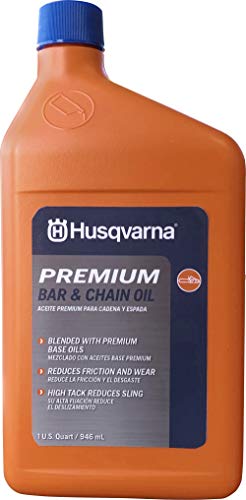
Best for: owners who need an all-season product with manufacturer-published cold-weather guidance.
Why it stands out: Husqvarna says X-Guard All Season is good for use down to 15°F (-9°C), uses a tackifier, and is formulated to reduce friction and wear on cutting equipment.

X-Guard is a strong alternative when the expected working temperature matters. The manufacturer publishes a lower operating-temperature point than a generic “all season” label, which gives a buyer something specific to compare with local conditions. That rating is not permission to ignore the saw manual or run equipment outside its own environmental limits. If temperatures fall below the oil’s stated range, ask the saw manufacturer or dealer which product and maintenance approach is appropriate.
Husqvarna also explains why tackiness matters: a lubricant that stays on the chain can reduce sling-off and help maintain lubrication at the cutting assembly. This does not mean that an oil should never be seen leaving the chain; a functioning oiler uses and distributes lubricant. It means the product is formulated for this application rather than behaving like a thin general-purpose fluid. Compare quart and gallon listings carefully because the ASIN and seller can differ even when the brand name is the same.
3. STIHL Bar and Chain Oil — best saw-brand option

Best for: STIHL owners who prefer to buy the lubricant from their saw’s brand family.
Why it stands out: STIHL lists bar and chain oil as a core chainsaw maintenance item. A saw-brand oil is easy to match with the dealer network and support materials for a STIHL electric or battery saw.
There is no need to buy the same brand of oil as the saw unless the manual requires it, but choosing a saw-brand lubricant can make shopping simple. STIHL’s maintenance guidance includes bar and chain oil as the product used to lubricate the cutting portion of the saw. Check the manual for the specific model and any environmental or seasonal recommendation. Verify the package size and exact product name before checkout because marketplace listings may show different STIHL lubricants, including two-cycle engine oil, which is a separate product for gasoline equipment.
That distinction is especially important for electric chainsaws. Battery and corded saws do not need premix gasoline, so two-cycle oil does not belong in the bar oil tank. The bar reservoir uses bar and chain lubricant; the engine-oil product is intended for a different component and purpose. Never pour a bottle into a reservoir based only on the word “chainsaw” on its label.
4. Oregon Premium Bar & Chain Oil, one gallon — best larger refill

Best for: owners who run several compatible saws or regularly cut firewood and want fewer replacement orders.
Why it stands out: the manufacturer identifies the gallon size and says the formula is for electric and gas saws; the larger bottle can reduce per-ounce packaging waste, though value depends on the current price.
A gallon is convenient for regular use, but it is not automatically the best value for every homeowner. A larger container can be heavier to pour, takes more storage space, and should be kept sealed and clearly labeled. If you only prune a few branches each year, a quart may be easier to use before the bottle gets misplaced or contaminated. Compare the current delivered cost per fluid ounce and consider how often you realistically operate the saw.
Why electric chainsaws need bar and chain oil
The chain travels around the guide bar while its cutters contact wood. That motion creates friction and heat. Bar and chain oil lubricates the contact surfaces, helping reduce wear on the chain and bar and supporting the saw’s intended cutting operation. Many electric chainsaws use an automatic oiler that feeds lubricant from a reservoir to the bar, but the owner still needs to fill the reservoir and confirm that oil reaches the cutting assembly.
A battery motor does not eliminate the need for this lubrication. In fact, battery saws can make it easy to forget because there is no fuel mixing or engine-oil routine to remind the user. A low reservoir, blocked oil hole, or wrong viscosity can result in a dry or poorly lubricated chain. Manufacturer support pages identify inadequate or unsuitable bar oil as one possible reason for smoking, poor cutting, and wear. If the saw begins to smoke at the bar, stop and inspect the chain sharpness, oil level, oil flow, and bar oil passages according to the manual.
Bar and chain oil is formulated to adhere to the chain at operating speed. Oregon and Husqvarna both describe tackiness or tackifier as a feature to help the lubricant stay in place and resist throw-off. Ordinary motor oil is not an equivalent substitute: equipment manufacturers caution that it lacks the intended tack and may contain contaminants if used. Husqvarna specifically says not to use used engine oil, noting possible contaminants, rubber-component deterioration, poor adhesion, and environmental and health concerns. Dispose of waste oil through an appropriate collection program; do not pour it on the ground or into a storm drain.
Bar oil is not two-cycle mix oil
Two-cycle oil is mixed with gasoline for certain gas-powered saw engines. Bar and chain oil lubricates the cutting assembly. They have different jobs and should never be confused. A corded or battery chainsaw does not use a gasoline-and-oil fuel mix, but it usually still uses bar oil. Check the labels and the manual before filling either reservoir. Our separate 2-cycle oil guide covers fuel-mix lubricants for applicable gas saws; it is not a substitute for this bar oil guide.
Bar oil is not general-purpose lubricant
Do not substitute cooking oil, hydraulic oil, automatic transmission fluid, penetrating spray, or a random shop lubricant unless the manufacturer explicitly approves it. A product that feels slippery between fingers may not cling to a fast-moving chain, protect the bar under load, or flow properly through the oiler. Use a chain lubricant intended for this application, in a temperature range that matches the saw maker’s guidance.
How to choose bar and chain oil for an electric chainsaw
Start with your saw’s manual, not the bottle aisle. Manuals specify the lubricant type, tank capacity, filling instructions, and sometimes the temperature or environmental constraints. After confirming compatibility, compare the following practical factors.
1. Match the manufacturer’s instructions
Look up the exact model, not just the brand. Corded, battery, and pole-saw models can have different reservoirs and requirements. Some owners’ manuals recommend a specific product class or oil made for chainsaw bars and chains. If a manual specifies a special biodegradable lubricant for work near water or in an environmentally sensitive location, follow that instruction. When uncertain, contact the tool manufacturer or an authorized dealer rather than testing a substitute.
2. Choose a suitable temperature range
Oil viscosity changes with temperature. A product that is appropriate in mild weather may not flow the same way in severe cold. Manufacturers sometimes provide seasonal guidance or a stated low-temperature point. Husqvarna lists X-Guard All Season for use down to 15°F (-9°C). That is useful when comparing products, but you must also obey the saw’s operating-temperature limits and manual. Do not assume “all season” means suitable for every extreme temperature.
If you use the saw only in ordinary backyard conditions, an all-season formula is usually the least complicated choice. For cold-weather work, verify the oil maker’s guidance, store the bottle as instructed, and check the saw’s oil flow before cutting. If the oil thickens, fails to feed, or the chain appears dry, stop and correct the issue instead of continuing under load.
3. Decide between conventional and biodegradable products
Conventional mineral-based bar oils are common and often cost less, but they are petroleum-based. Biodegradable or vegetable-based alternatives may be preferred for certain forestry, agricultural, or waterside work. The environmental benefit depends on the actual product and conditions; do not assume every green-colored label is biodegradable or that every biodegradable oil suits every saw. Check the product’s technical details, the saw manual, and local requirements. When the manual or land manager requires a specific type, follow that direction.
4. Pick the right bottle size
For light trimming and occasional yard cleanup, a quart is usually easier to handle and store. A gallon can make sense for frequent cutting or several compatible saws. Compare cost per ounce, but also consider whether you can keep the oil clean and sealed. If you pour from a gallon, use a clean spout or a dedicated funnel. Keep dust, sawdust, and water out of the container and wipe the bottle neck before closing it.
5. Consider availability and support
A dependable product should be easy to identify and restock. Established brands publish product details and maintain retailer channels. Verify that the Amazon listing’s seller, brand, product name, and bottle size match what you intend to buy. Avoid listings that combine incompatible items or use unclear labeling. We checked the ASINs and images for the linked product cards through Amazon’s product catalog, but the listing and inventory may change after this guide is published.
6. Avoid selecting by “eco,” “premium,” or “all-season” alone
Marketing terms do not replace technical fit. “Premium” might describe additives or a brand tier, but you still need to verify compatibility and temperature guidance. “All-season” is not an unlimited temperature guarantee. “Biodegradable” is a product claim that should be supported by the maker’s documentation, and it may not mean the oil is harmless to plants or wildlife. Read the specific product page and manual before relying on a label.
Using bar and chain oil through the seasons
In mild temperatures, fill the tank with the oil specified for the saw and use the machine as directed. In cold conditions, consult the oil and saw manuals for minimum temperatures. A cold bottle can pour more slowly, and a cold saw may need the maker’s prescribed storage or start-up steps. Do not thin the oil with solvents or mix different products in an attempt to improve flow unless the manufacturer directs you to do so.
In hot weather, the oil still needs to remain on the chain and reach the bar. If you see excessive throw-off or the chain appears dry, verify that the oil is intended for chainsaw use, check for leaks and blockages, and follow the saw manual’s maintenance procedure. Oil consumption is normal on many automatic-oiler saws; running out quickly can be a sign to check usage, tank size, leaks, and operating conditions. Never block an oiler to reduce oil consumption.
For seasonal storage, follow the manual. Some models require cleaning and a particular storage procedure. Wipe spilled oil, keep the saw away from ignition sources where applicable, and store lubricant in its original labeled container with the cap secured. Keep it away from children and pets, and follow the label for safe storage and disposal. Do not leave oil in an open cup or an unmarked drink bottle.
How to check that oil is reaching the chain
Use the model-specific method in your manual. Many manufacturers describe a simple oil-flow check that runs the saw briefly and looks for a small trace of oil on a light surface, but the procedure and safe position differ by model. Do not improvise a test while holding the saw in an unsafe posture or pointing the chain toward yourself. If your manual gives a check, follow it exactly and maintain the required guard, stance, and distance.
If oil does not reach the bar, disconnect the cord or remove the battery before inspecting the tool. Check the reservoir level, cap seal, visible oil channels, and bar oil hole as the manual allows. Sawdust and debris can obstruct passages. Clean only with the methods and tools the manufacturer recommends. If the oiler still does not work, contact service; do not bypass the system or continue cutting with a dry chain.
A properly lubricated chain should not smoke from friction during normal cutting. White smoke, excessive heat, a dry-looking chain, or a sudden drop in cutting performance deserves an immediate stop and inspection. A dull chain can produce heat and poor cutting even if oil is present, so also check sharpening and chain condition. Replace damaged components only with parts that match the saw’s specifications.
How much oil should an electric chainsaw use?
There is no universal consumption rate because reservoir size, bar length, oiler design, wood, cutting time, and operating conditions differ. Some saws use adjustable automatic oilers; others are fixed-flow. Learn the expected behavior from the manual, check the tank before each use, and watch for leaks. If you repeatedly empty a reservoir unusually fast, inspect the saw rather than simply refilling without understanding why.
Do not run the saw until the reservoir is empty just to measure consumption. Keep the oil supply above the minimum needed for operation, and stop if you suspect an oiling fault. A clean chain and bar, correct chain tension, and sharp cutters also support efficient cutting, but they do not replace lubrication.
Common bar oil mistakes to avoid
- Using two-cycle oil in the bar reservoir: it serves a different purpose and is not bar-and-chain lubricant.
- Using used motor oil: manufacturers warn that contaminants and poor tack can damage equipment and create exposure or disposal concerns.
- Assuming every electric saw takes any oil: confirm the exact model’s manual and use a product approved for chain and bar lubrication.
- Ignoring temperature guidance: a product may not flow correctly outside its stated conditions.
- Mixing oils in a dirty container: contamination can enter the reservoir and obstruct small oil passages.
- Overlooking a dry chain because the motor still runs: stop and inspect oil flow before continuing.
- Buying a gallon for a once-a-year task: the lower price per ounce may not offset storage, handling, and waste.
- Relying on price alone: product compatibility, authenticity, package size, and seller reputation matter.
How we chose these recommendations
We focused on oils with clear chain-and-bar purpose, manufacturer documentation, and a product identity that could be matched to a current Amazon catalog item with a valid image and ASIN. Oregon explicitly describes its premium oil for electric and gas chainsaws. Husqvarna publishes X-Guard’s temperature and tackifier details. STIHL includes bar and chain oil in its chainsaw maintenance guidance. The recommendations are organized by use case rather than presented as a laboratory ranking.
We did not test these oils side by side, measure wear, or claim a quantified performance advantage. Manufacturer descriptions are used for product features, and the Amazon links are included as shopping links for the exact catalog items identified. Amazon prices, sellers, stock, and images can change. Confirm the product and bottle size on the retailer page and follow your saw manual.
Frequently asked questions
What is the best bar and chain oil for electric chainsaws?
Oregon Premium Bar & Chain Oil is our best all-around choice because Oregon explicitly lists it for electric chainsaws and offers quart and gallon sizes. Husqvarna X-Guard is a good alternative when its published cold-weather guidance is useful, while STIHL oil suits owners who prefer the saw-brand product. The best choice is the one approved by your specific manual.
Do battery chainsaws need bar and chain oil?
Most battery chainsaws with a conventional chain and guide bar use bar and chain oil, often through an automatic oiler. Battery power does not eliminate friction at the cutting assembly. Check the manual and fill the correct reservoir with the specified product.
Can I use motor oil in an electric chainsaw?
Do not substitute standard or used motor oil unless the saw maker specifically approves it. Bar and chain oil is formulated to adhere to the chain and bar. Manufacturers warn that motor oil may not provide the intended tack and that used oil may contain contaminants.
Can I use 2-cycle oil as chainsaw bar oil?
No. Two-cycle oil is designed for fuel lubrication in applicable gas engines. Bar and chain oil lubricates the guide bar and cutting chain. Electric saws do not use a gasoline mix, but they may still require bar oil.
How often should I refill the bar oil tank?
Check the reservoir before each use and refill according to the manual. Consumption varies by model, bar, work, and conditions. Stop if the chain appears dry, the bar smokes, or the oil level drops unexpectedly quickly.
Is biodegradable bar oil better?
It may be appropriate for certain environmentally sensitive jobs, especially where a land manager or manual requires it. Verify the product’s actual documentation and your saw’s compatibility. “Biodegradable” does not mean safe to spill or dispose of anywhere.
Does bar and chain oil expire?
Follow the product label and manufacturer guidance for shelf life and storage. Keep the original container closed, clean, and away from contamination, heat, and children. If oil looks contaminated or has been stored improperly, do not pour it into the saw.
Why is oil spraying off my chain?
A small amount of oil distribution can be normal, but excessive throw-off can indicate the wrong product, oiler setting, operating conditions, or a fault. Verify the oil type and model-specific setup. Check for leaks and follow the manual rather than adjusting or blocking the oiler without guidance.
Can one bottle be used for a corded and battery chainsaw?
Usually, a bar and chain oil intended for chainsaws can be used across different power types if both manuals allow it. Oregon explicitly lists its product for gas and electric saws. Still, check both manuals for any model-specific or environmental requirement.
What size oil bottle should a homeowner buy?
A quart is convenient for occasional trimming and easier to pour. A gallon may suit regular firewood cutting or multiple saws. Compare the current cost per ounce and consider how much you will use before storage becomes inconvenient.
What should I do if the chain smokes?
Stop the saw and disconnect power or remove the battery when safe. Check oil level and flow, bar oil passages, chain sharpness, chain tension, and bar condition according to the manual. Do not continue cutting to see if the smoke goes away.
Final verdict
For most corded and battery chainsaw owners, Oregon Premium Bar & Chain Oil is the easiest all-around recommendation because its manufacturer explicitly lists electric-saw compatibility and offers both quart and gallon bottles. Husqvarna X-Guard is a strong alternative when its stated 15°F (-9°C) use guidance is relevant. STIHL’s own bar oil is a convenient option for owners who prefer to stay with the saw brand.
Whatever bottle you choose, read the exact saw manual, use bar oil rather than two-cycle or engine oil, keep the reservoir clean, and verify that lubricant reaches the chain before cutting. A small amount of attention to oil flow helps protect the cutting assembly and catches problems before they become expensive repairs.
Certain content that appears on this site comes from Amazon. This content is provided “as is” and is subject to change or removal at any time. Product examples and images are supplied through Amazon Creators API; confirm specifications and availability on the current listing.