Best Gas Chain Saws: How to Choose the Right Gas-Powered Model
The best gas chain saws are matched to the wood, workload, operator, and maintenance routine—not simply the largest engine or longest guide bar in a listing. A gasoline-powered saw can be useful for repeated cutting away from an outlet, storm cleanup, land management, and firewood processing. It also brings extra responsibilities: fuel handling, exhaust, noise, starting, chain maintenance, and a higher consequence when a cut goes wrong. Choosing the right class of saw can make the tool easier to control and can reduce the temptation to use an oversized machine for a small task.
This guide focuses narrowly on gasoline-powered chain saws. It explains how to compare workload classes, power and weight, bar and chain compatibility, starting systems, fuel requirements, vibration, safety features, and upkeep. It does not rank products based on hands-on testing, and it does not assume current pricing or model specifications. Treat product cards as examples to investigate, then verify the exact model number, manual, included bar and chain, current availability, and warranty before purchase.
Affiliate disclosure: DailyHomeDecorating.com may earn a commission from qualifying purchases through links in this article. This does not change the price you pay.
Amazon product examples to compare

ASIN: B0G2NVBQCY

ASIN: B0BRNTSSY8

ASIN: B0H41ZB14H
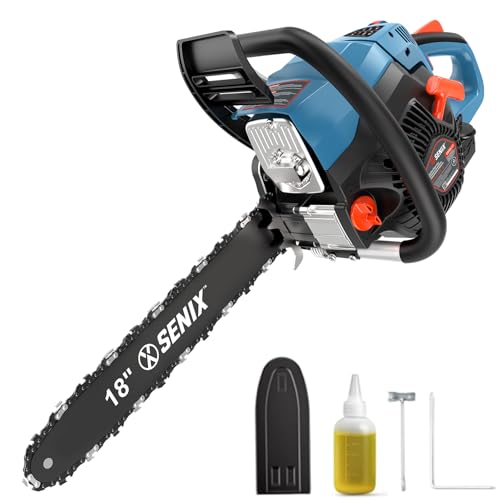
ASIN: B0FJ22JY8C
Certain content that appears on this site comes from Amazon. This content is provided “as is” and is subject to change or removal at any time. Product examples and images are supplied through Amazon Creators API; confirm specifications and availability on the current listing.
Table of contents
- Quick comparison
- What gas chain saws are for
- How to choose a gas saw
- Bar and chain selection
- Safety and operating limits
- Fuel, maintenance, and storage
- Frequently asked questions
Quick comparison: gas chain saw classes
| Use profile | Typical priorities | Trade-offs to check |
|---|---|---|
| Occasional homeowner cleanup | Manageable weight, dependable starting, simple controls, service access | Gas maintenance may outweigh the benefit if jobs are rare |
| Firewood and regular property work | Balanced power and weight, suitable bar range, parts availability | More frequent chain sharpening, fuel mixing, and upkeep |
| Landowner or frequent cutting | Durability, service network, compatible chains and bars, fatigue control | Higher purchase and maintenance demands; operator training matters |
| Professional forestry or tree work | Task-specific saws, service support, safety training, multiple setups | Not a casual DIY category; complex tree work requires qualified skill |
These are shopping profiles, not standardized engine categories. Manufacturers may describe saws as homeowner, farm and ranch, or professional, but the labels do not replace the technical manual. Compare powerhead weight, displacement or output as specified, bar range, chain type, fuel requirements, vibration information, safety equipment, serviceability, and the tasks you actually perform.
What gas chain saws are—and are not—best at
A gas chain saw uses a small combustion engine to drive a cutting chain around a guide bar. It can operate without a nearby electrical outlet and can be refueled for continued work, which helps on larger properties or remote sites. That mobility is useful when cutting clean logs, bucking firewood, or handling storm debris within the operator’s training. The same engine produces exhaust and noise, and the saw requires the correct fuel, lubrication, chain tension, air filtration, and scheduled service.
A gas model is not automatically the most capable choice for every owner. For a few light cuts near a home, a battery model may be quieter, simpler to store, and easier to start. A corded electric saw may suit limited work near a safe outlet, if the cord and operating conditions can be managed. For garden pruning, smaller tools may make more sense than a chain saw: compare the site’s guides to hand saws for gardening, loppers for thick branches, and pole saws for tree trimming.
Gas chain saws are distinct from battery and corded models in how they start, run, refuel, and require maintenance. Our separate battery chain saw guide covers that power source. A gas saw should not be chosen just because its engine sounds more powerful; control, fit, workload, and operator experience are at least as important.
How to choose among the best gas chain saws
1. Define the actual work
Before comparing listings, write down what you expect to cut: species or general wood type, typical diameter, frequency, location, and whether the wood is clean, dirty, frozen, or under tension. A few fallen branches are a different workload from routine firewood cutting or forestry. Include the awkward parts of the job: carrying the saw, working on uneven ground, managing fuel, and transporting cut pieces. The best choice is usually the smallest class that can handle the intended work safely and consistently.
Do not choose a chain saw for felling or limbing based on a product page alone. Tree work can involve unpredictable movement, hung-up limbs, decay, wind, slopes, overhead hazards, and escape routes. If a tree is leaning, damaged, near buildings or power lines, or under unusual tension, use a qualified tree-care professional. A consumer saw is not a substitute for training, planning, and specialized equipment.
2. Compare power and powerhead weight together
Specifications may describe engine displacement, power output, or both. These figures are not directly comparable across every maker and model, and a bigger value does not prove that a saw is suitable for your work. A longer bar and larger engine can increase the weight carried and the force involved in a cut. Look at the complete powerhead weight and whether the listed weight includes the bar, chain, fuel, and oil; manufacturers may define weight differently.
Balance also matters. A saw that feels manageable when held at waist height can become tiring during repeated cuts. If possible, handle a comparable saw while it is off and follow store policies. Consider grip shape, handle spacing, control reach, vibration information, and whether the saw can be carried safely. Fatigue reduces attention and coordination, so a heavy saw that exceeds the operator’s strength or experience is a poor match even if its engine capacity appears attractive.
3. Pick a practical guide-bar length
Bar length must be compatible with the powerhead and recommended workload. A longer bar can reach farther across a large log, but it can add leverage and weight, demand more from the engine, and present more exposed chain. A shorter bar can be easier to maneuver but may not be appropriate for the diameter or cut configuration. Never assume that every bar length can be fitted to a saw or that using the longest compatible bar is best.
Check the manufacturer’s approved bar range and the manual’s cutting instructions. Select the shortest bar that properly covers the work you intend to do while staying within the maker’s guidance. For large-diameter wood, do not exceed the saw’s rating or attempt a complicated cut beyond your training. Having an appropriate tool or asking a professional is safer than forcing a small saw through oversized stock.
4. Verify chain and bar compatibility
The chain must match the bar, sprocket, and powerhead. Important dimensions can include pitch, gauge, drive-link count, and cutter style. A chain that is close but not correct can fail to fit, run poorly, or create a dangerous condition. Record the exact model and part numbers from the current saw setup before ordering replacements. Use the manufacturer’s compatibility chart and manual rather than relying on a generic listing title. As one manufacturer reference explains, verify the chain and bar fit criteria for the exact model in its chain and bar guide.
Chain design and sharpness influence cutting behavior. Reduced-kickback chains and compatible bars can help reduce certain kickback hazards, but they do not eliminate the risk. A dull chain can encourage excess pressure and heat; a chain sharpened incorrectly can cut unevenly or behave unpredictably. If you do not know how to inspect, sharpen, tension, and lubricate a chain, learn from the saw maker or a qualified instructor before operating the saw.
5. Consider starting and control features
Cold starting and restarting a gas saw require a model-specific procedure. Primer bulbs, decompression valves, choke controls, and starting systems vary. A design that helps an operator start a saw can be useful, but it does not remove the need to follow the manual and keep the chain brake engaged when instructed. Check that the start/stop control is easy to identify and reach, and learn what each control does before fueling or starting.
Compare the chain brake, throttle lockout, chain catcher, hand guards, vibration isolation, and other features listed for the exact model. Confirm that safety devices are present, serviceable, and explained in the instruction manual. A feature list should not be treated as proof that a saw is safe to use in every condition. The operator, protective equipment, maintenance, and cut plan remain essential.
6. Review vibration, noise, and ergonomics
Gas saws are noisy and produce vibration. Manufacturers may report vibration values and sound data, but the measurement conditions and units should be checked before comparing them. Reduced vibration can improve comfort, yet it does not eliminate fatigue or exposure. Use hearing protection and take breaks. If a saw is unusually rough, loose, or noisy, stop and inspect it rather than assuming that all vibration is normal.
Ergonomics include the front and rear handles, balance, throttle response, grip texture, and access to routine service points. A saw that is difficult to hold securely can undermine control. Consider the operator’s hand size, strength, and experience. If more than one person will use the saw, each operator should receive training and verify fit rather than sharing assumptions about how it handles.
7. Check service support and ownership cost
A gas saw needs more than fuel. Over time, the owner may need chain sharpening or replacement, bar service, air-filter cleaning, spark-plug service, fuel-system care, and professional repair. Check whether the brand has authorized service nearby and whether common parts are available for the exact model. Read the warranty terms and find out what maintenance records or approved fuel requirements apply.
Estimate ownership costs over the period you expect to keep the saw. Include fuel and oil, protective equipment, replacement chains and bars, sharpening tools or service, storage, and periodic repairs. Do not compare only the initial price with a battery model that requires a separately sold battery or charger, or with a corded model that may not suit remote work. The best value is the tool that fits the real workload and can be maintained correctly.
Fuel, lubrication, and emissions considerations
Many gas chain saws use a two-stroke engine that requires a specified gasoline-to-oil mixture, while other configurations may use a different system. Never guess the ratio or substitute automotive oil. Read the exact manual and use fresh fuel of the grade and composition the manufacturer allows. Some manufacturers specify premixed fuel or limits on ethanol content; those requirements are model-specific. A wrong mixture or stale fuel can cause poor running and engine damage.
Fueling should happen with the engine stopped and cool, away from flames, sparks, smoking, or other ignition sources. Use an approved fuel container and avoid spills. Do not fuel a running or hot saw. Move to the designated work area before starting, following the safety guidance and applicable workplace procedures. Keep fuel away from children and living spaces, and store it in an approved container in a suitable, ventilated location according to local fire rules.
Chain lubrication is separate from engine fuel. The bar and chain need the lubricant specified by the manufacturer. Check the oil reservoir and lubrication system before work and monitor oil use during cutting. Running a chain dry can damage the bar and chain and may create unsafe operating behavior. Do not pour used oil into soil, a storm drain, or household trash; follow local disposal requirements.
Gasoline engines emit exhaust and should not be operated in enclosed or poorly ventilated areas. Do not run the saw in a garage, shed, vehicle, or other enclosed space, even with a door open. Exhaust can accumulate. Plan outdoor work away from people, animals, doors, windows, and air intakes. Consider the noise impact on neighbors and local restrictions before choosing a gas model for frequent use.
Safety: equipment, setup, and operating limits
Chain saws can cause severe or fatal injuries. OSHA’s current chainsaw safety guidance covers protective equipment, kickback, pre-use checks, safe starting, carrying, and work conditions. It says to keep both hands on the handles, avoid cutting with the bar tip, maintain balance, check controls and chain tension, and use protective devices to reduce kickback. Review the OSHA Chainsaw Safety QuickCard, the relevant manufacturer safety manual, and the exact saw’s operator manual before operating. Manufacturer documents are model-specific and should control setup and maintenance.
Protective equipment should be selected for the job and meet applicable standards. OSHA’s guidance lists hand, foot, leg, eye, face, hearing, and head protection for chain saw operation. Fit matters, and gear must be in serviceable condition. Ordinary work clothes, sneakers, and basic glasses are not substitutes for purpose-built chain saw PPE. Employers must follow the applicable workplace rules; homeowners should use appropriate protection and training rather than relying on minimum legal requirements.
Before starting
- Inspect the chain, bar, chain brake, throttle lockout, stop switch, handles, chain catcher, fasteners, and guards.
- Confirm chain tension and lubrication according to the manual; do not operate with a loose, damaged, or improperly sharpened chain.
- Check the work area for nails, wire, stones, people, animals, overhead hazards, and escape paths.
- Identify whether the wood is under compression or tension and how it could move when cut.
- Wear suitable head, eye or face, hearing, hand, leg, and foot protection for the task.
- Fuel outdoors with the engine off and cool, using the required mixture and approved container.
- Start the saw on a firm support using the manufacturer’s procedure; never improvise a drop-start.
- Keep the chain brake engaged for starting when the manual instructs, and verify that the saw is stable.
During operation
Keep a secure two-handed grip and stable footing. Do not cut above shoulder height, from a ladder, or from an unstable platform. Avoid the bar tip and keep the chain brake and other safety features in working condition. Do not touch the chain while it is moving, and do not reach across the saw. Shut off the engine or use the chain brake as directed when moving between cuts or carrying the saw across uneven terrain.
Branches under tension can spring when cut. Logs can roll, pinch the bar, or shift as support changes. Plan cuts so the wood remains stable and the bar is unlikely to be trapped. If you cannot identify how the material will move, stop and get help. Felling, limbing, bucking on slopes, overhead cutting, and storm-damaged trees can exceed a homeowner’s skill level. OSHA specifically warns against attempting work beyond training, including trees on unstable ground or steep slopes, heavy lean, decay, or trees known to split.
If the chain stalls, binds, or behaves unexpectedly, release the throttle, engage the brake as appropriate, and shut the saw down before investigating. Do not pull a stuck saw free while the chain is moving. Never make adjustments with the engine running unless the manufacturer gives a safe procedure for that specific operation. A damaged safety component means the saw should be taken out of service until repaired.
Fueling and carrying
Let a hot engine cool before refueling. Use the fuel mixture and container specified by the manual, wipe spills, and move away from the fueling area before starting. Keep fuel and the saw away from ignition sources. For transport, shut the engine off, engage the brake or cover the bar as directed, and secure the saw so it cannot move. Do not carry a running saw or walk with the chain exposed and moving.
Gas saws versus battery and corded chain saws
Gasoline offers mobility and quick refueling, which can be useful when work is remote or continuous. The trade-offs are engine maintenance, fuel storage, exhaust, noise, starting steps, and vibration. Battery saws can be easier to start and may be preferable for shorter jobs near home, but they depend on charged batteries and their runtime is affected by workload and battery capacity. Corded electric saws avoid fuel mixing but require a suitable power source and careful cord management.
Do not assume one power source is always more powerful, economical, or appropriate. Compare the exact model’s intended task, bar and chain, rated performance, operator weight tolerance, service needs, and job location. For detailed battery-specific criteria, use the battery chain saw guide. If your work is limited to trimming elevated branches from the ground, a pole saw may reduce the need to handle a full-size saw overhead; see the site’s pole saw guide and follow its safety limits.
Maintenance and storage
After each work session
Shut off the engine, allow the saw to cool, and follow the manual before cleaning. Remove sawdust and debris from the bar groove, sprocket cover, chain brake area, and air intake as directed. Inspect the chain, bar, fasteners, and safety devices. Clean the air filter using the specified method and interval; do not damage filter media or operate without the required filter. Keep cooling fins and exhaust areas free of buildup.
Check chain sharpness and tension before the next use. A chain should be sharpened with the correct file size, angle, depth-gauge setting, or approved tool for its design. Incorrect sharpening can make it cut unevenly and increase control problems. If you are learning, use a training class or have a qualified service provider demonstrate. Replace a cracked chain, damaged bar, or defective safety component rather than trying to extend its life.
Long-term storage
Follow the manufacturer’s storage procedure for fuel and carburetor care. Some instructions may call for draining fuel, using approved stabilizer, or running the engine until a system is empty; procedures differ. Do not apply generic storage advice without checking the manual. Store the saw with the chain brake and bar protection arranged as directed, away from children, ignition sources, damp conditions, and living spaces.
Keep fuel in an approved, labeled container and follow local fire and environmental rules. Do not store fuel in a food or beverage container. Keep bar and chain oil separate from engine fuel and label containers clearly. Before returning a stored saw to service, inspect all safety features and consumables, verify fuel condition, and follow the starting procedure.
Research-based comparison method
For this guide, products in the gas-chain-saw category should be compared using manufacturer specifications and manuals rather than unverified rankings. A useful comparison records exact model and revision, intended user class, engine type and manufacturer-stated output, powerhead weight definition, supported bar range, compatible chain pitch and gauge, starting controls, safety equipment, vibration data if published, fuel and oil requirements, warranty, and service access.
The work profile should be stated separately from specifications. A model could be suitable for regular firewood bucking but a poor choice for pruning because it is too heavy or powerful for the operator. A saw could list a compatible long bar but still require particular wood, chain, or experience for that work. Reviews are useful for identifying owner concerns, but they are not a substitute for specifications, a safety manual, or a controlled test. Current prices and availability change, so confirm them on the retailer listing at the time of purchase.
When Amazon API cards are added below the disclosure, each ASIN and image should be checked against the exact product listing. Verify the model, gas engine type, bar package, and included safety accessories rather than treating the search result or image alone as confirmation. Specifications and bundles may change; the current manufacturer manual remains the primary reference.
Common buying mistakes
Buying the biggest saw available
A larger saw can add weight, vibration, and control demands. More power does not automatically make a cut safer or more productive. Choose for the actual workload and operator’s ability. If the work requires a larger professional saw or tree expertise, hire a qualified operator.
Choosing a long bar without checking compatibility
Bar length affects balance, load, reach, and kickback exposure. Use only a bar and chain configuration approved for the model. A long bar can be difficult to control and may not suit the saw’s intended engine class or your experience.
Ignoring protective equipment cost
Protective clothing and gear are part of the purchase, not optional extras. Budget for properly fitted head, eye/face, hearing, hand, leg, and foot protection suitable to the task. Replace gear that is damaged, expired, or no longer fits.
Underestimating fuel upkeep
Gas saws need fresh fuel mixed or supplied as specified, bar oil, filter maintenance, and seasonal storage steps. A saw that sits for long periods may become a maintenance burden. If you make only occasional small cuts, compare a battery or manual alternative before choosing gas.
Using a chain saw for jobs beyond training
Tree felling and storm cleanup can involve hidden tension, decay, unstable roots, overhead branches, and unpredictable movement. A product’s engine capacity does not make the operator qualified. Stop when conditions are uncertain and call a professional.
Frequently asked questions
What gas chain saw size should a homeowner buy?
There is no universal size. Base the choice on the typical wood diameter, frequency, location, operator experience, and the model’s intended use. Compare powerhead weight and supported bar configurations, and avoid buying more capacity than can be handled safely. For small occasional pruning, a smaller manual or battery tool may be more suitable.
Are gas chain saws better than battery saws?
They serve different users and work patterns. Gas can be useful for remote or repeated work with refueling access, while a battery saw may be easier to start and maintain for shorter jobs near home. Compare actual runtime, workload, service, weight, noise, emissions, and operator experience for the models under consideration.
What is the best bar length for a gas chain saw?
The best length is the shortest manufacturer-approved bar that fits the intended cuts. A longer bar can add weight and change control demands. Check the exact manual for supported configurations and do not assume the longest listed bar is the right one for every job.
Do gas chain saws need mixed fuel?
Some two-stroke models require a specified gasoline-and-oil mixture, while other designs may differ. Follow the exact model manual for fuel type, ratio, ethanol guidance, and storage. Do not guess or use an automotive oil substitute.
How often should I sharpen a chain?
Sharpening frequency depends on the wood, dirt, contact with foreign objects, chain design, and cutting behavior. Inspect the chain before use and sharpen when the manual’s indicators or cut quality show it is needed. A dull chain should not be compensated for with greater feed pressure.
How tight should a chain saw chain be?
Use the manufacturer’s tension procedure for the exact saw and chain. The chain must be correctly seated and tensioned while cold or as specified, and it must be checked during work as directed. Too loose or too tight can create a hazard or damage equipment.
Can I use a longer bar on my gas saw?
Only if the manufacturer lists that bar configuration as compatible and the chain, sprocket, and cutting conditions are correct. A longer bar changes handling and may place greater demands on the saw. Do not modify the setup based on a generic online recommendation.
What protective equipment is needed?
OSHA’s chainsaw guidance lists hand, foot, leg, eye, face, hearing, and head protection for saw operation. Select equipment appropriate to the job, properly fitted, and compliant with applicable standards. Training and a safe work plan are also essential.
Is a gas chain saw suitable for storm-damaged trees?
Storm-damaged trees can contain unpredictable tension, hanging limbs, split trunks, and unstable roots. These conditions can exceed a homeowner’s skill and should be assessed by a qualified tree-care professional. Do not climb, cut overhead, work near power lines, or attempt a hazardous tree because the saw is powerful enough.
How should I store a gas chain saw?
Follow the manufacturer’s seasonal storage instructions for fuel, oil, chain, and the engine. Store fuel in an approved container and keep the saw away from children, living areas, and ignition sources. Inspect the saw and safety devices before returning it to use.
Can a gas chain saw run indoors?
No. Gasoline engines produce exhaust and must not be operated in an enclosed or poorly ventilated area. Work outdoors and away from doors, windows, and air intakes, following the manual and local requirements.
Final decision: match the saw to the operator and job
The best gas chain saws balance workload, bar compatibility, weight, controls, service support, and safe handling. Define the cuts first. Then compare the exact model’s manual, approved bar and chain, safety equipment, fuel instructions, maintenance demands, and current listing. Gas power can be valuable when a job is remote or repeated, but it brings noise, exhaust, fuel, vibration, and upkeep that a buyer should account for.
Choose a saw you can control, learn its starting and maintenance procedures, wear appropriate protective equipment, and stop when the wood or conditions exceed your training. For uncertain or hazardous tree work, use a qualified professional. A well-matched saw and careful operator matter more than a marketing label or a single engine specification.
This guide is general product research and is not a substitute for the manufacturer’s instructions, formal chain-saw training, occupational safety requirements, or professional tree-care advice.