Disclosure: As an Amazon Associate, dailyhomedecorating.com earns from qualifying purchases. Links on this page are affiliate links; they cost you nothing extra. Prices and availability change often, so check the current Amazon listing before you buy.
Every parent meets the same 3 a.m. examination: a hot forehead, a sleeping household, and the need for a number that can be trusted. The best digital thermometer for babies and kids is the one that produces that number accurately, quickly and kindly — and the honest complication is that the right device changes as the child grows, because the measurement sites a baby tolerates and a toddler permits are different countries with different capitals.
This roundup follows the paediatric shape of the problem. For young infants, the rectal reading remains the reference clinicians ask for, and the infant pick is built for exactly that duty. Toddlers graduate to the ear and the forehead; school-age children to the oral stick their grandparents would recognise; and the connected thermometer serves the parent who wants the fever’s story across a night rather than its snapshot. Each pick is covered with its technique, because a thermometer’s accuracy lives in the hand that holds it.
One framing note, stated plainly at the start: this article discusses comfort and measurement, and it does not give medical advice. Fever thresholds, warning signs and when to seek care are questions for the child’s own clinician and the guidance of your health authority — the roundup’s job is to ensure that when you call them, the number you report is a good one.
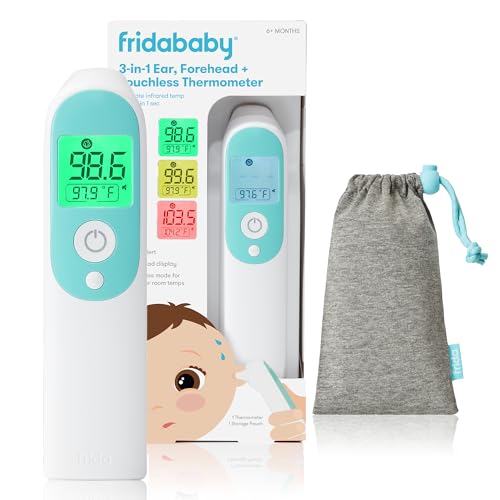
Best Digital Thermometer For Babies And Kids: The Short Version
| Pick | Known for |
|---|---|
| Frida Baby Rectal Thermometer | Best for young infants |
| Braun ThermoScan Ear Thermometer | Best for toddlers and up |
| Braun No Touch + Forehead | Best for sleeping children |
| iProven Oral & Rectal Stick | Best value all-rounder |
| Withings Thermo | Best connected thermometer |
The best digital thermometer for babies and kids depends on the child’s age, because the medicine does: rectal readings are the reference standard for young infants, ear and forehead readings serve toddlers and older children well, and a cheap oral stick remains the school-age benchmark. The picks below divide those briefs — the infant reference, the ear thermometer for the toddler years, the no-touch for sleeping children, the connected option, and the value stick — and the guide explains how to take a reading worth acting on, which matters more than the device that takes it.
In this guide
The methods, by age: what the clinicians ask for
In the first months of life, fever is treated with a seriousness out of proportion to the number, and the rectal temperature is the reading the system is calibrated to: it tracks the body’s core most closely, and infant guidance worldwide is written in its terms. The device for it is a simple flexible-tip stick, used with lubricant, inserted gently a short distance, and held by a calm hand — a technique the how-to below walks through, and one that sounds worse to new parents than it proves to be at the changing table.
From toddlerhood, the ear thermometer becomes practical: it reads infrared from the eardrum, the body’s own thermostat neighbourhood, in about a second. Its accuracy lives in placement — the ear canal straightened with a gentle pull, the probe aimed as its manual directs, the same ear used for repeat readings — and its great virtue is speed on a child whose cooperation is measured in seconds. Earwax, a recent cold ear from outdoors, and a poor aim are its known saboteurs, and the guide below names them so they can be managed rather than met.
Forehead thermometers — the swipe and the no-touch — are the kindest instruments in the nursery and the most sensitive to conditions: sweat, a hat just removed, a draughty room or a scanner held at the wrong distance can each move the reading. Used on a dry, settled forehead at the maker’s stated distance, they serve brilliantly for screening and for the sleeping child; used carelessly, they manufacture both false alarms and false reassurance, which is why this roundup grades them as screening instruments with a confirmation habit, not as the nursery’s final court.
Accuracy, honestly stated
Every method in this roundup is accurate enough for home decisions when its technique is right, and none is accurate when its technique is wrong — which is why the differences between models matter less than the differences between readings taken well and badly. The parent’s craft is consistency: same device, same site, same conditions, readings compared against the child’s own baseline and behaviour rather than against a stranger’s chart. A miserable child with a modest number deserves more concern than a playing child with a higher one, and every clinician will say so.
Two habits protect the household from the instruments’ weaknesses. The first is confirmation: an unexpected reading — very high, or normal on a plainly unwell child — is retaken, by a second method if one is in the house, before it drives a decision. The second is the record: time, reading, site and any medicine given, noted in the phone or on the fridge pad, because the clinician’s first questions are a timeline, and a parent with a timeline gets better advice faster.
What this roundup will not do is print fever thresholds or dosing guidance, deliberately: those belong to the child’s clinician and to current official guidance, which varies by age and circumstance and changes as evidence does. The thermometer’s contribution to that conversation is a trustworthy number, honestly taken — and producing it is a skill this article teaches in full, because it is the part of fever management a shopping page can legitimately own.
Speed, light and the 3 a.m. specification
A child’s thermometer works the night shift, and its specification should be written by the night: a backlight that does not blast the room, a beep that can be silenced, a reading fast enough for a half-asleep child and a half-asleep parent, and a memory that recalls the last reading when the parent cannot. Several picks below were chosen on exactly these grounds, because the difference between a four-second and a forty-second reading at 3 a.m. is the difference between a sleeping child re-measured and a household awake until dawn.
Storage and survival are the day shift’s criteria: probe covers for the ear device bought before they run out, batteries replaced on a rhythm rather than discovered dead, a case that keeps the stick out of the toy box’s economy. The thermometer is a small instrument with an outsized job, and households that keep it like equipment — one drawer, one home, checked monthly — are the ones whose 3 a.m. examination goes the way this roundup intends.
Finally, buy before the fever. The thermometer bought in a panic at midnight is the one the shop had, not the one the child needs; the household that chooses in daylight, practises on a healthy child and learns its technique in calm will measure well in the storm. That sentence is this roundup’s whole philosophy, and the how-to below is written to be read before it is needed.
The nursery’s instrument drawer: a system, not a gadget
This roundup’s picks assemble, in a well-kept nursery, into a system rather than a collection: the reference stick for the infant months and for confirmation, the fast instrument for the toddler years, the silent scanner for the sleeping check, and the record — app or pad — over them all. Households should buy the system in the order the child’s age demands it, not all at once: the stick before the birth, the ear or forehead when the toddler’s cooperation becomes the scarce resource, the connected ledger when the fever’s third day first teaches its value.
The system’s discipline is the drawer’s: one home for the instruments, batteries and covers checked on the same monthly rhythm as the smoke alarms’, and a household where every caregiver — parents, grandparents, the babysitter with the laminated sheet — knows which instrument is the court of appeal. Fevers are managed by households, not by devices, and the drawer is where the household keeps its competence.
Grandparents, nurseries and other people’s hands
A child’s temperature gets taken by more hands than any other measurement in its life: the childminder’s, the nursery’s, the grandparent’s, the other parent’s at the end of a phone call. Each hand has its own technique and its own instrument, and the readings that result are a small parliament of methods. The household’s defence is the one this article has built throughout: a home reference method, a kept record with sites noted, and a calm understanding — passed to every caregiver — that the number travels with its site or it does not travel at all.
There is a kindness in briefing the other hands well. The grandparent handed a strange scanner and a hot grandchild has been given an anxiety, not an instrument; the same grandparent, practised once in daylight with the household’s own device and its one-page sheet, becomes part of the system. Children are raised by villages, and the village’s thermometers should be calibrated to each other by rehearsal, exactly as its stories are.
When the thermometer is not the next step
A roundup about instruments owes its readers a section about the instrument’s limits. There are presentations — the very young infant with any fever, the child whose behaviour frightens its parents whatever the number says, the fever with the signs the official guidance lists — where the next step is not a better reading but a faster phone call, and the thermometer’s role is finished until the clinician asks for it. This article prints no thresholds, deliberately, and it ends its advice where the clinician’s begins, on purpose and without apology.
What the household can do in advance is the preparation this article’s how-to ends with: the numbers written down, the route known, the record kept from the fever’s first hour so that the call, whenever it comes, starts from evidence. Preparation is the part of an emergency that can be rehearsed, and a household that has rehearsed it meets the rest of the emergency as a team with a system — which is, in the end, what this whole roundup has been building.
The Picks in Detail: Best Digital Thermometer For Babies And Kids Contenders
Frida Baby Rectal Thermometer — Best for young infants
For the first months, when clinicians ask for a rectal reading by name, the Frida design answers the nursery’s two anxieties at once: a flexible tip and a stopper that prevents over-insertion, a large backlit display, and a reading fast enough for the changing table’s diplomacy. It is covered here in prose — this programme links only listings it has verified against the maker’s own data — and it is the infant pick on the strength of its design’s understanding of the task.
Its constituency is deliberately narrow: the youngest babies, for whom its method is the reference. Households should graduate to the ear and forehead picks as the child grows and the method’s dignity becomes a negotiation, and keep the Frida in the drawer as the confirmation instrument — the second opinion, in plastic, that settles a doubtful forehead reading in the infant months.
Strengths
- Designed for the infant reference method
- Insertion stopper answers the new parent’s fear
- Fast, backlit, changing-table friendly
Trade-offs
- A narrow, infant-only constituency
- Rectal duty is nobody’s favourite task
- Prose-only in this programme pending verification
Best for: newborns and young infants, and confirmation readings
Not suited for: toddlers and older children, who have better options
Positioning: best digital thermometer for babies and kids — no linked listing is offered for the Frida Baby Rectal Thermometer; it is covered in prose, so check the maker’s own current terms before deciding.
Braun ThermoScan Ear Thermometer — Best for toddlers and up
The ThermoScan is the ear method’s reference design: a pre-warmed tip that avoids cooling the ear canal it measures, positioning guidance, a memory of recent readings and a speed that respects a toddler’s attention span. Covered in prose under this programme’s verification discipline, it remains the pick the ear category is graded against, and the toddler years’ most practical instrument.
Its costs are the method’s: probe covers as a running consumable, technique that must be learned, and readings that earwax or a cold ear can sabotage. Households that learn the placement — the gentle pull, the consistent ear, the retake habit — get laboratory manners from a nursery instrument, and the how-to below teaches exactly that hand.
Strengths
- The ear method’s reference design
- Pre-warmed tip and positioning guidance
- One-second readings for short cooperations
Trade-offs
- Probe covers are a running cost
- Technique-sensitive: placement is everything
- Prose-only here pending listing verification
Best for: toddlers, preschoolers and school-age children
Not suited for: young infants, whose reference method is rectal
Positioning: best digital thermometer for babies and kids — the Braun ThermoScan Ear Thermometer is covered in prose, not as a linked pick; compare it on the maker’s own current terms before deciding.
Braun No Touch + Forehead — Best for sleeping children
The no-touch forehead design is the night shift’s instrument: a silent, distance-guided reading taken without waking the patient, with a colour-coded display a half-asleep parent can grade in the dark. As this roundup’s methods section insists, it is a screening instrument — superb for the sleeping check and the quick survey, confirmed by a second method when the reading and the child disagree — and within that honest brief it is unmatched.
Its discipline is distance and conditions: the maker’s stated range, a dry forehead, a settled room. Parents who keep those three find its readings track the household’s other instruments closely; parents who scan from across the room own an expensive random-number toy. The technique is this pick’s price, and it is a fair one for a full night’s sleep.
Strengths
- Silent readings that keep children asleep
- Distance guidance and colour-coded display
- The fastest screening in the nursery
Trade-offs
- A screening instrument, not the final court
- Distance and sweat discipline required
- Prose-only here pending listing verification
Best for: sleeping children and quick screening checks
Not suited for: young infants and any reading that must be exact
Positioning: best digital thermometer for babies and kids — Braun No Touch + Forehead is described rather than linked; this programme links only verified listings, so confirm its terms with the maker.
iProven Oral & Rectal Stick — Best value all-rounder
The humble stick, done well: a flexible waterproof tip, a reading in the category’s faster band, a fever alarm, and a price that admits owning two — one for the nursery drawer, one for the travel bag. The iProven class of sticks serves the rectal duty of the infant months and the oral duty of the school years with the same instrument, which is why the value pick of this roundup is a design a grandparent would recognise.
Its borders are the stick’s eternal ones: slower than the ear, kinder than nothing, and dependent on a still child for its oral readings. As the household’s second instrument and confirmation court — the role this roundup keeps recommending — it has no rival at its price, and every nursery drawer in the land should contain its like.
Strengths
- One stick for infant rectal and later oral duty
- Fast for its class, with a fever alarm
- Cheap enough to own two
Trade-offs
- Slower than ear or forehead methods
- Oral readings need a still, older child
- Prose-only here pending listing verification
Best for: value buyers and every household’s second instrument
Not suited for: parents who need one-second toddler readings
Positioning: best digital thermometer for babies and kids — the iProven Oral & Rectal Stick appears as a prose pick rather than a linked one; the maker’s own current listing is the place to confirm its terms.
Withings Thermo — Best connected thermometer
The Thermo takes the forehead method into the record-keeping age: a swipe across the temple’s artery, sixteen sensors sampling the path, and every reading logged to an app with the child’s name, the time and the symptoms the parent adds. For the household that manages a fever across days and caregivers, that automatic timeline — the very record this roundup’s accuracy section begs parents to keep — is the product, and it is genuinely well made.
Its costs are money and the forehead method’s own caveats: it is the priciest instrument here by multiples, and its screening readings deserve the same confirmation habit as any forehead device. Households with one child and steady nerves may never need its ledger; households juggling grandparents, nurseries and a fever’s third day will understand its price by the second night.
Strengths
- Automatic fever timelines for multiple caregivers
- Sixteen-sensor temple swipe, hygienic and silent
- The record-keeping this guide preaches, automated
Trade-offs
- Multiples of the other picks’ prices
- A forehead method: confirmation habit applies
- App-dependent for its main virtue
Best for: multi-caregiver households and record-keepers
Not suited for: simple briefs and tight budgets
Positioning: best digital thermometer for babies and kids — Withings Thermo is described rather than linked; this programme links only verified listings, so confirm its terms with the maker.
How the Best Digital Thermometer For Babies And Kids Field Compares
The category’s methods divide by anatomy and patience. The rectal stick is slow, undignified and unmatched for accuracy in the youngest babies, which is why clinicians ask for it by name in the first months. The ear thermometer reads the eardrum’s infrared in a second but demands placement a wriggling toddler resents. The forehead scanner — contact or no-touch — is the kindest and the most technique-sensitive. The connected thermometer trades the spot reading for a trend, which is a different and sometimes better question.
Against those methods, brand differences are the small print: a second’s speed, a backlight, a memory of past readings, an app. This roundup therefore grades the picks as methods first and models second, because a household that chooses the right method with a decent model will out-measure a household that buys the finest model of the wrong method — at 3 a.m., with a hot child, that ordering is the whole subject.
Buying Guide: Judging Best Digital Thermometer For Babies And Kids on the Right Criteria
A child’s thermometer is graded by the standard of the decision it feeds: a reading a parent can trust at 3 a.m., taken on a child who would rather be doing anything else, in the form the family’s clinician actually wants. The criteria below apply that standard, and they begin where paediatric guidance begins — with the child’s age.
Method matched to age is where best digital thermometer for babies and kids stops being marketing and becomes measurable, because rectal for the young infant’s reference reading, ear or forehead for the toddler’s seconds of cooperation, oral for the school-age child — the method is the paediatric decision, and the model is its footnote In the picks above this is why the list is headed by methods rather than models: the infant’s rectal reference, the toddler’s ear, the sleeper’s forehead — a household that buys the method first can hardly buy wrong.
Technique forgiveness deserves its own line in your notes. the best home instrument is the one whose accuracy survives a tired parent’s hand: positioning guides, distance sensors, insertion stoppers and pre-warmed tips are accuracy features, not luxuries The Frida’s stopper, the ThermoScan’s positioning system and the no-touch’s distance guide are all the same specification wearing different clothes: accuracy that survives a tired parent’s hand at 3 a.m.
Night specification deserves its own line in your notes. backlight without glare, a silencable beep, a fast reading and a memory — because the thermometer’s defining shift is 3 a.m. and its specification should be written by it Graded across the picks, the night specification is where the cheap stick honestly loses — no backlight worth the name, a beep with no mercy — and where the premium instruments earn their nursery keep.
Confirmation value is where best digital thermometer for babies and kids stops being marketing and becomes measurable, because every household needs a second method or a retake habit for the reading that disagrees with the child — the cheap stick in the drawer is the nursery’s court of appeal Every pick in this roundup was also graded as a second opinion: the stick confirms the forehead, the ear confirms the stick, and the household with two methods owns a court of appeal for the reading that matters.
Consumables and survival deserves its own line in your notes. probe covers in stock, batteries on a rhythm, a case and a drawer — an instrument that cannot be found, fed or trusted at the moment of need has failed before the fever starts Probe covers, batteries and cases sound like shopping-list trivia until the night they are missing; the criterion exists because the nursery’s emergencies are disproportionately logistical.
Record-keeping deserves its own line in your notes. time, reading, site and medicine, kept somewhere — by the app’s ledger or the fridge pad’s pencil — because the clinician’s advice is only as good as the timeline it is built on The Withings automates it, the fridge pad performs it free, and the criterion grades both by the same standard: whether the clinician, at the end of the phone, receives a story or a snapshot.
Best Digital Thermometer For Babies And Kids in Real Households
Picture the first fever, at three months for a moment. The household’s examination debut, with the stakes at their highest and the method prescribed: the rectal reading, calmly taken, the record started, the clinician called with a number worth reporting. This scenario is why the infant pick exists and why it should be bought, and practised with, before the baby is a month old.
The toddler who will not sit is the situation readers describe most often. Cooperation measured in seconds: the ear thermometer’s one-second reading, or the forehead’s sleeping swipe, with the confirmation stick for the reading that matters. This household should grade speed and forgiveness above all other specifications, because its patient’s attention is the scarcest resource in the nursery.
The school-age veteran is the situation readers describe most often. A child who can hold a stick under the tongue and report symptoms in sentences: the oral method’s dignity and accuracy both serve, the value stick is the whole requirement, and the household’s sophistication moves from the instrument to the record it keeps.
Picture the fever’s third day, with grandparents for a moment. Multiple caregivers, a trend that matters more than a snapshot, a clinician asking for the story: the connected thermometer’s ledger earns its price, or the fridge pad’s disciplined pencil does the same job for free. Either way, the timeline is the instrument this scenario actually buys.
The travel bag. Fevers keep no calendar and respect no holidays: a stick thermometer, its case, spare batteries and the family’s clinician’s number, packed where the passports live. The travel instrument should be the cheap, robust one — the nursery’s court of appeal, promoted to touring duty.
How To Get Best Digital Thermometer For Babies And Kids Right, Step by Step
Step 1: Practise on a healthy child. In daylight, in calm, with the manual open: take each household instrument’s reading on a well child and note the baseline. Technique learned in peace is technique available at 3 a.m.; technique first attempted on a screaming toddler at a fever’s peak is neither.
Step 2: Take the infant rectal reading. Lubricate the tip, lay the baby securely, insert the flexible tip gently the short distance the maker directs — never against resistance — and hold until the reading completes. The stoppered designs exist to make this unhurried and safe; clean the stick as directed and record the reading with its site.
Step 3: Take the ear reading. Warm room, settled child, the ear canal straightened with the gentle pull the manual shows — up and back for older children — the probe sealed and aimed as directed, the same ear for repeats. Covers fresh, aim true, and a retake whenever the number surprises.
Step 4: Take the forehead reading. Dry skin, no hat for a quarter-hour, the scanner at the maker’s stated distance or swept as directed across the temple. Treat the result as a screening: confirm by a second method whenever the child in front of you disagrees with the number on the screen.
Step 5: Keep the fever record. Time, reading, site, symptoms, medicine and dose if any — in the app or on paper by the medicine box. The record is the household’s gift to the clinician who advises it, and to the parent who takes over at dawn.
Step 6: Know your escalation path in advance. The clinician’s number, the out-of-hours route, the official guidance for the child’s age — found in daylight, written on the same pad as the record. This article deliberately prints no thresholds; your clinician and health authority own them, and the time to learn them is before the first fever, not during it.
Mistakes That Undermine Best Digital Thermometer For Babies And Kids
Using the forehead reading as the final court. A screening instrument’s number, taken at the wrong distance on a sweaty forehead, has reassured and alarmed more households than any other in this roundup. Confirm the reading that disagrees with the child — by retake, by second method, by the child’s own presentation.
Adding or subtracting degrees by folklore: The old rules about adjusting one site’s reading to match another’s belong to the instruments of another era. Report the reading you took, the site you took it at, and let the clinician — who works in those terms daily — do any translating.
Measuring straight after a bath, a feed or the cold outdoors. Skin and ears carry the last half-hour’s weather. Let the child settle, dry the forehead, warm the ear, and then measure — the conditions are part of the technique, and skipping them manufactures numbers.
Owning one thermometer, dead. A single instrument with flat batteries at 3 a.m. is the nursery’s most preventable emergency. Spare batteries, a second cheap stick, a monthly check: the redundancy costs almost nothing and is bought exactly once per childhood, in daylight.
Treating the number as the illness: The reading informs; the child decides. A playing child with a number and a listless child without one are not the mystery folklore makes them — the second child is the concern, and the clinician, not the thermometer, is the next step for both.
Going Deeper on Best Digital Thermometer For Babies And Kids
The thermometer is the first medical instrument most households own, and it teaches a lesson the rest of domestic medicine keeps re-teaching: the measurement is a craft, not a purchase. Two parents with the same device produce different data because one learned the hand and the other bought the box — and the child whose fevers are well measured gets better advice, calmer nights and fewer unnecessary journeys than the child whose numbers are weather. This roundup’s insistence on technique over models is not modesty about shopping; it is the subject itself.
There is a second lesson in the fever record, the timeline this article keeps recommending. A fever is a story — onset, pattern, response to the household’s care, the child’s behaviour between the peaks — and the clinician reads the story, not the snapshot. Households that keep the record discover that their calls become shorter, their advice better targeted and their own anxiety measurably lower, because uncertainty, more than temperature, is what a feverish night actually consists of.
The connected thermometer’s rise is best understood in that light: its sensors are ordinary, but its ledger is the record-keeping virtue automated, and for multi-caregiver households that automation is worth real money. The pencil on the fridge pad performs the same sacrament free of charge. Either way, the household that keeps the story is practising the only part of fever management that a shopping article can honestly improve — which is why this roundup grades ledgers beside lenses.
So the best digital thermometer for babies and kids is the right method for the child’s age, in a hand that has practised, backed by a cheap second opinion and a kept record. Buy it in daylight, learn it in calm, and let it do its quiet work in the night — a good number, honestly taken, reported with its site and its story, to the clinician whose judgement it exists to serve.
The thermometer is a child’s first encounter with measurement as care — the cool hand on the forehead replaced, across their childhood, by instruments they learn to hold still for, then to hold themselves. There is a small developmental poetry in the sequence this roundup follows: the infant measured, the toddler negotiated with, the schoolchild entrusted with the stick and the record. Households that teach the sequence deliberately — letting the older child take the parent’s temperature in play, keep the pad during a parent’s cold — are teaching measurement itself: that numbers are taken carefully, recorded honestly and acted on calmly. Few shopping articles get to end on a curriculum, but this one’s subject insists on it.
A final word on the article’s deliberate silence. This roundup has refused, throughout, to print the thresholds and dosages that a search engine would happily supply, because those belong to the child’s clinician and to guidance that updates as evidence does — and because a page that teaches measurement well and medicine badly would be a bad page wearing a good one’s clothes. The discipline is offered as the reader’s protection and the programme’s standard: know what the article is for, and let it be for that, completely.
Buying the thermometer: channels and counterfeits
Medical-adjacent instruments attract the marketplace’s worst habits — lookalike models, grey imports with another region’s calibration assumptions, listings whose photographs borrow a famous brand’s authority. Buy the nursery’s instruments from the maker’s own channels or the programme’s verified routes, check the exact model’s name against the maker’s own page, and treat a price dramatically beneath the field as the information it usually is. The instrument’s whole value is trust, and trust begins at its provenance.
That discipline extends to the consumables: probe covers and batteries are unglamorous, and their counterfeits are correspondingly invisible until the night they fail. The nursery’s drawer should be stocked from the same clean channels as the instruments it serves, on the monthly rhythm this article prescribes — because a fever, like every emergency, audits the supply chain without notice.
The fever kit, assembled in daylight
Beyond the thermometer itself, the household that manages fevers well keeps a small kit whose contents this roundup can list without crossing into medical advice: the instruments and their consumables, the record pad and its pencil, the clinician’s and out-of-hours numbers, the official guidance for the child’s current age printed or saved, and whatever the clinician has previously advised for this child, written in their words. The kit lives in one place, known to every caregiver, and is audited when the child has a birthday — because ages change the guidance, and the kit should age with the child.
Assembling it is an afternoon’s calm work that repays itself the first time it is opened at 3 a.m. by a parent who does not have to think about logistics. That is the deepest sense in which this shopping article is not really about shopping: the thermometer is the kit’s excuse, and the kit — the system, the record, the rehearsed hands — is the product the household actually needs.
Field Notes on Best Digital Thermometer For Babies And Kids
There is a second lesson in the fever record, the timeline this article keeps recommending. A fever is a story — onset, pattern, response to the household’s care, the child’s behaviour between the peaks — and the clinician reads the story, not the snapshot. Households that keep the record discover that their calls become shorter, their advice better targeted and their own anxiety measurably lower, because uncertainty, more than temperature, is what a feverish night actually consists of.
As a rule, the rectal reading’s authority in infancy is a calibration fact: the guidance clinicians use was built on it, so the number and the advice speak the same language only when the site matches an ear thermometer measures the eardrum because it shares blood supply with the brain’s temperature centre — the body’s own thermostat, read by infrared in a second, when the aim is true a forehead scanner’s errors are almost never the sensor’s: distance, sweat and a hat removed a minute ago are the saboteurs, which is why its manual’s conditions read like a ritual and work like one the fever record outperforms the fever reading in clinical value, because a trend across a night answers the questions a snapshot cannot — direction, pattern and response
Look closer and batteries are the nursery’s most predictable emergency: thermometers die in drawers, silently, across months, and announce it at the exact moment of need, which is why the spare is a specification children’s cooperation is a measurable specification — the toddler’s seconds, the infant’s stillness, the schoolchild’s pride in doing it properly — and the right method is the one sized to the cooperation available in the end the thermometer’s accuracy lives where this roundup kept insisting it does: in the practised hand, the settled child, the confirmed surprise and the kept record — the box merely holds the sensor the eardrum’s claim to be the body’s thermostat neighbourhood is anatomical: it shares its blood supply with the brain’s temperature centre, so a well-aimed ear reading is a core reading taken through a keyhole
Note, too, that a fever’s record outperforms its readings in clinical value because direction is diagnostic: a falling trend on a playing child and a rising one on a listless child are different stories told by the same numbers the nursery’s emergencies are disproportionately logistical — dead batteries, missing covers, an instrument at the other house — which is why this roundup grades drawers and rhythms beside sensors and screens in the end the best thermometer is the one embedded in a system: practised hands, a confirmation habit, a kept record and a known next step — the device is the smallest part of its own accuracy the village’s hands — grandparents, childminders, the other parent at the end of a phone — are part of the instrument, and a household that rehearses them owns a system no single device can match
One detail matters here: a child’s ages change the guidance, the methods and the instruments in turn, so the fever kit should be audited at birthdays the way the car seat is — as equipment with a growth chart of its own the record pad’s pencil is a deliberate choice in the households that keep one: it works with wet hands, in the dark, without a login, at the exact moment the nursery’s technology budget is best spent on sleep and the confirmation habit generalises beyond thermometers: any single instrument, in any emergency, deserves a second reading before it deserves a decision — a principle worth teaching the child along with the thermometer
Best Digital Thermometer For Babies And Kids: Cases Worth Studying
The night the record made the call. A household rang their clinician on a fever’s second night with a kept timeline — readings, sites, doses, the child’s behaviour between peaks — and received precise advice in a four-minute call, without a journey. The parent later described the fridge pad as the best purchase of the child’s first year. It cost nothing; the thermometer that fed it is in this roundup, and the habit is in its how-to.
Final Recommendation on Best Digital Thermometer For Babies And Kids
For young infants, take the rectal reference the clinicians ask for, with a stoppered design like the Frida class. For toddlers, the ear method’s speed — the ThermoScan class — or the no-touch forehead for sleeping checks, confirmed when it matters. For school-age children, the value stick is the whole requirement; for multi-caregiver households, the connected ledger earns its keep. Every pick here is covered in prose under this programme’s verification discipline, and every one is subordinate to the technique that wields it.
Buy before the fever, practise on a healthy child, keep the record, and know your escalation path in advance. Do those four things and the 3 a.m. examination becomes what it should be: a good number, calmly taken, in a household that was ready — which is the only promise a thermometer can honestly make, and the one these picks keep.
Frequently Asked Questions About Best Digital Thermometer For Babies And Kids
What is the most accurate way to take a baby’s temperature?
For young infants, the rectal reading is the reference standard clinicians ask for, because it tracks the body’s core most closely and infant guidance is written in its terms. As children grow, ear and oral readings taken with good technique serve home decisions well — and technique, as this guide repeats, matters more than the model on the box. Accuracy follows the hand as much as the site: a rectal reading taken hurriedly and shallowly can lose to an ear reading taken with the placement this guide teaches — which is why the practise session, in calm, is part of the prescription.
Are forehead thermometers accurate enough?
As screening instruments, yes — used at the right distance on a dry, settled forehead, they track a child’s state well enough to decide whether a closer reading is needed. As a final court, no: confirm any forehead reading that disagrees with how the child looks and behaves, ideally with a second method. For the sleeping check and the quick survey they are the nursery’s kindest instrument; for the reading that will be telephoned to a clinician in the infant months, confirm with the reference method — the two instruments are a system, not a rivalry.
Why do two thermometers give different readings?
Different sites measure different things — core, eardrum, skin — and each carries its own conditions and technique. Small differences between methods are normal; consistency is the parent’s tool. Use the same device and site for a fever’s trend, report the site with the number, and retake any reading that surprises you. A difference that repeats in the same direction is information about the sites, not about the child; a difference that jumps around is information about technique — and the record, kept across a fever, distinguishes the two better than any single retake.
When should I worry about a fever?
That judgement belongs to the child’s clinician and to current official guidance for the child’s age — this article prints no thresholds deliberately, because they vary by age and circumstance. The thermometer’s job is a trustworthy number; the record’s job is the timeline; the clinician’s job is the decision, and young infants’ fevers always merit prompt advice. Your clinician and your health authority’s current guidance own this answer for your child’s age; what this roundup owns is the quality of the number and the record you bring to that conversation, and it has spent its length on exactly those.
How often should I re-check a fever?
Often enough to know the trend, not so often that the household revolves around the instrument — and always when the child’s condition changes. The record you keep will show the pattern the clinician needs; a settled, sleeping child generally needs sleep more than another reading. Let the child’s condition set the rhythm — a change in behaviour earns a reading, a settled sleep earns leave to sleep — and let the record show the pattern rather than the parent’s anxiety.
Do I need more than one thermometer?
This roundup’s honest answer is yes, cheaply: a primary instrument matched to the child’s age, and an inexpensive stick as the confirmation court and travel spare. The redundancy costs very little, survives dead batteries and doubtful readings, and is the nursery’s best-value insurance. The second instrument is also the travel instrument, the grandparent’s-house instrument and the dead-battery answer — redundancy in the nursery is not duplication but distribution.
Reading: best digital thermometer for babies and kids — from our own guides: nursery rocking chairs washable nursery rugs baby security cameras nursery chairs for small spaces non-toxic nursery rugs best HEPA air purifiers