Affiliate disclosure: Daily Home Decorating may earn a commission if you buy through links in this guide, at no extra cost to you. As an Amazon Associate, we earn from qualifying purchases.
The best cool sofas bring personality into a living room without making the room difficult to use. A striking sofa might have a sculptural curve, bold upholstery, unusual arms, channel tufting, a low modern silhouette, or a modular shape that can change with the room. “Cool” is personal, so start with the look you want and then check comfort, size, upholstery, construction, and delivery. A statement piece still needs to fit the doorway, support the people who use it, and work with the rest of the room.
This guide explores distinctive sofa styles and how to choose one that feels expressive rather than impractical. Product examples are Amazon listings returned through Amazon Creators API; we have not purchased or physically tested them. Product details, photos, and colors can change. Verify the exact model, dimensions, upholstery, comfort features, seller, and return terms on the live listing before ordering.
For related style ideas, see our contemporary corner sofa guide, compare mid-century-inspired sofas, or browse Home & DIY.
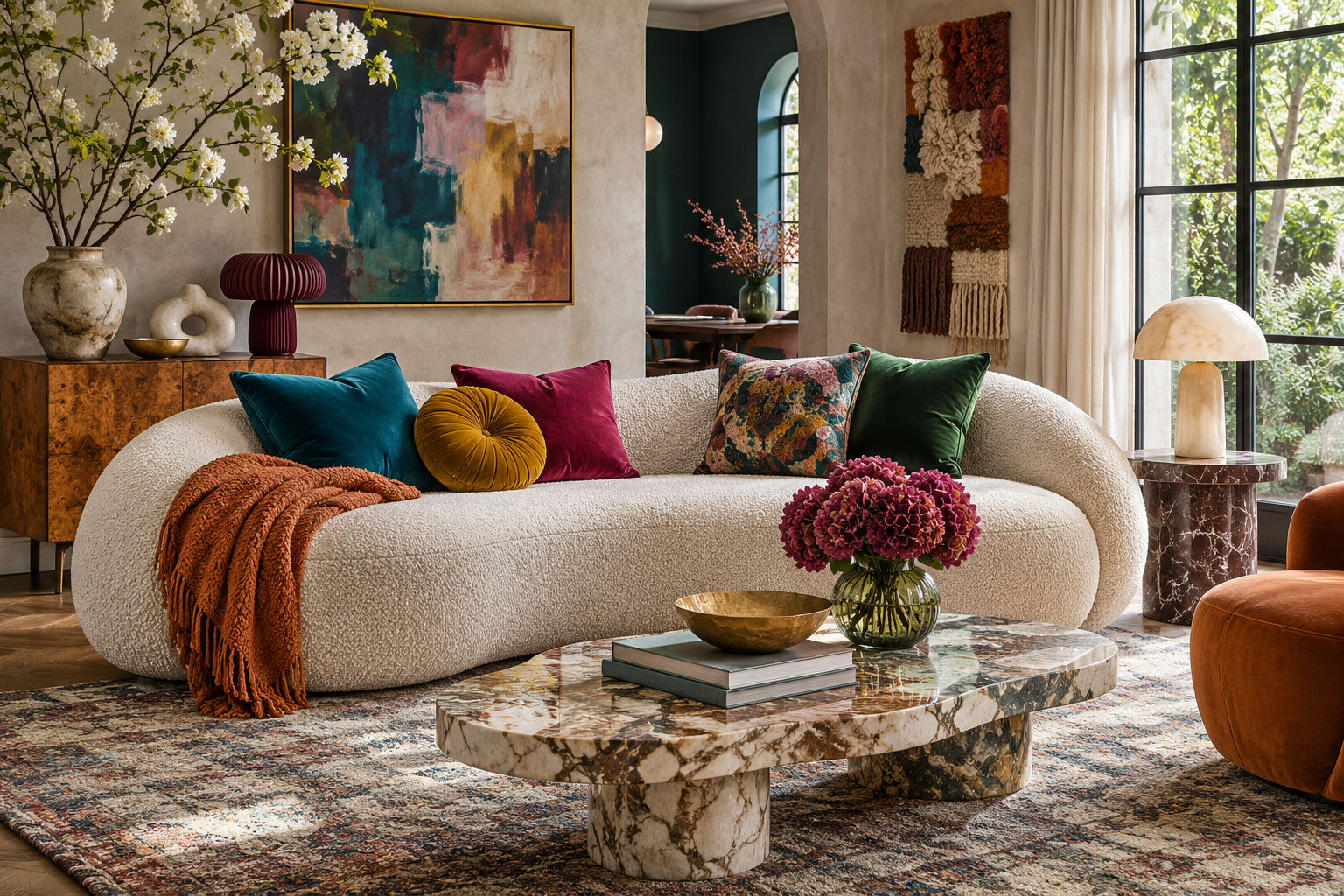
Quick ways to make a sofa feel distinctive
- Sculptural outline: try a curved back, rounded arms, a crescent profile, or an unusual silhouette.
- Color statement: choose velvet green, deep blue, rust, yellow, or a saturated neutral.
- Texture: compare boucle, channel-tufted velvet, corduroy, chenille, or textured woven fabric.
- Visible base: use sculptural legs, a metallic finish, or a low platform to change the sofa’s visual weight.
- Modular flexibility: select pieces that can be rearranged if your room or routine changes.
- Unexpected detail: consider piping, tufting, a contrasting frame, or asymmetrical arms.
Pick one main feature and let it lead. A curved silhouette, bold color, and dramatic pattern can all work together, but using every statement detail at once may make the room feel crowded. Keep the rug, tables, and lighting supportive so the sofa remains the focal point.
Start with what “cool” means to you
One person’s cool sofa is sculptural and minimal; another person prefers vivid color, retro details, or a modular lounge shape. Save a few inspiration images and look for the common feature you like. Is it the silhouette, color, texture, or a sense of unusual proportion? Identifying that preference helps narrow the search and prevents a dramatic product photo from making every option seem equally appealing.
Consider the room’s existing character. A bright red sofa can energize a neutral room, while a soft curved sofa may suit a room with organic shapes and natural materials. A sleek black sofa can work in a graphic space, but a textured green sofa may feel warmer. Choose a style that complements the home rather than treating the sofa as an isolated object.
Think about how long you want the feature to remain central. A bold shape or saturated color can become a signature piece, while a more restrained sofa allows pillows and art to change over time. There is no wrong choice if you like the piece and understand how it will affect the room.
Sculptural and curved silhouettes
Curved sofas can create a focal point and encourage conversation by turning seats slightly toward one another. A crescent, kidney, or soft-radius form can break up a room dominated by right angles. The shape can also help define a seating zone in an open floor plan. Measure the widest point and depth carefully because a curved front may project farther into the room than a straight sofa of similar width.
Look at the sofa from every side. Sculptural pieces often sit away from the wall, so the back upholstery and leg finish remain visible. Check whether the shape includes a conventional frame and cushions or uses a foam-based construction. Ask how to clean the fabric and whether the piece can be moved through the delivery route.
A curved sofa may need a round or oval coffee table, but it does not require matching curves everywhere. A simple rectangular rug or angular lamp can create an interesting contrast. Tape the sofa’s outline on the floor and test a table location before ordering.
Bold colors and expressive upholstery
Color is one of the easiest ways to make a sofa feel distinctive. Deep green, cobalt blue, mustard, rust, pink, and bright red can all become the room’s main accent. The right color depends on daylight, wall paint, flooring, and the materials you plan to keep. Compare a fabric swatch in the actual room if possible because product photos and screens may shift the hue.
When the sofa is a strong color, use a few supporting accents rather than repeating it everywhere. A pillow, print, or vase can echo the sofa’s hue, while neutral walls and a rug provide visual space. If you enjoy layered color, use a patterned rug or artwork that combines the sofa tone with another accent. The aim is to connect colors, not make every item match exactly.
Consider how the color will look under evening lighting. A rich blue may appear nearly black in a dim corner, while yellow or orange may feel more intense under warm bulbs. Request a swatch and view it near the sofa’s intended location. A large fabric surface can make a shade much more dominant than a small online thumbnail suggests.
Texture and tactile details
Texture adds visual interest even when the sofa’s color is neutral. Boucle and nubby weaves create a soft, irregular surface; velvet changes appearance with its pile direction; chenille feels plush and dimensional; corduroy adds visible ridges; and smooth leather offers a cleaner outline. Each fabric has different care and wear characteristics, so check fiber content and cleaning instructions.
Mixing texture can make a statement sofa easier to integrate. A sculptural sofa in textured cream fabric can sit beside a smooth wood table and a flatweave rug. A velvet sofa may pair well with linen pillows and a matte ceramic lamp. Avoid using too many competing textures in one small area if the sofa already has prominent tufting or piping.
Touch the upholstery if possible. A beautiful fabric that feels scratchy, hot, or difficult to clean may not suit daily use. Ask whether cushions are removable, whether covers are replaceable, and what cleaning agents are approved. A sample can show texture and color, though it cannot fully show how the fabric stretches across a seat.
Retro, mid-century, and modern details
Mid-century-inspired sofas can feel distinctive through tapered legs, visible wood, clean lines, and compact proportions. Retro colors or button tufting can add a nostalgic note without requiring a vintage piece. Contemporary interpretations vary widely, so check the actual materials and construction rather than assuming a style label indicates quality.
Modern sofas may use broad low arms, hidden legs, modular forms, or simple upholstery. A contemporary design can be cool because of proportion rather than ornament. Look for a detail that is unusual but still useful: a curved back that invites conversation, a chaise that supports lounging, or a modular layout that can change.
Mix styles intentionally. A sculptural sofa can work with a vintage side table or a simple contemporary lamp. Repeating one material—wood, metal, or a color—can connect pieces from different periods. Avoid buying a full matching set just because it appears in a product photograph.
Comfort comes before the photo
A sofa can be visually striking and still need to work for everyday sitting. Check seat height, seat depth, cushion firmness, back support, and arm shape. A low lounge sofa may be comfortable for stretching out but harder for some users to stand from. A deep seat can feel generous to a tall person and too deep for a shorter sitter. Compare dimensions with a sofa you already enjoy.
Test every seat, especially on curved and modular sofas. The corner or center may feel different from the ends. Sit for several minutes and notice whether cushions shift or whether your feet rest naturally. Ask about cushion materials and replacement availability. If ordering online, compare measurements and read the return terms before committing.
Statement shapes may have unusual backs or arms that change how people use them. A rolled arm can be comfortable for leaning; a narrow sculptural arm may be more decorative than supportive. If the sofa will be the main seating for family or guests, prioritize comfort across multiple users instead of choosing from appearance alone.
Measure the room and delivery path
Measure total width, depth, and height, plus any chaise, ottoman, or curved projection. Mark the footprint with tape and walk through the room. Check doors, windows, drawers, outlets, heating vents, and paths between rooms. A statement sofa should not prevent the room from functioning.
Measure the delivery route as well. Door openings, staircase turns, elevators, and hallways can be tighter than the final seating area. Ask for package dimensions and whether legs or components can be removed. A modular sofa may arrive in sections, but the largest piece still needs to pass through the narrowest point.
Plan the rest of the seating zone. Choose a rug size and coffee table shape that suit the sofa’s outline. A round table can complement a curved sofa, while a rectangular table may balance a rounded silhouette. Leave enough room to reach the table and move around the seats.
Balance a statement sofa with the room
Give the sofa visual breathing room. If its shape or color is bold, keep nearby large surfaces simpler. A solid rug, calm wall, and streamlined tables can let the sofa stand out. If the sofa is relatively simple, use artwork, lighting, or a patterned rug to add another point of interest.
Repeat one feature in a small way. A brass leg can connect to a lamp base; a green sofa can relate to plants or an artwork accent; a curved sofa can echo a rounded mirror. The repetition should be subtle enough that the room does not look like a themed showroom.
Check the room’s visual balance from the entrance. A very large sofa may make the rest of the furniture appear small. A small sculptural loveseat may need a chair or side table nearby. Think about how many people need to sit and whether another seat would make the room more useful.
Three statement directions to consider
The sculptural centerpiece
A sculptural sofa uses shape as its main feature. Curved backs, rounded ends, asymmetrical arms, or a distinctive silhouette can make the seating area memorable even in a quiet color. This direction works well when the sofa has room around it to be seen. Keep the coffee table and rug relatively simple, and check that the unusual arms and back still support comfortable sitting.
The color-forward sofa
A strong color can make a familiar sofa shape feel fresh. Jewel greens, navy, cobalt, rust, or pink can become the room’s anchor. Use a swatch and decide whether you want the sofa to harmonize with an existing palette or introduce a new one. If the sofa is the main color statement, choose pillows and art that support it without repeating the exact shade everywhere.
The texture-led design
Texture can make a neutral sofa feel distinctive through boucle, channel tufting, chenille, corduroy, or velvet. This direction is useful when you want visual depth without a bright color. Compare care instructions and touch carefully; a textured fabric may require different cleaning from a smooth weave. Test the material in the room’s lighting because pile and texture affect how color appears.
Choose the statement level that suits daily life
Think about whether the sofa is a long-term anchor or a piece you may replace as your taste changes. A dramatic silhouette can be a lasting favorite if you love it, but it may limit the shapes of nearby tables and chairs. A bold upholstery color can be easier to update with a slipcover only if the model offers one. Check whether replacement covers are actually available before assuming the sofa can change appearance later.
Consider the household’s practical needs. A showpiece sofa in a formal room may receive occasional use, while a family-room sofa needs more forgiving comfort and maintenance. If people eat, nap, or host often, evaluate cushion recovery, fabric care, and repair support alongside the design. The “cool” feature should enhance the way the room is used, not make normal use feel risky.
Set a clear budget that includes delivery and assembly. Distinctive shapes and upholstery can vary widely in price, and product pages may group several sizes or finishes. Confirm the exact option and total cost before comparing alternatives. Avoid paying for a dramatic feature that does not fit the room or the way you sit.
It can help to choose one “hero” element and let the supporting furniture do a quieter job. If the sofa is curved and brightly colored, choose a simple lamp and a rug with a restrained pattern. If the sofa is a neutral sculptural shape, artwork and pillows can carry more color. This keeps the room lively while making the sofa easy to live with rather than visually overwhelming.
Statement sofa examples to compare
These Amazon listings illustrate a sculptural shape, a curved modular design, and a velvet accent style. They are not independent rankings or hands-on tests. Confirm the exact dimensions, upholstery, comfort details, delivery, and current seller information before ordering.

woqijia lip-shaped sculptural sofa
ASIN: B0HDSKP1WR
This listing describes a distinctive curved accent sofa. Check its seat dimensions, upholstery, back support, and whether the shape fits the room’s daily use.

KEIKI 80-inch green curved sofa
ASIN: B0HF3VB6X8
The listing describes a three-seat curved modular sofa in green boucle-style upholstery. Verify the actual fabric, module dimensions, cushion feel, and assembly details for the selected option.

Meridian Furniture Margo velvet sofa
ASIN: B0758GVJYQ
The listing describes a navy velvet sofa with channel tufting and gold-toned legs. Check the current upholstery, dimensions, firmness, and assembly before purchase.
Care, durability, and the return plan
Check upholstery care before buying. Follow the manufacturer’s cleaning code and ask whether the fabric can be spot-cleaned or professionally cleaned. A statement fabric may be harder to match later, so save the exact color and material information. If the sofa is modular, ask whether replacement covers or cushions are available.
Review the warranty for frame, suspension, cushions, mechanisms, and fabric separately. A short product title may not mention exclusions. Ask whether assembly affects coverage and what to do if hardware is missing. Keep the order record, product label, and care guide.
Read the return policy for large furniture. Confirm the return window, pickup fees, packaging requirements, and who handles damage claims. Keep the packaging until you inspect the sofa and assemble it. A dramatic sofa is a significant purchase; planning for a return is part of choosing responsibly.
Common statement sofa mistakes
One mistake is selecting a sofa because it looks unusual without checking whether people can sit comfortably. Another is choosing a bold color under showroom lighting and discovering it looks different at home. Request a swatch and consider the room’s light and fixed finishes.
It is also easy to overlook the back and sides. A sculptural sofa may float in the room, so inspect all visible surfaces. Measure the delivery path and full footprint before ordering. A piece can look compact in a wide-angle photo and still dominate the room.
Finally, do not combine too many statement details automatically. A bold sofa can coexist with patterned art and colorful accessories, but give each piece room to be seen. Repeat a small color or material to make the palette feel connected.
Frequently asked questions
What makes a sofa cool or unique? A distinctive silhouette, unusual color, texture, visible frame, modular arrangement, or decorative detail can make a sofa stand out.
Are curved sofas practical? They can work well for conversation and as a focal point, but measure their projection and plan the coffee table and walkways carefully.
How do I decorate around a statement sofa? Let the sofa lead, then repeat one color or material in smaller accessories. Keep nearby large surfaces balanced so the room does not feel crowded.
Should I choose a neutral or bright sofa? A neutral can be easier to update with accessories, while a bold color can define the room. Choose based on how long you want the sofa to remain the focal point.
Can a unique sofa still be comfortable? Yes, but appearance does not predict comfort. Test seat depth, height, cushions, back support, and every seat position.
Do sculptural sofas need special tables? Not necessarily. Round or oval tables can echo curves, while a simple rectangular table can create contrast. Measure reach and circulation first.
How do I check the sofa color online? Request a swatch when possible, compare several product photos, and view the color in the room’s daylight and evening lighting.
What should I ask before ordering? Confirm dimensions, upholstery, frame and cushion details, assembly, delivery, warranty, replacement parts, and return pickup.
Final checklist
- Choose the design feature that makes the sofa feel distinctive.
- Check seat comfort and room fit as carefully as the silhouette.
- View upholstery samples in the intended lighting.
- Measure the full sofa and delivery route.
- Balance the sofa with rug, table, lighting, and supporting colors.
- Review care, warranty, replacement parts, and return terms.
The best cool sofa is the one that feels personal and works in the room. Choose a shape, color, or texture you enjoy, then verify seat comfort, dimensions, upholstery, and delivery. A striking design can be a long-term favorite when it supports everyday use as well as the room’s style.
Continue with our contemporary corner sofa guide, compare mid-century styles, or browse Home & DIY.
Certain content on this site comes from Amazon and may change. Amazon product images and listing details are supplied through Amazon Creators API. Confirm the exact option, seller, dimensions, materials, and current terms before purchase.