Affiliate disclosure: Daily Home Decorating may earn a commission if you buy through links in this guide, at no extra cost to you. As an Amazon Associate, we earn from qualifying purchases.
The best comfortable mid-century sofas combine the clean profile people like about the style with seat dimensions and construction that suit everyday use. Look for balanced proportions, a supportive frame, cushions that match your preferred firmness, and a seat depth that works for your height and posture. Tapered legs and simple arms can make a sofa feel visually light, but they do not tell you whether it will be comfortable or durable. Evaluate the design, materials, comfort, and room fit separately before deciding.
This guide explains how to recognize mid-century-inspired sofa details and compare quality and comfort claims. Product examples are Amazon listings returned through Amazon Creators API; we have not purchased, assembled, or physically tested them. Current models, upholstery options, and listing details can change. Confirm the exact frame, cushion construction, dimensions, fabric or leather, seller, assembly, delivery, and return terms on the live page before ordering.
For broader comfort guidance, read our sofa fit and comfort guide, see how to assess sofa construction and value, or browse Home & DIY.
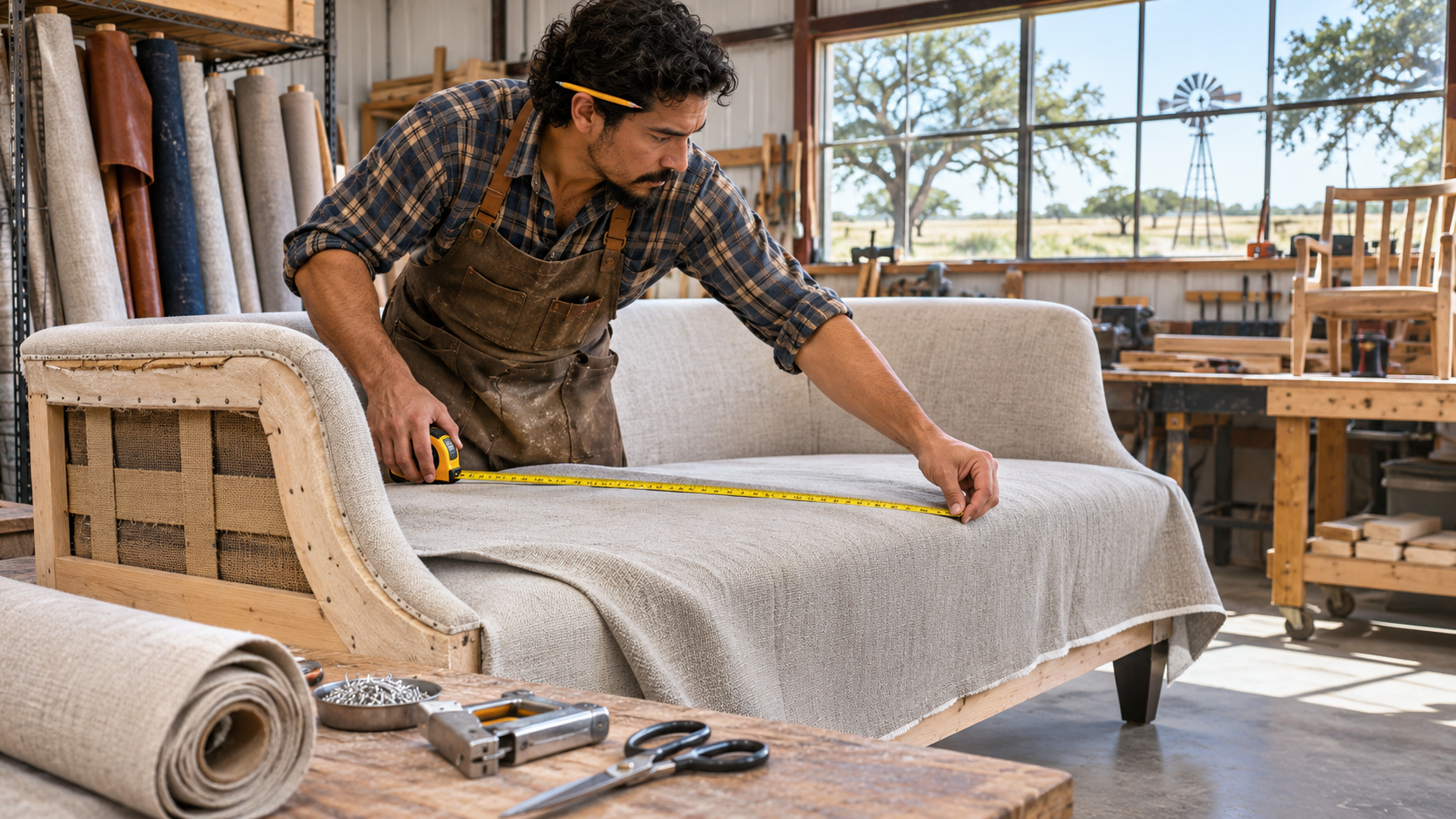
Quick checklist for a comfortable mid-century sofa
- Style: check the profile, leg shape, arm design, and upholstery instead of relying on the “mid-century” label alone.
- Fit: compare seat height, seat depth, inside width, back height, and total dimensions.
- Support: ask about the frame, suspension, cushion core, and warranty.
- Comfort: test the seat in your usual posture and compare firmness and cushion recovery.
- Materials: confirm wood species or frame materials, fabric content, cleaning code, and removable-cover details.
- Room planning: measure pathways, wall clearance, and space for a coffee table or side tables.
- Ownership: check assembly, delivery, replacement cushions, return pickup, and warranty coverage.
Mid-century-inspired furniture is available in many price points and construction levels. The style can be attractive and useful, but it is not a guarantee of craftsmanship. Inspect the exact model and ask for details that can be verified.
What defines a mid-century-inspired sofa?
Many mid-century-inspired sofas use clean lines, simple forms, tapered legs, compact arms, and a visible base. Some have button tufting, channel backs, or warm wood accents; others use a minimal upholstered frame. These traits can make the sofa look visually lighter than a bulky traditional silhouette. Product pages use “mid-century modern” broadly, so compare the actual shape and materials with the look you want.
The style does not require a specific color or upholstery. Teak-toned legs, walnut finishes, neutral fabric, velvet, leather, and patterned textiles all appear in contemporary interpretations. Choose the combination that fits the room, while confirming whether a wood-looking component is solid wood, veneer, engineered material, or a finish over another substrate.
Think about how the sofa will look from the sides and back. Tapered legs and a visible frame are often seen because these sofas may float in a room rather than sit against a wall. If the back is unfinished or the upholstery changes on the rear, that can affect placement. Request photos from multiple angles and confirm the model’s rear construction.
Comfort can differ from the classic low profile
Some mid-century-inspired sofas have a lower seat, firmer cushion, or more upright back than a deep modern lounge sofa. That can be comfortable for conversation and reading, but it may not suit someone who wants to sink into a very soft seat. Try the exact model and compare it with the way you normally sit. The visual profile does not predict the feel.
Check seat height under body weight, not only the number on the product page. A cushion compresses when someone sits. A lower seat can feel relaxed but may make standing harder for some users; a higher seat can feel accessible but may not suit shorter legs. If you share the sofa, ask each regular user to test it.
Seat depth also matters. A compact sofa may be useful in a smaller room but feel restrictive to a tall person. A deeper seat may allow lounging but require a lumbar cushion for upright sitting. Measure from the front edge to the back cushion and compare with a chair or sofa you already find comfortable.
Frame quality and visible legs
The frame carries the seated load and anchors the legs, suspension, arms, and back. Ask what the frame is made from and how the main joints are assembled. “Solid wood frame” is useful information only when the listing explains which components are wood and whether rails, corner blocks, or support elements use other materials. A wood-looking leg can be a different material or finish, so check the specification.
Inspect the legs and their connection to the frame. Tapered legs should be firmly attached and appropriate for the sofa’s weight and footprint. If legs screw into threaded plates, the maker should provide assembly instructions and hardware. A sofa that rocks or has uneven feet after correct assembly needs adjustment or seller support; do not force a misaligned leg into place.
Ask whether the frame warranty covers structural failure and how long the coverage lasts. Read what counts as normal wear and whether labor or transport is included. Warranty terms can vary by seller and product. Keep the model number, order information, assembly guide, and any photos of the furniture after delivery.
Suspension and seat support
Sofas can use sinuous springs, coil units, webbing, or mixed suspension systems. Each can work when designed and installed correctly. The suspension, cushion, and frame form a system, so no one label proves superior comfort. Ask which system the sofa uses and whether service parts are available. If the listing does not say, contact the seller before purchasing.
When testing, sit in several places and notice whether support feels consistent. A seat should not have a sudden dip or hard spot. Stand up and observe whether the cushion and deck return normally. New squeaks, movement, or loose components should be reported rather than ignored. A showroom test cannot predict years of wear, but it can reveal obvious unevenness.
Do not infer capacity from the number of legs or the appearance of the frame. If weight capacity is important, look for a clearly stated value and ask how it applies to the sofa—per seat or total. Product pages may use different methods, so read the exact wording and avoid comparing values that are not defined the same way.
Cushion construction and firmness
Seat cushions may use foam, fiber, feathers, springs, or layered blends. Each feels different, and firmness depends on more than one material. Ask about the core and wrap, whether the cushions are reversible, and whether replacement inserts are available. A mid-century silhouette may use tight seat cushions, loose cushions, or a bench cushion; these designs have different maintenance and appearance tradeoffs.
Test how the cushion feels after sitting for several minutes. A quick press with your hand does not reproduce body weight. Sit back, then move forward to a conversation posture. Stand and see how quickly the cushion returns. If the model is online only, compare its seat dimensions and cushion description with furniture you know.
Bench cushions create a continuous seat surface and can give a simple, tailored appearance. Separate cushions allow individual users to adjust or rotate them if the manufacturer permits. A fixed cushion may stay orderly but be harder to replace. Ask which covers can be removed and what care instructions apply.
Back, arms, and posture
A straight, structured back often suits the clean lines of mid-century design. It may encourage a more upright position, but comfort depends on back angle, cushion depth, and user height. Sit with your back against the sofa and check whether your shoulders and head feel supported. A low back can look light under a window but may not provide the support some people prefer.
Arm design changes both comfort and seating width. Narrow track arms preserve more interior room; broad padded arms can be comfortable for leaning but reduce usable width. Sloped or low arms may support lounging, while firm square arms can function as a visual frame. Try resting an arm naturally rather than judging by appearance.
Check the inside width between arms and compare it with the number of regular users. A sofa’s headline width includes arms and may overstate the available seat. If the sofa is compact, make sure the cushions still provide enough space for the people who will use it.
Upholstery choices: fabric, velvet, and leather
Fabric choices affect touch, color, and maintenance. Woven upholstery can feel breathable and relaxed; chenille is soft and textured; velvet has a plush surface that changes appearance with its nap. Ask for the fiber content and care code for the exact option. A product title that says “linen” or “velvet” may describe a look or pile style rather than a single fiber composition.
Leather and faux leather provide a different surface feel and may make the wood frame more prominent. Confirm the material details, because product pages sometimes use broad labels. Check how the surface feels in warm and cool conditions, how it should be cleaned, and what the warranty covers. A sample or showroom visit can help you assess texture and color.
Consider pets and daily use. Claws, hair, spills, and friction affect materials differently. No fabric is completely pet-proof or stain-proof. Ask about removable covers, approved cleaning methods, replacement upholstery, and any performance claims. The right choice is one that feels good and fits the upkeep you are willing to do.
Choosing a sofa size for the room
Measure the room and mark the sofa footprint with painter’s tape. Include the full width, depth, and any chaise or ottoman. Check the route from the doorway, nearby drawers, windows, radiators, and walking paths. Mid-century sofas often have visible legs that make them look open, but their actual footprint still needs to fit.
Measure the delivery path too: door clearances, stairs, tight corners, and elevator openings. Ask for package dimensions if the sofa arrives boxed. Some legs may be removable, but confirm the instructions rather than assuming. Modular pieces can simplify delivery, though the connectors and alignment should be checked before buying.
Consider the visual scale. A compact two-seat sofa may suit an apartment or office, while a long three-seat model may balance a larger living room. Avoid choosing only by overall width; check seat width, depth, and back height. Leave room for side tables and a coffee table so people can use the sofa comfortably.
Vintage original or modern reproduction?
Vintage sofas can offer distinctive proportions and materials, but condition varies. Inspect joints, frame movement, cushion support, odors, stains, and upholstery before buying. Ask whether the item has been restored and what was replaced. A vintage piece may need reupholstery or new cushions, so include that cost and time in your decision.
Modern reproductions are easier to order new and may provide current warranty and delivery options, but construction varies by manufacturer. Compare the actual materials and dimensions rather than assuming a reproduction uses the same build as an original design. Product names such as “mid-century” describe a style direction, not a guarantee of origin or quality.
If buying vintage, measure carefully and consider whether the seat height and depth suit modern daily use. A design admired in a photograph may feel quite different when you sit on it. If reupholstery is planned, ask a professional to inspect the frame before you invest in new fabric.
What quality details can you check without a tear-down?
You can learn useful things without removing upholstery. Inspect visible seams for even stitching and straight alignment. Check that cushions sit evenly and that the fabric is not pulled tightly at one corner. Look at the legs, fasteners, underside dust cover, and exposed frame edges. These observations do not prove how the hidden frame is built, but they can identify loose assembly, uneven finishing, or details worth asking the seller about.
Ask whether the sofa is delivered assembled or requires attaching legs, connecting modules, or installing brackets. Request the assembly guide in advance if possible. A well-written manual, clearly labeled hardware, and accessible service contact can make ownership easier. Confirm whether replacement legs, cushion inserts, and upholstery covers are available separately and for how long the maker expects to support the model.
Warranty length is only one part of quality. Read what is covered, what is excluded, whether the warranty is limited to the original buyer, and who pays labor or transport. A long warranty with narrow exclusions may be less useful than clear coverage and practical service. Save a copy of the terms as they appeared when you ordered, along with the receipt and model information.
Plan the rest of the seating area
Mid-century sofas often have visible legs and a relatively open base. A rug can define the seating group while allowing the legs to remain visible. Measure the rug and table together so the sofa, coffee table, and any accent chair feel connected. A low coffee table can complement the sofa’s profile, but leave enough room to walk and reach the surface from every seat.
Side tables and lamps can make a compact sofa more functional. Check the arm height against the tabletop, and place lighting where it supports reading without creating glare on the upholstery. If the sofa floats in the room, consider a console behind it, but verify there is enough circulation space. These choices affect daily comfort as much as the sofa’s cushion material.
Use a consistent visual weight. A slim sofa with tapered legs may look overwhelmed by a bulky dark coffee table, while an oversized sectional may need a larger rug and table to balance its scale. There is no required matching set; repeat one finish or color in a few places to create continuity.
How to evaluate a product listing
Read the complete description and look for seat height, seat depth, inside width, overall dimensions, frame material, cushion details, fabric content, and assembly requirements. Product photos may show an alternate finish, leg color, or configuration. Confirm the exact variant in the order selection and review the return terms for large furniture.
Customer reviews can reveal recurring issues such as difficult assembly, color differences, or cushion firmness, but they are not controlled tests. Check whether reviews refer to the exact model and size. A grouped product page may include several unrelated options. Ask the seller about any missing specification that matters to your decision.
Compare delivery services, room-of-choice placement, packaging removal, assembly, and return pickup. Keep the packaging until the sofa is inspected. If damage occurs, take photos and contact the seller before attempting repair. Confirm whether the warranty covers frame, suspension, cushions, and upholstery separately.
Mid-century sofa examples to compare
These Amazon listings illustrate different mid-century-inspired materials and profiles. They are not independent rankings or hands-on test results. Verify the exact material, dimensions, configuration, and current seller details before buying.

82.67-inch mid-century-inspired sofa
ASIN: B0HHF7FHD3
The listing describes a three-seat fabric sofa with a wood frame. Verify the frame details, seat dimensions, cushion fill, fabric content, and assembly before deciding whether it fits your needs.

Kingfun mid-century loveseat
ASIN: B0BS1229W3
The listing describes a button-tufted loveseat for smaller rooms. Compare inside seat width, cushion firmness, assembly, and the blue upholstery option with your room plan.
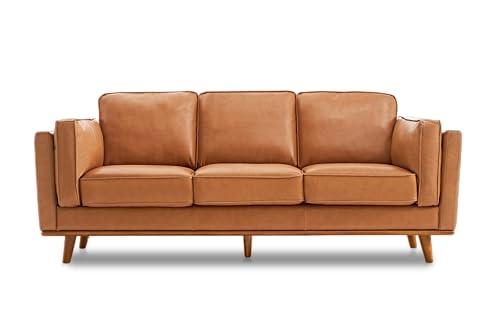
Valencia Artisan 88-inch sofa
ASIN: B09XFGY758
The listing describes a cognac leather sofa with wood accents. Confirm which surfaces use leather, the frame details, seat dimensions, care needs, and current warranty before ordering.
Common buying mistakes
One mistake is treating the style label as proof of quality. Mid-century design can be reproduced at many price points, and a tapered wood leg does not guarantee a strong frame. Ask for material and joint details, read the warranty, and inspect the exact piece where possible.
Another is choosing a low, compact sofa without testing seat height or depth. A sleek silhouette can be uncomfortable if it does not suit the user. Compare dimensions with a chair you already like and try the sofa in your usual posture. If multiple people use it, have each person test it.
It is also easy to overlook the delivery route or the back of the sofa. Measure the doorways, stair turns, and final footprint, and check all visible sides. Finally, do not assume a removable cover is washable or that a warranty covers every part. Confirm the terms in writing before ordering.
Frequently asked questions
Are mid-century sofas comfortable? They can be, but comfort depends on seat depth, height, cushions, back angle, and upholstery. Try the exact model rather than relying on the style.
Are mid-century sofas usually firm? Some have a firmer, more upright feel, but there is no universal rule. Cushion materials and design vary by maker and model.
What makes a mid-century sofa high quality? Look for clear frame and joint details, stable legs, even suspension, well-constructed cushions, useful warranty coverage, and repair or replacement options.
Are tapered legs sturdy? They can be when correctly designed and attached. Inspect the connection, follow assembly instructions, and check that the sofa sits level.
What fabric suits a mid-century sofa? Woven fabric, velvet, chenille, leather, and other upholstery can all suit the style. Choose based on feel, care, climate, and household use.
How do I choose seat depth? Compare the cushion depth with your body and usual posture. A deeper seat can suit lounging, while a shallower seat may support upright sitting.
Is a vintage sofa better than a modern reproduction? Neither is automatically better. Inspect vintage condition and repair needs; for a reproduction, check construction, warranty, and exact materials.
Can a mid-century sofa work in a small apartment? Yes, if the footprint, delivery path, and seat dimensions fit. A visually light frame does not replace accurate measuring.
Final checklist
- Confirm the exact style, profile, and visible frame details.
- Compare seat height, depth, inside width, and back support.
- Ask about frame, joints, suspension, cushions, fabric, and warranty.
- Test the exact model or compare its dimensions with a sofa you like.
- Measure the room and delivery path before ordering.
- Review seller, assembly, return, and replacement-part details.
The best comfortable mid-century sofa balances a clean style with construction and dimensions that suit everyday use. Check the frame and cushions, test the seat, and confirm the exact materials and warranty. A sofa can look right in a photograph and still be the wrong fit, so use measurements and a real sit test whenever possible.
Continue with our comfort and fit guide, compare frame and construction checks, or browse Home & DIY.
Certain content on this site comes from Amazon and may change. Amazon product images and listing details are supplied through Amazon Creators API. Confirm the exact option, seller, dimensions, materials, and current terms before purchase.