Affiliate disclosure: As an Amazon Associate, Daily Home Decorating earns from qualifying purchases.
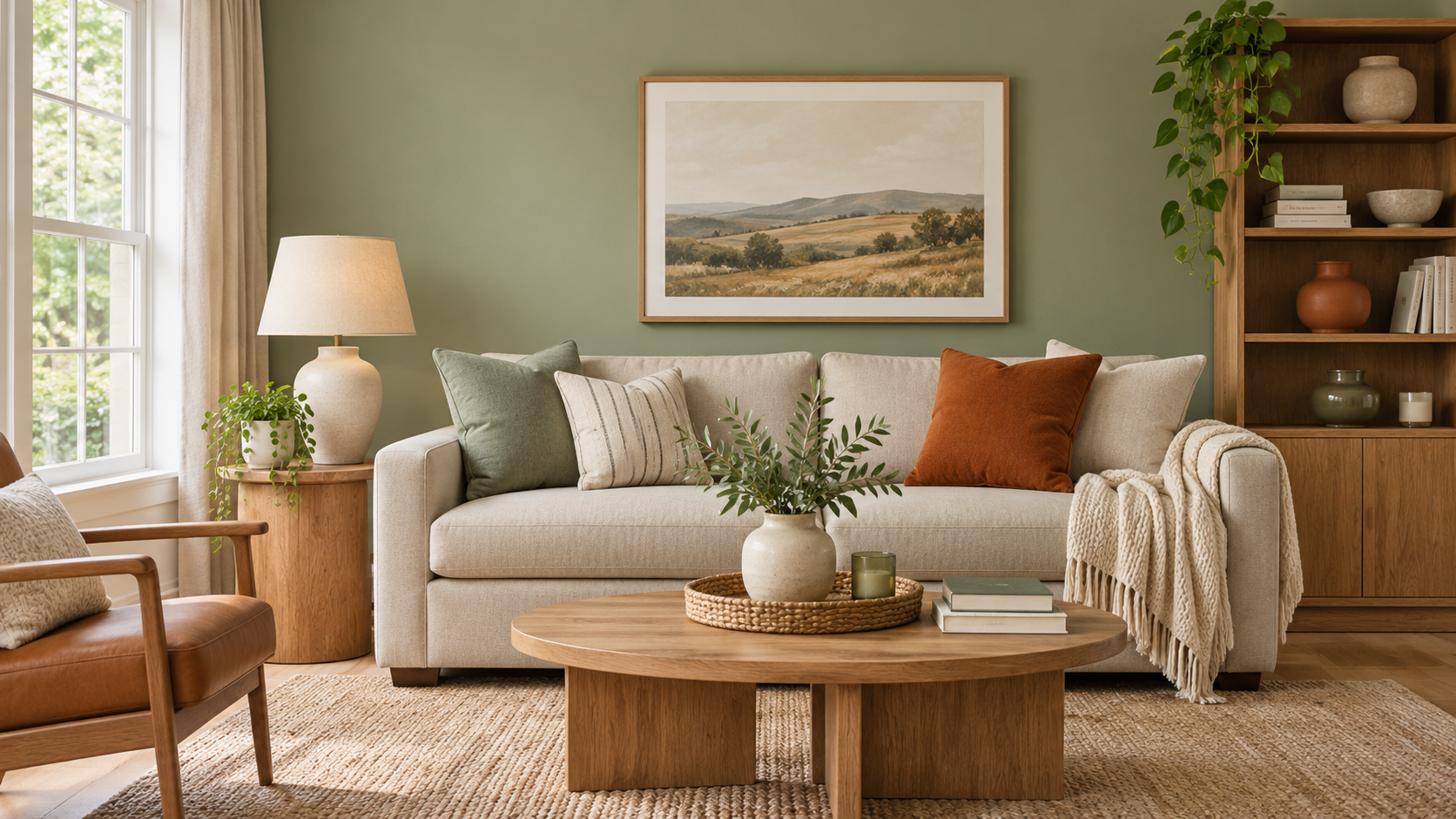
Best Colours for Living Room Sofas: Room Palettes by Upholstery Shade
The best colours for living room sofas depend on what you are trying to coordinate: the wall, floor, rug, curtains, artwork, or the room’s overall mood. If the sofa is already chosen, the design task is not to find a matching shade for the sofa. It is to build a balanced room around its upholstery without making every surface identical. This guide explains practical palettes for gray, blue, brown, cream, black, green, and patterned sofas, plus a simple way to test color choices before buying paint or accessories.
Think of the sofa as the largest fixed color area in the seating zone. A successful room usually repeats one or two colors from it, adds a contrasting or complementary shade, and leaves enough neutral space for the eye to rest. Repetition does not mean buying matching sets. It can be as subtle as carrying a warm undertone from the sofa into a wood frame, a small cushion, or the color in a piece of art. The goal is a room that feels connected while keeping each material distinct.
Start with the sofa’s undertone, not just its label
A product description such as gray, beige, blue, or brown gives only a broad family. Gray can lean blue, green, violet, or brown; beige can look yellow, peach, pink, or stone; brown can be red, golden, or neutral. Those undertones influence which wall and accent colors feel harmonious. If possible, use a fabric swatch in the room. Compare it beside the floor, wall, rug, and wood furniture in daylight and at night, because lighting shifts the appearance.
If you are still deciding on a sofa’s upholstery color, see our separate guide to choosing the best colors for sofas. This article assumes you already own or have selected the sofa and want to coordinate the rest of the living room. That distinction helps prevent two different decisions from getting mixed together: choosing the sofa shade, and choosing the room palette around it.
A simple color-balance framework
A practical starting framework is to choose one dominant color field, one supporting color, and one small accent. In many living rooms, the sofa and walls make up much of the dominant field; a rug or curtains can support them; cushions, lamps, or artwork add the accent. These roles are flexible. If the sofa is patterned or brightly colored, let it lead and keep larger surrounding surfaces calmer. If the sofa is neutral, a rug or art can carry more of the room’s personality.
Do not treat any color formula as a strict ratio that every home must follow. The furniture arrangement, natural light, room size, and personal taste matter more than a numerical rule. A small amount of a bold color may be enough to connect artwork and cushions, while a large, open room can carry two strong colors. Stand in the doorway and notice which objects attract attention first. If your eye jumps between too many competing colors, simplify the largest surfaces before adding more accessories.
Living room colors for a gray sofa
Gray sofas can support warm, cool, or mixed palettes, but the undertone is the deciding detail. For a blue-gray sofa, try navy, dusty blue, or muted teal with off-white walls and warm wood to prevent the room from feeling cold. For a warm gray or greige sofa, consider cream, olive, clay, or cognac accents. A charcoal sofa can look crisp beside pale walls and a lighter rug, while mid-gray may work with both warm and cool materials.
If the room already contains gray floors or gray walls, introduce a different texture or value so the seating area does not become flat. A patterned rug can include gray alongside one warmer color. Cushions can repeat a shade from artwork without copying the entire composition. Our separate accent color guide for gray sofas goes deeper on gray undertones; use it alongside this broader room-planning overview.
Living room colors for a blue or navy sofa
A blue sofa can look relaxed, nautical, traditional, or dramatic depending on the shade and materials around it. Pair navy with warm white, camel, natural wood, or brass-toned accents if you want contrast without making the room feel overly cool. A softer blue can sit well with pale gray, cream, or sage. If you want a layered blue palette, vary the depth: a dark sofa, medium blue art, and a light blue textile read more clearly than several nearly identical blues.
Be careful with red-orange accents beside a strong blue. The contrast can be lively, but too many saturated colors may compete. Try a small rust cushion or a patterned rug that includes both colors before committing to a large feature wall. A more restrained room can use blue as the strongest hue and let wood, white, and muted green supply the supporting colors. If you want specific rug ideas for blue upholstery, see our guide to area rugs for blue sofas.
Living room colors for a brown or cognac sofa
Brown and cognac sofas bring warm undertones, but they do not automatically require a brown room. Cream, soft white, olive, muted blue, terracotta, and warm gray can all work, depending on the sofa’s leather or fabric tone. To keep a brown sofa from blending into a wood floor, add a rug with a lighter field or a pattern that includes a cooler color. If the sofa is a deep chocolate, lighter walls and curtains can preserve brightness.
A cognac leather sofa is often visually strong because both the color and the material attract attention. Let its warm tone repeat in smaller details, such as a wood frame or a restrained rust accent, rather than adding several large orange-brown surfaces. If you prefer a calm room, pair it with cream, stone, and a low-contrast rug. For a richer palette, add deep green or muted blue through art and textiles, then use a neutral wall to give the combination breathing room.
Living room colors for a cream or beige sofa
A cream sofa is a flexible background, but a room can feel washed out if every surface is the same pale value. Create definition with a textured rug, darker wood, black or bronze details, plants, or cushions in a deeper color. Warm beige upholstery often works with terracotta, olive, caramel, and soft white. Cooler cream may sit comfortably with slate blue, charcoal, or pale gray. Check undertones in person because cream can look much more yellow under warm lamps.
If you like a very light palette, vary texture rather than adding many competing colors. Linen-like fabric, a woven rug, wood grain, and a knit throw can create depth while keeping the colors quiet. If the room needs more contrast, add one dark element that repeats at least twice, such as a lamp base and a frame, or a deep blue cushion and a small detail in art. That repetition helps the room feel deliberate without turning the sofa into a matching set.
Living room colors for a black or charcoal sofa
Black upholstery creates a strong anchor, so a lighter wall and rug often make the room easier to read. Warm white, pale stone, soft taupe, or muted green can soften the contrast; a patterned rug can connect the sofa to both the floor and lighter furniture. Charcoal allows more subtle transitions than true black, especially when the fabric has visible texture. If the room is small, open floor space and visible sofa legs can reduce the sense of a heavy block.
A black sofa can work in a colorful room, but choose the accents intentionally. One bright color can become a clear focal point, while several saturated accents may make the black feel disconnected. Repeat the selected color in two or three small places rather than spreading it everywhere. For specific wall and accent suggestions, open our guide to living room colors with black sofas.
Living room colors for a green sofa
Green upholstery ranges from muted sage and olive to deep forest and emerald, so begin by identifying whether the sofa leans warm or cool. Sage often pairs with cream, light wood, and soft gray. Olive works naturally with camel, clay, and darker wood. Emerald can be balanced with pale neutrals and a small amount of warm metal. Plants can connect the palette, but use different leaf shapes and greens so the room does not look like a single-color display.
For a quieter scheme, keep walls and rugs neutral and echo the sofa color in just one or two smaller details. For a more layered look, use related hues such as sage, moss, and olive at different values, then add a contrasting material like pale oak or cream wool. If the sofa is very dark green, avoid placing it against an equally dark wall unless you want a low-contrast cocoon effect. A light rug or side table can help define its outline.
Living room colors for a red, rust, or orange sofa
A red, rust, or orange sofa already supplies a strong room color. Consider warm white, cream, muted olive, navy, or natural wood as supporting elements. Rust tends to blend smoothly with earthy colors; a bright red creates sharper contrast and may need simpler surroundings. Use a small textile sample or printed palette to see how the sofa looks with the wall and rug. The undertone matters: a red that leans pink may pair differently from a red that leans orange.
If you want the sofa to be the only statement piece, choose curtains and walls that do not compete. If you want a more eclectic room, pull a secondary color from the sofa’s fabric or artwork and repeat it in a measured way. A multicolor rug can help bridge bold upholstery, but it should include enough quieter space that the floor does not become another focal point. Avoid purchasing a large rug based only on its online product photo; compare the actual colors in the room.
When the sofa is patterned
For a patterned sofa, identify the two or three colors that appear most often, then decide which one should lead in the rest of the room. Usually, the easiest route is to use a quiet wall color and bring one secondary fabric color into cushions, a throw, or artwork. A patterned sofa already contains detail, so avoid repeating the exact same scale of pattern on every surface. Mix a larger motif with a smaller one or use solid textures to give the eye a place to rest.
Do not try to match every stripe or floral color. Select one color you enjoy and one neutral that links the sofa to the floor or wall. If the pattern feels busy, a plain rug and simple curtains can stabilize the room. If the sofa pattern is subtle, a rug can add another layer without overwhelming it. Bring a cushion or swatch with you when shopping for accessories, but view it beside the entire sofa rather than relying on a close-up photo.
Choose wall colors around an existing sofa
Wall color has a large effect because it surrounds the sofa and covers a broad surface. A lighter wall can make dark upholstery stand out; a deeper wall can create a more enclosed, dramatic setting. Before painting, sample at least two colors on large boards or several broad patches. Place the samples behind the sofa and observe them in daylight and at night. A paint chip is too small to show the full effect, and the same color may shift across walls with different light.
If you are uncertain, choose a wall color that shares an undertone with the sofa but differs in brightness. A gray sofa with cool undertones might work with a soft blue-white; a warm brown sofa could sit beside a creamy neutral. You do not need to choose the same color family, though. Contrast can be effective when the transition feels intentional and other elements link the scheme. Our guide to wall colors for leather sofas focuses on that specific combination.
Use rugs to connect sofa and floor
The rug can be the bridge between upholstery and flooring. It can repeat the sofa color, introduce a complementary color, or provide a patterned transition between warm wood and cool fabric. When the sofa is a solid color, a rug with several tones can add movement; with a patterned sofa, a quieter rug may preserve balance. Check the rug’s background color, not just its accent colors. A rug that appears mostly ivory online may look more yellow or gray in a real room.
Size matters too. A rug should normally extend enough under the seating area to make the arrangement feel connected; a very small rug floating in front of the sofa can fragment the room. Measure the seating zone and determine whether the front legs of the sofa and chairs can sit on the rug. If you are selecting a rug for a specific sofa color, compare the rug’s color family, scale, and material instead of purchasing solely to match one cushion.
Coordinate curtains, art, and wood tones
Curtains can either blend with the wall or repeat a color from the sofa and rug. In a small room, wall-colored curtains can make the window wall feel continuous. In a larger space, a muted accent curtain can add softness. Artwork is a useful way to introduce several room colors at once, but it should relate to the room’s palette rather than act as an unrelated color sample. Pick one or two colors in the art and echo them in a cushion or accessory.
Wood tones are colors too. A warm brown sofa can relate to walnut or oak, but too many similar browns may merge into one heavy band. Add value contrast through a lighter table, a darker frame, or a neutral rug. Metal finishes also affect the temperature: brass often reads warmer, while chrome or brushed steel tends cooler. None of these materials must match exactly. A little variation can make the room feel collected rather than purchased as a single coordinated package.
Lighting and time of day
Living room colors change under sunlight, shade, and artificial light. Warm bulbs can make beige and rust appear more golden; cool bulbs may emphasize blue or gray. If you are choosing wall paint, curtains, or a large rug, test them under the lighting you use at home. A color that feels right near a bright window may appear dull in an interior corner. Look at the sofa palette in the morning, late afternoon, and evening before making a large purchase.
Layer lighting so a room does not depend on one bright overhead fixture. Table lamps and floor lamps can create warm pools of light, while task lighting helps with reading. Choose bulb color and brightness based on how you want the room to feel, then test the fabrics and paint under those conditions. Lighting will not correct an incompatible palette, but it can change how the undertones are perceived and whether the room feels soft, crisp, or subdued.
A step-by-step room palette plan
First, photograph the room from the main doorway and write down the sofa’s undertone. Second, identify the fixed surfaces: floor, wall, fireplace, large cabinetry, and any rug you plan to keep. Third, decide whether the goal is contrast or a quieter blend. Fourth, choose one supporting color and one optional accent. Fifth, test swatches and sample materials in the room. Sixth, buy small accessories before large items if you still feel uncertain.
This order is useful because small objects are easier to change than paint or a large rug. Start with cushions, throws, or art that test the palette without taking over the room. If the combination works after a week of living with it, move to curtains or a larger rug. If it feels too saturated, remove one accent instead of replacing the sofa. A room evolves; you do not have to purchase every decorative item at once.
Common palette mistakes to avoid
One mistake is matching all the accessories exactly to the sofa. Repetition can help, but identical color and fabric can make a room feel like a showroom set. Another is introducing too many accent colors because each individual item looks attractive. Step back and consider the total room, not the isolated product. A third mistake is choosing paint from an online rendering without testing it at home. Screens vary and a broad painted wall reflects more color than a small sample card.
A fourth mistake is ignoring undertones in rugs and wood. A blue-gray sofa beside a yellow-beige wall may feel off even when both colors are individually attractive. A fifth is assuming that a neutral palette needs no contrast. Neutrals still vary in warmth, brightness, and texture. If the room feels flat, add a darker or lighter value, a different material, or a small accent color instead of adding more beige objects.
Product examples for testing color accents
These Amazon examples are simple accessories for testing a room palette; they are not ranked as the best products. The ASINs and images were checked in Amazon’s Creator API, and the image URLs returned successfully when reviewed. Confirm the exact cover size, material, insert inclusion, and current variants on the live product pages. Pillow covers often do not include inserts, and the color shown on a screen can differ from fabric in your room.
Terracotta pillow covers

View terracotta pillow covers on Amazon
A small rust accent can warm up blue, gray, or cream upholstery. Check whether pillow inserts are included.
Sage green pillow covers

View sage green pillow covers on Amazon
Sage can soften a neutral palette or connect upholstery to green plants. Review dimensions and fabric care before ordering.
Navy blue pillow covers

View navy blue pillow covers on Amazon
Navy can provide contrast beside cream, camel, or light gray. Check the current shade and package quantity.
Blue, rust, and ivory rug example

View a blue, rust, and ivory rug on Amazon
A multicolor rug can bridge cool and warm tones. Confirm the size, pile, and care instructions on the listing.
Frequently asked questions
What are the best colours for a living room with a sofa? There is no single best palette for every room. Start with the sofa’s undertone, then consider wall, floor, light, and the size of the seating area. Cream, warm white, gray, wood, and muted colors make flexible supporting surfaces. A more saturated color can be introduced through a rug, artwork, or a few cushions. The best scheme is the one that supports the sofa and feels comfortable in the room at different times of day.
Should the walls be lighter or darker than the sofa? Either can work. Lighter walls create more contrast around a dark sofa and often make the room feel open. A darker wall can feel intimate and dramatic, particularly if the sofa is lighter or the room has enough light. Compare large paint samples against the actual upholstery before choosing. The wall does not have to be a different color family; a difference in brightness or texture may be enough to define the furniture.
What cushion colours go with a gray sofa? First determine whether the gray is warm, cool, or blue-leaning. Cream, rust, olive, dusty blue, navy, and charcoal can all work in different combinations. Use one or two tones, then repeat them in art or a rug. If the gray upholstery is already patterned or textured, simpler cushion colors may help the sofa read clearly. Our separate gray accent palette guide has more combinations for existing gray sofas.
Can I mix warm and cool colours in one living room? Yes. Mixing warm and cool colors can make a room feel balanced, as long as there is a connecting element. For example, warm wood can soften a blue-gray sofa, or a cool blue accent can refresh a room with a cognac sofa. Repeat each temperature in more than one place or use a patterned rug that contains both. A single isolated accent may look accidental, so create a small visual connection.
How many colours should I use around a sofa? A room can work with many colors, but a simple plan is easier to execute: one main field, one supporting color, and one accent. This is a starting point, not a strict limit. Patterned rugs and artwork may contain several colors while still reading as one coordinated piece. If the room feels busy, reduce the number of large high-contrast surfaces before removing every small decorative detail.
How do I choose a rug colour for my sofa? Consider the sofa, floor, and other fixed colors together. The rug can repeat the sofa shade, introduce contrast, or combine the two. Also consider pattern scale and background tone. Ask for a sample when available, and view it beside the sofa in the actual room. Verify rug dimensions before purchase; color coordination cannot fix a rug that is too small for the seating arrangement.
A final palette check
Before buying paint or a large rug, place your sofa swatch, floor sample, curtain fabric, and one accessory together in the room. View the grouping in daylight and evening light. Photograph it only as a reference, and trust the in-person comparison more than the screen image. If a color feels uncertain, test it through a small pillow cover or throw first. Small changes can teach you how the palette works without committing the entire room.
The most useful living room palette gives the sofa a clear role and connects it to the rest of the room through a few repeated colors, textures, and materials. Let large surfaces stay calm when the sofa is bold; use the rug or art to bridge colors when the sofa is neutral; test undertones before painting. For more ideas, browse our sofa color selection guide and sofa room guides.
As an Amazon Associate, Daily Home Decorating earns from qualifying purchases.