Affiliate disclosure: Daily Home Decorating may earn a commission if you buy through links in this guide, at no extra cost to you. As an Amazon Associate, we earn from qualifying purchases.
The best colors for a living room with a black sofa depend on the room’s light, the sofa’s finish, and how much contrast you want. Warm white, cream, and beige brighten black upholstery; rust and terracotta add warmth; emerald or olive green bring depth; and blue can make the palette feel calm and tailored. Black-and-white patterns can look graphic, while charcoal and other dark shades create a moody, layered room. You can use these colors on walls, rugs, pillows, curtains, and artwork without making every item match.
Black is a strong neutral, so it can support many styles. The challenge is visual weight: a large black sectional may dominate a small room, and a room with black furniture, dark walls, and a dark rug can feel flat without texture or lighting. This guide shows how to build color around a black sofa using a few deliberate accents. Product examples are Amazon listings returned through Amazon Creators API; we have not purchased or tested them. Verify current colors, sizes, materials, cover-versus-insert details, and seller terms on the live listing.
For other sofa palettes, see our accent color guide for gray sofas, read about wall colors for leather sofas, or browse Home & DIY.
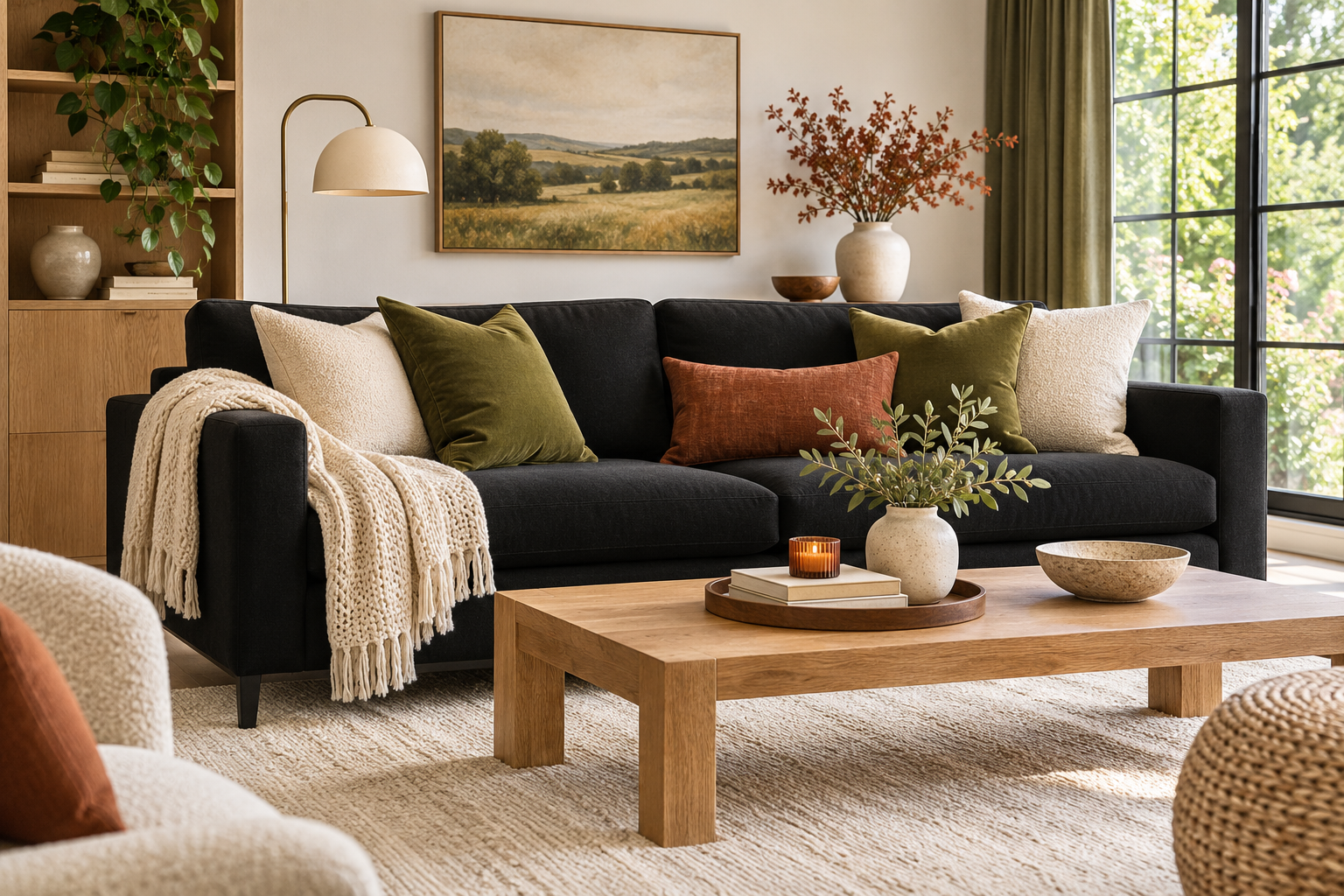
Quick palette ideas for a black sofa
- Warm and welcoming: cream, camel, walnut, and a small amount of rust.
- Clean and graphic: warm white, black, natural wood, and a restrained black-and-white pattern.
- Natural and relaxed: sage or olive, warm beige, plants, and woven textures.
- Rich and dramatic: emerald, burgundy, navy, or deep teal balanced with a lighter rug or wall.
- Soft modern neutral: greige, taupe, pale gray, black accents, and varied fabric textures.
- Glamorous accent: black, cream, brass or gold-toned details, and one jewel color.
Choose one main direction and repeat it in a few places. A black sofa does not need to be surrounded by black accessories. Two or three related colors, combined with different materials and light values, are usually enough to make the seating area feel designed rather than assembled from a single matching set.
Start with the room’s fixed finishes
Before choosing accent colors, note the surfaces that are difficult or expensive to change: floor, wall paint, cabinetry, fireplace surround, large rug, and window trim. These finishes set the background for the sofa. Warm oak floors, for example, can connect naturally with cream, camel, olive, or rust. Cool gray flooring may work with blue, green, or crisp white. Neither palette is mandatory; the purpose is to notice undertones before adding more colors.
Look at the black sofa in both daylight and evening light. Black upholstery can appear blue-black, brown-black, charcoal, or nearly flat depending on the material and lighting. Leather may reflect windows and lamps; velvet can show directional shading; textured woven fabric may appear softer. A glossy black sofa can make a room feel more formal, while matte black upholstery may blend more easily into a relaxed palette.
Decide whether the sofa should stand out or recede. If it should be the focal point, use lighter walls and a rug that defines its shape. If you prefer a quieter seating area, repeat black in a media cabinet or frames and add a few lighter textures to keep the room from becoming one dark mass. A large black sectional can be grounded by a pale rug and lifted with warm wood, art, and layered lighting.
Warm white, cream, and beige
Warm white and cream create clear contrast with black upholstery while avoiding the starkness of a purely cool white. They work well on walls, curtains, rugs, and pillows. A cream rug can soften a dark sofa, and warm-white walls can make the seating area feel brighter. Beige adds a slightly deeper neutral that relates black to wood and leather tones. Compare these shades with the room’s trim and floor; a yellow beige may look too golden beside a cool gray floor.
Use texture to keep a black-and-cream room from feeling overly formal. Linen, wool, cotton, boucle-like fabrics, woven baskets, and natural wood add variation. A subtle pattern can combine black and cream without turning the room into a high-contrast checkerboard. If the sofa is leather, a soft woven throw or textured pillow can contrast with its smooth surface.
Light neutrals are useful when the living room is small or has limited daylight. They reflect more light than dark surfaces, though the room’s actual brightness depends on windows, lamps, and finishes. If you worry that cream will show marks, choose a patterned or mid-tone rug and check care instructions for pillows or curtains. Do not assume a color is stain resistant without product information.
Rust, terracotta, and warm orange accents
Rust and terracotta bring warmth to black and make the room feel less stark. Use them in a rug, a pair of pillows, artwork, or a small accent chair. Burnt orange can work with black, cream, and wood; a muted clay shade feels softer than a bright saturated orange. If the room already has warm wood or brick, these accents can echo existing tones and make the black sofa feel integrated.
Keep the amount of orange proportional to the room. A vivid accent wall and a large orange rug may compete with a black sofa, while a few rust pillows can provide warmth without taking over. If you want more color, use one patterned accessory that combines rust with cream, charcoal, or blue. The other pieces can stay simpler.
Rust can also shift under warm lighting. A pillow that appears earthy in daylight may look redder at night. Compare fabrics in the room, and repeat the chosen tone in at least one other small object if the palette feels isolated. The goal is a connection, not an exact match between pillow, rug, and art.
Green: sage, olive, and emerald
Green creates a natural contrast with black. Sage and gray-green feel muted and can pair with cream, wood, and plants. Olive adds warmth and works especially well with tan, camel, and brown accents. Emerald or forest green is more dramatic and can bring a jewel-toned note to the room. The best shade depends on whether you want the sofa to remain the darkest object or share that weight with the walls and accessories.
Use green in a controlled way if the room is small. A few pillows or a plant-filled corner can be enough. In a larger room, a green rug, chair, or painted wall can create a stronger focal point. If the sofa is black leather, velvet or woven green textiles can add softness and contrast. If you choose dark green walls, include lighter art, curtains, or a rug to keep the sofa’s outline visible.
Plants can help repeat green, but their leaf colors vary and do not need to match the pillows. Consider the room’s light and plant care before adding living plants. Green artwork, glass, ceramics, or textiles can create the same palette connection when plants are not practical.
Blue, navy, and teal
Blue can make a black sofa feel composed and modern. Navy adds depth, dusty blue softens the palette, and teal introduces a green undertone. Blue and black can look sophisticated together, but if both are very dark the room may need a lighter rug or wall to preserve contrast. Pair with warm wood, brass, cream, or tan to keep the overall look from becoming too cool.
Use one blue tone as the main accent and choose related shades for small details. If the rug includes navy and cream, pick one of those colors for pillows or artwork. Avoid adding several unrelated blues without a linking pattern or texture. Small variations are fine; repeating the same exact shade everywhere can make the arrangement feel overly coordinated.
Consider how the room is used. A deep navy can make a media room feel cozy, while pale blue can make a bright living room feel lighter. Teal works as a stronger accent when the rest of the palette is restrained. Compare blue fabrics with the sofa in daylight and at night before making a large purchase.
Yellow, brass, and gold tones
Mustard, ochre, and soft gold can add warmth beside black. A small amount in a pillow, lamp, picture frame, or ceramic object can brighten the seating area. Brass and gold-toned metal are materials rather than wall colors, but they can support the same warm palette. Combine them with cream, wood, or deep green to keep the effect balanced.
Yellow is highly sensitive to lighting. A pale buttery shade can become very warm under yellow bulbs, while mustard can look brown in a dim corner. Test fabric and paint in place. If you want a subtle effect, use a patterned pillow that contains a touch of yellow rather than a solid saturated accessory.
Use metallic finishes selectively. A few brass accents can connect the sofa to lamps or hardware, but too many shiny surfaces may compete with reflective leather. If the black sofa is matte, gold-toned metal can provide a clear highlight. If the sofa itself is glossy, softer textiles can keep the room from feeling too hard.
Gray, charcoal, and tonal palettes
Gray and charcoal create a layered monochrome palette with black. This can feel modern and calm when the room includes differences in texture and lightness: pale gray walls, a charcoal rug, black upholstery, and a light wood table are more dimensional than several identical dark surfaces. A warm greige may soften the transition, while blue-gray creates a cooler effect.
To avoid a flat room, vary materials. Combine smooth leather with wool, linen, wood grain, matte ceramics, or a textured rug. Use lamps and art to create lighter areas. A monochrome palette does not mean every element must be gray; cream, tan, and plants can provide subtle warmth without breaking the overall direction.
Black sofa and charcoal wall combinations can be striking, especially in rooms with strong daylight, but consider the room’s size and lighting. Sample paint on multiple walls and view the sofa against it. If the outline disappears too much, use lighter trim, art, pillows, or a lighter rug near the sofa.
Black-and-white patterns
Black-and-white patterns can connect directly to the sofa and provide movement. They can appear in pillows, rugs, curtains, or art. A small geometric pattern may feel crisp and modern; a larger organic pattern can soften the room. If the sofa is already visually bold, choose one patterned surface and keep nearby accessories quieter.
Pattern scale matters. A tiny high-contrast print repeated across several pillows can feel busy, while one larger pattern can read as a focal point. Consider what remains visible when the pillows are placed on the sofa and when the coffee table sits on the rug. A pattern should support the seating area rather than compete with every other object.
Mixing patterns can work when they share a color or scale relationship. For example, a black-and-cream rug with a small green pillow pattern can be unified by a repeated green accent in artwork. If you are unsure, begin with one patterned item and add solids in colors drawn from it.
Choose wall colors around a black sofa
Warm white and pale greige walls make black upholstery stand out and can brighten a smaller room. Sage, muted blue, or soft green create a colored backdrop without demanding a high-saturation palette. Deep charcoal or navy walls can make the room feel intimate, but they reduce contrast and may require more lighting. Use paint samples behind the sofa and compare them at different times of day.
Consider the color of the trim, ceiling, and adjoining spaces. A bright white trim against a dark wall creates a crisp outline; painting trim closer to the wall color can create a more enveloping effect. In an open-plan home, check how the wall transitions to the kitchen or hall. A color that works behind the sofa may look abrupt at a corner if it has no connection to nearby finishes.
If you want to keep the walls neutral, add color through removable accessories. This makes it easier to change the room later and lets the black sofa remain the anchor. For a room with a strong accent wall, repeat a small amount of that wall color in pillows or art so the palette feels connected.
Balance rugs, curtains, and pillows
A rug can define the black sofa’s seating area and prevent it from appearing to float. A light rug creates contrast; a patterned rug can combine several accent colors; and a dark rug can make a tonal room feel grounded. Measure the furniture arrangement first. A rug that is too small can make a large sofa look disconnected, regardless of color.
Curtains can either blend with the wall or add another layer of color. In a small room, wall-colored curtains may keep the visual field calm. In a larger room, green, blue, or rust curtains can echo the accent palette. Check how much daylight the fabric blocks and how it looks beside the black upholstery.
Pillows are an easy way to test color. Start with two or three colors and vary the texture or pattern. If your sofa is black, cream and rust pillows can warm it; green and gold can make it richer; black-and-white patterns can sharpen it. Use the pillow cover sizes that fit the inserts, and verify whether a listing sells covers only or complete pillows.
Decorative pillow covers to compare
These Amazon examples show black-and-gold, rust, and emerald pillow-cover directions that can be used to test a living-room palette. They are not independent quality rankings. Confirm the current size, fabric, set quantity, zipper, insert inclusion, and washing guidance before ordering.

Black and gold velvet pillow-cover set
ASIN: B09VXRH24Z
A black-and-gold cover can repeat the sofa’s dark tone while adding a warmer accent. Check the listing for exact fabric, set quantity, and whether inserts are included.

Fancy Homi rust boho pillow covers
ASIN: B0C3B5BZ5Y
Rust adds warmth against black and can relate to wood or terracotta details elsewhere in the room. Confirm that the color and texture match the palette you want.

VAKADO emerald green velvet covers
ASIN: B07PGFC1PB
A rich green cover can create a jewel-tone accent beside black upholstery. Check the listing’s season-specific title, current shade, dimensions, and care notes before purchase.
Lighting and texture keep dark palettes readable
Black upholstery absorbs more light than pale fabrics, so layered lighting can make the seating area more comfortable. Combine ambient light with a floor or table lamp near the sofa, and avoid a single harsh overhead source if it creates glare on leather. Use warm bulbs when you want wood and rust accents to feel welcoming, but test the color temperature with your wall paint and upholstery.
Texture separates surfaces that share dark colors. A matte wall, textured rug, woven throw, and smooth leather sofa can all be black or charcoal without appearing identical. A reflective metal lamp or glass table can introduce another surface quality. Add variation gradually and view the room from a distance; too many different textures can become visually busy.
Keep paths clear around the sofa and lamps. A dramatic palette is still a living room, and people need room to walk, read, and use the seating comfortably. Place cords safely and keep fragile decor away from edges where it could be knocked over.
Common black-sofa color mistakes
One mistake is treating black as a color that only works with white. Black can pair with warm neutrals, greens, blues, rust, and jewel tones. Another is making every surrounding surface dark. If black sofa, dark wall, dark rug, and dark curtains occupy the whole room, the seating area may lose definition unless there is enough light and texture.
It is also easy to overuse accent colors. A black sofa can support many colors, but using every possible accent at once can make the room feel scattered. Pick one primary accent and one supporting color, then repeat them in a few small places. A patterned rug or pillow can help combine those choices.
Do not buy accessories based only on thumbnails. Check whether a pillow listing includes inserts, whether the cover dimensions fit your cushions, and how the fabric should be cleaned. For rugs and curtains, confirm actual dimensions and color variants. Product images may represent another option in the same listing.
Frequently asked questions
What colors look best with a black sofa? Warm white, cream, beige, rust, green, blue, gold-toned accents, and black-and-white patterns are useful starting points. Choose based on the room’s light and fixed finishes.
What wall color goes with a black couch? Warm white and greige create contrast; sage, muted blue, or green add color; charcoal and navy create a darker, layered room. Test samples in the actual space.
Can I use a black rug with a black sofa? Yes, if texture, pattern, or lighter furnishings separate them. A pale wall, wood table, or patterned rug can keep the seating area from blending together.
Do gold accents work with black furniture? Gold or brass tones can warm a black palette. Use them in a few repeated details such as a lamp, frame, or pillow pattern rather than covering every surface.
What pillow colors brighten a black sofa? Cream, ivory, rust, mustard, pale blue, and sage can all brighten black upholstery. Try a small group of colors and vary textures to see which fits the room.
How do I make a black sofa feel less formal? Add warm wood, soft rugs, textured throws, plants, and comfortable lighting. A relaxed pattern or warm neutral can soften a sleek black frame.
Can a black sofa work in a small room? Yes. Keep the surrounding palette lighter, ensure the sofa fits the circulation plan, and use lighting and contrast to define its shape.
Should all pillows match? No. Coordinate them through one shared color, pattern, or texture. A mix of solids and patterns often feels more relaxed than identical covers.
Final checklist
- Notice the black sofa’s finish and how it looks in daylight and evening light.
- Use the room’s floor, walls, and large furniture to guide undertones.
- Choose one main accent direction: warm, natural, jewel-toned, or monochrome.
- Repeat colors in a few places and use texture to separate dark surfaces.
- Measure rugs and verify pillow sizes, inserts, and care instructions.
- Test samples before buying large accessories or repainting.
The best colors for a living room with a black sofa are the ones that balance its visual weight and fit the room’s light and materials. Cream and beige brighten, rust warms, green adds a natural or jewel-like accent, blue creates a calm contrast, and charcoal builds a tonal look. Start with one palette, test it in place, and repeat a few colors rather than trying to coordinate everything at once.
Continue with our sofa accent color guide, read our wall color ideas for leather seating, or browse Home & DIY.
Certain content on this site comes from Amazon and may change. Amazon product images and listing details are supplied through Amazon Creators API. Confirm the exact option, seller, dimensions, materials, and current terms before purchase.