Where to buy
Check the latest price, availability and delivery on Amazon. Orders are placed on Amazon. We may earn a commission from qualifying purchases.
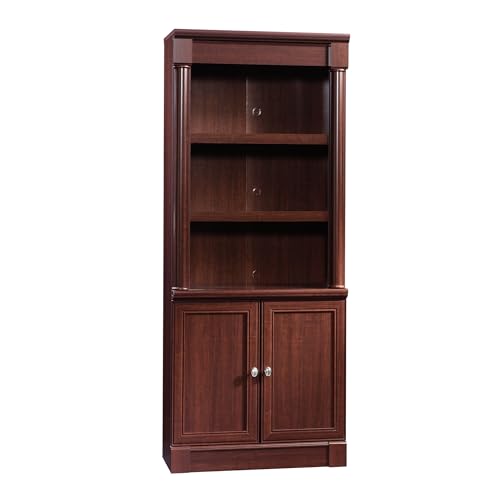
- Best overall: Sauder Palladia Library Bookcase with Doors, Select Cherry — Check on Amazon
- Nathan James Theo 6-Shelf Tall Bookcase, Rustic Oak/White — Check on Amazon
- VASAGLE Custos Collection 6-Tier Bookcase, Rustic Brown — Check on Amazon
- Sauder Beginnings 5-Shelf Bookcase — Check on Amazon
- VASAGLE 6-Tier Tempered Glass Bookcase, Metallic Gold — Check on Amazon
See 1 more Amazon option
- Furinno Turn-N-Tube 5-Tier Corner Display Rack, Black — Check on Amazon
Read the full guide ↓
Disclosure: As an Amazon Associate, dailyhomedecorating.com earns from qualifying purchases. Links to Amazon on this page are affiliate links; they cost you nothing extra. Listing details such as price and availability change often, so check the current Amazon listing before you buy.
Finding the best bookcase under $300 is a different exercise from shopping the bargain shelves below it. At this budget, the best bookcase under $300 should stop feeling like a temporary fix: shelves should stay flat under a full row of hardcovers, the frame should not rack when you slide a heavy atlas out, doors and backs should be finished rather than raw, and the proportions should suit a real living room rather than a dorm corner. The good news is that $300 is exactly the band where those upgrades arrive. The bad news is that plenty of bookcases priced near this ceiling are simply larger versions of flimsy designs — taller, wider, and no better built. This guide separates the two groups.
We compared enclosed library-style cases, open industrial etageres, glass display shelves and compact corner units, because “bookcase” at this price covers all four jobs. The six picks below each win a specific one. The Sauder Palladia is the complete package: a tall library case with open display shelves up top and concealed storage behind framed doors below. The Nathan James Theo 6-Shelf is the tall, open statement piece for readers who want height and a lighter visual footprint. The VASAGLE Custos is the adjustable, everyday workhorse. The Sauder Beginnings is the traditional tall case for maximum shelf count per dollar. The VASAGLE glass bookcase is the display-first option for collections you want to see, not just store. And the Furinno corner rack turns a dead corner into five extra shelves for very little of the budget.
One rule before we start: at this price, measure twice. Several picks here stand close to six feet tall, and one reaches 85 inches. Ceiling height, doorway width and the swing of nearby doors all matter more than they do with a three-shelf unit. We flag the real dimensions in every review, along with honest limitations — because a bookcase you have to return helps nobody.
In this guide
Quick Picks
| Pick | Best for | Style | Shelves | Check |
|---|---|---|---|---|
| Sauder Palladia Library with Doors | Best overall — display plus hidden storage | Enclosed library case, Select Cherry | 3 open + cabinet shelf | Check on Amazon |
| Nathan James Theo 6-Shelf | Tall open shelving, modern-industrial rooms | Open ladder frame, oak/white | 6 fixed | Check on Amazon |
| VASAGLE Custos 6-Tier | Adjustable everyday storage | Enclosed case, rustic brown | 6 tiers, adjustable | Check on Amazon |
| Sauder Beginnings 5-Shelf | Most books per dollar | Traditional enclosed case | 5, adjustable | Check on Amazon |
| VASAGLE 6-Tier Glass, Gold | Displaying decor and collectibles | Tempered glass, gold steel frame | 6 fixed | Check on Amazon |
| Furinno Turn-N-Tube Corner | Dead corners and light loads | Corner rack, black | 5 corner tiers | Check on Amazon |
How These Picks Were Chosen
Every pick had to clear the under-$300 framing from the brief, be a real, currently listed model from a recognizable furniture brand, and offer something the cheaper tiers below it do not. We weighted five criteria. First, structure: shelf material and thickness, frame design, and whether the maker publishes a per-shelf weight limit — a published limit is a sign the shelf was actually engineered rather than guessed at. Second, storage logic: adjustable shelves beat fixed spacing for mixed collections of paperbacks, hardcovers, binders and baskets, so enclosed cases with pin-adjustable shelves scored well, while fixed open frames had to justify themselves with capacity or looks. Third, footprint honesty: we used the manufacturers’ stated dimensions, not listing-photo impressions, and we call out the models that need wall anchoring or a stud to be safe.
Fourth, finish and detailing. Near $300, buyers reasonably expect framed door panels, metal hardware, cord access through a back panel, or tempered glass rather than raw particleboard edges — each pick here delivers at least one of those step-ups. Fifth, assembly reality: all six picks are flat-pack furniture that you build at home, so we favored models with clear hardware, numbered parts or tool-free systems, and we note where a second pair of hands genuinely helps. What we did not do: print prices or star ratings. Prices move, ratings move, and neither tells you whether a shelf sags. Where a pick is better treated as a display piece than a book vault, we say so plainly instead of padding the list with lookalikes.
The 6 Best Bookcases Under $300
Sauder Palladia Library Bookcase with Doors, Select Cherry (412019)
Best for: Anyone who wants one bookcase to do two jobs — open display shelving above, concealed storage below — in a traditional or transitional living room, study or home office.
The Palladia is the most complete bookcase in this guide, and it earns the top spot by solving the problem open shelves never can: visual clutter. The upper section gives you three spacious open shelves for books, framed photos and the objects you actually want seen, with two of them adjustable so tall art books and standard hardcovers can share the case. Below, two framed panel doors in the Palladia collection’s classic style hide a second adjustable shelf — the right home for board games, photo boxes, spare cables, binders and everything else that makes open shelving look messy. Sauder even cuts cord access into the enclosed back panel, so a small lamp, a speaker or a charging station can live inside the cabinet without a cable draped over the front.
The dimensions suit the role: about 29.4 inches wide, 13.9 inches deep and 71.9 inches tall, with shelf depth around 11.4 inches — deep enough for hardcovers and most storage baskets without the case swallowing the room. The Select Cherry finish and nickel hardware read as furniture, not flat-pack, and the contoured plinth base gives it the grounded, library look that open metal frames cannot imitate. If your room leans traditional, this is the pick that will look intentional rather than assembled. Start with the Sauder Palladia on Amazon if you only read one review in this guide.
Pros:
- Open display shelves plus a genuine hidden cabinet in one footprint
- Adjustable shelves in both sections, so spacing follows your collection
- Cord access through the back panel for lamps, speakers or chargers
- Framed panel doors, plinth base and nickel hardware look like built furniture
- Nearly 72 inches tall without being overly wide for apartment walls
Honest limitation: It is engineered wood, not solid timber, and at roughly 91 pounds assembled it is a two-person build and a plan-ahead move — you will not casually shuffle it between rooms. The cherry finish also commits you to a warm, traditional palette; it will fight a cool grey minimalist scheme rather than blend into it.
Choose it if your bookcase needs to hide as much as it shows. Skip it if you want an airy, open, modern look — read the Theo review next instead. Either way, check the Palladia’s current price on Amazon before deciding, since it anchors the top of this budget.
Nathan James Theo 6-Shelf Tall Bookcase, Rustic Oak/White
Best for: Tall, open, design-led shelving in modern, industrial or Scandinavian-leaning rooms — and for lining two or more units along one wall as a modular library.
Where the Palladia encloses, the Theo opens everything up. Six fixed shelves climb a full 85 inches on a slim metal frame with rustic oak-finish shelves against matte white uprights, and because there is no back panel and no cabinet, the whole piece reads as architecture rather than storage. The shelves are a generous 30 inches wide and 12 inches deep, and Nathan James rates each shelf at 55 pounds — a serious number for an open frame, and the reason this unit can genuinely work as a bookcase rather than a decor etagere that tolerates a few paperbacks. The maker designs the Theo to be lined up in multiples, so a pair flanking a desk or a run of three along a living-room wall looks deliberate, not improvised.
Two practical notes define ownership. First, this is a wall-mount design: the frame secures to the wall, which is exactly what makes an 85-inch open tower safe, but it means renters should check their lease and everyone should plan for studs or the included anchoring approach before assembly day. Second, the shelf spacing is fixed, so measure your tallest items — oversized atlases, vinyl records and tall vases need a shelf gap that fits them, and there is no pin to move if they do not. Assembly is quoted by the maker at around 40 minutes, which is realistic for a frame-and-shelf design with this few panels. See the Theo 6-Shelf listing on Amazon for the current finish options, since this frame is sold in several colorways and only some sit under the $300 ceiling at any given time.
Pros:
- 85-inch height uses vertical space no standard case reaches
- 55 lb per-shelf rating is unusually strong for an open frame
- Modular design lines up cleanly in pairs or runs
- Open back keeps rooms feeling light and uncluttered
- Fast, simple assembly for a unit this tall
Honest limitation: Fixed shelf spacing is the trade for that clean ladder look — one awkwardly tall object can waste a whole shelf gap. It must be wall-secured, so it is not a rearrange-on-a-whim piece, and the open design offers zero concealment: messy collections will look messy, just taller.
Choose it if height, openness and a modern frame matter more than hidden storage. Skip it if you cannot anchor to a wall or need adjustable shelves. You can check the Theo on Amazon to confirm the current colorway pricing against the $300 cap.
VASAGLE Custos Collection 6-Tier Bookcase, Rustic Brown (ULBC166X01)
Best for: The everyday default — a mid-size enclosed bookcase with adjustable shelves for a mixed collection of books, baskets and media in living rooms and bedrooms.
If the Palladia is the statement and the Theo is the sculpture, the Custos is the sensible colleague who gets the work done. At about 23.6 inches wide, 9.4 inches deep and 63.3 inches tall, it fits the wall spaces real rooms actually offer — beside a sofa, at the end of a hallway, flanking a TV stand — while still stacking six tiers of storage. The shelves adjust, which matters more in daily use than any finish: drop one shelf low for storage baskets, raise another for tall cookbooks, and the case adapts as your collection changes instead of forcing your collection to adapt to it. The rustic brown finish and clean enclosed silhouette sit comfortably in farmhouse, transitional and casual modern rooms alike.
VASAGLE’s Custos line is sold in several sizes and finishes under closely related listings, which is a quiet advantage: if this exact footprint is slightly wrong for your wall, the same design language exists in narrower and wider siblings, so a matched pair or a future second unit stays visually consistent. The shallower 9.4-inch depth is the thing to check before ordering — standard hardcovers fit, but deep storage bins and oversized art books may overhang, and this is a case for books first and display second. Assembly is typical flat-pack work with numbered parts; budget an unhurried hour and use the included anti-tip hardware, because any 63-inch case full of books deserves anchoring. The Custos listing on Amazon shows the current configuration options.
Pros:
- Adjustable shelves across six tiers — the most flexible layout here
- Footprint fits ordinary walls, hallways and beside-sofa gaps
- Rustic finish blends with farmhouse and transitional decor
- Enclosed design keeps collections looking tidy from the front
- Related sizes in the same collection make pairing easy later
Honest limitation: At 9.4 inches deep it is the shallowest full case in this guide — measure deep bins, board-game boxes and art books before committing. The finish is a laminate over engineered board, so it will not take the knocks that solid wood shrugs off, and heavy encyclopedia rows belong on the lowest tiers.
Choose it if you want one adaptable, mid-size case that simply works in most rooms. Skip it if your storage is mostly deep boxes or oversized volumes — the Palladia’s deeper shelves serve those better. Check the Custos on Amazon for the latest availability in this finish.
Sauder Beginnings 5-Shelf Bookcase
Best for: Readers with large collections who want the most tall, adjustable shelving the budget allows, in a traditional enclosed case.
The Beginnings 5-Shelf is Sauder’s long-running answer to a simple brief: five shelves, most of them adjustable, in a tall case with an enclosed back, at a price that leaves room in the budget for a second unit. The frame stands roughly 71 inches tall and about 24.6 inches wide with shelves around 11.5 inches deep — dimensions that have made this design a default in home offices, spare bedrooms and first apartments for years. Three of the shelves adjust on pins, so a shelf of mass-market paperbacks can sit a few inches above a shelf of tall reference books, and the fixed middle shelf doubles as a structural brace that keeps the tall case feeling planted rather than wobbly.
That enclosed back deserves a word, because open-frame rivals skip it. A back panel stops books sliding through, hides the wall behind, stiffens the whole box against sideways racking, and makes the case look finished from the side angles where open frames show their hardware. The trade is ventilation and lightness: this is a visually solid piece, and in a small room it will read as a block of furniture rather than a frame you can see through. Finishes in the Beginnings line run traditional — cherry and similar warm tones — so it pairs naturally with the Palladia if you ever build a mixed wall of Sauder cases, though the detailing here is simpler and the doors of the Palladia are absent. Assembly is classic cam-and-dowel flat-pack: methodical, not difficult, and the instructions reward patience over speed. You can see the current finish and configuration on the Beginnings 5-Shelf listing on Amazon.
Pros:
- Five shelves, three adjustable — maximum flexible capacity per dollar
- Enclosed back adds stiffness and a finished look from every angle
- Full 11.5-inch shelf depth suits hardcovers and textbooks
- Traditional finishes coordinate with other classic cases
- Simple, proven design with widely available replacement hardware
Honest limitation: The styling is plainly traditional flat-pack — no framed doors, no metal accents, nothing to make a design-led room swoon. The engineered-wood shelves also have sensible load limits, so full rows of heavy textbooks belong low and spread across shelves rather than concentrated on one adjustable shelf at the top.
Choose it if capacity and adjustability outrank styling in your decision. Skip it if the bookcase is meant to be a decorative centerpiece — the Palladia or the glass VASAGLE will carry that role better. Check the Beginnings on Amazon to see which finish is currently listed under the ceiling.
VASAGLE 6-Tier Tempered Glass Bookcase, Metallic Gold (ULGT502A01)
Best for: Display-first storage — collectibles, ceramics, plants, art books and beautiful objects — in modern and glam-leaning rooms.
Every other pick in this guide stores books and tolerates decor. This one inverts the priority. Six tiers of tempered glass on a metallic gold steel frame, about 31.5 inches wide, 11.8 inches deep and 70.9 inches tall, turn a collection into a gallery: light passes through the shelves, objects appear to float, and the gold frame supplies the jewelry-like accent that modern rooms often need exactly once. The tier heights vary — the design deliberately mixes taller and shorter gaps, up to roughly 22 inches at the most generous — so a tall vase, a stack of art books and a row of small ceramics each find a shelf that fits instead of a uniform grid that fits nothing perfectly.
Glass demands honesty about loads. VASAGLE rates the unit at 88 pounds total, which is a display shelf’s number, not a book vault’s: a full tier of hardcovers can approach that on its own. Treat it as the maker intends — books as accents among objects, heaviest items on the lowest tiers, weight spread wide. The adjustable feet handle slightly uneven floors, and the included anti-tip kit should be used; a tall, narrow, top-displayed unit is precisely the profile anchoring exists for. Tempered glass is stronger and safer than standard glass if the worst happens, and it wipes clean in seconds, though it also shows every fingerprint and dust film — budget a weekly wipe if it lives in a bright room. The glass VASAGLE listing on Amazon shows the shelf layout clearly.
Pros:
- Tempered glass and gold frame create a genuine display piece
- Varied tier heights fit vases, art books and ceramics alike
- Light passes through, keeping small rooms feeling open
- Adjustable feet and anti-tip kit included
- Wipes clean faster than any wood-finish shelf
Honest limitation: The 88 lb total capacity rules it out as a primary bookcase for a serious library — it is a display unit that holds some books, not the reverse. Glass also advertises dust and fingerprints, and the gold finish is a commitment: it will not quietly disappear into a rustic or traditional scheme.
Choose it if your shelves are as much exhibition as storage. Skip it if you need to shelve hundreds of heavy books — that is the Beginnings’ job. Check the glass bookcase on Amazon for current availability.
Furinno Turn-N-Tube 5-Tier Corner Display Rack, Black (99811)
Best for: The corner every room has and no straight bookcase fits — light books, plants, photos and small decor, assembled without tools.
Not every storage problem needs $300, and this final pick exists for the corner left over after the main case is placed. The Turn-N-Tube corner rack tucks five corner-shaped tiers into an 11.6-by-11.6-inch footprint and stands about 57.7 inches tall, turning the dead angle between a sofa and a wall, or beside a desk, into vertical storage. The Turn-N-Tube system is Furinno’s signature: composite-wood shelves twist onto PVC tube uprights by hand, no tools, in minutes, and the whole unit weighs only about 9 pounds, so it can be carried to a new corner or a new apartment by one person without a second thought.
The limits are real and we will state them as plainly as the maker does: each shelf is rated at about 10 pounds, 50 pounds total. That is paperbacks, a plant, a small speaker, framed photos — not a row of hardcover reference books, and not a climbing surface for children or cats with ambitions. Within that brief, though, it is genuinely useful: five tiers is a lot of surface for a footprint smaller than a side table, the black finish disappears into most corners, and the price leaves most of the $300 budget unspent for the main bookcase it complements. Think of it as the supporting actor of this guide — bought alongside a Palladia or Custos, it finishes rooms that a single case leaves awkward. It is listed as the Furinno corner rack on Amazon.
Pros:
- Uses an 11.6-inch corner footprint no straight case can use
- Tool-free twist-together assembly in minutes
- Only about 9 lb — effortless to move or reconfigure
- Five tiers of light storage for very little of the budget
- Pairs with a main bookcase to finish a room’s storage
Honest limitation: Ten pounds per shelf is a hard ceiling — this is a display rack for light objects, not a bookcase for a working library. The PVC tube construction also feels as light as it is; buyers expecting furniture heft should put their money into the enclosed cases above instead.
Choose it if you have a dead corner and light items needing a home. Skip it if it would be your only bookcase — it cannot carry that role. Check the Furinno corner rack on Amazon for the current listing.
What $300 Buys That $150 Does Not
Readers comparing this guide with our coverage of cheaper tiers often ask what the extra money actually purchases, since a shelf is a shelf. Four things. First, doors and backs: below this band, concealed storage and finished enclosed backs are rare; here, the Palladia hides a whole cabinet behind framed doors. Second, height: 71-to-85-inch cases with real stability engineering replace the 60-inch ceiling of budget lines. Third, published engineering — per-shelf ratings like the Theo’s 55 pounds and tempered-glass specifications replace the vague “sturdy” of listings that never commit to a number. Fourth, finishes and hardware meant to be looked at: nickel pulls, gold steel, framed panels. If none of those four matter to your room, a cheaper case will serve you honestly — see our guide to Best Bookcase Under $150 for that tier. If two or more matter, this is the band where they arrive together.
Comparison Table
| Bookcase | Approx. size (W × D × H) | Shelves | Adjustable? | Standout trait |
|---|---|---|---|---|
| Sauder Palladia | 29.4″ × 13.9″ × 71.9″ | 3 open + cabinet | Yes | Hidden storage behind doors |
| Nathan James Theo 6-Shelf | 30″ × 12″ × 85″ | 6 | No | Tallest; 55 lb per shelf |
| VASAGLE Custos 6-Tier | 23.6″ × 9.4″ × 63.3″ | 6 tiers | Yes | Flexible mid-size default |
| Sauder Beginnings 5-Shelf | 24.6″ × 11.5″ × 71″ | 5 | Yes (3) | Capacity per dollar |
| VASAGLE Glass 6-Tier Gold | 31.5″ × 11.8″ × 70.9″ | 6 | No | Display glass, varied tiers |
| Furinno Corner Rack | 11.6″ × 11.6″ × 57.7″ | 5 corner tiers | No | Tool-free, corner footprint |
How to Choose the Best Bookcase Under $300 for Your Room
Start with the job, not the style. A bookcase that mostly stores should be enclosed, deep and adjustable — Palladia, Beginnings or Custos territory. A bookcase that mostly displays can be open or glass. Buying a display piece for a storage job is the most common and most expensive mistake in this category, because the second, correct purchase follows within a year.
Measure three spaces: the wall (width and height, including baseboards and ceiling slope), the route (doorways, hallway turns, stairwell clearance for a 72-inch panel), and the collection (your tallest book, your deepest bin). A case that fits the wall but not the hallway is a return waiting to happen. Leave at least a couple of inches above any tall case so you can tilt it upright during assembly — tall flat-pack is built lying down and stood up, and the diagonal of an 85-inch frame needs room to swing.
Match depth to content. Paperbacks need 8–9 inches; standard hardcovers 10–11; art books, binders and storage baskets 11–13. Shelf depth beyond your content wastes room depth, and depth short of it leaves books overhanging and bins impossible. The picks here span 9.4 to 13.9 inches for exactly this reason.
Decide about doors honestly. Doors hide clutter, dust and the charger-and-cable drawer every household has — but they add cost and a swing clearance. If everything you shelve is display-worthy, open shelves are cheaper per tier and airier. If even one shelf would embarrass you, doors pay for themselves in calm.
Plan anchoring before you shop. Every case over about 60 inches should be anchored, full stop; in homes with children or large pets it is non-negotiable. Check whether your pick includes the kit (the glass VASAGLE and Custos do; the Theo is wall-mounted by design) and whether your wall — stud, masonry, or plaster — needs different hardware than the box provides. For more on the narrower end of this category, our guide to the Best Bookshelf Under $300 compares open bookshelf formats specifically.
Common Buying Mistakes
Buying by photo width. Listing photos crop and stretch; a “wide library” can be 24 inches across. Shop by the dimension line, never the picture. Ignoring the diagonal. Tall cases are assembled flat and tilted up — low ceilings and tight rooms can make a 72-inch case impossible to stand. Overloading the top adjustable shelf. Adjustable shelves on pins are the least supported; heavy rows belong on fixed or bottom shelves. Skipping the anchor because the case “feels solid.” A full bookcase is top-heavy by physics, not by feel; anchor it. Matching finishes by name. “Cherry” from two brands is two different colors — coordinate by tone family (warm, cool, neutral), not by label. Forgetting the route in. Measure doorways and stair turns before ordering the tallest case you can find, not after it arrives.
Loading, Anchoring and Looking After a Tall Bookcase
A bookcase is one of the few pieces of furniture whose load grows quietly for years. Books accumulate a shelf at a time, and a case that felt lightly loaded in its first month can be carrying several hundred pounds by its third year — which is why the habits you set at assembly matter more than the brand on the box. Load heavy material low: encyclopedias, art books and full binders belong on the bottom shelf or the fixed structural shelf, never on a high adjustable shelf resting on four pins. Spread concentrated weight across the width of a shelf rather than stacking it at one end, and leave the top shelf for the lightest material — paperbacks, baskets, decor — because weight up high is what turns a nudge into a tip.
Anchoring deserves its own paragraph because it is the step buyers most often skip and most regret skipping. Use the kit in the box as a minimum; if your wall is plaster over lath, masonry, or metal-stud, buy the anchor type made for that wall rather than forcing the included drywall hardware. Anchor into a stud whenever the case position allows it, check the case is level before tightening so the strap is not fighting a lean, and re-check the fixing after the first month of loading, when the case has settled into its real weight. In homes with children, treat anchoring the way you treat stair gates: not optional, not postponable, and worth doing before the first book goes in rather than after.
Care is simple but not zero. Engineered-wood finishes want a soft cloth and no soaking; standing water from a plant pot will swell a shelf edge faster than years of books will sag it, so use trays under anything green. Glass shelves wipe clean with a microfiber cloth and show their best side when you resist overloading the top tier, where every object is silhouetted. Metal frames need only dusting, but check the feet and levelers twice a year — a quarter-turn of an adjustable foot cures the wobble that otherwise works fasteners loose over time. Finally, if you move house, empty the case completely and move it unladen; a loaded or half-loaded tall case carried by its frame is how good bookcases die.
Styling a Bookcase So It Reads as Furniture, Not Storage
The difference between a bookcase that elevates a room and one that merely occupies it is rarely the case itself — it is the arrangement. A reliable method used by stylists is to work in thirds: roughly a third books standing upright, a third books stacked horizontally, and a third objects, baskets and breathing room. Horizontal stacks do double duty as display plinths for a small plant, a clock or a framed print, and they break the library monotony that makes a full wall of spines feel heavy. Group books by approximate height within a shelf, keep the tallest at the ends where they read as bookends, and let color emerge naturally rather than forcing a rainbow order you will never maintain.
On enclosed cases like the Palladia and Beginnings, reserve the top shelf for the lightest visual material — it is the shelf at eye level when seated, and a row of pale spines, ceramics or a trailing plant there softens the whole piece. The cabinet section earns its keep precisely because styling has a backstage: the spare chargers, the board games, the photo boxes live behind the doors, and the open shelves never have to apologize for them. On open frames like the Theo and the glass VASAGLE, remember that everything is visible from the side and sometimes from behind; place the case against a wall whose color flatters the frame, and accept that open shelving rewards households that enjoy arranging — if arranging feels like a chore, an enclosed case will make you happier for longer. A small lamp or a picture light on the top shelf, plugged through the Palladia’s cord access or run neatly down an open frame’s upright, turns a storage unit into the warmest corner of the room.
Final Recommendation
For most readers, the Sauder Palladia is the best bookcase under $300: it is the only pick that displays and conceals in the same footprint, its adjustable shelves fit a real mixed collection, and its finish and hardware look like furniture long after the flat-pack jokes fade. Choose the Nathan James Theo instead if your room wants height and openness and your wall can take the mount, and keep the VASAGLE Custos in mind as the flexible mid-size default that fits the walls the other two cannot. Add the Furinno corner rack only as a supplement, and let the glass VASAGLE do the displaying it was born for. Whichever you choose, anchor it, load the heavy books low, and the case will quietly outlast several reading habits.
Assembly Day: What to Expect From Each Style
Flat-pack anxiety is real, so here is the honest shape of each build in this guide. The enclosed Sauder cases — Palladia and Beginnings — are panel-and-cam projects: a dozen or so engineered-wood panels, dowels, cam locks and a back panel that must go on square, because a racked back means doors that never quite align on the Palladia. Work on a rug or the flattened box to protect the finish, keep the hardware sorted in the order the steps call for it, and do not fully tighten the frame until the back is fitted — that sequence is the difference between a square case and a parallelogram. Two people make the standing-up step trivial; one determined person can do it with a wall, patience and a plan.
The open frames are the lighter lift. The Theo bolts shelves to a metal ladder frame and then secures to the wall, so the fiddly part is not the frame but the mounting: find your studs first, mark level lines, and treat the wall step as the real assembly. The glass VASAGLE goes together as a steel frame with glass tiers laid or fixed in place — handle the tempered panels on a soft surface, keep the protective film on until the frame is upright if your listing ships with it, and resist overtightening fixings against glass. The Custos sits between the two families: an enclosed case, but a smaller one, and the most forgiving solo build of the enclosed group. The Furinno corner rack is the outlier — shelves twist onto tubes by hand, and the whole build can be done during a single podcast episode with no tool drawer opened. Across all six, the universal advice holds: inventory the parts before you begin, build in the room the case will live in whenever size allows, and anchor before you load a single book.
Frequently Asked Questions
How many books does a bookcase under $300 hold?
As a working estimate, a 24-to-30-inch shelf holds roughly 25–35 standard books depending on thickness, so a five- or six-shelf case in this guide holds on the order of 120–180 mixed books when fully loaded with books alone. Display mixing — baskets, objects, horizontal stacks — reduces that count but usually looks better and loads the shelves more gently.
Is an enclosed bookcase or an open one better?
Enclosed cases with backs are stiffer, hide the wall, and keep books from sliding through; open frames feel lighter, cost less per tier and suit display. For a primary bookcase in a living room, we lean enclosed or hybrid like the Palladia; for secondary and display shelving, open frames like the Theo are excellent.
Do I really need to anchor a tall bookcase?
Yes. Any case around 60 inches or taller should be secured to the wall, and in homes with children it is essential. Most picks here include anti-tip hardware or are wall-mounted by design. Anchoring takes minutes and is the single highest-value step in the whole purchase.
Are adjustable shelves worth it at this price?
For mixed collections, yes — paperbacks, hardcovers, binders and baskets all want different shelf gaps, and adjustability lets one case serve them all. Fixed-shelf designs like the Theo justify themselves with capacity and looks, but measure your tallest items first because there is no pin to move later.
Engineered wood or solid wood under $300?
Almost everything at this price is engineered wood, metal, glass, or a combination — true solid-wood tall cases generally live above this ceiling. Well-made engineered panels with a proper frame and back are entirely fit for purpose; judge by shelf ratings, hardware and construction rather than material snobbery.
Can one person assemble these bookcases?
The Furinno corner rack and the Theo frame are realistic solo builds. The tall enclosed cases — Palladia and Beginnings especially — are safer and easier with two people, mainly for standing the case upright and holding panels square while fasteners go in.
What depth bookcase do I need for hardcover books?
Standard hardcovers are happy at 10–11 inches of shelf depth. Oversized art books, atlases and deep storage baskets want 11.5–13 inches. If your collection is mostly paperbacks, a shallower case like the Custos saves floor depth without costing you anything.
How long should a bookcase at this price last?
Anchored, sensibly loaded and kept dry, the enclosed cases here should serve for many years of daily use. The enemies are overload, moisture and moving house with the case still assembled — break it down or empty and brace it before any move.
Does a bookcase need a back panel?
Not strictly, but a back panel earns its place on a primary bookcase: it stiffens the frame against sideways racking, stops books sliding through, and hides the wall so the case looks finished from side angles. Open-back designs like the Theo trade that stiffness and concealment for lightness and a see-through profile, and they compensate by fixing to the wall. Choose based on the job — storage favors a back, display can go without.
Should I buy one tall bookcase or two shorter ones?
One tall case uses less floor and usually costs less than two short ones of equal total shelf space, and it anchors once. Two shorter cases win on flexibility — they can flank a window, split between rooms, or move house far more easily — and a lower top shelf stays reachable without a step stool. If your collection is still growing and your home is settled, go tall; if you move often or the room layout is unsettled, two smaller cases forgive more.
How do I stop shelves from sagging over time?
Respect the maker’s per-shelf rating where one is published, keep the heaviest rows on fixed or bottom shelves, and avoid concentrating a full set of encyclopedias at the center of a long adjustable shelf. Spreading weight toward the shelf supports, using bookends or horizontal stacks to break up long dense rows, and keeping the case dry will prevent most of the sag buyers blame on materials.