Where to buy
Check the latest price, availability and delivery on Amazon. Orders are placed on Amazon. We may earn a commission from qualifying purchases.
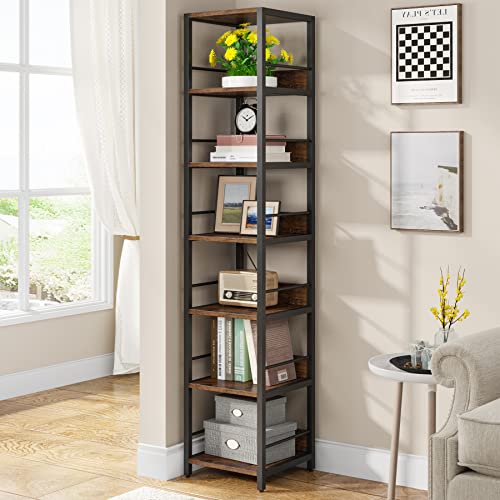
- Best overall for small spaces: Tribesigns 6-Tier Corner Shelf, 75-Inch, Rustic — Check on Amazon
- Furologee 5-Tier Ladder Shelf with Drawer, Black Oak — Check on Amazon
- Furinno Turn-N-Tube 5-Tier Corner Display Rack, French Oak — Check on Amazon
- Furinno Luder 5-Tier Bookcase with Door Cabinet, White — Check on Amazon
- Casual Home 3-Shelf Folding Bookcase, Natural Solid Wood — Check on Amazon
See 1 more Amazon option
- VASAGLE Custos Collection 6-Tier Bookcase, Rustic Brown — Check on Amazon
Read the full guide ↓
Disclosure: As an Amazon Associate, dailyhomedecorating.com earns from qualifying purchases. Links to Amazon on this page are affiliate links; they cost you nothing extra. Listing details such as price and availability change often, so check the current Amazon listing before you buy.
The best bookcase for small spaces under $150 is found by looking where other buyers never look: the corner, the sliver, the wall above the low furniture, the twelve inches beside the door frame. Small spaces are rarely small everywhere — a compact bedroom has a dead corner, a hallway has an alcove, a little living room has one narrow wall doing nothing — and the right bookcase converts exactly those leftover geometries into storage without touching the room’s working floor. The wrong bookcase, even a “small” one, does the opposite: a standard-width case parked in a compact room eats the circulation space, crowds the door swing and makes the room feel smaller than it did with the books in piles. In small spaces, placement and profile matter more than capacity.
This guide is organized by territory rather than by style. Corner towers and racks claim the 90-degree dead zones. Ladder and narrow cube cases claim slivers as slim as twelve inches. Low folding cases claim the under-window wall and double as surfaces. And one full but narrow panel case proves that a small room can still hold a real, adjustable six-tier bookcase if its width is disciplined. Every pick is a verified, currently listed model from an established maker, chosen against the under-$150 ceiling in the keyword; we print no prices under site policy, so check price on Amazon. If your small space is specifically a small apartment with a lease attached, our Best Bookcase For Small Apartments Under $150 guide applies the rental filter; if the budget is tighter still, start with Best Bookcase For Small Spaces Under $100.
The headline pick is the Tribesigns corner tower: six tiers climbing 75 inches out of a corner that was holding nothing, framed in metal so it carries real books. The Furologee ladder takes the narrow walls, the Furinno corner rack takes the lightest corners with zero tools, the Luder hides a small space’s clutter behind a door in a twelve-inch footprint, the Casual Home folds into whatever shape the room needs this month, and the VASAGLE Custos is the small room’s grown-up option — narrow, adjustable, and finished like furniture.
Picture the spaces this guide is written for, because they are probably yours: the compact bedroom where the only free wall is the one the door opens against; the hallway landing wide enough for exactly one piece of furniture; the small living room whose corner currently holds a lamp, a plant and a quiet sense of waste; the box room that is office, guest room and storage in rotation. None of these spaces needs a smaller version of a big room’s bookcase. Each needs a different shape entirely — and that is why this guide refuses to rank one “best small bookcase” in the abstract. The corner tower is a hero in the living room corner and a menace in the hallway; the ladder is perfect beside the bed and pointless under the window. Territory first, product second, is not a slogan here; it is the method.
There is a second small-space truth the picks respect: in a compact room, furniture is always in the photograph. A bookcase in a large home can be purely functional, tucked in a study nobody guests in. In a small home it stands in the living room, the bedroom, the background of every video call — so it has to look chosen, not merely stored. That is why this guide’s picks lean on finishes and silhouettes that read as decor (black oak, natural wood, a rustic corner tower that looks like a garden column) and why the styling guidance matters as much as the dimensions. A small space does not forgive an ugly storage decision; it displays it, daily, at close range.
In this guide
Quick Picks
| Pick | Bookcase | Territory it claims | Profile | Amazon |
|---|---|---|---|---|
| Best overall | Tribesigns 6-Tier Corner Shelf, 75-Inch | The dead corner | Corner tower, 6 tiers | Check on Amazon |
| Best for narrow walls | Furologee 5-Tier Ladder with Drawer | The sliver wall | Narrow, 55.6 in tall | Check on Amazon |
| Best light corner | Furinno Turn-N-Tube Corner Rack | Display corners | Corner, toolless | Check on Amazon |
| Best with a door | Furinno Luder 5-Tier with Cabinet | 12-inch wall gaps | 12 × 9.3 × 52 in | Check on Amazon |
| Best flexible | Casual Home 3-Shelf Folding | Under windows, anywhere | Low, folds flat | Check on Amazon |
| Best full case, small room | VASAGLE Custos 6-Tier | One disciplined wall | 23.6 × 9.4 × 63.3 in | Check on Amazon |
How These Picks Were Chosen
Small-space suitability is a geometry test before it is a furniture test, so we screened on five measurements and behaviours. Footprint: every pick claims two square feet or less of floor, or is low enough to double as a surface. Depth: nothing here exceeds roughly twelve inches, because in a small room a deep case is a wall that moved inward. Vertical yield: shelves per footprint — the corner tower’s six tiers from a corner is the benchmark the others are judged against. Territory fit: each pick had to own a specific leftover geometry (corner, sliver, under-window, single narrow wall) rather than merely being a shrunken standard case. Behaviour in tight quarters: assembly possible in the room itself, doors and drawers that open without a clearance ceremony, and weights one person can shift for cleaning behind — in small spaces you will clean behind it, because dust has nowhere else to go either.
We excluded standard 30-inch-wide cases wearing “small” in their titles, deep cube systems that project a foot into the room, and any design whose top shelf is unreachable without standing on furniture — storage you cannot reach is decoration you dust. Prices are not printed (they move too fast to print honestly); the under-$150 framing is the selection budget. For the unfiltered field, the parent roundup is our Best Bookcase Under $150 guide, and for wider open formats in compact rooms, see Best Bookshelf For Small Spaces Under $150.
Best Bookcase for Small Spaces Under $150: The 6 Picks
Tribesigns 6-Tier Corner Shelf, 75-Inch, Rustic
Who it suits: Anyone with a dead corner and a real storage problem — the small bedroom, compact living room or home office nook where the corner is the only unclaimed territory left.
A corner is the strangest space in a room: too angled for standard furniture, too central to ignore, usually surrendered to a plant or a floor lamp and a quiet sense of waste. The Tribesigns converts it into the room’s storage engine — six square tiers rising 75 inches on a metal frame with rustic wood-look shelves, using the corner’s full depth instead of bowing to it. The tiers hold genuine loads: book rows, baskets, a small speaker, the games, the printer in an office corner. Height is the strategy — in a small space the floor is rationed but the air is free, and this tower spends air lavishly. The rustic finish warms the corner rather than leaving it as the room’s cold spot, and the open frame keeps a tall object from reading as a solid block in a room that cannot afford visual bulk.
Pros:
- Six tiers from a corner footprint — the best vertical yield here
- Metal frame carries real book loads
- Open frame keeps a 75-inch piece visually light
- Turns the room’s deadest zone into its hardest-working
Honest limitation: At 75 inches it must be anchored, assembled in place, and measured against the ceiling’s stand-up diagonal. It is a commitment to that corner — if the room rearranges seasonally, a lighter pick below will travel better.
Choose it if the corner is free and the storage need is serious. Skip it if the corner holds the room’s only good light — a tower there will tax the whole space.
Living with it: Zone it by altitude: heavy and daily at the bottom, display at eye level, light and seasonal at the top. Corner towers reward a small ritual — a plant trailing from the second-highest tier softens the geometry and makes the tower read as a garden column rather than a warehouse. Dust downward with a long duster monthly; the open shelves make it a five-minute job, and in a small room the difference between a dusted corner and a dusty one is the difference between intentional and accidental.
Furologee 5-Tier Ladder Shelf with Drawer, Black Oak
Who it suits: The narrow wall — beside the bed, flanking the desk, the strip between window and wall — anywhere twelve to eighteen inches of width is the whole opportunity.
The ladder profile is the small-space silhouette par excellence because its depth steps with its height: generous shelves low, where the room can spare the projection and the weight belongs, narrowing as it rises to 55.6 inches, so at eye level the case is nearly flush and the wall still breathes. Five tiers plus a fabric drawer at the base give the Furologee a complete storage grammar in a footprint most cases would call a side table: books and baskets low, display in the middle, one perfect object at the top, and the drawer swallowing the chargers, remotes and small chaos that make small rooms look smaller. In black oak with a black frame it reads as a deliberate accent — the piece guests assume was chosen by someone with a plan.
Pros:
- Stepped depth — storage low, near-flush at eye level
- Fabric drawer hides small-space clutter
- Narrow width fits slivers and flanks furniture symmetrically
- Accent looks: reads as decor, works as storage
Honest limitation: Upper shelves are display-shallow by design; big hardcovers live on the bottom tiers or not at all. Secure the leaning profile as the maker directs — a ladder’s stability is a system, not a hope.
Choose it if your free wall is a sliver and your taste runs modern. Skip it if you need uniform deep shelves top to bottom.
Living with it: Ladders invite styling by altitude and punish clutter instantly, which in a small room is a feature: the case stays honest because it cannot hide anything except in its drawer. It also pairs — two ladders flanking a bed, a desk or a fireplace turn two slivers into a composition, doubling storage while looking like a design decision. Move it seasonally if you like; it is light enough that the room’s layout can evolve around the light and the seasons instead of around the furniture’s weight.
Furinno Turn-N-Tube 5-Tier Corner Display Rack, French Oak
Who it suits: The light-duty corner — plants, paperbacks, photos, the speaker — and anyone who values instant, toolless, reversible storage over load-bearing ambition.
Furinno’s tube system twists together by hand in minutes: five composite-wood shelves on connecting tubes, shaped for the corner, in a warm French oak finish. It is the lightest object in this guide by a wide margin, and in small spaces lightness is a strategy — the rack can be lifted over the sofa to clean behind it, carried to another room when the layout changes, or twisted apart and bundled away when the corner is needed for the tree, the guests or the new desk. Its five tiers are display shelves in the honest sense: they hold the objects that make a small room feel inhabited rather than stored-in. Used within that design brief, nothing at this price assembles faster, moves easier or asks less of the room.
Pros:
- Toolless — assembles and disassembles by hand in minutes
- Featherweight: lifts, carries and relocates solo
- Corner format claims dead space gently
- Five tiers of display and light storage
Honest limitation: This is display-weight construction. A full row of hardcovers on every shelf, a heavy plant in a ceramic pot on top, a child using it as a step — all outside the brief. Keep loads light and low and it will serve for years; ask it to be a library and it will not.
Choose it if the corner’s job is display and the build must be effortless. Skip it if the corner must store the book collection — that is the Tribesigns tower, above.
Living with it: Think of it as the room’s rotating exhibition: the current reads, the plant of the season, the framed thing, the object with a story. Because it moves so easily, it becomes the piece that absorbs change — guest coming, it takes the entry corner with a basket for their things; working from home this month, it flanks the desk. In small spaces, the furniture that adapts is the furniture that stays.
Furinno Luder 5-Tier Bookcase with Door Cabinet, White
Who it suits: The twelve-inch gap — beside the door, between the wardrobe and the wall, at the end of the hallway — in a small space where clutter has literally nowhere else to hide.
Small spaces do not suffer from too many books; they suffer from too many visible small things. The Luder is the only pick here that answers with a door: open display tiers above, a closed cabinet section within a case roughly 12 inches wide, 9.3 inches deep and 52 inches tall. That footprint is the narrowest in this guide — it fits gaps that read as architectural accidents — and the white finish keeps it quiet against pale walls. Behind the door goes the visual noise: chargers, paperwork, games, the cleaning caddy, the gift wrap. Above it, a disciplined little display. In a studio or a compact bedroom, that single closed door can be the difference between a room that looks stored-in and a room that looks lived-in.
Pros:
- Door cabinet — hidden storage in the narrowest footprint here
- 12-inch width claims gaps no other case can use
- White finish disappears against light walls
- Light enough to reposition as the room evolves
Honest limitation: The 9.3-inch depth is for paperbacks, media and baskets, not large-format books, and the light frame prefers moderate loads. It is a precision tool for small clutter, not a bulk store.
Choose it if your small space’s problem is visible clutter in a narrow gap. Skip it if depth is what you lack — the VASAGLE below is the deeper small-room answer.
Living with it: The Luder thrives on a rule: open shelves are curated, the cabinet is not. Guests see the plant, the short book row, the framed print; the household knows the door is where the day gets filed. It also works as a bedside tower in a compact bedroom — books and a lamp’s worth of objects above, the nightstand drawer you do not have, behind the door below. Few pieces under $150 solve a specific small-space problem this completely.
Casual Home 3-Shelf Folding Bookcase, 27.5-Inch, Natural
Who it suits: The under-window wall, the flexible room, the small space whose layout is still being negotiated — and anyone who wants solid wood without assembly.
At three shelves and 27.5 inches wide, the Casual Home claims the territory tall cases cannot: beneath windows, where it keeps the light and becomes a surface for plants and the current read; along low walls in hallways and landings; in the room that is an office on weekdays and a guest room on weekends, where its party trick — folding flat in seconds, no tools, no hardware — turns storage into a convertible. The construction is solid wood in a natural finish, which at this size is a genuine material upgrade: edges can be sanded, joints glued, the whole piece maintained across years of rearrangement. The units stack, so the system grows vertically when the collection does, without a style mismatch or a second purchase decision.
Pros:
- Folds flat — the small-space convertible, no assembly ever
- Solid wood build, repairable and warm
- Low profile preserves window light, doubles as a surface
- Stackable for vertical growth
Honest limitation: Three shelves is a modest yield, and a folding frame trades a little monolithic rigidity for its flexibility. If the space is permanent and the collection large, the corner tower stores three times as much in similar floor area.
Choose it if flexibility, light and material quality lead. Skip it if maximum capacity per footprint is the whole brief.
Living with it: Under a window it becomes the room’s green shelf — plants on top where the light is, books below in the shade they prefer. In a hallway it is the landing library that never blocks the path because its depth is modest and its height is below the sightline. And when life changes — the guest, the move, the new hobby that needs the wall — it folds against the wall and waits, which is the most small-space virtue of all: furniture that can temporarily not exist.
VASAGLE Custos Collection 6-Tier Bookcase, Rustic Brown
Who it suits: The small room that still wants a real bookcase — adjustable shelves, six tiers, furniture presence — on a width discipline of under two feet.
Not every small space is a corner or a sliver; some are simply small rooms with one honest wall. For those, the Custos is the answer that does not feel like a compromise: 23.6 inches wide, 9.4 inches deep, 63.3 inches tall, six tiers with adjustable shelves, and a footless plinth base that sits flush like built-in joinery. The adjustability is what elevates it above other narrow cases — set a tall gap for the art books and the storage box, tighten the rest for paperbacks — so the case fits a real mixed collection instead of a theoretical one. The rustic brown finish gives a small room the warmth that white can sterilize, and the panel construction’s rigidity makes its wall strap fully effective. It is the pick for the small bedroom or compact living room that wants one proper piece of furniture and is done apologizing for its square footage.
Pros:
- Adjustable shelves — rare and valuable at this width
- Six tiers in under two feet of width
- Plinth base reads as built-in furniture
- Rigid panel build anchors securely
Honest limitation: The 9.4-inch depth keeps the biggest books at the edge, and at 63 inches it is a fixed resident of its wall — measure the stand-up space and commit. In the tiniest rooms, the ladder or the corner picks leave more air.
Choose it if one small wall must hold a real, adaptable library. Skip it if your free space is a corner or a sliver rather than a wall. Bigger small-space budgets open the field further in our Best Bookcase For Small Spaces Under $300 guide.
Living with it: The Custos rewards the small-room stylist: because the shelves adjust, the facade can be composed — a tall art-book gap that reads as a picture window in the case, tight paperback rows that read as texture, one shelf given to a single object and air. The plinth base keeps the floor line clean, which in a small room is half the battle for visual calm, and the flush sides let it sit tight against a desk or sofa arm with no dust canyon between. It is the case that makes visitors say the room feels “finished” without knowing why.
Small-Space Styling: Making Storage Look Like a Decision
Three habits keep a small space’s bookcase looking intentional. First, repeat one material: if the case is natural wood, echo it in one frame or tray across the room; if it is black, echo it in a lamp base. Repetition is what separates “placed” from “parked” in a room where everything is visible from everywhere. Second, style the sightline shelf: the shelf at seated eye height is the one the room actually looks at — give it the plant, the framed thing, the beautiful stack, and let the shelves above and below be frankly functional. Third, leave one gap: a single under-filled shelf or cube, somewhere in the composition, is the cheapest luxury in small-space design; it tells the eye the room is edited rather than saturated, and it gives next month’s new object somewhere to go that is not the floor.
Lighting deserves its own sentence in small spaces, because a bookcase in a compact room is close to every seat: a small lamp on or beside the case, or a plant catching the window light on its top shelf, converts storage into the room’s warmest feature after dark. The low folding case under a window does this for free at noon; the corner tower does it with one trailing plant at dusk. Buy the case for the shelves, but place it for the light — in a small room, that order of priorities is what visitors remember as “cosy” without knowing why.
Comparison Table
| Bookcase | Territory | Tiers | Depth | Hidden storage | Amazon |
|---|---|---|---|---|---|
| Tribesigns Corner Shelf | Corner | 6 | Corner depth | No | Check on Amazon |
| Furologee Ladder | Narrow wall | 5 + drawer | Stepped | Yes — drawer | Check on Amazon |
| Furinno Turn-N-Tube Corner | Corner | 5 | Corner depth | No | Check on Amazon |
| Furinno Luder with Door | 12-in gap | 5 | 9.3 in | Yes — cabinet | Check on Amazon |
| Casual Home Folding | Under window | 3 | Modest | No | Check on Amazon |
| VASAGLE Custos | Small wall | 6 | 9.4 in | No | Check on Amazon |
How to Choose a Bookcase for a Small Space
Survey territories, not products. Walk the room and name its leftovers: the corner (how deep, how lit?), the slivers (measure them — 12, 16, 20 inches?), the under-window run, the one honest wall. Then shop the territory. Buyers who start from a product they liked online end up negotiating with their room; buyers who start from the territory end up with storage that looks inevitable.
Cap the depth at twelve inches. In a small space, depth is the dimension that steals the room. Paperbacks need seven inches, hardcovers nine to ten, baskets about eleven. Anything deeper should have to argue for its existence (a record collection can; a paperback shelf cannot). Every pick in this guide lives at or under the line — check any case you consider against it.
Spend height, hoard floor. The floor plan is fixed; the walls are not. Prefer the taller, narrower option whenever the ceiling allows, and zone by altitude: daily at hand height, weekly above, seasonal at the top. The exception is the window wall, where height is spent from the light budget instead — there, low wins, and the folding case is the honest answer.
Demand a second job. In a small space every object should hold two roles: the low case is also a plant surface and a bench-height divider; the ladder is also the room’s accent; the corner tower is also the pantry. If a candidate does only one job, it must do it exceptionally — like the Luder’s door — or it is taking a salary it has not earned.
Anchor with the space in mind. Tall small-space cases concentrate the same tip physics into smaller rooms, often where children and pets pass closer. Strap towers and tall cases to a stud; if the wall truly cannot take a screw, go low and load low. A small room is also a room where a falling case has less distance to miss you — respect the strap.
Measuring a Small Space Without Fooling Yourself
Small-space measuring has four traps. First, baseboards: measure depth from the baseboard’s face, not the wall — the half inch you gain on paper is the half inch that makes the case lean. Second, door and drawer clearance: a case that fits the wall but blocks the wardrobe door’s swing has not fit. Third, the stand-up diagonal: tall cases rotate into place, and a 75-inch tower in a room with a low beam or a ceiling fan needs its rotation rehearsed with a tape measure, not discovered with the frame in your hands. Fourth, the outlet and the vent: the perfect corner often hosts the room’s only free outlet or its heat source — books forgive neither being baked nor blocking the plug you need weekly. Measure all four, write the numbers on the wall in pencil where the case will stand, and live with the tape outline for a day if the space is tight. Small rooms reward this pedantry disproportionately, because in a small room there is no “close enough” — there is only fit, and the daily irritation of almost.
Pairing Two Small Cases Beats One Big One
Small spaces often solve themselves in pairs, and it is worth understanding why before you spend the whole budget on a single piece. Two narrow cases in two territories — the corner tower in the living room, the ladder beside the bed — put storage where life actually happens, so objects stop migrating to the floor between rooms. They also fail independently: when one room is rearranged, only its case moves. And they compose: matching finishes across two different shapes reads as a designed scheme, while one oversized case reads as a storage event. The budget arithmetic cooperates too — two of this guide’s lighter picks can sit inside a single $150 ceiling if you shop the pair deliberately, or one anchor pick now and its partner next month, with no style risk because the finishes were chosen to agree.
The pairing rule is contrast of geometry, agreement of finish. Tall with low, corner with sliver, open with doored — the Luder’s closed cabinet is the natural partner to any open pick in this guide, because small spaces need exactly one place where clutter can be invisible. What pairs badly is sameness: two identical mid-height cases in one small room double the visual weight without doubling the usefulness, and two towers in two corners can make a compact room feel like a warehouse aisle. Buy the anchor first, live with it for a month, and let the room itself tell you which territory still needs claiming — in small spaces, the second purchase is always smarter than the first, because the room has had its say.
Finally, remember that a small space is not a failed large one. The rooms this guide serves — the snug bedroom, the landing, the little living room with the good light — are the rooms people actually remember fondly, and they become that way by editing rather than by square footage. A bookcase chosen by territory, loaded by altitude and styled with one deliberate gap is not a compromise made under constraint; it is the reason the room works. That is the standard these six picks were held to, and it is a higher standard than any big room ever imposes.
Common Buying Mistakes
Buying a standard case and calling the room small. A 30-inch-wide, 12-inch-deep case in a 9-foot room is not storage; it is a second wall. Discipline the width first.
Wasting the corner on a plant stand. In a small space the corner is premium storage territory. Give it a tower and put the plant on the tower’s best shelf — both win.
Forgetting the top shelf is visible. In small rooms you see the tops of things constantly. A tall case’s upper shelf is a display whether you style it or not — style it.
All-open storage in a tiny room. Visual clutter scales inversely with room size: the smaller the space, the more one closed door is worth. If your pick is all-open, add baskets in the same order.
Measuring once, optimistically. Small spaces punish rounding up. Measure twice, buy to the smaller number, and let the case have an inch of air rather than a friction fit.
There is one more territory worth naming before you buy, because almost every home has it and almost nobody furnishes it: the wall at the end of the bed, the landing outside the bathroom, the wide part of the hallway where the linen cupboard should have been. These in-between spaces are where small homes hide their spare capacity, and a bookcase is usually the right shape to claim them — narrow enough not to obstruct, tall enough to matter, and honest storage rather than a cupboard’s pretence. The discipline is traffic: keep the passage at comfortable width, keep the case’s depth at the modest end of this guide’s range, and anchor anything tall, because in-between spaces are also the routes people take in the dark. Furnished well, the in-between wall becomes the home’s quiet library — the shelf you pass a dozen times a day, which is exactly where the books you actually reread belong.
And if the room still resists — if every territory is claimed and the books still stack — the small-space answer is rotation, not more furniture. Keep a season’s worth of books on the case and the archive in a lidded box in the closet; swap quarterly. A small space with a rotating library feels curated where a small space with a crammed one feels defeated, and the cases in this guide were chosen to look their best at that curated fill level. Constraint, handled deliberately, is the whole aesthetic of small-space living — the bookcase is simply where it becomes visible.
A closing note on sequence, because small-space buying has an order that saves money: measure the territories, buy the anchor piece for the worst territory, live with it for a month, then buy the partner piece only if a territory is still unclaimed. Small rooms punish impulse symmetry — the matched pair bought on day one — and reward this patience, because the room’s real behaviour (where bags land, where the light dies at 4 p.m., which corner the cat has annexed) only reveals itself in use. The six picks in this guide were chosen to be buyable one at a time without style risk: finishes that agree across shapes, footprints that do not compete. Start with the corner. The room will tell you the rest.
Final Recommendation
Claim the corner first: the Tribesigns 6-Tier Corner Shelf converts the room’s deadest geometry into six tiers of real storage, and for most small spaces that single move solves the problem. Take the Furologee ladder for the narrow wall, the Luder for the gap with clutter, the Casual Home for the window wall, and the VASAGLE when one small wall deserves a real bookcase. Survey the territory, cap the depth, spend the height — and a small space stops being a storage problem and becomes an editing exercise you have already won.
Small spaces reward the decisive: survey the room this week, order the anchor piece, and let the shelves start earning their floor space back immediately.
Frequently Asked Questions
What type of bookcase is best for a small space?
The one that matches your leftover geometry: corner towers for dead corners, ladders and narrow cubes for slivers, low cases for window walls, and one narrow adjustable case for the single honest wall. As a type, vertical and corner designs return the most storage per square foot; as a rule, keep depth at twelve inches or under so the room keeps its circulation.
Are corner bookcases actually space-efficient?
Yes — they are the most efficient format in this guide, because the corner floor they occupy is unusable by almost any other furniture. A six-tier corner tower can hold a small library on a footprint that was previously holding a plant. The trade-offs are commitment (they anchor and stay) and access (the back corner of each shelf is a reach), both manageable with altitude zoning.
How narrow can a useful bookcase be?
Usefully, about twelve inches wide — the Luder in this guide stores paperbacks, media and a cabinet of clutter in exactly that. Below twelve inches you are in ledge-and-rail territory rather than bookcase territory. Narrow cases should always be judged by their second feature (a door, a drawer, cube organization), because width alone will not carry a storage strategy.
Should a small-space bookcase be tall or low?
Tall on walls away from windows, low under windows and along sightlines. Tall cases spend the free vertical dimension; low cases preserve light and double as surfaces. Many small rooms want one of each — a corner or wall tower for capacity, a low case under the window for the daily layer — which is why this guide fields both rather than crowning a single shape.
How do I keep a small room from looking cluttered with a bookcase?
Fill to about three-quarters, give clutter one closed home (a door, a drawer, matched baskets), keep the top shelf light, and match the case finish to the wall so the eye reads it as architecture. In small rooms the bookcase is a major visual object; treating it as a styled wall rather than a storage appliance is the whole secret.
Can a bookcase go in a hallway or landing?
Yes, if depth and traffic allow: keep the case at or under about ten inches deep so the passage stays comfortable, choose low or mid height to preserve the sightline, and anchor anything tall. The folding Casual Home and the narrow Luder are the hallway-friendly picks here; a hallway library is one of the great small-space pleasures when the depth discipline holds.
Where should a bookcase go in a very small bedroom?
The corner beside the door is usually the winner — it is dead space, it does not compete with the bed wall, and a corner tower there holds the room’s books and clutter without touching the floor plan. Second choice is the under-window wall with a low case that doubles as a plant and lamp surface. Avoid the wall the door swings against and any placement that narrows the path to the bed below comfortable walking width; in a small bedroom, circulation is the luxury.
Can a bookcase make a small room look bigger?
Yes, in two specific ways: a tall, light-finished case draws the eye upward and makes the ceiling feel higher, especially when its top shelf is kept airy; and a low case along one wall creates a long horizontal that stretches the room’s perceived length. The opposite also holds — a dark, wide, half-empty case in the middle of the main wall shrinks a room on sight. Shape and finish, not size alone, decide which effect you get.
Do small-space bookcases need different care?
Only in one respect: proximity. A case in a small room is touched, brushed past and cleaned around far more often than one in a spare room, so wipeable finishes and a monthly two-minute dust are worth more than any spec. Keep the cleaning kit in the case itself — a duster on the top shelf, wipes behind the Luder’s door if you have one — and the maintenance actually happens.
Related guides: the full field — Best Bookcase Under $150; rental small spaces — Best Bookcase For Small Apartments Under $150; tighter budget — Best Bookcase For Small Spaces Under $100; step-up budget — Best Bookcase For Small Spaces Under $300; open formats — Best Bookshelf For Small Spaces Under $150.


