Where to buy
Check the latest price, availability and delivery on Amazon. Orders are placed on Amazon. We may earn a commission from qualifying purchases.
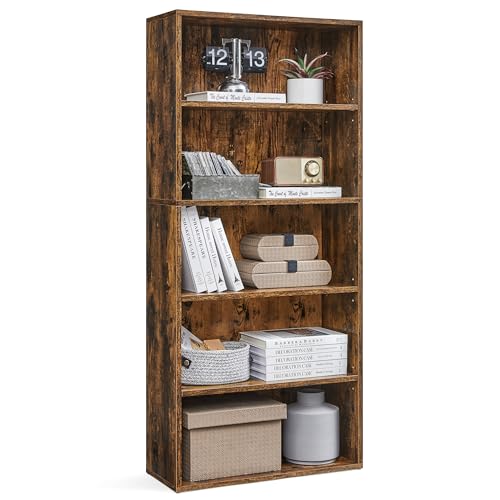
- Best overall: VASAGLE CUSTOS Collection 5-Tier Bookshelf, Rustic Brown (ULBC165X01) — Check on Amazon
- Furinno Luder 5-Tier Bookshelf, Blackwood (11055) — Check on Amazon
- Sauder Beginnings 5-Shelf Bookcase, Brook Cherry (416439) — Check on Amazon
- Furinno Luder 5-Cube Bookcase, White (11069) — Check on Amazon
- Amazon Basics 5-Tier Ladder Bookshelf, Espresso (Rubberwood Frame) — Check on Amazon
- VASAGLE 5-Tier Narrow Ladder Shelf, Camel Brown and Ink Black (ULLS109B50V2) — Check on Amazon
Read the full guide ↓
Disclosure: As an Amazon Associate, dailyhomedecorating.com earns from qualifying purchases. Links to Amazon on this page are affiliate links; they cost you nothing extra. Listing details such as price and availability change often, so check price on Amazon before you buy.
Finding the best bookshelf for small spaces under $150 is less about finding any shelf that fits the budget and more about matching five honest variables: the width of wall you can actually give up, the depth your largest books need, the height you can safely anchor, the finish your room can absorb, and the weight your floor plan and your future moving day can handle. This guide is written for anyone fitting storage into a bedroom corner, hallway nook or compact home office, where the priority is the most storage per square foot of floor, corner-friendly widths, and shelves that do not visually shrink the room. Every pick below stays inside the under $150 framing of the search itself — always check price on Amazon, because listings move — and every pick was chosen for footprint area, vertical use, open backs that keep rooms feeling light, and multi-use potential as room divider or plant stand. There are no star ratings or review counts printed here, because those numbers change constantly and a guide should not go stale on its own page.
Below you will find a quick picks table for fast decisions, a transparent account of how these picks were chosen, detailed reviews of all six bookshelves with who each one suits, its strengths, an honest limitation and a clear choose-or-skip verdict, a side-by-side comparison table, a practical how-to-choose section written for tight rooms, corners and nooks, the common mistakes shoppers make at this budget, a final recommendation that names a winner for each situation, and a FAQ that answers the questions buyers actually ask before ordering a flat-pack bookshelf. Count footprint, not just width. The narrow Furinno uses roughly one square foot of floor, the low cube about 1.3 square feet, while the wide VASAGLE uses about 1.5 square feet but returns far more shelf length. In a truly tight room, floor area is the currency and height is free, which is why narrow tall units dominate this guide.
In this guide
Quick Picks: Best Bookshelf for Small Spaces Under $150
Short on time? Each row names a situation and the bookshelf that suits it best.
| Best for | Pick | Why it stands out | Link |
|---|---|---|---|
| Best overall | VASAGLE CUSTOS 5-Tier | 9.4 x 23.6 x 52.5 inches; 5 open tiers | Check on Amazon |
| Best narrow fit | Furinno Luder 5-Tier | 9.4 x 15.8 x 52 inches; 5 tiers | Check on Amazon |
| Best tall adjustable | Sauder Beginnings 5-Shelf | 11.5 x 24.57 x 71.18 inches; 5 shelves, adjustable shelves included | Check on Amazon |
| Best low cube storage | Furinno Luder 5-Cube | 9.4 x 19.5 x 31.5 inches; 5 cube compartments, two sizes | Check on Amazon |
| Best ladder design | Amazon Basics Ladder Bookshelf | 14 x 24.8 x 70.1 inches; 5 ladder shelves, deeper toward the bottom | Check on Amazon |
| Best for tight corners | VASAGLE Narrow Ladder Shelf | 11.8 x 13.3 x 66.9 inches; 5 narrow ladder tiers | Check on Amazon |
How These Picks Were Chosen
We compared manufacturer specifications rather than marketing claims: assembled dimensions in inches, shelf count and adjustability, frame and shelf materials, listed weight limits where makers publish them, unit weight, and whether an anti-tip kit or wall anchor is part of safe installation. We did not use these products ourselves, and this guide does not pretend otherwise; it is a specification-led shortlist built from maker listings and retailer product pages, checked for internal consistency — a shelf listed at 9.4 inches deep cannot honestly be sold as fitting oversized art books flat, and a 71-inch tall unit cannot honestly be sold as anchor-optional in a home with children.
The budget filter was the search itself: best bookshelf for small spaces under $150. Prices change, sometimes weekly, so the article prints no static product price for any pick and instead directs you to check price on Amazon at the moment you order. That is deliberate, and it protects you from acting on a stale number. The second filter was honesty about tiers: at under $150 you are choosing among engineered wood, steel-and-board hybrids, one solid rubberwood ladder frame, and light-duty cube storage. None of these is a solid-oak library bookcase, and the reviews below say plainly where each material choice shows — in shelf sag under heavy hardcovers, in assembly care, and in how the finish handles daily wiping.
The third filter was fit for tight rooms, corners and nooks. A bookshelf that is perfect in a spacious living room can be wrong in a rental nook, wrong beside a toddler, and wrong in a minimalist modern room for three different reasons. Each review therefore judges its product against the job this specific guide is hiring for, not against an abstract ideal. If your situation is different, the sibling guides linked at the end re-judge the same shelf family from those other angles.
The 6 Best Bookshelf for Small Spaces Under $150 Picks, Reviewed
VASAGLE CUSTOS Collection 5-Tier Bookshelf, Rustic Brown (ULBC165X01)
Who it suits: Shoppers prioritising footprint area, vertical use, open backs that keep rooms feeling light, and multi-use potential as room divider or plant stand, who want the best overall option in this budget.
The CUSTOS pairs wide 23.6-inch shelves with a shallow 9.4-inch depth, a combination that suits living rooms where the shelf must sit flat against a wall without eating the walkway. The steel frame gives the unit a more finished, furniture-like outline than all-board budget shelves, and the rustic brown shelves warm up that industrial frame. Five tiers at 52.5 inches tall put the top shelf at a reachable height for most adults, which matters for books you actually reread rather than decor you dust twice a year. Assembly is a frame-and-shelves build: keep screws loose until the frame is square, then tighten in sequence so the unit does not rock.
Specifications that matter: assembled size 9.4 x 23.6 x 52.5 inches; construction is Engineered wood shelves with steel frame; configuration is 5 open tiers. Capacity note: Sturdy steel-frame construction; distribute heavy books across lower tiers. For tight rooms, corners and nooks, think through placement before assembly: leave clearance to open nearby doors, keep the unit out of direct radiator heat that can dry finishes, and plan the wall anchor point before the shelves are loaded, because anchoring an empty, square unit is five minutes of work and anchoring a loaded, leaning one is an afternoon. Dusting is part of ownership with open shelves; a closed-back or cube-and-bin setup hides more, a ladder display shows more and asks for a weekly pass with a dry cloth.
- Verified size 9.4 x 23.6 x 52.5 inches — measure your wall run and your tallest books against it before ordering.
- 5 open tiers gives flexible storage for books, bins, plants and framed photos.
- Construction — Engineered wood shelves with steel frame — matched to the under $150 tier without pretending to be solid hardwood throughout.
- Flat-pack assembly with standard home tools; building on a rug protects both floor and finish.
Honest limitation: Like every bookshelf at this budget, long shelves can flex under a full row of heavy hardcovers; distribute weight, use bookends, put the heaviest volumes low, and do not exceed the makers listed limits where published. Tall units must be anchored, finishes are veneers or laminates rather than solid timber surfaces, and assembly rewards patience — overtightening cam locks in engineered board is the classic way to damage a budget shelf on day one.
Choose it if its size and style match your room and your priority is the most storage per square foot of floor, corner-friendly widths, and shelves that do not visually shrink the room. Skip it if you need solid-wood heirloom construction, enclosed doors, or a unit you never need to anchor — none of those honestly exist in this tier.
Furinno Luder 5-Tier Bookshelf, Blackwood (11055)
Who it suits: Shoppers prioritising footprint area, vertical use, open backs that keep rooms feeling light, and multi-use potential as room divider or plant stand, who want the best narrow fit option in this budget.
At only 15.8 inches wide, this is the bookshelf for the leftover strip of wall between a door frame and a window, the spot wider units waste. The closed back panel is its quiet advantage: books cannot slide out the rear, the silhouette looks finished from the side, and the panel adds rigidity to a light 22-pound unit. Five tiers in 52 inches means tighter shelf spacing than tall bookcases, so measure oversized art books before assuming they fit upright; paperbacks, standard hardcovers, bins and framed photos are its natural load. It is also reversible in layout in the Luder line tradition, letting you orient compartments to suit the room.
Specifications that matter: assembled size 9.4 x 15.8 x 52 inches; construction is Engineered wood, closed back panel; configuration is 5 tiers. Capacity note: 75 lb total weight limit listed; 22 lb unit weight. For tight rooms, corners and nooks, think through placement before assembly: leave clearance to open nearby doors, keep the unit out of direct radiator heat that can dry finishes, and plan the wall anchor point before the shelves are loaded, because anchoring an empty, square unit is five minutes of work and anchoring a loaded, leaning one is an afternoon. Dusting is part of ownership with open shelves; a closed-back or cube-and-bin setup hides more, a ladder display shows more and asks for a weekly pass with a dry cloth.
- Verified size 9.4 x 15.8 x 52 inches — measure your wall run and your tallest books against it before ordering.
- 5 tiers gives flexible storage for books, bins, plants and framed photos.
- Construction — Engineered wood, closed back panel — matched to the under $150 tier without pretending to be solid hardwood throughout.
- Flat-pack assembly with standard home tools; building on a rug protects both floor and finish.
Honest limitation: Like every bookshelf at this budget, long shelves can flex under a full row of heavy hardcovers; distribute weight, use bookends, put the heaviest volumes low, and do not exceed the makers listed limits where published. Tall units must be anchored, finishes are veneers or laminates rather than solid timber surfaces, and assembly rewards patience — overtightening cam locks in engineered board is the classic way to damage a budget shelf on day one.
Choose it if its size and style match your room and your priority is the most storage per square foot of floor, corner-friendly widths, and shelves that do not visually shrink the room. Skip it if you need solid-wood heirloom construction, enclosed doors, or a unit you never need to anchor — none of those honestly exist in this tier.
Sauder Beginnings 5-Shelf Bookcase, Brook Cherry (416439)
Who it suits: Shoppers prioritising footprint area, vertical use, open backs that keep rooms feeling light, and multi-use potential as room divider or plant stand, who want the best tall adjustable option in this budget.
The Beginnings is the traditional tall bookcase of the group: 71.18 inches tall, 24.57 inches wide, with adjustable shelves that let you create one tall bay for binders or art books and shorter bays for paperbacks. Brook Cherry is a warm, conventional finish that matches older living-room furniture better than industrial black steel does. At this height anchoring is not optional advice, it is part of the product: use the wall strap, find a stud, and load the bottom shelves heaviest. The trade for that capacity is footprint and assembly time; this is a settle-in piece, not a move-every-semester piece.
Specifications that matter: assembled size 11.5 x 24.57 x 71.18 inches; construction is Engineered wood; configuration is 5 shelves, adjustable shelves included. Capacity note: Tall freestanding bookcase; anchor to wall for safety. For tight rooms, corners and nooks, think through placement before assembly: leave clearance to open nearby doors, keep the unit out of direct radiator heat that can dry finishes, and plan the wall anchor point before the shelves are loaded, because anchoring an empty, square unit is five minutes of work and anchoring a loaded, leaning one is an afternoon. Dusting is part of ownership with open shelves; a closed-back or cube-and-bin setup hides more, a ladder display shows more and asks for a weekly pass with a dry cloth.
- Verified size 11.5 x 24.57 x 71.18 inches — measure your wall run and your tallest books against it before ordering.
- 5 shelves, adjustable shelves included gives flexible storage for books, bins, plants and framed photos.
- Construction — Engineered wood — matched to the under $150 tier without pretending to be solid hardwood throughout.
- Flat-pack assembly with standard home tools; building on a rug protects both floor and finish.
Honest limitation: Like every bookshelf at this budget, long shelves can flex under a full row of heavy hardcovers; distribute weight, use bookends, put the heaviest volumes low, and do not exceed the makers listed limits where published. Tall units must be anchored, finishes are veneers or laminates rather than solid timber surfaces, and assembly rewards patience — overtightening cam locks in engineered board is the classic way to damage a budget shelf on day one.
Choose it if its size and style match your room and your priority is the most storage per square foot of floor, corner-friendly widths, and shelves that do not visually shrink the room. Skip it if you need solid-wood heirloom construction, enclosed doors, or a unit you never need to anchor — none of those honestly exist in this tier.
Furinno Luder 5-Cube Bookcase, White (11069)
Who it suits: Shoppers prioritising footprint area, vertical use, open backs that keep rooms feeling light, and multi-use potential as room divider or plant stand, who want the best low cube storage option in this budget.
The 5-Cube is only 31.5 inches tall, which changes its job entirely. It is a low credenza-height storage piece: kids can reach it, a television or plant can sit on top of it in some rooms, and it can run horizontally as well as vertically in the Luder cube tradition. Five compartments in two sizes accept fabric bins, which instantly hide clutter that open flat shelves would display. At 9 pounds it is by far the easiest unit here to carry, reposition and move house with. The honest limit is book height and load: this is light-duty storage for paperbacks, childrens books, games and bins, not a library wall for heavy reference sets.
Specifications that matter: assembled size 9.4 x 19.5 x 31.5 inches; construction is Engineered wood cube compartments; configuration is 5 cube compartments, two sizes. Capacity note: 9 lb unit weight; light-duty display and storage. For tight rooms, corners and nooks, think through placement before assembly: leave clearance to open nearby doors, keep the unit out of direct radiator heat that can dry finishes, and plan the wall anchor point before the shelves are loaded, because anchoring an empty, square unit is five minutes of work and anchoring a loaded, leaning one is an afternoon. Dusting is part of ownership with open shelves; a closed-back or cube-and-bin setup hides more, a ladder display shows more and asks for a weekly pass with a dry cloth.
- Verified size 9.4 x 19.5 x 31.5 inches — measure your wall run and your tallest books against it before ordering.
- 5 cube compartments, two sizes gives flexible storage for books, bins, plants and framed photos.
- Construction — Engineered wood cube compartments — matched to the under $150 tier without pretending to be solid hardwood throughout.
- Flat-pack assembly with standard home tools; building on a rug protects both floor and finish.
Honest limitation: Like every bookshelf at this budget, long shelves can flex under a full row of heavy hardcovers; distribute weight, use bookends, put the heaviest volumes low, and do not exceed the makers listed limits where published. Tall units must be anchored, finishes are veneers or laminates rather than solid timber surfaces, and assembly rewards patience — overtightening cam locks in engineered board is the classic way to damage a budget shelf on day one.
Choose it if its size and style match your room and your priority is the most storage per square foot of floor, corner-friendly widths, and shelves that do not visually shrink the room. Skip it if you need solid-wood heirloom construction, enclosed doors, or a unit you never need to anchor — none of those honestly exist in this tier.
Amazon Basics 5-Tier Ladder Bookshelf, Espresso (Rubberwood Frame)
Who it suits: Shoppers prioritising footprint area, vertical use, open backs that keep rooms feeling light, and multi-use potential as room divider or plant stand, who want the best ladder design option in this budget.
The ladder silhouette leans the storage story toward display: shelves deepen toward the bottom, so the lowest, deepest shelf takes large art books, baskets and heavier objects, while upper shelves suit paperbacks and decor. A solid rubberwood frame is a material step up from all-particleboard budget units, with a warmer, more substantial feel in espresso finish. At 70.1 inches tall and 14 inches deep at the base, it needs its wall space planned; ladder shelves project into the room more at the bottom than flat 9.4-inch units. Anchor it, load it bottom-heavy, and it reads as intentional furniture rather than storage furniture.
Specifications that matter: assembled size 14 x 24.8 x 70.1 inches; construction is Solid rubberwood frame, ladder design; configuration is 5 ladder shelves, deeper toward the bottom. Capacity note: Solid wood frame; place heaviest items on lowest, deepest shelf. For tight rooms, corners and nooks, think through placement before assembly: leave clearance to open nearby doors, keep the unit out of direct radiator heat that can dry finishes, and plan the wall anchor point before the shelves are loaded, because anchoring an empty, square unit is five minutes of work and anchoring a loaded, leaning one is an afternoon. Dusting is part of ownership with open shelves; a closed-back or cube-and-bin setup hides more, a ladder display shows more and asks for a weekly pass with a dry cloth.
- Verified size 14 x 24.8 x 70.1 inches — measure your wall run and your tallest books against it before ordering.
- 5 ladder shelves, deeper toward the bottom gives flexible storage for books, bins, plants and framed photos.
- Construction — Solid rubberwood frame, ladder design — matched to the under $150 tier without pretending to be solid hardwood throughout.
- Flat-pack assembly with standard home tools; building on a rug protects both floor and finish.
Honest limitation: Like every bookshelf at this budget, long shelves can flex under a full row of heavy hardcovers; distribute weight, use bookends, put the heaviest volumes low, and do not exceed the makers listed limits where published. Tall units must be anchored, finishes are veneers or laminates rather than solid timber surfaces, and assembly rewards patience — overtightening cam locks in engineered board is the classic way to damage a budget shelf on day one.
Choose it if its size and style match your room and your priority is the most storage per square foot of floor, corner-friendly widths, and shelves that do not visually shrink the room. Skip it if you need solid-wood heirloom construction, enclosed doors, or a unit you never need to anchor — none of those honestly exist in this tier.
VASAGLE 5-Tier Narrow Ladder Shelf, Camel Brown and Ink Black (ULLS109B50V2)
Who it suits: Shoppers prioritising footprint area, vertical use, open backs that keep rooms feeling light, and multi-use potential as room divider or plant stand, who want the best for tight corners option in this budget.
This narrow ladder is 13.3 inches wide, the slimmest tall option here, built for the corner beside a desk, the end of a hallway, or the strip beside a wardrobe. Camel brown shelves with an ink black frame give it a warmer modern contrast than all-black units. Five tiers climbing to 66.9 inches exploit height when floor width is the hard constraint. Narrow tall units are inherently tippier than wide low ones, so anchoring and bottom-heavy loading matter more here than anywhere else in the guide; keep the heaviest books on the lowest tier and decor up top.
Specifications that matter: assembled size 11.8 x 13.3 x 66.9 inches; construction is Steel frame with engineered wood shelves; configuration is 5 narrow ladder tiers. Capacity note: Narrow footprint; anchor tall unit to wall. For tight rooms, corners and nooks, think through placement before assembly: leave clearance to open nearby doors, keep the unit out of direct radiator heat that can dry finishes, and plan the wall anchor point before the shelves are loaded, because anchoring an empty, square unit is five minutes of work and anchoring a loaded, leaning one is an afternoon. Dusting is part of ownership with open shelves; a closed-back or cube-and-bin setup hides more, a ladder display shows more and asks for a weekly pass with a dry cloth.
- Verified size 11.8 x 13.3 x 66.9 inches — measure your wall run and your tallest books against it before ordering.
- 5 narrow ladder tiers gives flexible storage for books, bins, plants and framed photos.
- Construction — Steel frame with engineered wood shelves — matched to the under $150 tier without pretending to be solid hardwood throughout.
- Flat-pack assembly with standard home tools; building on a rug protects both floor and finish.
Honest limitation: Like every bookshelf at this budget, long shelves can flex under a full row of heavy hardcovers; distribute weight, use bookends, put the heaviest volumes low, and do not exceed the makers listed limits where published. Tall units must be anchored, finishes are veneers or laminates rather than solid timber surfaces, and assembly rewards patience — overtightening cam locks in engineered board is the classic way to damage a budget shelf on day one.
Choose it if its size and style match your room and your priority is the most storage per square foot of floor, corner-friendly widths, and shelves that do not visually shrink the room. Skip it if you need solid-wood heirloom construction, enclosed doors, or a unit you never need to anchor — none of those honestly exist in this tier.
Living With Each Pick: Assembly, Loading and Everyday Use
The headline dimensions only tell half the story. What decides whether a bookshelf under $150 still feels solid a year from now is how you assemble it, how you load it on day one, and how honestly its footprint matches the books and objects you actually own. The notes below walk through each of the six picks in daily-use terms, using only the construction and sizing details confirmed for each model.
VASAGLE CUSTOS Collection 5-Tier Bookshelf, Rustic Brown (ULBC165X01). At 9.4 x 23.6 x 52.5 inches, this is the mid-height workhorse of the group: tall enough for five genuinely useful open tiers, short enough that the top shelf stays reachable without a step stool. The engineered wood shelves sit in a steel frame, and that frame is what you feel during assembly — the unit gains its stiffness once every frame joint is fully tightened, so build it on a flat floor, square it before the final tightening pass, and re-check the fasteners after the first week of loading. Because the tiers are open on all sides, plan your loading deliberately: heaviest hardcovers and reference sets belong on the lowest two tiers, spread across the width rather than stacked at one end, with lighter paperbacks, plants and framed pieces higher up. In everyday use the 23.6-inch width suits a standard run of novels and trade hardcovers without wasted side space, and the open design makes dusting a single wipe per shelf instead of a full unload.
Furinno Luder 5-Tier Bookshelf, Blackwood (11055). This is the narrowest full-height option here at 9.4 x 15.8 x 52 inches, and its closed back panel changes how it behaves compared with the open-frame picks. The back panel adds a finished look from the front and stops paperbacks sliding through, but it also means the shelf rewards careful, even loading: the listing gives a 75 lb total weight limit for the whole unit, so treat that as a whole-bookcase budget, not a per-shelf allowance. With a unit weight of 22 lb, one person can carry the flat pack and reposition the assembled shelf easily, which makes it a forgiving choice for renters and first apartments. During assembly, lay the back panel flat and confirm it is square before fixing it — a slightly skewed back is the most common cause of a wobble that no amount of floor shimming will cure. Load heaviest books low and centred, and keep the top tier for light display pieces.
Sauder Beginnings 5-Shelf Bookcase, Brook Cherry (416439). At 11.5 x 24.57 x 71.18 inches, this is the tall traditional bookcase of the group and the only one whose depth comfortably swallows larger hardcovers and binders with room to spare. The adjustable shelves are its real advantage: set one tall opening for atlases, textbooks or storage boxes, then tighten the remaining spacing for standard novels so no vertical space is wasted. Height is also its responsibility — a bookcase over 70 inches tall must be anchored to the wall, no exceptions, and the anchor should go into a stud or a proper wall anchor rated for the job, fitted before the shelves are loaded rather than after. Assemble it as close to its final wall as possible, because walking a tall, fully built bookcase through a doorway invites racking stress on the joints. Once anchored and loaded heaviest-at-the-bottom, it is the closest thing in this price framing to a permanent library wall.
Furinno Luder 5-Cube Bookcase, White (11069). At 9.4 x 19.5 x 31.5 inches and just 9 lb, this low cube unit plays a completely different role: it is a room divider, a TV-side storage piece, a kids’-room organiser and an entryway catch-all as much as a bookcase. The five cube compartments come in two sizes, so measure your tallest books and your storage bins before assuming everything fits — the larger cubes take standard hardcovers and fabric bins, while the smaller ones suit paperbacks, games and baskets. Its light weight makes it the easiest pick here to rearrange seasonally, but light also means it should never be climbed on or overloaded on top; keep heavy items inside the lowest cubes and treat the top surface as display space for light objects only. In daily use, cubes reward a system: one cube for books, one for a bin, one left open for display, so the piece reads as intentional rather than crowded.
Amazon Basics 5-Tier Ladder Bookshelf, Espresso (Rubberwood Frame). The ladder format — 14 x 24.8 x 70.1 inches, with shelves that deepen toward the bottom — is built around a solid rubberwood frame, and the frame material is the story here: solid wood rails feel noticeably more rigid under lateral pressure than thin panel sides. The deepening shelves dictate the loading plan for you. The lowest, deepest shelf takes large-format books, storage boxes and heavier objects; each higher shelf steps in, suiting progressively smaller books and decor. Because a ladder shelf leans its visual weight against the wall, position it on the straightest wall you have, confirm it sits flush, and anchor the top as you would any tall unit. Assembly is mainly about keeping the two side frames parallel while the shelves go in — tighten in stages, alternating sides, so the frame does not pull itself out of square.
VASAGLE 5-Tier Narrow Ladder Shelf, Camel Brown and Ink Black (ULLS109B50V2). At 11.8 x 13.3 x 66.9 inches, this steel-frame ladder shelf is the specialist for leftover widths of wall that no standard bookcase can use — the gap beside a sofa, the strip between a door frame and a corner, the end of a hallway. Five narrow tiers mean it stores vertically rather than broadly: think paperbacks, small plants, toiletries in a bathroom-adjacent nook, or a rotating display of favourite covers facing outward. The narrow footprint is exactly why anchoring matters most here; a tall, slim unit has the smallest base relative to its height, so fix the included-style wall anchor point to the wall before loading it. During assembly, the steel frame rewards a final levelling check on the actual floor it will live on, because narrow units show a slight lean more obviously than wide ones.
Comparison Table
| Product | Size | Configuration | Link |
|---|---|---|---|
| VASAGLE CUSTOS 5-Tier | 9.4 x 23.6 x 52.5 inches | 5 open tiers | Check on Amazon |
| Furinno Luder 5-Tier | 9.4 x 15.8 x 52 inches | 5 tiers | Check on Amazon |
| Sauder Beginnings 5-Shelf | 11.5 x 24.57 x 71.18 inches | 5 shelves, adjustable shelves included | Check on Amazon |
| Furinno Luder 5-Cube | 9.4 x 19.5 x 31.5 inches | 5 cube compartments, two sizes | Check on Amazon |
| Amazon Basics Ladder Bookshelf | 14 x 24.8 x 70.1 inches | 5 ladder shelves, deeper toward the bottom | Check on Amazon |
| VASAGLE Narrow Ladder Shelf | 11.8 x 13.3 x 66.9 inches | 5 narrow ladder tiers | Check on Amazon |
How to Choose a Bookshelf for Tight Rooms, Corners And Nooks Under $150
- Measure three times: wall width, floor depth including baseboards, and ceiling height for tall units. Subtract an inch for baseboards and assembly tilt room.
- Measure your books, not the average book: tallest height, deepest footprint, and total linear feet. A shelf that fits paperbacks can fail art books completely.
- Decide open, closed-back, cube or ladder: open is airiest, closed-back is tidiest, cubes take bins, ladders are display-first.
- Plan the anchor before the books: find the stud, confirm permission in rentals, and install the strap while the unit is empty.
- Load bottom-heavy: heaviest books lowest, decor highest, and never let children treat shelves as steps.
- Match finish in daylight: rustic brown warms, cherry traditionalises, white and camel brighten, espresso grounds a room.
- Count total shelf length: width multiplied by tiers is the real capacity number; height alone is marketing.
- Think about moving day: unit weight ranges from 9 pounds for the cube to far heavier tall bookcases; know which future you are buying for.
Count footprint, not just width. The narrow Furinno uses roughly one square foot of floor, the low cube about 1.3 square feet, while the wide VASAGLE uses about 1.5 square feet but returns far more shelf length. In a truly tight room, floor area is the currency and height is free, which is why narrow tall units dominate this guide.
Beyond the checklist, consider how the shelf will age in your home. Engineered finishes wipe clean and shrug off the daily dusting open shelves demand. Open steel frames show every object, which rewards edited styling and punishes clutter. Cube units forgive mess because bins hide it. If you read constantly and reshelve daily, adjustable shelves earn their keep every time a tall new book arrives. If the shelf is mostly display, fixed ladder tiers with varied depth will look better with less effort. There is no universal winner, only the unit whose compromises you will never notice because they are not the compromises your life tests.
Common Buying Mistakes
- Ordering by height alone and discovering the shelves are too shallow for your books.
- Skipping the wall anchor on a tall bookshelf, especially in homes with children or pets.
- Loading every shelf with hardcovers and ignoring listed weight limits and shelf flex.
- Forgetting baseboards, radiators, door swing and outlet access when measuring the wall.
- Assembling on a hard floor without protection, then overtightening fasteners in engineered board.
- Buying a wide unit for a narrow leftover wall instead of measuring the actual run.
- Expecting solid hardwood, doors and heirloom joinery at an under $150 budget.
- Packing every shelf completely full in a modern or small room, making the space feel smaller.
Measuring, Anchoring and Loading: A Step-by-Step Plan for Tight Spaces
Step one — hunt for the hidden inches. Small spaces hide storage capacity in plain sight: the strip of wall between a door frame and a corner, the dead zone beside a wardrobe, the end wall of a hallway, the alcove that fits nothing standard. Measure each candidate spot in three dimensions — width, depth and height — and check it against the way you move through the room, because a shelf that narrows a pinch-point walkway will annoy you daily no matter how much it stores. Measure your books the same forensic way: tallest spine, deepest cover, total linear length. In a tight room the winning unit is usually the one whose footprint disappears while its vertical storage stacks up.
Step two — anchor the narrow ones without debate. The taller and narrower a bookshelf is, the more it depends on its wall restraint, and the slim ladder picks in this guide are exactly that shape. Find the stud, match the fixing to the wall, fit the restraint before a single book goes on, and keep it short and taut. In a small room this matters double, because tight spaces mean more brushing past, more vacuum-cleaner bumps and more chances for a loaded unit to be knocked — the anchor is what turns each of those moments into a non-event.
Step three — load vertically with discipline. In a narrow unit, weight distribution is everything: heaviest books on the lowest tier, centred, spread across the full width; each higher tier lighter than the one below it. Resist filling a slim shelf to bursting — a narrow shelf crammed edge-to-edge looks smaller, not bigger, and overloading the top of a tall slim frame is precisely the loading pattern anchoring is designed to forgive only once. Use the height deliberately instead: everyday books at hand level, occasional references higher, lightest display at the very top where it draws the eye upward and makes the ceiling feel further away.
Step four — audit the fit after a week. Re-tighten, re-check the anchor, sight for sag — and then judge the placement itself. Small-space furniture earns its place over the first week: if you are still sidestepping it, move it to the second-choice wall while the lesson is fresh. The right nook makes a narrow bookshelf feel built-in; the wrong one makes it feel like an obstacle with books on it.
Final Recommendation
- Best overall: VASAGLE CUSTOS 5-Tier.
- Best narrow fit: Furinno Luder 5-Tier.
- Best tall adjustable: Sauder Beginnings 5-Shelf.
- Best low cube storage: Furinno Luder 5-Cube.
- Best ladder design: Amazon Basics Ladder Bookshelf.
- Best for tight corners: VASAGLE Narrow Ladder Shelf.
For most readers of this guide, start with the VASAGLE CUSTOS for balanced width and a finished steel-frame look, unless your wall is narrow, in which case the Furinno Luder 5-Tier is the honest fit, or your space is truly tight, in which case the narrow VASAGLE ladder earns its place. Families should weight anchoring and the low cube heavily; modern rooms should weight ladder and steel silhouettes; apartments should weight width and unit weight. Whichever you choose, check price on Amazon, measure once more, and anchor tall units before the first book goes on.
Frequently Asked Questions
How much shelf space does an under $150 bookshelf really give?
Count total linear shelf length: width multiplied by usable tiers. The wide VASAGLE offers roughly ten linear feet across five tiers, narrow units offer less per tier but fit walls wide units cannot use. Measure your books in linear feet before ordering.
Do I really need to anchor a bookshelf to the wall?
Yes for any tall unit, and doubly so with children, pets, or uneven floors. Anchoring is quick while the unit is empty and is the single most important safety step in flat-pack furniture ownership.
Will engineered wood shelves sag under hardcovers?
Long spans can flex under a full row of heavy books. Distribute heavy volumes across lower and shorter spans, use bookends, alternate vertical books with horizontal stacks, and respect listed limits.
What shelf depth do standard books need?
Most novels and trade hardcovers sit comfortably on 9 to 11 inch deep shelves. Large art and coffee-table books need deeper shelves or should be stacked flat as display piles.
Is a ladder bookshelf practical or just decorative?
Both: deeper lower shelves are genuinely useful for baskets and large books, while narrower upper shelves suit paperbacks and decor. Load it bottom-heavy and anchor it.
Which bookshelf is easiest to move house with?
The Furinno 5-Cube at 9 pounds, by a wide margin. Tall and wide units are settle-in furniture; if you move yearly, weight and width should lead your decision.
- Best Bookshelf Under $100
- Best Bookshelf Under $300
- Best Bookcase Under $150
- Best Coffee Table Under $150
- Best Bookshelf For Families Under $150
Where do bookshelves fit in a room with no free wall?
Look at the spaces standard furniture ignores: beside a door frame, at the end of a hallway, in an alcove, alongside a wardrobe, or as a low cube at the foot of a bed or under a window. Narrow ladder shelves exist precisely for these leftover widths — measure the gap first, then choose the unit that was designed for it.
Will a tall narrow shelf make a small room feel smaller?
Usually the opposite, if it is loaded with restraint: vertical storage draws the eye upward, clears floor clutter, and a shelf kept two-thirds full with the lightest items at the top reads as airy. What shrinks a room is a wide, deep unit eating floor area — footprint, not height, is what a small room feels.
How do I keep a narrow bookshelf from looking overcrowded?
Leave one tier noticeably emptier than the rest, face a few favourite covers outward instead of packing every spine in, and keep a consistent front line. On a slim shelf, a little empty space is what separates a curated display from storage that happens to be visible.


