Disclosure: As an Amazon Associate, dailyhomedecorating.com earns from qualifying purchases. Links to Amazon on this page are affiliate links; they cost you nothing extra. Prices and availability change often, so check the current Amazon listing before you buy.
Cold sleepers do not need a lecture about layering. They need the best blankets for cold sleepers that actually change the night: a bed that is warm when they get in, warmth that survives turning over at three in the morning, and feet that stop being the reason they wake up. The best blankets for cold sleepers combine three strategies — insulation that traps warm air, optional powered heat with careful safety features for the coldest sleepers and rooms, and natural fibers like wool that hold steady warmth without clamminess. This guide ranks six options from the verified pool across those strategies, from a king heated blanket with twenty settings down to the humble fleece layer that makes every other blanket work better, so you can build warmth in the order your budget and your bedroom demand.
Start by diagnosing your cold honestly. A cold room needs different help from cold feet, a partner who steals covers, an old house with drafts, or a body that simply runs cold while a partner runs hot. The picks below call out which problem each one solves. For the broader winter picture, compare Best Wool Blankets For Beds for natural insulation and Best Blankets For Winter Camping for extreme-cold lessons, and complete the bed with Black Friday Throw Pillow And Blanket Deals and Best Throw Pillows For Bedrooms Under $100.
Where to Buy
Every pick in this guide is sold on Amazon, where you can check the current size, color, and availability before you buy. Start with the lead pick, the Beautyrest Reversible Heated Blanket, and use its Check on Amazon listing to confirm controller count for your size. The remaining picks are the Sunbeam Electric Heated Blanket — Check on Amazon; the Degrees of Comfort Full Size Heated Blanket — Check on Amazon; the Pendleton National Park Blanket — Check on Amazon; the Bedsure GentleSoft Sherpa Fleece Throw Blanket for Couch — Check on Amazon; and the Bedsure Fleece Bed Blankets Queen Size Grey — Check on Amazon. Check price on Amazon for each in your exact size.
In this guide
Quick Picks
| Pick | Badge | Why it earns its place |
|---|---|---|
| Beautyrest Reversible Heated Blanket | Best Overall | King coverage, twenty heat settings, plush sherpa warmth even unpowered. |
| Sunbeam Electric Heated Blanket | Best for Precise Heat | Twelve settings, heat-sensing technology, and a long selectable auto-off. |
| Degrees of Comfort Full Size Heated Blanket | Best for Solo Sleepers | Twenty settings in a simple single-controller full size with a long cord. |
| Pendleton National Park Blanket | Best Premium | Pure wool steady warmth with no power, cords, or controllers. |
| Bedsure GentleSoft Sherpa Fleece Throw Blanket for Couch | Best for Cold Feet | Targeted sherpa warmth at the foot of the bed or over the shoulders. |
| Bedsure Fleece Bed Blankets Queen Size Grey | Best Budget | The washable base layer that makes every warm system work harder. |
Key Takeaways
- Preheat the bed, not the sleeper: powered blankets shine brightest in the half hour before bed.
- Dual controls end the couple’s temperature war on king and queen heated blankets.
- Wool gives the steadiest unpowered warmth and never needs an outlet or a controller.
- Cold feet respond best to targeted warmth — a sherpa throw at the foot beats a hotter whole room.
- Layer order matters: soft fleece against the sheet, insulation or heat above it, room drafts fixed separately.
- Respect every auto-off and safety instruction; heated bedding rewards careful users and punishes shortcuts.
How These Picks Were Chosen
Cold-sleeper merit was judged on warmth delivered, warmth controlled, and warmth sustained safely. Heated blankets were assessed on setting range, auto-off design, controller practicality, fabric warmth when unpowered, and certification and safety information provided by their makers. Unpowered picks were assessed on insulation structure — wool fiber, sherpa pile, fleece layering value — and on how they combine into systems, because most cold sleepers ultimately layer. Coverage was checked by size, since a warm blanket that leaves shoulders bare fails at its only job. Only verified pool specifications are printed, with no prices or fixed ratings.
The 6 Best Best Blankets for Cold Sleepers — Reviewed

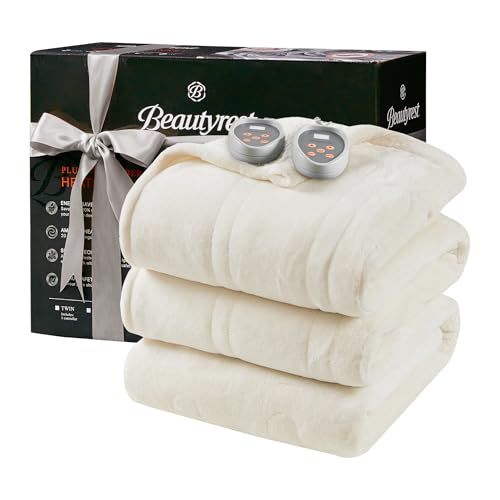
Beautyrest Reversible Heated Blanket
Our badge: Best Overall
The Beautyrest Reversible Heated Blanket leads because it is warm twice: a thick plush and sherpa construction that insulates even with the power off, and an electric system with twenty heat settings and a one-to-ten-hour auto shut-off when you need active heat. In king size with dual-sided plush and sherpa faces, it suits couples in cold houses, primary bedrooms in northern climates, and anyone who wants one purchase to end the cold-bed problem outright.
Strengths
- Twenty settings fine-tune warmth for very different sleepers.
- Plush and sherpa fabrics insulate even unpowered.
- Oeko-Tex certified and machine washable per its maker.
Trade-offs
- Heaviest, most committed option; overkill for mild climates.
- Controllers and cords need sensible bedside management.
- King size is a substantial wash load when laundering.
| Color | Ivory |
| Size | King (90 in x 100 in) |
| Dimensions | 90 x 100 x 0.25 inches |
| Weight | 9.53 pounds |
The winning routine is preheating: turn it on while you brush your teeth and lock up, and the bed receives you warm instead of stealing your heat for the first twenty minutes — the interval in which cold sleepers decide a night is ruined. Larger sizes include two controllers per the maker, so each partner dials their own side and the blanket-stealing era ends. Evenly spaced, soft wires keep hot spots at bay, and the ten-hour maximum auto-off gives overnight peace of mind when used exactly as directed. Wash by unplugging and following the label, keep controllers uncovered during use, and never fold a heated blanket tightly while it is on. Choose Beautyrest for the complete heated solution. Skip it if your winters are mild or your outlets are scarce.
Best for: Cold houses, couples, and king beds / Not suited for: Mild climates or minimalists
Choose it to end cold beds decisively; skip it for gentle chill. Check on Amazon

Sunbeam Electric Heated Blanket
Our badge: Best for Precise Heat
The Sunbeam Electric Heated Blanket emphasizes control and sensing: twelve heat settings on a dial controller with an LED-backlit display for nighttime adjustments, heat-sensing technology, and a selectable one-to-twelve-hour auto-off, all in a soft Royal Luxe microplush in a warm mushroom beige. In full size it suits solo sleepers and couples on full beds who want a trusted heated-blanket name and granular control.
Strengths
- Backlit display makes midnight adjustments easy without lights.
- Long, flexible auto-off window suits preheat or overnight use.
- Microplush face feels soft before the heat even starts.
Trade-offs
- Full size only in this listing; king sleepers should look above.
- Dial control is simpler but less precise-feeling than digital for some.
- Powered warmth requires outlet access and cord care.
| Color | Mushroom |
| Size | Full |
| Weight | 4.63 pounds |
Sunbeam’s heat-sensing approach matters on real nights because room temperature is not static: a blanket that responds intelligently feels steadier than one blasting a fixed output into a warming room. The selectable auto-off is equally practical — a short window for preheating, a longer one for a cold snap night — always within the maker’s safety guidance, including overheat protection and ETL certification. Machine washable when unplugged and handled as directed, it asks only for the standard heated-bedding disciplines. Choose it for controlled, sensed warmth on a full bed. Skip it for king coverage.
Best for: Full beds and control-focused sleepers / Not suited for: King beds
Choose it for sensed, adjustable heat; skip it for maximum size. Check on Amazon

Degrees of Comfort Full Size Heated Blanket
Our badge: Best for Solo Sleepers
The Degrees of Comfort Full Size Heated Blanket strips heated bedding to its essentials and does them well: twenty heat settings through one simple controller, a ten-hour auto shut-off, soft fleece, and an unusually long controller cord that makes outlet placement forgiving. It suits solo sleepers, guest rooms in cold houses, and anyone who wants heated warmth without dual-control complexity.
Strengths
- Twenty settings through one uncomplicated controller.
- Long cord solves awkward outlet locations.
- Detachable controller makes washing straightforward.
Trade-offs
- Single zone cannot serve two different-temperature partners.
- Full size only in this listing.
- Fleece face is plainer than plush and sherpa rivals.
| Color | Blue2 |
| Size | Full: 72×84″ |
| Dimensions | 72 x 84 x 0.25 inches |
Simplicity is a safety and usability feature in heated bedding: one controller, one zone, one routine to learn. Preheat on a higher setting, settle to a lower one for sleep if you use it overnight per its directions, and let the auto-off stand guard. The blue colorway brightens a winter bedroom, and the blanket washes and dries by detaching the controller and following the label — no specialist handling. Choose it for straightforward solo warmth. Skip it for couples with different thermostats.
Best for: Solo sleepers and guest rooms / Not suited for: Two-temperature couples
Choose it for simple, generous heat; skip it for dual control. Check on Amazon

Pendleton National Park Blanket
Our badge: Best Premium
The Pendleton National Park Blanket is the unpowered champion: one hundred percent wool in queen size, warming by fiber physics rather than electricity. Wool traps air, buffers moisture, and holds a steady temperature through the night’s swings, which is why it remains the cold sleeper’s classic in cabins, old houses, and anywhere outlets or electronics in bed are unwelcome.
Strengths
- Steady, breathable warmth with zero power or cords.
- Natural odor resistance means less washing in winter.
- Heirloom construction that lasts for years.
Trade-offs
- Cannot preheat a cold bed the way powered blankets can.
- Wool texture and gentle care do not suit everyone.
- Premium positioning.
| Color | Grand Canyon Navy |
| Size | Queen (90″ x 90″) |
| Dimensions | 18 x 15 x 6.5 inches |
| Weight | 6.2 pounds |
Layer the Pendleton over the fleece base below and the system rivals powered heat for steady-state warmth once you are in bed; its weakness is only the first cold minutes, which a hot water bottle, a pre-warming routine, or simply getting in earlier solves. It also travels — to the cabin, the car, the fireside — where heated blankets cannot follow. Readers weighing natural versus powered warmth will find the same comparison in Best Blankets For Diabetics, where gentle, even warmth and careful heat safety get extra attention. Choose wool for timeless, cord-free warmth. Skip it if preheating is your whole problem.
Best for: Steady natural warmth and cord-free beds / Not suited for: Instant preheat seekers
Choose it for wool’s steady heat; skip it for plug-in speed. Check on Amazon

Bedsure GentleSoft Sherpa Fleece Throw Blanket for Couch
Our badge: Best for Cold Feet
The Bedsure GentleSoft Sherpa Fleece Throw Blanket for Couch solves the most specific cold-sleeper complaint with precision: folded at the foot of the bed, sherpa side ready, it warms feet fast without overheating the torso or the partner. It also serves as the evening reading layer before the main bedding takes over.
Strengths
- Concentrated sherpa warmth exactly where cold starts.
- Reversible for milder nights and different feels.
- Small, washable, and easy to add to any existing bed.
Trade-offs
- Targeted throw, not whole-bed warmth.
- Too hot if used as a full covering in mild rooms.
- Sherpa care needs low heat drying.
| Color | 01 – Grey |
| Size | Throw (50″ X 60″) |
| Dimensions | 59.05511805 x 51.18110231 x 0.0399999999592 inches |
| Weight | 2.03 pounds |
Cold feet delay sleep for many people, and warming them locally is more comfortable and more economical than heating the whole bed or room to summer levels. Tuck the throw’s edge under the mattress foot to keep it parked, or keep it loose for couch-to-bed portability. Choose it as the precision tool in a cold sleeper’s kit. Skip it as a standalone solution for a genuinely cold room.
Best for: Cold feet and evening layering / Not suited for: Whole-room cold alone
Choose it to warm feet first; skip it as the only fix. Check on Amazon

Bedsure Fleece Bed Blankets Queen Size Grey
Our badge: Best Budget
The Bedsure Fleece Bed Blankets Queen Size Grey is the foundation layer: a full queen fleece that sits over the sheet, stops the chill of cold bedding on contact, and adds its own insulation under wool, a comforter, or a heated blanket. Cold sleepers who skip the base layer often blame their top blanket for a problem that starts at the skin.
Strengths
- Instant soft, non-cold contact when you get into bed.
- Layers under every warmer system without bulk.
- Washable workhorse for nightly winter use.
Trade-offs
- Insufficient alone in truly cold rooms.
- Fleece warmth is passive, not powered.
- Plain utility styling.
| Color | Grey |
| Size | Queen (90″ X 90″) |
| Dimensions | 94.48818888 x 86.61417314 x 0.0399999999592 inches |
| Weight | 3.19 pounds |
Think of the fleece as thermal underwear for the bed: unglamorous, transformative, and the first thing to buy if your budget forces an order. It also protects finer top blankets from body oils and frequent washing, extending their life. Choose it as the base of any cold-sleeper build. Skip it only if your bed already has an equivalent layer doing this job.
Best for: Base layering on any cold bed / Not suited for: Solo use in freezing rooms
Choose it to start the warm system; skip it if already layered. Check on Amazon
The comparison separates two philosophies of warmth. The heated picks manufacture heat, which is unbeatable for climbing into a warm bed and for sleepers whose rooms are genuinely cold; their warmth stops when the power does. The wool and sherpa picks conserve heat your body makes, work during outages, travel to cabins, and never need a controller — but they cannot pre-warm a freezing bed. Many cold sleepers ultimately own one of each: powered warmth for the primary bed in deep winter, insulation for everywhere else. Decide which philosophy your coldest nights actually require before comparing settings and sizes.
Do not overlook the bed itself as a heat source or a heat sink. A bed frame against an exterior wall radiates cold into the mattress all night; moving the bed even a few inches off the wall, or insulating behind the headboard, changes the microclimate measurably. Metal frames and slatted bases let cold air circulate beneath the mattress, which suits hot sleepers and quietly sabotages cold ones; a blanket layer under the fitted sheet, or a wool layer as this guide suggests, breaks that chill. Mattresses differ too: dense foam starts cold and warms slowly, innersprings equilibrate faster, and a topper can either insulate you from a cold slab or isolate you from a partner’s warmth. Cold sleepers who audit the whole stack — wall, frame, mattress, under-layer, top layers — usually find one cheap fix hiding among the expensive ones, and their blanket budget then buys comfort instead of compensation.
Keep a realistic emergency layer for the nights systems fail: the heating outage, the unexpectedly freezing guest room, the illness that drops your temperature regulation for a week. A wool blanket plus a warm hat and socks, kept together where you can find them in the dark, covers nearly every contingency without electricity, and knowing it exists removes the low-grade anxiety that makes cold sleepers overheat their bedrooms all winter just in case. Check that kit once each autumn, wash what needs washing, and then let the everyday system — right-sized, zoned, and logged — carry the season. Cold sleeping, handled this way, stops being a nightly negotiation with the thermostat and becomes what it should have been all along: a solved problem you only think about when the seasons change.
Comparison Table
| Pick | Size | Weight | Color | Check price on Amazon |
|---|---|---|---|---|
| Beautyrest Reversible Heated Blanket | King (90 in x 100 in) | 9.53 pounds | Ivory | Check price on Amazon |
| Sunbeam Electric Heated Blanket | Full | 4.63 pounds | Mushroom | Check price on Amazon |
| Degrees of Comfort Full Size Heated Blanket | Full: 72×84″ | — | Blue2 | Check price on Amazon |
| Pendleton National Park Blanket | Queen (90″ x 90″) | 6.2 pounds | Grand Canyon Navy | Check price on Amazon |
| Bedsure GentleSoft Sherpa Fleece Throw Blanket for Couch | Throw (50″ X 60″) | 2.03 pounds | 01 – Grey | Check price on Amazon |
| Bedsure Fleece Bed Blankets Queen Size Grey | Queen (90″ X 90″) | 3.19 pounds | Grey | Check price on Amazon |
How to Choose Warmth That Matches Your Kind of Cold
Cold bed at bedtime: choose preheating power
If the shock of cold sheets is your enemy, a heated blanket used as a preheater is the direct cure. Look for a wide setting range, a reliable auto-off, and fabric that stays pleasant if you fall asleep before turning it down. Follow the maker’s overnight-use guidance exactly rather than improvising.
Cold all night: choose insulation and coverage
If you wake cold at three in the morning, the problem is sustained insulation and lost coverage. Wool, thick plush, generous sizing, and a tucked foot end outperform raw heat settings. Check dimensions against your mattress depth and consider sizing up so turning over never uncovers you.
Cold feet only: choose targeted warmth
Feet have poor circulation moments in everyone. A sherpa throw at the foot, warm socks, or a heated blanket’s lower zone solves it without roasting the rest of you. Do not buy a whole new bedding system for a one-zone problem.
Two temperatures, one bed: choose zones
Dual-controller heated blankets, personal throws, and layered halves let each sleeper tune their side. Negotiating one compromise temperature satisfies nobody and disturbs both; zoning is cheaper than separate bedrooms and kinder than nightly blanket warfare.
Diagnose whether you are cold from air, surface, or circulation habits
Cold sleepers lump three different problems under one complaint, and each has a different blanket answer. If the room air itself is cold — you can see your breath’s edge, the walls feel icy — insulation and coverage matter most, and a heated blanket pre-warms a bed that would otherwise steal your body heat for the first hour. If the mattress surface is the problem, common with foam that starts cold or a bed against an outside wall, a heated layer or a wool blanket between you and the mattress changes more than any top blanket will. If you warm up once asleep but cannot fall asleep cold — cold feet are the classic culprit — targeted warmth at the foot of the bed for the first hour solves it without heating your torso all night. Spend one night noticing which cold is yours before spending money; cold sleepers routinely buy maximum heat for a foot problem and then spend the winter overheating from the waist up.
Read controller design as a sleep feature
On heated blankets, the controller is the product you interact with at two in the morning, half asleep, in the dark. Judge it that way. Controls should be findable by touch, with a dial or buttons you can operate without turning on a light, a cord long enough to reach your side of the bed without crossing your partner, and settings distinct enough that you can tell low from medium by feel. Auto-off duration matters just as much: a sleeper who uses the blanket to preheat and then switches it off needs different timing from one who keeps low heat running until dawn. Dual controllers on king sizes are not a luxury; they are the difference between a shared blanket and two separate temperature negotiations conducted nightly. Check these details on the listing with the same seriousness you give to heat settings.
How Should You Use a Heated Blanket Safely Through Winter?
Read the maker’s instructions before first use and treat them as the authority: lay the blanket flat without folds or bunches while powered, keep controllers uncovered and ventilated, route cords where they cannot be pinched or tripped over, and never use a heated blanket that is damaged, scorched, or malfunctioning. Use auto-off features as designed rather than defeating them, unplug when washing, wash and dry exactly as directed, and store the blanket loosely rolled or flat in season-off months rather than tightly folded on its wires. Keep heated bedding away from infants, from anyone who cannot operate the controls or sense heat properly without supervision, and from pets who might chew cords or wires — for animal households, unpowered wool and sherpa systems are the safer architecture, a point pet owners will also meet in Best Blankets For Dogs That Chew.
For unpowered warmth, the routine is layering discipline: fleece base, wool or comforter insulation, throw at the feet, drafts sealed at windows, and the bedroom door’s undercut managed if hallway air is the culprit. Warm the person and the bed, not the whole house, and winter bills and comfort can coexist.
Problem: Bed is warm at bedtime, cold by morning — Insulation is leaking through thin top layers or lost coverage. Add wool or plush insulation above the heat source, size up for drape, and tuck the foot end.
Problem: One partner is roasting, one freezing — Split the system: dual controls or a personal sherpa throw and lighter side for the warm partner. One shared setting cannot serve two thermostats.
Problem: Heated blanket feels uneven — It is likely folded, bunched, or layered under heavy bedding against its instructions. Lay it flat as directed, smooth it before use, and stop using it and contact the maker if unevenness persists as possible damage.
Problem: Feet stay cold under a warm blanket — Add targeted foot warmth: a sherpa throw zone, a preheated foot area, or warm socks. Whole-bed heat is a blunt tool for a local problem.
The Layering Order That Works
From the mattress up: fitted sheet, optional fleece base blanket for instant non-cold contact, the sleeper, then insulation in descending order of loft — comforter or wool — with a heated blanket placed exactly where its maker directs within that stack, and a throw parked at the feet. Each layer has a job, and rearranging jobs carelessly — especially trapping a heated blanket under heavy insulation against its guidance — degrades both comfort and safety. When in doubt, fewer, correctly placed layers beat a tall, chaotic pile, and the bed stays easier to make, wash, and share.
Cold Sleepers in Old Houses, Cabins, and Guest Rooms
Drafts defeat blankets from the side, so pair bedding with simple room fixes: window seals, door sweeps, rugs on cold floors beside the bed, and the bed moved away from exterior walls and windows where possible. Cabins reward wool and sherpa that work without power and forgive irregular heating. Guest rooms in cold houses are where a simple heated blanket like the Degrees of Comfort earns its keep, warming a bed that sits cold all week for the one night it is needed, without heating the whole house for a guest’s comfort. Cold sleep is rarely one problem, and the households that sleep warmest treat bed, room, and routine as one system.
The cheapest warmth in any cold bedroom is the heat you stop losing. Before upgrading blankets, spend one evening on losses: the gap under the bedroom door that pulls warm air out, the window that radiates cold onto the bed’s side, the headboard wall that stays icy, and the pajama-and-sock layer that many cold sleepers oddly resist. Warm socks alone change foot temperature more than an extra blanket layer does, because feet lose heat from exposed skin, not from insufficient bedding above them. A rug beside the bed prevents the shock of a cold floor from undoing a warm night’s start. None of this replaces a good blanket — it multiplies one. Cold sleepers who fix losses first often find a midweight heated or wool blanket suddenly sufficient, where before they were shopping for maximum heat to fight a draft they could have sealed with a door sweep.
Plan for the coldest week, but live with the blanket all winter. A blanket chosen solely for the three coldest nights will overheat you for the other ninety. That is the practical argument for adjustability — multiple heat settings on powered blankets, layers you can peel on wool and fleece systems, and a foot-only option for the many nights when only your feet object. Test any new setup across a full week of weather, adjusting one variable at a time, and write down what worked; cold sleepers who keep that small log stop re-solving the same problem every November. The goal is a bed that disappears beneath you — warm at entry, neutral by deep sleep, and still comfortable at the cold hour before dawn when room temperature bottoms out.
Seasonal transitions fool cold sleepers twice a year, so schedule them. In early autumn, the first cold night arrives before the warm bedding does; keep the heated or wool layer accessible from the first cool week rather than stored until a date on the calendar, and wash and test powered blankets before the season, while a failed controller is an inconvenience rather than a crisis. In spring, resist retiring warmth on the first mild evening — the coldest surprise nights of the year hide in April — and step down gradually: preheat only, then insulation only, then the light layer. Households that transition in stages stop having the two worst nights of each season, which are reliably the nights the bedding and the weather disagreed.
Traveling cold sleepers should pack their diagnosis, not just a blanket. If your cold is a foot problem, warm socks and a compact fleece solve most hotel rooms; if it is a cold-mattress problem, a light layer to sleep on top of changes more than one to sleep under; if it is whole-room cold, ask the hotel for the extra blanket before you need it at midnight, and run the room warm while you are out for dinner rather than after you are already chilled. Knowing which cold is yours — the work of one observant night at home — turns every strange bed from a gamble into a checklist, and it is the most portable thing this guide can give you.
Do not forget the humble pre-sleep routine, which primes warmth better than any blanket setting. Warm feet before bed — a brief warm soak or simply socks worn through the evening — mean you arrive at the mattress already comfortable instead of spending the first hour donating heat to cold extremities. A warm drink, a room that has been closed and warming since evening rather than opened at bedtime, and bedding that has been preheating during those same minutes stack small advantages into a bed that feels warm on contact. Cold sleepers often chase the last advantage with money because it is purchasable; the routine advantages are free, cumulative, and — once habitual — the reason many former cold sleepers discover their midweight blanket was sufficient all along.
Humidity plays a quiet role in cold sleeping that dry statistics miss. Very dry winter air makes bedding feel colder on contact and skin feel tighter, while a room at comfortable humidity lets the same blanket feel noticeably warmer at the same temperature — one reason two identical bedrooms can disagree about a blanket. If your home runs desert-dry in winter, addressing humidity may do as much for your nights as another layer, and it helps sinuses that otherwise wake cold sleepers as reliably as cold feet do. Judge your blanket only after the room’s air is reasonable; many a good blanket has been returned for a dry room’s crime.
Keep the faith through the adjustment week. Any new warmth system — powered, wool, or layered — feels strange for the first nights simply because it is new, and cold sleepers who verdict-shop nightly own four blankets and trust none. Give a sound setup five to seven nights, adjust one dial at a time, and let the log you keep arbitrate. Warmth, once systematized, becomes invisible, which is the entire ambition: a bed you stop thinking about, in a season you stop dreading.
Tell your household the system once it works — where the spare warm layer lives, how the controller behaves, what to do if the power fails on a cold night — because warmth knowledge held by one sleeper fails the night that sleeper travels. A guest, a partner, or an older child who knows the bed’s warm routine can reproduce it without experimentation, and the coldest nights of the year stop depending on a single person’s memory. Warmth, like everything else in a well-run bedroom, should be a system the house knows, not a talent one person has.
One final check before any purchase: spend a night in the guest bed, a child’s room, or even on the sofa under your candidate system, and notice whether your cold follows you. If it does, your answer is personal and portable — layers, socks, targeted heat — and belongs in your primary bed in its strongest form. If it does not, your primary bedroom itself is the problem, and the draft, wall, and window work in this guide will pay better than any blanket. Diagnosis before purchase is the whole method; everything else in these pages is simply the catalogue of answers, waiting for the right question to be asked in the right order.
Common Buying Mistakes
Buying heat when the problem is drafts
No blanket outruns a window leak at the head of the bed. Fix the room’s obvious cold sources alongside the bedding.
Ignoring auto-off and controller design
Settings you cannot adjust in the dark and safety timers that do not fit your routine will be misused. Choose controls you will operate correctly at midnight.
Undersizing for a deep mattress
Warmth that ends at your shoulders is a scarf, not a blanket. Measure, account for mattress depth, and size up for shared beds.
Folding or bunching a powered blanket in use
Heated blankets must lie flat as directed. Bunching concentrates heat and damages wires; smooth placement is a safety habit, not fussiness.
Expecting one blanket to serve two thermostats
Zone the bed. Dual controls and personal layers end more arguments than any single perfect blanket.
Cold Sleepers and Health: Knowing the Boundary
Feeling cold at night is usually a bedding and bedroom problem, and this guide treats it that way — but it is worth stating plainly when it might be more. If you are newly and persistently cold in a room where you used to be comfortable, if cold comes with unusual fatigue, if one partner’s experience has changed dramatically while the other’s has not, or if extremities change color or stay painful rather than merely chilly, those are conversations for a clinician, not for a blanket upgrade. Circulatory and thyroid issues, among others, announce themselves partly through temperature, and no heated blanket should be used to mask a change that deserves assessment. Similarly, anyone who cannot reliably feel heat or move a blanket independently — including some elderly sleepers and anyone with reduced sensation — should use powered blankets only with appropriate guidance and supervision, and should follow the manufacturer’s safety instructions exactly. For everyone else, cold sleeping is a solvable comfort equation: stop the losses, warm the surface, zone the bed, and keep a week’s log before buying twice. Respecting the boundary makes the comfort advice more trustworthy, not less.
Children and older relatives deserve a specific mention in any cold-sleeper plan. Children overheat and kick free more readily than adults admit, so their warmth should come from insulation and room temperature rather than powered blankets, which are adult products to be used per manufacturer guidance. Older relatives often feel cold more intensely and manage controllers, cords, and heavy blankets less easily; for them, a light heated blanket with a simple dial, pre-set by a family member, or a genuinely warm wool layer they can handle independently, beats a feature-rich model they cannot operate at two in the morning. In guest rooms, tell visitors how the warmth works — where the controller is, that it turns itself off — because a guest who cannot find the control will either freeze politely or overheat silently, and both will tell you the bed was lovely.
Final Recommendation
For the most complete cold-sleeper solution, choose the Beautyrest Reversible Heated Blanket and preheat without mercy, with the wool runner-up as the cord-free alternative — Check on Amazon for the Pendleton’s current park designs. Add the fleece base and sherpa foot throw in that order if budget builds in stages, and fix the draft you have been ignoring.
Frequently Asked Questions
How do I preheat the bed without wasting energy?
Switch the heated blanket on at a higher setting twenty to thirty minutes before bed, with the covers pulled up so the heat builds in the bedding instead of escaping into the room, then turn it down to low or off when you get in. That short preheat does most of the comfort work — warm sheets, warm mattress surface — for a fraction of an all-night run. A timer or auto-off setting makes the routine effortless, and closing the bedroom door during the preheat keeps the warmed air where you will sleep.
Why do I get cold again at four in the morning?
That is usually the room, not the blanket: home temperatures bottom out in the pre-dawn hours, heating systems cycle less, and your own body temperature reaches its nightly low at roughly the same time. Answers that work are a low heat setting timed to continue through that window, an added insulating layer you pull up without fully waking, and socks you can kick off if the dip passes. If pre-dawn waking is new, severe, or paired with other symptoms, mention it to a clinician rather than endlessly upgrading bedding.
Are heated blankets safe to sleep with all night?
Modern heated blankets include auto-off and overheat protections, but you should follow your specific model’s instructions about overnight use, settings, and placement exactly, and never use one that is damaged or with anyone who cannot operate it safely.
What is warmer, wool or a heated blanket?
A heated blanket is warmer on demand and can preheat the bed; wool is warmer than any unpowered blanket at holding steady, breathable warmth all night without electricity. Many cold sleepers layer wool over a preheated bed for both benefits.
Should I heat the room or heat the bed?
For most cold sleepers, heating the bed is the more comfortable and economical answer: a preheated blanket warms the few cubic feet you actually occupy, while room heating fights the whole volume all night. The exceptions are rooms so cold that breathing the air is uncomfortable, and households with infants or anyone advised to keep a minimum room temperature — follow that guidance first. Many people land on a hybrid: a modest room temperature that takes the edge off, plus targeted bed warmth doing the real work.
Why are my feet still cold under a thick blanket?
Feet sit at the far end of circulation and at the blanket’s thinnest, most disturbed edge. Targeted foot warmth — a sherpa throw zone, preheating the foot of the bed, or warm socks — fixes what overall thickness does not.
How many heat settings do I need?
Enough to distinguish preheat, comfortable sleep, and a mild boost. Wide ranges like twenty settings give fine control; twelve well-spaced settings satisfy most sleepers. The auto-off design and controller usability matter as much as the count.
Can I put a heated blanket under a comforter?
Only exactly as its maker directs. Layering instructions vary by model because insulation above a heat source changes its temperature behavior. When the manual and habit disagree, the manual wins.
What if I share with a hot sleeper?
Zone the bed: dual-controller heated blankets, or a warm layered side for you and a light side for them, plus a personal throw you can add or shed without disturbing their sleep.


