Disclosure: As an Amazon Associate, dailyhomedecorating.com earns from qualifying purchases. Links to Amazon on this page are affiliate links; they cost you nothing extra. Prices and availability change often, so check the current Amazon listing before you buy.
The best wool blankets for beds earn their loyal following for reasons no synthetic has fully copied: wool warms without sealing in heat, breathes as the room warms and cools, resists odors between washes, and lasts for years when it is treated with basic respect. Shoppers searching for the best wool blankets for beds usually want that natural, breathable warmth for a primary bed, a cabin, a guest room, or a cold-climate home — and they want to know how wool compares honestly with the fleece and cotton blankets they already own. This guide is transparent about its pool: it contains one outstanding full-size wool bed blanket and one natural-fiber toddler blanket, so those two lead on wool merit, while four additional linked picks serve as clearly labeled non-wool comparisons for readers whose budget, washing routine, or texture preference points away from wool after all.
That comparison is useful rather than disappointing. Wool asks for gentler washing and a higher commitment than fleece, and its textured hand feel delights some sleepers and bothers others. Reading the wool picks alongside wash-and-go alternatives helps you decide with open eyes. For related warmth shopping, see Best Blankets For Cold Sleepers for the broader cold-bed system and Best Blankets For Winter Camping for wool’s outdoor strengths, and finish the bed with ideas from Black Friday Throw Pillow And Blanket Deals and Best Throw Pillows For Bedrooms Under $75.
Where to Buy
Every linked pick in this guide is sold on Amazon, where you can check the current size, color, and availability before you buy. Start with the lead wool pick, the Pendleton National Park Blanket, and use its Check on Amazon listing to confirm the park design and dimensions. The remaining picks are the Woolino Toddler Blanket — Check on Amazon; the Bedsure Fleece Bed Blankets Queen Size Grey — Check on Amazon; the Bedsure GentleSoft Sherpa Fleece Throw Blanket for Couch — Check on Amazon; the Bedsure Cooling Cotton Waffle Blanket for Hot Sleepers — Check on Amazon; and the Tache Cotton Patchwork Quilt Blanket — Check on Amazon. Check price on Amazon for each in your exact size.
In this guide
Quick Picks
| Pick | Badge | Why it earns its place |
|---|---|---|
| Pendleton National Park Blanket | Best Overall | Full-size one hundred percent wool with breathable warmth and heirloom build. |
| Woolino Toddler Blanket | Best for Toddlers | Merino wool lining with organic cotton outer for gentle temperature regulation. |
| Bedsure Fleece Bed Blankets Queen Size Grey | Best Budget | Wash-and-go fleece alternative with full queen coverage for daily use. |
| Bedsure GentleSoft Sherpa Fleece Throw Blanket for Couch | Best for Cuddling | Plush two-sided throw warmth for evenings, without wool care demands. |
| Bedsure Cooling Cotton Waffle Blanket for Hot Sleepers | Best for Warm Sleepers | Breathable cotton waffle for sleepers who find even wool too warm. |
| Tache Cotton Patchwork Quilt Blanket | Best for Cottage Style | Natural cotton patchwork charm with light, breathable layering. |
Key Takeaways
- True wool bed blankets warm by breathing: they buffer temperature swings instead of trapping heat like sealed synthetics.
- The Pendleton is the only full-size wool bed blanket in this pool and the clear lead for wool seekers.
- Wool needs gentler, less frequent washing; airing refreshes it surprisingly well between proper cleans.
- Texture is the deal-breaker to test: napped wool feels cozy to most and scratchy to a minority with sensitive skin.
- For toddlers, merino with an organic cotton face gives wool’s regulation with a gentler skin contact layer.
- If weekly hot washing is non-negotiable in your home, choose the fleece alternative honestly instead of ruining wool.
How These Picks Were Chosen
Wool merit came first: fiber content, coverage, weave quality, and the reputation of the construction for lasting. The pool was then read honestly — it holds two wool products, one for beds generally and one for toddlers — so the remaining places were given to the strongest natural-feeling and everyday alternatives, each labeled by what it actually is. No synthetic pick is described as wool anywhere in this guide. Warmth, breathability, care burden, texture, and value were weighed for a bed context specifically, and only verified pool specifications are printed. No prices or fixed ratings appear, because both change and neither tells you whether wool suits your skin and laundry habits, which are the decisions that actually matter here.
The 6 Best Best Wool Blankets for Beds — Reviewed

Pendleton National Park Blanket
Our badge: Best Overall
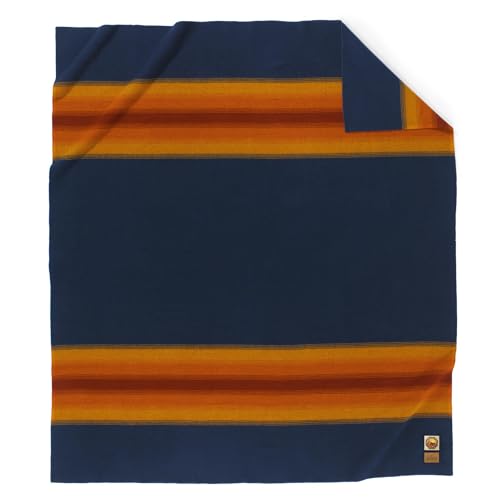
The Pendleton National Park Blanket is the wool blanket most bed shoppers picture, and it earns that status on the bed, not just on a shelf. Woven from one hundred percent wool in a queen footprint, with a napped finish that softens its texture and the iconic National Park stripes at the design’s heart, it delivers the classic wool experience: substantial warmth that breathes, a reassuring weight without heaviness, and construction meant to be kept for years. It suits cold and temperate bedrooms, cabins and guest rooms, and anyone buying a blanket as a long-term household piece rather than a seasonal extra.
Strengths
- Pure wool warmth with natural breathability and odor resistance.
- Napped texture feels inviting rather than harsh.
- Queen coverage with heirloom, keepsake-quality construction.
Trade-offs
- Wool care is gentler and less frequent than fleece routines.
- Textured wool hand feel bothers a minority of sensitive sleepers.
- Premium, long-life positioning rewards committed wool lovers most.
| Color | Grand Canyon Navy |
| Size | Queen (90″ x 90″) |
| Dimensions | 18 x 15 x 6.5 inches |
| Weight | 6.2 pounds |
On the bed, the Pendleton behaves like wool should. It takes the chill off immediately, then settles into a steady warmth that does not spike when the heating cycles or a partner adds body heat, because the fiber buffers moisture and air instead of sealing them in. That steadiness is why wool blankets are traditional in cabins and variable climates: the same blanket serves in October and January with only the layers beneath it changing. The stripes make it the visible top layer in most rooms, folded at the foot or spread fully, and the weight helps it stay placed rather than sliding. Care is the honest price: air it regularly, wash it rarely and gently according to its label or use appropriate wool care, store it clean with airflow, and it will outlast several fleece blankets. Choose it as the definitive wool bed blanket here. Skip it only if you know wool texture irritates your skin or your household truly needs hot weekly washing.
Best for: Cold bedrooms, cabins, and long-life natural warmth / Not suited for: Wool-sensitive skin or hot-wash routines
Choose it for real wool performance; skip it for set-and-forget synthetics. Check on Amazon
Woolino Toddler Blanket
Our badge: Best for Toddlers
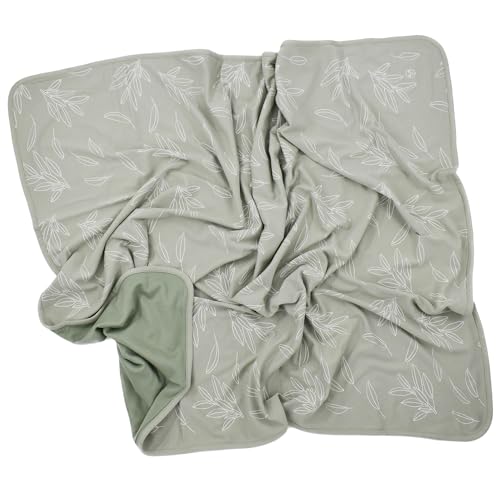
The Woolino Toddler Blanket applies wool intelligently for small children: an Australian merino wool lining for temperature regulation, faced with GOTS-certified organic cotton so the surface against skin is smooth and simple. Sized generously for toddlers, it suits parents who value natural fibers, four-season regulation, and a blanket that transitions from stroller to toddler bed to travel.
Strengths
- Merino regulates warmth in both cool and warm rooms.
- Organic cotton outer is gentle and chemical-free in feel and intent.
- Machine washable for a natural-fiber blanket, with care.
Trade-offs
- Toddler size only; irrelevant for adult beds except as a gift.
- Natural fibers deserve gentler cycles than daycare fleece.
- Premium fiber quality is priced into its positioning.
| Color | Sage |
| Size | 40 inch |
Merino’s fineness is the key detail: it lacks the prickle associated with coarser wools, so it can sit near a child’s skin comfortably while still doing wool’s regulatory work — warming when the room cools at night and releasing heat when a toddler, who cannot kick covers with adult strategy, gets warm. The sage color and simple construction suit many nurseries, and the blanket’s size means it remains useful well past the first year. Wash gently and follow its label precisely; natural quality rewards a little attention. Choose it as the wool answer for the youngest sleepers. Skip it for adult beds or bulk institutional buying, where the fleece picks below serve better.
Best for: Toddlers and natural-fiber families / Not suited for: Adult beds or bulk daycare fleets
Choose it for gentle merino comfort; skip it for grown-up coverage. Check on Amazon

Bedsure Fleece Bed Blankets Queen Size Grey
Our badge: Best Budget
The Bedsure Fleece Bed Blankets Queen Size Grey is the honest alternative for readers who love the idea of a warm bed blanket but know their life needs weekly, easy washing. This flannel fleece covers a queen bed fully, feels uniformly soft, layers under the Pendleton or any comforter, and asks almost nothing in care. It suits busy families, pet-friendly beds, and guest rooms.
Strengths
- Full queen coverage with even, plush fleece softness.
- Tolerates frequent gentle washing without special products.
- Light for its warmth, so layering is effortless.
Trade-offs
- Synthetic warmth traps more heat than breathable wool.
- Shorter lifespan and less natural odor resistance than wool.
- Plain look compared with the Pendleton’s stripes.
| Color | Grey |
| Size | Queen (90″ X 90″) |
| Dimensions | 94.48818888 x 86.61417314 x 0.0399999999592 inches |
| Weight | 3.19 pounds |
Many households sensibly own both systems: wool as the treasured top blanket for the primary bed, fleece as the workhorse for kids’ beds, guests, and the blanket that goes to the sofa and back. The Bedsure’s neat stitching and shed resistance keep it presentable through that workload. Choose it when washability outranks fiber purity. Skip it when natural breathability is the whole point of your search — that is the Pendleton’s territory, a distinction also central to Best Blankets For Allergies for readers weighing fiber and washing together.
Best for: Busy households and easy-care warmth / Not suited for: Natural-fiber purists
Choose it for practical softness; skip it for wool authenticity. Check on Amazon

Bedsure GentleSoft Sherpa Fleece Throw Blanket for Couch
Our badge: Best for Cuddling
The Bedsure GentleSoft Sherpa Fleece Throw Blanket for Couch covers the evening role beside a wool bed blanket: a flannel and sherpa throw for reading, cuddling, and warming feet while the wool blanket keeps the bed itself in steady state. It suits couples, cold-footed sleepers, and anyone who wants plushness wool does not try to provide.
Strengths
- Two textures in one throw for changing evening needs.
- Sherpa warmth arrives fast for feet and shoulders.
- Easy care compared with any wool piece.
Trade-offs
- Throw size only; a companion, not a bed blanket.
- Sherpa heat is excessive for warm sleepers.
- Pile needs low-heat drying to remain soft.
| Color | 01 – Grey |
| Size | Throw (50″ X 60″) |
| Dimensions | 59.05511805 x 51.18110231 x 0.0399999999592 inches |
| Weight | 2.03 pounds |
Pairing a wool bed blanket with a washable throw is a system professionals would recognize: protect the investment piece from lotions, snacks, and pet naps by giving daily lounging its own layer. The sherpa throw takes the wear, washes easily, and adds the cuddle factor. Choose it as the wool blanket’s partner. Skip it as a wool substitute for sleeping coverage.
Best for: Evenings, cuddling, and protecting finer bedding / Not suited for: Full-bed sleeping coverage
Choose it as the companion layer; skip it as the main event. Check on Amazon

Bedsure Cooling Cotton Waffle Blanket for Hot Sleepers
Our badge: Best for Warm Sleepers
The Bedsure Cooling Cotton Waffle Blanket for Hot Sleepers represents the natural-fiber alternative for sleepers who admire wool’s breathability but still sleep too warm for it. Its cotton and bamboo-derived rayon waffle weave covers a queen bed with airy texture and moisture-wicking comfort.
Strengths
- Breathable natural-blend weave for warm nights.
- Full coverage with a light, dry hand feel.
- Waffle texture styles the bed without weight.
Trade-offs
- Far less warm than wool in cold rooms.
- Ivory color demands regular washing.
- No wool odor resistance or heirloom lifespan.
| Color | 01 – Ivory |
| Size | Queen (90″ X 90″) |
| Dimensions | 16.535433054 x 12.598425184 x 22.834645646 inches |
| Weight | 3.8 Pounds |
Seasonal households often rotate exactly these two natural systems: waffle cotton for summer, wool for the cold months, with fleece bridging the transitions. If you are buying one blanket today for a warm sleeper, choose this and revisit wool when the weather or the sleeper changes. Choose it for cool natural comfort. Skip it for winter warmth.
Best for: Warm sleepers and summer natural layering / Not suited for: Cold-room winter use
Choose it to stay cool naturally; skip it to stay warm. Check on Amazon

Tache Cotton Patchwork Quilt Blanket
Our badge: Best for Cottage Style
The Tache Cotton Patchwork Quilt Blanket closes the set with natural cotton in a different voice: patchwork pieces, vermicelli quilting, and a light poly-cotton filling for a throw that breathes, drapes flat, and brings handmade character to a bed dressed with a plainer wool or fleece base.
Strengths
- Breathable cotton patchwork with real quilting.
- Light layer that never feels clammy.
- Distinctive cottage pattern and color.
Trade-offs
- Light warmth only, even layered.
- Pattern will fight busy bedding prints.
- Throw size, not bed coverage.
| Color | Burgundy |
| Size | 50×60 |
| Dimensions | 59.9999999388 x 49.999999949 x 0.01181102361 inches |
Use the Tache where its strengths show: across the foot of a bed, over a reading chair in a guest room, or as the summer nap throw in a house whose winter star is wool. Wash cold on delicate, dry low, and its colors and quilting will hold. Choose it for natural charm. Skip it for insulation.
Best for: Cottage beds and light natural layering / Not suited for: Winter warmth
Choose it for character; skip it for cold nights. Check on Amazon
Read the comparison below with one question in mind: which of these blankets will still be on your bed in ten years? The fleece and cotton picks win on washing ease and immediate softness, and for many households that is the right answer. The wool picks ask more of you — gentler washing, deliberate storage, tolerance of a textured hand feel — and repay it with insulation that breathes, edges that stay bound, and a blanket that can be aired back to freshness instead of washed back to it. Households replacing cheap blankets every second winter often discover that one wool blanket, honestly cared for, is both the warmer and the calmer purchase over time.
Consider, too, how wool behaves across a single household’s different beds, because one wool blanket often ends up serving several. On the primary bed it is the winter anchor, layered over cotton and under nothing heavier. In the guest room it is the blanket visitors remark on, because its weight and texture read as care. On a child’s bed — for an older child, with a cotton sheet between skin and wool — it is frequently the layer that ends the nightly complaint about being cold, precisely because it breathes instead of sealing. And in the living room, a wool throw over the sofa back handles naps, reading, and the dog’s preferred corner with a durability that plush throws surrender within a season. Buying wool with that whole-house career in mind changes the size decision: a generous queen in a neutral, classic pattern will fit every post it rotates through, while a fashion color in a twin cut retires early to a single room.
The first wash is where wool owners are made or lost, so approach it as a skill to learn once rather than a risk to fear forever. Read the specific blanket’s care guidance, use cool water and a gentle approach, support the blanket’s wet weight instead of lifting it by one corner — wet wool is heavy and can stretch — and dry it flat or with full support, reshaping it to its dry measurements while damp. Airing handles most freshness needs between rare washes; sunlight and a breeze do for wool what a full laundry cycle does for fleece, at no cost to the fibers. Owners who internalize that rhythm — air often, wash rarely and gently, store clean — stop thinking of wool as delicate. It is not delicate. It is simply playing by older rules, and it rewards those who learn them with the longest service life of any blanket in this guide.
Comparison Table
| Pick | Size | Weight | Color | Check price on Amazon |
|---|---|---|---|---|
| Pendleton National Park Blanket | Queen (90″ x 90″) | 6.2 pounds | Grand Canyon Navy | Check price on Amazon |
| Woolino Toddler Blanket | 40 inch | — | Sage | Check price on Amazon |
| Bedsure Fleece Bed Blankets Queen Size Grey | Queen (90″ X 90″) | 3.19 pounds | Grey | Check price on Amazon |
| Bedsure GentleSoft Sherpa Fleece Throw Blanket for Couch | Throw (50″ X 60″) | 2.03 pounds | 01 – Grey | Check price on Amazon |
| Bedsure Cooling Cotton Waffle Blanket for Hot Sleepers | Queen (90″ X 90″) | 3.8 Pounds | 01 – Ivory | Check price on Amazon |
| Tache Cotton Patchwork Quilt Blanket | 50×60 | — | Burgundy | Check price on Amazon |
How to Choose the Best Wool Blanket for Your Bed
Confirm it is really wool, and how much
Read the fiber content on the listing carefully. A blanket marketed with wool language may be a blend with a minority of wool, which changes warmth, care, and price fairness. One hundred percent wool and high-wool blends behave most like the classic article; merino indicates finer, softer fiber than generic wool. Match the claim to your goal rather than to the headline.
Test texture against your own skin honestly
Napped and merino wools feel soft to most people, but sensitivity is individual. If you have reacted to wool sweaters, plan for a cotton sheet barrier between you and the blanket, choose merino, or accept the fleece alternative without regret. A blanket you avoid touching has failed regardless of its fiber pedigree.
Size for drape and tuck
Wool blankets are often kept for decades, so size generously for your current mattress depth and any topper. Queen dimensions around ninety inches square suit most queen beds; tall sleepers and deep mattresses reward sizing up where options exist. A wool blanket that barely reaches the edges will migrate and disappoint nightly.
Accept the wool care contract
Wool wants airing more than washing, gentle handling when washing is needed, protection from moths in storage, and no high heat. If that contract sounds enjoyable or at least easy, wool will repay you. If it sounds like a burden you will resent, the honest choice is a quality fleece or cotton blanket you will care for happily — a principle that also guides readers of Best Material For Dog Blankets, where care reality beats fiber romance for pet households.
Understand what napped, felted, and worsted finishes feel like
Wool blankets that share the same fiber content can feel completely different because of finishing. A napped finish is brushed to raise soft fibers at the surface — it feels fuzzier and warmer on contact, traps more air, and is the finish most people picture on a classic camp or bed blanket like the Pendleton in this guide. A smoother worsted-style finish lies flatter, feels cooler and sleeker, shows weave patterns crisply, and sheds dust more readily. Lightly felted wool is denser and more wind-resistant, excellent for cabins and drafts, but firmer against the skin. None is best in isolation: napped suits cold sleepers who want immediate surface warmth, smooth suits sleepers who layer wool over cotton sheets and dislike fuzz, and denser weaves suit unheated rooms. Run your forearm across the blanket in the direction you will actually sleep; the finish, not the fiber percentage alone, predicts your first night’s verdict.
Plan for moths and storage before you need to
Wool’s one household enemy that fleece simply does not have is the clothes moth, and prevention is a storage habit, not a product emergency. Always store a wool blanket clean — moth larvae are attracted to body oils and food traces far more than to clean fiber — fully dry, and in a sealed container or bag with airflow excluded, away from the back of a warm closet where undisturbed textiles sit for months. Check stored wool at the change of seasons, refold along different lines so creases do not become worn tracks, and air it in daylight, which wool responds to beautifully. A blanket treated this way can serve for decades; the same blanket folded dirty into a cedar chest and forgotten for three summers may come out holed. If longevity is your reason for choosing wool — and for many buyers it is the entire point — the storage routine is part of the purchase.
How Should You Care for a Wool Bed Blanket?
Air wool outdoors or draped in moving indoor air regularly; wool releases odors and refreshes itself remarkably well with ventilation alone. Spot-clean small marks promptly with cool water and minimal wool-appropriate detergent. When a full wash is truly needed, follow the blanket’s own label exactly — gentle, cool, and low agitation are the usual themes — reshape it while damp, and dry it flat or draped with airflow rather than in high heat. Never store wool dirty, because soil attracts moths; store it clean, fully dry, loosely folded, and in a breathable place, checking it when seasons change.
Between seasons, brush the surface gently to lift dust, fold with acid-free tissue if you keep heirloom pieces, and keep wool away from rough storage companions that snag its nap. A wool blanket treated this way softens with age instead of wearing out, which is the entire economic argument for buying it once and buying it well.
Problem: Wool blanket feels scratchy — Layer a cotton top sheet beneath it, choose napped or merino wool next time, and give new wool a few nights; perceived scratch often softens as the nap settles and skin adjusts, but persistent irritation means the fiber is wrong for you.
Problem: Blanket smells musty after storage — Air it outdoors in shade for a day, brush it, and only then consider a gentle wool wash; it was likely stored slightly damp or unwashed, so correct storage hygiene before the next season.
Problem: Moth damage appears — Isolate the blanket, clean it appropriately, inspect nearby woolens, and store clean wool with ventilation and regular checks; prevention through clean storage beats any remedy after damage.
Problem: Blanket shrank or felted — Heat and agitation felt wool irreversibly. Gentle stretching while damp may recover a little size, but the real fix is future care: cool, gentle, minimal handling, exactly as the label directs.
Wool Versus Fleece and Cotton on a Real Bed
Wool wins on temperature steadiness, odor resistance, longevity, and natural moisture buffering. Fleece wins on price accessibility, plush first touch, and carefree washing. Cotton wins on cool breathability, smooth skin feel, and summer suitability. The mature bedding wardrobe uses each where it wins rather than demanding one fiber do everything: wool as the cold-season anchor, cotton waffle as the summer standard, fleece as the washable everyday and guest solution. Framed that way, the question is not which fiber is best but which job you are hiring for tonight, this season, and this sleeper.
Wool Blankets Beyond the Primary Bed
A good wool blanket multiplies its value across the home and beyond it. It is the cabin blanket that handles damp mountain air, the car blanket that stays fresh without washing, the picnic and stadium layer that shrugs off grass and chill, and the guest-room piece that makes visitors feel genuinely hosted. Its fire-adjacent reputation — wool is naturally slow to ignite compared with many synthetics — is one reason it is traditional around hearths and camps, though no blanket should ever be treated as fireproof or placed near open flame. Readers planning fireside use can explore Best Outdoor Blankets For Fire Pit for that setting’s fuller safety and material discussion.
Wool also earns its place in situations fleece handles poorly. In a power outage during cold weather, a wool blanket keeps insulating even if it absorbs some dampness from breath and room air, which is one reason wool remains the traditional emergency and vehicle blanket. In homes heated by wood stoves, where the bedroom temperature swings widely between the evening fire and the cold hour before dawn, wool’s breathability smooths the swing: it releases excess heat early in the night instead of trapping it, then holds warmth when the room cools. Guests often sleep better under wool for the same reason — an unfamiliar bed under wool tends to feel neither clammy nor stifling. If your household includes a cabin, a camper, or an older home with uneven heating, a single good wool blanket often ends up migrating to wherever the temperature problem is worst that week, which is a versatility no one plans at purchase and everyone appreciates by the second winter.
Expect wool to change character gracefully rather than stay factory-new. The surface softens with use and airing, colors deepen slightly, and the blanket takes on the drape of the bed it lives on. What should not change is structural integrity: edges should stay bound, the weave should not thin in the center, and the blanket should not develop a persistent odor that airing cannot clear — that last sign usually means it was stored damp at some point. Keep a simple record of when the blanket was last washed and aired if several family members share care duties; wool suffers more from duplicated harsh washing by well-meaning helpers than from benign neglect. Handled with that light, informed touch, wool is the closest thing bedding offers to a buy-once decision, and its cost should be judged across the decades it can serve rather than against a fleece blanket’s first season.
One underappreciated wool skill is pairing it with the right sheet. Wool over a cotton flannel sheet in deep winter is the warmest unpowered combination most households will ever need, each layer trapping air the other lacks. Wool over smooth cotton percale in the shoulder seasons breathes at both interfaces and suits sleepers who run warm in October and cold in January. Wool directly over a synthetic microfiber sheet can feel static-prone and oddly clammy, the one pairing that regularly disappoints. If your first wool night underwhelms, change the sheet before blaming the blanket — the interface is half the experience, and it is the cheaper half to fix.
Gifting wool follows the same logic as buying it, with one addition: give the care honestly. A wool blanket presented with a sentence of guidance — air it often, wash it rarely and gently, store it clean — will be kept for decades; the same blanket given without a word is the one that dies in a hot wash by February. Choose classic patterns for gifts unless you know the recipient’s taste intimately, because wool outlives decorating trends by design, and include the household it might migrate through in your thinking: the blanket you give a young couple may warm a nursery, a cabin, and a college dorm before it retires. Few gifts can honestly promise that career. Wool can, provided its first owner learns its few, learnable rules.
Secondhand wool deserves a welcoming word, because flea markets, estate sales, and family attics are full of excellent blankets priced by people who fear the care. Inspect before you fall in love: hold the blanket to the light for moth damage and thin patches, check edges and binding, smell for the deep mustiness that signals long damp storage, and ask what is known of its fiber. A sound vintage wool blanket, aired thoroughly and washed gently once, can out-serve a new budget blanket for years, and its patterns carry a character modern lines rarely attempt. The risks are real but visible — wool hides nothing from an unhurried inspection — and the reward is the category’s famous longevity at a fraction of its usual entry cost.
Travelers have quietly known wool’s virtues longest. A wool blanket in a car, a cabin, or a cold rental earns its space in every season because it insulates without power, shrugs off the damp of early mornings, and doubles as picnic ground cover, emergency layer, and the wrap for the drive home. If your household camps, boats, or rents older houses with optimistic heating, judge a wool purchase against that whole itinerary rather than against the primary bed alone; few textiles in this guide can present references from so many different kinds of night. It is one more reason wool, bought once and bought well, so rarely feels like the expensive option by its third year.
Give a new wool blanket one full week before judging it, because wool’s first nights are its stiffest and its character settles as the fibers relax into the bed’s shape and your habits. Many owners report the blanket they nearly returned becoming the household favorite by the second week — a reminder that in this category, patience is not a virtue added to the purchase but part of the product itself.
Label your wool blanket’s storage with the date it was cleaned and put away, and refold it along fresh lines whenever you check it at the season’s turn. Creases left for years in one position wear the fibers along those lines, while a thirty-second refold twice a year distributes the stress invisibly. It is the smallest maintenance act in this guide and, across a blanket’s decades, one of the most protective — the kind of unglamorous care that explains why some families are still sleeping under blankets older than their children, while others wonder why theirs thinned at the folds. Wool remembers how it was treated, and it repays the households that remember it in return.
Common Buying Mistakes
Buying wool language instead of wool content
Check the actual fiber percentage before paying wool expectations. Blends can be fine blankets, but they should be chosen and priced as blends.
Planning to wash wool like fleece
Hot, frequent, agitated washing felts and shrinks wool. If your household cannot adapt, choose the alternative now and enjoy it without anxiety.
Ignoring texture sensitivity
Forcing wool on a wool-sensitive sleeper ruins everyone’s nights. Use a sheet barrier, merino, or a different fiber, and treat comfort as the authority.
Storing wool dirty or damp
That is how moths and mustiness happen. Clean, dry, airy storage is part of the purchase price of wool ownership.
Buying too small for a modern deep mattress
Measure mattress depth and desired drape before ordering. Wool kept for years deserves a size that fits the bed you actually own.
Wool Blankets for Allergy-Aware and Sensitive Households
Wool provokes strong opinions in sensitive households, and the honest position is nuanced. Wool is not hypoallergenic in any magical sense, and people with a genuine wool sensitivity should not be talked into it by tradition. But many households that assumed wool was the enemy discover their problem was a coarse, short-fiber blanket or the dust a rarely washed blanket of any fiber accumulates — and wool, aired regularly and washed occasionally and correctly, can sit comfortably in a low-dust bedroom because it does not need the constant laundering that wears other blankets out. The decision procedure is personal and simple: test the specific blanket’s finish against skin over a sheet first, then directly, across several nights, and believe the result. Pair wool with the washable cotton layers elsewhere in the bed doing the frequent-wash duty, as guides like Best Blankets For Allergies recommend for whole-bed systems, and wool’s low-maintenance rhythm becomes an asset rather than a risk. What wool cannot do is treat or prevent any condition, and any household managing diagnosed allergies should follow its clinician’s guidance over bedding tradition, however distinguished.
There is also a sustainability and repair story that fleece cannot match, and for many buyers it settles the choice. A wool blanket can be re-bound when its edges wear, darned invisibly when a moth or a snag makes a small hole, and passed between households, cabins, and generations with its function intact; its failures are local and repairable rather than total. When it finally retires, it does so as a natural fiber. None of that matters on night one, and all of it matters across the twenty years a good wool blanket can serve. Buy wool the way you would buy a good coat — fit, finish, and care contract examined in advance — and it stops being the expensive option and becomes, amortized across its life, one of the most economical blankets in this entire guide.
Final Recommendation
Buy the Pendleton National Park Blanket if you came for wool: it is the genuine, full-size, long-life article, and nothing else in this pool substitutes for it. For households whose washing reality points elsewhere, the runner-up fleece is the sensible everyday standard — Check on Amazon to confirm its queen options — and the Woolino brings wool’s benefits to toddlers in the gentlest form.
Frequently Asked Questions
How can I tell if a wool blanket will feel itchy before buying?
Test the exact finish against sensitive skin — the inside of the forearm or the neck — for several minutes, not a one-second brush with your palm, because palms are far less sensitive than sleeping skin. Coarser guard hairs and short, stiff fibers are what prickle; finer, longer, well-finished wool lies flatter and bothers far fewer people. If you are between, plan the layering: wool over a cotton top sheet keeps its warmth while removing direct contact entirely, which is how many self-described wool-sensitive sleepers happily use wool for decades.
Can I use a wool blanket in summer?
Yes, in the right weight and room. Wool breathes and handles moisture, so a lighter wool blanket in a cool or air-conditioned bedroom can feel more even than fleece, which tends to trap a clammy layer on humid nights. In a hot, uncooled room, any insulating blanket is too much; switch to cotton and keep the wool aired and stored clean until the season turns. The mistake is assuming wool means winter-only — it means temperature-buffering, which has value in more months than most people expect.
Are wool blankets warmer than fleece?
Wool feels steadily warm and breathes as conditions change, while fleece feels immediately plush and can trap more heat. In cold, variable rooms wool usually sleeps more comfortably; in a consistently cold room both warm well, and layering either under a comforter serves the coldest nights.
How often should I wash a wool blanket?
Far less often than fleece. Air it regularly, spot-clean marks, and wash fully only when soiled or before seasonal storage, always following its label with cool, gentle handling. Wool’s natural odor resistance is what makes this rhythm hygienic.
How do I remove a musty smell from a stored wool blanket?
Start with air, not water: drape the blanket outdoors in moving air and indirect daylight for a day, turning it once — wool releases stored odors remarkably well this way. If the smell persists, it usually means the blanket went into storage unclean or damp, and a proper gentle wash per its care guidance is warranted before re-storing. Never seal a musty blanket back into a container hoping time will fix it; time, in a closed box, is the problem rather than the cure.
Is wool itchy?
Coarse wool can prickle; napped wool and fine merino feel soft to most sleepers. Sensitivity varies, so use a cotton sheet barrier if you are unsure, and choose merino where skin contact is closest, as in the toddler pick.
Can wool blankets go in the washing machine?
Some can on a gentle wool cycle, and others should be cleaned differently. The blanket’s own label is the authority; heat and agitation are the enemies, and felting damage cannot be undone.
Why do wool blankets cost more in positioning than fleece?
Wool is a natural fiber with a longer production chain and, in a well-made blanket, a much longer service life. Judged per year of use rather than per purchase, a kept wool blanket is often the economical choice.
What size wool blanket fits a queen bed?
Look for queen dimensions near ninety inches square and account for mattress depth and desired overhang. The Pendleton’s queen cut in this guide is the reference point; deeper mattresses and tall sleepers may prefer any larger option the listing offers.


