Disclosure: As an Amazon Associate, dailyhomedecorating.com earns from qualifying purchases. Links to Amazon on this page are affiliate links; they cost you nothing extra. Prices and availability change often, so check the current Amazon listing before you buy.
Let us begin with the truth every owner of a chewer already knows: no soft blanket is chew-proof, and any guide that promises one is selling fiction. The best blankets for dogs that chew are chosen with a different, honest strategy — durable, tight, simple constructions that resist casual gnawing and shredding better than lofty or knitted ones; low cost in commitment so a loss is annoying rather than devastating; easy washing because dog blankets live hard; and above all a management plan, because the blanket is never the real solution. The best blankets for dogs that chew pair with supervision, appropriate chew toys, and the wisdom to retire any blanket the moment it is damaged, since swallowed fabric and fill are genuine veterinary emergencies. This guide ranks six pool blankets by chewing-household realism — tight fleeces lead, knits and heirloom wool are flagged as exactly what to keep away from a chewer — and gives you the safety and training framework that actually protects your dog.
For the wider fabric logic, Best Material For Dog Blankets explains fiber and weave choices in depth, and Best Blankets For Pet Hair covers the shedding half of dog-blanket life. Home textiles the dog is not invited to share can be refreshed via Black Friday Throw Pillow And Blanket Deals and Best Throw Pillows For Apartments Under $75.
Where to Buy
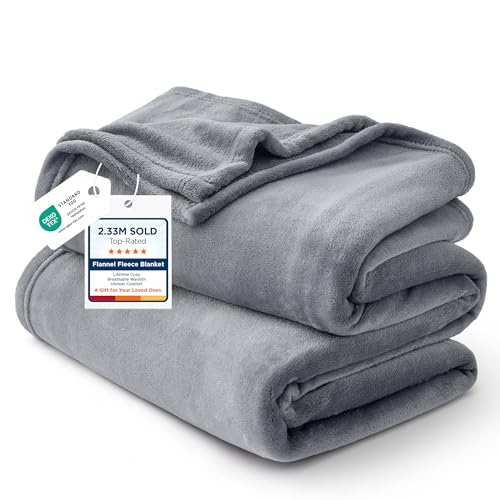
Every pick in this guide is sold on Amazon, where you can check the current size, color, and availability before you buy. Start with the lead pick, the Bedsure Fleece Blanket Queen Blankets for Bed, and use its Check on Amazon listing to confirm sizes — many owners buy it as an oversized, foldable dog-zone layer. The remaining picks are the Exclusivo Mezcla Soft Large Fleece Throw Blanket for Couch — Check on Amazon; the Bedsure GentleSoft Sherpa Fleece Throw Blanket for Couch — Check on Amazon; the Bedsure Faux Fur Fluffy Fleece Sherpa Blanket — Check on Amazon; the Pendleton National Park Blanket — Check on Amazon; and the Bearaby Cotton Hand-Knit Weighted Blankets for Adults — Check on Amazon. Check price on Amazon for each, and buy the dog’s blankets like supplies, not heirlooms.
In this guide
Quick Picks
| Pick | Badge | Why it earns its place |
|---|---|---|
| Bedsure Fleece Blanket Queen Blankets for Bed | Best Overall | Tight, simple fleece with no fill, no loops, and nothing tempting to excavate. |
| Exclusivo Mezcla Soft Large Fleece Throw Blanket for Couch | Best Budget | The sacrificial layer: cheap in commitment, light, and endlessly replaceable. |
| Bedsure GentleSoft Sherpa Fleece Throw Blanket for Couch | Best for Supervised Coziness | Smooth face out for shared couch time while you are right there. |
| Bedsure Faux Fur Fluffy Fleece Sherpa Blanket | Best with Caution | Plush pile tempts excavation; supervised, settled dogs only. |
| Pendleton National Park Blanket | Best to Keep Away | A superb blanket that should never meet a chewer; included as the warning. |
| Bearaby Cotton Hand-Knit Weighted Blankets for Adults | Best Never for Chewers | Open loops plus fill-free weight equals maximum temptation; keep it on human furniture. |
Key Takeaways
- No fabric blanket is chew-proof. Strategy is durability plus management, never a promise.
- Tight, flat, fill-free fleece gives teeth the least purchase and owners the least loss.
- Retire any damaged blanket immediately; holes invite escalation and ingestion risk.
- Supervise blanket time for chewers, provide legal chew targets, and store blankets away when you cannot watch.
- Knits, loops, sherpa piles, and heirlooms are for human furniture, out of chewer reach.
- Persistent destructive chewing is a training and veterinary conversation, not a shopping one.
How These Picks Were Chosen
Candidates were judged on construction tightness, absence of fill and loose elements, edge simplicity, washability, and replaceability. Two picks are deliberately included as labeled warnings — a plush pile and two premium human blankets — because a chewer household’s most expensive mistakes are category errors: giving the dog the wrong blanket, not buying the wrong brand of right one. No product is described as chew-proof, indestructible, or safe to leave with an unsupervised chewer, because none is. Specifications are pool-verified only, with no prices or fixed ratings.
The 6 Best Best Blankets for Dogs That Chew — Reviewed

Bedsure Fleece Blanket Queen Blankets for Bed
Our badge: Best Overall
The Bedsure Fleece Blanket Queen Blankets for Bed is the chewer-household champion precisely because it is unexciting: one flat layer of tight microfiber fleece, no fill to excavate, no loops to catch a tooth, no fringe or edging to start a project with. Its queen size folds into a thick multi-layer pad for dog zones, covers crates and car seats, and washes back to service after every adventure.
Strengths
- Nothing to excavate: no fill, loops, or loose weave.
- Folds thick for crates, cars, and dog beds.
- Washes and dries fast enough for real rotation.
Trade-offs
- A determined chewer will still destroy it given time and privacy — management remains the plan.
- Queen size is more blanket than small dogs need unfolded.
- Static and hair cling need regular washing.
| Color | 01 – Grey |
| Size | Queen (90″x90″) |
| Dimensions | 94.48818888 x 86.61417314 x 0.0399999999592 inches |
| Weight | 3.19 Pounds |
Inspect it at every wash: the moment a hole or torn edge appears, it retires, because damage is an invitation. Keep a spare in the closet so retirement never tempts you to leave a compromised blanket in service. Choose it as the dog’s standard issue. Skip any fantasy that it — or anything fabric — is indestructible.
Best for: Dog zones, crates, cars, and supervised lounging / Not suited for: Unsupervised determined chewers (nothing is)
Choose it for tight, simple durability; skip it for unsupervised faith. Check on Amazon

Exclusivo Mezcla Soft Large Fleece Throw Blanket for Couch
Our badge: Best Budget
The Exclusivo Mezcla Soft Large Fleece Throw Blanket for Couch plays the sacrificial role with grace: a light, long, inexpensive-in-spirit throw for the dog’s couch corner, the car, and the muddy-day floor, whose loss to a chewing incident would sting least. In chewer households, planning for loss is not pessimism; it is budgeting.
Strengths
- Light, flat fleece with no fill or texture traps.
- Long enough to protect a full couch seat.
- The set’s easiest blanket to replace without grief.
Trade-offs
- Thin against determined teeth; a management aid, not armor.
- Light warmth for cold floors.
- One color to hide a season of dog life.
| Color | Forest Green |
| Size | Throw XL (50″ x 70″) |
| Dimensions | 70 x 50 x 0.04 inches |
| Weight | 1.55 pounds |
Layer it over the queen fleece in the dog’s main zone as the first line, washed constantly and replaced without ceremony when its tour of duty ends. Its Forest Green hides the evidence of dog life between washes better than any pale textile. Choose it as the front line. Skip it as a solo barrier for a power chewer.
Best for: Couch protection and sacrificial layering / Not suited for: Solo duty with power chewers
Choose it to take the hit; skip it as the only defense. Check on Amazon

Bedsure GentleSoft Sherpa Fleece Throw Blanket for Couch
Our badge: Best for Supervised Coziness
The Bedsure GentleSoft Sherpa Fleece Throw Blanket for Couch is for the good hours: shared couch time with a settled dog and a present human, smooth fleece face turned outward, sherpa warmth underneath for the humans. Its pile side is a texture a chewer could worry at, so its assignment is explicit — supervised coziness only, stored away when the room empties.
Strengths
- Smooth face presents the least tempting surface.
- Genuine two-sided warmth for shared evenings.
- Washes clean after dog-adjacent duty.
Trade-offs
- Sherpa pile invites picking; never leave it with a chewer.
- Throw size only.
- Requires the storage discipline this guide preaches.
| Color | 01 – Grey |
| Size | Throw (50″ X 60″) |
| Dimensions | 59.05511805 x 51.18110231 x 0.0399999999592 inches |
| Weight | 2.03 pounds |
Build the habit loop: blanket comes out when people sit down, blanket goes away when people stand up. Dogs learn the ritual faster than humans expect, and the blanket survives to be cozy for years. Choose it for supervised together-time. Skip it for the crate, the car, or any unattended minute.
Best for: Supervised couch evenings / Not suited for: Any unsupervised chewer access
Choose it for watched coziness; skip it for alone time. Check on Amazon

Bedsure Faux Fur Fluffy Fleece Sherpa Blanket
Our badge: Best with Caution
The Bedsure Faux Fur Fluffy Fleece Sherpa Blanket is a beautiful human throw whose long plush pile is, to a chewing dog, a field of tiny handles. It is included so its assignment can be stated in the guide itself rather than discovered expensively: settled, non-chewing dogs may share it supervised; chewers should never have access, because pile pulls free, mats around teeth, and turns a glamorous throw into a vet-bill risk.
Strengths
- Gorgeous plush comfort for human furniture.
- Warm two-sided construction for people.
- Fine for truly settled dogs under supervision.
Trade-offs
- Pile is the most chewable texture in the set.
- Sheds and mats under dog use.
- Strictly a keep-away item in chewer homes.
| Color | 01- Tie Dye Grey |
| Size | Throw (50″ X 60″) |
| Dimensions | 60 x 50 x 0.04 inches |
| Weight | 2.73 pounds |
Keep it on the good chair in the room the dog does not rule, and let it be the reminder that a chewer household runs on zones, not hopes. Choose it for human luxury in dog-free zones. Skip it entirely if zones cannot be enforced in your home.
Best for: Human throws in enforced dog-free zones / Not suited for: Any chewer access
Choose it for people only; skip it anywhere near a chewer. Check on Amazon

Pendleton National Park Blanket
Our badge: Best to Keep Away
The Pendleton National Park Blanket earns its place in this guide as the most expensive mistake available: a magnificent wool heirloom that a chewer can ruin in one unsupervised afternoon, and whose woven wool fibers are exactly what should not be ingested or excavated. Its presence here is a fence, not a recommendation — admire it, buy it for the human bed, and keep it behind a closed door from any dog with a chewing habit.
Strengths
- Superb wool warmth and longevity for humans.
- Odor resistance and classic looks.
- Everything a dog blanket should not be asked to survive.
Trade-offs
- Irreplaceable-feeling loss if chewed.
- Woven texture gives teeth purchase.
- Gentle care incompatible with dog duty.
| Color | Grand Canyon Navy |
| Size | Queen (90″ x 90″) |
| Dimensions | 18 x 15 x 6.5 inches |
| Weight | 6.2 pounds |
Every chewer household has a version of this story — the good blanket, the quiet afternoon, the hole. Let this listing be the story you do not have to tell. Choose it for the human bed, proudly. Keep it from the dog, completely.
Best for: Human beds in chewer households / Not suited for: Dogs, in any capacity
Choose it for people; skip it for pets without exception. Check on Amazon

Bearaby Cotton Hand-Knit Weighted Blankets for Adults
Our badge: Best Never for Chewers
The Bearaby Cotton Hand-Knit Weighted Blankets for Adults completes the warning pair: an open-loop hand-knit whose every loop is a handle for teeth, attached to fifteen pounds of cotton a dog could worry into a genuine hazard. It is a wonderful human blanket and the single worst object in this pool to leave within a chewer’s reach — included so that no reader wonders whether the pretty knit is the exception. It is not.
Strengths
- Beautiful, breathable weighted comfort for humans.
- No fill to spill; the knit itself is the structure.
- A clear, memorable example of loop risk.
Trade-offs
- Loops catch teeth and claws instantly.
- Heavy, valuable, and slow to replace.
- Absolutely not a dog-zone textile.
| Color | Midnight Blue |
| Size | 15 lbs (40”x72”) |
| Dimensions | 71.99999992656 x 39.9999999592 x 0.01181102361 inches |
| Weight | 15 pounds |
Store it on human furniture in rooms with doors, and apply the same rule to every knit, crochet, and weighted product you own. Chewer-proofing a home is mostly this: the tempting objects live where teeth cannot. Choose it for your own chair. Skip it — emphatically — for the dog.
Best for: Human weighted comfort, stored safely / Not suited for: Chewer households’ dog zones
Choose it for yourself; skip it for any dog access. Check on Amazon
How the Six Picks Behave in a Chewer’s Household, Honestly
The lead Bedsure fleece is the roster’s working answer, and its behavior in a chewer’s home defines the strategy: it offers a dog almost nothing to start on. No stuffing to excavate, no fringe, no loose weave to catch a tooth, no seam piping standing proud — a flat, smooth, single-texture field that most dogs, after an investigative mouth, classify as boring and lie down on. That boringness is engineered safety. When chewing does happen — a determined dog can damage anything — the fleece’s failure mode is comparatively benign and, crucially, visible: a hole reads as a hole, the blanket is retired the same day, and the household’s inspection habit catches it at the evening fold. Bought in multiples and rotated, it gives the chewer’s household a bedding system that assumes incidents and survives them economically, which is the only honest promise any product in this category can make.
The Exclusivo Mezcla plays the same strategy at throw scale, and its household role is coverage of the secondary stations: the car seat, the sofa’s dog end, the spare bed in the guest room where the dog is technically not allowed and practically resident. A chewer’s damage is rarely confined to the crate, so the household needs the safe construction everywhere the dog rests, not just in the primary spot — and a light, inexpensive, identically-constructed throw is how that coverage stays affordable. Its lightness has a second safety virtue: it is the blanket least likely to be dragged, bunched, and worried at, because it settles flat and offers no satisfying bulk to a mouth looking for something to work on. Keep it smooth, keep it inspected, and replace it at the first hole without debating the dog’s intentions.
The Bedsure sherpa is in this guide as a managed exception, and its behavior explains why. Dogs love it — pile is the most mouthable, kneadable, nestable surface in the roster — and that love is precisely the risk: a chewer presented with sherpa has been handed texture, purchase, and encouragement. For a dog whose chewing is historical and genuinely past, supervised sherpa time on the sofa can be a earned comfort. For a dog in active chewing phases, sherpa belongs in the closed closet with the other temptations, and no amount of “he has been good lately” changes the arithmetic of one unsupervised hour. The guide keeps it in the roster because households are mixed — the non-chewing second dog, the senior dog, the supervised evening — and a blanket that is wrong for the chewer may be right for the rest of the pack, provided the storage discipline keeps the two worlds separate.
The faux fur sherpa extends that logic to its limit. Long pile is, to a chewing dog, a project: strands to pull, a backing to reach, a texture that rewards every stage of destruction. This guide includes it to make the boundary unmistakable — if a household is shopping for a dog that chews, this entire construction family is the answer to “what should we avoid,” and its presence in the roster, clearly labeled, is more protective than its absence would be. In a chewer-free room, on a chair the dog never accesses, it is a perfectly good human blanket. The rule is zoning, and the faux fur is the pick that tests whether a household’s zoning is real: if it would migrate to the dog’s sofa within a month, it should not enter the house at all.
The Pendleton’s role is value protection. A wool blanket of this quality is exactly the textile a chewing dog should never meet — not because wool is uniquely dangerous, but because the loss is large, the woven structure gives a determined mouth threads to work, and a damaged heirloom breeds the kind of resentment that poisons a household’s patience with the dog. Its place in this guide is to be named, admired, and stored in the dog-free zone: the guest bed the dog is genuinely kept from, the human side of the sofa barrier, the closed closet. Households that run the zone system well find the good blankets live full lives in parallel with the dog; households that rely on “he usually leaves it alone” are scheduling the loss.
The Bearaby knit closes the roster as the clearest exclusion in the guide. An open, looped, chunky knit is the single most hazardous construction a chewing dog can be given: loops catch teeth and claws, a pulled loop unzips its neighbors, and the resulting strands are exactly the long, swallowable geometry that turns a chewing incident into a veterinary one. It is a fine blanket for a dog-free home and it appears here so that no reader mistakes its popularity for suitability. If a chunky knit already lives in a chewer’s household, it moves to a closed room or a high shelf today — not after the first pull, because the first pull can be the incident. That sentence, applied without exception, is worth more than every other recommendation in this article combined.
The First Week With a New Blanket: A Supervised Introduction
Even the safest construction in this guide should be introduced like a hypothesis, not a guarantee. Day one and two: the blanket appears only under supervision, in the dog’s ordinary resting place, and the household watches what the dog’s mouth does with it — lying, kneading, mouthing, and worrying are four different reports, and only the first is a pass. Days three through five: short unsupervised intervals, with the inspection performed before and after each one, so any change in the blanket is caught at the scale of a pulled thread rather than a missing corner. By the end of the week, an uneventful blanket has earned its rotation place, and a blanket with any damage has given the household its answer cheaply. Skipping the introduction — handing a new blanket to a known chewer and leaving for the day — converts a manageable question into a possible emergency, and it is the single most common way the households in this guide’s cautionary tales got there. The week costs nothing but attention, which is the currency this entire category runs on.
Comparison Table
| Pick | Size | Weight | Color | Check price on Amazon |
|---|---|---|---|---|
| Bedsure Fleece Blanket Queen Blankets for Bed | Queen (90″x90″) | 3.19 Pounds | 01 – Grey | Check price on Amazon |
| Exclusivo Mezcla Soft Large Fleece Throw Blanket for Couch | Throw XL (50″ x 70″) | 1.55 pounds | Forest Green | Check price on Amazon |
| Bedsure GentleSoft Sherpa Fleece Throw Blanket for Couch | Throw (50″ X 60″) | 2.03 pounds | 01 – Grey | Check price on Amazon |
| Bedsure Faux Fur Fluffy Fleece Sherpa Blanket | Throw (50″ X 60″) | 2.73 pounds | 01- Tie Dye Grey | Check price on Amazon |
| Pendleton National Park Blanket | Queen (90″ x 90″) | 6.2 pounds | Grand Canyon Navy | Check price on Amazon |
| Bearaby Cotton Hand-Knit Weighted Blankets for Adults | 15 lbs (40”x72”) | 15 pounds | Midnight Blue | Check price on Amazon |
How to Choose Blankets in a Chewer’s Home
Construction: tight, flat, fill-free
Teeth need purchase: loops, pile, fringe, loose weaves, and puffy fill provide it. Flat fleece denies it longest. Run your thumbnail across any candidate — if it catches, snags, or lifts, so will a tooth.
Edges and details: the fewer, the better
Chewing starts at edges, tags, buttons, and stitched decorations. Plain hems and zero embellishments remove the starting points. Inspect second-hand and household blankets with the same suspicion.
Economics: budget for attrition
Buy the dog’s blankets in duplicate, at commitment levels you can replace without anger — at the dog or yourself. A blanket whose loss would ruin your week does not belong in a chewer’s zone, whatever its construction.
Washability as a safety feature
Dog blankets collect saliva, dirt, and the occasional unspeakable thing. Machine washing after incidents and on a weekly rhythm keeps the dog’s textiles hygienic and gives you a scheduled inspection moment for damage.
How Do You Actually Stop a Dog From Eating Blankets?
With management and training, not textiles. Supervise all blanket access until a dog has earned trust over months, and store blankets out of reach whenever you cannot watch — a closed closet is the cheapest safety device in this guide. Provide legal, appealing chew targets in the same spaces where blankets live, rotate them for novelty, and reward the dog for choosing them. Exercise and mental work before rest periods drain the energy that boredom chewing runs on. Teach and reward a reliable “leave it” and “drop it,” and trade up calmly whenever a blanket enters a mouth — never chase, which turns theft into sport.
If chewing is intense, sudden, or focused on eating fabric rather than shredding it, talk to your veterinarian: compulsive fabric-eating (a form of pica) and anxiety-driven destruction are health and behavior matters with real help available, and no blanket purchase substitutes for it. Puppies, meanwhile, chew as a life stage — give them the sacrificial fleece, total supervision, and time.
Problem: Found a hole in the dog’s blanket — Retire it the same day. Holes escalate chewing and expose ingestible edges; replace it from your spare stock and increase supervision while you review what gave the dog the opportunity.
Problem: Dog chews only when left alone — That pattern points to boredom or separation distress rather than textile preference. Remove blanket access when away, enrich the environment, and discuss the pattern with your vet or a qualified trainer.
Problem: Dog steals and guards blankets — Trade, never grab: offer a high-value treat or toy, reward the release, and store blankets out of reach while you build the habit with professional guidance if guarding escalates.
Problem: Puppy chews everything, including blankets — Normal, temporary, and totally supervised. Sacrificial fleece only, legal chew toys everywhere, blankets stored between supervised sessions, and patience — this stage ends.
The Chewer Household’s Zone System
Divide the home honestly: dog zones get the flat fleeces and nothing precious; human zones keep the knits, wools, and faux fur behind doors and habits; shared zones run on the supervised-coziness rule with blankets that come out and go away with the people. Post the system in your own mind like a fire drill — everyone in the household, including guests and dog-sitters, follows the same map. Most blanket losses happen at the seams of the system: visitors, holidays, and the one afternoon everyone assumed someone else was watching. The map, kept boringly, is the protection.
When a Blanket Incident Happens
If you find a damaged blanket and missing fabric, note how much is unaccounted for and watch the dog closely; contact your veterinarian promptly if fabric may have been swallowed, and immediately if you see vomiting, appetite loss, lethargy, or straining. Do not wait for certainty — vets would rather hear early. Then audit the system without blame: which zone failed, which blanket was misplaced, which supervision lapsed — and fix the map, because the dog was only ever being a dog. Households that treat incidents as system feedback, rather than dog crimes, end up with safer dogs and longer-lived blankets.
The Inspection Habit: Two Minutes That Prevent the Emergency
Every safety claim in this guide ultimately rests on a habit, not a product: the daily inspection. It takes two minutes, folded into the moment the blanket is shaken out or the crate is tidied. Run a palm across the surface for new roughness, hold the blanket up to the light for thinning and holes, check the edges and corners — the starter points — and sniff for the sour smell of a blanket that has been worried at and wetted. Any failure retires the blanket that day, to the trash rather than the rag pile if the damage involves loose threads or missing pieces, because a chewer’s rag in the garage has a way of migrating back to the dog. Log the incidents, at least mentally: a dog whose damage is escalating in frequency or appetite is telling the household something — about boredom, anxiety, discomfort, or an unmet need — that belongs in a conversation with a veterinarian or a qualified behaviorist, not in a sterner blanket purchase. The inspection is also where the hygiene rhythm lives: a blanket washed on the schedule described in guides like Best Light Blankets For Summer rotations — a clean spare always ready — is a blanket whose damage gets seen, because handling is inspection.
Teach the habit to everyone who handles the dog’s bedding: partners, older children, pet sitters, and the family member who “helps” by putting a found blanket back in the crate. The zone system and the inspection habit fail at their least-informed user, so the household’s standard should be written where the blankets are stored — what the dog may have, what it may never have, and what to do with a damaged piece. Two lines on a card, taped inside the cupboard, outperform a household understanding that lives in one person’s head.
Puppies, Adolescents, and the Chewing Calendar
Chewing is developmental before it is behavioral, and the calendar matters. Teething puppies mouth everything as a biological program; the correct response is a rotation of appropriate chew objects, a crate kept deliberately boring in its textiles — many households use no blanket at all during the peak weeks, on their veterinarian’s advice — and supervision that assumes intent. Adolescence brings the second wave: a stronger jaw, a testing mind, and the destruction of blankets that survived puppyhood, which is why this guide’s retirement rules apply with extra force in the six-to-eighteen-month window. Adult chewing that arrives suddenly, in a dog with no history of it, is a signal to investigate rather than a habit to manage — pain, anxiety, and dietary issues all present as chewing, and the veterinarian is the first call, ahead of any product in this roster. Senior dogs usually chew less, and their blankets can graduate toward comfort — with the inspection habit kept, because an old dog’s sudden interest in fabric is as meaningful as a young one’s. Furnishing the rest of a dog household’s rooms with washable, replaceable layers, like those under Best Throw Pillows For Bedrooms Under $40, keeps the same philosophy — nothing precious within reach — consistent through the whole home.
What to Give the Mouth Instead
A chewing strategy that only removes is a strategy that fails by Friday. The dog’s mouth needs a legal economy: durable chew toys rotated so they stay interesting, food-dispensing toys that convert the chewing hour into a working hour, and a taught “leave it” and “trade” that make surrendering a blanket fragment a rewarded behavior rather than a confrontation. Time the legal chews to the risky hours — the post-walk restlessness, the evening settle, the departure window — because chewing is scheduled by the dog’s day, and a household that meets the schedule with the right object rarely meets it with a blanket emergency. Keep the chew toys in the same condition discipline as the blankets: inspected, retired when they fragment, and never treated as indestructible, because nothing in the dog’s mouth is. The final piece is exercise and engagement honest enough to matter — a tired, worked dog chews textiles at a fraction of the rate of a bored one — which is why this guide, like the room-by-room options under Best Throw Pillows Under $15, treats the blanket as one part of a household system rather than a product that can be asked to solve a life.
Boarding, Sitters, and Other People’s Houses
The zone system is most fragile exactly where it is least supervised: at the boarding kennel, the sitter’s home, and the relative’s house where the dog is a guest. Export the system in writing — which blanket travels with the dog (the designated fleece, in duplicate), which textiles the dog must not be given, and what to do if fabric is chewed or missing — and confirm the facility’s own bedding policy before booking, since many kennels supply their own bedding and prohibit personal textiles for hygiene reasons. Where the dog’s own blanket is welcomed, send the duplicate, never the irreplaceable, and wash it on return before it rejoins the home rotation. A sitter briefed in two sentences will protect the system; a sitter left to improvise will, with the best intentions, offer the dog the household’s knitted throw. The dog’s safety away from home is a communication product, and this guide’s rules only travel as far as they are spoken.
Common Buying Mistakes
Believing “indestructible” marketing
No fabric earns that word against a determined dog. Buy construction and management, not promises, and keep supervision as the actual safety system.
Giving the dog the good blanket “just for tonight”
Tonight is when it happens. Zones do not take evenings off; the sacrificial fleece exists precisely for tonight.
Keeping a damaged blanket in service
Every hole is a starting handle and an ingestion risk. Retire at first damage; spares make it painless.
Choosing knits or sherpa for coziness points
Loops and piles are chew invitations. Coziness for chewers is flat fleece, warm room, and your company — in that order.
Skipping the training half
Blankets alone change nothing. Chew toys, exercise, supervision, and vet-guided help for compulsive chewing are the solution; textiles are just the safest stage for it.
Sewing up a chewed hole and returning the blanket
A repaired chewed blanket is a worse blanket: the repair is a new texture, a new starter point, and a proven location, and the dog will find all three within the week. Worse, thread and patch edges introduce exactly the loose geometry the construction rules exist to avoid. Retire damaged blankets whole. The economics sting once; the alternative can sting at the veterinary clinic.
Assuming the chewing phase has passed because a month was quiet
Quiet months happen inside chewing phases — a change of season, a visitor, a new stress, and the behavior returns at its old strength. Promote a dog to richer textiles gradually, supervised, and reversibly, and keep the zone system in place for a long season after the last incident rather than dismantling it at the first calm. The households that get hurt are the ones that declared victory.
Punishing the dog for a chewed blanket found hours later
A dog cannot connect a scolding with a blanket chewed at noon, and punishment after the fact teaches only that the household’s return is unpredictable — which raises the anxiety that drives much chewing. The productive responses are all upstream: construction, zoning, supervision, legal chews, and the inspection that finds damage early. Manage the environment you control, and let the dog’s behavior be data rather than disobedience.
Final Recommendation
Standardize on the Bedsure Fleece Blanket Queen Blankets for Bed in duplicate for every dog zone, fronted by the sacrificial throw — Check on Amazon to stock the Exclusivo Mezcla. Supervise, store the good blankets away, retire damage instantly, and put your real energy into toys, exercise, and training. That combination — not any fabric — is what keeps chewers and blankets coexisting safely.
Frequently Asked Questions
Should a chewing dog have any blanket in the crate at all?
For many chewing dogs, the honest answer during active phases is no — and that answer should come from, or be confirmed by, your veterinarian, who knows the dog. A bare, safe crate with an appropriate chew object is not a deprivation; it is the standard management for a dog whose blanket habit is a swallowing risk. If a blanket is used, it should be the flat, fill-free construction this guide leads with, inspected daily, and removed the moment the dog’s interest in it turns from lying to working.
How do I know if my dog swallowed fabric?
You often cannot know in the moment, which is why the inspection habit counts missing pieces rather than guessing. Signs that warrant an immediate call to a veterinarian or emergency clinic include vomiting, loss of appetite, lethargy, abdominal discomfort, straining, or any thread or fabric seen hanging from the mouth or in stool — never pull a visible thread. When in doubt, call: fabric obstructions are time-sensitive, and a professional’s triage is the correct response to uncertainty, not watchful waiting.
Should I photograph the blanket when it is new?
It sounds excessive and it genuinely works well: a phone photograph of the new blanket, with edges and corners clearly visible, gives the daily inspection a reliable reference. Damage that creeps — a corner slowly rounding, an edge gradually thinning — is obvious against the photograph and completely invisible to memory alone.
Is any blanket truly chew-proof?
No. Tight, flat, fill-free fleece resists casual chewing longest and fails most gracefully, but supervision, storage, and training are the actual safety system. Treat any “indestructible” claim as marketing.
What blanket construction is safest for a chewer?
Single-layer, tight-weave fleece with plain hems and no fill, loops, pile, fringe, or decorations — inspected at every wash and retired at the first hole or tear.
What should I do with the good blankets during a chewing phase?
Move them physically out of the dog’s world — closed closets, closed rooms, high storage — rather than relying on the dog’s restraint or the household’s vigilance. Phases pass; heirlooms do not regenerate. When the phase has been quiet for a long season, reintroduce the good textiles gradually and supervised, the same protocol as a new blanket’s first week.
Can my dog keep a blanket in the crate?
Only if your dog has a long, proven record of not chewing bedding, and many trainers advise against crate textiles for known chewers entirely. When in doubt, leave the crate bare and discuss it with your vet or trainer.
Are bitter sprays a solution?
Taste deterrents help some dogs and are ignored, or even enjoyed, by others — and they wash out, wear off, and do nothing for a dog whose chewing is driven by anxiety or discomfort. Treat a deterrent spray, if you use one, as a minor supporting tool inside the system of construction, zoning, inspection, and legal chews in this guide, never as the system itself. A dog chewing through a deterrent is giving you information about the strength of the drive, and that information belongs in the veterinarian or behaviorist conversation.
How many sacrificial blankets should we keep?
Enough that a retirement never creates a shortage that tempts the household to return a damaged blanket to service: in practice, two in service and two in reserve for the primary station, with the secondary stations covered by the same construction. The reserve is the safety device — most repeat incidents happen in the gap between a retirement and its replacement.
Why does my dog chew blankets?
Boredom, teething, anxiety, habit, and sometimes compulsive disorders all drive fabric chewing. Management protects the dog today; a veterinarian or qualified behavior professional addresses the cause.
What should I do if my dog swallowed fabric?
Call your veterinarian promptly — immediately if you see vomiting, appetite loss, lethargy, abdominal discomfort, or straining. Missing fabric plus symptoms is an emergency, not a wait-and-see.
How do I protect my good blankets?
Zones and storage: knits, wool, faux fur, and weighted blankets live in dog-free rooms or closed storage, and shared-space throws come out only under supervision and go away with the people.


