Where to buy
Check the latest price, availability and delivery on Amazon. Orders are placed on Amazon. We may earn a commission from qualifying purchases.
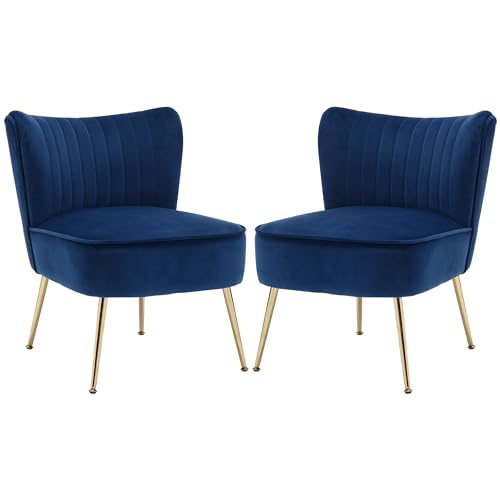
- Best overall for small spaces: ABET Accent Chairs, Set of 2, Velvet Tufted Wingback Slipper Chairs with Gold Metal Legs, Blue — Check on Amazon
- TINA’S HOME Accent Chair with Golden Metal Legs, Tufted Wingback Armless Slipper Chair, Floral Blue — Check on Amazon
- Christopher Knight Home Anni Low Profile Modern Accent Chair, Armless, Beige — Check on Amazon
- Giantex 360° Swivel Accent Chair, Sherpa Boucle Barrel, White — Check on Amazon
See 2 more Amazon options
- Yaheetech Modern Armchair, Mid-Century Accent Chair with Wood Legs, Yellow — Check on Amazon
- Signature Design by Ashley Daylenville Accent Chair with Lumbar Pillow, Light Gray — Check on Amazon
Read the full guide ↓
Disclosure: As an Amazon Associate, dailyhomedecorating.com earns from qualifying purchases. Links to Amazon on this page are affiliate links; they cost you nothing extra. Listing details such as price and availability change often, so check the current Amazon listing before you buy.
The best accent chair for small spaces under $1000 is not a small chair. It is a full-quality chair with a disciplined footprint — and the distinction matters, because “small space” describes half the rooms in a normal house, not just studio apartments. It is the bedroom corner that is currently a laundry pile with ambitions. It is the wide place in the hallway, the landing at the top of the stairs, the nursery corner waiting for a feeding chair, the home office that is also a guest room, the primary-suite sitting spot that fits exactly one chair and a lamp. These spaces do not need miniature furniture; they need furniture that respects a tape measure: armless where arms waste six inches, low-backed where a tall chair would block a window or a sightline, narrow enough to leave the walkway a walkway, and good enough — this budget insists on it — that the little corner becomes the favorite seat in the house rather than its apology.
That is the filter this guide applies, and it differs from our apartment guide in an important way. Apartment shopping is about routes, leases and total square footage; small-space shopping is about specific spaces inside homes of any size, each with its own geometry: a corner’s width, a window’s sill height, a doorway’s swing, a nursery’s 3 a.m. requirements. So the picks below are organized by the shape of the problem. Armless slipper chairs for the narrowest slots. A low boucle barrel that slides under a window line and keeps a room’s light moving. A modular foam chair that can be one seat today and part of a sectional tomorrow. A compact armchair with a lumbar pillow for the corner that must support an hour of reading, not a ten-minute perch. And a full mid-century armchair, at 29 inches, for the small space that turns out to have room for a real chair after all — which happens more often than people expect, once the tape measure replaces the guess.
Our short answer: the ABET velvet slipper pair is the most useful purchase in this guide — two genuine, tufted, wingback-styled seats at 22 inches wide each, for a fraction of the budget — because small spaces usually come in twos (two corners, two sides of a bed, a corner and a desk). For a single statement nook, the TINA’S HOME floral slipper chair is the prettiest 26 inches in the category. For the reading corner that must truly support you, take the Daylenville and its lumbar pillow. The reviews below detail all six, then cover the measuring method for odd spaces, the placement tricks that make small corners feel designed, and the errors that shrink rooms. For whole-apartment strategies rather than single corners, see Best Accent Chair For Small Apartments Under $1000, which this guide complements rather than repeats.
In this guide
Quick Picks: best accent chair for small spaces under $1000
Match the chair to the shape of your space. Every pick is under the $1000 ceiling — check the live listing for the current price.
| Small-space problem | Pick | Why it stands out | Link |
|---|---|---|---|
| Best overall for small spaces | ABET Velvet Accent Chairs, Set of 2 | Two tufted wingback slipper chairs at only 22″W each, 250 lb capacity, gold tapered legs | Check on Amazon |
| Best bedroom / vanity corner | TINA’S HOME Armless Slipper Chair, Floral | 26″W wingback slipper on gold legs, 18″ seat height — a designed moment in a tiny footprint | Check on Amazon |
| Best flexible / modular seat | Christopher Knight Home Anni Accent Chair | Armless foam form, 24.7″ high, no assembly, 300 lb capacity; multiples combine into larger seating | Check on Amazon |
| Best under windows & sightlines | Giantex 360° Swivel Boucle Barrel Chair | Back only 25.5″ high, boucle texture, swivel base, 350 lb capacity | Check on Amazon |
| Best real armchair, tight corner | Yaheetech Modern Armchair | A full mid-century armchair at 29″W, 300 lb capacity, springs and rubberwood legs | Check on Amazon |
| Best back support in a small chair | Signature Design by Ashley Daylenville | Compact accent chair with an included lumbar pillow, track arms, 40 lb build | Check on Amazon |
How we chose these small-space accent chairs
Four tests, applied in order. Footprint honesty: every pick publishes its dimensions, and every pick earns its place at 29 inches wide or less, or with a shape — armless, barrel, low-profile — that behaves smaller than its tape measure. Height discipline: small spaces are usually carved from rooms with windows, doors and sightlines to protect, so we favored backs between 24.7 and 33 inches and flagged the one taller pick honestly. Real-seat construction: published capacities where makers state them (250 lb ABET, 300 lb Anni and Yaheetech, 350 lb Giantex), named materials, and seats designed for adults — a small-space chair that only a child could love is a toy, not a pick. Role clarity: each chair had to be the best answer to a specific small-space problem — a pair of narrow perches, a vanity corner, a modular seat, an under-window lounge, a true armchair, a supported read — because in small spaces, a chair without a defined job becomes the thing the room stores its clutter on. What we excluded: folding chairs and stools dressed as accent chairs, chairs with unpublished dimensions, and anything whose “small space” claim was a title rather than a measurement.
The 6 best accent chairs for small spaces under $1000, reviewed
1. ABET Accent Chairs, Set of 2, Velvet — best overall for small spaces
The ABET velvet accent chairs understand the assignment completely. Each chair is a tufted wingback slipper chair — armless, upright, with a thickened cushion and gold tapered metal legs — at just 22 inches wide, 26.8 inches deep and 28.5 inches high, with a 19.5-inch seat depth and a stated maximum capacity of 250 lb. Sold as a pair, they are the small-space multiplier: flank a bed, face each other across a tiny table, split between a desk and a corner, or give a narrow living room two real guest seats that store against one wall. The blue velvet is rich enough to make each small placement look designed, and the wingback tufting gives a 22-inch chair a formality that flat little chairs never achieve.
Who it suits: bedrooms with two corners to fill, narrow living rooms, vanity and dressing areas, and anyone whose small spaces come in pairs.
Pros: two chairs at 22″W each for a fraction of the budget; published 250 lb capacity; wingback tufting reads as real furniture; armless form tucks anywhere, including at a desk or table.
Honest limitation: a 22-inch armless perch is not an evening lounge chair — sessions are measured in chapters, not marathons — and velvet wants a wipe-clean care routine (the maker’s stated instruction) rather than a soak. Broad users should sit-test the width against a chair they know.
Choose it if you have two small spots or one spot and a need for a guest seat. Skip it if the chair is your main reading or TV seat — see the Daylenville and Yaheetech below. Check on Amazon
2. TINA’S HOME Armless Slipper Chair, Floral — best bedroom and vanity corner
The TINA’S HOME slipper chair is the decorator’s small-space move: a tufted wingback slipper chair, armless, on golden tapered legs, 26 inches wide, 30 inches deep and 31 inches high, with an 18-inch seat height and a floral fabric that turns a forgotten corner into the room’s photograph. Slipper chairs were born in bedrooms — for dressing, for shoes, for the five quiet minutes at the start of the day — and this one is faithful to the brief while working just as well as a living room’s single patterned accent among plain upholstery. At 20.9 pounds it also moves between those roles without a second person.
Who it suits: bedroom corners, vanity and dressing areas, reading spots in guest rooms, and traditional or glam-leaning interiors that need one joyful print.
Pros: a genuine design statement in 26 inches; proper 18″ seat height for dressing and perching; light enough to redeploy room to room; wingback shape gives a small chair presence.
Honest limitation: the floral print is the opposite of neutral — it will lead the corner’s palette, so choose it as the room’s one print or not at all — and the 30-inch depth is deeper than its width suggests, so measure the corner’s depth, not just its width. Armless, as ever, means perch comfort rather than lounge comfort.
Choose it if the corner needs beauty first and a seat second that still serves daily. Skip it if you want a neutral, an armchair, or a long-session read. Check on Amazon
3. Christopher Knight Home Anni — best flexible, modular small-space seat
The Christopher Knight Home Anni treats a small space as a temporary condition, which in most homes it is. It is a sculpted, armless lounge chair built from compressed foam — 31.1 inches wide, 33.6 inches deep, 24.7 inches high — that arrives with no assembly, expands to shape, and can combine with identical chairs into two-seat, three-seat or curved arrangements when the small space becomes a bigger one. The maker states a 300 lb capacity, and at 22.1 pounds the Anni is the chair you carry to the room that needs it tonight: the office for a call, the bedroom for a read, the living room for a guest. Its low, blocky profile also slides into the dead zones other chairs cannot use — under a sloped ceiling, beneath a window, at the foot of a bed.
Who it suits: evolving rooms, renters and rearrangers, under-window and under-eaves spots, and households that value a seat that can grow into a sofa system.
Pros: modular by design; zero assembly; the lowest back in this guide keeps every sightline; light and genuinely portable between rooms.
Honest limitation: frameless foam sits soft and low — a lounge slump, not an upright perch — and needs its expansion time out of the box before judging; the 33.6-inch depth is also the deepest here, so the Anni is “small” in height and visual weight more than in floor depth. Older users get no arms to rise with.
Choose it if flexibility is the whole point. Skip it if you want an upright, framed, armed chair. Check on Amazon
4. Giantex 360° Swivel Boucle Barrel Chair — best under windows and sightlines
Some small spaces are not narrow — they are low: the wall under a window, the stretch beneath a picture rail, the spot where a tall chair would bisect the room’s view. The Giantex boucle barrel is built for exactly that geometry: 32.5 inches wide and 27.5 inches deep, but only 25.5 inches high, in white sherpa boucle on a 360-degree swivel base, with a stated 350 lb capacity — the strongest in this guide — and a 16-inch seat height. The swivel matters in a small space because the chair can serve the room, the window and the conversation without being moved at all. And the boucle does the decorating: in a small, plain corner, texture is the entire event.
Who it suits: under-window placements, bright rooms where the view is the art, soft-modern and Scandinavian corners, and anyone short on width but generous on light.
Pros: lowest profile here; highest stated capacity (350 lb); swivel multiplies the chair’s roles without moving it; boucle texture makes a minimal corner feel finished.
Honest limitation: white boucle is high-maintenance — regular vacuuming, prompt spill response — and the 16-inch seat is a true lounge height that some users will find low; the width (32.5″) is also the largest here, so this is a pick for low spaces, not narrow ones.
Choose it if your constraint is height and light, not width. Skip it if your corner is narrow or your household is hard on white upholstery. Check on Amazon
5. Yaheetech Modern Armchair — best real armchair for a tight corner
Every small-space guide needs one chair that refuses the premise — a complete armchair that happens to fit. The Yaheetech modern armchair is a mid-century club chair with rolled arms, a button-tufted high back, zig-zag spring seat support and rubberwood legs, at 29 inches wide, 28 inches deep and 37 inches high, in polyester upholstery with a stated 300 lb capacity. That is a real reading chair — arms for the book, springs under the seat, a back that reaches your shoulders — in a footprint only an inch wider than the armless picks. The yellow finish suits its mid-century lines; the listing family includes calmer colors for corners that need them.
Who it suits: the small corner that must be a true reading chair; offices and bedrooms in houses of any size; anyone who tried perch chairs and missed arms.
Pros: full armchair comfort at 29″W; published 300 lb capacity; spring-supported seat out-sits foam-only rivals; adjustable foot pads protect floors and stop rocking.
Honest limitation: at 37 inches, the back is the tallest here — check it against your window line — and the seat runs firm and compact, so it is a one-to-two-hour chair rather than an all-day lounge; very tall users should verify the fit against the published dimensions.
Choose it if your small space deserves a real armchair and has 29 inches to give. Skip it if the spot is under a low window or narrower than 29 inches. Check on Amazon
6. Signature Design by Ashley Daylenville — best back support in a small chair
Small chairs usually cheat the back: a low perch back, a decorative curve, nothing where your lumbar lives. The Ashley Daylenville is the exception in this guide — a compact, casual accent chair with track arms and an included lumbar pillow, from a major furniture brand, at a 40-pound build that feels like furniture rather than flat-pack. Ashley positions it as a perfectly proportioned compact chair for living rooms and office nooks, and the lumbar pillow is the detail that converts it from a perch to a session chair: place it at the small of your back and the corner can hold a chapter, a call, or a whole film. Confirm the exact dimensions on the live listing before ordering — Ashley publishes them — and measure your corner against them.
Who it suits: reading and laptop corners, home-office nooks, anyone whose back complains in perch chairs, and buyers who want a big-brand compact with a tailored, casual look.
Pros: included lumbar pillow — rare at any size; track arms give support without bulk; substantial 40 lb build; neutral light gray suits most rooms and migrates well.
Honest limitation: it is the least “miniature” pick here in spirit — a compact armchair, not an armless space-saver — so the very narrowest slots still belong to the ABET and TINA’S HOME chairs; and a lumbar pillow is one more loose piece to keep track of in a busy household.
Choose it if your small corner is a reading corner and your back has opinions. Skip it if you need under 24 inches of width or an armless tuck-under seat. Check on Amazon
Comparison table
| Pick | Overall size (W x D x H) | Arms | Back height character | Stated capacity | Best for |
|---|---|---|---|---|---|
| ABET Velvet Slipper (x2) | 22″ x 26.8″ x 28.5″ each | No | Low wingback | 250 lb | Pairs, narrow slots |
| TINA’S HOME Slipper | 26″ x 30″ x 31″ | No | Wingback | Per listing | Bedroom / vanity corners |
| Christopher Knight Home Anni | 31.1″ x 33.6″ x 24.7″ | No | Lowest here | 300 lb | Modular, flexible rooms |
| Giantex Boucle Barrel | 32.5″ x 27.5″ x 25.5″ | Barrel | Low, wide | 350 lb | Under windows, sightlines |
| Yaheetech Modern Armchair | 29″ x 28″ x 37″ | Yes | Tallest here | 300 lb | Real armchair, tight corner |
| Ashley Daylenville | Compact — per listing | Yes (track) | Supportive + lumbar pillow | Per listing | Reading nooks, back support |
How to choose an accent chair for a small space
Measure the space’s three dimensions separately. Small spaces fail in different directions. Width failures are obvious; depth failures hide (the TINA’S HOME chair is 26 wide but 30 deep; the Anni is low but 33.6 deep); height failures are aesthetic — a back that crosses a window sill or bisects a mirror. Record all three numbers for your spot, plus the swing of any door and the path you walk past it, and shop against the tightest one. A chair that fits on paper but steals the walkway will be resented in person.
Decide the chair’s session length honestly. Perch (under 30 minutes: dressing, calls, guests) → armless slippers like the ABET and TINA’S HOME chairs are perfect and free up the most space. Session (one to two hours: reading, laptop, a film) → you need a shaped back, a lumbar answer and ideally arms: the Daylenville or the Yaheetech. Lounge (an evening) → the low, deep picks (Anni, Giantex) trade height for sprawl. Most small-space disappointment is a perch bought for session work.
Use the small-space multipliers. Armless saves width. Raised legs return visible floor. Swivel returns the need to move the chair at all. Light upholstery returns light. A pair of small chairs returns flexibility that one medium chair cannot match — they split, flank, face and store in ways a single seat never will. Stack two or three multipliers in one purchase and a small space stops feeling like a compromise; the ABET pair (armless + light + pair) is this guide’s worked example. For the living-room end of the same logic, Best Accent Chair For Modern Homes Under $1000 shows how low profiles and texture play in full-size modern rooms.
Give the corner its constellation, in miniature. A small chair alone in a small space reads as leftover. Add the smallest versions of the supporting cast — a drink-table barely wider than a book, a plug-in lamp or a wall-mounted light that spends no floor at all, a cushion that tunes the seat — and the same chair reads as a destination. The budget under $1000 usually covers the chair and leaves room for exactly these pieces; spend the remainder there before upgrading the chair itself. A useful companion read is Best End Table For Small Spaces Under $1000, which applies the same discipline to the table beside the chair.
Common mistakes in small spaces
Buying a “small” chair by title instead of by tape. Listings call chairs small-space-friendly at 34 inches wide. Your space does not care about titles. Every pick here was screened by published dimensions; do the same with any chair you consider elsewhere.
Matching the chair to the space’s size but not its job. A beautiful perch in a reading corner fails daily. Session length first, footprint second, looks third — in small spaces the order matters because there is no second chair to cover the mistake.
Blocking the light to save the floor. A tall chair under a window saves inches and costs the room its daylight. Low picks exist (Anni at 24.7″, Giantex at 25.5″) precisely so the window keeps working.
Forgetting the door, the drawer and the closet. Small spaces are shared with things that open. A chair that fits beautifully until the wardrobe door swings is a chair that lives at an angle forever. Map every swing before placing.
Letting the small chair become the household dumping ground. In space-starved rooms, any horizontal surface collects. The defense is a defined role and a hook or basket within reach for the things that would otherwise land on the seat.
Small corners, room by room
Bedroom: the slipper chair’s ancestral home. Put it where dressing actually happens — near the wardrobe, with light — rather than in the photogenic corner far from the clothes. The ABET pair flanking a bed, or the TINA’S HOME chair by a vanity, are the classic arrangements because they follow the morning’s route. Nursery: the corner needs a chair that supports feeding at 3 a.m. — arms or a lumbar pillow (Daylenville), a washable throw over everything, and a small table within reach that holds a bottle without waking the house. Home office / guest room: the chair is the room’s softening note and its guest seat; an upright, armed compact (Yaheetech, Daylenville) doubles as a second desk seat for calls. Hallway and landing: the boldest small space — a single slipper chair and a lamp turn a pass-through into a pause, but the walkway rule is absolute: if passing the chair requires turning sideways, the chair is too big, whatever its charms. Living room corner: angle the chair toward the room, give it the rug’s edge and the lamp’s pool, and it stops being the leftover corner and becomes the seat people choose first — the entire goal of this guide in one arrangement.
The tape-measure method for odd spaces
Odd spaces — alcoves, bays, the wedge under the stairs — defeat mental arithmetic, so here is the method that works every time. Step one: measure the space at three heights, not one. Corners taper: skirting boards steal an inch at the floor, a sloping ceiling steals six at the top, and a radiator’s valves steal two in the middle. Record width and depth at floor level, at seat height (about 18 inches up) and at the intended chair’s back height, and shop against the smallest set. Step two: tape the footprint on the floor at full size, including the chair’s depth, and mark the walkway past it with a second line of tape. Live with the tape for a full day — open every door, carry laundry past it, let a child or a dog test it — because a footprint that annoys you in tape will enrage you in velvet.
Step three: check the delivery geometry of the specific chair. Compact chairs arrive in compact boxes, but “compact” is relative; a set of two ships as one long box, a foam chair arrives compressed and expands beyond its box in every direction, and a chair with pre-attached legs cannot be slimmed down for a tight turn. The published product dimensions — which every pick in this guide provides — describe the chair, not the box, so allow the box a few extra inches on every side and confirm your door and stair clearances against that larger number. Step four: photograph the taped corner and hold the listing photo beside it at the same angle. It sounds rudimentary; it catches scale illusions that measurements alone miss, especially back height against windows and art. Ten minutes of this method is worth more than any review, including this one, because it tests the chair against the one space no reviewer has seen: yours.
Color and texture at small scale
Small spaces amplify color decisions. A saturated chair in a tiny corner is not a quarter of the room’s color — it can be half of everything you see from the doorway, which is either the design or the problem. The safe architecture is one decision deep: let the chair be the corner’s only saturated note (the ABET blue, the TINA’S HOME floral) and keep everything within sight of it quiet; or keep the chair neutral (the Anni’s beige, the Daylenville’s light gray) and let a cushion, a throw or the lamp carry the color, because those are replaceable in an afternoon when the mood changes. Texture follows the same logic at small scale: one strong texture per corner. Boucle plus a smooth table plus a plain wall is a composition; boucle plus a nubby rug plus a woven throw is a texture argument, and in a small space arguments look like clutter.
Light deserves a final word, because small corners are usually the dimmest parts of their rooms — that is often why they were empty. A chair placed in gloom will stay unused no matter how well it fits, so budget the lamp with the chair: a plug-in wall light above and behind the shoulder for reading corners, a small table lamp for dressing corners, or simply the discipline of placing the chair within the spill of an existing window or fixture. In small-space furnishing, the chair is the noun but the light is the verb — corners with both get used, corners with only the chair get stored on. Plan them together and the smallest corner in the house can carry the most life per square foot in it.
Final recommendation
For most small spaces, buy the ABET velvet slipper chairs: two real seats at 22 inches each solve more small-space problems per dollar than anything else in this guide. If your corner is a reading corner, take the Ashley Daylenville and its lumbar pillow; if it is under a window, the low Giantex boucle barrel; if it is a bedroom’s dressing corner, the TINA’S HOME floral. Measure all three dimensions, confirm them on the live listing, check the current price on Amazon — and enjoy how a small space with the right chair stops being the room’s leftover and becomes its signature.
When the small space is shared: housemates, partners and claims
Small spaces in shared homes carry a politics that solo homes never meet. The corner you furnish will be used by everyone, claimed by someone, and — if the chair is good — quietly annexed. Plan for it rather than resenting it. If the chair is bought for a shared room, choose the democratic version: a neutral color nobody objects to, a seat that fits the range of bodies in the house, and a position that serves the room rather than one person’s routine. If the chair is bought for your corner of a shared home — the bedroom nook, the landing outside your door — the opposite logic applies: this is the one seat allowed to be entirely personal, in the print, the texture and the height that suit you alone, because a shared home needs one uncompromised corner per person the way it needs one shelf in the fridge.
Two practical corollaries. First, pairs defuse claims: the ABET set’s identical twins are as much a peace treaty in a shared house as they are in a family with siblings — nobody’s chair is better, because the chairs are the same. Second, portability is a right worth keeping: the light picks in this guide (the 20.9 lb TINA’S HOME chair, the 22.1 lb Anni) can be reclaimed, moved or taken with you when households rearrange, and in shared living that option value is real money. Buy the small chair the way you would sign a lease: happily, but with the exit in mind.
The small chair’s second life
Well-bought small chairs almost never leave a household; they migrate. The living-room corner chair becomes the bedroom chair when the living room is refurnished. The bedroom chair becomes the guest room’s dignity. The nursery chair becomes the child’s reading chair, then the desk chair’s companion, then the piece that goes to a first apartment because it fits every door it will ever meet. This migratory talent is precisely what the under-$1000 tier buys in a small chair: construction that survives being carried, finishes that survive being re-styled, and proportions that were never so extreme they only worked in one room. It is also an argument for the classic end of this list when in doubt — the tailored, the neutral, the well-framed — because a chair with three rooms of future in it should not spend its one loud pattern in the first.
When a small chair finally does leave, it leaves well: compact, named-brand chairs are the easiest furniture in the house to sell or gift locally, because every buyer has a small space and a tape measure that says yes. Keep the assembly hardware and a note of the model name taped under the seat, and the chair’s second life — in your house or someone else’s — starts the day it is needed. That is the quiet economics of this entire guide: in small spaces, the right chair is never really bought for one corner. It is bought for every corner it will ever fit, which, at these dimensions, is all of them.
Accessories that earn their inches
In a small corner, every accessory must justify its footprint the way the chair did. The ones that reliably do: a wall-mounted or plug-in swing-arm light, which spends zero floor and puts reading light exactly over the shoulder; a C-table or drink table whose base slides under the chair or sofa, holding a book and a glass in a 12-inch circle; a single cushion, chosen to tune the seat depth for the corner’s main user — effectively a second chair size hidden in the first; and a small rug, no larger than the corner itself, whose real job is acoustic and psychological: it tells the eye where the place begins. The ones that reliably do not earn their inches: a floor lamp with a tripod footprint in a corner that needed its floor, a side table big enough to become a second desk and therefore a second clutter surface, and any ottoman that cannot store something, seat someone or slide away — in a small space, a single-purpose ottoman is a roommate who does not pay rent. Keep the accessory list to three items and the corner stays a place; let it grow to six and the corner becomes storage with a chair in it.
A note on buying pairs and singles at this tier
Because three of this guide’s six picks are sold as pairs or designed to multiply, one budgeting note is worth making explicit. A pair under this ceiling is not a compromise purchase; it is a different allocation of the same money, trading per-chair luxury for coverage — two corners finished, two guests seated, two rooms started. A single chair at the same total spends everything on one seat’s materials and build. Neither dominates; the right choice follows the map of your home. Count your genuinely empty, genuinely used corners. If there are two, the pair wins almost every time, because an empty corner with a household living around it collects clutter at a rate no single beautiful chair can offset. If there is exactly one, concentrate the budget without guilt. And if there are three, buy the pair now and the single later — small spaces reveal their third corner slowly, usually the month after the first two are finished, and a guide, like a home, should leave room for that discovery.
FAQ
What is the ideal size for an accent chair in a small space? There is no single ideal — there is your space’s tightest dimension. As a working range, chairs 20–29 inches wide with backs under 33 inches fit most nooks; the picks here span 22 to 32.5 inches wide and 24.7 to 37 inches high so you can match the constraint you actually have — width, depth or height.
Are armless chairs a good idea for small spaces? Yes, for perch and medium sessions: they save four to six inches of width and tuck close to tables, desks and walls. For long reading sessions, most people want arms and lumbar support — which is why this guide includes compact armed options alongside the slippers.
How do I make a small corner feel designed rather than leftover? Give the chair company, in miniature: a small table, a light source, and one textile. Keep the palette to the chair plus one echo elsewhere in the room, pull the chair a couple of inches off the wall, and angle it toward the room. The corner will read as a place, not a parking spot.
Can a small-space chair be comfortable for tall people? Check seat depth and back height against your own body: tall users need depth (around 20 inches or more) and a back that reaches the shoulder blades, or a lumbar pillow to bridge a lower back — the Daylenville’s included pillow is there for exactly this. Published dimensions, which every pick here provides, make the check possible before ordering.
Is a pair of small chairs better than one bigger chair? For flexibility, usually yes: pairs split between rooms, flank furniture, face each other for conversation and give guests real seats. For a single dedicated reading corner, one excellent chair beats two perches. Decide by the job, not the room size alone.
Where else should I look for small-space seating ideas? Our apartment guide covers whole-room strategies, and Best Accent Chair Under $300 covers the budget end of compact chairs for secondary corners.
How much should I spend on a chair for a secondary corner? Let the hours decide. A corner used daily for reading deserves the same investment as a main chair — the Daylenville end of this guide. A corner used weekly for guests, dressing or the occasional call can be served beautifully by the pair picks, whose per-chair cost is a small fraction of the ceiling, freeing budget for the rooms where you live most. The mistake is the middle drift: spending main-chair money on a corner that hosts coats. Walk the corner’s actual week before you price it.
What if my small space is a rental and I cannot change anything? Then the chair corner is your best tool, because it changes everything while altering nothing: no fixings, no paint, no permission. Choose the chair, a rug that needs no pad alterations, and plug-in light; photograph the corner before and after for your own records; and choose pieces light enough to leave with you cleanly. Every pick in this guide assembles without wall fixings and moves without professional help — that is not an accident, it is the brief.
Can two different small chairs work in one room? Yes, if they share one language: the same leg finish, the same color family, or the same period. Two unrelated small chairs read as leftovers; two related ones read as a collected room. When in doubt, the matched pair removes the question entirely, which is why pairs anchor this guide.
What is the most overlooked small space in a house? The primary bedroom’s far corner. It is usually the largest unused area in the home, it already has the quiet a reading chair wants, and a slipper or compact armchair there changes the room from a place you sleep into a place you live. Second place: the upstairs landing, which in many houses is a room pretending to be a corridor — one chair, one lamp and one small shelf are all it takes to stop the pretense.
Should I buy the chair or the lamp first for a dark corner? The chair — sized to the space — and then the lamp sized to the chair: its height relative to the chair’s back and shoulder decides whether the corner reads well and lights well. Buying the lamp first inverts the relationship and usually ends with a beautiful light standing over a chair that almost fits. In small spaces, sequence is a dimension too.


