Where to buy
Check the latest price, availability and delivery on Amazon. Orders are placed on Amazon. We may earn a commission from qualifying purchases.
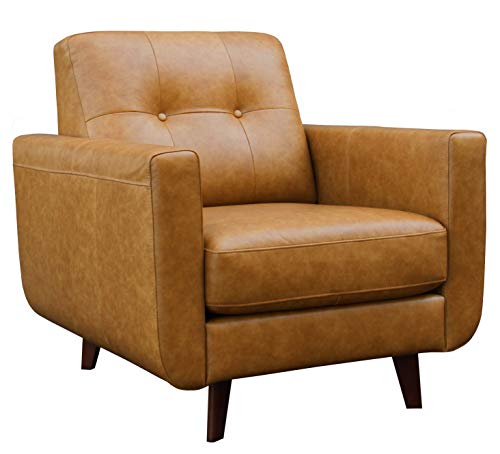
- Best overall for modern homes: Amazon Brand – Rivet Sloane Mid-Century Modern Leather Armchair, 32.7″W, Caramel — Check on Amazon
- Amazon Brand – Rivet Modern Armless Lounge Chair, Cognac Brown Leather, 35.4″W — Check on Amazon
- Dewhut Mid-Century 360° Swivel Barrel Accent Chair, Velvet — Check on Amazon
- Giantex 360° Swivel Accent Chair, Sherpa Boucle Barrel, White — Check on Amazon
See 2 more Amazon options
- Christopher Knight Home Anni Low Profile Modern Accent Chair, Armless, Beige — Check on Amazon
- COLAMY Mid-Century Modern Upholstered Accent Chair with Back Pillow & Solid Wood Legs, Beige — Check on Amazon
Read the full guide ↓
Disclosure: As an Amazon Associate, dailyhomedecorating.com earns from qualifying purchases. Links to Amazon on this page are affiliate links; they cost you nothing extra. Listing details such as price and availability change often, so check the current Amazon listing before you buy.
The best accent chair for modern homes under $1000 has to pass a test that ordinary chairs never face: it will be judged as sculpture first and seating second, every single day, by everyone who walks into the room. Modern interiors are unforgiving that way. In a traditional room, a slightly clumsy chair hides among patterns, skirts and other furniture. In a modern room — clean lines, negative space, a restrained palette, nowhere to hide — the accent chair is often the single most expressive object present, and its proportions, materials and silhouette carry the whole corner. That is a demanding brief, but it is also why modern homes get more design value per chair than any other style: choose well, and one seat does the work of a gallery piece, a reading chair and a conversation anchor at once.
So this guide judges differently from our general roundup of the Best Accent Chair Under $1000. Silhouette comes first: low profiles that keep sightlines long, armless and barrel forms that read as shapes rather than furniture, exposed frames and tapered legs that lift the chair visually off the floor. Materials come second, and in modern rooms materials are the decoration — cognac and caramel leather, boucle’s looped texture, velvet’s light-absorbing depth, pale fabric against walnut-toned wood. Comfort still matters, because a sculptural chair nobody sits in is just an expensive obstacle; every pick below publishes real dimensions and, where the maker states one, a real capacity. And the budget matters in a specific way: under $1000 is exactly the tier where modern design stops being printed-on styling and starts being construction — hardwood frames, genuine leather, engineered swivel bases — so this is the sweet spot for the style.
Our short answer: the Rivet Sloane in caramel leather is the modern classic — mid-century bones, honest materials, proportions that anchor a room without shouting. For a bolder sculptural statement, Rivet’s armless cognac lounge chair removes the arms and lets the leather form speak. For texture-led rooms, the boucle and velvet swivel barrels (Giantex and Dewhut) deliver the soft-modern look that defines current interiors. The reviews below take each pick in turn, then walk through the modern-specific rules: scale against low sofas, palette discipline, visual weight, and the mistakes that make modern rooms feel like furniture showrooms instead of homes. If your modern space is also a small one, Best Accent Chair For Modern Homes Under $700 covers the same aesthetic one tier down.
In this guide
Quick Picks: best accent chair for modern homes under $1000
Match the chair to your room’s design language. Every pick is under the $1000 ceiling — check the live listing for the current price.
| Modern style | Pick | Why it stands out | Link |
|---|---|---|---|
| Best overall modern classic | Rivet Sloane Leather Armchair, Caramel | Mid-century proportions, hardwood frame, solid beech legs, leather that anchors a neutral palette | Check on Amazon |
| Best sculptural statement | Rivet Armless Lounge Chair, Cognac Leather | Armless low lounge form, 35.4″W x 40.2″D x 28.3″H — a shape, not just a chair | Check on Amazon |
| Best velvet swivel | Dewhut 360° Swivel Barrel Chair, Velvet | Curved barrel shell in velvet, 300 lb capacity, 18.9″ seat height, compact 28.15″W footprint | Check on Amazon |
| Best boucle texture | Giantex 360° Swivel Boucle Barrel Chair, White | Sherpa boucle, low 25.5″ back, 350 lb capacity — the soft-modern texture piece | Check on Amazon |
| Best low-profile modular | Christopher Knight Home Anni Accent Chair | Armless sculpted foam form, 24.7″ high, no assembly, pairs into a curved sofa arrangement | Check on Amazon |
| Best warm minimalist | COLAMY Mid-Century Accent Chair, Beige | Clean fabric lines, back pillow and solid wood legs — Japandi-friendly restraint | Check on Amazon |
How we chose these modern accent chairs
Modern is the most abused word in furniture listings, so we defined it by construction rather than by label. Silhouette: each pick has a deliberate, readable form — mid-century taper, armless lounge, barrel curve, or low modular block — with no decorative carving, no nailhead nostalgia, no skirted bases. Profile: modern rooms run low and horizontal, so we favored back heights that keep sightlines open (the Giantex at 25.5 inches and the Rivet armless at 28.3 inches are the extreme examples) or classic proportions that earn their height, like the Sloane. Materials as decoration: leather, boucle, velvet and clean-weave fabric in the restrained palettes modern rooms use — cognac, caramel, white, beige, and saturated single-color velvet. Honest engineering: published dimensions on every pick, published capacities where the maker states them (300 lb Dewhut, 350 lb Giantex, 300 lb Anni), and frames described in materials, not adjectives. Finally, versatility across modern sub-styles: the list deliberately spans mid-century modern, soft modern/boucle, Japandi minimalism and contemporary sculptural, because “modern home” means four different rooms to four different readers and a guide that serves only one of them has failed the other three.
The 6 best accent chairs for modern homes under $1000, reviewed
1. Rivet Sloane Leather Armchair, Caramel — the modern classic
The Rivet Sloane is the chair modern rooms reach for when they want one perfect, permanent note. At 32.7 inches wide, on a hardwood frame with solid beech legs, its button-tufted caramel leather brings the two things a minimalist palette cannot supply for itself: warmth and age. Leather is the modern material that improves in public — it deepens, softens and records use as patina — and caramel is the tone that bridges the modern divide, sitting as comfortably beside a white boucle sofa as beside a charcoal one. The proportions are textbook mid-century: structured arms, a slightly reclined back, legs that lift the whole form so light passes underneath and the floor plane stays unbroken.
Who it suits: mid-century and transitional-modern homes, rooms built on a neutral palette that need one warm anchor, and buyers furnishing for the long term.
Pros: genuine leather at this tier; hardwood frame and solid beech legs; a silhouette that has anchored modern rooms for decades and will not date; substantial width that holds a corner against a full-size sofa.
Honest limitation: it is the most traditional shape in this modern list — if your room’s language is radically sculptural, the armless Rivet below speaks it more fluently — and leather asks for occasional conditioning and honesty about pet claws.
Choose it if you want the definitive modern accent chair rather than the trendiest. Skip it if you want a swivel, a lounge recline, or a texture piece in boucle or velvet. Check on Amazon
2. Rivet Armless Lounge Chair, Cognac Leather — the sculptural statement
Remove the arms from a lounge chair and something interesting happens: it stops reading as furniture and starts reading as form. The Rivet armless lounge chair in cognac leather is 35.4 inches wide, 40.2 inches deep and just 28.3 inches high — wide, deep and low, a single sweeping gesture of leather that sits in a room the way a chaise sits in a gallery. The low back keeps every sightline in the room intact, the width makes it a genuine curl-up seat, and the cognac tone is the warm metallic of modern interiors: it glows against white walls and goes quiet and rich against dark ones.
Who it suits: contemporary and gallery-style interiors, open-plan spaces where chair backs would chop the view, and design-led buyers who want the chair to be the room’s artwork.
Pros: a true statement silhouette in genuine leather; low 28.3″ profile preserves sightlines across open plans; generous width and depth for cross-legged lounging; armless form slides closer to a side table or pairs at an angle without arm collisions.
Honest limitation: armless and low is a posture commitment — there is nothing to push up from and no arm to rest a book on, so older guests and upright readers are better served elsewhere in this list; the deep seat also wants a cushion behind shorter sitters’ backs.
Choose it if the chair is your room’s statement piece. Skip it if you need arm support, an upright sit, or a chair for a formal conversation arrangement. Check on Amazon
3. Dewhut 360° Swivel Barrel Chair, Velvet — best velvet swivel
The Dewhut swivel barrel is the social modern chair: a curved, wrap-around barrel shell in velvet on a 360-degree swivel base, sized at 28.15 inches wide, 27.17 inches deep and 30.51 inches high — compact enough for a pair to face a sofa without crowding it. The maker states a 300 lb capacity, an 18.9-inch seat height that keeps it in comfortable conversation range, and a 20.47-inch seat depth that supports without swallowing. Velvet is the modern texture of the moment for a reason: it absorbs light, deepens color, and makes a simple curved form look expensive. In the listing’s saturated colorways, this chair is the color note a neutral modern room is usually missing.
Who it suits: conversation layouts, color-led modern rooms, smaller living rooms that still want a designed pair, and anyone whose chair must serve both the TV and the talk.
Pros: true 360° swivel on a compact footprint; velvet over a curved shell reads far above the tier; published capacity and full dimensions; seat height suits most adults comfortably.
Honest limitation: velvet wants a brush and shows pressure marks, and a barrel’s curved back offers less lumbar definition than a shaped backrest — long reading sessions may want the included-style cushion solution of a small pillow. Swivel bases also need their circle of clearance, as always.
Choose it if you want color, curve and conversation flexibility in one compact chair. Skip it if you want a tall back, arms at desk height, or a fabric you never have to brush. Check on Amazon
4. Giantex 360° Swivel Boucle Barrel Chair, White — best boucle texture
If soft modern has a signature material, it is boucle, and the Giantex swivel barrel is its purest expression in this guide: sherpa boucle over a rounded barrel form, 32.5 inches wide, 27.5 inches deep and only 25.5 inches high, on a 360-degree swivel base. That low, cloud-like profile is the point — the chair adds texture and softness without adding visual height, which is why boucle barrels appear in every calm, layered, Scandinavian-adjacent interior of the last few years. The engineering is not decorative either: the maker states a 350 lb capacity, the highest in this list, on a plywood-and-metal structure, with a 16-inch seat height that puts it firmly in lounge territory.
Who it suits: soft-modern, Scandinavian and Japandi rooms; texture-led neutral palettes; low-slung seating groups around low media furniture.
Pros: the defining modern texture in a clean, low form; 350 lb stated capacity; swivel base adds function to the sculpture; low back preserves light and sightlines in bright rooms.
Honest limitation: white boucle is the highest-maintenance upholstery in this guide — it shows soil, wants regular vacuuming, and is a brave choice with red wine or toddlers — and the 16-inch seat is a lounge height that some users will find low to leave.
Choose it if texture is your room’s decoration and the palette is calm. Skip it if your household is high-mess or you need an upright, higher seat. Check on Amazon
5. Christopher Knight Home Anni Low Profile Accent Chair — best low-profile modular
The Christopher Knight Home Anni is modern in the modular sense: a sculpted, armless block of compressed foam, 31.1 inches wide, 33.6 inches deep and 24.7 inches high, fully upholstered, arriving with no assembly — unbox, let the foam expand, sit. The maker describes a modular build that lets identical chairs combine into two-seat, three-seat or even curved sectional arrangements, which makes the Anni less a chair than a system: start with one sculptural seat, grow the corner as the room and budget evolve. The stated capacity is 300 lb, and at 22.1 pounds the chair moves rooms as easily as modern renters and rearrangers demand.
Who it suits: minimalist and modular interiors, renters who rearrange, media corners that may grow into sectionals, and anyone who values a no-assembly unboxing.
Pros: genuinely modular — multiples combine into larger seating; no assembly at all; low 24.7″ profile is the most sightline-friendly here; light enough to move for cleaning or redecorating.
Honest limitation: an all-foam, frameless build sits differently from a framed chair — softer and lower, with less edge support — and compressed foam needs its expansion time before you judge it; the armless, low form also gives older users nothing to push up from.
Choose it if you want flexible, sculptural, rearrangeable seating. Skip it if you want a firm framed sit, arms, or a tall back. Check on Amazon
6. COLAMY Mid-Century Modern Accent Chair, Beige — best warm minimalist
The COLAMY mid-century accent chair is the quietest chair in this guide, and in Japandi and warm-minimalist rooms quiet is the highest compliment. The formula is restraint: clean fabric upholstery in beige, a loose back pillow for a touch of softness against the tailored lines, and solid wood legs that give the chair its crafted, grounded note. COLAMY positions the model for living rooms, reading nooks, apartments and small spaces, and that versatility is the point — this is the modern chair that does not compete with art, plants or architecture, but makes all three look better by being calmly, correctly proportioned beside them.
Who it suits: Japandi, Scandinavian and warm-minimalist interiors; reading nooks; rooms where the view, the art or the architecture is the statement.
Pros: solid wood legs and a back pillow at a mid-tier position within this budget; neutral beige works with every modern palette; a scale that suits both living rooms and bedroom corners; clean lines that will not fight other furniture.
Honest limitation: quiet cuts both ways — if you need the chair itself to be the room’s event, the Rivets above will serve you better — and beige fabric needs the usual prompt spill care; confirm the listing’s full dimensions and care notes before ordering, as COLAMY sells several similar models.
Choose it if your modern room whispers rather than shouts. Skip it if you want a statement silhouette or a performance fabric. Check on Amazon
Comparison table
| Pick | Overall size (W x D x H) | Material | Profile | Stated capacity | Modern sub-style |
|---|---|---|---|---|---|
| Rivet Sloane, Caramel | 32.7″W | Leather, beech legs | Classic mid-century | Per listing | Mid-century modern |
| Rivet Armless Lounge, Cognac | 35.4″ x 40.2″ x 28.3″ | Leather | Low, armless | Per listing | Contemporary sculptural |
| Dewhut Swivel Barrel | 28.15″ x 27.17″ x 30.51″ | Velvet | Barrel, swivel | 300 lb | Color-led modern |
| Giantex Swivel Barrel | 32.5″ x 27.5″ x 25.5″ | Sherpa boucle | Lowest back here | 350 lb | Soft modern / Scandi |
| Christopher Knight Home Anni | 31.1″ x 33.6″ x 24.7″ | Fabric over foam | Low, armless, modular | 300 lb | Minimalist modular |
| COLAMY Mid-Century, Beige | Per listing | Fabric, solid wood legs | Tailored, quiet | Per listing | Japandi / warm minimal |
How to choose an accent chair for a modern home
Match the chair’s height to the room’s horizon. Modern rooms are composed horizontally: low sofas, low media units, long sightlines. A chair back that towers over everything breaks the composition, which is why this guide’s profiles run from 24.7 to 30.5 inches for the lounge picks. As a rule, keep the accent chair’s back within a few inches of the sofa’s back height, or go deliberately lower — the in-between heights are where rooms start to look accidental.
Let material do the decorating. In a restrained palette, texture is color. Boucle gives a white room depth without a single hue; velvet gives a grey room richness; leather gives a beige room warmth and a white room an anchor. Choose the chair’s material against what the room lacks, not what it already has — three smooth surfaces in a row is a showroom, while one contrasting texture is a design decision. If the room is already texture-rich, a smooth leather chair is the calming note.
Respect visual weight. Raised legs, open sides and armless forms lighten a chair; skirted bases, deep upholstery and dark velvet ground it. Bright, small or north-facing modern rooms usually want the light end; large, sunlit, high-ceilinged rooms can carry — and often need — the grounded end so the chair does not float away visually. The tape test helps physically; for visual weight, hold a photo of the chair against a photo of your room and squint: the chair should be noticeable, not dominant, not invisible.
Buy the silhouette, verify the seat. Modern styling tempts buyers to shop by photograph alone, but you will sit in the geometry, not the render. Check seat height (16–17″ lounges, 18–19″ converses, 20″+ sits upright), seat depth against your legs, and the stated capacity as the proxy for build quality. Every pick here publishes its dimensions; use them with the same seriousness as the style pages. For a deeper dive into modern seating geometry, Best Armchair For Modern Homes Under $1000 covers the armed formats.
Plan the pair or the solo deliberately. A single sculptural chair is a statement; a matched swivel pair is a system. Modern rooms usually commit to one of the two. Mixing — one statement chair plus one unrelated chair — is the hardest composition to pull off and the most common way modern corners go wrong. If you are furnishing gradually, buy the chair that can later be duplicated (the Dewhut, the Anni, the COLAMY) or the one strong enough to stand alone permanently (the two Rivets).
Common mistakes in modern rooms
Choosing the trendiest texture in the room’s only chair. Boucle and channel velvet cycle fast. If the chair is your one big piece, a classic material (leather, clean-weave fabric) with a trendy cushion or throw gives you the look with an exit route; save the full-boucle commitment for a chair you can afford to rotate.
Ignoring scale against a low sofa. A standard-height accent chair beside a low modern sofa looks like it belongs to another set. Measure the sofa’s back and seat heights first; the chair should rhyme with them.
Filling the negative space. Modern rooms breathe on purpose. A chair plus table plus lamp plus plant plus stack of books in one corner is a traditional corner wearing modern clothes. Edit: the chair, one surface, one light — then stop.
Buying armless for looks when you read for hours. Sculptural armless forms are wonderful for lounging and conversation and genuinely poor for long upright reading. Match the form to the hours it will actually serve; the prettiest chair in the room should also be sat in.
Letting the rug fight the chair. Swivel bases need flat, low-pile surfaces to rotate cleanly, and low-profile chairs disappear on busy patterned rugs. In modern rooms the rug is a plane, not a picture — keep it quiet and let the chair be the event.
Styling the modern corner
Compose the corner in three layers. The base layer is the floor plane: a flat-weave or low-pile rug in a tone between the floor and the chair, large enough to hold the chair and its table fully — floating the chair half off the rug edge breaks the modern line. The middle layer is the chair itself plus one surface: a side table in a material that appears elsewhere in the room (the leg wood, the shelf metal) at a height near the chair’s arm or, for armless chairs, near seat height. The top layer is light and one vertical: an arc or pharmacy-style lamp behind the shoulder, or a single tall plant where the room needs height more than light. Then the discipline that defines the style: remove one thing. Modern corners are finished by subtraction, and the object you remove is usually the second decorative item competing with the chair.
Color discipline deserves its own sentence: in a modern room, the chair is allowed to be the only saturated object, or one of exactly two. If the chair carries the color (a velvet Dewhut in a deep tone), keep cushions and throws in the room’s neutrals; if the chair is neutral (the COLAMY, the Giantex), a single bold cushion is the permitted accent. Leather chairs cheat this rule gracefully — caramel and cognac read as materials, not colors — which is one more reason the Rivets anchor so many modern schemes.
Final recommendation
For most modern homes, the Rivet Sloane in caramel leather remains the safest excellent choice: classic modern bones, honest materials, a decade-proof silhouette. If your room wants art it can sit in, choose the armless cognac lounge chair instead; if it wants softness, the boucle Giantex; if it wants quiet, the COLAMY. Measure against your sofa’s heights, confirm dimensions and materials on the live listing, check the current price on Amazon — and then let one well-chosen chair do the work of a whole redesign.
Modern sub-styles, decoded: which chair belongs in yours
“Modern” on a listing can mean five different rooms. Mid-century modern is the warmest: tapered legs, organic curves, walnut tones, leather and tweed-like fabrics, a palette of caramel, olive, mustard and teak. The Sloane is its textbook accent chair, and the COLAMY its quieter cousin. Rooms in this style forgive — even welcome — a chair with visible wood and a bit of tufting, because the period itself was furniture-forward. Contemporary sculptural is the gallery end: forms first, comfort engineered invisibly, materials in single bold gestures. The armless Rivet lounge chair lives here, and so does the Anni’s foam geometry. These rooms want the fewest objects and the strongest shapes, and they punish a timid chair.
Soft modern — the boucle era — keeps modern lines but wraps them in looped, nubby, touchable textures and a palette of white, cream, oatmeal and pale grey. The Giantex barrel is its emblem. Its risk is monotony: everything soft, everything pale, nothing to rest the eye on, which is why soft-modern rooms benefit from one leather or wood note (a Sloane, or even just a walnut side table) as contrast. Japandi fuses Japanese restraint with Scandinavian function: low profiles, natural materials, negative space treated as a material itself. The COLAMY’s beige calm and the Anni’s low block both serve it, and the style’s rule — nothing in the room that does not earn its place — should be applied to the chair’s accessories first: no cushion pile-ups, no throws performing for photographs.
Industrial modern is the fifth dialect: metal, leather, darker tones, architecture exposed. It borrows the Sloane and the cognac lounge chair happily, adds steel and concrete around them, and is the one modern sub-style where a recliner’s mechanism or a rivet detail looks native rather than apologetic. Whichever dialect your home speaks, the chair-buying rule is the same: the chair should be fluent in it, not merely translated into it by a listing title. Read the materials and the silhouette, ignore the adjective, and the match makes itself.
Proportion checks the designers run (and you can too)
Three quick checks separate a modern corner that looks designed from one that looks assembled. First, the two-thirds rule: a single accent chair’s width should sit between roughly half and two-thirds of the sofa’s width for a balanced conversation group — the 32.7-inch Sloane against a typical 84-inch sofa is nearly perfect, while a 52-inch chair and a half is a deliberate, room-defining exception, not an accident to stumble into. Second, the skyline check: stand at the doorway and look at the tops of the furniture. Modern rooms read best with a calm skyline — backs within a few inches of each other, one taller element (a lamp, a plant, shelving) providing the single vertical accent. A chair that spikes the skyline alone will look wrong every day, and you will feel it before you can name it.
Third, the floor-shadow check: modern furniture is lifted — legs, plinths, swivel discs — so light and shadow move under it and the floor plane stays continuous. A chair that sits as a solid block to the floor (skirted, or a deep foam block like the Anni) is not wrong, but it is a commitment: it anchors its corner completely and everything else in the room must be lighter to compensate. Run these three checks with the listing dimensions and a phone photo of your room and you have done, in ten minutes, the essential work of an interior designer on this purchase. The remaining decisions — color, texture, budget split — are taste, and taste you already have; it is proportion that makes taste visible.
One statement chair or a matched modern pair?
Modern rooms force this decision earlier than traditional ones, because symmetry and singularity are both native to the style and they lead to different rooms. The single statement chair — the cognac armless lounge is the archetype — works when the room already has its structure: a strong sofa, a defined rug, art with presence. The chair becomes the exclamation point, and its job is character. This strategy concentrates the budget beautifully: one chair at the top of the tier, in leather, with nothing spent on a second seat the room did not need. It fails when the room is actually short of seating, because guests end up on the statement piece’s arms, the floor, or standing — and a sculpture being sat on wrong is a short-lived sculpture.
The matched pair — two Dewhut swivels facing a sofa, two Anni blocks building toward a sectional, two COLAMY chairs flanking a window — works when the room’s job is conversation or when the architecture is symmetrical and wants furniture that answers it. Pairs read calmer and more formal than singles; they also halve the per-chair budget, which at this ceiling still buys honest mid-tier chairs rather than the leather flagships. The modern-specific caution is duplication of trend: two boucle barrels are a look with an expiry date in a way one never is, so pairs are safest in the classic materials and silhouettes, with trend expressed in cushions and art. Decide by the room’s real seating count and its architecture, not by the photograph you fell for — both strategies are correct in the rooms they belong to and faintly wrong in each other’s.
Caring for modern materials
Modern upholstery looks low-maintenance because the rooms are uncluttered; the fabrics themselves need the same rhythm as any others, with a few material-specific notes. Boucle and sherpa trap dust deep in the loops: vacuum weekly with an upholstery tool on low suction, work in the direction of the pile, and lift spills by blotting with a cloth dampened with water and a drop of mild detergent — never scrub, which felts the loops into permanent flat spots. Velvet wants a soft brush or a steamer pass when pressure marks appear, and its pile should be brushed in one consistent direction after cleaning so the light falls evenly. Leather in modern rooms often sits in strong light — the rooms are bright by design — so UV is its main enemy: rotate the chair’s position or angle seasonally if one side faces a south window, dust weekly, and condition twice a year to keep the surface from drying into cracks that no patina story can excuse.
Frames and bases: swivel mechanisms stay smooth if the base ring is kept grit-free — a monthly wipe of the disc and the floor beneath it is the whole maintenance program — and tapered wood legs should be checked for tightness twice a year, because modern legs are long, angled and leveraged by every sit. Foam-block chairs like the Anni benefit from a weekly plump and rotation of sitting position; compressed foam remembers habits. None of this exceeds ten minutes a week. What it buys is the modern look itself, which depends on surfaces reading clean and intentional — a dusty boucle chair in a minimalist room is not a style, it is a contradiction.
What this budget buys in modern design — and where to spend less
Modern design has a particular price structure worth understanding before you allocate the $1000. The iconic end of the market — licensed mid-century originals and designer pieces — prices a single lounge chair at several multiples of this entire budget, and part of that premium buys genuine provenance and part buys hand-finishing that is real but subtle. The under-$1000 tier is where well-made interpretations live: correct proportions, honest materials, competent engineering, no licensing premium. The Rivet chairs in this guide are the type specimen — Amazon’s brand can sell a hardwood-and-leather mid-century chair at this level precisely because it is selling the design language, not the designer’s estate. For most homes, that is the rational place to buy: the daily experience of the chair — its comfort, its silhouette in your light, its aging — is nearly all here.
Spend less, deliberately, in three situations. First, when the chair is a trend test: if you are boucle-curious but unsure your room will love it in three years, a mid-tier chair from our lower-budget modern guide is the honest experiment, and the flagship money stays in reserve. Second, when the chair is secondary seating — the bedroom corner, the guest room — where hours of use are low and the COLAMY end of this list, or below, serves perfectly. Third, when the room itself is temporary: a first apartment’s modern corner should be built from pieces that move well and forgive relocation, like the 22-pound Anni, rather than a leather anchor bought for a home you have not yet found. Spend the full tier when the chair is the room’s anchor, when it will be sat in daily for years, and when its material — leather above all — is one whose aging you will enjoy watching. That is the whole economics of this guide in one paragraph: the budget is not the point; the match between the chair’s lifespan and the room’s lifespan is.
A final modern-specific note on buying online: modern furniture is disproportionately photographed in empty, bright, architecturally interesting rooms that flatter it. Your room has baseboards, a radiator and a door that opens into the corner. The defense is the tape test from our general guide — mark the footprint, live with it for a day — plus one modern addition: check the chair’s back height against your window sill and your art line, the two horizontal datums modern rooms are composed around. A chair that respects both will look installed; a chair that crosses both will look stored. Ten minutes of measuring is the difference, and it is the cheapest design consultation available.
FAQ
What style of accent chair suits a modern living room best? The silhouettes that recur in modern interiors are mid-century armchairs, armless lounge chairs, barrel/swivel forms and low modular seats — all represented here. The right one depends on your sub-style: mid-century for warmth, armless sculptural for contemporary, boucle barrels for soft modern, tailored fabric for Japandi minimalism.
Is boucle still a good choice, or is it a passing trend? Boucle as a texture is a century old; its current popularity will soften, but a boucle chair in a neutral color reads as “textured neutral” in any era. The risk is not the fabric, it is committing a whole room to one texture. One boucle chair ages gracefully; a boucle sofa, chair, ottoman and cushions date together.
How low is too low for a modern accent chair? Seat heights around 16 inches (the Giantex) are deliberate lounge heights — comfortable for long, relaxed sits, harder for older users to leave. If the chair serves guests of all ages, stay at 18 inches or above, like the Dewhut’s 18.9 inches.
Can I mix a leather chair with a fabric sofa in a modern room? Yes — it is one of the style’s standard moves. Leather and fabric share a palette, not a texture, and the contrast is the point. Keep one element in common (tone, leg finish or period) and the pairing reads intentional.
Do swivel chairs work in minimalist rooms? Very well: the base disappears visually, the form stays pure, and the function replaces the need to rearrange furniture. Just give the swivel its full circle of clearance and a low-pile surface to rotate on.
What should I pair with a modern accent chair? A quiet flat-weave rug, one side table and one lamp — then stop. For the wall behind the seating group, Best Console Table For Modern Homes Under $1000 covers the clean-lined options.
How do I keep a modern chair from looking like a showroom piece? Use it, visibly. A modern chair with a book on the arm, a throw that is actually unfolded, and a cushion that is slightly imperfect reads as a home; the same chair kept pristine reads as a display. Choose materials that record use gracefully — leather’s patina, boucle’s softening — and let the corner show one sign of life: the current read, the good mug, the plant that is thriving rather than styled.
Should the accent chair be the room’s only wood tone, leather or color? It can be, if it is deliberate. A single material note works when it is repeated once, quietly — the chair’s beech legs echoed in a picture frame or a bowl — and left alone otherwise. Singularity without any echo reads as an accident; one echo turns it into a theme. This is the smallest, cheapest styling move in the modern toolkit, and it is why the warm leather chairs in this guide settle so easily into rooms that contain no other leather at all.
How do I choose between two modern chairs I like equally? Sit in the decision, literally: compare the two listings’ seat heights and depths against the chair you currently sit in most, and pick the geometry closest to the one your body already votes for. Then check the tiebreakers in order — published capacity, frame material named rather than implied, and whether the maker sells the same model in other colors (a sign of a real product line rather than a one-season listing). Style got them to the final; specs should pick the winner.
What is the fastest way to make a modern room feel finished? One correctly scaled chair, one surface, one light — placed, not arranged. Modern rooms feel unfinished when the big geometry is unresolved, and the accent chair is usually the missing geometry: it completes the seating conversation, gives the eye a second place to land after the sofa, and lets every smaller object stop trying to compensate. Buy the chair before the accessories; in modern interiors the order of purchases is half the design.
Does a modern accent chair work in a room that is only partly modern? Yes — transitional rooms are where most of these chairs actually live. A single modern chair in a traditional-leaning room acts as the bridge piece: it updates the scheme without demanding the whole room follow, especially in a classic material like the Sloane’s caramel leather, whose warmth speaks both languages. The rule is commitment at the level of the piece: one fully modern chair reads as a decision, while several half-modern pieces read as indecision.


