Disclosure: As an Amazon Associate, dailyhomedecorating.com earns from qualifying purchases. Links to Amazon on this page are affiliate links; they cost you nothing extra. Prices and availability change often, so check the current Amazon listing before you buy.
The best blankets for cold weather camping are layers inside a sleep system — never the system itself. In cold camps, survival-grade warmth comes from rated sleeping bags, insulated pads, shelter, and clothing working together; blankets add insulation, protect bags from damp and sparks, warm the fireside hours, and rescue the nights when temperatures dip below the plan. This guide compares six verified blankets by their cold-camp jobs: a 100 percent wool blanket as the system’s versatile core, plush sherpa and faux-fur layers for tent and fireside warmth, a queen fleece as a bag-topper and bunk layer, a light fleece throw for vehicles and shoulders, and a merino-cotton child layer for family camps. Heated blankets are excluded entirely — they have no place in cold camping — and no pick here is rated for extreme or survival use. Wool-specific depth is in Best Wool Blankets For Camping; home cold systems are in Best Blankets For Cold Weather.
Cold camping punishes single-product thinking faster than any other blanket use. Ground conduction steals heat from below, tent condensation wets insulation from above, wind strips loft at every gap, and the camper who packed one heroic blanket discovers all three thefts in one night. The system mindset in this guide — pad below, bag as the rated core, blanket as the adaptable layer — is how experienced winter campers actually stay warm, and every review names its layer’s job honestly.
Where to Buy
All picks are sold on Amazon; check current listings before your trip, not after the forecast. Lead pick: the Pendleton National Park Blanket — Check on Amazon. The others are the Bedsure GentleSoft Sherpa Throw — Check on Amazon; the Bedsure Faux Fur Sherpa Blanket — Check on Amazon; the Bedsure Fleece Bed Blanket — Check on Amazon; the Exclusivo Mezcla Throw — Check on Amazon; and the Woolino Merino-Cotton Blanket — Check on Amazon. Cabin textiles beyond the tent are in Best Throw Pillows Under $100.
In this guide
Quick Picks
| Pick | Badge | Why it earns its place |
|---|---|---|
| Pendleton National Park Blanket | Best Overall | Wool system core: bag topper, fireside wrap, and damp-night insurance. |
| Bedsure GentleSoft Sherpa Fleece Throw Blanket for Couch | Best Budget | Reversible sherpa warmth for tents, bunks, and vehicles at family scale. |
| Bedsure Faux Fur Fluffy Fleece Sherpa Blanket Couch Throw Grey 50″x60″ | Christmas Fuzzy P | Best for Fireside | Deep pile for sitting warmth during cold camp evenings. |
| Bedsure Fleece Bed Blankets Queen Size Grey – Soft Cozy Warm Winter Blanket Christmas Than | Best for Bunks | Queen fleece coverage for cabin bunks and bag topping. |
| Exclusivo Mezcla Soft Large Fleece Throw Blanket for Couch | Best Compact | Light vehicle and shoulder layer that lives in the camp kit. |
| Woolino Toddler Blanket – Merino Wool and Organic Cotton Baby Blanket for Girls and Boys – | Best for Kids | Merino regulation for young campers’ sleep systems. |
Key Takeaways
- Blankets supplement rated cold-weather sleep systems; they never replace bags and pads in serious cold.
- Wool is the cold-camp blanket material: damp-tolerant, spark-tolerant relative to synthetics, and multi-role.
- Fleece and sherpa layers excel inside tents and cabins, where wind is managed and dryness is likelier.
- Insulate beneath first — a pad upgrade warms more than any blanket upgrade in ground cold.
- Keep one blanket sacred for sleep and let cheaper throws take fireside and ground abuse.
How These Picks Were Chosen
Cold-camp fitness meant insulation value as a layer, tolerance for damp and rough handling, packability for vehicle-based camping, and honest role definition. The pool’s wool blanket leads; fleece and sherpa picks are framed for tent, bunk, and vehicle use rather than exposed outdoor sleep. Heated products were excluded as categorically unsuited; cooling and summer products were excluded as thermally opposite. Specs are pool-verified only. This guide assumes car camping, cabins, and basecamps — backpacking in cold conditions requires purpose-built lightweight systems beyond blanket scope, and winter campers should follow rated gear guidance for their conditions. Family context continues in Best Blankets For Homeless only insofar as durability and washability standards overlap for hard-use blankets.
The 6 Best Best Blankets for Cold Weather Camping — Reviewed

Pendleton National Park Blanket
Our badge: Best Overall
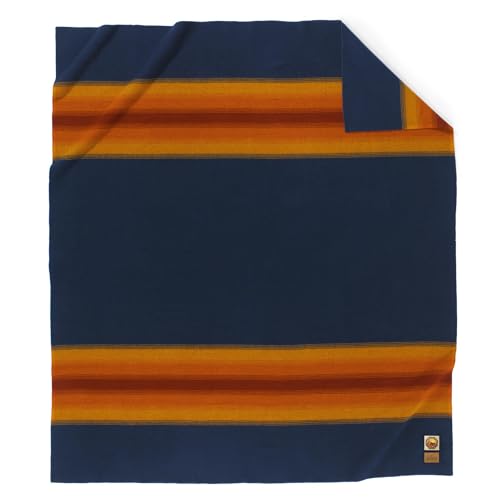
The Pendleton National Park Blanket is the cold-camp blanket system in one textile: 100 percent wool at queen size, napped, 6.2 pounds of insulation that drapes over a sleeping bag to add warmth and shield it from condensation, wraps two people at the fire, lines a bunk, and still works when damp in ways cotton never will. The maker designs it for home and outdoor adventure; cold camping is where that dual citizenship pays highest dividends.
Strengths
- System versatility: topper, wrap, ground-side living layer, emergency warmth.
- Wool handles tent damp and multi-day odor better than any synthetic here.
- Coverage for sharing warmth — cold camps are social survival exercises.
Trade-offs
- Vehicle-camping weight and bulk only.
- Premium cost and gentle home care after muddy trips.
- Not a standalone winter sleep system — pair with rated bag and pad.
| Color | Grand Canyon Navy |
| Size | Queen (90″ x 90″) |
| Weight | 6.2 pounds |
Cold technique: lay the wool over the bag with edges tucked to seal drafts, vent the tent enough to limit condensation, and air the blanket at midday whenever sun appears — wool rewards the ritual by staying lofty and fresh across a week. At the fire, keep respectful distance despite wool’s relative spark tolerance. Choose Pendleton as the cold-camp core blanket. Skip it for backpacking weight classes.
Best for: car campers and cabin crews in cold conditions / Not suited for: backpacking or sole winter insulation
Choose Pendleton as your cold-camp system core. Check on Amazon

Bedsure GentleSoft Sherpa Fleece Throw Blanket for Couch
Our badge: Best Budget
The Bedsure GentleSoft Sherpa Fleece Throw Blanket for Couch is the cold-camp quantity play: reversible flannel-sherpa warmth at 50 by 60 inches, light, washable, and affordable enough in spirit (check current pricing) to assign one per camper. Inside tents and cabins — out of wind, over bags and bunks — sherpa’s trapped-air pile delivers sitting and sleeping warmth that punches above its packed size.
Strengths
- Per-camper deployment: nobody fights over the good blanket.
- Packs and washes easily after smoky, muddy trips.
- Vehicle-ready for the drive to and from cold trailheads.
Trade-offs
- Synthetic pile loses the damp contest to wool; keep it dry inside the tent system.
- Throw size tops bags and laps rather than wrapping bodies fully.
- Spark sensitivity near fires — fireside duty belongs to wool.
| Color | 01 – Grey |
| Size | Throw (50″ X 60″) |
| Weight | 2.03 pounds |
Assign GentleSoft throws as personal tent layers: over the bag’s foot and legs where cold pools, around shoulders for tent reading, and in the vehicle for passengers. Their durability framing — neat stitching, fade resistance — suits camp abuse cycles. Choose sherpa throws for family-scale cold layering. Skip them as fireside or damp-ground textiles.
Best for: family tents, bunks, and vehicles / Not suited for: fireside or wet-ground use
Choose GentleSoft throws for every camper in the tent. Check on Amazon

Bedsure Faux Fur Fluffy Fleece Sherpa Blanket Couch Throw Grey 50″x60″ | Christmas Fuzzy P
Our badge: Best for Fireside
The Bedsure Faux Fur Fluffy Fleece Sherpa Blanket Couch Throw Grey 50″x60″ | Christmas Fuzzy P owns the cold camp’s waking hours: deep faux-fur pile on one side, sherpa on the other, wrapped around shoulders and legs during the long fireside evening when bodies sit still and cool fastest. In glamping tents and cabins it doubles as the bunk’s luxury layer.
Strengths
- Maximum sitting warmth per layer for evening camp life.
- Reversible textures for wind side versus skin side improvisation.
- Photogenic comfort that makes cold camps feel like occasions.
Trade-offs
- Synthetic pile must keep its distance from flames and embers — wool takes true fireside duty.
- Bulky packing for its insulation class.
- Too precious for ground or rough utility roles.
| Color | 01- Tie Dye Grey |
| Size | Throw (50″ X 60″) |
| Weight | 2.73 pounds |
Keep the faux fur for chairs set back from the fire, cabin couches, and the tent’s social corner — and let the Pendleton handle spark-adjacent wrapping. That division preserves both blankets and the campers inside them. Choose faux fur for cold-camp evenings in comfort. Skip it for rugged or spark-heavy kits.
Best for: cabin and tent evenings, glamping warmth / Not suited for: close fireside or ground use
Choose the faux fur throw for cold evenings in camp comfort. Check on Amazon

Bedsure Fleece Bed Blankets Queen Size Grey – Soft Cozy Warm Winter Blanket Christmas Than
Our badge: Best for Bunks
The Bedsure Fleece Bed Blankets Queen Size Grey – Soft Cozy Warm Winter Blanket Christmas Than covers what throws cannot: full bunks, cabin beds, and double sleeping bags in queen fleece dimensions. As a bag topper it adds a washable insulation layer that takes condensation and wear instead of the bag; as bunk bedding it turns a cold cabin mattress into a sleepable bed.
Strengths
- True coverage for bunks, doubles, and shared warmth.
- Sacrificial washable layer protecting expensive sleeping bags.
- Light for its size — packs reasonably for vehicle camps.
Trade-offs
- Fleece damp performance trails wool; manage tent ventilation.
- Queen bulk fills camp storage quickly.
- Passive layer only — deep cold still needs rated bags beneath.
| Color | Grey |
| Size | Queen (90″ X 90″) |
| Weight | 3.19 pounds |
Cabin crews should treat this blanket as standard issue: one per bunk, washed between groups, stored at the cabin if possible. Tent campers use it over double bags or as the family pile-on layer for story time before sleep systems separate. Choose the fleece bed blanket for coverage-scale camp warmth. Skip it for solo minimalist kits.
Best for: cabins, bunks, and double-bag topping / Not suited for: minimalist solo carry
Choose the fleece bed blanket for bunk-scale camp coverage. Check on Amazon

Exclusivo Mezcla Soft Large Fleece Throw Blanket for Couch
Our badge: Best Compact
The Exclusivo Mezcla Soft Large Fleece Throw Blanket for Couch is the cold kit’s permanent resident: 1.55 pounds of brushed flannel that lives in the vehicle, wraps the driver at dawn viewpoints, pads a cold bench, and layers inside a bag as a liner-boost on unexpectedly cold nights. Its camp value is presence — it is always there because it costs nothing to carry.
Strengths
- Always-along weight and pack size for vehicles and day kits.
- Multi-role: wrap, liner boost, seat pad cover, pet layer.
- Washes fast between trips without ceremony.
Trade-offs
- Light insulation: a helper layer, never a cold-night plan.
- Synthetic fire and damp limits apply as with all fleece here.
- One-person throw coverage.
| Color | Forest Green |
| Size | Throw XL (50″ x 70″) |
| Weight | 1.55 pounds |
Cold campers learn to love the blanket that is present. Keep the Exclusivo in the vehicle year-round with the compact wool class from the wool guide, and your kit handles breakdowns, delays, and scenic stops as comfortably as planned camps. Choose it for readiness. Skip it as a listed insulation strategy.
Best for: vehicles, day kits, and liner boosts / Not suited for: primary cold insulation
Choose Exclusivo as the blanket that is always with you. Check on Amazon
Woolino Toddler Blanket – Merino Wool and Organic Cotton Baby Blanket for Girls and Boys –
Our badge: Best for Kids
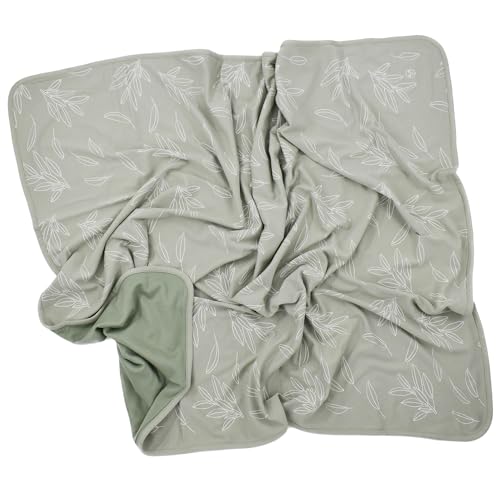
The Woolino Toddler Blanket – Merino Wool and Organic Cotton Baby Blanket for Girls and Boys – layers young campers in merino’s regulation: warm when the tent drops cold, breathable when small bodies run hot, in a size children can manage inside their own sleeping bags and bunks. Family cold camping succeeds when kids sleep, and kids sleep when their temperature stops swinging — merino’s entire specialty.
Strengths
- Two-way temperature regulation for small campers.
- Child-manageable size builds camp independence.
- Machine washable for family trip turnover.
Trade-offs
- A layer within a child’s rated sleep system, never the system in cold.
- Child dimensions only.
- Premium cost among kids’ camp textiles.
| Color | Sage |
| Size | 40 inch |
Dress kids in dry base layers, keep the Woolino inside the bag or bunk system, and check small campers during the night on the coldest trips — children report cold late. Choose Woolino for young campers’ regulated layer. Skip expecting any child blanket to substitute for proper bags, pads, and adult supervision in cold conditions.
Best for: toddlers and young kids in family cold camps / Not suited for: standalone child insulation in deep cold
Choose Woolino for the youngest camper’s cold layer. Check on Amazon
What Experienced Cold Campers Carry That Beginners Do Not
Watch a practiced cold camper unload and the differences are boring, which is the point. There is a dedicated dry bag for sleep layers, because the system’s core stays dry even when the trip does not. There is a spare set of sleep clothing sealed against accidents, because one spilled bottle should not be able to reach the night’s warmth. There is a blanket assigned to the ground and the dog, protecting the blanket assigned to sleep. There is a headlamp hung where the night’s cold check needs no searching, a repair patch and a spare stuff sack, and a written note of the last trip’s low and what the system wore. None of these items is expensive, and together they are worth more than the price difference between any two blankets in this guide. Beginners shop for warmth; experienced campers shop for systems and then maintain them. If this article moves you from the first habit to the second, it has done more for your cold camps than any single pick in its table — and the picks will perform exactly as reviewed, inside a system finally built to let them.
Comparison Table
| Pick | Size | Weight | Camp job | Check price on Amazon |
|---|---|---|---|---|
| Pendleton Wool | Queen 90″ x 90″ | 6.2 pounds | System core + fireside | Check price on Amazon |
| Bedsure Sherpa Throw | Throw 50″ X 60″ | 2.03 pounds | Personal tent layer | Check price on Amazon |
| Bedsure Faux Fur Throw | Throw 50″ X 60″ | 2.73 pounds | Evening sitting warmth | Check price on Amazon |
| Bedsure Fleece Bed | Queen 90″ X 90″ | 3.19 pounds | Bunk + bag topper | Check price on Amazon |
| Exclusivo Throw | Throw XL 50″ x 70″ | 1.55 pounds | Vehicle + liner boost | Check price on Amazon |
| Woolino | 40 inch | — | Kids’ regulated layer | Check price on Amazon |
How to Choose the Best Blankets for Cold Weather Camping
Start with the rated system, add blankets second
Choose sleeping bag and pad for the coldest expected night first, with margin. Then add blankets for the roles bags do badly: fireside hours, condensation shielding, bunk coverage, vehicle warmth, and temperature insurance above the bag. This order — system, then blankets — is the difference between cold camping and cold suffering.
Assign every blanket a job and a place
Sleep blanket (protected, dry, sacred), fireside blanket (wool, spark-aware), vehicle blanket (always packed), bunk blanket (washable, replaceable). Jobs prevent the good blanket from dying as a ground cloth and the ground cloth from being asked to insulate a child. Label camp bins by job if your crew is large.
Manage moisture like warmth depends on it — it does
Vent tents, air blankets at midday, keep sleep layers in dry bags during travel, and never pack a damp blanket sealed for the drive home. Wool tolerates moisture best; fleece needs the driest management; all insulation loses the fight against stored damp. A dry mediocre layer outwarms a wet premium one.
Pack for the coldest hour, dress for all of them
Blankets cannot rescue wet cotton clothing or missing hats. Dry sleep clothes kept sealed in the tent, warm drinks before bed, and a hot water bottle in the bag (securely closed, a classic camp trick) multiply every blanket’s effect. Systems thinking extends to the camper, not just the gear list.
Choosing Between One Heavy Blanket and Two Lighter Layers
Cold campers divide into two philosophies, and both can be right. One heavy blanket — the substantial wool class — offers simplicity, drape that stays put, wind resistance, and a single textile to air, inspect, and store; it is the better choice for car campers whose trips are cold but predictable, and for the fireside and cabin roles where one generous layer serves a group. Two lighter layers offer tuning: add or shed a layer as the night’s temperature moves, assign one layer to the bag and one to the fire, and dry each faster after a damp trip; they suit shoulder-season campers whose nights swing widely and families whose blankets must cover children, dogs, and vehicles in shifting combinations. The honest tiebreaker is your laundry and storage reality: two layers double the airing and inspection ritual, while one heavy blanket concentrates it. Either philosophy fails in the same familiar way when it is asked to replace ground insulation or an honestly rated bag, and either succeeds when it is built into the system this guide describes. Choose the philosophy you will actually maintain, because in cold camping the maintained system always beats the theoretically superior one.
How to Layer Blankets Over a Sleeping Bag in Cold Camps
Place the pad and bag as your rated foundation. Drape the blanket over the bag’s top, tucking edges under the bag’s sides to seal drafts without compressing the bag’s loft from above with excessive weight — heavy blankets on down bags reduce loft, so distribute and prefer draping over pressing. Add a fleece layer inside the bag only if it does not restrict circulation or bunch. In the morning, air both bag and blanket before packing. If condensation wets the blanket instead of the bag, the system worked — dry the blanket at breakfast and repeat.
Problem: You wake colder than the bag’s rating suggests. — Check pad insulation and ground contact first, then drafts at shoulders, then damp. Blanket upgrades rank fourth on this diagnostic list.
Problem: Tent rain (condensation) soaks your layers. — Vent more aggressively, keep blankets off tent walls, and put wool outermost — it tolerates the damp shift best.
Problem: The fireside blanket smells like smoke for weeks. — Air it for a full day outdoors, store breathable, and accept campfire perfume as wool’s occupational badge; deep wash only when needed.
Problem: Kids kick every layer off in the tent. — Contain layers inside the bag system (Woolino inside, bag zipped), dress them warmly, and check once during the night on cold trips.
Fireside Warmth Without Ruining the Blanket
The campfire is where cold-camp blankets earn their second salary and take their worst damage, so technique matters. Wrap with the blanket’s bulk behind you, sealing the cold air at your back while your front takes the fire’s radiant heat, and keep every edge, corner, and fringe outside the fire ring and the cooking zone without exception. Wool-forward blankets tolerate a stray spark better than melt-prone synthetics, but tolerance is not immunity: shake the blanket out away from the fire after each evening, inspect for ember marks before packing it into the tent, and never dry a wet blanket draped over flames, a stove, or a lantern, where a moment’s inattention turns drying into damage. Assign the fireside role deliberately — many experienced groups dedicate one durable blanket to fire duty and keep the primary sleep blankets in the tent, clean of smoke and sparks — because smoke odor that is charming on night one is a tent-wide presence by night four. The fireside blanket also serves as the group’s shared layer for the coldest social hour, the one after dinner when temperatures fall fastest and nobody wants to retreat to a bag yet; sized generously, it covers a bench of people and extends the camp’s evening more pleasantly than any other single item in the vehicle.
Cabin Camping: Blankets as House Systems
Cabins forgive what tents punish: space, dryness, and laundry access let fleece and sherpa systems shine as bunk bedding, couch layers, and porch wraps. Stock cabins by bunk (fleece bed blanket plus sherpa throw per bed), keep the Pendleton as the cabin’s shared heirloom for porch and fire duty, and wash between groups without sentimentality. A cabin blanket kit is a small hospitality business: clean, layered, and ready beats luxurious and damp every booking. Owners who rent cabins should over-invest in washable layers and under-invest in precious ones.
Wind, Altitude, and the Cold That Arrives Sideways
Still cold is honest cold; wind is theft. Moving air strips the warm boundary layer from every textile, compresses loft, and finds the gaps at shoulders, zips, and tent doors that still air politely ignores. In windy cold camps, the blanket’s dense-weave virtues rise in value: a substantial wool or tightly woven layer over the bag resists the stripping that leaves lofty, airy insulation feeling thin, and tucking strategy matters more than adding another loose layer that the wind will simply lift and chill. Pitch shelter with wind in mind before textile questions arise — behind natural or vehicle windbreaks, doors away from the prevailing flow — and keep the blanket system inside that shelter decision, because no blanket corrects a tent pitched as a sail. Altitude compounds wind with thinner air, stronger sun by day, and faster radiative cooling at night; systems that felt ample at home can feel marginal a few thousand feet higher, which is another argument for the rehearsal habit and for carrying the blanket as margin rather than as the plan. Margin, in cold camping, is not pessimism — it is the difference between a trip remembered for its stars and one remembered for its shivering, and blankets are the cheapest margin the vehicle can carry.
Emergency Warmth: Blankets in Vehicle Kits
Every cold-climate vehicle should carry at least one real blanket — the Exclusivo or sherpa class at minimum, wool at best — alongside water, light, and communication basics. In a breakdown, stay with the vehicle, insulate beneath bodies from cold seats and floors with whatever is available, share warmth under the blanket, and run the engine only with a clear exhaust and ventilation awareness per standard winter safety guidance. Blankets buy time and comfort; they do not replace signaling for help. Check the kit each fall and after every trip that borrows from it.
Building the Cold-Camp Sleep System Around the Blanket
A blanket in cold-weather camping is a layer with a job description, and the trips go well when every layer’s job is assigned before departure. From the ground up: a footprint or ground cloth protects the tent floor; an insulated pad or a cot with insulation beneath it stops conductive loss, which is the cold that arrives from below and defeats top blankets regardless of their quality; the sleeper wears dry base layers reserved for sleep and never the day’s damp clothing; a sleeping bag rated honestly for the expected low provides the system’s core insulation; and the blanket works above and around that core — sealing the shoulder and neck gaps where bags leak heat, adding a protective, spark-tolerant, moisture-managing shell over the bag, and serving as the camp’s shared warmth at the fire and in the tent’s living space. Campers who assign jobs this way stop asking a blanket to be a sleeping bag, and campers who skip the assignment blame the blanket for the pad they did not bring. If you take one sentence from this guide to the trailhead, take that one.
Moisture management is the system’s second architecture. A cold camp generates moisture relentlessly — breath condensing on tent walls, damp air, wet outer layers — and the blanket over the bag is the layer that intercepts much of it, which is one reason wool and wool-forward choices recur in this guide’s picks and in Best Wool Blankets For Camping. Vent the tent even in cold weather, because a sealed tent rains condensation on its sleepers by morning; keep the blanket off the tent walls where condensation collects; and air the whole sleep system whenever the day offers sun or wind, draping bags and blankets while camp chores run. Ten minutes of midday airing returns more warmth to the following night than any single product upgrade, and it costs nothing but the habit. In multi-night cold, that habit compounds: systems that dry daily stay warm, while systems that accumulate moisture get colder every night in identical weather, and their owners misdiagnose the trend as the blanket wearing out.
Finally, rehearse the system at home or in the backyard on a cold night before the trip that matters. A rehearsal exposes the shoulder gap, the short pad, the blanket that slides off the bag, and the layer you forgot, at a cost of one chilly night near your own door. Adjust at home, where adjustment is free: add the blanket’s tuck or drape strategy, swap the layer order, pack the repair and the spare dry base layer. Cold-weather camping rewards rehearsed systems and punishes improvised ones with a consistency that experienced campers respect and novices learn exactly once.
Cold Camps With Kids and Dogs: Blanket Roles for the Whole Tent
Children in cold camps lose heat faster, report cold later, and kick layers off in their sleep, so their blanket system needs margin and monitoring rather than miniature versions of adult logic. Dress the child in dry sleep layers, use a properly sized bag as the core, and let the blanket serve as the parent’s adjustable tool — tucked over the child’s bag at the night’s coldest point, checked whenever the adult wakes, and never piled so heavily that the child cannot move or push layers aside. Keep a spare dry layer for the child in a waterproof stuff sack inside the tent; the midnight spill or accident that wets a child’s sleep system is a when, not an if, across enough family trips. Warmth checks should be hands-on and brief — a hand at the child’s chest tells the truth that a sleeping face cannot — and any child who is inconsolably cold, shivering hard, or unusually listless ends the experiment for the night: warm them in the vehicle or by the group’s warmest means and treat the lesson as trip planning data, never as a test to pass.
Dogs claim cold-camp blankets with total conviction and some justice: a dog on the tent floor needs insulation beneath it before it needs a blanket above it, because ground conduction chills dogs exactly as it chills people. Give the dog its own pad or folded infrastructure layer, assign it a designated blanket — the durable, washable class rather than the household’s best wool — and expect that blanket to return home carrying the entire trip. A dog under the shared fireside blanket is one of camping’s genuine pleasures; a dog negotiating for space inside a sleeping system at 3 a.m. is a sleep problem with paws. Assign roles before dark, while assignments are still funny, and the whole tent — adults, kids, and dog — sleeps inside a system instead of inside an argument. The same layered thinking that warms a tent also warms a house in the coldest weeks, as Best Warm Blankets For Winter shows for the indoor version of the problem.
Common Buying Mistakes
Treating a blanket as a winter sleep system
The most dangerous mistake in this category. Rated bags and pads exist because blankets alone cannot be rated. Layer blankets proudly — on top of a system.
Bringing heated or electric anything to cold camp
No power, no flat safe surface, no business in a tent. Heated blankets stay home, without exception in this guide.
Using cotton blankets as cold insulation
Cotton chills when damp and insulates poorly in cold camps. Cotton’s camp role is summer and skin layers in dry systems, never cold-night insulation.
Packing one blanket for every job
Ground, fire, sleep, and vehicle duties destroy and soil blankets differently. Job-assigned layers survive seasons; omnibus blankets survive weekends.
Packing, Transporting, and Storing Cold-Camp Blankets
Cold-camp blankets travel best as structure: rolled tightly, they fill the vehicle’s dead spaces, cushion equipment, and arrive without the compressed creases that make a blanket drape badly on its first night. Keep the primary sleep blanket in a dry bag or tote separated from wet and dirty gear, and keep the ground-duty and dog-duty layers in their own containment, because the drive home mixes everything the trip kept separate. At home, the ritual is non-negotiable: shake out debris fully, air the blanket until it is completely dry — a full day is not excessive after a damp trip — inspect edges and thin spots in good light, wash only as the fiber and the trip require, and store loose and breathable in a dry place. A blanket stored faintly damp in a sealed bin will announce itself next season with an odor that airing only partly redeems, and a blanket stored dirty invites the pests that wool owners in particular must respect. Note the trip’s lessons on a card kept with the blanket: the low temperature, what the system wore, and what you wished you had packed. That card, written in ten honest lines, is the most valuable planning document your next cold trip will have, and it is written by the only reviewer whose conditions match yours exactly.
Final Recommendation
Build cold camp warmth on a rated bag and pad, crown it with the Pendleton National Park Blanket, distribute sherpa throws to every camper — Check on Amazon — and keep fleece coverage on bunks and in vehicles. That system respects cold honestly and sleeps warm because of it.
When to Stay Home: The Blanket’s Limits, Stated Plainly
Every honest cold-weather guide needs a limits paragraph, and here it is. A blanket extends a proper sleep system, protects it, and serves the camp around it; it does not create safety in conditions the system is not rated for, and it does not substitute for shelter, insulation beneath you, dry clothing, food, or judgment. If the forecast low falls well below your bag’s honest rating, if wind or precipitation will defeat your shelter, if anyone in the group is ill, very young, or inexperienced in cold, the correct equipment decision is a different trip — a cabin, a lower elevation, a later date. Experienced cold campers cancel without embarrassment, because they know the cold does not grade on effort. Within the system’s honest envelope, the blankets in this guide perform generously and for years. Outside it, no purchase in this article is the right answer, and a guide that pretends otherwise would be selling blankets at the expense of the people under them. Buy for the trips you will actually take, build the system this guide describes, rehearse it near home, and let the cold be the trip’s challenge rather than its emergency.
The Morning After a Cold Night: Reading Your System’s Report
Every cold night files a report; learn to read it before packing up. Where is the blanket damp — at the foot, from tent-wall condensation, or across the top, from breath and still air? Dampness location diagnoses ventilation better than any gadget. Where did you wake cold — shoulders, hips, feet? Each site names a fix: shoulder gaps want drape and tuck strategy, hip cold wants ground insulation checked, foot cold wants the bag’s footbox and your sock system reviewed before the blanket is blamed. What slid, bunched, or ended on the tent floor? Movement problems are sizing and layer-order problems, solved at home with different drape or a layer swap, not with a heavier purchase. Write the report’s three findings on the trip card while breakfast cooks, because by the drive home every camper remembers only that the night was cold. Trips debriefed this way improve measurably season over season; trips remembered vaguely repeat themselves. The blanket you already own, inside a system you actually understand, is very often the blanket this guide would have recommended — the remaining sections simply help you prove it before spending anything.
Keep the same report habit for the season, not just the trip. A winter’s worth of trip cards reveals patterns no single night can: the trip type where your system is always marginal, the companion who always needs the spare layer you sometimes leave behind, the month when your home region’s cold turns from recreational to serious. Buy and pack against those patterns rather than against the brochure version of your camping. Cold-weather competence is mostly this — evidence, margin, and maintenance — accumulated quietly across seasons, and blankets chosen inside that discipline serve for decades, which is precisely the ownership experience the best picks in this guide were selected to deliver.
Bring one beginner with you when you can, and lend them the good system rather than the spare one. New cold campers judge the whole pursuit by their first night, and a first night inside a rehearsed, margined system — warm pad below, honest bag, blanket sealing the gaps, dry clothes sealed against accident — converts skeptics into campers more reliably than any scenery. Teaching the system as you lend it also audits your own habits: explaining why the blanket goes over the bag, why the tent vents in the cold, and why the trip card gets written at breakfast forces every step to justify itself, and the steps that cannot are the ones to fix before the next season. Cold camping’s traditions survive exactly this way, passed hand to hand alongside the blankets themselves. The beginner you teach this winter is the partner who checks your shoulder gap next winter, and a group that teaches its system multiplies its safety margin every season without buying a single additional thing.
Keep the group’s trip cards together, season over season, in the same dry bag as the primary blanket, so the archive travels with the equipment it describes. Patterns that no single camper would notice — the site that always runs colder than its forecast, the month when the group’s margin should double — emerge from the stack within a few seasons, and they are worth more than any single gear purchase the group will ever debate. Evidence, carried and consulted, is the cold camper’s real heirloom; the blankets are simply its most comfortable expression.
Frequently Asked Questions
Can I camp in cold weather with just blankets?
In mild cold with excellent ground insulation, dry conditions, and vehicle backup, experienced car campers sometimes do. As general guidance: no — use a rated sleeping bag and pad for cold nights and let blankets supplement. When in doubt, equip for the coldest forecast, not the average.
What blanket is best over a sleeping bag?
Wool (Pendleton class) for damp tolerance and versatility; fleece bed blankets as washable toppers in cabins and dry tents. Drape without crushing bag loft, and seal shoulder drafts.
How do I keep blankets dry in a tent?
Ventilate the tent, keep textiles off walls, store sleep layers in dry bags by day, and air everything at midday sun when available. Wool forgives lapses best; fleece needs the driest discipline.
Are fleece blankets okay for cold camping?
Yes, inside tent and cabin systems as layers — warm, washable, and affordable. Keep them dry, away from sparks, and never as the sole plan in serious cold.
What should kids use in cold camps?
Properly rated kids’ sleep systems with regulating layers like the Woolino inside, dry sleep clothes, and adult checks during cold nights. No blanket substitutes for a child’s rated bag and pad.
Why not bring an electric blanket with a power station?
This guide excludes heated blankets from camping: they require flat, unfolded, supervised indoor-style use per their manuals, and tents, moisture, and improvised power violate that brief. Passive systems are the cold-camp answer.


