Disclosure: As an Amazon Associate, dailyhomedecorating.com earns from qualifying purchases. Links to Amazon on this page are affiliate links; they cost you nothing extra. Prices and availability change often, so check the current Amazon listing before you buy.
The best crochet stitches for blankets balance five things at once: warmth without excessive weight, drape that folds over a lap, speed you can sustain for months, texture that flatters your yarn, and edges that stay straight without a fight. This guide compares six stitch families as prose-only recommendations — our verified pool contains finished blankets, not stitch products, and stitches have no listings to link — plus two linked finished blankets as texture references: a hand-knit cotton blanket whose loop openness resembles large-scale crochet, and a cotton patchwork quilt whose fabric weight mimics a finished crochet throw. The stitch picks move from beginner-proof moss and linen stitch through classic ripple and granny construction to shell elegance and basketweave warmth, so you can match stitch to skill, yarn, and recipient. Choose yarn alongside stitch using Best Yarn For Blankets Crochet, and fiber families from Best Yarn For Blankets.
A stitch that delights for a swatch can oppress for a blanket. Dense stitches eat yarn and time; open stitches grow fast and sleep cool; textured stitches demand counting long after novelty fades. The honest question is never which stitch is prettiest, but which stitch you will still enjoy in row eighty, in your chosen yarn, for the person who will live under the result. Each review below answers that question directly, including yardage appetite and the mistakes each stitch invites.
Where to Buy
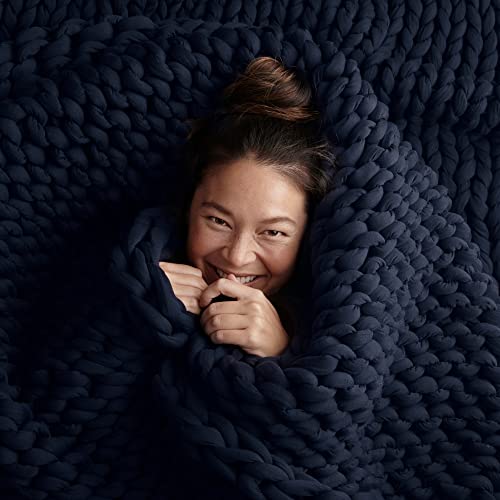
Stitch picks are prose-only knowledge with no products to buy; check Amazon for crochet hooks, yarn, and stitch references as needed. The linked finished references are the Bearaby Cotton Hand-Knit Weighted Blankets for Adults – Chunky Knit Blanket – Sustainable — Check on Amazon — and the Tache Cotton Patchwork Quilt Blanket — Check on Amazon. For finished blankets without crochet, see Best Blankets For Sleeping and Best Throw Pillows Under $100 for coordinated textiles.
In this guide
Quick Picks
| Pick | Badge | Why it earns its place |
|---|---|---|
| Moss / Linen Stitch (prose-only) | Best Overall | Woven look, flat drape, beginner rhythm, modern in any yarn. |
| Half Double Crochet (prose-only) | Best for Beginners | The fastest simple stitch with real warmth and minimal counting. |
| Ripple / Chevron (prose-only) | Best for Colorwork | Graphic waves that turn stripes into design. |
| Granny Stitch and Squares (prose-only) | Best for Portability | Motif construction that travels and uses color fearlessly. |
| Shell Stitch (prose-only) | Best for Baby Blankets | Soft scallops, gentle drape, timeless gift appeal. |
| Basketweave Stitch (prose-only) | Best for Warmth | Dense woven texture for winter blankets that mean it. |
Key Takeaways
- Moss stitch is the modern default: beautiful in solids and variegated yarns, flat, and kind to beginners.
- Choose stitch density by season — basketweave and dense stitches for winter, open and lacy work for summer.
- Textured stitches consume significantly more yarn; buy yardage for the stitch, not the blanket’s dimensions alone.
- Swatch the stitch, wash the swatch, and live with it for a day before committing a blanket’s worth of evenings.
- Straight edges come from counting and markers, not from stitch choice — build the habit with whichever stitch you pick.
How These Picks Were Chosen
Stitches were judged on blanket-scale criteria: drape, warmth, speed, yardage appetite, edge behavior, yarn forgiveness, and suitability across recipients from babies to grandparents. Purely decorative stitches that curl, gap excessively, or demand unsustainable counting were excluded. Because stitches are techniques rather than products, all six picks are prose-only with no specifications to verify; the two linked finished blankets serve only as texture and weight references and are labeled as such. Guidance assumes standard US crochet terminology; UK readers should translate stitch names before starting. Pairing advice draws on the yarn guides in this series, especially Best Chunky Yarn For Blankets for large-gauge stitch behavior.
The 6 Best Best Crochet Stitches for Blankets — Reviewed
Moss / Linen Stitch (Prose-Only)
Our badge: Best Overall
Moss stitch — single crochet and chain spaces worked into each other’s gaps, also called linen stitch — produces a flat, woven, almost knitted-looking fabric with superb drape and a modern, textile quality. It lies flat without curling, shows variegated and speckled yarns at their best, and settles into a meditative one-row rhythm that beginners master quickly and experienced makers love for miles of calm stitching.
Strengths
- Flat, drapey, woven fabric that looks far more complex than it is.
- Kind to variegated yarns that turn muddy in taller stitches.
- Even edges and minimal curling reduce finishing work.
Trade-offs
- Slow growth — single-crochet height takes patience at blanket scale.
- Firm fabric in tight gauges; size up hooks for drape.
- Subtle texture disappears in fuzzy or chenille yarns.
Work moss stitch in worsted acrylic or cotton blends for throws that look woven on a loom, and in lighter yarns for elegant baby and summer blankets. Keep a marker in the last stitch of each row while learning the pattern’s edge logic; after ten rows the rhythm self-maintains. Choose moss when the blanket should look contemporary and feel like fabric. Skip it when you need a blanket finished this month in thick winter weight — choose half double crochet instead.
Moss stitch mechanics reward understanding. Each single crochet lands in a chain space rather than into a stitch top, which is why the fabric stays flat and woven instead of stacking into ridges — and why the stitch is so forgiving of minor tension drift: the spaces absorb small irregularities that a dense stitch would display. The trade is row height: you gain roughly a single crochet’s height per row, so measure your progress in inches per hour honestly before promising a deadline. Edge logic matters here too — rows begin and end in a pattern that alternates, and the common beginner error is ending every row identically, which slowly slants the fabric. Mark both edges for the first fifteen rows and the alternation becomes automatic. In cotton, moss makes superb summer throws with a linen-like hand; in wool blends it relaxes into surprising softness after blocking.
Best for: modern throws, variegated yarns, patient beginners / Not suited for: fastest-possible blankets
Choose moss stitch for woven, modern blankets. No Amazon link is provided for this prose-only pick by design.
Half Double Crochet (Prose-Only)
Our badge: Best for Beginners
Half double crochet is the blanket workhorse: taller and faster than single crochet, denser and warmer than double crochet, simple enough for a first project and satisfying enough for a hundredth. Worked plain, it makes a smooth, warm, honest blanket; worked in the back loop or third loop, it gains subtle ribbed texture without new skills.
Strengths
- Best speed-to-warmth ratio among the basic stitches.
- Minimal counting and easy edge management for new makers.
- Adapts with loop variations when plain fabric needs interest.
Trade-offs
- Plain fabric is visually quiet — color must do the design work.
- Can bias or slant slightly in some hands; blocking evens it.
- Dense enough to eat yarn faster than beginners expect.
For a first blanket, pair half double crochet with bulky acrylic or chunky chenille and stripes planned by skein: the project will finish, look generous, and teach tension, counting, and finishing in one forgiving fabric. Mark the first and last stitches until counting is automatic. Choose half double crochet whenever finishing matters more than filigree. Skip it for lace ambitions.
Two variations rescue half double crochet from plainness without adding difficulty. Working into the back loop only creates a subtle horizontal rib that reads as intentional texture and adds a little elasticity across the fabric — excellent for blankets that get folded and dragged daily. Working into the third loop — the horizontal bar behind the stitch — pushes the top loops forward into a braided, almost knitted ridge that looks far more advanced than it is; it is the variation most often mistaken for a complicated stitch in finished blankets. Both variations change yarn consumption slightly, so swatch the exact variation you plan to use. A note on slant: half double crochet leans in some hands because of how the yarn-over pulls through; alternating your turning direction habits will not fix it, but blocking will, and a border frames whatever remains.
Best for: first blankets, warm throws, fast gifts / Not suited for: lace or showcase texture
Choose half double crochet to finish warm blankets reliably. No Amazon link is provided for this prose-only pick by design.
Ripple / Chevron (Prose-Only)
Our badge: Best for Colorwork
The ripple turns simple stitches into landscape: regular increases and decreases create waves that make even two-color striping look designed. It is crochet’s most generous colorwork stitch — stash yarns become gradients, team colors become tasteful, and a child’s blanket becomes a heirloom with nothing but double crochet and counting.
Strengths
- Maximum design impact from basic stitches and color changes.
- Rhythmic repeat is relaxing once the first rows are established.
- Flat, warm, fully closed fabric with no gaps.
Trade-offs
- Counting is non-negotiable; a missed decrease warps the wave.
- Top and bottom edges wave too — plan borders or embrace the chevron edge.
- Color changes create many ends unless you carry yarn deliberately.
Establish the first three rows with total attention and stitch markers at every peak and valley; after that, count repeats rather than stitches. Ripples forgive yarn mixing beautifully — same-weight remnants in a planned sequence make the best stash blankets in crochet. Choose ripple when color is your design language. Skip it for single-color subtlety, where the wave’s drama has nothing to amplify.
Ripple mathematics deserve respect before the first chain. The blanket’s width is set by the repeat — peaks and valleys in fixed stitch counts — so your starting chain must be a multiple of the repeat plus its turning allowance, and a miscounted chain cannot be fudged later without warping the wave. Work the first row slowly, place a marker at every valley, and verify the repeat count across the whole row before row two exists. Color planning is the ripple’s other discipline: two-row stripes keep ends manageable and rhythm visible, while single-row stripes double the ends and soften the wave’s graphic punch. If you plan to carry colors up the side, decide now and keep the carried edge consistent — the border will hide it. A ripple in three shades of one color family looks quietly sophisticated; the same stitch in seven stash colors looks like a celebration. Both are correct; choose on purpose.
Best for: stripes, stash blankets, graphic gifts / Not suited for: counting-averse makers
Choose ripple for blankets that look designed. No Amazon link is provided for this prose-only pick by design.
Granny Stitch and Squares (Prose-Only)
Our badge: Best for Portability
Granny construction — clusters worked in rounds as squares or as continuous rows — is crochet’s portable, social, scrap-friendly architecture. Squares travel in a pocket, grow in waiting rooms, and join into blankets of any size; continuous granny stitch gives the same airy texture without seaming. The slight openness sleeps cooler than dense stitches, suiting granny blankets to spring, summer, and layering.
Strengths
- Most portable blanket method: progress in small, satisfying units.
- Unmatched for color play, scraps, and communal or group projects.
- Airy texture drapes well and works across seasons as a layer.
Trade-offs
- Joining and end-weaving are real labor — count them before choosing 100 squares.
- Gaps reduce warmth and can catch toes and pet claws.
- Squares can skew if rounds are not turned or blocked consistently.
Decide your joining method before the tenth square, block squares to a template for even assembly, and weave ends as you go in batches. For babies, choose tighter motif variations and supervise use as with any openwork textile. Choose granny construction for joyful, portable making. Skip it when you need a dense winter seal against cold.
Joining methods change a granny blanket’s character as much as its colors do. Whipstitched seams are fast and slightly ridged; slip-stitch and single-crochet joins are flat and sturdy; join-as-you-go eliminates the assembly session entirely and suits makers who know finishing day is their motivation’s weak point. Whichever you choose, consistency of square size is the real craft: measure every square against a cardboard template and block the outliers, because a blanket assembled from squares of three sizes will pucker no matter how skilled the join. Turn your work each round or do not — but do the same thing for all one hundred squares, since turned and unturned rounds produce subtly different shapes. Finally, weigh the end-weaving honestly: two ends per color change per square adds up to an evening of finishing that should be scheduled, not discovered.
Best for: portable projects, color lovers, scrap use / Not suited for: maximum winter warmth
Choose granny stitch for portable, colorful blankets. No Amazon link is provided for this prose-only pick by design.
Shell Stitch (Prose-Only)
Our badge: Best for Baby Blankets
Shell stitch fans groups of stitches into scallops that read as soft, classic, and unmistakably handmade-gift. The fabric drapes gently, the edges scallop prettily without a border, and the rhythm — anchor, fan, anchor — is soothing to work for the months a special blanket deserves.
Strengths
- Timeless gift appearance for babies, weddings, and christenings.
- Built-in scalloped edges reduce finishing to a simple border row if desired.
- Pleasant, memorizable repeat that still looks intricate.
Trade-offs
- Consumes more yarn than plain stitches at the same dimensions.
- Scallops flatten in very heavy or fuzzy yarns — choose smooth yarns.
- Slightly open fabric; line or layer for winter warmth.
Work shells in smooth cotton or premium acrylic pastels and whites for classic baby blankets, remembering safe-sleep basics: blankets are for supervised holding and later toddler use, not unattended infant sleep. In worsted solids, shells also make elegant wedding throws. Choose shell stitch when the occasion is tender and traditional. Skip it for rugged family-room duty.
Shell stitch has a scaling secret: the same pattern worked in fine cotton makes a delicate christening blanket, while in worsted acrylic it becomes a cheerful, durable throw — the stitch’s personality survives translation across yarn weights better than most textured patterns. Watch the fabric’s bias as you work: shells can coax a blanket slightly diagonal in some hands, countered by keeping anchor stitches firm and blocking square at the finish. For color, shells reward restraint — a single color lets the scallops sculpt light and shadow, two alternating colors turn the fans into stripes of texture, and variegated yarn usually fights the rhythm. If the blanket is for a baby, pair shells with a firm single-crochet border to tidy the scalloped sides, choose a smooth yarn with no loose fibers, and wash the finished piece before it is gifted.
Best for: baby and occasion gift blankets / Not suited for: heavy-duty family throws
Choose shell stitch for classic gift blankets. No Amazon link is provided for this prose-only pick by design.
Basketweave Stitch (Prose-Only)
Our badge: Best for Warmth
Basketweave alternates front-post and back-post double crochet blocks to imitate woven texture with serious density. The result is the warmest, most substantial fabric in this guide — a winter blanket with architecture, best in wool blends and smooth acrylics that let the posts stand in relief.
Strengths
- Dense, warm, wind-resistant fabric for genuine winter blankets.
- Rich woven texture that looks impressive in a single color.
- Post stitches build hand strength and skill for future textured work.
Trade-offs
- Hungriest stitch here for both yarn and time — budget generously.
- Heavy finished blankets; confirm recipient and laundry can handle the weight.
- Texture vanishes in variegated or fuzzy yarns; solids and heathers only.
Swatch basketweave honestly: if the post stitches strain your hands in a swatch, they will not improve over a blanket. Use an ergonomic hook, take breaks, and reserve this stitch for blankets meant to anchor a cold room. Choose basketweave for winter commitment pieces. Skip it for speed, summer, or first projects.
Basketweave’s density comes from its architecture: post stitches pull the fabric’s surface forward and back in blocks, doubling the yarn in the texture’s depth. That is why it insulates like a much thicker blanket — the woven relief traps still air in its pockets — and why it consumes yarn at a rate that startles makers who budgeted by plain-stitch habits. Weigh your swatch and multiply honestly. The stitch also has a handedness reality: post stitches worked around the post demand consistent hook entry from front or back, and a block miscounted by one stitch shifts the weave visibly several rows later. Count blocks, not just stitches, at each row’s end. Because the fabric is nearly identical on both sides in character, basketweave is one of the best choices for a blanket that will be seen from both sides — draped over a sofa back, for instance — where one-sided textures look unfinished from behind.
Best for: winter heirlooms and textured single-color blankets / Not suited for: beginners or fast gifts
Choose basketweave for maximum crochet warmth. No Amazon link is provided for this prose-only pick by design.
Comparison Table
| Pick | Warmth | Speed | Yarn appetite | Check price on Amazon |
|---|---|---|---|---|
| Moss / Linen | Moderate | Slow | Moderate | Check price on Amazon |
| Half Double Crochet | Warm | Fast | Moderate-high | Check price on Amazon |
| Ripple / Chevron | Warm | Moderate | Moderate | Check price on Amazon |
| Granny | Light-moderate | Fast in units | Moderate | Check price on Amazon |
| Shell | Moderate | Moderate | High | Check price on Amazon |
| Basketweave | Warmest | Slow | Highest | Check price on Amazon |
How to Choose the Best Crochet Stitches for Blankets
Match density to season and recipient
Winter blankets want closed, dense stitches; summer and layering blankets want openness. Babies want smooth, closed fabrics without large holes; couch throws can carry any texture the household’s pets and habits allow. Season and recipient eliminate most stitches immediately — let them.
Let yarn and stitch negotiate
Smooth yarns showcase texture; fuzzy yarns erase it. Variegated yarns sing in moss and ripple and muddy in basketweave. Chunky yarns need simple stitches; fine yarns reward detail. Swatch the exact yarn-stitch pair — the negotiation only concludes in fabric, never in theory. Review chunky behavior in Best Chunky Yarn For Blankets before pairing jumbo yarn with any stitch here.
Budget time and yardage by stitch
Estimate honestly: post stitches and shells consume far more than plain stitches, and single-crochet-height stitches grow slowly. If the blanket has a deadline — a birth, a holiday, a departure — choose the stitch that finishes, not the stitch that impresses in a photo.
Plan edges and borders from row one
Decide whether the stitch self-edges (moss, shells), waves (ripple), or needs a border (most plain fabrics benefit). Work the first rows with markers and counts as if the blanket’s reputation depends on them — it does. A planned border also gives you a dignified rescue if edges waver slightly despite care.
Turning chains: the invisible decision in every row
Whether your turning chain counts as a stitch changes your stitch count, your edge shape, and where the first real stitch of each row must land — and patterns differ in their convention. Pick the pattern’s rule and obey it absolutely; most wavy edges and slow narrowing trace back to a maker alternating conventions unconsciously. If you dislike the small gap a counted chain leaves at the edge, stacked single crochet and other chainless starts exist for double-crochet fabrics; learn one for your main stitch and your edges will look tailored. Whatever you choose, write the convention on the project card — after a month’s pause, nobody remembers which rule row forty was using.
Row height is a design tool, not just a measurement
Stitch families grow at different heights, and a blanket’s proportions depend on the ratio between stitch width and row height. Tall stitches make blankets that feel generous quickly but can stretch lengthwise under their own weight; short stitches make stable, fabric-like blankets that hold dimensions for decades. When adapting a pattern to a different stitch, recalculate both dimensions from your swatch — swapping double crochet for half double without adding rows produces a shorter blanket, and swapping the other way produces a longer, heavier one. The swatch’s row gauge is as binding as its stitch gauge.
Consider both sides of the fabric
Some stitches are truly reversible (moss, basketweave in character), some have a clear right side (shells, post textures), and some look identical because they are plain (half double crochet). A blanket draped over a sofa, folded at a bed’s foot, or used by a child will show both faces daily. If your stitch has a wrong side you dislike, plan the blanket’s life accordingly — or choose a reversible stitch and never think about it again. Sampler blankets should alternate right-side presentations deliberately so the finished piece reads as designed from every angle.
How to Block a Crochet Blanket for a Professional Finish
Wash the finished blanket gently by its fiber’s rules, remove excess water by rolling in towels, and lay it flat on a clean surface, coaxing it to the intended dimensions with gentle hand pressure. Pin only if the fiber responds to pinning (wool and cotton do; acrylic prefers steam or simple wet-laying per yarn guidance). Let it dry fully before moving. Blocking evens stitches, opens lace and shells, flattens ripples into rhythm, and turns a handmade blanket into a finished textile. Do not skip it for gifts.
Problem: Edges keep waving. — Counts are drifting or tension tightens at turns. Mark first and last stitches, count every row for a while, and relax the turning chain.
Problem: The blanket is much smaller than planned. — Your gauge is tighter than the pattern’s. Swatch next time before starting; for this blanket, add a generous border or gift it as a lap throw without apology.
Problem: Texture disappears in your yarn. — The yarn is too fuzzy, dark, or variegated for the stitch. Switch the stitch to moss or plain work and save textured patterns for smooth solids.
Problem: Hands ache in post-stitch patterns. — Use an ergonomic hook, loosen tension slightly, alternate projects, and shorten sessions. Pain is data, not a discipline test.
Problem: The blanket will not lie flat even after blocking. — The stitch count is genuinely off somewhere, or a dense stitch was paired with too-small a hook and the fabric is over-full. Blocking persuades; it cannot rewrite geometry. Measure width at five points, find where the drift begins, and decide honestly whether to frog to that row or to border the blanket into submission with easing.
Blocking has one more benefit makers underuse: it is a final inspection. Spread flat and damp, every weak join, short tail, and thin spot announces itself under your hands while repair is still easy. Walk the whole surface slowly, tug each color join gently, and mend before the blanket dries. Ten minutes of inspection at blocking prevents the first-wash heartbreak of an end escaping in the machine.
Borders That Finish a Blanket
A border frames color, stabilizes edges, and adds the final size adjustment. Simple single-crochet rounds suit modern blankets; moss borders continue a woven theme; a final round of reverse single crochet (crab stitch) gives a tailored corded edge that resists curling. Work the first border round with careful corner math — extra stitches in corners, counts divisible by your border pattern — and lay the blanket flat between rounds to check for ruffling (too many stitches) or cupping (too few). The border is where good blankets become finished ones; budget an evening and a spare skein for it.
Border math deserves one concrete habit: count your edge stitches before the first border round and write the number down. A border pattern with a repeat — shells every five stitches, for example — must divide the edge count or be adjusted at the corners, and discovering the mismatch at the fourth side wastes an evening. Work the first round in plain single crochet to establish an exact, even foundation, then begin patterned rounds on that known count. If the border ruffles, you have too many stitches per inch; if it cups the blanket inward, too few. Adjust by a stitch every few inches rather than frogging the whole round — borders forgive graduated corrections that fields do not.
Stitch Sampler Blankets: Learning Without Boredom
A sampler — strips or blocks of different stitches in one yarn family — converts stitch learning into a finished blanket and is the finest use of this guide for intermediate makers. Keep yarn weight and hook constant, swatch each stitch to a shared width, and join strips with a flat seam or crochet join that becomes part of the design. Samplers forgive experimentation: a stitch you dislike occupies one strip, not one blanket. They also make extraordinary gifts, because every section invites touch and conversation. Plan the sequence from dense to open and back for visual rhythm.
Sampler planning has one quantitative trap: stitches differ in row height, so strips crocheted to the same row count end at different lengths. Swatch each stitch to a shared finished dimension — so many inches, not so many rows — and record the rows each stitch needed; that table is the sampler’s real pattern. Joining strips of equal length is pleasant; easing a four-inch difference between neighbors is not. Choose a unifying color for the joins and border, and the sampler reads as one designed blanket rather than a notebook with seams.
Common Buying Mistakes
Choosing the stitch from a photo alone
Photos hide yardage, weight, and counting load. Read the stitch’s structure, swatch it, and live with the swatch before committing.
Pairing textured stitches with textured yarn
One texture per blanket. Chenille, tweed, and variegation are textures; combine them with plain stitches and let each shine in turn.
Ignoring the recipient’s laundry reality
A dense wool basketweave for a dorm resident is a felted rug in waiting. Stitch and fiber must both survive the recipient’s actual washing habits.
Refusing to frog early rows
Errors in rows one to five echo for a hundred rows. Frog early, count carefully, and treat the first evening as foundation work, not progress.
Choosing a stitch your hands cannot sustain
A blanket is thousands of repetitions of one motion. A stitch that charms in a swatch and aches by the second evening — tight post stitches, dense single crochet in inelastic cotton — will not become comfortable at row eighty. Test stitches across two separate sessions, on different days, and believe your hands’ report over the photograph’s promise. The best stitch for your blanket is the most beautiful one you can repeat ten thousand times.
Final Recommendation
Start your next blanket in moss stitch for modern versatility, half double crochet for warm reliability, or ripple for color joy — and reserve basketweave and shells for the blankets whose occasions justify their appetite. Study the finished references — the Bearaby Cotton Hand-Knit Weighted Blanket for loop scale and the Tache quilt for finished throw weight — Check on Amazon — then swatch your stitch in your yarn before buying the blanket’s full yardage.
If two stitches are still tied after swatching, choose by the blanket’s hardest day. The winter blanket’s hardest day is the coldest night in a drafty room — density wins. The baby blanket’s hardest day is the hundredth wash — smoothness and closed fabric win. The gift blanket’s hardest day is the unwrapping, when the stitch must read as care at arm’s length — shells and ripples win. The stash blanket’s hardest day is the day the yarn runs out — granny squares, which absorb any ending, win. Stitches are tools; the job chooses the tool, and a maker who thinks in jobs rather than favorites builds a repertoire instead of a rut.
Frequently Asked Questions
What is the easiest crochet stitch for a blanket?
Half double crochet and moss stitch tie for easiest: simple repeats, forgiving fabric, and genuine blanket warmth or drape. Beginners finishing a first blanket should choose one of these in a smooth, light-colored yarn.
What stitch uses the least yarn?
Taller, more open stitches — double crochet fabrics and granny-style work — generally use less yarn per area than dense single-crochet-height or post-stitch fabrics. Exact consumption always depends on gauge; a weighed swatch gives your project’s true number.
Which stitch is warmest?
Basketweave and other dense post-stitch fabrics are warmest, followed by half double crochet. Pair dense stitches with wool blends for maximum winter performance.
How do I keep my blanket rectangular?
Count stitches, mark row ends, keep turning chains consistent, and block at the finish. Most rectangles are lost in the first ten rows — invest attention there.
Can I mix stitches in one blanket?
Yes — samplers and striped stitch sequences are classic. Keep yarn and hook constant, swatch each stitch to matching width and row rhythm, and join or transition deliberately.
What stitch is best for variegated yarn?
Moss stitch is the standout: its woven structure breaks color pooling into a tweedy, intentional fabric. Ripple is the runner-up, turning variegation into movement.
What stitch is best for a summer blanket?
Open and breathable fabrics: granny stitch, shells at a relaxed gauge, and lace-leaning patterns in cotton or cotton blends. The goal is a fabric with air in its architecture. Moss stitch in a light yarn is the closed-fabric summer option for people who dislike holes. Avoid post stitches and dense single-crochet fabrics, which insulate in any fiber.
How do I choose between single crochet and double crochet for a whole blanket?
By fabric, not by habit. Single crochet builds a dense, stable, almost woven blanket that holds its dimensions, grows slowly, and uses yarn steadily. Double crochet builds a softer, drapier, faster blanket with more stretch and more visible stitch character. For a first blanket, half double crochet splits the difference — which is precisely why it anchors this guide’s recommendations. Swatch all three in your yarn and drape them over a chair; the right choice usually identifies itself in your hands.
Can I use these stitches for a pet blanket?
Choose closed, low-profile stitches — moss or half double crochet in washable acrylic — and skip open granny gaps and tall post textures that catch claws. Pet blankets are washed more than any other textile you will make, so the stitch’s job is simply to survive gracefully. Many makers use pet blankets as their stitch-learning projects, which serves everyone: the pet gets a blanket, and you get low-stakes practice.
What is the most forgiving stitch for uneven tension?
Moss stitch, because its chain spaces absorb small irregularities, and granny clusters, because each cluster is a self-contained unit that resets your rhythm every few stitches. Post-stitch textures are the least forgiving — they publish every wobble in relief. If your tension is still settling, spend a blanket in moss or granny and let your hands calibrate at low stakes; the textured stitches will wait, and you will meet them with steadier hands.
Should I learn a new stitch on the blanket itself or on practice pieces first?
On a practice piece the size of a washcloth, always — then, if the stitch delights you, on the blanket. The practice piece costs an hour and a partial skein; learning on the blanket costs frogged rows and, often, quietly uneven early rows that the finished blanket displays forever at one end. Keep your practice squares: joined over a year, they become the sampler blanket described in this guide, and your learning curve turns into an heirloom instead of a drawer of evidence.
What stitch is best for a blanket for someone in a warm climate who still wants a handmade gift?
Granny stitch or shells in cotton, sized as a lap throw rather than a bed blanket. The open fabric gives the gesture and the craft without imposing warmth the recipient cannot use, and cotton keeps it washable in a climate where blankets are laundered often. If the recipient loves the idea of a winter-weight blanket for travel or air-conditioned rooms, moss stitch in a cotton blend is the middle path — closed fabric, breathable fiber, modern look.
How do I read a stitch pattern or chart for the first time?
Start with the stitch key and work the pattern’s own small swatch before scaling up — charts reward this literally, since one symbol misread repeats across an entire blanket. US and UK terminology differ for the same stitches (a US double crochet is a UK treble), so confirm the pattern’s dialect before the first row, not after the first frogging. Mark each completed row on a printed copy; at blanket scale, your place in the pattern is data worth protecting as carefully as your stitch count.
What stitch makes the softest blanket?
Softness lives more in yarn and gauge than in stitch name, but stitches help: half double crochet and moss at a relaxed gauge drape and fold like fabric, while any stitch worked too tightly feels like armor in the softest yarn. If softness is the brief, size up your hook beyond the band’s suggestion, choose the stitch for its drape (moss, HDC, shells), and block the finished blanket — the wash-and-relax step is where crochet fabric becomes blanket-soft rather than project-stiff.
Is a lacy stitch practical for a blanket?
For the right blanket, yes: summer throws, christening pieces, and layered bed accents are lace’s home ground, where breathability and beauty outrank insulation. For a working winter or family blanket, lace’s openness snags, stretches, and under-warms. The mistake is not lace itself but lace assigned to the wrong job — a distinction this whole guide exists to teach. If you love lace, give it a summer cotton brief and it will be the most admired blanket you own.
Can I crochet a blanket without a border?
Yes, when the stitch self-finishes: moss stitch edges lie flat and tidy, shells scallop decoratively, and ripples make their chevron edge the design. Plain fabrics usually look unfinished without a border and may curl or waver at the sides, so plan at least a single-crochet frame for them. Decide before row one, because a border adds width and length that belong in your starting dimensions — adding it as an afterthought can push a carefully sized blanket past its intended bed or recipient.
How long does each stitch take to learn?
Half double crochet and granny clusters are afternoon skills. Moss stitch takes an evening to make automatic, mostly for its edge alternation. Ripples take a few supervised rows until counting peaks and valleys becomes rhythm. Shells are quick to learn and slower to make perfectly even. Basketweave is a weekend of deliberate practice before blanket scale is wise. None of these timelines should intimidate — every stitch in this guide was someone’s second project once — but they should schedule your gift deadlines honestly.
What stitch should I choose for a blanket that will be washed constantly?
Closed, low-profile stitches in washable yarn: moss, half double crochet, and plain double crochet fabrics survive agitation and drying without snagging points or relief to flatten. Avoid tall post textures and open lace for institutional or family-machine duty — not because they are fragile, but because their beauty depends on structure that hard washing gradually erases. The most-washed blanket in any house should be the simplest one you own.
How do I make a stitch pattern look good in a dark yarn?
Mostly, you do not — deep colors absorb the light that texture needs. In dark yarns, choose stitches whose beauty is silhouette and drape rather than relief: ripples for movement, shells for edge profile, moss for fabric character. If your heart is set on basketweave in navy, work under strong light, expect the texture to reveal itself at close range only, and accept that the blanket’s audience is the person under it rather than the room across from it.
Do textured stitches shrink or change after washing?
They relax rather than shrink when the fiber is stable: post-stitch relief softens slightly, shells open, and ripples settle into rhythm — all reasons the washed, blocked swatch is the only honest preview. Wool textures bloom; acrylic textures set with gentle heat; cotton textures sharpen. Expect the finished blanket’s texture to be a calmer version of what left your hook, and choose stitches bold enough to survive the calming.


