Disclosure: As an Amazon Associate, dailyhomedecorating.com earns from qualifying purchases. Links to Amazon on this page are affiliate links; they cost you nothing extra. Prices and availability change often, so check the current Amazon listing before you buy.
Shopping for the best mattresses for back issues is different from shopping after one bad week. “Issues” is the word people use when the back has become a long-term feature of life — the stiffness that has a season, the ache that has a history, the morning routine built around a spine that needs negotiating with. A mattress for that life is not a cure, and this guide will never call it one. It is infrastructure: the surface your back spends a third of its existence on, either compounding the problem nightly with sag and misalignment or quietly removing itself from the list of aggravations. People managing a back long-term do not need miracles from a mattress. They need consistency — support that is identical in month eighteen to month one — and honesty about what bedding can and cannot do.
So this guide grades on a long horizon. Support architecture comes first, because a back with issues notices support fade before any other sleeper does. Durability comes second, for the same reason. Then the daily mechanics nobody reviews: edges that make getting out of bed a controlled event rather than a heave, heights that suit a careful stand, and trials and warranties long enough to de-risk a purchase your body will audit every morning for years. Persistent, worsening, or radiating symptoms belong with a clinician — that line runs through this whole program of guides, and it runs through this one. For narrower briefs, Best Mattresses For Lumbar Support isolates the lower back’s support mechanics, and Best Mattresses For Bad Backs And Hips handles the two-complaint version of the problem.
Where to Buy
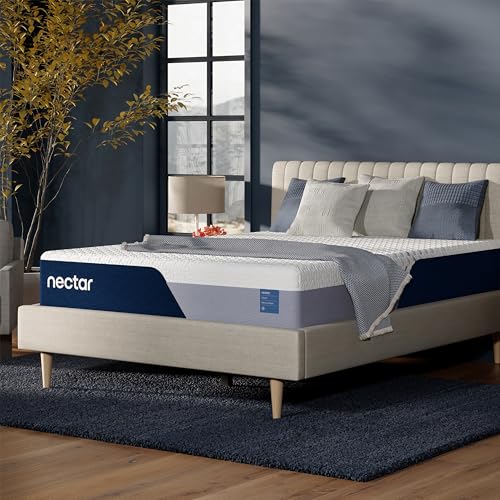
Every pick in this guide is sold on Amazon, where you can check the current price, size availability, trial terms, and delivery options on the listing itself. Start with our top pick, the Nectar 12” Memory Foam Mattress — Check on Amazon. The other five picks are the GhostBed Classic — Check on Amazon; the Sealy Dreamlife 12” Hybrid — Check on Amazon; the Serta Perfect Sleeper Ultimate — Check on Amazon; the Casper Sleep Original — Check on Amazon; and the Signature Design by Ashley Chime 12 Inch Hybrid — Check on Amazon. Because this purchase is a long-term one, weigh the trial and warranty terms on each listing as heavily as the materials.
In this guide
Quick Picks
| Pick | Badge | Why it earns its place |
|---|---|---|
| Nectar 12” Memory Foam Mattress | Best Overall | Firm-leaning contour with a long trial horizon — support a managed back can evaluate across seasons, not weekends. |
| GhostBed Classic 11 Inch Queen Memory Foam Mattress | Medium-Firm Feel | Best Durable Foam | A high-density core built to hold its support profile — consistency is the whole brief for a chronic back. |
| Sealy Dreamlife 12” Hybrid Mattress-in-a-Box | Best Coil Consistency | Encased coils deliver the same proportional support in year five as in week five. |
| Serta Perfect Sleeper Ultimate 14.5″ Queen Mattress – Medium Pillow Top | CertiPUR-US cert | Best for Getting In and Out | Zoned coils, a plush top, and deep edge encasement — the transitions of the day, engineered. |
| Casper Sleep Original 11″ Memory Foam Queen Mattress – Medium Firm Feel | Breathable Mem | Best Zoned Foam | Zoned Support holds the torso’s span while the surface stays kind — alignment as a nightly routine. |
| Signature Design by Ashley Chime 12 Inch Hybrid Full Size Mattress in a Box | Medium Firm | Best Lumbar Targeting | A dedicated gel lumbar layer over pocketed coils, adjustable-base compatible for position therapy at home. |
Key Takeaways
- For a managed back, consistency is the spec: choose support architectures — dense cores, coils, firm support layers — that fade slowest.
- A mattress removes nightly aggravation; it does not treat a back condition. Keep clinicians in charge of the condition.
- Edges, height, and getting-out mechanics matter daily to a careful back — grade them during the trial, not after it.
- Long trials and real warranties are risk management for a body that will audit this purchase every morning for years.
- The frame is half the infrastructure: a sagging base rewrites every support claim in this guide.
How These Picks Were Chosen
The selection weighted time. Each pick’s support story had to be built from materials with a slow fade curve: a firm dynamic support layer (Nectar), a high-density core (GhostBed), encased or zoned coils (Sealy, Serta, Ashley), or zoned foam from a maker whose durability positioning is explicit (Casper). Feel was the second filter — every pick sits in the supportive middle, because a managed back rarely wants an extreme — and daily mechanics were the third: edge construction, profile height, and adjustable compatibility were read as back features, not furniture trivia.
What was filtered out: plush-first mattresses whose comfort layers will hammock a pelvis within a few seasons; thin light-duty builds; and any product whose support story depends on a material behaving forever like its first month. On language: this guide uses comfort and management framing throughout, reports maker design language as design intent, and makes no medical claims — a back with a diagnosis deserves a care team, and the mattress auditions for the role of furniture in that team, nothing more. Specs come only from the verified pool entries; no static prices are printed.
The 6 Best Mattresses for Back Issues — Reviewed

Nectar 12” Memory Foam Mattress
Our badge: Best Overall
The Nectar 12” Memory Foam Mattress leads this guide on the strength of two long-horizon virtues: a firm-leaning support architecture — cooling top layer, contouring memory foam, dynamic support foam — that holds the spine’s line assertively, and trial positioning long enough for a managed back to evaluate the mattress across the seasons and flare patterns that define real life with back issues. Its maker describes the contouring layer as relieving pressure and reducing stress on high-tension areas like the hips and back, with the support layer promoting proper spinal alignment; in comfort terms, that is the nightly subtraction this keyword is shopping for.
Strengths
- Firm support holds alignment — the property a managed back audits first
- Contouring spreads pressure so support does not become its own insult
- A long trial horizon matches the timescale on which backs actually judge
Trade-offs
- Slow foam response makes position changes and bed exits more deliberate
- Light side sleepers may find the firm surface under-cushioning
- At 78 pounds in queen, installation and rotation need two people
| Color | White |
| Size | Queen |
| Dimensions | 80 x 60 x 12 inches |
| Weight | 78 pounds |
The Nectar’s relevance to a chronic back is its refusal to drift. Soft mattresses feel kind in month one and become the problem by month twelve as the pelvis zone softens; a firm-leaning build with a genuine support layer starts supportive and stays closer to its starting line. The contouring layer keeps that firmness humane — pressure at the hips and shoulders is distributed, not denied — and the cooling surface keeps deep foam from adding heat to a sleeper whose nights are already negotiated.
Treat the trial as the medical-grade instrument it imitates: log mornings across ordinary weeks and bad ones, note what the mattress does during a flare (a supportive bed cannot end a flare, but it should not extend one), and decide with data. For the back that has been through several mattresses, that methodical audition is the Nectar’s real feature.
Best for: Back and stomach sleepers managing an ongoing back, who want firm, stable support / Not suited for: Light side sleepers needing deep cushion
Choose it for support that stays. Skip it for plushness. Check on Amazon

GhostBed Classic 11 Inch Queen Memory Foam Mattress | Medium-Firm Feel
Our badge: Best Durable Foam
The GhostBed Classic is the foam pick for backs that have been betrayed by foam before: four layers — cooling gel memory foam, aerated latex, high-density support foam — in a medium-firm build whose core is the point. High-density foam is the material answer to compression fatigue: more cell structure per inch, slower softening, a support profile that resembles its first year deep into its service. Its maker describes the core as supporting spinal alignment and relieving stiffness — comfort language for the consistency this audience is buying.
Strengths
- A high-density core is the slowest-fading foam foundation in this guide
- Aerated latex keeps the surface responsive, so position changes cost a careful back less effort
- Balanced medium-firm suits back, side, stomach, and combination sleepers per its design
Trade-offs
- At 11 inches it has less depth margin than the 12-inch picks for heavier sleepers
- Less deep contour than the Nectar for pressure-first sleepers
- Medium-firm reads firm to light side sleepers
| Color | White |
| Size | Queen |
| Dimensions | 80 x 60 x 11 inches |
| Weight | 50 pounds |
The GhostBed’s lighter weight — 50 pounds in queen, the lightest full build here — is an underrated back feature in itself: rotations, the maintenance ritual that keeps support even, stay feasible for a household where one person’s back is the reason for the purchase. A mattress too heavy to rotate does not get rotated, and unrotated mattresses wear valleys; the GhostBed’s logistics quietly protect its own support story.
Made in the USA and Canada with CertiPUR-US certified materials, it is the foam answer for the long term: no gimmick to age out, a core built like it expects to be audited. Backs with issues should audition it alongside the Nectar and let density and feel argue it out over a month of mornings.
Best for: Foam shoppers whose last mattress softened early / Not suited for: The heaviest sleepers and deep-contour seekers
Choose it for foam that keeps its promises. Skip it for maximum sink. Check on Amazon

Sealy Dreamlife 12” Hybrid Mattress-in-a-Box
Our badge: Best Coil Consistency
The Sealy Dreamlife 12” Hybrid makes the structural case in its purest form: 7 inches of individually encased coils whose support is mechanical, proportional, and essentially indifferent to time, under gel memory foam and a 2.25-inch transition layer. For a back managing a long-term condition, a support core that cannot take a compression set removes the largest variable in mattress aging — the bed in year five is the bed whose support you chose in year one.
Strengths
- Steel support consistency across years — the chronic back’s core requirement
- Proportional local support: the pelvis gets depth, the waist gets fill, automatically
- Reduced motion transfer keeps a partner’s night out of a sensitive back’s
Trade-offs
- The heaviest pick here at just over 80 pounds in queen
- Surface contour is shallower than deep foam
- Coils demand a flat, rigid frame to stay level and quiet
| Color | Dreamlife |
| Size | Queen |
| Dimensions | 80 x 60 x 12 inches |
| Weight | 80.604164 pounds |
The Dreamlife’s transition layer deserves its sentence in a back guide: it is what allows a firm, durable coil platform to feel like care rather than hardware, spreading the body’s load across many coils and keeping their tops unfelt through years when a lesser hybrid’s comfort foam thins. CertiPUR-US foams and Surface-Guard antimicrobial technology support the long service the structure promises.
On the best flat frame in the budget, the Dreamlife is the set-and-verify pick: install it, rotate it seasonally with help, and let the back’s log confirm quarter after quarter that nothing has changed. For this audience, “nothing has changed” is the highest review a mattress can earn. The full hybrid field is covered in Best Hybrid Mattresses Under $1000.
Best for: Long-term planners and couples with one sensitive back / Not suited for: Solo movers and deep-foam loyalists
Choose it for support with a steel memory. Skip it for a plush hug. Check on Amazon

Serta Perfect Sleeper Ultimate 14.5″ Queen Mattress – Medium Pillow Top | CertiPUR-US cert
Our badge: Best for Getting In and Out
The Serta Perfect Sleeper Ultimate earns its badge on the moments around sleep: a zoned coil system supporting the lower back and hips, a medium pillow top cushioning the surface, and BestEdge foam encasement providing a deep, firm edge to sit on, pivot from, and stand against. A back with issues experiences the bed’s edge several times a day, and the Serta is the only pick here that engineers that experience as carefully as the sleep itself.
Strengths
- Deep edge encasement turns sitting and standing into controlled, supported movements
- Zoned coils target the lower back and hips beneath a forgiving pillow top
- The widest frame compatibility in the pool, including adjustable frames for position options
Trade-offs
- At 14.5 inches, total bed height needs planning — high beds help sitting, hinder shorter sleepers
- Pillow tops soften gradually across years
- At over 82 pounds, setup and rotation are two-person jobs
| Color | Dark Blue |
| Size | Queen |
| Dimensions | 79.5 x 60 x 14.5 inches |
| Weight | 82.26 pounds |
The Serta’s support map mirrors the Casper’s in steel: firmer where the torso’s load concentrates, cradling elsewhere, with the pillow top’s PillowSoft Aire and Cool Twist gel foam keeping the surface kind to a back that arrives at bed already tired of being negotiated with. On an adjustable frame — one of six base types its listing names — the head and knee positions become part of the home toolkit for bad-back evenings, a versatility no flat foam pick matches.
Do the height arithmetic before ordering: frame plus 14.5 inches should let the sleeper sit with feet flat and stand without a climb or a drop. Get that right, and the Serta is the most complete daily-life bed in this guide for a managed back — sleep support and transition support in one tall, traditional package.
Best for: Backs that struggle with bed exits, and traditional-bed loyalists / Not suited for: Low-profile setups and anyone who cannot manage a heavy mattress
Choose it for the whole day’s relationship with the bed. Skip it for a low, light setup. Check on Amazon

Casper Sleep Original 11″ Memory Foam Queen Mattress – Medium Firm Feel | Breathable Mem
Our badge: Best Zoned Foam
The Casper Sleep Original brings the map-based approach to the long-term back: Zoned Support with firmer foam under the hips, waist, and lower back, in a breathable medium-firm foam build with advanced motion isolation. For a back whose issue is alignment-sensitive — fine when the spine is held, vocal when it is not — a mattress that firms exactly along the torso’s span is a nightly routine of being held correctly.
Strengths
- Zoned firmness under the torso is alignment support in its most targeted foam form
- Breathable open-cell foam suits backs that also run warm and stiffen when chilled or overheated
- Motion isolation protects a light, pain-aware sleeper’s night
Trade-offs
- Foam zones soften gradually over years, unlike the coil picks
- The map assumes a torso near the designed zones
- Medium-firm may feel firm to light side sleepers in early weeks
| Color | Light Gray |
| Size | Queen |
| Dimensions | 80 x 60 x 11 inches |
The Casper’s durability positioning — its maker emphasizes premium foams that prevent sinking and sagging — is the claim a long-term back should test hardest during the trial, because zoning that fades is worse than honest uniform foam: it fades unevenly, into a map that no longer matches the body. The 100-night trial and 10-year limited warranty in its listing frame that test fairly. Side sleepers with back issues get the Casper’s best geometry: waist held, shoulder given, spine straight — the position where alignment and comfort most need each other.
For the back whose reports are positional — worse after side nights, better after back nights, or the reverse — the Casper’s map is diagnostic as well as supportive: it holds the variable of alignment constant so the sleeper can learn what their back actually responds to.
Best for: Alignment-sensitive backs, especially side sleepers / Not suited for: Sleepers who rest far from the designed zones
Choose it for targeted foam alignment. Skip it for steel permanence. Check on Amazon

Signature Design by Ashley Chime 12 Inch Hybrid Full Size Mattress in a Box | Medium Firm
Our badge: Best Lumbar Targeting
The Signature Design by Ashley Chime 12 Inch Hybrid closes the guide with the most specific back feature in the pool — a high-density gel memory foam layer targeting the lower back — over 9-inch 13-gauge pocketed coils with reinforced perimeter rows, in a verified full size, adjustable-base compatible. For backs whose issues live at one address, a mattress with a layer assigned to that address is a rational place to start.
Strengths
- A dedicated lumbar layer concentrates support where this audience’s issues concentrate
- Sturdy-gauge coils give the layer a foundation that does not fade
- Adjustable compatibility adds knee-elevation to the home comfort toolkit
Trade-offs
- Medium-firm, support-first feel offers limited plushness
- Verified size is full; other sizes must be confirmed on the listing
- Side sleepers with tender shoulders should look higher in this guide
| Color | White |
| Size | Full |
| Dimensions | 74.4 x 53.3 x 12 inches |
| Weight | 62 pounds |
The Chime’s lumbar layer is also a durability design: the pelvis zone is where foam ages fastest, and densifying the foam exactly there, over coils that do not age in the same way at all, defends the support map at its weakest point. Back and stomach sleepers feel a platform that stays present; the reinforced edges serve the sit-and-stand transitions this guide keeps insisting are part of the product.
CertiPUR-US certified with a 10-year warranty in its listing, the Chime is the targeted, accessibly positioned pick — the one for the back whose issue has a zip code, in the size smaller bedrooms need. Readers who want the lumbar argument developed into a full method will find it in the lumbar guide linked at this article’s start.
Best for: Lower-back-focused issues, full-size beds, adjustable-base owners / Not suited for: Plush-seeking side sleepers
Choose it for the lumbar layer. Skip it for surface softness. Check on Amazon
Comparison Table
| Pick | Support architecture | Consistency strategy | Transition (edge) story | Check price on Amazon |
|---|---|---|---|---|
| Nectar 12” Memory Foam Mattress | Firm support foam | Firm build + long trial | Firm foam edge | Check price on Amazon |
| GhostBed Classic | High-density foam core | Density resists fade | Dense foam edge | Check price on Amazon |
| Sealy Dreamlife 12” Hybrid | Encased coils | Steel does not set | Coil perimeter | Check price on Amazon |
| Serta Perfect Sleeper Ultimate | Zoned coils | Coil zoning + encasement | Deep foam encasement — best here | Check price on Amazon |
| Casper Sleep Original | Zoned foam | Durability-positioned foams | Standard foam edge | Check price on Amazon |
| Signature Design by Ashley Chime | Pocketed coils + lumbar layer | Densified foam over steel | Reinforced perimeter rows | Check price on Amazon |
How to Choose a Mattress for a Back You Manage Long-Term
Buy the Fade Curve, Not the First Month
Every mattress is at its best in month one. The long-term back should shop the trajectory: steel cores hold, dense foams fade slowly, ordinary foams fade faster, plush surfaces fastest. Ask of each finalist what its support will be in year four, and prefer the answer given in materials — coils, density, firm support layers — over the answer given in adjectives.
Grade the Exits as Well as the Sleep
Sit on the edge during the trial. Stand up the way you stand at 6 a.m., not the way you perform in a showroom. A bed whose edge collapses taxes a managed back several times a day, every day, in the moments it is least warmed up. Edge construction and total height are medical-adjacent specifications for this audience — treat them that way.
Keep the Spine’s Whole System in View
The mattress is one segment’s support; the pillow governs the neck’s segment, the frame governs the mattress’s honesty, and the chair you sit in governs the day’s other eight hours. A back with issues improves its odds when the whole system is audited, which is why this program’s guides cross-reference each other rather than pretending any single purchase is the story. Start with the bed, because it is the longest single exposure, and do not end there.
Use Trials and Warranties as Instruments
For this audience, a home trial is a diagnostic window and a warranty is a support guarantee — read both as such. Prefer the finalist whose trial lets you test across ordinary weeks and a flare, and whose warranty’s support terms (what counts as a defect, how impressions are measured) you have actually read. Calendar everything; backs are patient, paperwork is not.
Coordinate With Your Care, Not Around It
If your back has a clinician, a physio, or a program, let the mattress serve it: ask what sleep positions and firmness ranges your care favors, and shop inside that advice. A mattress chosen against professional guidance is furniture fighting the treatment plan; chosen with it, the bed becomes the night’s shift of the same team.
How Should You Evaluate a Mattress Across a Flare?
Long-term backs have weather, and a fair mattress evaluation must sample it. During the trial, log three things each morning in a line: stiffness on rising (a word, not a score), how long until you felt loosened, and whether the night itself was broken by the back or by life. Ordinary weeks establish the baseline; a flare week establishes the mattress’s character under load — a good bed cannot shorten a flare, but it should not add its own insults (a sagging middle, a collapsing edge) to the days when everything is already harder. Decide at the trial’s end with the whole log in view. If the trend is flat or worse, return the mattress and take the log to your clinician: it is genuinely useful clinical data, and it cost you nothing but honesty.
Problem: The new mattress feels worse in week one — Expected recalibration: your muscles were trained by the old bed’s shape. Judge from week three, unless pain is sharp or new in kind — that is a clinician call, not a trial note.
Problem: Support felt right, then faded by month four — Inspect the frame’s center support first; then measure any impression with a straightedge and open the warranty conversation with photos.
Problem: Getting out of bed is the hardest moment — The edge or the height is wrong for you. Within the trial, that is a return reason; beyond it, a bed rail aid or a frame height change may be the practical fix — discuss with your clinician or physio.
Problem: Your partner’s side is fine; yours is not — Check for uneven frame support under your half before blaming asymmetric wear; then rotate the mattress and re-log for a fortnight.
Problem: Nothing about the bed explains a worsening trend — Believe it. A worsening trend is clinical information; the mattress has done its diagnostic duty by being a controlled variable.
The Bed as Infrastructure: A Maintenance Calendar for Managed Backs
Infrastructure is maintained on schedule, not on symptoms. Quarterly: rotate the mattress head-to-foot and inspect the frame’s center legs and slats while the bedding is off. Seasonally: wash the protector, air the mattress, and re-check total bed height against the sleeper’s current mobility — backs change, and a height that suited last year may not suit this one. Annually: re-read the warranty terms, photograph the mattress’s surface with a straightedge across the sleep zones, and file the photos with the purchase records; a support claim made with dated evidence is a different conversation from one made with adjectives. This calendar sounds like fussiness until the first time it catches a shifted center leg in five minutes instead of a month of mysterious mornings — which is, in miniature, the entire philosophy of managing a back: small, scheduled attention instead of large, reactive repair.
When the Guest Bed, the Sofa, and Travel Beds Enter the Story
A managed back does not stop at the bedroom door. The guest bed that hosts you at family homes, the sofa you nap on, the hotel bed on the work trip — each is a night your back will grade. The portable and folding solutions in this program — the trifolds and cots of Best Mattresses For Cots, the folding frames of Best Mattresses For Sleeper Sofas — matter to this audience as travel kit and as household overflow when your own bed is commandeered. The practical habits travel well: a pillow of your own when you can carry it, a folded blanket under the lumbar or knees to correct a strange bed’s geometry, and a morning routine that assumes the first ten minutes belong to loosening. None of it is glamorous; all of it is the difference between a trip your back survives and one it narrates for a week.
Back Issues and Weight Change: When the Body Rewrites the Spec
A managed back lives in a body that changes — weight gained or lost across a year, muscle built or surrendered, a pregnancy, a new medication’s effect on sleep depth — and every change quietly rewrites the mattress specification that was correct at purchase. Twenty pounds either way changes how deeply the pelvis engages a foam layer; a stronger core changes how much support the muscles still need the bed to provide. The practical habit is an annual re-audit rather than a permanent verdict: one week of the morning log each year, the straightedge across the surface, and an honest answer to whether the bed still fits the body it serves. Sleepers furnishing around these changes often time the bigger household purchases to the tracked deal windows in Black Friday Bedding Deals 2026, which is sound arithmetic provided the trial, not the discount, still makes the final decision. A mattress is not a marriage vow; it is equipment sized to a body, and bodies reserve the right to be resized.
Talking to Your Clinician About Your Bed: Bringing Data, Not Vibes
The five-minute mattress conversation in a clinical appointment usually produces a generic adjective — “medium-firm, probably” — because the clinician is given nothing to work with. Bring the artifacts of this guide’s method instead: the morning log with positions and loosening times, the names and constructions of the beds trialed, the frame audit’s findings, and the specific question you need answered — whether a position should be avoided, whether an elevation wedge is appropriate, whether the trend you are seeing matches the condition being managed. Clinicians reason well from data and poorly from adjectives, and a patient who arrives with three weeks of structured notes converts a throwaway question into a real consultation. The reverse duty also holds: what the clinician tells you about positions and precautions outranks anything printed in a buying guide, including this one, and the trial log should be adjusted to their instructions without argument. The mattress is the instrument; the care team holds the chart.
The Second Bedroom Problem: Keeping a Supportive Spare
Households managing a back eventually face the spare-bed question: the guest room, the apartment’s second room, the night-shift sleeper’s alternate bed. The retired-mattress tradition — the old bed demoted to the spare room — is precisely wrong for this audience, because the back that needs the good bed most is often the one that ends up in the spare: during illnesses, snoring sieges, infant months, and every other exile the household imposes. The spare that a managed back sleeps on should meet the same mechanical standard as the primary: sound base, un-dipped surface, support geometry the back already trusts. That does not require a second premium purchase — several picks in this guide sit at accessible tiers and serve honorably as spares — but it forbids the cratered hand-me-down. Audit the spare with the same straightedge, and let guests, who are usually hardier and always shorter-stay, take the bed the back has retired rather than the reverse.
Back Issues and Sleep Position Training: Teaching the Night New Habits
Some managed backs do better in one position than another, and a clinician may suggest spending more of the night in it — advice that collides with the reality that sleeping people do not take instructions. The mattress and its supporting cast are how positions get trained in practice. A body pillow is the classic fence, making the discouraged position awkward and the encouraged one supported; a pillow between the knees keeps a side position’s pelvis honest, and one under the knees makes a back position self-reinforcing, since the body tends to stay where it is comfortable. The bed itself participates: a surface that punishes the old position with pressure and rewards the new one with alignment is a trainer that works all night without willpower. Expect the project to take weeks, log the position you wake in rather than the one you fell asleep in, and report the trend — not the nightly score — to the clinician who set the goal. Position training succeeds as a slope, not a switch, and the household that treats it that way usually arrives.
The Cost Conversation: Budgeting a Decade of Managed Sleep
A managed back is a long-horizon condition, and its sleep budget deserves the same horizon. Across a decade, the realistic ledger includes one or two mattresses, a frame that outlasts them, protectors and pillows on their shorter cycles, and the occasional topper-as-bridge — a sum best planned as a modest annual allocation rather than a series of emergencies. The economics favor the same choices as the comfort: buying the mechanically sound bed at a fair tier beats cycling cheap beds whose support fades early, because cost per year of verified support is the only honest unit price in this category. Keep the receipts and warranty documents in one folder — digital photographs suffice — since a decade-long plan generates claims in proportion to its length. And hold the plan loosely where the body is concerned: a condition that changes rewrites the budget’s assumptions, and the reserve kept for an unplanned replacement is not pessimism but the same respect for evidence that runs this entire guide.
Back Issues in the Cold Months: Stiffness Seasons and the Bed
Many managed backs keep a seasonal calendar — stiffer in the cold months, easier in the warm — and the bed sits at the center of the pattern for mechanical reasons worth understanding. Cold bedrooms firm temperature-sensitive foams, so the winter version of a memory foam mattress is measurably harder than its summer self; cold muscles and joints also start the night less forgiving, which raises the value of the warm-up the bed cannot provide and the room can. The countermeasures are seasonal housekeeping: warm the bedroom before bed in the coldest weeks, expect the foam’s first hour to soften under body heat and judge the night by its middle rather than its start, and keep the morning log’s seasonal context noted, because a January regression on a sound bed is weather until proven otherwise. The hybrid and coil picks in this guide swing least with temperature — one more argument for steel in a cold climate — and the household that learns its back’s calendar stops shopping in panic every November.
The Annual Bed Audit: A Ritual for Managed Backs
Management works on rituals, and the bed deserves one of its own: a single appointment each year, an hour at most, in which the whole sleep system is inspected with the back’s interests in mind. Run the straightedge across the mattress and photograph the gap; press the frame’s center and confirm every leg still meets the floor; check the protector’s integrity and the pillows’ loft against their purchase feel; re-read the year’s morning notes for the trend rather than the episodes. Then decide, from evidence, the year’s single action — rotate more faithfully, replace a pillow, start the mattress fund, or do nothing at all because the data says the system is holding. The audit’s real product is not the checklist but the posture: a back that is managed watches its equipment the way a pilot watches an aircraft, on schedule and without drama, and catches the small failures while they are still small. Put it on the calendar beside the other annual rituals of a well-run body.
A Last Word Before the Shortlist
Management is a long game played in small, consistent moves, and the mattress is one of the largest moves available to you. Choose it mechanically, trial it patiently, maintain it ritually, and keep it in honest conversation with the professionals who manage the condition itself. The six picks that follow the sections above were chosen for exactly that style of ownership — sound support, durable geometry, no promises beyond comfort — and the back that is managed at this standard of care gives itself the best nights its condition allows.
Common Buying Mistakes
Chasing This Month’s Miracle Feel
A managed back needs a five-year support profile, not a five-minute showroom sensation. Buy the fade curve; the feel will be audited by your mornings either way.
Ignoring the Edge Until the First Bad Morning
Exits are where backs get loaded cold. Test the sit-and-stand during the trial with the same seriousness as the sleep.
Letting the Frame Off the Audit
A new support system on a flexing base is an old problem with new receipts. Center legs, slats, flatness — verify before the mattress arrives and quarterly after.
Skipping the Log
Memory under pain is a biased witness. A line a morning turns the trial into evidence and gives your clinician something real to work with if the trend disappoints.
Expecting Furniture to Replace Care
The mattress is the night’s environment, not the treatment. Keep the care team in charge of the condition and let the bed do its one job — not aggravating it — superbly.
Final Recommendation
Start with the Nectar 12” Memory Foam Mattress: firm, stable support with a trial horizon long enough for a managed back to render a real verdict across ordinary weeks and bad ones. The runner-up is the Sealy Dreamlife Hybrid — Check on Amazon — for backs that want steel’s indifference to time, with the Serta as the transitions specialist and the GhostBed as the durable-foam alternative. Audit the frame, log the mornings, grade the exits, and keep your clinician in charge of everything the mattress is not.
Frequently Asked Questions
What type of mattress is best for long-term back issues?
The consistent ones: encased or zoned coils, high-density foam cores, and firm support layers that fade slowest. This guide’s picks are ordered by that logic. The right firmness is usually the supportive middle — medium-firm — adjusted by your position and your clinician’s advice.
Can a mattress make back issues worse?
A poorly matched one can aggravate the nights: a sagging or too-soft mattress holds the spine out of its neutral line for hours, and a collapsing edge taxes every exit. That is aggravation, not causation — and it is removable, which is the point of shopping carefully.
How often should a person with back issues replace a mattress?
Replace on evidence, not anniversaries: when rotation and a verified-flat frame no longer restore the support your mornings remember, or when a measured impression exceeds the warranty’s terms. Dense and coil builds extend that horizon; the maintenance calendar in this guide helps you see it coming.
Is an adjustable base worth it for a managed back?
For many, yes: slight head and knee elevation changes the lumbar’s resting geometry, and two picks here (Serta, Ashley) document adjustable compatibility. It is an enhancement layered on support, not a substitute for it — and worth discussing with your clinician.
What firmness do clinicians usually suggest for backs?
Advice varies with the individual back, which is why this guide recommends raising the question with your own clinician. The widely shopped center — medium-firm with real support architecture — is where this guide’s picks live, and where most backs in our readers’ experience settle.
When should back issues stop being a mattress question?
When symptoms radiate, worsen steadily, follow an injury, involve numbness or weakness, or persist unchanged through a well-chosen mattress and a fair, logged trial. At that point the mattress has contributed its data, and the next step is professional evaluation.


