Disclosure: As an Amazon Associate, dailyhomedecorating.com earns from qualifying purchases. Links to Amazon on this page are affiliate links; they cost you nothing extra. Prices and availability change often, so check the current Amazon listing before you buy.
Looking for the best mattresses for back and shoulder pain means shopping for two problems that share a bed and pull it in opposite directions. The shoulder — especially for side sleepers — is a narrow, bony lever that takes a large share of the body’s weight on a small area; it wants the surface to give, deeply and locally, or it spends the night compressed and reports the insult as a deep ache by morning. The back wants nearly the opposite: a held pelvis, a filled lumbar curve, a spine that runs in its neutral line from neck to tailbone. A mattress that simply goes soft serves the shoulder and betrays the back; a mattress that simply firms up does the reverse. The engineering that serves both at once — zoning, contour over structure, proportional coils — is what this guide is actually shopping for.
The framing stays honest throughout: these are comfort choices, not treatments. A mattress can remove the nightly mechanical insults — pressure concentration at the shoulder, sag at the pelvis — that plausibly feed morning discomfort, and it cannot diagnose or fix a shoulder joint or a spine. Pain that is sharp, persistent, worsening, follows an injury, or comes with numbness or weakness in an arm belongs in a clinician’s office promptly, not in a shopping cart. For the broad middle of readers whose shoulders and backs complain in the morning and loosen by midday, the bed is a legitimate variable, and the six picks below address it from genuinely different directions. Readers whose problem is the lower back alone will find the narrower focus in Best Mattresses For Bad Lower Backs, and those whose hips join the complaint should compare Best Mattresses For Bad Backs And Hips.
Where to Buy
Every pick in this guide is sold on Amazon, where you can check the current price, size availability, trial terms, and delivery options on the listing itself. Start with our top pick, the Casper Sleep Original 11″ Memory Foam Queen Mattress – Medium Firm Feel | Breathable Mem — Check on Amazon. The other five picks are the Nectar 12” Memory Foam Mattress — Check on Amazon; the Leesa Original — Check on Amazon; the Sealy Dreamlife 12” Hybrid — Check on Amazon; the Sweetnight CoolNest — Check on Amazon; and the Zinus 12 Inch Green Tea Memory Foam Mattress — Check on Amazon. Prices move with size and promotions, so treat the listing, not any roundup, as the final word.
In this guide
Quick Picks
| Pick | Badge | Why it earns its place |
|---|---|---|
| Casper Sleep Original 11″ Memory Foam Queen Mattress – Medium Firm Feel | Breathable Mem | Best Overall | Zoned Support: give at the shoulder’s end of the bed, firmness under the back’s span — the two-problem answer in one map. |
| Nectar 12” Memory Foam Mattress | Best for Back-Dominant Pain | Firm-leaning contour holds the back’s line while memory foam spreads shoulder pressure. |
| Leesa Original 10″ Memory Foam Mattress | Best for Tender Shoulders | The gentlest contour in the guide for shoulders that bruise easily, over a supportive stack. |
| Sealy Dreamlife 12” Hybrid Mattress-in-a-Box | Best Hybrid Balance | Encased coils respond proportionally — deep give under the shoulder’s load, firm hold under the back. |
| Sweetnight CoolNest Queen Mattress | Best Deep Cushion | A 14-inch, 5-zone stack gives the shoulder the deepest sink in the guide without losing the waist. |
| Zinus 12 Inch Queen Green Tea Memory Foam Mattress | Best Value | Zoned relief and a durable base at the most accessible position in this guide. |
Key Takeaways
- Shoulders want local give; backs want global support. Zoning, contour-over-structure, and proportional coils are the three honest ways to have both.
- Side sleepers should weight the shoulder end of the decision; back sleepers should weight the support end; the Casper’s map serves the overlap.
- Pillow height is half the shoulder equation — a mattress change without a pillow re-check is an unfinished experiment.
- Judge by mornings across three weeks, and treat persistent, sharp, or radiating symptoms as a clinician’s territory, not a mattress’s.
- Medium-firm with real contour is the reliable center; extremes serve one complaint by feeding the other.
How These Picks Were Chosen
Every pick had to present a credible mechanism for both ends of the keyword. For the shoulder: zoned give (Casper, Sweetnight, Zinus), deep contour (Leesa, Nectar), or proportional coil response (Sealy). For the back: zoned firmness under the torso, a firm support layer, or a coil skeleton. Picks that were merely soft failed the back test in review; picks that were merely firm failed the shoulder test. The survivors split across the three mechanisms so the guide covers the real design space, and their ordering reflects how completely each serves the combined brief rather than either half alone.
What was filtered out: extra-firm models that treat the shoulder as acceptable losses; ultra-plush models whose pelvis sink manufactures back complaints; and thin light-duty builds without the material for nightly adult support. Language discipline: this guide describes pressure, alignment, and morning comfort — the maker’s relief-oriented design language is reported as design intent, never as a medical promise. Every specification traces to the verified pool entry for that model, and no static prices are printed.
The 6 Best Mattresses for Back and Shoulder Pain — Reviewed

Casper Sleep Original 11″ Memory Foam Queen Mattress – Medium Firm Feel | Breathable Mem
Our badge: Best Overall
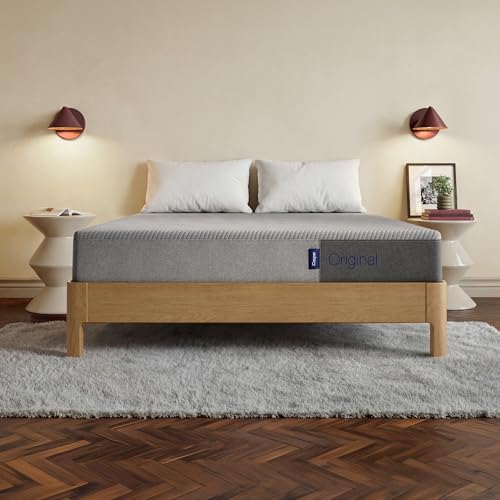
The Casper Sleep Original leads because zoning is the most direct engineering answer to a two-direction problem: its Zoned Support system places firmer foam under the hips, waist, and lower back — the back’s span — while the surface at the shoulder’s end of the bed stays giving enough for the joint to settle. Add breathable open-cell foam and strong motion isolation, and the Casper addresses the shoulder’s pressure, the back’s alignment, and the partner variable in one medium-firm build.
Strengths
- Zoned firmness separates the shoulder’s request from the back’s — the core trick of this keyword
- Breathable foam keeps the deep-contact shoulder zone from running warm
- Motion isolation protects a sensitive sleeper’s night from a partner’s schedule
Trade-offs
- Zones are positioned for an average torso; very tall or short sleepers land differently on the map
- Foam response is slower than coil or grid surfaces when changing position
- Medium-firm may feel firm to a very tender shoulder during break-in
| Color | Light Gray |
| Size | Queen |
| Dimensions | 80 x 60 x 11 inches |
The side sleeper’s geometry is where the Casper proves itself: shoulder sunk into its giving zone, waist held by the firmer span so the spine runs straight instead of sagging into a banana, hip supported at the map’s firm heart. Each element prevents a specific morning — the numb, aching shoulder; the stiff waist; the hip that joins in sympathy. Back sleepers get the same map from the other side: pelvis held, lumbar filled by the surface contour, shoulders resting on foam that does not need to be firm because their load is spread.
With CertiPUR-US foams, a 100-night trial, and a 10-year limited warranty in its listing, the Casper invites the only evaluation that matters: three weeks of your own mornings. If your complaint is genuinely both back and shoulder, this is the pick engineered around that exact conjunction.
Best for: Side and back sleepers whose shoulder and back complain together / Not suited for: Sleepers far outside average torso proportions
Choose it for the two-problem map. Skip it for a single-issue specialist. Check on Amazon

Nectar 12” Memory Foam Mattress
Our badge: Best for Back-Dominant Pain
The Nectar 12” Memory Foam Mattress orders its priorities back-first: a firm-leaning build — cooling top layer, contouring memory foam, dynamic support foam — whose maker describes the contouring layer as relieving pressure and reducing stress on high-tension areas like the hips and back while the support layer promotes spinal alignment. For the reader whose back is the headline and whose shoulder is the subheading, that ordering is the correct one, and the memory foam’s pressure-spreading still gives the shoulder a shaped cradle rather than a slab.
Strengths
- Firm support layer holds the back’s line — the priority when the back outranks the shoulder
- Contouring foam spreads shoulder load across a wider area than a firm surface can
- The listing’s long trial suits a verdict that accumulates over weeks of mornings
Trade-offs
- A very tender shoulder may find the firm surface insufficiently giving
- Slow foam response makes position changes deliberate
- At 78 pounds in queen, setup needs two people
| Color | White |
| Size | Queen |
| Dimensions | 80 x 60 x 12 inches |
| Weight | 78 pounds |
The Nectar’s shoulder story deserves precision: memory foam does not cushion by softness but by distribution — the shoulder sinks until the contact area is large enough that pressure per square inch falls. A firm-leaning foam performs that distribution with less depth than a plush one, which is the right trade for a back-dominant sleeper and the wrong one for a shoulder-dominant sleeper, and this guide’s ordering exists to make that distinction usable. Back and stomach sleepers get the Nectar’s best self; side sleepers get a supported, if not pampered, night.
Paired with a pillow matched to its sink depth — see the pillow section below — the Nectar is the support-first answer in a guide where support is half the title. Its cooling top layer keeps the deep contour from running warm through the night.
Best for: Back and stomach sleepers whose shoulders need competent, not luxurious, relief / Not suited for: Shoulder-dominant side sleepers
Choose it when the back outranks the shoulder. Skip it when the shoulder outranks the back. Check on Amazon
Leesa Original 10″ Memory Foam Mattress
Our badge: Best for Tender Shoulders
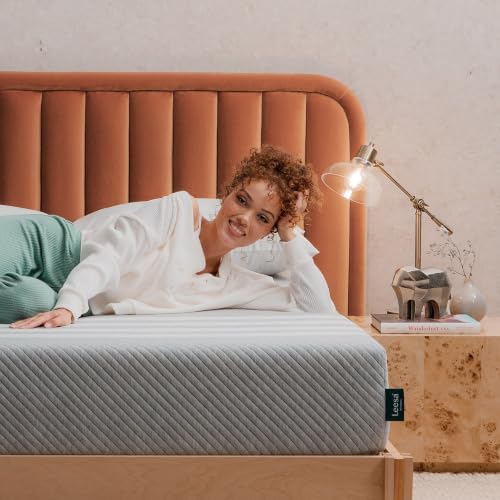
The Leesa Original inverts the Nectar’s ordering with equal legitimacy: a premium all-foam mattress designed for cooling, contouring, and pressure relief, with targeted relief its maker aims at lower-back comfort as well. For the shoulder-dominant reader — the side sleeper whose shoulder wakes them, whose arm goes numb, whose morning starts with a joint being coaxed back to life — the Leesa’s gentle, wide-area contour is the kindest surface in this guide, and its foam stack keeps the back from paying full price for that kindness.
Strengths
- The gentlest pressure distribution here — the tender shoulder’s first choice
- All-position design means the relief survives rolling onto the back at 3 a.m.
- Breathable twill cover and cooling positioning suit warm, sensitive sleepers
Trade-offs
- The back support is competent rather than assertive; back-dominant readers should start higher in this guide
- At 10 inches, heavier sleepers get less support margin
- No zoning — uniform contour relies on overall foam quality
| Color | Grey |
| Size | Queen |
| Dimensions | 80 x 60 x 10 inches |
| Weight | 71 pounds |
The Leesa’s shoulder mechanics are the deep-contour ideal: the joint settles into foam that molds around it, spreading load across the shoulder blade and upper arm instead of concentrating it on the point of the joint, while the body’s weight distributes along the whole side. Side sleepers with a history of waking to move the arm — the classic shoulder-sleeper’s alarm clock — are this mattress’s natural constituency. Its back story is quieter but real: uniform premium foam, properly supportive, without the zoned assertiveness the back-dominant reader needs.
Assembled in the USA with CertiPUR-US certified foam, and backed by a maker that donates a mattress to nonprofits for every ten sold, the Leesa is the shoulder’s advocate in this guide — order it when the shoulder writes the headline of your mornings.
Best for: Side sleepers with tender, pressure-sensitive shoulders / Not suited for: Back-dominant and heavier sleepers
Choose it when the shoulder outranks the back. Skip it when the reverse is true. Check on Amazon

Sealy Dreamlife 12” Hybrid Mattress-in-a-Box
Our badge: Best Hybrid Balance
The Sealy Dreamlife 12” Hybrid answers the two-direction problem with proportional physics: 7 inches of individually encased coils compress in proportion to the load on each, so the shoulder — a concentrated load — receives deep, local give, while the back’s distributed load meets an even, supportive platform. Two inches of gel memory foam and a 2.25-inch transition layer finish the surface, so neither the give nor the support arrives un-cushioned.
Strengths
- Load-proportional support is the shoulder-and-back compromise performed by physics, not zoning
- Coil support does not soften the way foam zones can across years
- Gel foam surface and transition layer keep coil support feeling like comfort
Trade-offs
- The heaviest pick here at just over 80 pounds in queen
- Surface contour is shallower than the deep foam picks for the most tender shoulders
- Coils need a flat, rigid base to stay level and quiet
| Color | Dreamlife |
| Size | Queen |
| Dimensions | 80 x 60 x 12 inches |
| Weight | 80.604164 pounds |
The Dreamlife’s relevance sharpens for the sleeper whose shoulder and back complaints have outlived a foam mattress: foam zones soften where load concentrates, and the shoulder’s zone is exactly a load concentration, so a zoned foam bed can slowly lose its shoulder manners while keeping its back support. Coils do not renegotiate that way. The support map you buy is the map you keep, which for a two-problem sleeper is a form of insurance on both problems at once.
CertiPUR-US foams and Surface-Guard antimicrobial technology support the long service the coils promise. Set it on a proper flat frame and the Dreamlife is the durable middle path of this guide — the pick for readers who want the compromise to still be working in year five. The wider hybrid field is reviewed in Best Hybrid Mattresses Under $1000.
Best for: Two-problem sleepers who prioritize durable, even support / Not suited for: The most tender shoulders needing deep foam contour
Choose it for physics that lasts. Skip it for maximum plushness. Check on Amazon
Sweetnight CoolNest Queen Mattress
Our badge: Best Deep Cushion
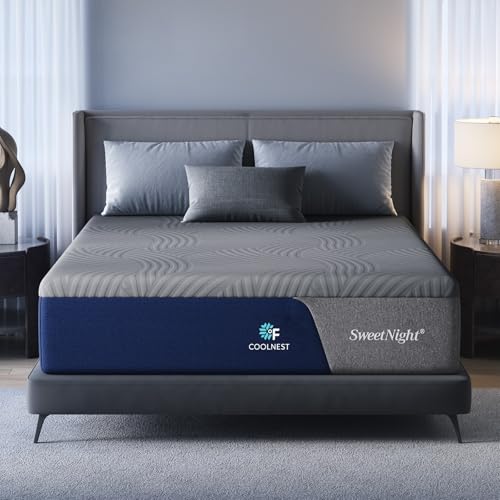
The Sweetnight CoolNest gives the shoulder the deepest room in the guide: a 14-inch stack with a 5-zone ergo support design, PCM and gel cooling foams, and a breathable 3D-woven cover. Depth is the shoulder’s friend because a joint that can sink far, gradually, spreads its load over the largest possible area — and the five zones protect the back’s interests meanwhile, firming the waist and torso span while the shoulder’s zone gives.
Strengths
- Five zones plus 14 inches of depth: the most graduated shoulder sink here
- Cooling system suits the high-contact side-sleeping posture that traps heat
- Deep motion isolation across the foam layers
Trade-offs
- Medium feel may under-hold a heavier stomach sleeper’s pelvis
- The tall profile needs deep-pocket sheets and a higher bed
- Full expansion is listed at up to 72 hours
| Color | Grey & Blue |
| Size | Queen (U.S. Standard) |
| Dimensions | 80 x 60 x 14 inches |
| Weight | 68.67 pounds |
The CoolNest’s maker notes American Chiropractic Association recognition for the 5-zone design — cited as the maker’s claim — and the comfort logic is independently visible: more zones approximate the body’s load map more closely, and the shoulder is where coarse zoning fails first, because the distance between “shoulder zone” and “waist zone” is short and the firmness difference between them must be large. Five zones draw that gradient more finely than three.
For the side sleeper whose shoulder and lower back arrive in the same complaint — the most common form of this keyword — the CoolNest is the deepest, coolest, most graduated answer in the pool. Pair it with the right pillow height (its deep sink raises the pillow requirement, as the section below explains) and the system completes.
Best for: Side sleepers with shoulder pressure who also need waist support / Not suited for: Stomach sleepers and low bed setups
Choose it for depth plus zoning. Skip it for a firm, low profile. Check on Amazon

Zinus 12 Inch Queen Green Tea Memory Foam Mattress
Our badge: Best Value
The Zinus 12 Inch Green Tea Memory Foam Mattress closes the guide with the value expression of the same ideas: patented zoned pressure relief — targeted cushioning and support varying by body zone — over a durable base foam, with green tea and charcoal freshness infusions, CertiPUR-US foams, an OEKO-TEX cover, and a fiberglass-free build. The zoning that leads this guide in the Casper appears here in a 12-inch, accessibly positioned package.
Strengths
- Zoned relief serves the shoulder-and-back brief at the guide’s most accessible position
- A full 12-inch stack with a durable base — no thin-mattress compromises
- The most complete materials and certification story per dollar in the guide
Trade-offs
- Classic slow foam response when changing position
- Mild off-gassing typically needs 24 to 48 hours to clear
- Zoning assumes a torso near the designed zones, as with all zoned foams
| Color | White |
| Size | Queen |
| Dimensions | 80 x 60 x 12 inches |
| Weight | 62.3 pounds |
The Zinus’s shoulder story is distribution through zones: the shoulder’s area gets cushioning tuned for a point load while the back’s span gets support tuned for a distributed one, and the base underneath keeps both honest across years. Its freshness infusions matter in the real bedrooms this tier serves — small, warm, shared — and its motion absorption keeps a partner’s night out of a sensitive sleeper’s.
For the reader whose back-and-shoulder problem arrives with a budget attached, the Zinus is the guide’s answer: the same mechanisms as the leaders, in the pool’s most value-engineered form. Spend the savings on the pillow this purchase will require you to re-fit — the section below explains why that pairing is not optional.
Best for: Value shoppers with combined back and shoulder complaints / Not suited for: Sleepers who dislike slow foam response
Choose it for zoned relief at the friendliest position. Skip it for coil durability. Check on Amazon
Comparison Table
| Pick | Shoulder mechanism | Back mechanism | Profile | Check price on Amazon |
|---|---|---|---|---|
| Casper Sleep Original | Giving zone at the shoulder | Zoned firmness under torso | 11 inches | Check price on Amazon |
| Nectar 12” Memory Foam Mattress | Contour distribution | Firm support layer | 12 inches | Check price on Amazon |
| Leesa Original | Deep gentle contour | Uniform supportive stack | 10 inches | Check price on Amazon |
| Sealy Dreamlife 12” Hybrid | Proportional coil give | Encased coil platform | 12 inches | Check price on Amazon |
| Sweetnight CoolNest | 5-zone deep sink | 5-zone waist support | 14 inches | Check price on Amazon |
| Zinus 12 Inch Green Tea Memory Foam Mattress | Zoned cushioning | Zoned support + durable base | 12 inches | Check price on Amazon |
How to Choose a Mattress When Your Back and Shoulder Both Complain
Rank the Complaints Honestly
One of the two usually writes the morning’s headline. Shoulder-first readers should start at the Leesa, Sweetnight, and Casper end of this guide; back-first readers at the Nectar, Sealy, and Casper end. The Casper sits at the overlap deliberately. Ranking honestly is worth more than any single feature, because a mattress optimized for your second problem is a mattress optimized for someone else.
Think in Mechanisms, Not Firmness Labels
Firmness is one number; your problem is two locations. Ask what the mattress does at the shoulder (zone, contour depth, coil give) and what it does at the pelvis and lumbar (zone firmness, support layer, coil platform) as separate questions. A listing that answers both specifically — as the picks here do — is a listing written by people who understand the assignment.
Refit the Pillow to the New Sink Depth
For side sleepers, the pillow must fill the distance between the mattress surface — after your shoulder has sunk into it — and your head. A deeper-sinking mattress needs a lower pillow than a firm one, and keeping the old pillow on a new mattress bends the neck and re-creates shoulder complaints the mattress just solved. Budget a pillow adjustment into every mattress change in this category; it is the cheapest experiment in the guide and the most commonly skipped.
Protect the Trial From Confounders
Change the mattress, then hold everything else steady for the first fortnight — same pillow if you can bear it, same routine — so the mornings grade the mattress. Then change the pillow and grade again. Two clean experiments beat one muddy one, especially when two body parts are filing reports.
Know the Referral Line
Shoulder pain with weakness, numbness, or a traumatic start; back pain that radiates, worsens steadily, or persists unchanged through a well-chosen mattress and a fair trial — these are clinical presentations. A good mattress is part of a comfortable life; it is not a diagnostic instrument, and this guide’s picks should never delay a needed evaluation.
How Can You Tell Whether the Mattress Is Your Shoulder’s Problem?
Run the comparison your body offers for free: how does the shoulder feel after a night on a different bed — a hotel, a guest room, a partner’s side of your own mattress? Shoulder discomfort that tracks the bed is mattress information; discomfort that follows you everywhere is clinical information. In-bed, two signs point at the mattress: you wake on your back having fled the shoulder in the night, though you fell asleep on your side contentedly; and the ache is worst at waking and loosens within the hour, the signature of a pressure insult rather than an injury. The pillow test refines it further — one night with a folded towel adjusting pillow height, in each direction, tells you whether the geometry or the joint is complaining. Only after those free experiments should money move, and when it moves, the trial system in this guide exists to keep the experiment honest.
Problem: Your arm falls asleep under you — The shoulder is bearing load it should share: you need more point give (zoned or deep contour picks) and possibly a pillow that keeps the head from rolling the shoulder under.
Problem: The shoulder improved but the back got worse — The classic overcorrection: you bought cushion without support. Return within the trial and move one step toward the support-led picks.
Problem: The back improved but the shoulder got worse — The mirror error: support without shoulder give. Move toward the zoned middle (Casper, Zinus) rather than to either extreme.
Problem: Both feel fine in bed but mornings still hurt — Check the pillow height against the new mattress’s sink, and the frame’s flatness; a system can fail at its ends while its center is blameless.
Problem: One shoulder only, always, regardless of bed — Believe the pattern and book the clinician; mattresses address bilateral, bed-tracking discomfort, not a single joint’s biography.
The Side Sleeper’s Shoulder: A Short Mechanical History
The human shoulder is a mobility joint pretending to be a structural one: a ball resting in a shallow socket, held by muscle, designed for reaching rather than for bearing a third of your body weight for eight hours. Side sleeping asks it to do the latter, and the mattress is the only thing negotiating the terms. The negotiation succeeds when pressure spreads — off the point of the joint, onto the shoulder blade, the upper arm, and the ribcage’s broad side — and fails when the joint’s point carries the load alone against a surface that will not yield. Every shoulder mechanism in this guide is a spreading strategy: zones that yield locally, contours that mold around the joint, coils that compress proportionally, depth that lets the joint submerge gradually. Understanding that single idea — spread the load — lets you evaluate any mattress, including ones not in this guide, with a clear eye: press your shoulder’s future into the surface and ask where the load went.
Back Sleepers Are Not Exempt: The Shoulder in Supine Life
Back sleepers meet the shoulder problem in a subtler form: arms that rest at the sides press the shoulder’s back surface into the mattress for hours, and a too-firm or poorly contoured surface can leave the shoulders rolled forward and the upper back stiff by morning — a complaint often misfiled under “back pain” generally. The fix lives in the same mechanisms: a surface that contours enough to let the shoulder blades settle (Nectar, Leesa), zoning that supports without propping (Casper), and a pillow low enough that the head does not push the whole assembly forward. If your mornings feature an upper-back stiffness that loosens by coffee, audit your supine surface and pillow before assuming the lumbar is the author — the spine’s top segment files its complaints in the same inbox as its bottom one, and this guide’s lumbar-focused sibling, Best Mattresses For Lumbar Support, covers the lower end of that inbox in full.
Back and Shoulder Pain in Older Sleepers
Age rewrites this purchase in three specific ways. First, transitions dominate: the older sleeper’s hardest mattress interaction is not lying but rising, which promotes edge support and moderate height from conveniences to headline features — a bed you cannot leave gracefully will be dreaded nightly regardless of its comfort at rest. Second, tissue tolerance narrows: the shoulder’s padding thins across the decades, so a surface that read “supportive” at forty can read as assault at seventy, pushing the choice toward the cushioned-zoned designs in this guide. Third, the support cast matters more: a bed partner, a rail, a nightstand at the right height, sheets that do not bind. Shoppers equipping a parent’s room should also survey the deal-driven moments to furnish the whole supportive room at once — the roundups collected under Black Friday Bedding Deals 2026 are where this program tracks those windows — and should involve the sleeper in the trial verdict, because comfort data gathered by proxy is how good intentions end up sleeping in the guest room.
When Two Specialists Disagree: Coordinating Advice About Your Bed
A common and confusing experience in this category: the back clinician says firmer, the shoulder clinician says softer, and the patient stands in the mattress aisle holding two prescriptions that cancel out. The resolution is the one this entire guide is built on — the conflict is real only at the level of the whole mattress, and dissolves at the level of zones and layers. A zoned or layered design can be firm at the lumbar span and giving at the shoulder simultaneously, which is not a compromise between the two advices but a fulfillment of both. Bring the specifics to the follow-up appointments: the model, its construction, your trial log. Clinicians advise better with data than with descriptions, and a sleeper who arrives with three weeks of position-tagged morning notes has done more for the consultation than any firmness opinion could. For the household’s other sleep surfaces, the same zoned logic applies to the convertible setups in Best Mattresses For Sleeper Sofas, where guests with their own two-specialist stories will sleep.
Shoulder Care Beyond the Bed: The Daytime Load
The shoulder that complains at night was usually loaded all day — the bag carried on one side, the desk that shrugs it toward the ear, the sport or trade that asks it for a thousand repetitions. This guide’s scope is the bed, but honesty about the shoulder’s twenty-four hours serves the reader better than mattress maximalism. The night’s job is to be the shoulder’s only unloaded, supported, neutral hours; if those hours are well spent and the mornings still trend wrong, the daytime ledger is where the next investigation belongs, ideally with the clinician who already knows the joint. The mattress purchase then takes its correct size in the reader’s life: not the cure for a shoulder, but the removal of the night’s contribution to its burden — which, for a great many sleepers, turns out to have been the largest single contribution all along.
Sleeping Around a Healing Shoulder: Positions With a Clinician’s Blessing
Some readers arrive mid-story: a shoulder under a clinician’s or therapist’s management, with position guidance already issued — avoid the affected side, support the arm, elevate as directed. This guide’s role in that story is strictly logistical, and it is worth stating the boundary before the tips: follow the care team’s position instructions over anything printed here, and treat the mattress as equipment for executing their plan comfortably. The logistics are real, though. A pillow arrangement that holds the affected arm supported — neither dangling nor pressed — is the nightly engineering problem, and it is solved with the household’s spare pillows more often than with any product. The unaffected side becomes the primary side, which promotes exactly the zoned, shoulder-kind surfaces this guide recommends, now with a single shoulder bearing the whole side-sleeping load and deserving the best pressure relief in the house. Back-sleeping chapters during healing argue for the lumbar support to be right too, since the back inherits hours it did not use to keep. When the care team clears the return to normal positions, re-run a short trial log: the healed shoulder’s verdict on the bed is new data, not a formality.
The Back-and-Shoulder Sleeper’s Travel Kit
Away from the tuned home bed, this audience’s nights are negotiable in proportion to what fits in the luggage. The kit is short and deliberate: your own pillow, or a compressible travel version of it, because hotel pillow roulette is the shoulder’s worst lottery; a small lumbar roll or the disciplined folded towel, which converts a bridged hotel bed into a supported one for back chapters; and a request made without embarrassment at booking or check-in — the firmest available room, extra pillows, a board if the bed is visibly sagging — because hotels field these requests daily and grant them when asked. On arrival, run the two-minute audit: the hand test at the lumbar, the shoulder press at the surface, and a position rehearsal before the evening makes decisions for you. One bad travel night is weather; a week of them is an itinerary problem, and the kit exists so the itinerary stops taxing the two joints this guide exists to protect.
The Two-Pillow System for Back-and-Shoulder Sleepers
This audience’s pillow problem is genuinely two problems wearing one name. The back chapters want a low, neck-filling pillow that keeps the head from tipping the spine’s top out of the line the mattress built below. The side chapters want height — the full shoulder span — with enough give that the shoulder’s own crater in the mattress and the pillow’s loft sum to a level head rather than a propped one. A single compromise pillow serves both chapters at seventy percent, which across a year of nights is a real tax on two managed joints. The two-pillow system — one low and shaped, one tall and scrunchable, swapped by position without ceremony — is the unglamorous correct answer, and the bedside should be arranged for it: the spare pillow within arm’s reach, not in a closet down the hall. During the mattress trial, hold the pillow system constant, because changing both variables at once makes the log unreadable; once the mattress is kept, tune the pillows with the same three-week patience. The spine runs from the pelvis to the skull without a break, and the household that furnishes both ends of it sleeps like it.
The Morning Transition: Rising Without Undoing the Night
The night’s good work can be taxed in its first sixty seconds, and this audience’s rising technique deserves the same care as its mattress. The practiced sequence is unhurried: roll to the edge as one unit rather than twisting upright from the center, let the legs lower to recruit their weight, push up through the arm on the sound side, and sit for a breath before standing — a sequence clinicians commonly suggest for stiff backs because it loads the spine in the order it prefers. The bed can be furnished for it: an edge that holds during the sit, a height that lets feet meet the floor flat, and a nightstand placed where a steadying hand lands naturally. None of this is treatment, and anyone whose clinician has given them a specific rising protocol should follow that instead; it is simply the recognition that a mattress’s job includes the exit, and a bed chosen with the first minute in mind completes the work the other eight hours began.
A Last Word Before the Shortlist
Hold the whole project to one standard: the trend of your mornings across three honest weeks. Single nights will argue both sides of any mattress; the trend does not argue, it reports. Choose the pick whose geometry matches your dominant position, keep the pillow system constant while the trial runs, and let the log — not hope, not the discount, not the first night’s relief — make the final call. Two joints that have carried you this far deserve decisions made at that standard of evidence.
Common Buying Mistakes
Solving the Shoulder by Going Soft Everywhere
A plush mattress cushions the shoulder and hammocks the pelvis in the same gesture. By month two the back has filed its own complaint. Cushion belongs at the surface and the shoulder’s zone; support belongs underneath and at the torso.
Solving the Back by Going Firm Everywhere
The mirror error: a firm slab holds the spine and grinds the shoulder point all night. Firmness is a blunt instrument applied to a two-location problem.
Keeping the Old Pillow on the New Mattress
Sink depth changed; pillow geometry did not. The neck and shoulder pay for the mismatch, and the mattress takes the blame in the review you write.
Judging by One Night in Each Position
Bodies recalibrate over weeks, and foam breaks in over the same span. Three weeks of mornings, logged briefly, is the smallest honest dataset for a two-complaint purchase.
Shopping Through a Diagnosis You Have Not Had
Persistent, one-sided, radiating, or injury-born pain deserves evaluation before or alongside any purchase. A mattress chosen to avoid a clinician helps neither the shoulder nor the back.
Final Recommendation
Start with the Casper Sleep Original: its zoned map is the most direct engineering answer to a shoulder that needs give and a back that needs holding, in one breathable, isolating bed. The runner-up depends on your ranking: the Leesa Original — Check on Amazon — when the shoulder writes your mornings, the Nectar when the back does, and the Sealy when you want the compromise to outlast foam. Refit the pillow, log three weeks of mornings, and let your own data — not the loudest complaint of a single night — make the final call.
Frequently Asked Questions
What firmness is best for back and shoulder discomfort?
Medium-firm with genuine contour or zoning is the reliable center: firm enough to hold the pelvis and spine, giving enough at the surface for the shoulder to settle. Extremes in either direction serve one complaint by feeding the other.
Why does my shoulder hurt more on a firm mattress?
On your side, the shoulder is a primary load point. A firm surface concentrates that load on the joint’s point instead of spreading it. Zoned, contouring, or proportional-coil designs let the shoulder sink in a controlled way while the waist and back stay supported.
Can a mattress fix shoulder pain?
A mattress can remove a nightly pressure insult, and many sleepers’ mornings improve for exactly that reason. It cannot treat a shoulder condition. Pain that is sharp, one-sided, persistent, or accompanied by weakness or numbness should be evaluated by a clinician.
Does my pillow really matter for shoulder comfort?
Enormously. The pillow sets the head’s height relative to a shoulder that has sunk into the mattress; the wrong height bends the neck and re-loads the shoulder. Refit pillow height to every new mattress’s sink depth before judging the mattress.
Foam, hybrid, or zoned — which is best for this combination?
All three mechanisms appear in this guide because all three work: zoning (Casper, Zinus, Sweetnight) targets the two locations directly; deep contour (Leesa, Nectar) spreads the shoulder’s load; proportional coils (Sealy) do both with the longest durability. Choose by which complaint leads and how long you keep mattresses.
How long should I trial a mattress for shoulder and back comfort?
About three weeks, with brief morning notes. Shoulders and backs recalibrate at different speeds, foam breaks in meanwhile, and a verdict needs both systems reporting on the settled mattress — not on the transition.


