Disclosure: As an Amazon Associate, dailyhomedecorating.com earns from qualifying purchases. Links to Amazon on this page are affiliate links; they cost you nothing extra. Prices and availability change often, so check the current Amazon listing before you buy.
The best mattresses for rheumatoid arthritis are chosen around a daily reality other mattress guides never mention: mornings are hard, hands are stiff, joints are tender in many places at once, and the simple acts of rolling over, sitting up, and getting out of bed are physical negotiations. A mattress cannot treat rheumatoid arthritis — this guide is comfort and wellness framing only, and your rheumatology care remains the center of managing the condition. But a mattress can absolutely make the night and the morning easier or harder: it can cradle inflamed joints without pressure punishment, or it can trap you in a foam crater your hands cannot push out of; it can hold a steady, supportive surface, or sag into angles that tender joints must endure for eight hours. This guide chooses for the first kind of night.
Our screening priorities for this keyword are specific: pressure relief distributed across many small and large joints, responsive surfaces that make rolling and rising as effortless as possible (grip matters when hands are stiff — a surface you sink into is a surface you must climb out of), strong edges and sensible bed height for the morning exit, temperature neutrality because overheated, restless sleep helps nothing, and long trials because RA symptoms fluctuate with flares and seasons. Every pick below earned its place against that list.
Where to Buy
All six picks are sold on Amazon — check current price, size, and trial terms on the listing before buying. Start with the Purple Mattress, whose responsive grid is the easiest surface here to move on; verify it via this Check on Amazon link. The remaining picks: Layla 10″ Copper Infused Memory Foam Mattress — Check on Amazon; Leesa Original 10″ Memory Foam Mattress — Check on Amazon; GhostBed Classic 11 Inch Memory Foam Mattress — Check on Amazon; Casper Sleep Original 11″ Memory Foam Mattress — Check on Amazon; Sweetnight CoolNest Queen Mattress — Check on Amazon.
In this guide
Quick Picks
| Pick | Badge | Why it earns its place |
|---|---|---|
| Purple Mattress | Best Overall | The GelFlex Grid cradles tender joints, stays cool, and responds instantly — rolling and rising take the least effort here. |
| Layla 10″ Copper Infused Memory Foam Mattress | Best Adjustable | Flippable soft/medium-firm faces adapt the bed to flare weeks and good weeks; copper foam firms under load. |
| Leesa Original 10″ Memory Foam Mattress | Best Contouring | Premium targeted pressure relief that wraps shoulders, hips, elbows, and knees in even, gentle support. |
| GhostBed Classic 11 Inch Memory Foam Mattress | Best Responsive Foam | Aerated latex and gel foam give a springy, easy-moving surface over an alignment-keeping dense core. |
| Casper Sleep Original 11″ Memory Foam Mattress | Best for Couples | Zoned support plus deep motion isolation — a partner’s night does not become your joints’ problem. |
| Sweetnight CoolNest Queen Mattress | Best Cooling | Five-zone cushioning in a deep, genuinely cooling build for inflamed, heat-sensitive sleep. |
Key Takeaways
- Responsiveness is an accessibility feature: surfaces that release you easily spare stiff hands and tender joints at every roll and rise.
- Pressure relief must be distributed — RA touches many joints, so point-by-point mechanisms (grid, zoning, copper response) beat single-zone designs.
- Edge support and total bed height decide the morning exit; test them during the trial as rigorously as the sleep itself.
- Fluctuating symptoms reward adjustability: flippable faces and long trials let the bed follow the condition’s rhythm.
- Cool, settled sleep protects next-day function; heat-driven thrashing is a joint tax.
- Coordinate any major sleep-surface change with your rheumatology team, and see Best Mattresses For Joint Pain for the joint-by-joint pressure analysis this guide builds on.
How These Picks Were Chosen
We screened the verified pool against an RA-specific rubric: (1) distributed pressure relief, verified in each listing’s design; (2) surface responsiveness — grids, latex, copper foam, and buoyant builds ranked above slow deep foam for ease of movement; (3) edge and exit friendliness; (4) temperature behavior; (5) trial length adequate to span symptom fluctuation. Pure plush mattresses (pressure relief without support or response) and plank-firm mattresses (support without mercy) were both excluded, as each fails one half of this keyword’s brief.
We also state our limits plainly: this is desk research on verified listings, written in comfort terms. We do not claim any product improves RA itself, eases inflammation medically, or substitutes for disease-modifying care. Brand comfort language is reported as framing. Your rheumatologist’s knowledge of your joints outranks every sentence here; treat these picks as a screened shortlist for a decision you make together with your own experience during the trial.
The 6 Best Mattresses for Rheumatoid Arthritis — Reviewed

Purple Mattress
Our badge: Best Overall
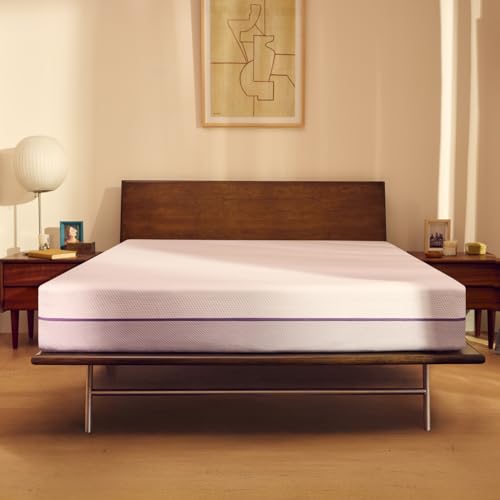
The Purple Mattress leads this guide because its mechanism answers RA’s two hardest mattress problems simultaneously. Two inches of GelFlex Grid cradle pressure points at the hips and shoulders — flexing away under concentrated load, distributing it across the lattice — so tender joints are unloaded without the sleeper sinking into a fixed position. And because the grid is instantly responsive with nothing to warm up or climb out of, rolling over and rising in the morning demand the least physical negotiation of any pick here: no foam crater, no pushing against a surface that holds your shape against you. The grid is temperature-neutral, the feel is medium-firm, and edge support foam steadies the perimeter for sitting and standing.
Strengths
- Point-precise pressure relief at hips and shoulders with alignment preserved
- Instant response — the easiest surface here for stiff, tender bodies to move on
- Temperature-neutral sleep; no heat buildup to drive restless repositioning
Trade-offs
- At one hundred pounds, setup absolutely requires help — plan it in advance
- Premium tier positioning
- The grid feel is distinctive; use the full trial to let your body vote
| Color | White |
| Size | Queen |
| Dimensions | 80 x 60 x 11 inches |
| Weight | 100 pounds |
Think about the morning specifically, because RA households do. You wake stiff; the bed’s edge is your first piece of equipment. The Purple’s supportive perimeter and buoyant surface turn sit-up, swing-legs, and stand into a sequence the mattress assists rather than resists. During the night, the same responsiveness means the dozen micro-adjustments tender joints demand happen without waking effort — you shift, the surface answers, you settle. Partners benefit too: the grid localizes disturbance better than its bounce suggests, and its coolness removes the heat restlessness that so often compounds a painful night.
The honest costs are weight and price, both stated above. Arrange delivery help as part of the purchase plan — a household managing RA should treat a hundred-pound setup as a two-visitor event, not a solo project. Judged purely on the night’s mechanics, though, nothing in the pool serves this keyword’s specific rubric better.
Best for: tender, multi-joint sleepers who need maximum ease of movement with real pressure relief / Not suited for: anyone who cannot arrange setup help, or who loves deep foam contouring
Choose it for the most RA-literate mechanism in the pool; skip it if its weight is unmanageable for your household. Check on Amazon

Layla 10″ Copper Infused Memory Foam Mattress
Our badge: Best Adjustable
The Layla 10″ Copper Infused Memory Foam Mattress is built for a condition defined by fluctuation. One face is soft, the other medium-firm: in a good week you sleep on support; in a flare week, when every joint is tender and pressure tolerance is low, the soft face receives you with the deepest cushioning in this guide. Its copper-gel memory foam firms responsively under load — the copper particles condense and push back where weight concentrates — so even the soft face keeps a support conscience. The copper also conducts heat away efficiently, the trial is 120 nights, and two memory foam pillows are included.
Strengths
- Two firmness faces matched to good weeks and flare weeks
- Copper-gel foam adapts support to load, joint by joint
- Cooling performance unusual for a deep-contouring foam
Trade-offs
- Flipping needs two able people — schedule flips for good days, with help
- Contouring foam still asks more effort to exit than the grid’s instant surface
- The soft face can under-support the pelvis for back sleepers
| Color | Natural |
| Size | Queen |
| Dimensions | 80 x 60 x 10.5 inches |
| Weight | 69 pounds |
The Layla’s logic is calendar-based, and RA households will recognize it immediately: your body is not one body across a month, so why should your mattress be one mattress? The practical pattern is to establish the medium-firm face as home base, flip to soft when a flare declares itself, and flip back when it passes — with the flip treated as a household task done by whoever’s hands are having the better week, or by a visiting helper. The 120-night trial is long enough to test both faces across real symptom weather, which is the only honest test this category allows.
Made to order in the USA, the mattress arrives fresh rather than warehouse-aged. Its contouring is genuine memory foam — slower than the Purple, kinder at peak tenderness than anything else here. For the sleeper whose flare weeks are the problem to solve, that kindness at the worst moment outranks every other metric.
Best for: fluctuating symptoms where flare weeks need a genuinely softer bed / Not suited for: solo households with no help available for flipping
Choose it for a bed that follows your condition’s rhythm; skip it if flipping is logistically impossible. Check on Amazon
Leesa Original 10″ Memory Foam Mattress
Our badge: Best Contouring
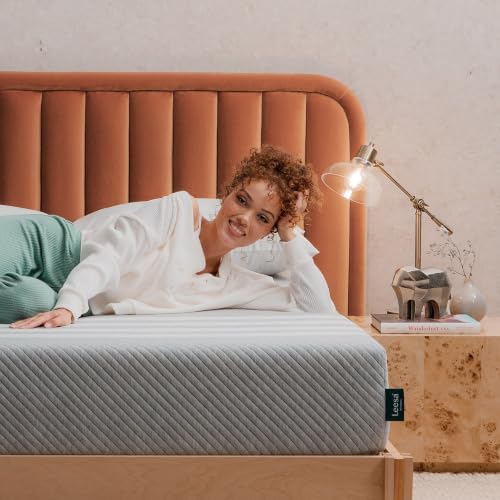
The Leesa Original 10″ Memory Foam Mattress is the contouring specialist: a premium all-foam mattress designed for cooling, contouring, and pressure relief, with targeted pressure relief named in its design. For RA sleepers, contouring has a specific virtue — it distributes load across the maximum body surface, so not only the headline joints (shoulders, hips) but the secondary ones (elbows, knees, ankles, the small joints where a limb rests against the bed) are cushioned by contact rather than left to bear point loads. The breathable twill cover keeps that wrap from feeling sealed, and the mattress is assembled in the USA with CertiPUR-US foams.
Strengths
- Full-surface contouring unloads large and small joints alike
- Targeted pressure relief is a stated design goal, executed in premium foams
- Deep motion isolation — a partner’s night stays entirely theirs
Trade-offs
- Contouring foam is the slowest surface here to exit; stiff mornings require technique
- Ten inches gives heavier sleepers less support travel
- No zoning — relief is even, not mapped
| Color | Grey |
| Size | Queen |
| Dimensions | 80 x 60 x 10 inches |
| Weight | 71 pounds |
The Leesa is the pick for the sleeper whose tenderness is everywhere and whose priority is being held gently all night. Side sleepers benefit most — the shoulder and hip receive deeply while the waist is floated — but back sleepers with tender heels, elbows, and shoulder blades will also feel the design’s point. The trade-off is the morning: memory foam’s embrace must be exited deliberately, and the how-to section below includes the roll-and-push technique that makes it manageable. Pair the Leesa with a bed height set slightly higher than standard if exits are your weak point; the combination neutralizes its one real weakness.
There is also a steadiness to this pick: a decade-established brand, considered materials, and a donation program (one mattress donated per ten sold) that signals a company planning to exist for your warranty’s lifetime. For a purchase a chronic condition makes unusually important, that institutional steadiness is a legitimate comfort.
Best for: all-over tenderness wanting maximum gentle contact and stillness / Not suited for: sleepers whose mornings demand an instantly releasing surface
Choose it for the kindest contouring in the guide; skip it if exit ease outranks night comfort. Check on Amazon

GhostBed Classic 11 Inch Memory Foam Mattress
Our badge: Best Responsive Foam
The GhostBed Classic 11 Inch Queen Memory Foam Mattress brings latex’s lesson into a foam build: its four layers include aerated latex alongside cooling gel memory foam over a high-density support core, producing a surface that is soft, supportive, and springy with minimal motion transfer. For RA sleepers, that springiness is the feature — position changes get assistance from the mattress instead of resistance, and the dense core keeps the spine aligned while you make them. The brand frames the core as supporting alignment and easing morning stiffness; we report that as comfort framing. CertiPUR-US certified, made in the USA and Canada.
Strengths
- Aerated latex makes the surface lively — rolling takes noticeably less effort than in deep foam
- High-density core holds alignment; medium-firm balance suits most positions
- At fifty pounds, the easiest queen here to rotate — a real factor for tender hands
Trade-offs
- Contains a latex layer — not for latex-sensitive shoppers
- Contouring is lighter than the Leesa’s; peak-tenderness weeks may want more wrap
- Uniform support without zoning
| Color | White |
| Size | Queen |
| Dimensions | 80 x 60 x 11 inches |
| Weight | 50 pounds |
The GhostBed occupies the practical middle of this guide: more responsive than the contouring picks, more cushioned than the grid, lighter than everything. Its ownership details suit an RA household quietly well — rotations that one person can manage on a good day, a surface that does not demand a warm-up, a feel that stays consistent because the core is dense. Couples will find its motion behavior a fair compromise: not foam-silent, but far from coil-lively.
If the Purple’s price or weight is the obstacle and the Leesa’s slow exit is the fear, the GhostBed is the pick that threads between them. It is also the guide’s best answer for combination sleepers with RA, whose position changes are frequent and whose joints charge interest on every difficult one.
Best for: combination sleepers wanting responsive, manageable, balanced comfort / Not suited for: latex-sensitive shoppers or those wanting maximum contouring
Choose it for responsive practicality; skip it if you need the deepest cushion or have a latex sensitivity. Check on Amazon

Casper Sleep Original 11″ Memory Foam Mattress
Our badge: Best for Couples
The Casper Sleep Original 11″ Memory Foam Queen Mattress earns its place on the strength of two RA-relevant virtues: zoned support and silence. Zoned Support firms the foam under the hips, waist, and lower back — keeping the heaviest, most joint-dense region of the body aligned — while the surface stays gentler at the shoulders. The motion isolation is the deepest in this guide, which matters doubly when one partner’s sleep is fragile and the other’s is restless: every absorbed movement is a tender joint not jarred awake. Open-cell foam breathes, the trial runs a hundred nights, and the foams are CertiPUR-US certified.
Strengths
- Zoned alignment for the pelvis and lower back, where joint load concentrates
- Best motion isolation here — protects fragile sleep from a partner
- Breathable, medium-firm diplomacy that suits mixed-need couples
Trade-offs
- Foam exit is slower than the grid or latex picks
- Eleven inches may under-serve very heavy sleepers
- No verified weight in the pool data
| Color | Light Gray |
| Size | Queen |
| Dimensions | 80 x 60 x 11 inches |
Couples managing RA face a specific arithmetic: the partner without the condition still needs sleep, and the partner with it needs protection from the other’s normal nocturnal movement. The Casper is engineered for exactly that household. Its medium-firm feel is the least objectionable surface in the pool for a second sleeper with ordinary needs, and its durability design — foams made to resist sinking and sagging — protects the zoning’s benefit across years.
Singles should not overlook it either: the zoned foam’s pelvis support is a genuine comfort for hip-dominant tenderness, and the breathable build keeps the contouring from sleeping hot. It is the guide’s quiet all-rounder, and in a category where extremes fail, all-rounders win more often than specialists expect.
Best for: couples where one partner’s fragile sleep needs motion protection / Not suited for: sleepers prioritizing the easiest possible bed exit
Choose it for shared-bed peace; skip it if you sleep alone and want a specialist mechanism. Check on Amazon
Sweetnight CoolNest Queen Mattress
Our badge: Best Cooling
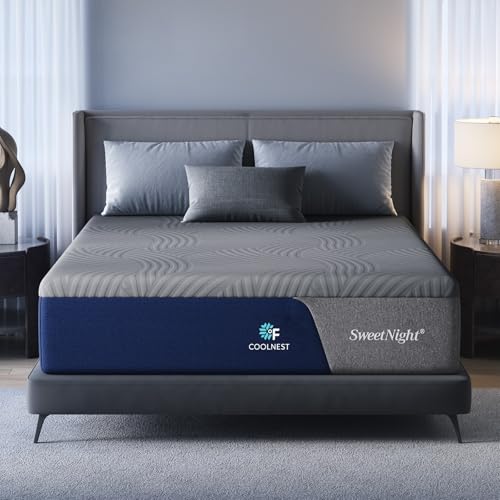
The Sweetnight CoolNest Queen Mattress closes the guide for the heat-sensitive end of RA experience: joints that feel worse in a hot, restless bed meet a fourteen-inch mattress whose CoolNest system — PCM high-resilience foam, gel-infused memory foam, and a 3D-woven ventilated cover — is the most thorough cooling stack in the pool, over a five-zone ergonomic design that cushions pressure areas from head to toe. Medium feel, CertiPUR-US certified, ten-year protection.
Strengths
- Five-zone cushioning distributes relief along the whole body
- Serious cooling engineering for inflamed, heat-sensitive sleep
- Deep profile gives tender bodies maximum material depth
Trade-offs
- Fourteen inches plus a frame can make bed height an exit challenge — set the frame low
- Expansion can take up to seventy-two hours
- Deep foam is the slowest exit in the guide alongside the Leesa
| Color | Grey & Blue |
| Size | Queen (U.S. Standard) |
| Dimensions | 80 x 60 x 14 inches |
| Weight | 68.67 pounds |
The CoolNest’s zoning is its RA argument: five zones mean the knees and lower legs — joints RA households know well — get a planned cushioning answer rather than the leftover response of a hip zone. The layered foam absorbs a partner’s motion thoroughly, and the cooling stack keeps the deep profile from the sauna effect thick foam usually brings. If your symptom diary shows hot nights preceding bad mornings, this mattress is the one whose mechanism matches your data.
Manage the exit question deliberately: pair the tall mattress with the lowest suitable frame, and test the sit-and-stand during the trial’s first days, not its last. With height solved, the CoolNest offers the guide’s most enveloping cool comfort — a genuine sanctuary bed for the heat-sensitive.
Best for: heat-sensitive sleepers with whole-body tenderness wanting zoned cooling depth / Not suited for: anyone whose bed-exit mechanics cannot tolerate a tall setup
Choose it for cool, zoned envelopment; skip it if easy exits are your top priority. Check on Amazon
Comparison Table
| Pick | Exit Ease | Pressure Style | Profile | Check price on Amazon |
|---|---|---|---|---|
| Purple Mattress | Easiest — instant response | Grid point flex | 11 inch | Check price on Amazon |
| Layla 10″ Copper | Moderate — contouring foam | Copper response, two faces | 10.5 inch | Check price on Amazon |
| Leesa Original 10″ | Slowest — deep contour | Full-surface wrap | 10 inch | Check price on Amazon |
| GhostBed Classic 11″ | Easy — springy latex layer | Balanced contour | 11 inch | Check price on Amazon |
| Casper Original 11″ | Moderate — foam | Zoned foam | 11 inch | Check price on Amazon |
| Sweetnight CoolNest | Slowest — deep foam, tall | Five-zone cushioning | 14 inch | Check price on Amazon |
How to Choose the Best Mattress for Rheumatoid Arthritis Comfort
Score the Exit as Heavily as the Sleep
Most mattress advice optimizes the eight hours horizontal and ignores the two minutes vertical that start the day. For RA, reverse some of that weight: surface responsiveness, edge support, and total bed height decide whether mornings begin with a negotiation or a routine. During any trial, perform your real morning exit ten times and grade it. A mattress that sleeps beautifully and strands you at dawn is the wrong mattress, and this guide’s comparison table includes an exit-ease column for exactly that reason.
Distributed Relief Beats a Single Showcase Zone
RA does not confine itself to one joint, so distrust designs that spend everything on one lumbar band. Look for mechanisms that answer everywhere: a grid that flexes at any point, zoning that spans the body, copper foam that responds wherever load lands, or full-surface contouring. Match the mechanism to your own tenderness map — shoulders and hips dominant, or everywhere at once — and let that map, not marketing, rank the picks.
Plan for Flares at Purchase Time
Your mattress must serve two bodies: the everyday one and the flare one. Flippable faces, a trial long enough to include a flare, and bedding you can manage with stiff hands (lightweight layers, easy fastenings) are flare planning. If a purchase only works on your good weeks, it does not work. The Layla is this guide’s flare-native pick; the others earn their place by being tolerable at your worst, which you should verify during the trial if a flare obliges.
Temperature Is a Symptom Variable
Track it in your sleep notes: many RA sleepers find hot, restless nights precede worse mornings. If your data agrees, weight cooling as a primary specification — grid air channels, PCM and gel systems, breathable covers — and keep bedroom bedding light and layered rather than heavy. A cooler bed is not a treatment; it is one less nightly aggravation, which is the honest currency of this entire guide.
Hands Matter: Bedding and Maintenance Realism
A mattress ecosystem that requires strong grips and heavy lifting will fail an RA household in practice: fitted sheets wrestled onto a fourteen-inch mattress, a sixty-nine-pound flip, a protector with a stubborn zipper. Choose depths you can dress, schedule heavy tasks for good days or helpers, and prefer protectors and covers designed for easy handling. The best mattress is the one whose whole routine your hands can sustain — a criterion no showroom tests and every owner lives.
How Do You Make Mornings Easier? A Bed-Exit Routine
Physical therapists teach bed mobility as a sequence, and the mattress you choose should support it: roll to your side using the surface’s response rather than fighting it, drop your legs over the edge so their weight helps lever the torso up (the log-roll principle), push through the forearm and hand as tolerated, then sit for a full minute before standing — letting stiffness and blood pressure both settle. Equipment helps: a bed height that puts your feet flat with knees near ninety degrees, a sturdy nightstand or bed rail positioned where your stronger hand lands, and a responsive mattress edge that does not collapse as you load it. Practice the sequence during the trial on a good morning and a bad one; the mattress that serves both is the keeper. Warmth helps many stiff joints — a warm room or a few minutes of gentle hand movement before rising are small rituals with outsized returns.
Problem: I sink into foam and cannot push myself up — your surface is too slow for your hands; a responsive pick (grid, latex-layer) or a firmer face is the fix, and bed height adjustment helps immediately.
Problem: the bed is too high or too low to exit safely — adjust the frame or foundation, not your technique; total height is a system setting, and getting it right is a one-time fix with nightly returns.
Problem: sheets and protectors are a hand battle — switch to lighter bedding, deep-pocket designs that do not need forcing, and dress the bed on a good day with help rather than struggling on a bad one.
Problem: my partner’s movement wakes my tender joints — prioritize the motion-isolating picks (Casper, Leesa) and separate blankets; if it persists, two twin XLs on one frame is a legitimate, common solution.
Problem: flare weeks make every surface wrong — that is the flippable pick’s reason to exist; short of that, a thin cushioning layer added only for flare weeks gives a fixed mattress a second personality.
Warmth, Weight, and Bedding: The RA Sleeper’s Details
Small bedding decisions carry unusual weight for this keyword. Heavy duvets load tender legs and feet and make turning an effort; layered light blankets give the same warmth with a fraction of the drag and let you adjust through the night with stiff hands. Electric warmth — a heated pad used to warm the bed before entry, then switched off or used per its safety guidance and your clinician’s advice — is a ritual many stiff-jointed sleepers swear by for the morning side of the night. Pillow choice should serve the neck and shoulders without demanding grip strength to arrange: a single well-chosen pillow beats a sculptural stack you must rebuild nightly. And keep the night’s necessities — water in a bottle your hands can open, medication your clinician has scheduled, a phone — arranged so a bad night never requires a dark expedition. Comfort for RA is a hundred small mercies; the mattress is merely the largest.
Talking to Your Rheumatology Team About Sleep
Sleep belongs in your rheumatology conversations, and a mattress change is worth mentioning like any other change in your routine. Your team can advise on sleep positions for your specific joint involvement, on whether elevation strategies suit you, and on how sleep quality interacts with your treatment plan and flare tracking. Bring your sleep log — the same notes this guide asks you to keep during a trial — because patterns you have measured are more useful to a clinician than impressions. And if sleep deteriorates sharply, or pain changes character, that is clinical information, not a shopping signal: report it rather than replacing the mattress again. The healthiest framing of this entire guide is that the mattress serves the care plan; it never substitutes for it. Households earlier in the RA journey will find the broader comfort framework in Best Mattresses For Chronic Pain a useful companion read.
Flare Nights vs Ordinary Nights: Planning for Both
RA sleep comes in two weathers, and a well-chosen setup serves both without renegotiation. Ordinary nights ask for the baseline this guide has built: level support, pressure-kind surfaces, easy movement, a room that stays temperature-neutral. Flare nights add their own requirements, and the households that cope best prepare them in advance rather than improvising at midnight with inflamed hands. A second, softer configuration within reach — the flippable pick turned to its gentle side, a spare pillow arrangement that unloads the currently angry joint, bedding light enough to move under without a fight — converts a flare from a crisis into a protocol. Keep water, medication, and anything the night might demand on the nightstand before the flare, not during it; the reaching and gripping that healthy hands ignore are a flare night’s real obstacles, and the bedroom should be arranged so that nothing essential requires them.
Morning after a flare deserves the same pre-planning: the first movements of the day, taken gently in bed before weight-bearing, are where many RA sleepers set the day’s ceiling, and a mattress whose surface allows easy in-bed movement — responsive foam, the grid, coils that return energy — is a participant in that routine rather than an obstacle to it. The broader comfort picture — the degenerative patterns that often share a household if not a body — runs through Best Mattresses For Degenerative Disc Disease, while Best Mattresses For Pressure Relief takes the mechanism-first view of the contact-point problem that flares make urgent. And because flares respect no calendar, the guest-room version of the protocol matters for travel between family homes — a familiar pillow carried along, and a host bed whose firmness you already know, are small mercies that experienced RA households quietly arrange. Plan for both weathers, and the bad nights get shorter even when they do not get rarer. The everyday-stiffness companion to all of this lives in Best Mattresses For Sore Backs, for the mornings when the weather is ordinary and the goal is simply to start the day unbraced.
Traveling With RA: Sleep Away From the Home Setup
Every carefully built home system meets its test at the hotel, the family visit, the hospital-adjacent stay — the nights away where the mattress is a stranger. Experienced RA travelers carry a small kit whose logic this guide endorses: their own pillow, or at minimum its case and a travel pillow whose height they know, because pillow geometry is the variable most within the traveler’s control and the one hotels vary most wildly. A lightweight layer of their own — a washable throw that serves as both warmth control and a familiar surface — reduces the foreign bed’s unpredictability. Requests made in advance are the other half of the kit: a room where the bed is not the softest in the building, extra pillows delivered before arrival rather than requested at midnight with inflamed hands, and a ground-floor or elevator-served room when stairs are part of the condition’s current weather. None of this eliminates the away-night penalty; all of it measurably reduces it, and the morning log from trips becomes part of the clinical picture — many rheumatology patients discover their disease’s patterns in the contrast between home nights and away nights.
The return home deserves a line as well: the first night back on the chosen mattress is data — the relief or its absence tells you what your home system is actually doing, stripped of habituation. RA sleepers who travel even occasionally own this comparison for free; use it at every purchase decision, because it is the closest thing to a controlled experiment that mattress shopping ever offers.
Seasonal Patterns: Weather, Flares, and the Bedroom Climate
Many RA sleepers notice a weather signature in their nights — cold damp weeks that stiffen, heat that swells, seasonal transitions that unsettle — and while the science of weather and joint symptoms remains honestly unsettled, the bedroom’s climate is one variable fully within the sleeper’s control. A room held at a steady, slightly cool temperature removes one source of nightly variation entirely; bedding layered for adjustment rather than a single heavy cover lets the sleeper respond to a 3 a.m. temperature swing without a full waking negotiation; and the temperature-neutral surfaces in this guide — the grid above all — refuse to add the mattress’s own heat to a swollen joint’s complaints. Humidity deserves its sentence: very dry winter air irritates airways and skin that RA medications may already have sensitized, and a modest humidifier, cleaned on schedule, is a legitimate member of the sleep system for many households.
The seasonal lens also sharpens the trial’s timing. A mattress trialed only in a mild month has been examined in one weather; the long trials in this guide exist partly so a chronic condition’s seasons can all cast their votes. Buy when you must — pain does not consult the calendar — but judge, where the trial allows, across a change of season before calling the verdict final.
Hands-On Help: When a Partner or Caregiver Shares the Routine
RA households often include a second pair of hands in the sleep system — the partner who straightens the bedding that inflamed fingers cannot grip, the caregiver who helps with the morning’s first transfers — and the mattress purchase should be made with those hands in the room. Bedding weight is a shared specification: duvets and protectors that one partner can change alone on a flare day are worth more than premium thread counts. Bed height is a shared specification: the surface that suits the sleeper’s transfers must also suit the helper’s back, because a care routine that injures the caregiver helps no one for long. Even the trial log improves when it is shared — a partner’s observations of the night (restlessness, wake counts, the sounds of discomfort the sleeper sleeps through) are data the sleeper cannot collect alone.
None of this diminishes the sleeper’s authority over the final choice; the body in the bed renders the verdict. It simply recognizes that in an RA household, sleep is a team outcome, and the best equipment decisions are the ones the whole team can operate on the worst morning of the year.
A Closing Note on Agency
RA removes choices in many domains, which is precisely why the choices that remain — the surface, the routine, the room — deserve to be exercised deliberately rather than defaulted. A mattress chosen by specification, trialed by log, and kept or returned on evidence is a small, complete act of agency in a condition that tolerates too few of them. Let the purchase be that, and let the sleep it buys compound quietly in the background of everything else the condition demands.
Common Buying Mistakes
Optimizing Only for the Night
A mattress chosen purely for sleep feel can fail at the exit, the flip, the sheet change — the moments RA makes expensive. Evaluate the whole ownership routine during the trial, mornings included.
Buying Maximum Softness for Tender Joints
Plush feels merciful and behaves cruelly: it traps movement, collapses edges, and lets the pelvis sag into angles tender hips must endure. Tender joints need distributed relief over support — the mechanisms in this guide — not a soft swamp.
Ignoring Your Hands in the Purchase
If you cannot flip it, rotate it, or dress it, its specifications are theoretical. Match the mattress’s maintenance demands to your household’s real hands, and schedule help for the rest without embarrassment.
Testing Only in a Good Week
A mattress that has never met your flare has not been tested. Prefer trials long enough to include one, and if a flare arrives during the trial, treat its verdict as the most valuable data you own.
Believing Comfort Claims Are Treatment Claims
Any seller implying a mattress improves the disease itself is overclaiming. Buy comfort, support, and sleep protection — and keep disease management where it belongs, with your care team.
Final Recommendation
The Purple Mattress is our top recommendation for rheumatoid arthritis comfort: its grid unloads tender joints point by point, its instant response makes rolling and rising as easy as any surface in the pool, and it sleeps cool through every season. Fluctuating symptoms point to the Layla’s two faces — Check on Amazon to review its trial — while all-over tenderness points to the Leesa’s wrap and couples to the Casper’s peacekeeping. Arrange setup help, set your bed height deliberately, trial across a flare if one comes, and tell your care team what you changed. The mattress will not treat anything; it can absolutely stop making nights and mornings harder than they need to be. For daytime rest surfaces that follow the same principles, Best Mattresses For Sleeper Sofas covers the nap-and-pacing side of the household.
Frequently Asked Questions
What mattress firmness is best for rheumatoid arthritis comfort?
Most RA sleepers land on medium to medium-firm surfaces with strong pressure relief — supportive enough to keep joints aligned, cushioned enough to unload tender points, and responsive enough to exit easily. Fluctuating symptoms may justify a flippable design so firmness can follow the week.
Is memory foam a good choice with RA?
Its contouring distributes pressure beautifully across many joints, which is why several foam picks appear here. Its weakness is exit effort: deep, slow foam can trap a stiff body at dawn. Responsive foams, latex layers, and grids answer that weakness — choose by how your mornings go, not just your nights.
How can I make getting out of bed easier?
Set total bed height so your feet rest flat with knees near ninety degrees when seated at the edge, choose a mattress with a supportive edge and responsive surface, use the roll-to-side and leg-lever sequence, and sit for a minute before standing. A bed rail or sturdy nightstand where your stronger hand lands adds security.
Should I choose a mattress that sleeps cool?
If your own notes show hot, restless nights preceding worse mornings — a common pattern — yes, weight cooling heavily: grid airflow, PCM/gel systems, and breathable covers all help. Temperature is a comfort variable you can actually control, unlike most of the condition’s weather.
How long a trial do I need?
Long enough to include a flare if your pattern produces them regularly — which argues for the longest trials available (120 nights and beyond in this guide) and against judging in the first fortnight. Your flare week’s verdict is the most honest data in the whole purchase.
Can a mattress help my RA?
It can help your sleep and your mornings’ mechanics — less pressure punishment, easier movement, fewer wake-ups — and good sleep supports everything else you and your care team are doing. It does not treat the disease, and any claim otherwise should end your interest in that seller. Keep the mattress decision inside your overall care conversation.


