Disclosure: As an Amazon Associate, dailyhomedecorating.com earns from qualifying purchases. Links to Amazon on this page are affiliate links; they cost you nothing extra. Prices and availability change often, so check the current Amazon listing before you buy.
The best mattresses for pressure relief all do one physical thing well: they increase the area over which your body weight is spread, so no single point — not your shoulder, not your hip, not your heel — carries a concentrated load for eight hours. Pressure is just force divided by area, and every technology in this guide is an area-multiplying machine: memory foam that contours into every curve, grids that flex away under bony points, zones that soften exactly where you press hardest, and copper foams that adjust their resistance to the load they feel. If you wake up with numb arms, aching hips, sore shoulders, or the sense that you spent the night lying on your own skeleton, your current mattress is failing at that one job, and this guide is the fix-it list.
We screened the verified pool for named pressure-relief engineering rather than generic softness, because softness alone is a trap: a merely soft mattress lets you sink until your heaviest points bottom out against the hard support core, which concentrates pressure worse than a firm bed would. Real relief pairs a giving surface with a core that stops the sink at the right depth. Every pick below has both halves of that equation, documented in its verified listing.
Where to Buy
All six picks are sold on Amazon, where you should check current price, size, and trial terms before buying. Begin with the Purple Mattress, the most mechanically distinctive relief surface in the pool; confirm it via this Check on Amazon link. The remaining picks: Sweetnight CoolNest Queen Mattress — Check on Amazon; Nectar 12″ Memory Foam Mattress — Check on Amazon; Zinus 12 Inch Green Tea Memory Foam Mattress — Check on Amazon; Layla 10″ Copper Infused Memory Foam Mattress — Check on Amazon; Leesa Original 10″ Memory Foam Mattress — Check on Amazon.
In this guide
Quick Picks
| Pick | Badge | Why it earns its place |
|---|---|---|
| Purple Mattress | Best Overall | The GelFlex Grid collapses under shoulders and hips and holds firm elsewhere — targeted relief without the sink. |
| Sweetnight CoolNest Queen Mattress | Best for Hot Sleepers | Five-zone ergonomic support cushions pressure areas head to toe inside a genuinely cooling build. |
| Nectar 12″ Memory Foam Mattress | Best Firm Relief | Contouring memory foam relieves hips and back pressure over a firm, alignment-keeping support system, with a year-long trial. |
| Zinus 12 Inch Green Tea Memory Foam Mattress | Best Zoned Value | Patented zoned pressure relief and certified materials at a mid-market tier. |
| Layla 10″ Copper Infused Memory Foam Mattress | Best Adjustable | Flippable soft/medium-firm faces plus copper foam that firms under load — two relief profiles in one mattress. |
| Leesa Original 10″ Memory Foam Mattress | Best for Side Sleepers | Premium contouring foam with targeted pressure relief, designed for all positions and kindest to shoulders. |
Key Takeaways
- Pressure relief is load-spreading: contouring, flexing grids, zoning, and load-responsive foams all do it differently.
- Surface give must sit on a support core, or relief collapses into bottoming out by 3 a.m.
- Side sleepers need the most relief (shoulder and hip carry the load); back sleepers need evenness; stomach sleepers need restraint.
- Heavier bodies need deeper comfort layers to achieve the same pressure spread as lighter bodies.
- Cooling matters to relief: a hot sleeper shifts position constantly, re-loading the same points all night.
- Judge relief over weeks with morning notes, not one night — and if aches concentrate in the joints specifically, Best Mattresses For Joint Pain narrows this guide’s logic to shoulders, hips, and knees.
How These Picks Were Chosen
We required each pick to name its relief mechanism in its verified listing: a grid, a zoned system, a stated pressure-relief design goal, or a load-responsive foam. Generic soft mattresses without a mechanism were excluded, as were thin or firm mattresses whose listings emphasize support alone — excellent products for other keywords, wrong tools for this one. We then diversified mechanisms deliberately: no two top picks relieve pressure the same way, because readers arrive here having often already failed with one mechanism and need a genuinely different answer, not a rebrand.
We also checked the support side of every listing, because relief without support is this category’s most common fraud. Each pick documents a base, core, or support layer with real structure. Trial lengths were weighed as evidence of manufacturer confidence and as practical testing windows for the reader. As always, this is desk research from verified pool data; nobody’s pressure map was measured, and individual bodies will rank these mechanisms differently — which is precisely why the mechanisms differ.
The 6 Best Mattresses for Pressure Relief — Reviewed

Purple Mattress
Our badge: Best Overall
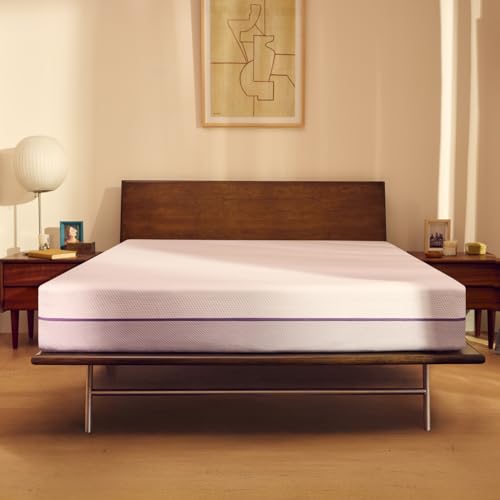
The Purple Mattress relieves pressure by geometry. Two inches of GelFlex Grid — a lattice of hyper-elastic polymer walls — sits atop the support layers, and when a shoulder or hip presses in, the grid walls under that point buckle and fold, dropping the joint into a cradle while the surrounding grid stays upright and supportive. The load that a foam mattress spreads by compression, the grid spreads by selective collapse, and it does so instantly, with no warm-up and no memory. Purple’s listing frames the outcome as cradling pressure points at the hips and shoulders while keeping the spine aligned, in a medium-firm feel for every sleep position.
Strengths
- Grid flexes only where loaded — relief and support coexist at different points simultaneously
- Instant response: no foam warm-up, no trapped feeling when changing position
- Air channels through the grid keep the surface temperature-neutral all night
Trade-offs
- The feel is unlike any foam; some sleepers need weeks to decide, so use the trial
- Heaviest pick here at one hundred pounds — a planned, two-person setup
- Premium tier; the grid’s engineering is the cost driver
| Color | White |
| Size | Queen |
| Dimensions | 80 x 60 x 11 inches |
| Weight | 100 pounds |
The lived experience differs from foam in ways pressure shoppers care about. There is no sinking-in ceremony and no climbing out of a crater at 3 a.m.; you lie on a surface that yields precisely at your bony points and nowhere else, and rolling over is a non-event. Sleepers whose pressure complaint includes numb arms — the classic sign of a shoulder point carrying too much load on too small an area — often find the grid’s local collapse answers what contouring foam could not, because foam resists proportionally everywhere while the grid effectively gives way completely at the point of need. Edge support foam keeps the perimeter honest for sitting, and the durable base layer keeps the whole structure from sagging into the trough that would undo the grid’s work.
Temperature neutrality deserves its own sentence in a pressure guide: hot sleepers move more, and every move re-seats your weight on the same points. A surface that never heats up breaks that cycle. If your pressure story is primarily a side-sleeping story, compare the grid’s answer with the Leesa’s foam answer below — both are excellent, and the difference is pure feel preference. Shoppers whose pressure points are also arthritic will find the joint-specific discussion in Best Mattresses For Rheumatoid Arthritis a sobering, useful extension of this guide.
Best for: side and combination sleepers wanting maximum point relief without foam sink / Not suited for: devoted memory-foam-hug sleepers and anyone who cannot manage a very heavy setup
Choose it for the most advanced relief mechanism in the pool; skip it if you know you love traditional contouring foam. Check on Amazon
Sweetnight CoolNest Queen Mattress
Our badge: Best for Hot Sleepers
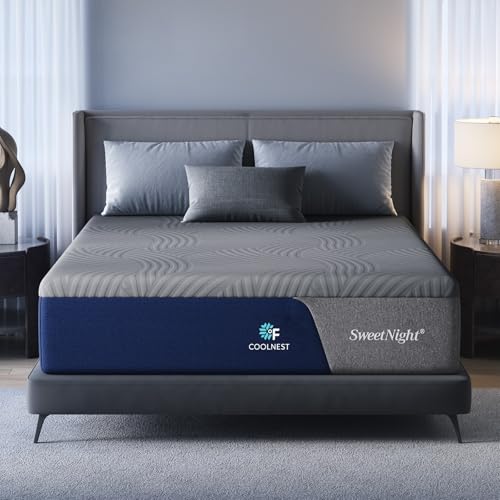
The Sweetnight CoolNest Queen Mattress relieves pressure by zoning: a five-zone ergonomic design in which support and comfort foams cushion pressure areas from head to toe, redistributing pressure while maintaining stability and balanced support. Fourteen inches of layered material gives those zones depth to work with, and the CoolNest cooling system — PCM high-resilience foam, gel-infused memory foam, and a 3D-woven ventilated cover — keeps the whole deep, cushioned structure from sleeping hot, the usual tax on thick pressure-relief mattresses.
Strengths
- Five-zone design answers pressure at shoulders, lumbar, hips, and legs individually
- Deep fourteen-inch profile: generous material between your joints and the core
- Layered cooling keeps a thick relief mattress breathable
Trade-offs
- Tall profile requires deep-pocket sheets and a lower frame
- Expansion can take up to seventy-two hours
- Medium feel may underwhelm sleepers who want a distinctly plush surface
| Color | Grey & Blue |
| Size | Queen (U.S. Standard) |
| Dimensions | 80 x 60 x 14 inches |
| Weight | 68.67 pounds |
Five zones is not a marketing escalation over three; it is a recognition that pressure events happen along the whole body, and that the legs and lumbar deserve planned answers rather than whatever the hip zone’s leftovers provide. On the CoolNest, a back sleeper’s heels and calves meet a zone tuned for them, while the hip zone does its heavier work independently. The motion isolation is thorough — multiple foam layers absorbing movement in sequence — so a partner’s restlessness does not keep re-aiming your pressure points. The brand notes recognition by the American Chiropractic Association for the design; we report that as the listing’s claim, in comfort terms.
For hot sleepers, the cooling stack is the differentiator that justifies this pick’s high placement: gel foam alone on a fourteen-inch mattress would still sleep warm, but the PCM layer’s heat handling and the cover’s ventilation design give the heat somewhere to go. If your pressure relief has always come with a sweating surcharge, this is the pool’s most complete rebuttal. The mattress is CertiPUR-US certified and carries ten-year protection.
Best for: hot sleepers with whole-body pressure points wanting zoned, deep cushioning / Not suited for: low frames, shallow sheets, or firm-bed purists
Choose it for zoned relief that stays cool; skip it if you want a slim, firm profile. Check on Amazon

Nectar 12″ Memory Foam Mattress
Our badge: Best Firm Relief
The Nectar 12″ Memory Foam Mattress proves that pressure relief and firmness are not enemies. Its contouring memory foam layer is described as relieving pressure and reducing stress on high-tension areas like the hips and back, while the adaptive support layer beneath promotes spinal alignment — and the overall feel is firm, with a touch of comfort rather than a plush sink. For back and stomach sleepers, whose pressure problem is usually a sagging midsection rather than a hard surface, that firm relief is exactly the right prescription in comfort terms.
Strengths
- Contouring relief delivered on a firm, alignment-first platform
- 365-night trial and forever warranty — unmatched evaluation time
- Cooling top layer over the foam stack tempers heat
Trade-offs
- Firm lean can under-cushion very light side sleepers’ shoulders
- Foam response is slow compared with the grid’s instant flex
- Seventy-eight pounds makes rotation a shared chore
| Color | White |
| Size | Queen |
| Dimensions | 80 x 60 x 12 inches |
| Weight | 78 pounds |
The Nectar’s relief works by contour depth under control: the memory foam molds to the body’s curves, filling the lumbar hollow and wrapping the hip, so load spreads across the maximum contact area — but the support foam refuses to let that contour become a crater. Back sleepers feel the difference as an absence: no pressure ridge at the shoulder blades, no pelvic tilt from a sinking seat, just even contact. Stomach sleepers, who generate pressure at the ribs and pelvis and are betrayed by soft mattresses into a back-bending sag, get the firm platform their position demands with enough surface give to stay comfortable.
The year-long trial deserves emphasis in a pressure guide, because pressure problems are episodic — a mattress that relieves beautifully in a good month must also perform in a bad one. Twelve months of testing across seasons, workloads, and flare patterns is real evidence, and the forever warranty says the brand expects the support core to outlast the experiment. Side sleepers who love the Nectar’s build but need more shoulder give should compare the Casper-style zoning in our sibling guides rather than forcing this firm pick into a soft job.
Best for: back and stomach sleepers wanting pressure relief that never sags / Not suited for: light side sleepers needing deep shoulder cushioning
Choose it for firm, durable relief with a year to judge; skip it if plush is the point. Check on Amazon

Zinus 12 Inch Green Tea Memory Foam Mattress
Our badge: Best Zoned Value
The Zinus 12 Inch Queen Green Tea Memory Foam Mattress delivers patented zoned pressure relief — targeted cushioning and support mapped across the surface — at the friendliest tier among this guide’s engineered picks. The zoned foam works as a system with a breathable knitted cover and durable base foam: contour where you load it, support where you need holding, freshness from green tea and charcoal infusions, and materials certified by CertiPUR-US with an OEKO-TEX Standard 100 cover, fiberglass free.
Strengths
- Named, patented zoning — a real relief mechanism, not just softness
- Certified foams and cover at a mid-market tier
- Foam motion isolation protects light sleepers’ pressure points from partner movement
Trade-offs
- Traditional slow foam response when changing position
- Warmer sleep than the grid or the CoolNest despite the breathable cover
- Needs a day or two of airing for the initial unboxing odor
| Color | White |
| Size | Queen |
| Dimensions | 80 x 60 x 12 inches |
| Weight | 62.3 pounds |
Zoning is foam’s answer to the grid: instead of flexing locally, the surface is manufactured with different responses in different bands, so the shoulder and hip bands yield more deeply while the waist band holds the spine’s line. For side sleepers — the largest pressure-relief constituency — that asymmetry is the whole game, and the Zinus implements it in a twelve-inch stack with enough base foam to keep the yielding honest. The freshness infusions are a practical bonus for a mattress whose job is nightly, years-long service.
Value framing matters here: pressure shoppers often assume relief requires the premium tier, and the Zinus demonstrates that a patented mechanism plus certified materials can arrive at a mid-market price structure. What you give up versus the top picks is responsiveness (foam is slow) and cooling headroom. What you keep is the essential physics — load spread by design rather than by luck. It is the pick we would hand a first-time pressure shopper who wants engineering, not adjectives, on a sane budget.
Best for: side sleepers wanting genuine zoned relief at a mid-market tier / Not suited for: hot, restless sleepers who change position constantly
Choose it for zoned value; skip it if instant response matters more than contour. Check on Amazon

Layla 10″ Copper Infused Memory Foam Mattress
Our badge: Best Adjustable
The Layla 10″ Copper Infused Memory Foam Mattress relieves pressure by adaptation — twice over. First, it is flippable, soft on one face and medium-firm on the other, so your relief profile can change with your body, your position, or your partner. Second, its copper-gel memory foam responds to load itself: the copper particles condense under weight and push back proportionally, giving more support where you press hardest and more give where you do not — a self-adjusting pressure map built into the foam’s physics. Add copper’s heat-transfer efficiency and a 120-night trial, and this is the most adaptable relief platform in the pool.
Strengths
- Two firmness faces — the only pick that can change its relief profile on demand
- Copper-gel foam firms responsively under concentrated loads like hips
- Efficient copper cooling keeps deep contouring from sleeping hot
Trade-offs
- Flipping sixty-nine pounds requires two people and a free afternoon
- Soft side can let stomach sleepers’ hips sink too far
- Variable-response foam feels unfamiliar for the first nights
| Color | Natural |
| Size | Queen |
| Dimensions | 80 x 60 x 10.5 inches |
| Weight | 69 pounds |
The Layla’s deepest appeal is insurance against your own uncertainty. Pressure needs are not stable facts: they shift with weight changes, injuries, pregnancies, new training routines, and simple aging. A single-feel mattress is a bet that your needs will stay put; the Layla hedges the bet with a second surface. Couples exploit it differently — one face for the compromise months, flipped when preferences diverge — and the included pair of memory foam pillows completes the pressure system at the head end, where neck and shoulder relief is decided.
Made to order in the USA, the mattress also skips the long compressed storage that can pre-age foam. In feel, expect contouring with a responsive twist: the copper foam receives you like memory foam, then firms its answer as you settle, which reads as support arriving exactly where the load is. For pressure shoppers who have returned a mattress for being almost right, “almost” is what the flip is for.
Best for: sleepers whose pressure needs change, and couples negotiating two different bodies / Not suited for: anyone who will never realistically flip a heavy mattress
Choose it for adaptability; skip it for a single fixed feel you already know you love. Check on Amazon
Leesa Original 10″ Memory Foam Mattress
Our badge: Best for Side Sleepers
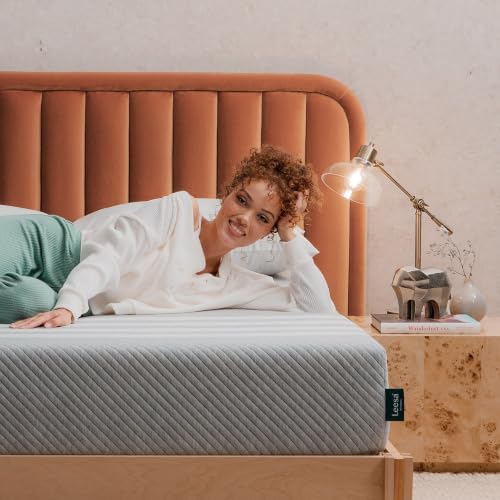
The Leesa Original 10″ Memory Foam Mattress is the contouring purist’s pick: a premium all-foam mattress designed for cooling, contouring, and pressure relief, with targeted pressure relief named among its design goals and a feel tuned for back, stomach, and side sleepers alike. Its relief mechanism is classic and well executed — premium foams that mold to the body’s map, spreading load across the full contact surface — in a ten-inch profile with a breathable signature twill cover.
Strengths
- Targeted pressure relief is a stated design goal, executed in premium foams
- Contouring that suits the shoulder-and-hip load pattern of side sleeping
- Breathable cover and cooling design keep contouring comfortable
Trade-offs
- Ten inches gives heavier sleepers less depth before the support core
- Slow foam response versus the grid and copper picks
- No zoning — relief is even-handed rather than mapped
| Color | Grey |
| Size | Queen |
| Dimensions | 80 x 60 x 10 inches |
| Weight | 71 pounds |
There is a reason contouring foam remains the default pressure answer: done with quality foams, it works, and the Leesa is the pool’s most polished version of the idea. The surface receives the shoulder until the load is shared by the whole ribcage, receives the hip until the pelvis floats level, and the sleeper experiences it simply as the absence of points. Assembly in the USA and CertiPUR-US certification cover the materials file, and the brand’s donation program — one mattress donated for every ten sold — is a legitimate values tiebreaker in a crowded field.
Choose the Leesa over the Zinus when you want contouring without zoning’s firmer waist band, and over the Layla when you want one refined feel rather than two experimental ones. Its ten-inch depth is the one number to respect: average-weight sleepers get full relief from it, while substantially heavier side sleepers should take the twelve-to-fourteen-inch picks or the grid, where depth or flex provides the extra travel their load requires.
Best for: average-weight side and combination sleepers wanting premium, even contouring / Not suited for: very heavy sleepers needing maximum foam depth
Choose it for polished, proven contouring; skip it if you need zoning, flipping, or extra depth. Check on Amazon
Comparison Table
| Pick | Relief Mechanism | Support Answer | Profile | Check price on Amazon |
|---|---|---|---|---|
| Purple Mattress | GelFlex Grid local flex | Durable base + edge foam | 11 inch | Check price on Amazon |
| Sweetnight CoolNest | Five-zone ergonomic foam | Balanced zoned support | 14 inch | Check price on Amazon |
| Nectar 12″ Memory Foam | Contouring memory foam | Adaptive support layer, firm | 12 inch | Check price on Amazon |
| Zinus 12 Inch Green Tea | Patented zoned foam | Durable base foam | 12 inch | Check price on Amazon |
| Layla 10″ Copper | Copper-gel load response | Dual firmness faces | 10.5 inch | Check price on Amazon |
| Leesa Original 10″ | Targeted foam contouring | Premium foam core | 10 inch | Check price on Amazon |
How to Choose the Best Mattress for Pressure Relief
Identify Your Pressure Map First
Relief is local, so shop locally. Note where you wake sore or numb: shoulders point to side sleeping and a need for deep point flex (grid, zoned shoulder bands, soft-face flippables); hips point to the same position with more load, demanding depth; heels and calves point to back sleeping and whole-surface evenness; a generally achy everything points to a mattress that has simply gone hard and dead with age. Your map should choose your mechanism — the comparison table is organized to let it.
Depth Scales With Body Weight
The physics are unforgiving: more weight needs more travel before the support core, or the point bottoms out and pressure concentrates on the core’s hardness. Lighter sleepers achieve full relief in ten-inch builds like the Leesa; average sleepers in the twelve-inch class; heavier sleepers should start at twelve to fourteen inches or choose the grid, whose flexing travel does not depend on foam depth. When in doubt between two depths, the deeper one is the safer pressure purchase.
Do Not Confuse Soft With Relieving
A soft mattress with a weak core is a pressure trap: the surface gives, the pelvis plunges, and the shoulder ends up bearing load against the compressed bottom of the comfort layer at a twisted angle. Real relief is a system — give at the top, a planned stop underneath. Every pick in this guide documents both halves; any mattress that markets only softness should be asked the support question out loud. The back-focused version of this principle anchors Best Mattresses For Sore Backs, worth reading if your pressure map includes a lumbar entry.
Cooling Is a Pressure Feature
Heat makes sleepers shift, and shifting re-loads points. Gel infusions, copper networks, PCM layers, ventilated covers, and the grid’s air channels all appear in this guide not as luxury garnish but as relief infrastructure: a sleeper who stays settled in a well-spread position keeps the benefit of the surface all night. If you know you sleep hot, weight cooling as heavily as the relief mechanism itself.
Test Across Your Own Cycle
Pressure sensitivity fluctuates — with workload, exercise, weather, and health. A one-week trial in a good week proves little. Use the long trials here (the Nectar’s year is the extreme case) across at least one demanding stretch, keep morning notes keyed to your pressure map, and let the trend decide. Returning a mattress that failed your map is the system working, not a shopping failure.
How Do You Set Up a Pressure-Relief Mattress for Best Results?
Give the mattress its full expansion time before judging — relief layers are the last to recover their designed thickness, and a half-expanded comfort layer under-delivers exactly the cushion you bought. Place it on a supportive, non-sagging foundation with slats close enough that foam cannot sag between them. Skip thick plush pads and pillow-tops added on top: they bury engineered surfaces under generic softness and blur zoning and grid behavior alike. If you need extra point cushioning during the adaptation weeks, use a thin, targeted pad at the specific point rather than upholstering the whole bed. Rotate head-to-foot on schedule to spread the pressure map across the surface’s life.
Problem: numb arm during the night — your shoulder point is still overloaded; check that the comfort layer has fully expanded, consider the grid or a softer face, and review pillow height, which changes shoulder load directly.
Problem: relief feels great at bedtime, poor by morning — classic bottoming out: the comfort layer is compressing fully under sustained load; you need more depth or a flexing mechanism rather than more softness.
Problem: new pressure point at the waist — a zoned mattress’s firm band may be landing wrong for your height; shift your sleeping position a few inches toward the head or foot to realign zones with anatomy.
Problem: partner’s side feels different from yours — rotate the mattress and swap sides for a week; early wear differences usually equalize, and a persistent difference is warranty-relevant information.
Problem: surface feels firmer in winter — memory foam firms in cold rooms; warm the bedroom slightly or allow the foam a few minutes of body heat before judging the night’s relief.
Pressure Relief for Side Sleepers: The Deep Dive
Side sleepers are the pressure-relief market, and their geometry explains why. Lying on your side, your body’s contact patch shrinks to a shoulder, a ribcage edge, a hip, and a knee — a fraction of the area available to a back sleeper — while the weight those points carry barely changes. The shoulder is the hardest problem: it must sink far enough to let the spine run straight, yet it is a bony, narrow point that protests early. Every top mechanism in this guide is, at heart, a shoulder answer: the grid collapses under it, the zones soften for it, the copper foam yields then firms beneath it, the contouring foams wrap it. If you are a side sleeper choosing among these picks, choose by shoulder verdict after two weeks of trial — your hip will usually forgive what your shoulder will not. And complete the geometry with the pillow: shoulder depth on the mattress must be matched by pillow loft beside it, or the neck pays for the shoulder’s comfort.
Pressure Relief and Recovery: Athletes, Physical Jobs, and Aging Bodies
Three groups arrive at this keyword with the same physics and different stories. Athletes and people in physical jobs load their muscles and joints all day and need the night to be pure unloading — deep, even relief with cooling, because training bodies also sleep hot; the CoolNest and Purple serve them best here. Aging bodies lose some of the natural padding over bony points, so yesterday’s perfectly fine mattress becomes today’s pressure problem without the mattress changing at all; the answer is more relief travel, not more firmness, and the deeper picks earn their profiles honestly. Desk workers carry their pressure story in the shoulders and neck from the day’s posture, and for them the shoulder-focused mechanisms plus a correctly lofted pillow do the most work. In every case the principle holds: the mattress’s job is to make the night’s eight hours the lowest-pressure hours of the twenty-four.
Pressure Relief for Different Bodies: Matching the Mechanism to the Map
Pressure maps differ, and the mechanism that wins depends on whose map it is. A light side sleeper concentrates modest total weight on small, sharp contact points — shoulder tip, hip point, knee — and needs a surface that yields deeply at points without requiring much force to engage: the grid’s low-threshold flex and the softer zoned foams answer best, while firm mattresses, however excellent for others, simply never receive enough load to activate their comfort layers and sleep hard. An average build engages every mechanism in this guide as designed, which is why the middle picks are the safest recommendations in the category. A heavier sleeper generates pressure by load as much as by shape: points carry more force, and the requirement flips — the surface must yield at points while the structure beneath refuses to bottom out, which is the deep, zoned, or coil-backed builds’ entire argument, and why thin plush mattresses fail heavier bodies fastest despite feeling softest in the store. Couples complicate the map twice over: two pressure signatures on one surface, often mismatched in weight, which is where local-response mechanisms — grid cells, encased coils — earn their premium by declining to average the two bodies into one compromise.
Position writes the map’s geography. Back sleepers spread load across the largest area and generate the gentlest peaks — their pressure story is usually lumbar support wearing a pressure costume, and medium-firm evenness serves them. Stomach sleepers concentrate on ribs, pelvis, and knees and need thin, firm, point-kind surfaces rather than deep yield. Side sleepers draw the sharpest maps of all and dominate this guide’s readership for a reason. The practical synthesis: name your build honestly, name your position honestly, and choose the mechanism whose physics matches both — the reviews above are organized to make that match explicit, and the trial exists to verify the map you drew in theory against the one your body draws in fact.
Pressure Relief and Circulation: What the Surface Owes the Tissue
Pressure relief is ultimately a circulation story. Tissue compressed between bone and mattress receives less blood flow; healthy sleepers solve this unconsciously, shifting position dozens of times a night in micro-movements that restore flow before discomfort registers. Anything that suppresses those shifts — exhaustion, sedating medication, alcohol, illness, or a mattress whose surface traps the sleeper in a foam well — extends each compression episode, and the sleeper wakes with the deep, bruised ache of tissue that waited too long for relief. This is why this guide keeps pairing pressure mechanisms with responsiveness: the yield that spreads load and the spring that permits movement are one system, and a mattress that offers only the first half can paradoxically worsen the second. It is also why pressure needs rise with age and with any condition that dulls the shift reflex, and why caregivers choosing for someone else — an aging parent, a recovering patient — should weight this category more heavily than the recipient’s own casual preference suggests.
The practical translation is a trial protocol with a clock in it: note not just morning soreness but its location and its half-life. Pressure soreness from a mismatched surface localizes at the classic points and fades within the first hour of movement; soreness that is diffuse, persistent through the day, or accompanied by numbness belongs to a different file and a clinician’s review. Judge the mattress on the first pattern across a fortnight of mornings, and let the second pattern route you to professional care regardless of what the mattress cost. The surface owes the tissue a fair chance to recover between shifts — the picks in this guide were chosen to pay that debt nightly.
Pressure Relief in Shared Beds: Two Maps, One Mattress
Couples complicate pressure relief because two pressure maps rarely match: different weights, different positions, different tender addresses, one surface. The failure pattern is averaging — a uniform medium that serves each partner’s map at seventy percent and neither’s at a hundred. The mechanisms that resist averaging are the local ones this guide has weighted throughout: grid cells that flex per body, encased coils that carry per zone, zoned foams whose firmness varies along the length both partners share. A couple shopping this category should also negotiate the trial protocol in advance — both partners logging, the worse-served map’s trend deciding — because pressure complaints are easy to dismiss in a partner and impossible to dismiss in a spreadsheet.
Where the maps diverge beyond one mattress’s diplomacy, the honest escalations are known: per-side toppers as a temporary asymmetry, and the split-king arrangement as the permanent one. Neither is an admission of defeat; both are what pressure management looks like when two bodies’ data outvotes one product’s range. Start with the local-response picks here, log both maps, and escalate only on evidence.
A Final Word on Expectations
Pressure relief done right is quiet: nothing hurts, nothing wakes you, and the morning contains no evidence to review. That quietness can feel anticlimactic after an expensive purchase — until the first month without the old complaints totals up, and the sleeper realizes the absence was the product. Judge this category by what stops happening, log the stoppages, and let the silence make the case.
Common Buying Mistakes
Buying Softness Without a Support Core
The category’s signature error. A thick, soft, cheap mattress feels relieving in the store and bottoms out by the second month. Ask what stops the sink; if the listing cannot say, neither can the mattress.
Undersizing Depth for Your Weight
A ten-inch relief mattress is not a universal product. Heavier sleepers who buy slim builds bottom out nightly and conclude, wrongly, that pressure-relief mattresses do not work. Match depth to load.
Burying an Engineered Surface Under a Plush Pad
Grid and zoned surfaces work at the point of contact. A generic pillow-top pad on top of them is like wearing mittens to feel textures — the engineering never reaches your body.
Judging Relief in the First Three Nights
Foam firms when cold, softens as it breaks in, and your body’s pressure expectations were trained by the old mattress. Two to four weeks of noted mornings is the minimum honest test.
Forgetting the Foundation’s Role
Sagging slats or a tired box spring tilt the whole pressure map. Inspect the base before the new mattress arrives; relief technology cannot compensate for a hammock underneath it.
Final Recommendation
The Purple Mattress is our top answer for pressure relief: the GelFlex Grid’s selective collapse is the most precise load-spreading mechanism in the pool, and it never sleeps hot. Zoned-foam shoppers should take the Zinus’s value seriously, hot sleepers the CoolNest, firm-relief back sleepers the Nectar, and the undecided should let the Layla’s two faces arbitrate — Check on Amazon to see its trial terms. Whichever mechanism you choose, match its depth to your weight, keep the foundation honest, and judge it across a full month of mornings. If your pressure story is really a whole-body comfort story, Best Mattresses For Chronic Pain extends this same mechanism-first thinking to persistent, multi-site discomfort. And when the pressure-sensitive sleeper in your life is a guest rather than the buyer, Best Mattresses For Sleeper Sofas covers the spare-room version of the same kindness, while Black Friday Bedding Deals 2026 tracks the bedding layer that completes a pressure-friendly sleep setup at the year’s best prices.
Frequently Asked Questions
What mattress material relieves pressure best?
There is no single winner — there are mechanisms. Memory foam spreads load by contouring, grids by flexing away at loaded points, zoned foams by softening selectively, and copper foams by adjusting resistance to load. The best material is the mechanism that matches your pressure map, position, and weight, which is why this guide leads with six different ones.
Is a softer mattress always better for pressure relief?
No. Relief requires a giving surface over a support core that stops the sink at the right depth. A uniformly soft mattress lets heavy points plunge until they meet the compressed bottom of the comfort layer, concentrating pressure and twisting alignment — often worse than a well-built medium.
How thick should a pressure-relief mattress be?
As a working guide: ten inches can serve lighter sleepers, twelve inches suits most adults, and fourteen inches or a flexing grid serves heavier sleepers and those with severe point pressure. Depth is travel for the comfort layers; match it to the load it must absorb.
Can a topper provide pressure relief instead of a new mattress?
If your current mattress still supports evenly and has merely gone hard at the surface, a quality topper can restore relief. If it sags, troughs, or has a failed core, a topper inherits the failure. Check the base honestly with a straight edge before spending topper money.
Why do I still wake with a numb arm on a new mattress?
Shoulder load depends on the mattress, the pillow’s loft, and your arm position together. Give the mattress its break-in weeks, audit the pillow, and avoid sleeping with the arm under the pillow or body. If numbness persists or worsens, it is worth raising with a clinician, as not all numbness is a mattress matter.
How long does pressure relief last before a mattress needs replacing?
Comfort layers age first: when morning pressure points return despite rotation and a sound foundation, the relief layer has compacted beyond its working range. Quality builds in this guide are designed for years of service, but relief performance — not the warranty clock — is the honest replacement signal.


