Disclosure: As an Amazon Associate, dailyhomedecorating.com earns from qualifying purchases. Links to Amazon on this page are affiliate links; they cost you nothing extra. Prices and availability change often, so check the current Amazon listing before you buy.
Shopping for the best mattresses for degenerative disc disease starts with an honest boundary: a mattress cannot treat, slow, or reverse a spinal condition, and nothing in this guide should be read as medical advice. What a mattress can do — and this is not a small thing when you live with a stiff, aching back — is support your spine in a neutral position for the third of your life you spend horizontal, cushion the bony points that concentrate pressure, and stop adding a badly sagging sleep surface to the list of things your back has to cope with. People managing degenerative disc changes often tell the same story: the wrong mattress turns a manageable morning into a slow, stiff negotiation, while the right one simply gets out of the way.
The picks below were chosen for the comfort factors clinicians and sleep specialists consistently discuss in general terms: medium-firm to firm support that resists sagging, zoned or targeted lumbar support, pressure relief at the shoulders and hips so the spine is not twisted by its own pressure points, and durable cores that hold their shape for years rather than months. Pair this guide with your own clinician’s guidance about your specific condition, sleep position, and any recommended firmness.
Where to Buy
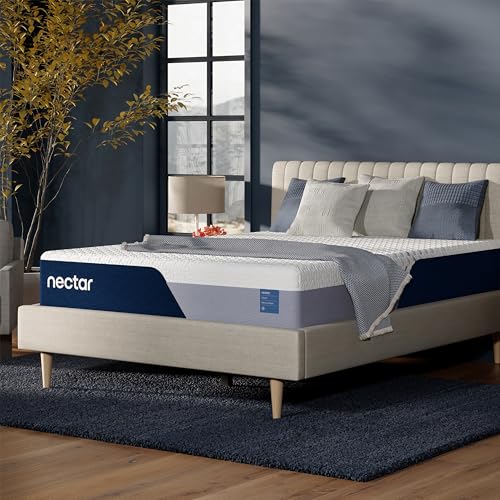
All six picks are sold on Amazon, where you should verify the current price, size, and trial terms before buying — the home trial matters enormously for this keyword, because only your own back can grade a mattress. Begin with the Nectar 12″ Memory Foam Mattress and its unusually long trial window; confirm details via its Check on Amazon link. The remaining picks: Sealy Dreamlife 12″ Hybrid Mattress-in-a-Box — Check on Amazon; Serta Perfect Sleeper Ultimate 14.5″ Queen Mattress — Check on Amazon; Casper Sleep Original 11″ Memory Foam Mattress — Check on Amazon; Signature Design by Ashley Chime 12 Inch Hybrid Mattress — Check on Amazon; GhostBed Classic 11 Inch Memory Foam Mattress — Check on Amazon.
In this guide
Quick Picks
| Pick | Badge | Why it earns its place |
|---|---|---|
| Nectar 12″ Memory Foam Mattress | Best Overall | Firm-leaning contouring memory foam with adaptive support for spinal alignment, plus a one-year trial to judge it with your own back. |
| Sealy Dreamlife 12″ Hybrid Mattress-in-a-Box | Best Hybrid Support | Encased coils hold the midsection up night after night while gel memory foam cushions on top. |
| Serta Perfect Sleeper Ultimate 14.5″ Queen Mattress | Best Premium | Zoned coil design targets support at the lower back and hips, with a pillow top that keeps the surface kind. |
| Casper Sleep Original 11″ Memory Foam Mattress | Best Zoned Foam | Zoned Support firms up under hips, waist, and lower back while staying gentler at the shoulders. |
| Signature Design by Ashley Chime 12 Inch Hybrid Mattress | Best for Lumbar Focus | A dedicated gel lumbar support layer plus 13-gauge pocketed coils, in a full size that suits smaller rooms. |
| GhostBed Classic 11 Inch Memory Foam Mattress | Best Budget | High-density foam core built for spinal alignment, at the most accessible tier in this guide. |
Key Takeaways
- Support that resists sagging matters more than any single feature: a level spine through the night is the whole goal.
- Medium-firm to firm is the most commonly recommended starting range for back comfort; use the trial to fine-tune from there.
- Zoned designs — firmer under the lumbar and hips, softer at the shoulders — help side and back sleepers keep alignment without pressure pain.
- Coil hybrids hold their support profile longer than budget all-foam builds; foam offers deeper motion isolation for couples.
- A long home trial is a medical-grade shopping tool here: your back’s verdict after thirty nights beats any specification sheet.
- Replace or rotate on schedule — a worn mattress quietly becomes a sagging one, and sagging is the enemy this keyword is really about; compare notes with Best Mattresses For Chronic Pain if pain, not stiffness, is your dominant symptom.
How These Picks Were Chosen
We filtered the verified pool for four things: a stated support architecture aimed at alignment (zoned foam, lumbar layers, or coil systems), firmness in the medium-firm to firm band that back-comfort guidance most often starts from, pressure relief sufficient to keep shoulders and hips from forcing spinal twist, and build quality signals — coil gauge, foam density language, warranty and trial length — that predict the support will still be there in year three. Products that were very soft, very thin, or purely plush were excluded for this keyword even when they are excellent for other shoppers.
We also want to be plain about method and limits. This is desk research from verified listings and general sleep-comfort knowledge; nobody involved has examined your spine, and degenerative disc disease varies enormously by level, severity, and sleep position. Treat these picks as a well-screened shortlist to discuss with your clinician or physical therapist, and treat the trial periods as the real test. Any brand language about pain in the pool listings is reported as comfort framing, not endorsed as treatment.
The 6 Best Mattresses for Degenerative Disc Disease — Reviewed

Nectar 12″ Memory Foam Mattress
Our badge: Best Overall
The Nectar 12″ Memory Foam Mattress leads because it combines the two things this keyword needs most: a firm-leaning memory foam build whose contouring layer relieves pressure on high-tension areas like the hips and back while an adaptive support layer promotes spinal alignment — and a 365-night trial with a forever warranty, which turns the purchase into a year-long personal evaluation instead of a gamble. The brand describes the feel as firm with a touch of comfort: solid support with a little more cradling than an extra-firm mattress, a profile that suits back and stomach sleepers and many combination sleepers managing back stiffness.
Strengths
- Firm support with contouring pressure relief at hips and back
- 365-night trial and forever warranty — the lowest-risk evaluation in this guide
- Cooling top layer tempers memory foam’s usual warmth
Trade-offs
- Strict side sleepers with sharp shoulder pressure may find the firm feel unyielding at first
- All-foam support feels different from coils; spring loyalists notice the absence of bounce
- At seventy-eight pounds, rotations are a two-person task
| Color | White |
| Size | Queen |
| Dimensions | 80 x 60 x 12 inches |
| Weight | 78 pounds |
The Nectar’s sleep system layers breathable cooling fabric over contouring memory foam over dynamic support foam, and the practical result is a surface that holds you rather than swallowing you. For a back managing disc degeneration, the relevant experience is consistency: the mattress feels the same at 3 a.m. as at 11 p.m., the midsection does not gradually hammock downward through the night, and morning stiffness is not compounded by eight hours in a sagging trough. Memory foam’s motion isolation also matters more than people expect — a partner’s movements that jolt you awake also jolt a sensitive back, and foam absorbs those disturbances at the source.
Setup is the standard unbox-and-unroll, snooze-ready within about a day. Use the trial the way it deserves: give your body two to three weeks to adapt (any firmness change feels strange at first), keep brief notes on morning stiffness, and only then judge. A year is long enough to test the mattress across flare-ups and good spells alike, which no showroom visit can simulate. Shoppers whose budget is the binding constraint should compare the approach in Best Affordable Mattresses For Back Pain, where several of the same support principles appear at lower tiers.
Best for: back and combination sleepers wanting firm contouring support with a year to evaluate it / Not suited for: sleepers who know they need a plush, soft surface for shoulder comfort
Choose it for support plus trial safety; skip it if you are a devoted side sleeper who needs deep shoulder sink. Check on Amazon

Sealy Dreamlife 12″ Hybrid Mattress-in-a-Box
Our badge: Best Hybrid Support
The Sealy Dreamlife 12″ Hybrid Mattress-in-a-Box is the coil-based answer in this guide: two inches of SealyComfort gel memory foam for tailored pressure relief, a high-density transition foam for durability, and seven inches of individually encased coils that provide targeted support across the whole surface. Coils matter for this keyword because they hold the body’s heaviest zones — hips and lumbar — up with spring force that does not fatigue the way tired foam does, and because each coil moves independently, support stays local instead of dipping the whole midsection.
Strengths
- Encased coils deliver durable, targeted support that resists midsection sag
- Gel memory foam comfort layer cushions pressure points without a plush feel
- Surface-Guard antimicrobial technology and CertiPUR-US certified foam
Trade-offs
- The heaviest pick here at just over eighty pounds; setup wants two people
- Motion isolation is good but not all-foam silent for very sensitive partners
- Hybrid edge feel is supportive, which firmer-preference sleepers like and plush-preference sleepers may not
| Color | Dreamlife |
| Size | Queen |
| Dimensions | 80 x 60 x 12 inches |
| Weight | 80.6 pounds |
On the bed, the Dreamlife behaves like a supportive traditional mattress that went to finishing school: you lie on it more than in it, turning over is easy, and the lumbar zone feels held rather than cushioned into a dip. That “on, not in” posture is exactly what many back-comfort guides recommend for disc issues, because it keeps the pelvis from rolling and the spine from spending the night in a shallow U. The transition foam deserves credit too — it is the layer that stops the coils from feeling mechanical through the comfort foam, and it adds the density that keeps the surface honest over years.
Care and longevity favor the hybrid: coils do not take body impressions the way foam comfort layers can, airflow through the core keeps the mattress drier, and rotation twice a year is the main ritual. If your history is a series of foam mattresses that felt great for eight months and then developed a hip trough, the Dreamlife is the structural correction. Its support philosophy overlaps with Best Mattresses For Upper Back Pain — alignment first, cushion second — applied here to the whole spine rather than the shoulders and neck.
Best for: back sleepers and foam-trough veterans wanting coil-backed alignment that lasts / Not suited for: shoppers who want deep memory-foam contouring and total motion isolation
Choose it for durable hybrid support; skip it if you are a light side sleeper who needs maximum shoulder give. Check on Amazon

Serta Perfect Sleeper Ultimate 14.5″ Queen Mattress
Our badge: Best Premium
The Serta Perfect Sleeper Ultimate 14.5″ Queen Mattress is the premium build in this guide, and its headline feature is a zoned coil design: a high-density coil system with support zones engineered for targeted support at the lower back and hips and cradled comfort everywhere else. That is precisely the zoning logic back-comfort shopping is built on. Above the coils sit PillowSoft Aire foam for cushioning and airflow, Cool Twist gel memory foam for cool, contouring comfort, a medium pillow top feel, and BestEdge foam encasement that deepens the usable sleep surface and reduces edge roll-off.
Strengths
- Zoned coils target support where disc-sensitive backs need it: lower back and hips
- Pillow top comfort without a soft, unsupportive core underneath
- BestEdge encasement keeps the full width usable — valuable when you sleep near an edge to manage stiffness
Trade-offs
- The 14.5-inch profile needs deep-pocket sheets and a suitably low frame or foundation
- At over eighty-two pounds, it is the most demanding setup in this guide
- Medium pillow top feel may read too cushioned for strict firm-mattress devotees
| Color | Dark Blue |
| Size | Queen |
| Dimensions | 79.5 x 60 x 14.5 inches |
| Weight | 82.26 pounds |
The Serta’s design intelligence shows in how it sequences softness and support: the pillow top and gel foam handle the first inch of contact so bony points are not punished, then the zoned coils take over and hold the pelvis level. For side sleepers managing disc issues — a group often torn between shoulder pressure and spinal alignment — that sequence is the compromise that works: cushion at the surface, discipline underneath. The hundred-night trial and ten-year warranty frame the purchase appropriately for a premium tier, and CertiPUR-US certification covers the foams’ content standards.
Practical notes: confirm your frame and bedding suit a tall mattress before ordering, and plan the delivery day with a second pair of hands. The mattress is compatible with traditional frames, box springs, platforms, slatted frames, and adjustable bases — that last option deserves attention, because many back-sensitive sleepers use slight head or knee elevation as a comfort strategy, and a mattress that flexes safely with an adjustable base keeps that option open. In the landscape of this lot, the Serta is the pick for shoppers who have decided to spend once on the most engineered support in the pool.
Best for: premium shoppers wanting zoned coil support with a kind surface, including side sleepers / Not suited for: strict firm-bed purists or anyone whose frame and sheets cannot take a 14.5-inch profile
Choose it for the most targeted support engineering here; skip it if you want a low, firm, minimal bed. Check on Amazon

Casper Sleep Original 11″ Memory Foam Mattress
Our badge: Best Zoned Foam
The Casper Sleep Original 11″ Memory Foam Queen Mattress brings zoning to the all-foam side of this guide. Its Zoned Support design uses firmer foam under the hips, waist, and lower back for targeted support and alignment, with more give where the body is lighter — the same firmer-middle logic as the Serta’s coils, executed in foam. The result is a medium-firm bed that works unusually hard to keep the spine straight for back sleepers while still letting side sleepers’ shoulders sink enough to avoid a twisted neck.
Strengths
- Zoned foam firms the lumbar and hip zone — the alignment heart of this keyword
- Breathable open-cell foam sleeps cooler than traditional memory foam
- Excellent motion isolation for couples where one partner’s back is sensitive
Trade-offs
- Foam zoning is subtler than coil zoning; very heavy sleepers may overpower it
- Eleven inches is the slimmest profile among the top picks for this keyword
- No verified weight in the pool data — check the listing if handling weight matters to your setup plan
| Color | Light Gray |
| Size | Queen |
| Dimensions | 80 x 60 x 11 inches |
The Casper’s party trick is balance. Many alignment-focused mattresses feel like boards with good intentions; the Casper keeps a genuinely comfortable, medium-firm surface while quietly firming the zone that decides your spinal posture. Over a night, that shows up as fewer position changes driven by discomfort and a back that was held level rather than perched or sunk. The hundred-night trial, CertiPUR-US foams, and ten-year warranty make it a low-risk way to test whether zoned foam is your answer before committing to a coil build.
It is also the couples pick in this guide: the foam layers absorb motion transfer so effectively that a partner’s restlessness stays a visual event rather than a physical one, and uninterrupted sleep is itself a back-comfort strategy — fragmented sleep amplifies next-day stiffness and pain perception in everyday experience. If your household includes a restless partner and a sensitive back, the Casper resolves both problems with one purchase. Readers whose issues center on joints rather than discs will find the sibling analysis in Best Mattresses For Joint Pain a useful complement.
Best for: couples and combination sleepers wanting zoned alignment in a forgiving foam feel / Not suited for: very heavy sleepers needing coil-grade midsection support
Choose it for balanced zoned comfort; skip it if you want the firmer, springier support of a hybrid. Check on Amazon

Signature Design by Ashley Chime 12 Inch Hybrid Mattress
Our badge: Best for Lumbar Focus
The Signature Design by Ashley Chime 12 Inch Hybrid Full Size Mattress in a Box is the most explicitly lumbar-minded listing in the pool: a dedicated high-density gel memory foam layer targets the lower back for enhanced support, over a support system of 13-gauge pocketed coils with two perimeter rows for edge stability. The brand frames it directly at full-size shoppers seeking back comfort at a medium-firm level, and the full footprint suits smaller bedrooms, guest rooms that double as recovery rooms, and single sleepers who want a real hybrid without queen dimensions.
Strengths
- Dedicated gel lumbar support layer aimed at the lower back
- 13-gauge pocketed coils — a firm, durable gauge — with reinforced perimeter rows
- 180-night home trial, adjustable-base compatible, CertiPUR-US certified foams
Trade-offs
- Full size only in this listing; couples should look at the queen picks instead
- Firm coil gauge will feel too assertive for plush-preference side sleepers
- Medium-firm with a supportive lean — not a contouring, hug-style bed
| Color | White |
| Size | Full |
| Dimensions | 74.4 x 53.3 x 12 inches |
| Weight | 62 pounds |
What the Chime understands is that “support” is not evenly distributed work. Your lower back carries the curve where alignment is won or lost, and a mattress that spends extra material there — a distinct lumbar layer, not just marketing language — is making a real engineering choice. The pocketed coils move independently for targeted support and reduced motion transfer, and the perimeter rows mean the support does not quit at the edges, which matters when you sit on the side of the bed to stand up carefully on a stiff morning.
The 180-night trial is generous for this tier and worth using fully: lumbar-focused firmness can feel almost too purposeful in week one and exactly right by week four, once your body stops bracing against an old sagging surface. Pair the Chime with a supportive, not sagging, foundation — the listing’s adjustable-base compatibility is a plus for sleepers who use elevation — and rotate it seasonally. For a single sleeper with a lumbar-focused comfort goal and a full-size frame, this is the most on-brief mattress in the entire pool.
Best for: single sleepers with lower-back-focused comfort goals on a full-size frame / Not suited for: couples, or side sleepers wanting deep plush cushioning
Choose it for targeted lumbar engineering at a sensible tier; skip it if you need a queen. Check on Amazon

GhostBed Classic 11 Inch Memory Foam Mattress
Our badge: Best Budget
The GhostBed Classic 11 Inch Queen Memory Foam Mattress closes the guide as the accessible route to a genuinely supportive core. Its four layers — cooling gel memory foam, high-density support foam, and aerated latex among them — are built around a high-density foam core that the brand credits with supporting spinal alignment and relieving stiffness, in a balanced medium-firm feel intended for stomach, back, side, and combo sleepers alike. It is CertiPUR-US certified and made in the USA and Canada.
Strengths
- High-density core prioritizes alignment over plushness — the right priority for this keyword
- Aerated latex and gel foam keep the surface cooler and more responsive than basic foam
- At fifty pounds, the easiest queen here to set up, rotate, and manage with a sensitive back
Trade-offs
- No zoning: support is uniform, so the lumbar gets the same firmness as everywhere else
- Budget tier means fewer refinement layers than the Serta or Nectar
- Medium-firm with springy character may feel lively to sleepers wanting a still, deadened foam surface
| Color | White |
| Size | Queen |
| Dimensions | 80 x 60 x 11 inches |
| Weight | 50 pounds |
The GhostBed’s virtues are practical. A lighter mattress is kinder to the person rotating it — an underappreciated point when the household’s back is the reason for the purchase — and its responsive surface makes the small hours’ position changes easy rather than effortful. The brand’s framing emphasizes waking refreshed, with the dense core holding alignment and minimizing motion transfer; in comfort terms, expect a supportive, slightly buoyant bed that does not let you sink into a valley.
For shoppers whose disc-related budget has already been spent on clinicians, braces, and ergonomic chairs, the GhostBed offers the core requirement — a firm, dense, alignment-minded sleep surface — without the premium tier’s price structure. It will not zone or target like the picks above it, and over many years a uniform foam core will soften where you sleep most; rotate faithfully to spread that. As an honest budget answer to a support-first brief, it earns its place.
Best for: budget shoppers needing a firm, dense, alignment-first foam core / Not suited for: sleepers wanting zoned or lumbar-targeted engineering
Choose it for supportive value and easy handling; skip it if targeted lumbar support is your top criterion. Check on Amazon
Comparison Table
| Pick | Support System | Targeting | Profile | Check price on Amazon |
|---|---|---|---|---|
| Nectar 12″ Memory Foam | Layered memory foam | Adaptive support layer | 12 inch | Check price on Amazon |
| Sealy Dreamlife 12″ Hybrid | Encased coils + gel foam | Coil-targeted support | 12 inch | Check price on Amazon |
| Serta Perfect Sleeper 14.5″ | Zoned coils + pillow top | Lower back and hip zones | 14.5 inch | Check price on Amazon |
| Casper Original 11″ | Zoned foam | Firmer hip/waist/lumbar zone | 11 inch | Check price on Amazon |
| Ashley Chime 12″ Hybrid | 13-gauge pocketed coils | Dedicated gel lumbar layer | 12 inch (Full) | Check price on Amazon |
| GhostBed Classic 11″ | High-density foam core | Uniform support | 11 inch | Check price on Amazon |
How to Choose the Best Mattress for Degenerative Disc Disease Comfort
Start With Support, Then Tune Firmness
Support and firmness are different properties that marketing constantly confuses. Support is whether the mattress keeps your spine in its neutral alignment; firmness is how the surface feels in the first inch. A mattress can feel firm yet support badly (a hard slab that bridges your lumbar curve) or feel cushioned yet support well (zoned builds). For disc-related comfort, shop support first — zoned or coil-backed or high-density — then choose the firmest surface feel you can sleep on comfortably, because a surface so hard it creates shoulder and hip pressure will twist your spine from the other direction. Most back-comfort guidance starts shoppers in the medium-firm to firm band and adjusts from personal trial.
Match the Mattress to Your Sleep Position
Back sleepers need the lumbar curve supported without the pelvis sinking — the zoned and hybrid picks shine here. Side sleepers need enough shoulder and hip give to keep the spine straight horizontally; a surface-cushioned zoned pick like the Serta or Casper usually threads that needle. Stomach sleepers need firmness most of all, because a soft mattress bends the back into an extension arch all night; the Nectar’s firm lean suits them. Combination sleepers should prioritize easy movement — responsive hybrids and the GhostBed’s livelier foam beat slow, deep memory foam. If your position is mixed up with pain in several places, Best Mattresses For Back Pain And Side Sleepers works through the side-sleeping half of this puzzle in depth.
Respect the Trial Period as Part of the Product
For this keyword, the trial is not a bonus feature — it is how the product is properly evaluated. Disc-related comfort cannot be judged in a showroom’s five minutes or a first night’s novelty. Bodies take two to four weeks to adapt to a new support profile, and flare patterns take longer to reveal themselves. The Nectar’s year-long trial and the Chime’s 180 nights are genuinely different products from a 100-night trial in this respect. Keep simple morning-stiffness notes during the trial; patterns in your own data beat any review, including this one.
Check the Foundation Before Blaming the Mattress
A supportive mattress on a sagging foundation is a sports car on flat tires. Box springs that have gone soft, slats spaced too widely, and frames with a dipping center rail all reproduce the exact hammock shape this keyword is trying to escape. Before buying — and certainly before returning a new mattress as “unsupportive” — put a straight edge across your foundation and look for dips. Many of the picks here are adjustable-base compatible, and slight elevation is a comfort tool many back-sensitive sleepers use under clinician guidance.
Plan for the Decade, Not the Month
Degenerative conditions are long-term companions, so durability is a comfort feature: coil systems and high-density cores hold their alignment profile for years, while soft budget foams can trough within a couple of seasons. Rotation schedules, a protector against moisture (which degrades foam), and honoring weight guidance all protect the support you paid for. A mattress that stays supportive for eight years is cheaper — and kinder to your back — than three mattresses that each fade in two.
How Should You Set Up and Maintain a Support-Focused Mattress?
Unbox the mattress on its foundation, let it expand fully before judging the feel, and give your body a structured adaptation window: two weeks minimum before forming a verdict, four before using a return window. Rotate the mattress head-to-foot every three to six months (more often in the first year) to distribute wear, unless the manufacturer directs otherwise. Use a protector — moisture is foam’s slow enemy — but avoid thick, plush mattress pads that reintroduce a soft, unsupportive layer on top of a carefully chosen support system; if you need surface cushioning, choose a thin one. Keep the bedroom sleep-friendly in the ordinary ways: consistent schedule, a pillow that keeps your neck in line with the spine your mattress is aligning, and a bed height that lets you get in and out without twisting under load.
Problem: the new mattress feels too firm in week one — this is the most common adaptation complaint; walk on it gently in socks to soften the surface slightly, add a thin cushioning layer if needed, and give it the full adaptation window before deciding.
Problem: a dip is forming under your hips — rotate the mattress, inspect the foundation for sag with a straight edge, and replace a failed foundation before the mattress takes permanent damage.
Problem: shoulder pain on a supportive mattress — your surface cushion is likely too thin for side sleeping; a zoned pick or a thin pressure-relieving topper usually resolves it without sacrificing lumbar support.
Problem: morning stiffness is unchanged after a month — the mattress is one variable among many; review pillow height, sleep position, and daytime ergonomics, and raise it with your clinician rather than endlessly swapping mattresses.
Problem: getting in and out of bed strains your back — check total bed height; a too-low or too-high bed forces spinal loading at its most vulnerable moment, and leg or frame adjustments are a cheap fix.
Sleep Position Strategies When Your Discs Are the Priority
The mattress does half the alignment work; your position does the rest. Back sleepers often find a small pillow under the knees relaxes the lumbar curve into the mattress’s support — a strategy worth discussing with your clinician. Side sleepers need the waist supported (that is what zoning is for) and benefit from a pillow between the knees to keep the pelvis from rolling the spine into a twist. Stomach sleeping is the hardest position to keep neutral and the one where firmness matters most; some stomach sleepers transition toward side sleeping with a body pillow as a half-measure. None of this is treatment advice — it is sleep-comfort mechanics, and your clinician’s knowledge of your specific disc levels outranks any general guidance, including ours.
What the mattress contributes to every one of these strategies is a surface that does not fight them: no trough pulling your pelvis down, no pressure ridge pushing a shoulder up, no soft crater that turns a careful position into a twisted one by 2 a.m. That is why this guide weighted durable support over plush first impressions, and why the trial periods matter — position strategies and mattresses succeed or fail together, over weeks, in your own bed.
When a Mattress Is Not the Answer
It is worth saying plainly in a guide like this: new or worsening neurological symptoms — leg weakness, numbness in a saddle pattern, bladder or bowel changes, pain following trauma — are reasons to seek prompt medical care, not to go mattress shopping. Likewise, pain that consistently wakes you in the second half of the night, or that arrives with fever or unexplained weight loss, belongs in a clinician’s office. A mattress is comfort equipment. Used well, it removes one aggravating factor from a sensitive back’s life and improves the sleep that everything else depends on. That is a worthwhile purchase — it is simply not a diagnosis or a treatment, and any seller who frames it as one is telling you something about themselves.
Living With the Diagnosis: The Bedroom Beyond the Mattress
A mattress decision lands inside a life that the diagnosis has already rearranged, and the shoppers who fare best treat the whole bedroom as part of the comfort system. Bed height deserves first attention: a surface that lets you sit with feet flat and stand without hauling — often helped by the deeper profiles in this guide on a standard frame — turns the day’s two hardest transfers into non-events. A sturdy nightstand at mattress height, a lamp reachable without twisting, and water and medication within arm’s reach all reduce the night-time contortions that stiff spines resent. Morning routines benefit from the same thinking: many people with degenerative disc disease find that a few minutes of gentle movement before standing, and a warm shower early, change the first hour more than any single product. None of this replaces the clinical plan — the exercises, the follow-ups, the medication reviews — and this guide’s recurring instruction stands: new weakness, numbness, bladder or bowel changes, or pain after a fall are same-week medical conversations, not mattress conversations. The bed’s job is narrower and genuinely valuable: to give a changing spine a level, pressure-kind, easy-to-leave surface for the third of life spent horizontal, night after night, while the medical plan does its own work in the other two-thirds.
The household dimension matters too. Partners of people with DDD become informal caregivers at 3 a.m. — fetching, steadying, losing their own sleep to the same broken nights. A mattress with real motion isolation and two served positions, like several picks in this guide, is partly a gift to that partner, and the purchase conversation goes better when both sleepers’ needs are on the table from the start. Likewise, the guest-room question — where does a visiting parent with the same diagnosis sleep? — is worth one thought while you are already mattress-shopping; Best Mattresses For Sleeper Sofas covers the convertible version of the problem for households that host family often.
Questions to Bring to Your Clinician About Sleep
A mattress purchase generates observations a clinician can actually use, and the DDD sleeper who arrives with them gets more from the appointment. Which positions ease and which provoke your symptoms — and does the pattern point to flexion or extension intolerance? Is morning stiffness that eases within the hour the expected signature of your condition, or a flag worth investigating? Are there sleep positions or pillow arrangements your specific imaging argues against? And is your current medication schedule timed with your pain’s daily rhythm in mind, a question worth asking whenever nights are the worst shift? Bring the trial log this guide prescribes — positions, morning ratings, what changed when the surface changed — because a month of recorded nights is diagnostic information no single consultation can recreate. The mattress cannot answer medical questions, but a well-run trial asks them beautifully.
Common Buying Mistakes
Buying the Softest Mattress Because It Feels Kind in the Store
Plush surfaces feel wonderful for five minutes and let the pelvis sink for eight hours. For disc-related comfort, that sink is the problem. If you love softness, get it in a thin surface layer over real support — the Serta’s pillow-top-over-zoned-coils formula — not as the mattress’s whole personality.
Buying Rock-Hard on the Theory That Firmer Is Always Better
The opposite error is just as common. A surface with no give concentrates pressure at the shoulders and hips, forcing the spine to bend around its own pressure points. Support is about alignment, not hardness, and the medium-firm band exists precisely because both extremes fail.
Ignoring a Sagging Foundation
Shoppers routinely replace a mattress, feel no improvement, and blame the new mattress — when the old foundation was reproducing the sag all along. Inspect first; foundations are cheaper than mattresses and sometimes the entire problem.
Judging the Mattress in Three Nights
Your body adapted to your old mattress’s flaws over years; it will not recalibrate in a weekend. Use the structured trial — weeks, notes, patience — or you will return good mattresses and keep bad habits.
Expecting the Mattress to Do a Clinician’s Job
Buying a mattress instead of getting a worsening condition evaluated delays real care. Buy the mattress for comfort and sleep quality, and keep your clinical appointments for everything else.
Final Recommendation
For most shoppers managing back comfort alongside degenerative disc concerns, the Nectar 12″ Memory Foam Mattress is the strongest starting point: firm-leaning contouring support, pressure relief where backs need it, and a full year to decide with your own spine as the judge. If you prefer coil-backed durability, the Sealy is the structural pick, and premium shoppers wanting zoned engineering with a kind surface should take the Serta — Check on Amazon to review its trial and dimensions. Lumbar-focused single sleepers on full frames have a tailor-made option in the Ashley Chime, and budget shoppers are honestly served by the GhostBed. Whichever you choose, inspect your foundation first, use the whole trial, and keep your clinician in the loop — the mattress is a comfort decision, and it should be made like one. For a broader look at supportive bedding around the mattress, Black Friday Bedding Deals 2026 tracks the seasonal sales worth timing.
Frequently Asked Questions
What firmness is best for degenerative disc disease comfort?
General sleep-comfort guidance most often starts back-sensitive shoppers in the medium-firm to firm range, because that band tends to keep the pelvis from sinking while still cushioning pressure points. Your clinician’s advice and your own trial experience outrank any general band — use the trial period to test where in that range your back sleeps best.
Is memory foam or a hybrid better for a sensitive back?
Both can work. Memory foam contours closely and isolates motion, which suits couples and pressure-sensitive sleepers; hybrids hold support with coils that resist sagging longer and sleep cooler and more responsively. The picks above include both because the honest answer depends on your position, weight, and feel preference.
Can a mattress make degenerative disc disease worse?
A mattress cannot change the condition itself, but a sagging or badly mismatched mattress can absolutely worsen your sleep quality and morning stiffness by holding your spine out of alignment for hours. That is why support durability — not just day-one feel — is weighted so heavily in this guide.
How long should I trial a mattress before deciding?
Give any new support profile at least two to four weeks; bodies adapt slowly, and disc-related comfort patterns take time to emerge. The long trials on the Nectar and the Ashley Chime exist for exactly this reason — use them fully rather than deciding in the first week.
Should I use an adjustable base with a sensitive back?
Many back-sensitive sleepers find slight head or knee elevation more comfortable, and several picks here are adjustable-base compatible. Whether elevation suits your specific condition is a question for your clinician; if they endorse it, choosing a compatible mattress keeps the option available.
When should I replace my current mattress?
When it no longer supports: visible troughs, a straight edge revealing dips, waking consistently stiffer than you went to bed, or a support feel that has clearly softened from when it was new. For a back managing disc issues, a worn mattress is not a frugal choice — it is a nightly misalignment.


