Disclosure: As an Amazon Associate, dailyhomedecorating.com earns from qualifying purchases. Links to Amazon on this page are affiliate links; they cost you nothing extra. Prices and availability change often, so check the current Amazon listing before you buy.
Side sleepers with back pain live inside a trade-off that most mattress advice refuses to acknowledge. The firm bed your back wants leaves your shoulder and hip bruised by 2 a.m.; the soft bed your shoulder wants lets your waist sag until your back files its own complaint. If you are searching for the best mattresses for side sleepers with back pain, you have probably been ping-ponged between those two failures, possibly across several purchases, and you are done being told to simply choose a side — pun intended — in the firm-versus-soft war.
The resolution is not a compromise firmness. It is a split design: a surface that yields deeply at exactly two points — shoulder and hip — while supporting the waist and pelvis as if it were a firm bed. The six picks in this guide achieve that split with encased coils under gel foam, zoned foam densities, a five-zone layout, a pressure-flexing grid, deep graded contouring, and load-responsive copper foam. Add a pillow between the knees and a main pillow fitted to your shoulder’s sink, and the side position stops being a negotiation. None of this treats a condition — persistent or radiating pain belongs with a clinician — but for the mechanical pattern of side-sleeping back pain, the bed is the first variable. Readers with the narrower lumbar version should see Best Mattresses For Lower Back Pain Side Sleeper; hip-led shoppers, Best Mattresses For Hip Pain.
Where to Buy
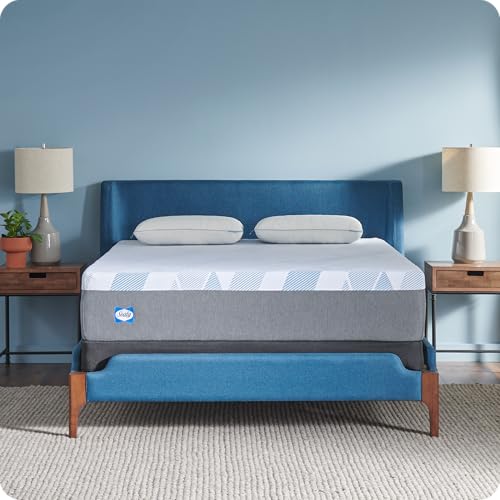
Every pick here is sold on Amazon, where the listing carries current pricing, sizes, and trial terms. Start with our top pick, the Sealy Dreamlife 12” Hybrid Mattress-in-a-Box — Check on Amazon. The other five picks are the Casper Sleep Original — Check on Amazon; the Sweetnight CoolNest Queen Mattress — Check on Amazon; the Purple Mattress — Check on Amazon; the Novilla Bliss Queen Size Mattress — Check on Amazon; and the Layla 10” Copper Infused Memory Foam Mattress — Check on Amazon. Confirm current pricing on the listing itself.
In this guide
Quick Picks
| Pick | Badge | Why it earns its place |
|---|---|---|
| Sealy Dreamlife 12” Hybrid Mattress-in-a-Box | Best Overall | Gel foam receives the shoulder while encased coils hold the waist — the split, executed in two materials |
| Casper Sleep Original 11″ Memory Foam Queen Mattress | Best Zoned Foam | Zoned Support firms the waist and pelvis while softening exactly where the shoulder lands |
| Sweetnight CoolNest Queen Mattress | Best Cooling Design | Five-zone support plus serious cooling for side sleepers who overheat at the contact points |
| Purple Mattress | Best for Pressure Relief | The grid cradles shoulder and hip points while the spine’s line holds |
| Novilla Bliss Queen Size Mattress | Best Cloud-Like Cushion | Deep contour for side sleepers whose back pain starts as pressure |
| Layla 10” Copper Infused Memory Foam Mattress | Best Adjustable Firmness | Flippable feel lets you tune the split yourself, with copper support that firms under load |
Key Takeaways
- The answer is a split design, not a middle firmness: give at the points, support at the waist.
- Independent coils and zoned foam are the two proven ways to build the split.
- A knee pillow is structural, not decorative — it keeps the pelvis from rotating your back out of the mattress’s good work.
- Refit your main pillow to the new shoulder sink, or the neck will inherit the problem.
- Judge by two weeks of logged back scores and shoulder wake-ups, together.
- If back pain radiates or persists on a well-fitted bed, it is a clinician’s question, not a retailer’s.
How These Picks Were Chosen
We filtered a verified product pool for the side-plus-back split. Every pick had to demonstrate both halves through a named mechanism: gel foam over independent coils, zoned densities, a five-zone layout, grid flex over a stable base, deep graded contour over support layers, or load-responsive foam in two firmnesses. We weighed cooling — side sleepers generate heat at two deep contact points — motion behavior for partners of frequent rollers, and trials long enough for the statistical verdict this combined complaint requires.
Filtered out: uniform firm beds that punish the shoulder, uniform plush beds that drop the waist, thin profiles, and products whose verified specifications we could not confirm. Method honesty: this is a research guide built from manufacturer-verified specifications and documented features, with comfort framing only. Readers who want the coil argument in full should also read Best Hybrid Mattresses For Side Sleepers.
The 6 Best Best Mattresses for Side Sleepers With Back Pain — Reviewed

Sealy Dreamlife 12” Hybrid Mattress-in-a-Box
Our badge: Best Overall
The Sealy Dreamlife 12” Hybrid leads this guide because it builds the split out of two materials, each doing its best work: two inches of SealyComfort gel memory foam receive the shoulder and hip, a transition layer grades the descent, and seven inches of individually encased coils support each body zone at its own height. On your side, the shoulder coils compress deeply while the waist coils stay tall — the spine’s line holds not by compromise but by independence.
Strengths
- Encased coils give the shoulder and waist different support in the same moment
- Gel foam comfort layer relieves the two pressure points side sleepers load
- Responsive surface makes the nightly side-switch and morning exit easy on a sore back
Trade-offs
- Just over 80 pounds in queen — a two-person setup
- More motion transfer than the foam picks
- Medium-firm lean may be assertive for very light side sleepers
| Color | Dreamlife |
| Size | Queen |
| Dimensions | 80 x 60 x 12 inches |
| Weight | 80.604164 pounds |
The transition layer is the unsung hero at the shoulder: without it, deep sink meets coil tops abruptly; with it, the descent is graded and the shoulder lands on support that has already begun helping. The gel handles contact-point heat, the coil core ventilates what the gel absorbs, and Surface-Guard antimicrobial technology with CertiPUR-US certified foams covers hygiene. Support ages slowly in steel, so the side posture you trial closely resembles the posture of year three.
For couples, the encased design civilizes motion — a partner’s exit registers without arriving — and the responsive surface means your own side-switches cost your back nothing. Rotate seasonally, verify frame capacity, and protect the surface.
If you want one bed that ends the firm-versus-soft war by refusing its premise, the Sealy is the treaty.
Best for: side sleepers with back pain who want cushion and structure from separate materials / Not suited for: motion-isolation absolutists
Choose the Sealy if both halves of your complaint are equally loud. Skip it if silence outranks support. Check on Amazon

Casper Sleep Original 11″ Memory Foam Queen Mattress
Our badge: Best Zoned Foam
The Casper Sleep Original builds the split inside foam: Zoned Support with firmer foam under the hips, waist, and lower back and softer foam at the shoulders. For the foam loyalist, this is the design that ends the trade-off — the shoulder sinks into its zone, the waist rests on firmer material, and the back wakes up without having spent the night bowed. The medium-firm whole also survives your back-sleeping hours gracefully.
Strengths
- Zoning serves the shoulder and the waist simultaneously — the whole brief
- Breathable open-cell foam tempers contact-point heat
- Best-in-guide motion isolation for partners
Trade-offs
- Very light side sleepers may not engage the soft zones fully
- Foam edges compress when sitting
- No coil airflow or bounce for those who want it
| Color | Light Gray |
| Size | Queen |
| Dimensions | 80 x 60 x 11 inches |
Durability is placed where it matters: the firmer foam occupies the zones whose fatigue would recreate the waist sag, and Casper positions the build against sinking and sagging with a 100-night trial and 10-year limited warranty listed. In practice the feel is graded calm — sink at the points, arrival of support, and a line that holds through side-switches to the mirror-image zones.
Fit the pillow system to it: a main pillow lofted for the shoulder sink the zoning allows, and the knee pillow to stop pelvic rotation undoing the waist’s good night. Rotate without flipping — the zones have an orientation — and support the bed evenly.
For side sleepers with back pain who share a bed and value quiet, the Casper is the most complete foam answer here.
Best for: side-plus-back sleepers in shared beds who prefer foam / Not suited for: coil fans and strict stomach sleepers
Choose the Casper if you want the split without the springs. Skip it if you run very hot. Check on Amazon
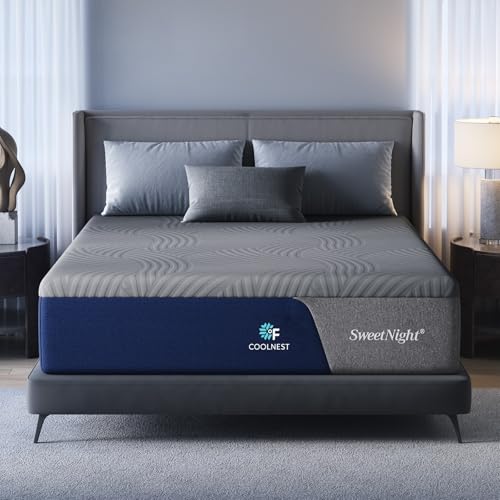
Sweetnight CoolNest Queen Mattress
Our badge: Best Cooling Design
The Sweetnight CoolNest Queen Mattress widens the split to five zones and adds the category’s most serious cooling. The five-zone ergonomic layout redistributes pressure from head to toe — shoulder, waist, and hip each calibrated — while the CoolNest system layers phase-change foam and gel memory foam under a ventilated cover. Side sleepers are the hottest sleepers by geometry, pressing deep contact patches into the surface for hours; this is the pick built for that thermodynamics.
Strengths
- Five-zone calibration of the whole side-sleeping line
- Layered cooling aimed at deep contact points
- Strong motion isolation for rolling-prone sleepers’ partners
Trade-offs
- Fourteen-inch profile needs deep-pocket sheets and a height check
- Expansion can take up to 72 hours
- Medium feel may be soft for side-to-stomach combination sleepers
| Color | Grey & Blue |
| Size | Queen (U.S. Standard) |
| Dimensions | 80 x 60 x 14 inches |
| Weight | 68.67 pounds |
The zone design is recognized by the American Chiropractic Association per the listing; the maker’s breathability figures are claims we note without adopting, while crediting the layered mechanism — ventilate, absorb, dissipate. Foams and cover are CertiPUR-US certified with a 10-year protection plan listed. The side-sleeping experience is a deep, cool reception at the shoulder with the waist held — and fewer heat-driven side-switches, which themselves are a back-pain variable, since every switch is a small spinal event.
Plan the height: fourteen inches on a standard frame makes a tall exit, and a low-profile frame is the elegant compensation. Judge on day four after full expansion.
For the side sleeper whose back pain and hot sleeping arrive as a package, the CoolNest is engineered for the package.
Best for: hot side sleepers with back pain who want zoned support / Not suited for: low bed setups
Choose the Sweetnight if heat shares your complaint list. Skip it if your frame already sits high. Check on Amazon

Purple Mattress
Our badge: Best for Pressure Relief
The Purple Mattress performs the split by geometry: the two-inch GelFlex Grid buckles locally under the shoulder and hip — the two points that bruise — while its structure and base hold the waist and spine in line. It is the only mechanism here that responds proportionally to pressure, giving most where the body is boniest and least where the body is broad, which is the side sleeper’s exact requirement stated as physics.
Strengths
- Grid cradles both pressure points while holding the waist’s line
- Temperature-neutral airflow cools the contact patches
- Instant response makes side-switching free for a sore back
Trade-offs
- The grid feel divides opinion — the trial is the arbiter
- Heaviest pick here per pool specs at 100 pounds in queen
- Premium tier within this guide
| Color | White |
| Size | Queen |
| Dimensions | 80 x 60 x 11 inches |
| Weight | 100 pounds |
Purple’s materials cite a 2025 SleepScore Labs study in which most participants felt more supported; we record it as the maker’s claim and rest the case on construction: medium-firm feel, edge support foam, and a comfort layer that does not fatigue like foam cells, so the split you trial persists. Back-sleeping hours are served by the same grid cradling the sacrum without sag.
Pillow pairing: the shoulder sinks moderately, so a medium-tall pillow suits most; the grid’s instant reset means your pillow’s re-loft speed becomes the pacing item in a side-switch — choose accordingly. Breathable bedding lets the channels breathe.
Plan a two-person setup and a long tenancy in one room. For pressure-led side-plus-back complaints, this is the guide’s most mechanical mind at work.
Best for: side sleepers whose back pain begins at the pressure points / Not suited for: foam-hug devotees
Choose the Purple if pressure is the headline of both complaints. Skip it if you know foam is your feel. Check on Amazon

Novilla Bliss Queen Size Mattress
Our badge: Best Cloud-Like Cushion
The Novilla Bliss Queen Size Mattress maximizes the cushion half: deep gel memory foam contouring that spreads the shoulder and hip loads across the widest contact area in this guide, over support layers that hold spinal alignment and isolate motion. For the side sleeper whose back pain is downstream of pressure — sore points, restless rolling, a spine that never gets to settle — the Novilla’s cloud-like reception is the direct answer.
Strengths
- Deepest contour here for pressure-driven side sleepers
- Reinforced edges keep the full width usable — side sleepers live near edges
- Motion isolation absorbs the rolling this audience does
Trade-offs
- Deep sink can let the waist drift on some builds — the log decides
- Full expansion can take up to 72 hours
- Foam sleeps warmer than the Sealy or Sweetnight
| Color | Bliss |
| Size | Queen (U.S. Standard) |
| Dimensions | 80 x 60 x 12 inches |
| Weight | 61.5 pounds |
The three-layer build distributes weight evenly and eases tension at the back and hips, with a breathable knitted cover, gel infusion for temperature, and plant-infused foam for freshness. Foams are CertiPUR-US certified, with a 100-day trial and 10-year protection listed. The reinforced edges deserve emphasis for this audience: side sleepers migrate toward the perimeter, and a held edge converts that territory from slope to surface.
The trial discipline is the honest companion to this pick: log back scores and shoulder wake-ups separately for two weeks. If the shoulder goes silent and the back improves, the Novilla has done the whole job for your build. If the back worsens while the shoulder heals, your waist needs the zoned picks above — and you will know it with data, inside the trial.
At 61.5 pounds, a manageable queen with the guide’s most welcoming first impression.
Best for: pressure-led side sleepers wanting maximum cushion / Not suited for: waists needing firm, explicit support
Choose the Novilla if your shoulder files the first complaint. Skip it if your waist does. Check on Amazon

Layla 10” Copper Infused Memory Foam Mattress
Our badge: Best Adjustable Firmness
The Layla 10” Copper Infused Memory Foam Mattress hands the split’s tuning to you: a flippable design, soft on one side for maximum point relief and medium-firm on the other for waist discipline, with copper-gel particles that condense under load and firm up exactly where you press — a passive zoning that operates on both settings. For the side sleeper who has bought wrong before, this is the category’s insurance policy.
Strengths
- Two firmness levels to find your split empirically
- Copper firms under the hip’s load while cushioning the shoulder
- Copper conduction cools the contact points; two pillows included in this listing
Trade-offs
- Flipping 69 pounds is a two-person, scheduled event
- Neither side is zoned — the calibration is coarser than the Casper’s
- Soft side remains wrong for stomach hours
| Color | Natural |
| Size | Queen |
| Dimensions | 80 x 60 x 10.5 inches |
| Weight | 69 pounds |
Run the experiment properly: two logged weeks per side, scoring back and shoulder separately, then keep the winner — with the other side in reserve for the season your body changes its mind, as bodies with back pain reliably do. The 120-night trial accommodates the full study. The mattress is made in the USA and made to order per the maker.
Couples with different splits to find will appreciate that the flip serves the household across time even though only one side is up at once: the setting that suits a winter of desk work may differ from a summer of training, and the Layla absorbs both without a purchase.
If your firmness confidence is the scarcest resource in this purchase, the Layla spends none of it.
Best for: side sleepers unsure of their firmness split, and fluctuating pain patterns / Not suited for: shoppers wanting engineered zoning
Choose the Layla if you want the question to stay open. Skip it if you want it answered by design. Check on Amazon
Comparison Table
| Pick | Split mechanism | Feel | Size listed | Profile | Check price on Amazon |
|---|---|---|---|---|---|
| Sealy Dreamlife Hybrid | Gel foam + encased coils | Medium-firm hybrid | Queen | 12 inches | Check price on Amazon |
| Casper Sleep Original | Zoned foam | Medium-firm | Queen | 11 inches | Check price on Amazon |
| Sweetnight CoolNest | 5-zone foam + cooling | Medium | Queen | 14 inches | Check price on Amazon |
| Purple Mattress | GelFlex Grid flex | Medium-firm | Queen | 11 inches (specs) | Check price on Amazon |
| Novilla Bliss | Deep gel contour | Medium | Queen | 12 inches | Check price on Amazon |
| Layla Copper | Load-responsive foam, flippable | Soft / Medium-firm | Queen | 10.5 inches | Check price on Amazon |
How to Choose When Your Side and Your Back Both Vote
Score your two complaints separately for a week first
Before shopping, log a week on your current bed: morning back score, and number of shoulder or hip wake-ups. The ratio tells you which half of the split leads. Pressure-led patterns shop the Novilla and Purple first; sag-led patterns shop the Sealy and Casper. Buying for the louder complaint, with a design that still respects the quieter one, is the whole strategy of this guide.
Demand the mechanism, not the middle
A “medium” mattress with no split mechanism is a compromise that serves neither complaint fully. Every pick here names how it gives and how it holds simultaneously. Hold all candidates to that standard and the category shrinks to honest engineering quickly.
Complete the posture with both pillows
Knee pillow for the pelvis, main pillow fitted to the shoulder’s new sink. Judge the mattress with both in place, because that is the system you will actually sleep in. Bedding refreshes can be timed with Black Friday Bedding Deals 2026, and restful extras such as Best Throw Pillows Under $500 round out the room.
Calibrate by build
Curvier, heavier side sleepers need deeper give over firmer support; lighter, straighter builds need less travel and can thrive on the medium zoned picks. Broad shoulders are a specification: they widen the ear-to-mattress gap and deepen the sink the comfort layer must provide.
Trial like a scientist with a sore back
Two to three weeks, both complaints logged separately, nothing else changed. A split trend — shoulder healed, back worse — is a precise instruction to move one step toward zoning or coils, and it is only visible if you kept the two scores apart.
How Should a Side Sleeper With Back Pain Set Up the Bed?
Expand the mattress fully — split mechanisms need full height to split correctly — fit a breathable protector, and set the exit height so your feet rest flat when seated. Place the knee pillow where your hand lands in the dark. Spend week one on the mattress with your existing main pillow, week two with the pillow refitted to the new sink, and log both complaints through both weeks; the comparison teaches you how much of your problem was pillow all along.
Roll as a unit when you switch sides — shoulders and pelvis together — rather than twisting the waist against a planted hip, and let responsive picks like the Sealy do half that work for you. Rotate the mattress seasonally to share the shoulder zones’ workload. Guest and convertible beds follow the same split logic, as our Best Mattresses For Sleeper Sofas guide shows for occasional sleepers.
Problem: shoulder fixed, back worse — your waist is dropping into the new cushion; move toward zoning or coils, or test one night with a slim pillow under the waist to confirm the diagnosis.
Problem: back fixed, shoulder worse — the support arrived but the give did not; check pillow loft first, then a deeper comfort layer.
Problem: you drift onto your stomach by dawn — position drift defeats side engineering; a body pillow barricade or a firmer overall pick addresses the drift.
Problem: the far side of the bed feels different — inspect the foundation under each side and rotate; shared beds age asymmetrically without rotation.
Problem: heat wakes you more than pain does now — breathable bedding first, then the cooling picks — Sweetnight, Purple, Sealy — in that order of mechanism strength.
Why the Middle Firmness Keeps Failing This Audience
The mattress industry loves a medium, because a medium can be sold to everyone. For this audience it is the one specification guaranteed to half-serve two complaints: medium foam gives the shoulder two-thirds of what it needs and the waist two-thirds of what it needs, and the deficits compound across eight hours into the familiar morning negotiation. The designs in this guide refuse the average. They spend their material budgets unevenly — soft here, firm there, deep here, shallow there — because bodies are uneven. Once you have slept on a surface that treats your shoulder and your waist as different countries, the uniform medium feels like what it is: a bed designed for a person who does not exist. That is the real lesson of the category, and it generalizes — the more specific your complaint pattern, the more specific the engineering you should demand.
There is a budget corollary worth stating plainly, because this audience has often already spent money on the war’s two losing sides. A split design costs more than a uniform slab of the same size, and the difference is the entire point: you are paying for material placed unevenly on purpose, whether that is zoned foam densities, a pocketed coil system with a transition layer, or a polymer grid. Shoppers who have bought a firm bed and then a soft topper to fix it have already paid the split’s price once, in two installments, for a worse version of it. Buying the integrated design first is not the expensive option in this category; it is the third purchase that is expensive, and this guide exists to make it unnecessary.
The same logic applies to the trial. A split design reveals itself more slowly than a uniform bed, because your body has two adaptations to make — the shoulder learning it may sink, the back learning it will be held — and those adaptations run on different clocks. Households that judge at night four routinely return the right mattress. Give the split three weeks and two logs, and the category’s engineering finally gets the hearing it deserves.
Couples: Two Sides, Two Splits
Shared beds multiply the geometry: your split and your partner’s split rarely match, and the heavier partner’s zones do more work every night. Independent-response designs — encased coils, grids, zoned foam — localize each sleeper’s physics better than uniform surfaces, which is why they fill this guide. Rotation keeps the shared surface symmetrical across years. And the trial should be a household trial: both partners logging, both complaints scored, because a bed that solves the side sleeper by folding the back sleeper has merely reassigned the problem to the person with less seniority in the purchase. The finalists here were chosen to be livable from both sides of the bed; insist on that standard and the category becomes much easier to shop.
One household pattern deserves naming because it decides more purchases than any specification: the side sleeper with back pain is often the household’s light sleeper too, woken by the pain and then kept awake by everything else — a partner’s movement, heat, the sound of a foam bed releasing its mold. That is why this guide weighs motion isolation and cooling as back-pain features rather than luxuries. A night with fewer wake-ups is a night with fewer chances for a sensitive back to find a bad angle, and the picks that quiet the whole sensory environment — the Casper’s isolation, the Purple’s silence and airflow, the Sealy’s civilized coils — are treating the complaint at the level of the night, not just the posture.
When the household includes a guest room, let it serve as the laboratory it naturally is. A side sleeper with back pain who sleeps noticeably better — or worse — on the guest bed has been handed free diagnostic data about firmness and construction, if anyone thinks to record it. Note what the guest bed is before your next purchase; your own history is the most underused dataset in mattress shopping.
Side sleepers with back pain should also know how to read a mattress’s middle age, because this body type meets it first. The shoulder and hip zones of any mattress soften fastest — they carry the most load through the smallest area — and the differential that felt perfect in month one narrows as those zones fatigue. Zoning built into support layers and coil gauges resists the narrowing longest; zoning that lives only in a plush comfort layer is a first-year feature. When you compare finalists, ask where the differential lives. The picks in this guide were ranked partly on that answer, favoring constructions whose shoulder-hip contrast is structural — encased zoned coils, firmer support bands, flippable dual builds — over those whose contrast is upholstery.
There is also a trial technique specific to this shopper: test both sides of your body, even if you favor one. Many side sleepers are one-sided by habit rather than by anatomy, and a mattress that cradles the favored side while punishing the other will be discovered the first night an injury or a partner’s elbow forces the switch. Spend trial nights on each side, log both, and let the pick that serves the pair win. A differential that only works facing left is half a differential, and back pain does not respect your habits when it chooses which side to visit.
Common Buying Mistakes
Choosing a side in the firm-versus-soft war
Both armies lose this audience. The split designs exist precisely because the war’s premise is wrong for side sleepers with back pain.
Logging one combined comfort score
Back and shoulder trends can move in opposite directions on the same mattress. Separate scores are the diagnostic; a blended score is a shrug.
Skipping the knee pillow
Pelvic rotation undoes waist support nightly. It is the cheapest structural item in sleep; use it.
Testing mattresses on your back
You are buying a side-sleeping surface. Trial in position, with your pillows, logged.
Ignoring the partner’s data
A household trial with one logger is half a trial. Both backs vote, or the purchase gets relitigated at 3 a.m. for years.
Finally, assemble the side sleeper’s full geometry before you judge any mattress in this guide, because the mattress is the middle of a three-part system. Above it, the head pillow must fill the gap the shoulder’s sink creates — a gap that changes with the mattress, which is why the pillow is fitted after the mattress lands, not before. Between the knees, a pillow keeps the pelvis from rotating the lumbar spine out of the line the mattress worked to create. A mattress trial conducted without those two fittings is a trial of an incomplete system, and side sleepers with back pain — the shoppers least able to afford a wrong verdict — are the ones most often misled by it. Fit the system, then judge the surface; the finalists above were chosen to reward exactly that discipline.
The side-sleeping back-pain shopper should also know the category’s honest limit, because expecting more of a mattress than a mattress can give is how good purchases get returned. A mattress controls the surface geometry of the eight hours you are horizontal. It does not control the disc, the joint, the muscle balance, or the day’s loading — and pain with a mechanical cause inside the body may persist on a perfect surface, quieter but present. The purchase succeeds if the bed stops being a contributor: mornings that start from the body’s baseline rather than below it, nights without the position-hunting that fragments sleep, and a back whose daytime story is no longer being written by its nights. Judge the finalists against that standard — contribution removed, rest restored — and you will judge them as the evidence deserves.
Practical sequencing closes the guide’s advice: mattress first, on a verified foundation; pillow refit in week two, against the new shoulder geometry; the knee pillow trialed in the same window; and the verdict at week three on the complete system, logged. Households that run the sequence own, within a month, a sleep system tuned to a side sleeper’s spine by evidence rather than by hope — and the finalists above, from the Sealy’s zoned steel to the Purple’s flexing grid, were chosen to be the surfaces most worth tuning around.
The side sleeper’s back also lives a daytime life that the mattress decision should acknowledge: the chair, the car seat, the couch’s favorite corner all load the same spine the bed must recover. Shoppers who fix only the bed often improve more than they expect — the night is where recovery compounds — but the honest guide notes the system: a lumbar-friendly chair by day multiplies the mattress’s work by night, just as a collapsing couch taxes it. You need not renovate your life around this purchase; simply know that the mattress is the largest single term in the recovery equation, not the only one, and that its measured success in the trial log partly reflects the company it keeps.
And a closing note on patience for this specific body: side sleepers with back pain are changing two variables at once when they change mattresses — the surface, and the habits the old surface trained. Shoulders that learned to hunch against a hard bed keep hunching for a week on a kind one; hips that braced against a sag keep bracing. The trial’s three weeks are not a formality for this shopper; they are the retraining period itself, and the log is how you know it is working.
Side sleepers should also know that their category quietly owns the mattress industry’s hardest engineering problem, and that the finalists here represent its current best answers rather than its final ones. The shoulder-hip differential is a genuine paradox — one surface, two opposite instructions — and every mechanism in this guide is a negotiation with it: zones that vary support by geography, grids that flex by point rather than by region, coils gauged differently along the bed’s length, flippable builds that let the household choose its compromise. Understanding that you are buying a negotiation, not a solution, calibrates expectations correctly: the goal is a spine that wakes straighter and a back that stops filing nightly reports, achieved by the mechanism whose compromise your body prefers. Try the mechanisms in the order the reviews rank them for your weight and warmth, and let your own logged mornings arbitrate the paradox.
Side sleepers should also give the trial a partner protocol where applicable: a restless back in pain is a shared weather system, and the mattress that calms one sleeper’s position-hunting measurably improves the other’s night. Ask your partner to keep their own one-line log during your three weeks; couples routinely discover that the winning mattress was the one under which both logs improved, even when the two sleepers would have chosen differently alone. The finalists here include the category’s best motion citizens for exactly this reason — a side sleeper’s back rarely sleeps alone, and its verdict should not be rendered alone either.
And if the trial ends in a return, treat the data as the purchase: you will know your differential’s direction — too much sink or too little, surface or structure — and the second choice, made with that knowledge, is the one this entire process exists to enable. A returned mattress with a log is progress; a kept mattress without one is a guess you sleep on for a decade.
Side sleepers should also treat the first rotation as a scheduled diagnostic, not a chore: at the three-month mark, when you turn the mattress, spend one night attending to whether the fresh zones feel meaningfully different from the worn ones. A large difference says the surface is fatiguing faster than your body deserves and the warranty paperwork deserves a fresh read; a small one says the construction is holding its differential as designed. Either answer is valuable, and both are free — the rotation was happening anyway. Mattresses talk to their owners at maintenance intervals; this category’s owners benefit most from listening.
The category’s last word belongs to proportion: a mattress is the largest single lever a side sleeper controls over their back’s nights, and it is still only a lever — the pillow system, the foundation, the room, and the day’s posture all pull on the same spine. Pull the big lever first, with the evidence discipline this guide prescribes, and the smaller levers become adjustments rather than rescues. That order of operations, more than any single product, is what separates the households that solve this problem from the ones that shop for it annually.
Sleep on the decision a night before you make it, too: shortlists benefit from the same patience as mattresses. The finalist that still looks right after a day’s distance from the research is usually the one the trial confirms.
Choose the mechanism whose compromise your body prefers, fit the pillows to it in week two, and let the third week’s mornings — straighter, quieter, less negotiated — deliver the verdict this category exists to earn.
Final Recommendation
For most side sleepers with back pain, the Sealy Dreamlife 12” Hybrid is the most complete treaty: gel foam for the points, independent coils for the waist, airflow for the heat, and support that ages in steel time. Foam loyalists and couples should take the runner-up — Check on Amazon for the Casper Sleep Original and its zoning. Pressure-led sleepers will prefer the Purple or Novilla; the undecided, the flippable Layla. Whichever you choose, log your two complaints separately for a week before it arrives and three weeks after, fit both pillows, and let the split trend — both lines improving — be the verdict you keep.
Frequently Asked Questions
What firmness is best for side sleepers with back pain?
Neither a firmness nor a softness — a split. Medium overall feels with zoned or layered designs that give at the shoulder and hip while supporting the waist outperform any uniform firmness for this combined complaint.
Are hybrids or foam better for side sleepers with back pain?
Both build the split credibly: hybrids with foam over independent coils, foam with zoning or grading. Hybrids add airflow and response; foam adds isolation and quiet. The Sealy and Casper in this guide are the respective exemplars.
Does a knee pillow really matter for back pain?
Yes. It keeps the upper leg from rotating the pelvis, which preserves the waist alignment the mattress creates. Side sleepers with back pain should treat it as part of the mattress system.
How do I know if my waist is sagging?
Have a partner photograph your side posture or slide a flat hand under your waist: easy entry with little contact means bridging or sagging. Morning lower back stiffness that eases with movement is the other classic tell.
How long should I trial before deciding?
Two to three weeks, logging back scores and shoulder wake-ups separately. The right split design improves both trends; a one-sided improvement tells you which direction to adjust.
When is side-sleeping back pain a medical issue?
When it radiates into a leg, brings numbness or weakness, follows an injury, or persists for weeks on a well-fitted bed. Those patterns need evaluation, not another mattress.


