Disclosure: As an Amazon Associate, dailyhomedecorating.com earns from qualifying purchases. Links to Amazon on this page are affiliate links; they cost you nothing extra. Prices and availability change often, so check the current Amazon listing before you buy.
Sciatica changes the relationship between a person and their bed. The pain is not a local ache but a traveling one — from the lower back or hip down the leg, sometimes as a burn, sometimes as a zing, worst in the positions that stretch or compress the wrong structures. If you are searching for the best mattresses for sciatica, we want to be careful and clear from the first paragraph: a mattress does not treat sciatica, and this guide will not claim otherwise. What a mattress can do — legitimately, and sometimes significantly — is stop adding mechanical insult to an irritated system for eight hours a night, by keeping the pelvis level, the lumbar spine in its neutral curve, and the hips free of pressure points that provoke symptoms.
That comfort brief is narrower than general back-pain shopping, and the picks here reflect it: firm-leaning support that prevents the pelvic drop which flexes the lumbar spine, zoned designs that hold the waist, pressure relief at the hip and sacrum, and surfaces that let you change position — often the sciatica sleeper’s most urgent nightly need — without a wrestling match. Positioning aids matter too, and we cover the knee-pillow and incline experiments that many sufferers use to find a tolerable angle. If your symptoms are new, worsening, or accompanied by weakness or numbness, the correct purchase is a medical appointment; this guide is for the comfort side of a managed situation. Closely related reading: Best Mattresses For Lower Back Pain for the lumbar foundation of the topic, and Best Mattresses For Back Problems for the broader pattern.
Where to Buy
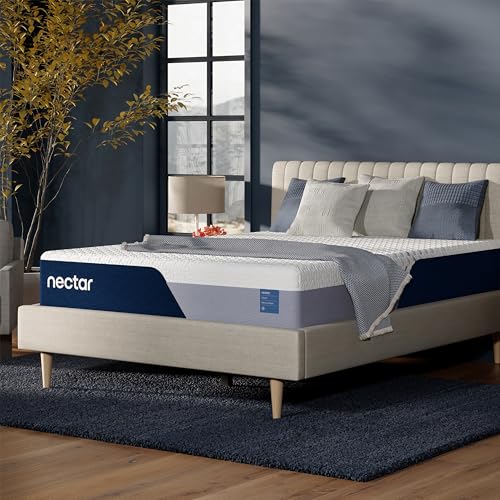
Every pick here is sold on Amazon, where the listing carries current pricing, sizes, and trial terms. Start with our top pick, the Nectar 12” Memory Foam Mattress — Check on Amazon. The other five picks are the Casper Sleep Original — Check on Amazon; the Sealy Dreamlife 12” Hybrid — Check on Amazon; the Signature Design by Ashley Chime 12 Inch Hybrid — Check on Amazon; the Purple Mattress — Check on Amazon; and the GhostBed Classic — Check on Amazon. Confirm current pricing on the listing itself.
In this guide
Quick Picks
| Pick | Badge | Why it earns its place |
|---|---|---|
| Nectar 12” Memory Foam Mattress | Best Overall | Firm-leaning contouring keeps the pelvis level and the lumbar curve filled — the anti-flexion brief, executed |
| Casper Sleep Original 11″ Memory Foam Queen Mattress | Best for Combination Sleepers | Zoned support that stays correct as you hunt for a tolerable position through the night |
| Sealy Dreamlife 12” Hybrid Mattress-in-a-Box | Best Hybrid | Responsive encased coils make position changes — this audience’s nightly necessity — physically easy |
| Signature Design by Ashley Chime 12 Inch Hybrid Full Size Mattress | Best for Targeted Lumbar Support | Lumbar gel layer plus adjustable-base compatibility for angle experiments |
| Purple Mattress | Best for Pressure Relief | The grid cradles the hip and sacrum without a pressure point to provoke symptoms |
| GhostBed Classic 11 Inch Queen Memory Foam Mattress | Best Firm-Leaning Feel | A stable, quick-responding platform for back and stomach sleepers who need the pelvis held high |
Key Takeaways
- A mattress cannot treat sciatica; it can stop provoking it mechanically for eight hours a night.
- The comfort brief: pelvis level, lumbar curve supported, no pressure point at the hip or sacrum.
- Position changes are this audience’s core need — responsive surfaces are a feature, not a luxury.
- Knee pillows, side pillows, and gentle inclines are experiments worth running during any trial.
- Judge by symptom nights logged across two to three weeks, not by a single good or bad night.
- New, worsening, or weakness-accompanied symptoms need a clinician promptly — before any purchase.
How These Picks Were Chosen
We filtered a verified product pool for the sciatica comfort brief. Every pick had to hold the pelvis level against overnight sinking — firm-leaning foam, zoned support, encased coils, or a dense core — while relieving pressure at the hip and sacrum, the contact points this audience cannot tolerate loading. We weighted responsiveness heavily, because the ability to change position easily is the difference between a bad patch and a ruined night, and we favored trials long enough to log symptom patterns, which fluctuate with the day’s activity.
Filtered out: soft uniform mattresses that drop the pelvis into lumbar flexion, extra-firm slabs that load the hip point, thin profiles, and products whose verified specifications we could not confirm. Method honesty, stated once and plainly: this guide is built from manufacturer-verified specifications and documented features; it offers comfort framing only, no diagnosis, no treatment claims, and no substitute for medical care. Readers earlier in the symptom story may find Best Mattresses For Back Pain the right starting point.
The 6 Best Best Mattresses for Sciatica — Reviewed

Nectar 12” Memory Foam Mattress
Our badge: Best Overall
The Nectar 12” Memory Foam Mattress leads this guide because its firm-leaning contouring performs the comfort brief precisely: the memory foam fills the lumbar curve so the lower spine rests in its natural shape, while the dynamic support layer keeps the pelvis from sinking into the flexed position that so many sciatica sufferers identify as their worst sleeping posture. Nectar designs the mattress to relieve pressure at high-tension areas like the hips and back, with an adaptive support layer promoting spinal alignment — the two halves of the brief in one build.
Strengths
- Firm-leaning support prevents the pelvic drop that flexes the lumbar spine
- Contouring fills the lumbar curve and relieves hip and sacrum pressure
- The longest trial and warranty terms in this guide, per the listing
Trade-offs
- Slow foam response makes position changes deliberate — the main cost for this audience
- Seventy-eight pounds in queen needs two people to manage
- Lightweight side sleepers may want more shoulder give
| Color | White |
| Size | Queen |
| Dimensions | 80 x 60 x 12 inches |
| Weight | 78 pounds |
The trial terms deserve first mention for this audience: symptom patterns fluctuate over weeks, and the listing’s one-year trial and forever warranty give the experiment the time it honestly needs. Overnight, the experience is stability — the pelvis stays where you put it, the curve stays filled, and motion isolation keeps a partner’s movements from jolting a sensitive system. The cooling fabric on top keeps the surface composed where contact concentrates.
The honest tension in this pick is response speed. Sciatica sleepers change position to escape a building zing, and memory foam’s slow rebound makes each change a small project. Many sufferers accept the trade for the Nectar’s positional stability — the position you find stays found — but if your pattern is frequent, urgent repositioning, the Sealy’s coils below may serve you better. Your log during the trial will tell you which sleeper you are.
Pair the Nectar with a thin pillow under the knees for back sleeping — the classic experiment for relaxing lumbar tension — and rotate seasonally on a rigid foundation.
Best for: back sleepers whose symptoms track with a sagging or too-soft bed / Not suited for: sleepers who need to change position quickly and often
Choose the Nectar if stability is your strategy. Skip it if mobility is. Check on Amazon

Casper Sleep Original 11″ Memory Foam Queen Mattress
Our badge: Best for Combination Sleepers
The Casper Sleep Original serves the sciatica sleeper who cannot stay in one position — which is most of them. Its Zoned Support keeps firmer foam under the hips, waist, and lower back while softening at the shoulders, so back sleeping gets a level pelvis and filled curve, and side sleeping gets a straight spine with the hip cradled. A bed that is only correct in one position fails this audience by the second hour; the Casper stays correct through the rotation the night demands.
Strengths
- Zoned support stays anatomically right across back and side positions
- Breathable open-cell foam avoids the sealed heat that agitates restless sleepers
- Strong motion isolation protects a partner from your position hunting
Trade-offs
- Medium-firm may under-support strict stomach sleepers
- Foam edges compress when sitting
- Response is foam-paced, not coil-quick
| Color | Light Gray |
| Size | Queen |
| Dimensions | 80 x 60 x 11 inches |
For side-sleeping hours, the Casper pairs with the two accessories this audience should own: a pillow between the knees to keep the pelvis unrotated — rotation at the pelvis is a symptom lever — and a main pillow fitted to the shoulder sink the zoning allows. The listing includes a 100-night trial and 10-year limited warranty, with CertiPUR-US certified foams positioned against sinking and sagging; the firmer foam sits exactly where fatigue would recreate the pelvic drop.
Combination sleepers with a symptom side will appreciate the symmetry: the zones are identical on both halves of the bed, so the “good side” and “bad side” of your body both get engineered support as you rotate away from whichever leg is complaining.
Rotate without flipping, support evenly, and let the log — symptom nights per week, positions that worked — arbitrate the trial.
Best for: position-hunting sleepers who need every position to be a correct one / Not suited for: strict stomach sleepers
Choose the Casper if no single position survives your night. Skip it if you sleep motionless on your stomach. Check on Amazon

Sealy Dreamlife 12” Hybrid Mattress-in-a-Box
Our badge: Best Hybrid
The Sealy Dreamlife 12” Hybrid is the mobility pick: gel memory foam over a transition layer and seven inches of individually encased coils, for a surface that returns energy when you move. For the sciatica sleeper whose night is a series of escapes — a position goes bad, you move, the next one holds for an hour — the difference between a bed that assists movement and one that resists it is the difference between a managed night and an exhausting one.
Strengths
- Responsive coils make repositioning physically easy at 3 a.m.
- Encased coils hold the pelvis zone independently, without foam’s overnight softening
- Coil airflow and gel foam keep a restless sleeper cooler
Trade-offs
- Heaviest pick here at just over 80 pounds in queen
- More motion transfer than the foam picks
- Less deep contour than memory foam specialists
| Color | Dreamlife |
| Size | Queen |
| Dimensions | 80 x 60 x 12 inches |
| Weight | 80.604164 pounds |
The support stability matters as much as the mobility: steel does not warm and soften across the night, so the pelvis height you fall asleep with is the pelvis height at dawn — no slow descent into flexion while you are unconscious to correct it. The transition layer grades the shoulder’s and hip’s descent into the coil support, and Surface-Guard antimicrobial technology with CertiPUR-US certified foams covers hygiene.
Morning exits are the second dividend: rolling, sitting, and standing are assisted by returned energy at the exact hour when this audience’s symptoms are stiffest and least forgiving of a climb out of foam. Rotate seasonally and verify frame capacity for a substantial mattress.
If your log shows position changes in the double digits nightly, the Sealy is the guide’s most practical engineering.
Best for: restless sleepers who reposition often and need stable pelvic support / Not suited for: motion-isolation purists
Choose the Sealy if movement is your management strategy. Skip it if your partner’s sleep is the fragile one. Check on Amazon

Signature Design by Ashley Chime 12 Inch Hybrid Full Size Mattress
Our badge: Best for Targeted Lumbar Support
The Signature Design by Ashley Chime 12 Inch Hybrid combines a dedicated gel lumbar support layer with wrapped coils and adjustable-base compatibility — a pairing this audience should notice. The lumbar layer concentrates support where the spine’s curve needs holding, and the adjustable compatibility lets you experiment with the angle variable: a slight knee lift, a gentle incline, the positions many sufferers use to find a tolerable night.
Strengths
- Lumbar gel layer targets support to the curve that drives the comfort brief
- Adjustable-base compatible for position and angle experiments
- Sturdy wrapped coils with reinforced edges for secure sitting and standing
Trade-offs
- Full size in this listing suits solo sleepers best
- The lumbar emphasis takes nights to stop noticing
- Medium-firm, not extra-firm, for maximum-lift seekers
| Color | White |
| Size | Full |
| Dimensions | 74.4 x 53.3 x 12 inches |
| Weight | 62 pounds |
The coil build — nine-inch, 13-gauge wrapped coils with doubled perimeter rows — gives independent support that holds the pelvis zone at its own height, and the pocketing keeps motion transfer low for a spring bed. The listing describes a 180-night home trial and 10-year warranty with CertiPUR-US certified foams, generous terms for the angle experiments this pick invites.
Solo sleepers in smaller rooms are the natural household: a full-size bed, an adjustable base, and a lumbar-targeted mattress is a complete comfort station in a modest footprint. Confirm the base’s weight capacity for a 62-pound hybrid plus sleeper.
If your symptom management already involves positions and pillows arranged like equipment, the Chime is the mattress that joins the system instead of ignoring it.
Best for: solo sleepers who manage symptoms with angles and targeted lumbar support / Not suited for: couples needing queen width
Choose the Chime if your comfort is a system. Skip it if you need maximum width. Check on Amazon

Purple Mattress
Our badge: Best for Pressure Relief
The Purple Mattress addresses the pressure half of the brief with its two-inch GelFlex Grid: the lattice flexes and buckles at bony points — the sacrum, the hip — distributing load without a hard contact patch, while the structure holds the spine’s alignment and the open channels keep the surface temperature-neutral. For the sleeper whose symptoms ignite where the body presses, a surface with no pressure point to find is a rational first experiment.
Strengths
- Grid cradles the sacrum and hip without a provoking pressure point
- Instant response — position changes are immediate, not excavated
- Temperature-neutral surface removes heat from the symptom equation
Trade-offs
- The grid feel is distinctive; trial honesty is essential
- Heaviest pick here per pool specs at 100 pounds in queen
- Premium tier within this guide
| Color | White |
| Size | Queen |
| Dimensions | 80 x 60 x 11 inches |
| Weight | 100 pounds |
Purple’s materials cite a 2025 SleepScore Labs study in which most participants felt more supported; noted here as the maker’s claim. The medium-firm feel serves back, side, stomach, and combination sleepers, and edge support foam steadies the perimeter for the careful exits this audience practices. The grid’s fatigue resistance means the pressure behavior you trial persists — no foam softening into a new geometry mid-year.
Breathable bedding is essential to the grid’s airflow. Plan a two-person setup and minimal future moving; this is a mattress you place once and build the room around.
For pressure-led symptom patterns, the Purple is the guide’s most distinctive mechanism — and the one whose trial data will be least ambiguous.
Best for: pressure-sensitive sleepers who also need instant repositioning / Not suited for: memory foam devotees
Choose the Purple if contact points are your triggers. Skip it if foam’s hug is your known comfort. Check on Amazon

GhostBed Classic 11 Inch Queen Memory Foam Mattress
Our badge: Best Firm-Leaning Feel
The GhostBed Classic closes the guide with stability plus response: a high-density core that supports spinal alignment, gel memory foam and aerated latex for a springy surface, and the lightest queen weight here at 50 pounds. For back and stomach sleepers whose symptoms worsen when the pelvis drops, the firm core is the brief; for sleepers who reposition often, the latex blend’s rebound is the delivery.
Strengths
- High-density core holds the pelvis at surface level all night
- Quick-responding latex blend makes position changes easy
- Fifty-pound queen is kind to set up and rotate with a sensitive back
Trade-offs
- Firm-leaning shoulder may press on petite side sleepers
- Light build can shift on slick frames without a grip pad
- Less contour than the Casper or Nectar
| Color | White |
| Size | Queen |
| Dimensions | 80 x 60 x 11 inches |
| Weight | 50 pounds |
GhostBed describes the feel as soft, supportive, and springy with minimal motion transfer — a combination that serves couples where one partner’s repositioning must not become the other’s wake-up call. The mattress is CertiPUR-US certified and made in the USA and Canada. Cooling is honest mid-tier work: gel at the surface, aerated latex ventilating beneath.
The light weight is a clinical-adjacent practicality: rotating a mattress is a lumbar event, and at 50 pounds this is the one queen here whose maintenance does not require recruiting a second adult and a free Saturday.
Add a non-slip pad on smooth frames and rotate on schedule; the GhostBed serves the firm-and-fast end of this audience’s spectrum.
Best for: back and stomach sleepers who need a stable pelvis and easy movement / Not suited for: side sleepers seeking deep sink
Choose the GhostBed if soft beds set your symptoms off. Skip it if you live on your side. Check on Amazon
Comparison Table
| Pick | Comfort-brief strategy | Feel | Size listed | Profile | Check price on Amazon |
|---|---|---|---|---|---|
| Nectar Memory Foam | Lumbar fill + firm support | Firm-leaning | Queen | 12 inches | Check price on Amazon |
| Casper Sleep Original | Zoned foam | Medium-firm | Queen | 11 inches | Check price on Amazon |
| Sealy Dreamlife Hybrid | Encased coils + gel foam | Medium-firm hybrid | Queen | 12 inches | Check price on Amazon |
| Ashley Chime Hybrid | Lumbar gel + wrapped coils | Medium-firm | Full | 12 inches | Check price on Amazon |
| Purple Mattress | GelFlex Grid flex | Medium-firm | Queen | 11 inches (specs) | Check price on Amazon |
| GhostBed Classic | High-density core + latex | Medium-firm, firm-leaning | Queen | 11 inches | Check price on Amazon |
How to Choose a Mattress When Sciatica Sets the Brief
Translate your symptom pattern into a specification
Worse when the pelvis sinks and the spine flexes: buy firm support and lumbar fill — the Nectar, GhostBed, or Chime. Worse at contact points: buy pressure distribution — the Purple or the Casper’s zoning. Worse because you cannot move: buy response — the Sealy or GhostBed. Your pattern, honestly logged for a week before shopping, is a better specification sheet than any firmness chart.
Protect the pelvis height above all
Whatever the construction, the pelvis must finish the night at the height it started. Foam that warms and softens, or a comfort stack with no support story, fails this test silently at 4 a.m. Coil cores, dense foam cores, and zoned reinforcement are the three credible ways to pass it — one of each anchors this guide.
Stock the position toolkit before the mattress arrives
A thin pillow for under the knees, a pillow for between them, and a body pillow for side-position control cost little and multiply any pick here. Trial the mattress and the toolkit together, because that is how you will actually sleep. Whole-room comfort refreshes can be timed with Black Friday Bedding Deals 2026, and restful extras like Best Throw Pillows Under $500 finish the room beyond the bed.
Use the trial as a symptom study
Log symptom nights, best positions, and morning scores for at least two to three weeks. Sciatica fluctuates with daytime activity — long drives, lifting, training — so annotate the log with the day that preceded each night, or you will credit and blame the mattress for your calendar.
Keep the clinician in the loop
If you are under care, tell your clinician you are changing sleep surfaces and report what the log shows. Sleep-position data across eight loaded hours is genuinely useful clinical information, and your mattress experiment can inform the real treatment rather than substitute for it.
How Should You Set Up and Sleep to Minimize Nighttime Provocation?
Expand the mattress fully before judging — support geometry is only honest at full height — fit a breathable protector, and set the bed height so sitting and standing are unhurried, controlled movements rather than drops and hauls. Arrange the position toolkit within arm’s reach before lights out; a pillow you must hunt for at 2 a.m. is a pillow that arrives after the zing.
Enter and exit the bed as one piece: roll to your side, drop your legs, push up with your arms, keeping the spine unrotated — the technique every back clinician teaches, and one the responsive and edge-supportive picks here make easier. Rotate the mattress seasonally with help; a 50-to-80-pound rotation is itself a lumbar event and should be planned like one. Convertible and guest setups follow the same discipline, as our Best Mattresses For Sleeper Sofas guide notes for occasional beds.
Problem: a position that starts fine goes bad after an hour — normal for this condition; favor responsive picks and keep the toolkit close so the next position is seconds away, not a project.
Problem: mornings are the worst of the day — check for overnight pelvic descent: photograph your posture on the bed in the evening and compare with the morning feel; a firmer class or coil core is the correction.
Problem: side sleeping provokes the leg — the knee pillow is non-negotiable, and a slightly firmer waist zone keeps the pelvis from rotating into the stretch.
Problem: you cannot get comfortable at any angle — an adjustable base with a compatible mattress, like the Chime pairing, adds the angle variable your flat experiments are missing.
Problem: symptoms are escalating week over week — stop optimizing bedding and book the clinician; escalation is information no mattress should be asked to absorb.
What a Mattress Can and Cannot Do for Sciatica
The honest ledger matters in this category more than any other, because the audience is motivated and the marketing knows it. A mattress can: hold your pelvis level, fill your lumbar curve, remove pressure points, let you move, and give an irritated system eight hours without mechanical provocation. A mattress cannot: change the anatomy pressing on a nerve, substitute for diagnosis, or promise symptom outcomes — and any product page that promises to cure or treat sciatica is telling you something about its relationship with the truth. The picks in this guide were chosen because their listings describe mechanisms rather than miracles. Buy the mechanism, log the results, and keep the medical questions with medical professionals, where they belong.
It is worth adding what “comfort” realistically means for this audience, because expectations calibrated wrongly produce returned mattresses that were actually helping. A successful mattress in this category rarely delivers zero symptom nights; it delivers fewer provoked nights, milder mornings, and longer stretches in a tolerable position before the first repositioning. Measured against a bad bed — where every night is provoked and every morning starts at a deficit — that is a large quality-of-life difference, and it is the honest promise these six picks can make. If your log shows that trend across three weeks, the mattress is doing its job, whatever the remaining bad nights suggest in the moment.
Partners belong in this ledger too. A sciatica sleeper’s night is disruptive by necessity — repositioning, pillow rearrangement, occasionally a full exit to walk off a zing — and a mattress with real motion isolation, or coils civilized enough to localize movement, protects the other person’s sleep from your management routine. Households that ignore this end up optimizing one sleeper by taxing the other, and the debt comes due in daytime patience. The foam picks here isolate best; the Sealy is the coil compromise; choose with both sleepers in the room, literally or in mind.
The Day Writes the Night: Activity, Sitting, and Symptoms
Sciatica sleepers learn what desk workers learn: the day loads the system the night must unload. Long sitting — in cars, at desks, on sofas — flexes the lumbar spine for hours before bed, and a mattress trial conducted across a sedentary week will read worse than the same mattress across an active one. This is why the log must annotate the day: a bad night after a six-hour drive is a data point about driving as much as about foam. It is also why the mattress, while genuinely important, is one lever among several — movement breaks, sitting posture, and the clinician’s program share the outcome. We say this not to diminish the purchase but to aim it: the best mattress for your pattern, verified by an annotated log, is a real contribution to a managed condition. Expecting it to be the whole management is how good mattresses get returned and bad conclusions get drawn.
Travel deserves a planning note, because this audience dreads hotel beds with good reason. You cannot pack a mattress, but you can pack the toolkit: a travel knee pillow, a small lumbar roll for the car and the bed, and the knowledge of which positions your log says work. Ask the hotel for extra pillows without embarrassment, build your side-sleeping arrangement before you are exhausted, and if a trip must include a long drive, schedule the arrival so the first night is not also the longest sitting day. None of this is glamorous, and all of it is the difference between a trip taken and a trip survived.
Finally, revisit the mattress decision as the condition evolves — because it does evolve, in both directions. A surface bought at the worst of a flare may be firmer than your recovered back wants a year later, and the flippable and zoned designs in this guide exist partly for that reason. Keep the log habit even after the trial ends, at a weekly rather than nightly cadence, and let sustained changes in the pattern — not single bad nights — tell you when the system needs re-tuning.
Sciatica shoppers should understand the night in phases, because a mattress serves each phase differently and a good trial observes all three. The first phase is settling: the surface must let the pelvis find its level without a fight, which is where contouring earns its place. The second is the long middle, where the sleeper barely moves and the support system’s job is pure maintenance — holding the geometry the settling phase found, hour after hour, without creep or sag. The third is the turn: the moments of position change when a vulnerable back is most likely to be torqued by a surface that grips too much or supports too little. When you log your trial mornings, note which phase felt wrong; a settling problem suggests surface feel, a middle problem suggests support depth, and a turning problem suggests response — and each diagnosis points at a different pick in this guide rather than at the category as a whole.
Position strategy interacts with the mattress more than most guides admit. Back sleepers with leg symptoms often do best with the knees’ angle softened by the surface’s give or a slim pillow beneath them; side sleepers need the differential this guide is built around, with the top leg supported so the pelvis does not roll the lower spine into rotation. The mattress cannot choose your position, but the right one makes your best position sustainable for a whole night instead of twenty minutes — and sustainability, across eight hours, is most of what comfort means for a nerve that complains in the small hours.
Common Buying Mistakes
Believing a cure claim
Any mattress that promises to treat sciatica is marketing past its evidence. Buy mechanisms; log outcomes; keep medicine medical.
Buying maximum softness for a nerve problem
Plush drops the pelvis into flexion — the posture this audience most often needs to avoid. Support first, cushion second.
Judging on three nights
Symptoms fluctuate with the calendar. Two to three annotated weeks or the trial teaches nothing.
Ignoring the exit and entry
Twisting out of a deep foam bed at dawn is a daily provocation. Responsive surfaces and firm edges are part of the prescription.
Shopping instead of calling the clinician
New weakness, spreading numbness, or escalating pain outranks every product in this guide. Make the call first.
The clinical boundary bears one final restatement, because this keyword attracts shoppers in genuine distress and distress deserves honesty over salesmanship. A mattress is a comfort intervention: it can remove a bad surface from the equation, support a neutral spine, and stop the bed from adding mechanical insult to an irritated nerve’s night. It cannot shorten a disc’s healing, substitute for a diagnosis, or stand in for the exercises and care a clinician prescribes. Shoppers whose symptoms include weakness, numbness in the saddle area, bladder or bowel changes, or pain following an injury should treat those as medical priorities that outrank any purchase in this guide — seek care first, and let the mattress decision wait the days it safely can. For everyone else, the picks above are the surfaces most likely to let a difficult nerve rest; choose among them with the trial as your referee and the red-flag list as your guardrail.
Sciatica shoppers living with a partner should plan the trial as a two-person protocol, because leg symptoms change how a person sleeps in ways that affect the whole bed: more position changes, a pillow between the knees, a tendency to claim the cooler half. A mattress with strong motion isolation — the foam finalists’ home ground — protects the partner’s sleep through the symptomatic season, while a responsive hybrid protects the sufferer’s turns. Decide which protection your household needs more, honestly, before the trial begins; the answer sorts the finalists in this guide faster than any specification. And brief the partner on the experiment: three weeks, logged mornings, a joint verdict. A trial run as a household project ends in a decision both sleepers can live with — literally.
The mattress decision also has a place in the longer arc of managing a nerve that flares and settles across seasons. During a flare, the bed’s job is minimal interference: neutral alignment, no new insults, a surface whose behavior the body already knows. Between flares, the job is the same — which is why the worst purchase in this category is the dramatic one, bought mid-flare for its promises, judged in pain, and replaced in the next flare. The finalists here are deliberately undramatic: proven mechanisms, certified materials, support that holds a line. Choose in a calm week if you possibly can, keep the mattress through the weather, and let consistency do what novelty cannot.
Travel is the sciatica shopper’s control group, and it is worth using as one. If hotel beds reliably worsen your mornings, note what they share — usually anonymous softness with no zoning — and you have a negative specification for your home purchase. If a firmer guest-room bed reliably helps, the firm-leaning finalists here deserve your first trial. Your back has been running experiments on every trip you have taken; the log you keep at home merely formalizes evidence your body has been collecting for years. Bring that history to the shortlist, and the trial becomes a confirmation rather than a search.
Sciatica shoppers should also give the new mattress a fair mechanical start: a foundation audited for sags before the mattress is blamed for any, the full expansion window respected before the first judged night, and the old mattress removed from the house rather than kept as a retreat. A nerve’s report in week one is partly a report on change itself; only a clean setup lets week three’s report mean what it says. The finalists in this guide were chosen to make that third-week report worth waiting for — support that holds a neutral line, surfaces that neither trap nor abandon the pelvis, and trials long enough for the evidence to mature past the noise of transition.
Sciatica shoppers should also think about the mattress’s place in their flare kit — the set of things a household reaches for when symptoms spike. A bed whose behavior is known and neutral is the kit’s foundation, because a flare is the worst possible time to also be adapting to a new surface’s surprises. This is the practical argument for buying in a calm season and keeping the mattress through the weather: familiarity is itself a comfort property for a nerve that dislikes novelty, and the finalists here — proven mechanisms, no experiments — were chosen to become familiar quickly and stay that way. If you are reading this mid-flare, the kindest sequence is care first, purchase second, and this guide will keep.
Sciatica shoppers who work physical jobs should read their trial data with the workday in the frame: a mattress cannot be fairly judged on mornings that follow shifts which would defeat any surface, and a fair trial includes rest days in its sample. Note the work pattern in the log’s margin — three characters, no essay — and the pattern that emerges will separate the mattress’s performance from the job’s residue. The goal is a surface that gives back more than the day took, on the days when that is physically possible; the log, honestly annotated, is how you will know you have found it.
One more comfort belongs in the sciatica household’s plan: a consistent pre-sleep routine that delivers the body to the mattress already settling — warmth, gentle movement as a clinician has advised, lights lowered on schedule. The mattress receives a calmer system and returns a calmer night; the routine costs fifteen minutes and multiplies the value of every dollar spent on the surface beneath it. Build the routine alongside the trial, and the three weeks will measure the system you actually intend to keep.
And keep the red-flag list where the household can find it — not from alarm, but from the same practicality that keeps a first-aid kit in the bathroom. Knowing which symptoms change the plan is part of owning the condition well, and a mattress guide that respects its readers says so plainly, once, and then gets on with the comfort it can honestly deliver.
Final Recommendation
For most shoppers in this category, the Nectar 12” Memory Foam Mattress is the soundest comfort bet: a level pelvis, a filled lumbar curve, pressure relief at the hip, and trial terms patient enough for a fluctuating condition. If your nights are defined by repositioning, take the runner-up — Check on Amazon for the Sealy Dreamlife Hybrid, whose coils make movement easy and hold their geometry all night. Angle experimenters should look at the Chime; pressure-led patterns, at the Purple. Whichever you choose, stock the pillow toolkit, log three annotated weeks, and keep your clinician informed — that is what managing this condition with a mattress actually looks like.
Frequently Asked Questions
Can a mattress cure sciatica?
No. A mattress can reduce mechanical provocation overnight — pelvic drop, lumbar flexion, pressure points — and many sufferers sleep meaningfully better on the right surface. Diagnosis and treatment belong to clinicians.
Is firm or soft better for sciatica comfort?
Most sufferers do best with firm-leaning support that keeps the pelvis level, plus enough surface contour to relieve the hip and sacrum. Uniformly soft beds that let the pelvis sink are the commonest aggravator.
What sleep position is kindest for sciatica?
It varies by person and cause, which is why we recommend logging. Common comfort strategies include back sleeping with a thin pillow under the knees, and side sleeping with a pillow between the knees on the less symptomatic side.
Do adjustable bases help?
They add the angle variable — knee lift and gentle inclines — that flat experiments cannot test. A compatible mattress like the Ashley Chime in this guide is the pairing to look for.
How long should I trial a mattress for sciatica?
At least two to three weeks with an annotated log, because symptoms fluctuate with daytime activity. Judge the trend in symptom nights per week, not individual nights.
When should I see a doctor urgently?
With new or worsening leg weakness, numbness in the saddle area, bladder or bowel changes, pain after trauma, or rapidly escalating symptoms. Those are medical priorities, not mattress problems.


