Affiliate disclosure: Daily Home Decorating participates in the Amazon Associates program and may earn from qualifying purchases through links in this guide, at no extra cost to you. Product images and listings below were retrieved through Amazon Creators API. We have not physically tested the products. Check the exact size, sofa compatibility, seller, care directions, and return terms on the live listing before buying.
The best sofa covers for dog protection match the way your dog uses the furniture. A cover for a small dog that naps on one cushion has different needs from a protector for a large dog that jumps onto the sofa after a walk. Some households mainly need a washable layer for fur and everyday dirt. Others want extra coverage against muddy paws, drool, or claw marks. No cover should be assumed to make a sofa scratchproof or waterproof unless the exact product specifications support that claim, and even those claims have limits.
This guide explains how to choose a protective layer for a sofa, how to measure the furniture, which fabrics and attachment styles to consider, and how to care for the cover without damaging the upholstery beneath it. Product listings are examples to inspect, not rankings or guarantees. Product shapes, colors, and availability can change, so verify the selected variant and details before ordering.
Start with the kind of protection you need
Make a short list of the problems the cover needs to reduce. Fur often comes off a washable, tightly woven cover more easily than it does from textured upholstery. Light dirt and paw marks may call for frequent laundering. Drool or an occasional damp paw may lead you to consider a water-resistant layer, but water resistant does not necessarily mean waterproof. Claws create a different challenge: a fabric cover can take some contact, but sharp nails may snag, puncture, or pull threads.
Think about the dog’s habits as well as its size. Does it lie in one spot, circle before settling, dig at blankets, or run across the sofa? Does it use the sofa only when invited, or spend much of the day there? A smooth mat can suit a dog with one favorite cushion, while a full wrap or fitted cover may be more useful for a dog that moves around. If the dog scratches repeatedly, a cover alone will not change that behavior; use training and suitable enrichment alongside furniture protection.
Also assess the existing sofa. Leather and faux leather can become slippery under a loose throw, while deep cushions and rounded arms may be difficult to cover with a flat mat. A fixed-back sofa, reclining sofa, sectional, or sofa with attached cushions may need a specially shaped product. Identify the furniture type before buying rather than expecting one universal cover to fit every silhouette.
Measure the sofa before choosing a size
Measure the total width from outside arm to outside arm, then measure the usable seat width between the arms. Record seat depth, back height, arm width, and cushion dimensions if the cover needs to wrap or tuck. For a reversible mat, measure the area your dog occupies and allow enough length to cover the seat and the section of back that receives paws or fur. Follow the sizing diagram on the current product page because brands may measure differently.
Check whether the size chart refers to the whole sofa or an individual cushion. A 68-inch mat may be intended for a three-cushion seat but might not cover the arms or the back. A long cover can bunch on a loveseat; a short one may leave exposed upholstery on a wide sofa. If the sofa is between sizes, check whether the manufacturer recommends sizing up and whether the attachment method can keep extra fabric secure.
Measure the sofa in the position in which it will be used. For a recliner or motion sofa, check the product instructions to see whether the cover can stay in place while the footrest moves. Do not block operating controls, ventilation, or moving joints. A full wrap can interfere with a reclining mechanism, and a loose edge can become caught. When in doubt, use a separate fitted cover for each seat or protect only the stationary sections.
Choose a cover style that stays manageable
Reversible sofa mats
A sofa mat covers the seat and often part of the back or arms. It is quick to remove for washing and can be turned over between cleanings if both sides are designed for use. It is a practical option for a dog that rests in one place. Mats may move when a dog jumps or turns, so look for straps, elastic anchors, or a non-slip backing and check that the attachment is compatible with your sofa fabric.
Fitted slipcovers
A fitted cover wraps more of the seat and back than a mat. Stretch fabric can follow the shape of some sofas and provide broader protection from fur and light soil. Fit depends on arm shape, cushion count, and the distance between the sofa’s dimensions and the maker’s sizing range. Read the installation directions and the return policy; a fitted cover can be frustrating if the fabric is stretched too far or the sofa has an unusual frame.
Individual cushion covers
Separate cushion covers can protect high-use seats while leaving the rest of the sofa visible. They may work well when a dog has a favorite place or when a full cover would hide the sofa’s style. Make sure the cover dimensions match the cushion and that it does not compromise removable upholstery covers. Avoid putting a loose cushion cover over a cushion if it slips or creates a bunching hazard for people or pets.
Full sofa protectors
A full protector may cover the seat, back, and arms. It can provide the broadest fabric barrier for fur and everyday contact, although a loose fit may need frequent adjustment. Look for enough fabric to tuck securely without putting tension on seams or upholstery. Protectors designed for recliners or sectional pieces should be matched to the exact configuration.
Three Amazon product examples to compare
These API-returned listings illustrate different styles of dog-focused sofa cover. The details below reflect the catalog listing at the time it was retrieved and may not apply to every size or color option. Open the exact page and confirm dimensions, current description, seller, and care instructions. These examples have not been independently tested by our team.
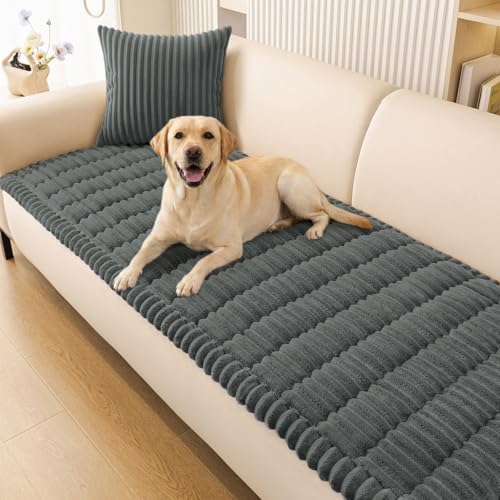
This listing describes a washable protector for fabric couches and includes a stated size. Compare that measurement with the intended sofa section before ordering. A smaller mat can be helpful for a dog’s usual resting spot, but it will not protect the entire sofa. Confirm the available color and whether the product includes any straps or other fastening pieces.
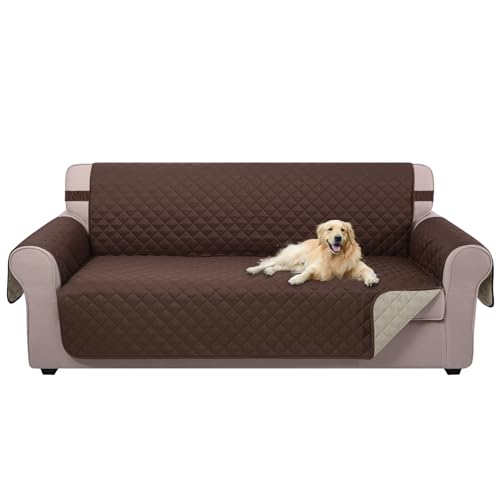
This product is described as a reversible mat for a three-cushion sofa. Check the actual dimensions and attachment features on the selected listing. A mat may be easier to remove and wash than a wraparound cover, while leaving the sofa’s arms exposed. Whether it stays in place depends on the sofa material, dog movement, and any included straps.

This listing describes a pet-focused cover with dimensions for a particular seating area. Do not treat wording such as “scratch resistant” or “waterproof” as a guarantee against every dog or accident. Read the materials and care directions, and use the return policy to assess fit if the cover is not compatible with the sofa.
Fabric and surface features
Fabric selection should balance washability, grip, comfort, and the amount of coverage you need. A tightly woven surface can be easier to lint-roll than a looped or highly textured textile, where hair may lodge between fibers. Smooth fabric can make fur easier to remove but may slide on leather. Fleece or quilted fabric can feel comfortable and add a soft layer, yet may trap hair or take longer to dry. Product descriptions alone cannot predict how a particular dog’s coat will behave on the surface.
Water-resistant backings can help limit the transfer of small amounts of moisture, but inspect seams and edges because liquids may pass through openings. If a product is advertised as waterproof, identify whether that claim applies to the whole cover or only a backing layer. Do not leave a wet cover on the sofa; trapped moisture can affect the upholstery beneath it. Remove and dry both the cover and any damp sofa surface promptly according to the sofa maker’s care instructions.
Some covers use silicone dots, elastic straps, foam anchors, or tuck-in panels to reduce movement. These features may help, but no single attachment will work on every sofa. A smooth leather cushion, deep seat, or narrow gap can make tucking difficult. Check the cover regularly after a dog jumps on it so loose fabric does not become a tripping or chewing hazard.
Protecting leather and faux leather sofas
Leather and faux leather need special attention. Some water-resistant or non-slip backings may rub, transfer color, or leave marks on certain finishes. Before regular use, test the cover in an inconspicuous area if the sofa maker permits and check the cover’s underside for rough seams or coatings. Make sure the cover does not trap moisture, heat, or debris against the surface.
Leather can be slippery, so a mat with secure straps may be more stable than a loose blanket. Avoid adhesives or fasteners that could damage the finish. Follow the sofa manufacturer’s care guidance for cleaning and conditioning; a cover does not replace proper maintenance. If the upholstery is delicate, antique, or under warranty, contact the maker before using a protective layer with a coated backing.
Keep claws and chewing in perspective
A fabric cover is a replaceable barrier, not a guarantee that claws cannot reach the sofa. A determined dog may catch a nail in the weave or chew an exposed edge. Trim nails as recommended by a veterinarian or groomer, provide an appropriate scratching or chewing outlet, and redirect the dog when it begins to dig at the cover. If scratching is persistent or suddenly increases, ask a veterinarian or qualified trainer about possible causes.
Choose a tightly woven, durable-feeling material and avoid long fringe, dangling ties, or loose elastic that a dog could chew. Supervise the first uses and check for pulled threads or damaged seams. Remove the cover if the dog mouths it or if a damaged part could be swallowed. Do not assume that a product described as pet friendly is safe to chew.
Choose colors and patterns for everyday life
A cover in a shade close to the sofa may be less noticeable, while a contrasting color can make the protector feel like an intentional accent. Pattern can help disguise a small amount of fur between cleanings, but it does not reduce the need to wash the cover. Consider the dog’s coat color, room lighting, and other textiles. Online photos may look different from the delivered item because screens and lighting vary.
If you want the cover to blend in, compare color names and swatches where available. A reversible cover can offer two looks, provided both sides are intended for use. Read reviews for comments about color accuracy and sizing, but verify that those reviews refer to the same variant. A color selector may change the product or fabric as well as the shade.
Set a cleaning routine
Follow the cover’s care label rather than assuming that every washable cover can go in a machine. Check water temperature, cycle, detergent, drying method, and whether the backing requires air-drying. Zippers, elastic, or waterproof coatings may be damaged by high heat. Shake off loose hair outdoors or vacuum the cover before washing to reduce the amount of fur in the machine.
Wash the cover often enough that odor, hair, and dirt do not build up. Frequency depends on the dog’s shedding, outdoor activity, and how often it uses the sofa. Keep a spare throw or mat so the sofa remains covered while the primary protector dries. If the cover has a waterproof backing, make sure it is completely dry before putting it back to reduce trapped moisture.
Clean the sofa itself according to its upholstery code and manufacturer guidance. A cover may shift and leave a small exposed area where dirt accumulates. Inspect cushions, seams, and the underside periodically. Avoid applying a household cleaner to the sofa simply because it worked on the cover; materials and dyes can react differently.
Use a cover with training and household routines
Furniture protection works best when it fits a consistent routine. If the dog is allowed on the sofa, teach a cue for getting on and off and provide a comfortable alternative bed nearby. Reward calm settling on the chosen surface. A protector cannot stop a dog from jumping, and repeated running or rough play may move a loose mat or strain the sofa.
Keep a towel near the entry for muddy paws and brush the dog as recommended for its coat. These small routines reduce the dirt and hair that reach the living room. If the dog is not allowed on furniture, use a physical boundary or training plan rather than relying on a cover to change access. The cover protects upholstery; it is not a behavior tool.
For puppies or newly adopted dogs, choose a cover that is easy to remove and clean, and supervise it until you understand the dog’s habits. Avoid leaving fabric ties or loose sections within reach if the dog chews. As the dog grows or changes behavior, recheck whether the cover still fits and provides enough coverage.
Common mistakes when buying a dog sofa cover
- Buying by the product photo without measuring the sofa and cover.
- Assuming a dog-oriented label means the item is claw proof, chew proof, or completely waterproof.
- Choosing a full cover for a reclining sofa without checking movement and mechanism compatibility.
- Ignoring the difference between a removable slipcover and a protective mat placed over upholstery.
- Leaving a damp protector on the sofa for hours.
- Using an abrasive backing on leather without checking the sofa maker’s guidance.
- Forgetting to check whether the item is machine washable and how it should be dried.
- Expecting one small mat to cover seat, arms, back, and chaise at the same time.
These errors can lead to poor fit, hidden moisture, a slipping cover, or damage to the sofa. Read the size chart and care label before ordering, and inspect the protector after the first few days of use.
What to check in reviews and listing details
Reviews can help identify fit and washing issues, but marketplace listings may combine several sizes and colors. Read reviews for the exact selected variant and look for details about the sofa type, dog size, and how long the product was used. A review that says “fits great” is more useful when it also gives the sofa width and cushion arrangement.
Look for recurring mentions of slipping, pilling, seams, color transfer, drying time, and changes after laundering. Separate delivery problems from product fit. If many buyers describe the same measurement issue, check the chart carefully before ordering. A single review cannot tell you how the cover will work on your sofa, but a pattern can reveal questions worth asking the seller.
When to use a local tailor or separate protector
Some sofas have unusual arms, attached backs, or nonstandard cushion shapes. A universal cover may not protect these areas without bunching. A tailored cover can provide a better fit, but the cost may approach that of a new upholstery piece. Ask for fabric samples, cleaning instructions, and a written estimate before commissioning work.
You can also combine a fitted cover with a washable mat in the dog’s favorite spot. This layered approach makes it easier to launder the high-use surface without removing the full protector. Ensure the layers lie flat and do not slide into a heap. Avoid loose layers on a recliner or where a person could trip.
Related sofa-care guides
For a different kind of cover, see our guide to loose-cover sofas, which focuses on sofas designed with removable upholstery covers. For spill cleanup, read our sofa spot-remover guide and follow your upholstery maker’s care code before applying any cleaner. These are separate topics; a protective cover does not replace cleaning or upholstery care.
How to make a final choice
Compare two or three products against the same checklist: sofa width and shape, coverage area, fabric, backing, attachment method, wash instructions, current price, seller, and return terms. Remove products that do not fit or that lack clear care instructions. Decide whether you need a seat mat, fitted cover, cushion protector, or full wrap based on where the dog spends time.
Before placing an order, confirm the exact selected size and color on the live page. Save the listing and measure once more. When it arrives, inspect the cover for damage, try it on the sofa while supervising the dog, and check whether it remains secure during normal movement. If it shifts, bunches, or interferes with a reclining mechanism, stop using it until you can adjust or replace it.
Bottom line
The best sofa cover for dog protection is the one that covers the right areas, fits the furniture, can be cleaned as often as your household needs, and stays secure during ordinary use. Measure first, match the material to the kind of mess you expect, and treat product claims as specific to the selected listing. A washable layer can make routine fur and dirt easier to manage, while training, grooming, and prompt cleaning help protect the sofa beneath it.
Protect the entry route and nearby furnishings
A dog can carry dirt from the entry to the sofa, so think about the route as part of the protection plan. Place a washable mat where the dog enters, keep a towel within reach, and give the dog time to dry before it settles on the furniture. This routine may reduce how often the sofa cover needs a full wash. Use a non-slip entry mat that lies flat and does not block a doorway; a loose rug can move under paws.
Check nearby tables, lamps, and cords too. A dog jumping onto a sofa can knock into objects at the edge of the seating area. Keep fragile decor out of the landing zone, and route charging cables where they cannot be chewed or caught under the cover. A protector should not conceal a cord or cover a heating vent. If your layout changes, recheck the path the dog takes to reach its usual spot.
Consider multiple dogs and shared seating
For two dogs that share a sofa, measure the full area they use rather than selecting a cover based on the smaller pet. A larger mat may protect the middle cushions, while separate washable throws can cover each dog’s preferred side. Make sure the cover remains flat when both animals shift positions. If one dog tends to push or dig at fabric, supervise the arrangement and adjust the setup if the cover bunches.
Shared seating can also make cleaning more frequent. Keep a second cover or spare blanket ready so the sofa is not left uncovered while the main protector is in the wash. Store the spare dry and clean, and label which cover fits which seat if you use separate pieces for a sectional. This simple preparation is more practical than waiting until a protector is wet or soiled to decide how to cover the furniture.
Check the sofa warranty and product care terms
Before adding a cover, review the sofa manufacturer’s warranty and maintenance instructions. Some upholstery makers give specific advice about dyes, backing materials, heat, and moisture. A protector that traps dampness or transfers color could create a problem even if the cover itself is easy to wash. Keep the care label and product listing so you can confirm the materials later.
If the sofa is new or expensive, test the cover in a hidden area only when the manufacturer’s instructions allow. Do not use pins, tape, adhesive strips, or sharp fasteners to hold it in place unless the sofa and cover makers explicitly recommend them. A safer alternative is to select a cover with a compatible strap or tuck-in system that can be removed without altering the upholstery.