Affiliate disclosure: Daily Home Decorating may earn a commission when you buy through links in this guide, at no extra cost to you. As an Amazon Associate, we earn from qualifying purchases. Foam density, dimensions, and cover details vary by listing; confirm the exact size and current seller information before ordering.
The best cushions for sofas depend on what needs fixing. If a seat cushion has lost its shape, a replacement foam insert or custom-cut cushion may be appropriate. If the seat feels low because its support deck has sagged, an under-cushion support board or insert addresses a different problem. If the back is uncomfortable, a separate back pillow can change posture without replacing the seat. These products are not interchangeable, and a new cushion will not repair a broken frame or suspension system.
This guide compares sofa seat inserts, foam replacement, back cushions, and sag supports. We explain how to measure the old cushion, choose foam and fill, compare covers, and know when the sofa itself needs repair. Amazon product cards use catalog matches returned by Creators API; they are examples, not products we physically tested. Confirm the precise dimensions, thickness, firmness, and return terms because a cushion can be difficult to return once opened or cut.
For more seating advice, see our support-focused sofa guide, comfortable sofa overview, and sofa cover comparison.
Quick guide: which cushion product should you look for?
- Seat cushion has flattened or torn foam: measure the insert and compare a replacement foam cushion or custom-cut upholstery foam.
- Seat surface feels uneven but foam seems intact: inspect the deck, springs, webbing, and frame before buying cushions; an under-cushion support product may help a limited sagging-seat issue.
- Back cushion is too soft or missing: consider a replacement back insert or supportive pillow after measuring height and width.
- Cushion cover is worn but fill is sound: look for a correctly sized cover, not a new foam insert.
- You need a different feel: compare foam firmness and layer construction, but confirm that the sofa’s manufacturer permits a different fill and that it will fit the original cover.
Start by identifying the problem rather than searching for a general “couch cushion.” A sofa cushion is a shape, fill, cover, and support system. Replacing only one layer may not solve the reason the seat feels uncomfortable.
Replacement foam, whole cushions, or support inserts?
A replacement foam insert goes inside an existing cover. It makes sense when the cover remains in good condition and the internal foam has compressed or broken down. Measure the foam itself where possible, not only the outside of a soft cover. A cushion cover may stretch or compress, so its flat measurement may not equal the insert’s finished size.
A complete cushion includes both fill and a cover. This is convenient if the old cover is stained or torn, but color and seam details may not match the sofa. Check whether it is sold as one insert or as a set, whether the cover is removable, and whether the listed dimensions include the cover. A replacement cushion can also have a different loft and firmness from the originals.
An under-cushion support is placed between the sofa deck and its seat cushion. It may help distribute load when a support surface is weak or uneven, but it is not a substitute for repairing a broken spring, webbing, or frame. Remove the cushion and inspect the sofa base. If wood is cracked, a spring is detached, or the deck has a sharp protrusion, contact a furniture repair professional instead of hiding the damage.
A back pillow changes where your body rests but does not rebuild the sofa’s original back cushion. It can fill a gap or provide additional support for a particular sitter. Check height, thickness, and whether it stays in place when someone leans back. A pillow that is too thick can push the body forward and reduce seat depth.
Measure a sofa cushion before ordering
Remove the existing cushion cover if it opens easily and the maker’s instructions allow it. Measure the insert’s width, depth, and thickness in several places. Foam may taper at the front or have a rounded edge, and back cushions may be irregularly shaped. Note any bevel, curve, seam, zipper, or attachment flap. Photograph the cushion and the opening so you can compare the product shape before ordering.
Measure the cushion when it is uncompressed. Do not squeeze the foam while measuring. For a foam block with a rounded front, record both the longest depth and the straight section. A rectangular insert may not fit a cushion cover designed for a waterfall front or a tapered back. Ask the seller whether the product can be cut to size and whether cutting voids the return policy.
Check the sofa frame’s inside dimensions too. If the replacement insert is too large, the cover may strain at the seams or fail to close. If it is too small, the cover may wrinkle and the cushion can shift. Some sellers recommend a slightly larger foam insert to create a full look, but the exact tolerance depends on the cover fabric and existing fill. Ask before ordering if the dimensions are close.
For sets, confirm how many cushions are included. A title may describe a single cushion while photos show a sofa with multiple seats. Verify that the product is an insert, a full cushion, a back pillow, or a support panel. Review the package contents and return terms carefully.
Choosing foam firmness and construction
Before choosing a new feel, compare the old cushion with the sofa’s other seats. If only one cushion has softened, replacing all cushions with a different firmness can make the seating uneven. If all seats have compressed, a matched set may restore a consistent height. When an original cushion contains a foam core wrapped in fiber, replacing it with bare foam can leave sharp-looking edges and a flatter appearance even if the dimensions match.
Ask sellers for the foam’s firmness rating and density when they are not listed. These values can help compare products, but they are not a universal comfort scale between every manufacturer. The shape of the seat, cover tension, user weight, and suspension underneath affect the finished feel. If specifications are unavailable, buy from a seller with a clear return process and avoid cutting the insert until you have checked the fit.
Density and firmness are different measurements. Foam density describes weight per volume and is often used as an indicator of material amount; firmness describes how much force it takes to compress the foam. A foam block can be dense and firm, dense and softer, or low-density and firm. Product descriptions sometimes use these terms loosely, so compare the manufacturer’s actual specifications rather than relying on words like “premium” or “high density” alone.
Seat cushions usually need more support than decorative back pillows. A very soft insert can feel plush initially but compress deeply under body weight. A very firm block may feel supportive but uncomfortable if it does not suit your original cushion shape. If the sofa’s original fill used layered foam, fiber wrap, or a feather blend, a single foam block will feel different. Ask the sofa manufacturer for the original construction and replacement recommendation.
Layered cushions combine different foams or wraps to balance support and surface softness. A fiber or batting wrap can smooth the edges and create a fuller profile. If you are replacing a cushion, inspect the old insert to see whether a wrap was used and whether it has flattened. Recreating the layers may fit better than choosing a single thick slab, especially in a tailored cover.
Foam products may arrive compressed or rolled. Follow the supplier’s expansion instructions and give the foam the recommended recovery time before measuring or installing it. Do not force a partially expanded insert into a cover. If the foam is cut to order, confirm whether the final size has a tolerance and whether the item is returnable.
Keep a simple measurement note for each cushion: location on the sofa, width, depth, thickness, shape, and whether it is reversible. Label left and right cushions if the sofa has a chaise or curved seat. Take a clear photo with a tape measure along each edge. This makes it easier to ask a seller a precise question and reduces the chance of ordering the wrong side for a sectional.
Seat cushion examples from Amazon Creators API
These API-matched examples show several types of seat replacement products. They are not tested recommendations and may differ in firmness, cover, and fit. Use the model page to verify current dimensions and package contents. Match the insert to the old cushion before purchase.

HOMBYS memory foam couch cushion replacement
Catalog example of a layered replacement insert with a removable cover. Confirm whether the listed size matches your sofa cushion.
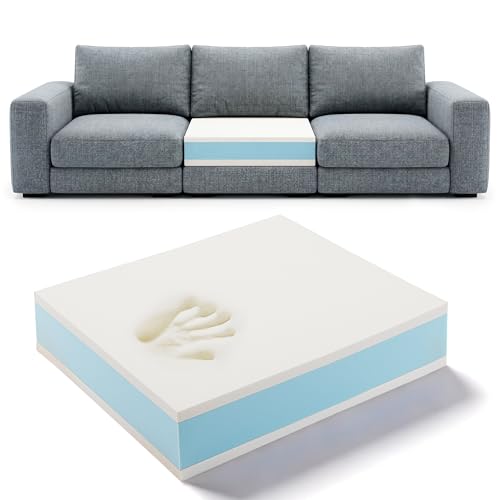
BALAPET three-layer cuttable foam insert
A DIY foam example without a cover. Verify the exact thickness, size, firmness details, cutting guidance, and return eligibility.
When a sagging seat needs support rather than new foam
Remove the cushion and press the deck where the sag appears. Check whether the fabric platform, webbing, springs, or wooden rails look uneven, detached, or damaged. If the cushion itself is compressed, replacing or rebuilding it may help. If the base gives way under pressure, a new cushion alone may still sink. Identify the source before spending money.
An under-cushion support panel can spread weight across a wider area and create a more level sitting surface in some sofas. It may add firmness and can make the seat feel higher. It may also alter the cushion’s position or make the sofa feel different from its original design. Measure the seat platform and check for supports, crossbars, or a center seam that could prevent the insert from lying flat.
Do not use a support panel over a broken spring or loose metal part that could puncture the cushion. Do not cover a cracked frame with a rigid board and assume the sofa is safe. If the sofa is under warranty, ask the manufacturer about repairs before adding third-party supports or changing the construction. Keep children away from furniture with broken springs or unstable frames until it has been repaired.

Spongiduits under-cushion support insert
A support product example for a seat that feels uneven. Inspect the frame and suspension first; it is not a repair for broken furniture.
After placing a support insert, test the seat gently and check whether the cushion remains level. A panel can make a low seat feel firmer or higher, but it may create a hard edge or raise the front of the cushion. If the sofa seat becomes uncomfortable or the panel shifts, remove it. A temporary support product should not mask a structural problem that needs a proper repair.
Back cushions and supportive sofa pillows
Back cushions can be filled with foam, fiber, feather blends, or shredded material. A foam insert tends to hold a more defined shape; loose fiber or shredded fill can be plumped but may need regular adjustment. The right choice depends on whether the sofa has a tight back or loose pillows, how much support you want, and whether the cover is designed for a firm insert.
Measure the back cushion’s height and width, but also check its thickness while it rests in the sofa. A new pillow that is too thick can move the sitter forward and make a comfortable seat feel short. If the sofa has a loose pillow back, compare the new fill with the existing cushion rather than ordering by the sofa’s overall size.
A separate lumbar pillow can help fill a gap for one person, but it does not necessarily fix the sofa for everyone. Try different pillow heights and thicknesses before buying. A very large back pillow may take away space from the seat. For a shared sofa, a removable pillow lets each person adjust their own position without permanently altering the cushion.

Royalay replacement sofa back cushion example
A back pillow option to compare for cushion replacement or added support. Confirm dimensions and whether it fits your sofa’s cover.
Cover, fabric, and care choices
A cushion insert needs a cover that matches its shape and use. If you reuse the original cover, inspect the zipper and seams. A worn seam may split when a new, fuller insert is installed. If the cover is removable, check its cleaning code. Removable does not mean machine washable; some upholstery covers require professional cleaning or should not be removed at all.
If you buy a new cover, compare fabric stretch, texture, zipper placement, and color. A highly elastic cover can fit a range of sizes, but may make the cushion look different from the rest of the sofa. A matching fabric may be available from the furniture manufacturer or retailer. For an older sofa, exact fabric dye lots may no longer exist, so choose a complementary fabric or cover all cushions consistently.
For pets and children, consider how easy the material is to vacuum and clean. Textured fabrics can trap fur; smooth covers may show scratches. Follow the furniture maker’s instructions and avoid harsh chemicals. If the old cushion smells or has a stain inside the foam, replacing the insert and cleaning the cover may be more effective than adding another layer over it.
When to repair or replace the whole sofa
Look for signs that a sofa is no longer a cushion-only project: a seat that tilts toward the center, a creak that changes when weight shifts, a visible gap between the frame and deck, exposed staples, a loose arm, or a spring you can feel through the upholstery. A sagging platform may require webbing or spring repair. A torn cover can expose the insert and allow it to shift. A replacement cushion may improve the surface but will not correct these underlying issues.
Ask a repair shop whether the frame can be fixed and whether replacement parts are available for the make and model. Older or custom sofas may have unusual cushion shapes. A professional can sometimes cut foam to match a pattern, add a wrap, and sew a new cover. Compare that quote with a retail replacement cushion and a new sofa. Include pickup and labor costs, not only the materials.
If the sofa is still under a manufacturer or retailer warranty, contact them before opening a cushion or changing its filling. Some sofas use special fire barriers, tags, or construction layers. Altering the cover may affect coverage. Keep the product label and receipt and describe the problem clearly: whether the cushion collapses, the base sags, the cover stretches, or the frame makes noise.
Replacement cushions can extend the useful life of a sofa when the frame and suspension remain sound. They are less useful when the sofa rocks, a frame joint is loose, springs are broken, or the upholstery is torn across multiple areas. Compare repair cost with the price of a replacement sofa. Ask a furniture repair shop for a quote if the sofa is a quality frame or has sentimental value.
Check the sofa’s warranty before doing a DIY repair. Some warranties cover frame components for certain periods but exclude cushion comfort, normal wear, or third-party alterations. Keep proof of purchase and contact the manufacturer or retailer. A repair professional can determine whether the support deck, springs, webbing, or foam is the main cause of discomfort.
If the frame is structurally sound but one seat is worn, replacing one cushion may be enough. If all seats have compressed evenly, consider replacing the full set so the sofa feels consistent. Mixing old and new cushions can create uneven seat heights. Compare the expected life and cost of each option before ordering individual parts.
Common cushion-buying mistakes
- Buying by sofa width instead of cushion size: individual inserts have their own dimensions and shape.
- Confusing density with firmness: they describe different properties.
- Ordering foam before checking the deck: support damage can make a new insert sink too.
- Assuming every replacement includes a cover: some products are foam only.
- Ignoring thickness and edge shape: the insert may not fit the old cover.
- Choosing only by product photos: photos do not reveal actual firmness or feel.
- Cutting foam before checking returns: custom-cut items may not be returnable.
A further mistake is assuming that a cushion marketed as “orthopedic” or “ergonomic” will solve pain. Seat comfort depends on body shape, posture, and the entire sofa. If a cushion causes discomfort, stop using it and consult a qualified health professional for individualized advice. Product titles are not clinical evidence.
Final recommendations
If the seat foam is worn and the deck is intact, measure the insert and compare replacement foam with a complete cushion. Choose a support panel only when the base is uneven but structurally sound. Replace or add back cushions when the back is the issue, and check thickness so you do not lose too much seat depth. Keep original cushion dimensions, cover details, and cleaning instructions before ordering.
Compare the replacement by size, construction, firmness information, cover, care, and return terms. If the sofa’s support system is damaged or the warranty is active, contact the maker before modifying it. The best cushion is the one that fits the existing sofa correctly and solves the right problem—not simply the one with the softest description.
Keep the original cushion nearby until the replacement is fully installed and you are sure the fit works. If the new insert is too thick or too firm, the old one can help you compare shapes and identify the difference. Store the product packaging and purchase details during the trial period, and contact the seller quickly if a dimension or component does not match the listing.
A careful fit check is the final step before discarding anything.