Affiliate disclosure: As an Amazon Associate, Daily Home Decorating earns from qualifying purchases.
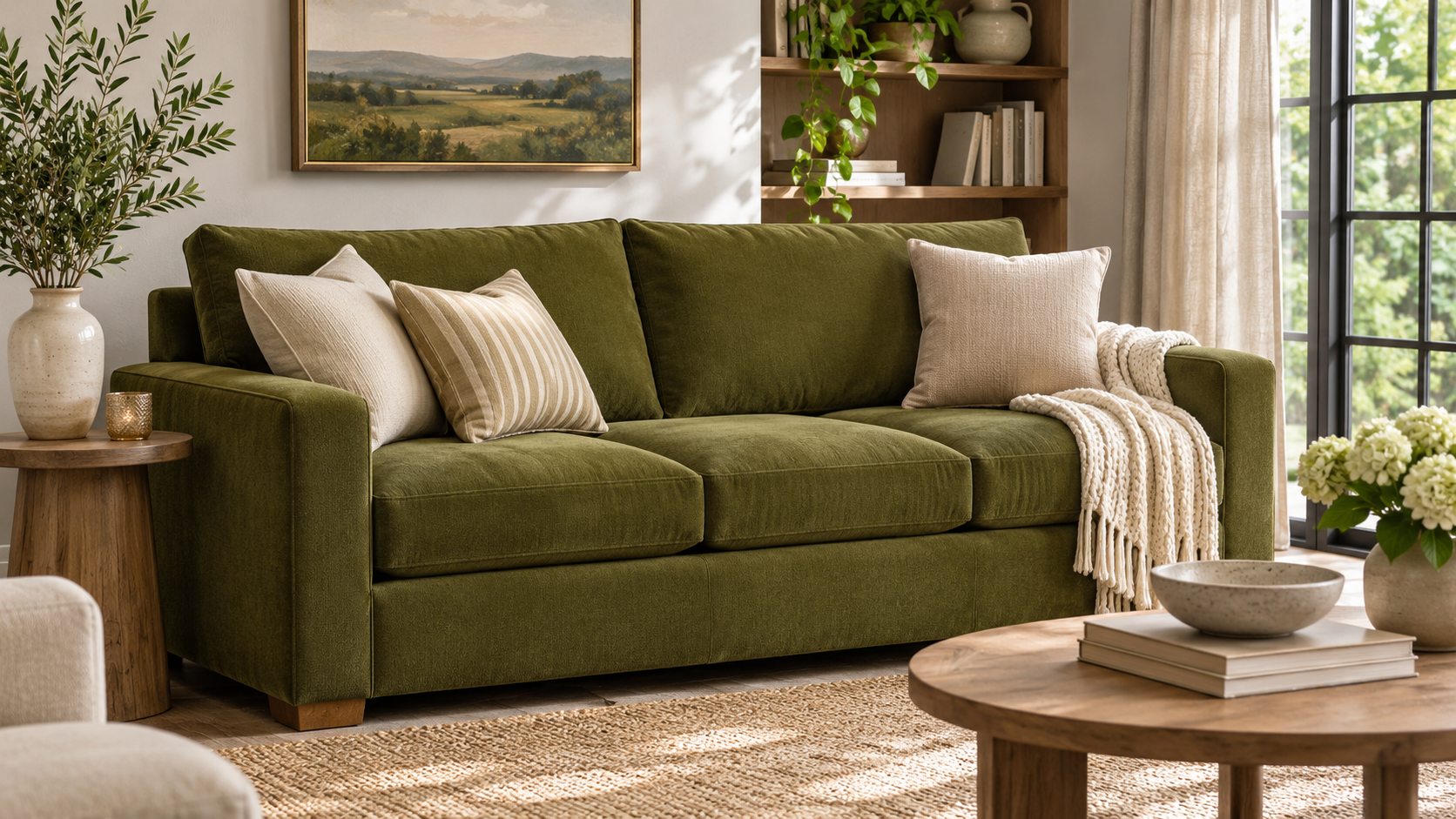
Warm neutrals: oatmeal, taupe, mushroom, and camel
Warm neutral upholstery is a dependable starting point when you want a sofa to work with several decorating styles. Oatmeal and beige soften white walls and pair naturally with oak, rattan, and warm metals. Mushroom and taupe sit between brown and gray, so they can bridge mixed finishes. Camel and cognac add richer warmth, particularly in leather or leather-like upholstery. These colors provide a quieter foundation that lets artwork, curtains, and smaller accents change without requiring a new sofa.
Pay attention to undertones. A beige sofa with a pink or yellow cast may clash with cool white walls, while a taupe that leans gray can feel dull next to honey-toned floors. Hold the swatch against the largest fixed surfaces, not just a small decorative item. If the room already has warm wood and cream walls, a cooler gray sofa may bring useful contrast. If the room has cool tile or blue-gray paint, a warmer neutral can keep the space from feeling stark. The goal is a deliberate relationship, not an exact match.
Gray sofa colors: flexible, but not automatically neutral
Gray remains popular because it can look understated and pair with many colors, but gray covers a wide range. Light silver-gray can feel crisp; charcoal reads bold and formal; greige contains brown warmth; blue-gray feels cooler. Consider the light in the room before selecting a pale or dark gray. In a dim room, a very cool gray may look flat, while a warm greige can feel more welcoming. In a sunlit room, dark charcoal may create a useful visual anchor without swallowing the space.
Gray can also look different depending on the fabric. A flat weave reads more uniform; velvet catches light and may show darker and lighter patches as the nap changes direction. A nubby chenille introduces shadows that make a single gray appear dimensional. If your main question is how to decorate around an existing gray sofa, see our separate guide to accent colors that go with gray sofas. Here, the focus is choosing the upholstery shade for a new sofa, not selecting every other color in the room.
Blue and navy: calm color with a clear identity
Blue upholstery ranges from pale denim to saturated navy. Muted blue can feel relaxed without becoming as visually strong as a jewel tone. Navy creates depth and works well when the room has lighter walls, warm wood, or metal details to balance it. In an open-plan space, a blue sofa can help define a seating area without using a wall or divider. Choose a blue that relates to fixed finishes, such as a rug or a favorite piece of art, rather than matching every blue object in the room.
Before ordering, check whether the blue leans purple, teal, or gray. These undertones affect how it sits beside other colors. A blue velvet sofa can look richer and more formal than the same hue in cotton or linen. If you are nervous about a bold shade, use a smaller loveseat or chair in blue first, or choose a softer slate-blue. If you are ready for a focal point, deep navy has strong visual presence while still behaving like a near-neutral in many palettes.
Green: nature-inspired without being a simple neutral
Green upholstery can feel grounded and distinctive. Olive and moss connect with wood, leather, and earthy palettes; sage is softer and more subtle; emerald or forest green makes a confident statement. Green often works well when a room already includes plants or natural materials, but do not rely on greenery as the only supporting color. Add a second or third related tone through art, a rug, or a cushion, and include a contrasting neutral so the arrangement does not become one block of green.
A saturated green sofa is a better long-term choice when you genuinely enjoy the color, rather than choosing it only because it appears in current product imagery. Consider fabric and silhouette too: a traditional tufted shape in emerald can feel formal, while a compact modern profile in olive may look casual. A darker green can visually recede in a large room but feel weighty in a small one. Ask for a swatch and check it in daylight, lamp light, and against the actual floor.
Cream and white: light, open, and care-dependent
Cream and ivory sofas reflect light and can make a room feel open. They are attractive in rooms with plenty of daylight, smaller apartments that need visual breathing room, or households that enjoy a clean, pale palette. They also show soil and spills sooner than medium tones, particularly on textured fabric. A removable, washable cover can make a pale sofa more practical, but check the care instructions before relying on that feature. Performance fabric does not mean stain-proof, and cleaning methods vary by fiber and finish.
Warm cream usually feels softer beside wood and beige; cool white can look crisp near black accents or cool stone. Compare the sofa to a white sheet of paper and to your wall paint to notice its undertone. If your walls are already a creamy white, a sofa with slightly more color or texture may create separation. If the room has dark flooring, a pale sofa can create contrast, but consider how the fabric will look where people rest their hands, feet, and pets.
Brown, tan, and cognac: warmth that deepens with texture
Brown upholstery can range from light caramel to chocolate. Tan and camel bring warmth while remaining lighter than dark brown. Cognac leather adds a strong material character, and deeper chocolate fabric can feel cozy in a large room. Brown works with natural wood and many warm palettes, but it is not a universal neutral: a red-brown cast looks very different from an ashy brown or a golden tan. Compare samples against your wood floor and existing leather pieces.
Leather changes with wear and light differently from woven upholstery. Aniline leather may develop patina, while coated or faux leather may have a more uniform finish; care and aging vary by product. A brown sofa can make a room feel darker if paired with dark floors, walls, and curtains. Use lighter art, rugs, or nearby finishes to create contrast. The point is not to avoid dark color, but to make sure the sofa has enough visual separation from its surroundings.
Black and charcoal: dramatic anchors with practical limits
Black and charcoal sofas can anchor a bright room, add contrast to pale walls, and complement metal or graphic accents. They can also show lint, dust, and light-colored pet hair, depending on the fabric. A black sofa may visually dominate a small space, especially when it has a bulky silhouette and sits against a dark wall. If you like the look, soften the mass with a lighter rug, visible legs, or open space around the sofa. A textured dark fabric can be more forgiving than a smooth surface.
Charcoal often offers a less stark alternative to true black. Test the shade in the room: charcoal can appear blue, brown, or nearly black under different lighting. If you already own a black sofa and want help with its surrounding palette, our guide to living room colors with black sofas focuses on wall and accent choices. That is separate from selecting upholstery color for a new sofa.
Rust, terracotta, and other statement shades
Rust, terracotta, and muted red-orange upholstery add warmth and personality. They can be appealing in a room that already includes wood, cream, or earth-tone details. A muted rust often feels easier to live with than a bright primary red because it contains brown or orange undertones. Still, a statement sofa is a major part of a room’s identity, not a detail you can easily overlook.
If you want a vivid shade but worry about future flexibility, choose a compact sofa with a simpler shape, or bring the color into a chair that is easier to replace. Another option is a muted hue or a textured weave that breaks up the color field. Before committing, make a small palette with the sofa swatch, floor, wall, and one textile. If the combination works in real light and still feels appealing after a few days, the color is more likely to suit you beyond the initial excitement.
How lighting changes sofa color
Natural light shifts through the day and varies by direction, nearby buildings, trees, and window treatments. A north-facing room may keep colors cooler; strong afternoon sun can warm them. At night, warm bulbs bring out yellow or red undertones, while cooler bulbs may emphasize blue. Put the swatch where the sofa will stand and look at it at several times of day. A color that looks balanced at noon may feel too dark or too saturated under lamps.
Do not judge a sofa color in a showroom under bright retail lighting alone. Take a sample home if available, place it beside the floor and wall, and look from the doorway as well as up close. A phone photo does not reproduce color perfectly, so use it only as a reminder. If you cannot get a swatch, compare the seller’s multiple photos and read the exact color name carefully. If shade accuracy matters, ask the retailer about samples, returns, and what happens if delivered upholstery differs from the listing.
Room size, layout, and sofa silhouette
Color and shape work together. A large sectional in a saturated hue occupies more visual attention than a small two-seat sofa in the same fabric. A low-profile sofa with visible legs may feel lighter, while a skirted or boxy base creates a heavier block. In a narrow room, a very dark sofa can make the seating area feel denser; a pale or medium tone may preserve openness. But a small room does not require a beige sofa. A carefully chosen bold color can make a compact space feel intentional.
Think about the sofa’s relationship to walls and floor. If all three are close in value, the sofa may blend into the room. That can be useful for a quiet, continuous look, but it can also erase the furniture’s shape. Stronger contrast defines a seating area. You can create separation through color, texture, legs, or a rug rather than relying on a high-contrast hue alone. Use a floor plan and painter’s tape to estimate the sofa footprint before deciding whether a dramatic color will dominate the room.
How daily use should influence the color choice
The best sofa color for a formal sitting room may not be the best one for a household with children, pets, frequent guests, or meals on the sofa. Medium-value colors often hide small bits of dust better than pure white or black, but patterns and texture matter as much as brightness. A speckled weave can disguise minor variation; a smooth pale surface may make crumbs obvious. Consider where people sit most and whether cushion covers can be cleaned or replaced.
Pet hair behaves differently on different fabrics. Light hair is easier to notice on dark upholstery, and dark hair can stand out on pale upholstery. A mixed or heathered color may reduce contrast, but no sofa shade eliminates cleaning. Check the maker’s care code and retailer’s instructions; do not assume a cleaning product or machine-wash method is safe. If spills are a concern, compare fabric construction and care guidance alongside color, rather than choosing a dark sofa solely because you hope it will hide everything.
Choose upholstery color with existing items
List the fixed or expensive items likely to stay: flooring, cabinets, wall paint, a large rug, or built-in shelving. The sofa does not need to match these surfaces, but its undertone should make sense next to them. A warm tan can complement golden oak, while a cool gray can bring contrast. A dark blue sofa can sit comfortably beside neutral walls if the room includes another small blue note elsewhere. One repeated accent is often enough to make the color feel connected.
Avoid buying extra décor before settling on the sofa sample. It is easier to add pillows, throws, lamps, or art after the upholstery is chosen than to replace a large sofa because a small pillow palette led you toward the wrong color. If you already own a favorite rug, bring a photo or sample to the showroom. If you plan to replace the rug later, choose a sofa color that gives you several options rather than depending on one exact textile.
Fabric texture changes color perception
Color cannot be separated from surface. Velvet catches light and can appear lighter or darker as the nap is brushed in different directions. Linen-like weaves show small irregularities that soften a solid shade. Chenille has a plush, slightly dimensional look; tightly woven performance fabrics may make a color appear more even. Leather reflects light and can develop variation as it ages. Compare fabric samples, not only color chips, because two materials in the same nominal shade can create different moods and maintenance needs.
A textured upholstery is often a safer way to use a strong color than a smooth, glossy surface because the texture breaks up the visual field. Yet texture may catch lint or be harder to clean, so check product care information. If your goal is a sofa that appears calm from across the room, a low-contrast weave may help. If you want a dramatic focal point, velvet or a pronounced weave can emphasize both color and shape. Consider how the material looks at the distance from which you usually see the sofa.
How to shortlist colors instead of shopping endlessly
Start with three color families: one quiet neutral, one warmer or cooler alternative, and one statement option. For instance, compare taupe, blue-gray, and forest green. This gives you a realistic range without turning the decision into dozens of nearly identical screenshots. Write a short reason for each option. A practical reason might be that the fabric can be spot-cleaned; a design reason might be that the sofa needs to anchor a pale room.
Then compare all three swatches in the room at the same time. Looking at one sample on Monday and a different one days later makes your memory do too much work. Put labels on the back so you remember the product and fabric. View the options in daylight and after sunset, and ask another person to describe what they notice before you tell them your preference. Their reaction may reveal that one color looks unexpectedly pink, green, or flat in your room.
Coordinate color with the sofa’s expected lifespan
A sofa is a long-term and relatively expensive purchase. If you expect to keep it through several moves or redecorations, choose a color that can work with more than one palette. Medium neutrals, brown, and softer blues are common adaptable choices, but a saturated color can still age well if you truly like it. Think about whether your taste changes often and whether the sofa’s covers can be replaced. Some frames and cushion systems allow cover updates, but do not assume that every model offers this option.
If you plan to move soon, choose a color that is not overly dependent on the current wall paint or rug. A neutral sofa can be easier to reposition, while a statement color can travel successfully if you are willing to adapt the next room around it. Consider the sofa’s value in your home beyond resale: the piece should suit your daily life. A shade chosen only to please a hypothetical future buyer may make the room less enjoyable for the years you own it.
A six-step process for checking color before purchase
First, identify the role the sofa should play: background, bridge, or focal point. Second, record the undertones of the room’s floor, wall, and largest textile. Third, select a few color families that answer the first two points. Fourth, test real fabric samples at the sofa’s location. Fifth, include household use and cleaning in the decision. Sixth, confirm the ordered color code and return terms before paying. This simple sequence keeps design and practical needs in view together.
When comparing swatches, hold them upright if possible; fabric on a vertical backrest reflects light differently from a sample lying flat. Put the swatch beside the floor and against the wall, then step back to see the combined effect. Take a picture only as a reference; cameras and displays shift tones. If two choices are close, ask everyone who uses the room to look at them and explain what each option would mean for care and future décor changes.
Write down your top choice and one backup before shopping. Include a plain reason, such as “warm taupe because it connects the oak floor and cream walls” or “navy because we want contrast and can live with a darker room.” This prevents a quick showroom impression from overriding criteria you already decided on. Check swatch names, item numbers, and fabric selections carefully when placing an order. A similar color in another fabric may not look the same, and online listings can group several variants under one page.
Common sofa color mistakes
One common mistake is matching the sofa exactly to a wall or rug. A close match can make the furniture look accidental if undertones differ slightly; either create intentional contrast or match precisely enough that the relationship is clear. Another mistake is choosing a very pale sofa only because it makes a showroom feel bright. The room’s natural light, wall color, floor, and daily use can change that effect. A third mistake is choosing a dark sofa based on stain concerns without checking lint, pet hair, or how the shade affects the room.
A fourth mistake is buying a trend color without considering the sofa’s likely lifespan. Trends can be useful inspiration, but a fixed piece of furniture is expensive and takes up a large area. Choose a shade you can imagine living with after accessories change. A fifth mistake is assuming the color name describes the exact appearance. Natural, stone, sand, and slate are not standardized codes. Ask for a sample, confirm the fabric, and keep the listing details with your order.
Color palette examples for common rooms
For a warm wood living room, consider oatmeal, camel, olive, or warm gray. Use a cooler rug or art to prevent the room from becoming one continuous field of beige and brown. For a cool gray room, a taupe or cognac sofa can add warmth; slate blue or deep green can create a more saturated focal point. For an all-white room, almost any value can work, but texture and contrast become especially important because the room has few visual boundaries.
For a compact apartment with limited daylight, a medium warm neutral or softened color may preserve openness without making the sofa visually disappear. For a sunlit room with pale floors, charcoal, navy, or forest green can create contrast. For a room with patterned wallpaper or a strong area rug, a quieter sofa color may reduce competition. These are starting points, not strict rules. Test the actual shade against fixed finishes and decide whether you want the sofa to blend or stand out.
Why “neutral” does not always mean flexible
A neutral color can still be difficult to coordinate if its undertone conflicts with the rest of the room. Gray may lean violet, blue, green, or brown; beige can look pink or yellow; cream can read bright white next to warm flooring. Before buying, compare the sofa’s undertone with the room instead of relying on the generic label. A well-chosen statement color can be easier to style than a neutral that looks wrong beside every fixed finish.
Flexibility also depends on value and texture. A pale beige sofa may be easy to pair with colorful accents but harder to maintain. Charcoal can suit many graphic palettes yet show lint. A medium warm gray may work across several schemes but look flat if the room has little natural light. Ask what kind of flexibility matters to you: changing accessories, hiding wear, fitting future homes, or making a particular room feel brighter. A useful answer often narrows the shortlist quickly.
Amazon sofa color examples
The following examples are visual references for different upholstery-color families, not product rankings. Creator API search results returned these exact ASINs and image URLs for the listed color descriptions, and the images returned HTTP 200 during review. Product availability, variants, dimensions, and shipping can change. Confirm the exact color and details on Amazon before deciding.
Green velvet

View this green velvet sofa on Amazon
Use this as a reference for the way a strong green can anchor a living room. Verify current options, upholstery, and dimensions on the listing.
Navy velvet

View this navy velvet sofa on Amazon
Navy provides depth while staying adaptable with lighter walls and warm wood. Check the current finish and configuration.
Cream linen-look

View this cream sofa on Amazon
Check the listing for fiber content and cleaning instructions; “linen” in a title does not always mean the item is made from natural linen.
Cognac tan leather

View this cognac tan sofa on Amazon
Warm leather adds material character. Confirm the exact leather type, finish, care needs, and color variant.
Pewter gray
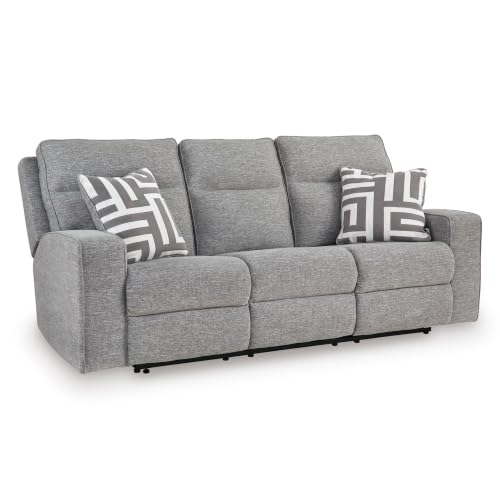
View this pewter gray sofa on Amazon
Use this as a comparison point for cool mid-tone gray. Confirm the live listing’s upholstery color and model configuration.
Frequently asked questions
What is the most popular sofa color? Neutral colors such as gray, beige, taupe, and cream remain widely available because they suit many styles, but there is no one best color for every room. The right color depends on lighting, fixed finishes, fabric, and maintenance. If you want a base that can adapt as accessories change, start with a medium neutral. If you want the sofa to define the room, choose a saturated shade you genuinely enjoy.
What sofa color is easiest to decorate around? Medium neutrals, including warm gray, taupe, mushroom, and some beiges, are often flexible starting points. Their usefulness depends on undertone: cool gray may clash with warm finishes, and yellow-beige can look out of place beside cool white. Look at the swatch against the actual room elements rather than choosing a color based only on its category name.
Are dark or light sofas better for pets? Neither is automatically better. Hair color, fabric texture, weave, and the pet’s habits affect what will be visible. Light hair can stand out on dark upholstery; dark hair can be obvious on pale upholstery. A mixed or heathered fabric may reduce contrast, but it will not prevent dirt or damage. Review the manufacturer’s care instructions and consider removable covers if cleaning is a priority.
Is gray still a good sofa color? Gray can work well, but choose its undertone and value for the room. Warm gray or greige may complement wood floors; blue-gray may suit a cooler palette. Gray velvet, chenille, and flat weave can look quite different even when the labels are similar. Use a swatch before ordering. If you already own a gray sofa, choose wall, rug, or accent colors separately rather than replacing it only because a trend changes.
Should the sofa match the rug? It does not have to. The sofa and rug can share a color family while differing in value or texture, or contrast to define the seating area. Exact matching can feel flat and is difficult across different materials. Use one shared undertone or accent color to connect them, then let the larger surfaces have their own visual roles.
What sofa color is best for resale? There is no guaranteed resale color. Neutral upholstery may appeal to more buyers, but condition, quality, size, brand, and local demand also affect resale. A sofa in a bright statement color may narrow the audience, but it could be attractive to someone seeking that look. If you expect to resell, choose a color you can maintain and keep product information and care documentation.
Final checklist before ordering
Confirm the exact color and fabric variant, ask for a swatch if available, compare it in the room at several times of day, and check care instructions. Measure the sofa and the path into the home. Review the return policy for custom upholstery and clarify return shipping or restocking fees. Save the selected color and item code. These checks reduce the risk that a technically correct order still feels wrong when the sofa arrives.
The best colors for sofas are those that suit the room and the people who use it. Warm neutrals offer flexibility; blues and greens add personality; cream keeps a room light; brown and cognac bring warmth; charcoal creates contrast. Look at undertone, light, texture, and maintenance as one decision. For related decorating ideas, explore our separate guides to wall colors with leather sofas and colors for sectional sofas.
As an Amazon Associate, Daily Home Decorating earns from qualifying purchases.