Affiliate disclosure: As an Amazon Associate, this site may earn from qualifying purchases. If you buy through links on this page, we may receive a commission at no extra cost to you.
When a full-size wet/dry vacuum feels like too much machine for the job, a small shop vacuum can make everyday cleanup easier to start and easier to put away. Compact models are useful for a one-car garage, a small home workshop, a utility closet, apartment storage, quick renovation tasks, and the occasional wet spill. Their advantages are modest size, easier carrying, and less space consumed between jobs. The trade-offs are equally practical: a small tank fills sooner, a compact hose may not reach as far, and small wheels or no wheels can make a loaded vacuum less convenient than it looked on a product page.
This guide focuses on choosing small wet/dry vacuums by footprint, capacity, handling, storage, and realistic cleanup needs. It is separate from a broad shop-vacuum overview: here the key question is how little machine you can reasonably use without making every cleanup a series of interruptions. The examples below span compact 2.5-gallon units and a portable 4-gallon model. They are representative products to compare, not the result of a head-to-head lab test. Check the exact model, included accessories, filter, warranty, and current listing before buying.
Quick picks: choose the compact format that suits your space
For quick household and bench cleanup, the CRAFTSMAN CMXEVBE17250 is a corded 2.5-gallon option with a short hose, small accessories, and a filter bag in the advertised configuration. Its size suits dry debris and modest wet pickup when the manual’s setup instructions are followed. A Vacmaster VOM205P wall-mount configuration can be attractive when floor space is scarce and a fixed location near a workbench makes sense. The RIDGID 4000RV steps up to a 4-gallon tank and a more portable canister design for someone who wants more room between emptying stops. DEWALT’s 2-gallon DCV581H has the special advantage of operating from a compatible 20V MAX battery or AC power, but the bare-tool package means the battery may be an additional purchase.
These choices are not interchangeable. A wall-mounted vacuum is convenient in a planned station, but you cannot carry the whole unit to a different room. A small canister is easier to move, though the hose and cord still need space and a safe route. A 2.5-gallon tank takes less room and is quicker to empty; a 4-gallon tank can reduce interruptions. A battery-powered option brings portability but requires you to manage runtime, charging, and battery compatibility. Start with where you will store the vacuum and what you will collect most often.
Compact shop vacuums to compare
Amazon product names and images shown here were retrieved through the Amazon Creators API. Listing bundles and images can change, so confirm the exact model and included parts on the current product page. Product inclusion is for comparison and does not imply independent performance testing.

ASIN: B07QXWG93C. A small corded format for routine household or bench cleanup.

ASIN: B08D646L23. A fixed station may help keep a compact garage floor clear.

ASIN: B011KF44YQ. A larger compact canister when a little more tank capacity matters.
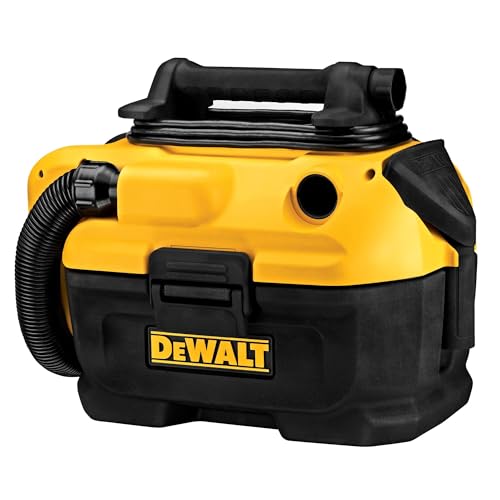
ASIN: B00DD1UQ3Y. Consider for mobile jobs if you already own a compatible battery; verify what the package includes.
What “small” should mean in your home
There is no universal gallon cutoff that makes a vacuum small. The useful definition is relative to the place you intend to keep it and the amount you can comfortably move. A two- or two-and-a-half-gallon drum is easier to tuck under a bench or onto a shelf than a conventional large tank, but the motor head, hose, cord, and attachments also take room. A four-gallon unit can still be compact beside a full-size contractor vacuum, yet feel awkward if you must carry it up narrow stairs or store it in a crowded apartment closet.
Measure the storage location before shopping. Record the clear width and height, then allow room to remove the motor head, take out the filter, and lift the tank. A vacuum that fits only when its hose is detached can be frustrating if the hose has no home. Check whether the power cord wraps around the body and whether the accessories clip onto the unit. A tidy system is more likely to be used than a tool that leaves its nozzles scattered in a drawer.
Also think about transport. Do you carry the machine by a handle, move it between rooms, or leave it parked near a workbench? A few pounds matter more when the unit is lifted frequently than when it sits on a garage floor. When comparing listed weights, check whether they describe the vacuum empty and without accessories. A wet tank can become heavy quickly, and a small vessel can still be awkward when filled with water or dense debris. If carrying is central to your routine, favour a balanced handle and a manageable emptying method over a marginal increase in capacity.
Tank capacity: fewer trips versus easier storage
Tank capacity describes the container’s nominal volume, not a guarantee that all of that volume is usable for every material. Dry debris can reach the filter or interfere with suction before the tank is physically full. Liquid pickup is governed by the float mechanism and the manufacturer’s instructions. Bulky material such as wood shavings occupies space quickly, while fine dust can load a filter and reduce airflow. The type of mess matters as much as its volume.
A 2.5-gallon vacuum can be a sensible choice for sawdust around a small bench, crumbs and grit in a vehicle, the debris from a short repair, or a contained spill. It may require emptying during a garage cleanup that includes leaves, wood chips, or renovation waste. A 4-gallon unit offers a buffer, but also needs a bit more storage and can be heavier to carry when full. Ask yourself whether an extra emptying stop is genuinely disruptive. For occasional short tasks, a smaller canister can save space every day in exchange for a few extra minutes once in a while.
Do not select by gallon number alone. Compare tank shape and opening, whether the top comes off easily, how the filter is accessed, and whether a drain is provided. A wide opening may make dry debris easier to empty; a drain can help with liquid, if the model includes one and the location is appropriate. For wet pickup, plan for cleaning and drying the tank after use so that residue and odours do not build up. Read the manual before changing from dry to wet operation because filter requirements can differ.
Portability and carrying comfort
Small shop vacuums tend to be carried more often than large models, making shape and grip important. A top handle should let you lift the machine without pinching fingers against the hose or cord. Consider where your hand lands when the vacuum is assembled, and whether the centre of gravity feels balanced with accessories attached. A low, wide body may sit steadily on a shelf; a tall narrow body can use less floor area but may be less comfortable to carry.
Wheels are not automatically an advantage on a small vacuum. Casters make sense if it will roll around a smooth garage or basement floor, but tiny wheels can catch on thresholds and cords. A unit without wheels is easier to place on a shelf or carry into a vehicle, but you must lift it rather than pull it. Wall-mounted models avoid floor rolling entirely, but trade mobility for a fixed installation. Choose the movement style that fits the paths you actually take.
Consider the cord and hose together. A short hose on a lightweight unit keeps the package compact but may force you to move the vacuum more frequently. A longer hose can extend reach while the machine stays parked; it also adds storage bulk and can be harder to coil. Likewise, a long cord is useful near a car or across a room, but it should wrap neatly and not snag on shelves. Use a grounded outlet and keep electrical connections away from wet pickup areas. Extension cord use should follow the vacuum’s manual and applicable electrical guidance.
Storage: portable canister or fixed wall station
A canister vacuum is the flexible choice when cleanup happens in different places. Store it near the tools you use, lift it to a vehicle, or roll it to a spill. For a small garage, the ideal spot is close enough to reach but not in the path of a car door, walkway, or frequently used tool. Leave clearance to remove the head, empty the tank, and clean the filter. A shelf can work for a truly light machine, but avoid lifting a wet or debris-filled tank overhead.
A wall-mounted wet/dry vacuum can reclaim floor area in a narrow garage and create a predictable cleanup station. It is especially appealing if you always clean the same bench, vehicle bay, or craft area. Before mounting, confirm the wall type, stud locations, fasteners, required height, and the unit’s installation directions. Plan the cord route and hose reach. A wall mount is a poor choice if the hose cannot reach the places you need or if you expect to use the vacuum around the home. Do not improvise a mount using hardware that is not appropriate for the wall and product weight.
Accessory storage often determines whether a compact vacuum stays organized. Look for a place for the crevice tool, floor nozzle, adapters, and any filter bags. If the model has no onboard storage, a labelled bin or hook next to the vacuum can be enough. Keep clean and used filters separate, and store the vacuum dry with the hose loosely arranged rather than sharply kinked. These small habits prevent the common annoyance of discovering that the right nozzle or filter is missing halfway through a task.
Choose the vacuum around the debris
For ordinary dry household grit, crumbs, and workshop debris, the main questions are whether the floor nozzle and hose suit the surfaces and whether the filter is installed and maintained as directed. A small wet/dry vacuum can be useful around a workbench, utility area, vehicle interior, or after a short DIY task. Use the narrow nozzle for corners and a wider tool for flat surfaces. The hose diameter and attachments on compact models can be smaller than those on larger shop vacuums, so check that the opening is not too narrow for the chips or debris you expect to collect.
For liquids, confirm that the specific model is designed for wet pickup and follow its manual about the filter, float shutoff, tank capacity, and cleanup. Disconnect power before changing configuration if the instructions require it. Do not pick up flammable liquids, hot ash, corrosive chemicals, sewage, or unknown substances with an ordinary household shop vacuum. Such materials can create fire, exposure, or equipment hazards and may require a specialist. Never use a vacuum to collect a liquid simply because the tank looks sealed.
Fine dust needs more thought than its small particle size suggests. Drywall dust, sanding dust, masonry dust, and other fine material can pass through or clog a filter not designed for it. A disposable collection bag may reduce mess and protect a filter in applications allowed by the manufacturer, but a bag alone does not turn a standard vacuum into a certified dust extractor. Follow the tool manufacturer’s dust-control instructions and relevant workplace requirements. For hazardous materials, use the correct rated equipment and professional guidance rather than relying on a compact general-purpose model.
Filtration and bags: keep dust contained
Check what filter comes with the exact model and which replacement filters are available. A filter that fits the canister securely is essential; a torn or incorrectly seated filter can let debris enter the motor or escape into the room. Wet pickup may require a different filter arrangement from dry pickup. The operator’s manual, not an online listing headline, should determine the correct configuration. Keep the model number handy when ordering replacements because filter families can look similar while fitting different tanks.
Filter bags can make emptying cleaner and help keep dust away from the main filter during compatible dry pickup. They do add a recurring cost and can reduce usable volume as the bag fills. Never use a paper or cloth bag for wet pickup unless the manufacturer specifically permits it. A bag must fit the inlet and tank correctly; a loose bag can collapse or tear. If you collect dusty material frequently, compare bag availability, price, and capacity before settling on a vacuum.
HEPA is a specific filtration term, and a HEPA filter by itself does not prove that every part of the machine is sealed to a particular standard. A compact household vacuum should not be represented as suitable for hazardous dust simply because a replacement filter carries a high-efficiency label. The complete system, its seals, bag, filter retention, and intended use all matter. For routine debris, use the supplied and compatible filters as directed; for regulated or hazardous exposure, consult the applicable standard and select a properly rated system.
Hose, nozzle, and accessory fit
Compact vacuums are often bundled with a flexible hose, extension wands, a utility nozzle, and a crevice tool. Those accessories have a direct effect on reach and convenience. A short hose is easier to store and may be adequate for a workbench or car interior. If you need to clean under furniture or around a whole vehicle, a longer hose can reduce repositioning. Check the hose diameter as well as its length, since a narrow hose can be restrictive for larger chips and may not fit a dust port without an adapter.
Attachments should lock or fit securely enough that they do not fall off while moving. The crevice tool reaches gaps; a brush can be useful for dust on delicate surfaces; a floor nozzle speeds up flat cleanup. Not every compact vacuum includes a full accessory set, and product listings may show parts that belong to a separate bundle. Confirm the included tools in the current package and manufacturer documentation. If you need to buy adapters, verify dimensions and avoid stacking several reducers that narrow the airflow path unnecessarily.
For power-tool dust collection, verify compatibility with the tool port and check the tool’s instructions. A small vacuum may suit intermittent collection from a sander or compact saw if the connection and filter setup are appropriate, but it is not automatically a substitute for a dedicated dust extractor. A tight adapter can be useful, yet the system needs enough airflow for the tool and material. If a filter clogs quickly or dust escapes, stop and reassess rather than continuing to work in a cloud.
Corded versus cordless small shop vacuums
A corded compact vacuum provides consistent access to power and is usually a straightforward choice for a fixed garage or workshop station. The cost is managing the cable and locating an outlet. If you often clean a vehicle in a driveway or move between rooms, cable reach can be inconvenient. Keep the cord away from standing water, sharp edges, heat, and moving equipment, and follow the manual for safe extension-cord use.
A cordless wet/dry vacuum can be carried to a job without first finding an outlet. This is valuable for a short cleanup in a car, shed, or unfinished area. Runtime depends on the battery, selected mode, material, filter condition, and how continuously the motor runs. Tank volume does not tell you how long the battery will last. A bare-tool package may exclude the battery and charger, so include those costs if you are not already invested in that battery platform. Batteries are also another item to charge, store, and maintain.
The DEWALT DCV581H is listed as a 2-gallon corded/cordless tool compatible with the company’s 20V MAX system; confirm battery and charger inclusion on the exact listing. Its hybrid power option offers flexibility, but it still has a compact tank and should be selected for small jobs. If the vacuum will live beside a workbench and run for longer sessions, a corded model can be simpler. If you need to cross a driveway or reach a boat or shed, cordless convenience may justify the smaller capacity and battery planning.
Noise, maintenance, and daily use
Compact does not necessarily mean quiet. Motor noise depends on the design and the surface, hose, and nozzle in use. If you live in a shared building or work near occupied rooms, check for a published noise rating and consider when the vacuum will run. Wear hearing protection when appropriate, especially during prolonged use in enclosed spaces. Avoid assuming that a small motor is safe to run for long periods without breaks; follow the product’s duty-cycle and cooling instructions.
Routine maintenance is important because a small filter or tank can show the effect of accumulated material quickly. Empty the container before debris reaches the filter inlet, inspect for obstructions, clean filters by the method allowed in the manual, and let washable components dry fully before reinstalling. Check the hose for cracks and clogs and ensure the filter seats properly. If suction drops suddenly, switch off and unplug or remove the battery before inspecting the machine.
After wet pickup, empty the tank promptly, rinse only if allowed, and dry it thoroughly. Keep the motor head and electrical components dry. Store the vacuum in a place protected from freezing temperatures if water may remain in the tank. For dry dusty work, wear suitable protection, avoid shaking dust into the air, and empty bags or containers outdoors where appropriate. If the material is hazardous, follow its disposal instructions instead of treating it as ordinary household dust.
How to choose among the small formats
Choose a 2- to 2.5-gallon canister if you have short, predictable cleanups, tight storage, and a convenient place to empty it. This is a practical size for keeping near a bench or carrying to a vehicle for crumbs and ordinary dry grit. Choose a 4-gallon portable model if the same tasks routinely fill a small tank or if you want a more flexible wet/dry tool without moving to a full-size unit. The larger body occupies more space, so consider whether it will still be easy to keep accessible.
Choose a wall-mounted unit when you clean one main zone and every inch of floor space matters. Before purchase, make sure the mounting position gives useful hose reach and the wall can support the installation using the specified hardware. Choose a cordless model when the absence of an outlet is a real constraint and the tasks are short enough for your battery setup. When comparing these options, evaluate total setup rather than a single specification: machine, hose, cable or battery, accessories, filters, and the place where all of it will live.
If you regularly collect heavy construction debris, large volumes of liquid, or long sessions of sawdust, a compact model may cause repeated interruptions. A larger wet/dry vacuum or a dedicated extractor could be a better fit. Conversely, if the vacuum is mainly for household carpet and hard floors, a conventional household vacuum may be easier to store and handle. The small shop-vac category makes sense because of its wet/dry capability and rugged cleanup role, not because every household needs another vacuum.
Buying checklist before you order
- Measure the storage space. Include the motor head, hose, cable, and accessories, and leave room to empty and service the tank.
- Match capacity to debris. Consider bulky chips, fine dust, and liquid separately; nominal gallons are not usable capacity for every task.
- Check the exact model. Similar product names can describe different packages, voltages, filters, and accessory bundles.
- Confirm wet-pickup setup. Read the manual for filter changes, float shutoff, and materials the vacuum may not collect.
- Plan how it moves. Compare handle comfort, wheels, cord reach, hose reach, and whether you will carry or park it.
- Verify replacement supplies. Check the availability and cost of compatible filters, bags, and any required adapters.
- Check battery costs. For cordless tools, confirm whether battery and charger are included and whether your existing platform is compatible.
- Look at emptying and cleaning. A convenient tank opening and accessible filter make routine maintenance more likely.
- Consider sound and work hours. A compact vacuum can still be loud in a small room or shared building.
- Use suitable dust control. Do not treat a standard shop vacuum as a certified solution for fine hazardous dust.
Common mistakes with compact wet/dry vacuums
Buying the smallest tank without thinking about emptying. Compact storage is useful, but if your routine cleanup fills the canister several times, the time saved on storage may be outweighed by repeated emptying. Think about a representative job, not the smallest possible mess. If one size larger still fits your planned spot, the extra capacity may be worthwhile.
Assuming a wet/dry label means every liquid is safe. These machines are designed for certain kinds of wet pickup, not fuel, solvents, chemicals, hot liquid, or unknown substances. Read the exclusions and safety steps. Electrical equipment and water deserve care: keep plugs and outlets dry, avoid standing water around connections, and do not bypass float or filter safeguards.
Confusing a filter claim with complete dust containment. A high-efficiency filter cannot compensate for a poor seal or an unsuitable bag and collection setup. Check the rating of the complete system required for the material. For regular sanding or masonry work, choose purpose-built dust control rather than expecting a tiny general-purpose vacuum to manage every airborne particle.
Ignoring where the hose will go. A vacuum may fit in a corner yet still be inconvenient if the hose cannot reach the work area or has nowhere to coil. Plan hose and attachment storage at the same time as the machine’s footprint. If a wall mount is fixed too high or too far away, it may be less useful than a portable canister.
Comparing peak horsepower as the whole story. Peak motor ratings are not a simple measure of pickup at the nozzle. Airflow, restriction, filter condition, hose size, and attachment fit all affect real use. Choose from your task and check manufacturer specifications rather than selecting the largest number on a product box.
Frequently asked questions about small shop vacuums
What is the best small shop vacuum size?
For short household and bench cleanups, 2 to 2.5 gallons can be convenient; for longer jobs or more debris, a portable 4-gallon model gives more room before emptying. The right size depends on debris volume, storage, and how you move it. Capacity is nominal, so follow the instructions for dry and wet pickup.
Can a small shop vac clean a car?
Yes, a compact wet/dry model can handle ordinary crumbs, grit, and small spills in a vehicle if you use an appropriate attachment and the vacuum is configured as directed. The hose length, nozzle width, cord reach, and tank capacity influence convenience. For dedicated detailing work and specialized upholstery extraction, see our separate guide to vacuums for car detailing.
Is a wall-mounted shop vacuum worth it?
It can be worthwhile when cleanup happens in one regular location and floor space is limited. A fixed unit is less convenient to carry elsewhere, and hose reach must suit the whole work area. Confirm mounting instructions, wall support, cord routing, and accessory storage before installation.
Can I use a small shop vacuum for sawdust?
For ordinary coarse debris and occasional cleanup, possibly, if the manual permits the material and the filter and bag are correct. Fine dust can clog filters or escape, and some dust presents health risks. Use the dust-control equipment specified for the tool and material; do not assume a small shop vacuum is a certified extractor.
How often should I empty a compact vacuum?
Empty it before debris reaches the filter or the manufacturer’s fill limit, and sooner if suction declines. Bulky shavings and leaves take more volume than fine grit. For liquid, observe the fill indicator or float shutoff instructions and empty the tank promptly after use.
Can one filter be used for wet and dry pickup?
That depends on the model and filter. Some require a different filter or configuration for wet pickup. Follow the owner’s manual exactly, and never assume a dry paper bag or filter is suitable for liquids. Reinstall and dry washable parts fully before dry operation.
Are cordless shop vacuums practical?
They are useful where power outlets are inconvenient and tasks are short. Runtime depends on battery size, condition, operating mode, and load. The battery and charger may be sold separately, so account for their cost and charging needs before comparing a cordless bare tool with a corded vacuum.
Does a compact shop vacuum replace a household vacuum?
Usually not. A small wet/dry vacuum is built for workshop debris and certain spills. A household vacuum may be more comfortable for routine cleaning of carpet and floors, while a compact wet/dry machine is a useful secondary tool for garages, benches, utility rooms, and wet/dry tasks.
Final recommendation
The best small shop vacuum is a machine that fits the storage space, reaches the cleanup area, and has enough capacity for the mess you actually make. Pick a 2.5-gallon unit when compact storage and short tasks lead; move to around 4 gallons when emptying interruptions matter more. A wall mount suits a fixed station, while a cordless model suits jobs away from outlets. Verify the exact package, filter setup, battery inclusion, and current manufacturer instructions before ordering. For a broader comparison that covers larger tank sizes and general workshop setups, see our guide to choosing a shop vacuum for home and workshop use. For projects that create airborne sawdust, our article on dust collection for jobsite saws covers why tool-specific collection and safe filtration matter.
Certain content that appears on this site comes from Amazon. This content is provided “as is” and may change or be removed at any time. Product examples and images are supplied through Amazon Creators API; check current Amazon listings for the latest prices, availability, product details, and specifications.