As an Amazon Associate, DailyHomeDecorating.com earns from qualifying purchases. If you buy through links in this article, we may earn a commission at no additional cost to you.
Finding the best vacuums for car detailing is less about buying the machine with the biggest advertised number and more about choosing a setup that can reach, loosen, collect, and safely dispose of the soil inside a vehicle. A detailing job moves through several different tasks: loose sand in carpet, crumbs between seat cushions, pet hair woven into fabric, dust along the dashboard, liquid spots on mats, and sometimes a full upholstery extraction. One vacuum style rarely handles each task equally well.
This guide is about detailing workflows and the tools that support them. It is not a hands-on laboratory test or a claim that any one product wins every comparison. We explain how dry vacuums, wet/dry shop vacs, automotive vacuum-and-blower kits, and portable extractors differ; how to choose tools for tight access; and what to confirm before buying. For broader advice about cleaning an entire vehicle, see our car-cleaning vacuum guide. Here, the emphasis is on more controlled interior detailing, stain extraction, and professional-use criteria.
What makes a detailing vacuum different?
A household floor vacuum is designed to cover open floor area. Vehicle detailing requires controlled pickup in narrow, fragile, and awkward locations: seat seams, rails, cup holders, console gaps, pedals, door pockets, carpet edges, and cargo corners. The tool needs to reach around seat frames without scraping trim. A long, flexible hose can help keep the machine outside the door, while a set of small attachments gives the operator control over vents, fabrics, and crevices. A wide floor head may be useful for mats, but it cannot substitute for the small tools used throughout a cabin.
The soil itself changes from place to place. Fine dust can escape from a weak collection system; gravel may clog a narrow tool; hair may cling to upholstery; sticky spills need a different treatment from dry crumbs. An extractor sprays cleaning solution and recovers liquid from compatible fabric. A dry vacuum collects loose matter. A wet/dry vacuum may pick up liquid only when configured according to its manual. These categories overlap in marketing, but their jobs are different. Choosing the right kind of machine for each step helps avoid poor cleaning and equipment damage.
Think of a detailing vacuum as a system: motor body, filter, hose, nozzle, brush, power source, and storage. For a single personal car, a compact vacuum and careful hand tools may be enough. A mobile detailer may need a durable shop vacuum, a fine-access kit, and a separate extractor. A person who buys the largest tank but lacks a useful crevice tool may still struggle under the seat. Match the complete kit to the actual work rather than selecting by one headline specification.
Quick picks by detailing task
- Dry crumbs, sand, and dust: use a dry vacuum with a flexible hose, narrow crevice nozzle, soft brush, and upholstery attachment.
- Deep fabric spots: add a portable extractor, then vacuum loose debris first and control moisture carefully.
- Garage cleanup and wet utility work: consider a wet/dry shop vac, but verify the exact filter and wet-pickup setup in its manual.
- Vents, narrow seams, and detail brushes: a dedicated automotive kit with micro attachments may be easier to guide than a bulky shop vacuum.
- Limited storage: a compact utility vacuum or compact extractor can be easier to keep ready, though its capacity may require more frequent emptying.
- Multiple vehicles each day: prioritize durable hose couplings, replacement filters, accessible tools, duty information, and support over a high peak-horsepower claim.
Product examples for different setups
The products below illustrate distinct equipment types, not a ranked test. Amazon Creators API supplied the product identifiers and images. Confirm the current listing, model suffix, voltage, tools included, and intended use before ordering. Bundles can change, and a product name alone may not describe every package variation.
BISSELL Little Green HydroSteam 3618: portable stain extraction
This is a portable deep cleaner rather than a dry vacuum. BISSELL lists a 64-ounce clean tank, a separate 51-ounce dirty-water tank, a 4.8-foot hose, and a five-inch tough-stain tool for this model. That configuration may suit someone who periodically cleans fabric seats, carpeted mats, and other compatible upholstery. It is best viewed as a spot-cleaning and extraction companion to a dry vacuum. Read the manufacturer instructions for approved surfaces, cleaning modes, and formula. A steam-capable label does not mean every automotive material should be treated with heat or moisture.
BISSELL Little Green Mini 4075: compact spot cleaning
A mini extractor can fit a tighter storage area and handle an occasional mark on a compatible cloth surface. Its smaller size does not turn it into a machine for rapidly dry-vacuuming a full cabin. Compare the package’s included tool, hose and cord reach, tank volume, and cleaning instructions. If you regularly work through several vehicles or full-size interiors, frequent refills and emptying can make a small format inconvenient.
BISSELL Little Green 1400B: a portable upholstery cleaner
This portable cleaner is another example of a machine intended to spray and recover liquid from spots and upholstery. Product listings identify automotive use, but check the current model-specific manual rather than assuming any cleaner is safe for every seat. The useful comparison factors are the size of its cleaning head, tank access, hose handling, recovery performance, and how simple it is to rinse after use. Consider whether you will clean a few stains or repeatedly treat large textile areas.
Vacmaster Beast VFB511H 0201: garage-based wet/dry utility pickup
A five-gallon wet/dry vacuum can serve as a garage tool for loose debris and other cleanup approved by its instructions. Vacmaster’s manual describes the model and filter setup; verify the exact model number and kit because similar VFB products may include different accessories. A small car nozzle, soft brush, and flexible hose make a shop vacuum more useful in an interior. The tank is still heavier and bulkier than an automotive vacuum, so keep it stable outside the door and route the hose without contacting paint.
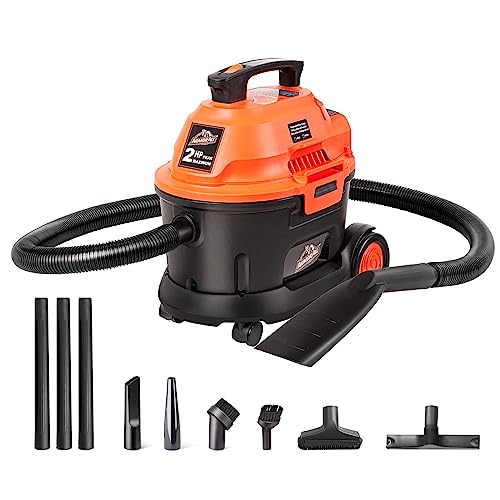
Armor All AA255W: a compact wet/dry utility vacuum
The 2.5-gallon format is an option for people who value compact storage. It may mean more frequent emptying on a heavily soiled vehicle, but a smaller body can be easier to move around a home garage. Look closely at the included hose and nozzle assortment, filter requirements, and cord reach. Verify that the exact model and filter combination is approved for any liquid pickup you plan to do; do not assume a product title alone establishes the safe configuration.
MetroVac Vac N Blo VNB-94BD: automotive vacuum and blower kit
MetroVac’s US 120-volt VNB-94BD combines vacuum and blower functions with an automotive accessory assortment. Its product information lists a six-foot hose, crevice and upholstery tools, micro tools, and a blower nozzle. That can be useful for controlled access around vents and seams, as well as light debris-moving tasks. The blower can also scatter dust or push it deeper into openings if used carelessly. Some similarly named listings are 220-volt versions for other regions, so confirm voltage before purchase.
Amazon product examples

BISSELL Little Green HydroSteam 3618
ASIN: B0C9V4L32W

BISSELL Little Green Mini 4075
ASIN: B0DJMP6T3N

BISSELL Little Green 1400B
ASIN: B0016HF5GK

Vacmaster Beast VFB511H 0201
ASIN: B0D2D3CGV8
Armor All AA255W
ASIN: B00Y5BX674

MetroVac Vac N Blo VNB-94BD
ASIN: B003FVLGZ4
Certain content that appears on this site comes from Amazon. This content is provided “as is” and is subject to change or removal at any time. Product images and descriptions are supplied through Amazon Creators API; confirm specifications, included accessories, compatibility, and availability on the current listing.
Choose a setup by who will use it
One personal vehicle, occasional cleanup
If you clean a single vehicle monthly, a compact dry vacuum may be the most realistic purchase. The goal is to make a quick cleanup easy enough to repeat. Look for a body that stores conveniently, plus a hose and small nozzles that reach under seats. Battery power can avoid dragging a cord across the driveway; if you choose it, confirm battery and charger inclusion, compatible replacement batteries, and runtime at the power setting you will actually use. A bare tool listing can look inexpensive while omitting the essential battery.
For occasional spots on cloth, renting an extractor or using a small portable cleaner can be more sensible than buying professional-size equipment. Avoid applying liquid to leather, suede, headliners, or electronics without surface-specific instructions. A vehicle’s seat covers can conceal sensors and wiring. If a spill reaches an electrical component, stop and consult a qualified service professional rather than adding water and suction.
Family cars, pets, and weekly messes
Weekly cleaning changes the value of filters, easy-empty tanks, hose storage, and attachments. Food crumbs, sand, hair, and wet shoe marks tend to recur in different locations. A useful setup might be a dry vacuum with a pet-hair brush and a compact extractor for periodic cloth stains. These are separate jobs, so compare each tool against the surfaces and messes it handles rather than searching for a machine that advertises every function.
For hair, the attachment needs to loosen fur without catching the upholstery. A rubberized brush or non-powered pet tool can help gather hair into a pickup line. Rotating brush rolls may work on sturdy carpet but can pull loops in delicate fabric. Test a small hidden area and stop at any snag. For child seats, remove them only if appropriate and reinstall according to their manufacturer; vacuum around the installed seat carefully when you cannot safely remove it.
Mobile detailing and multi-vehicle work
When several vehicles are cleaned in a day, ease of service and workflow matters as much as raw pickup. Consider spare filters, tool durability, hose diameter, how quickly the tank opens, and whether attachments stay organized. Make sure replacement parts are actually available for the exact model. A machine with a convenient cart may be helpful in a fixed garage but cumbersome in a mobile van. A compact auto kit may be easier to carry but require separate equipment for bulk shop cleanup.
Look for manufacturer statements about duty cycles or commercial usage instead of assuming a consumer tool is made for continuous operation. Peak-horsepower figures do not establish how long a motor can safely run. Keep a routine for cleaning filters, checking cords, draining wet tanks, and rotating batteries. For paid work, reliable service and an organized tool kit reduce downtime more consistently than chasing a slightly higher advertised number.
Specifications that matter more than hype
Airflow and sealed suction
Listings may quote CFM, water lift, sealed suction, or peak horsepower. These are not interchangeable measures, and tests may be performed under different conditions. CFM can describe air volume; sealed suction is a measure under a blocked condition; peak horsepower is not the same as a continuous rating. None of those figures alone predicts how easily a small crevice tool will pick up a line of grit through a long hose with a partly loaded filter.
Use numbers as context, not as a ranking. Prefer model-specific specifications, a clear tool list, and a manual that explains the machine’s intended use. Consider the whole air path: nozzle opening, hose width, bends, filter, bag, tank seal, and exhaust. A narrow tool gives precision but can restrict flow and clog with larger debris. A strong motor does not compensate for a blocked filter or a loose hose connection.
Hose length, diameter, and flexibility
Hose reach determines whether you can work on a far seat without moving the machine. A hose that is too short makes the motor body bump into doors; one that is very stiff can push the nozzle around instead of letting you guide it. Check the measurement and connector size in the product documentation. Attachments from another brand may not fit even if their nominal diameters seem similar, and adapters can reduce airflow or disconnect under tension.
Route a corded vacuum’s hose and power cord before opening with the tool. Keep the body stable and outside painted door frames. If you detail outdoors, use electrical equipment and cords in accordance with their ratings and the manufacturer’s safety instructions. Keep plugs and connections away from standing water. Do not use a household extension cord in wet conditions unless it is specifically designed and rated for that use.
Filtration, bags, and fine particles
Fine dust can pass through a weak filtration system and return to the cabin or garage. Look up the exact filter type, whether a collection bag is recommended, and how to change it without scattering debris. Do not assume a vacuum has HEPA filtration because a generic title includes the term. Verify the exact model and compatible filter. If a manufacturer specifies a filter for fine particles, use the approved one and replace or clean it at the stated interval.
Wet/dry equipment may require different filters for liquid pickup. A paper cartridge filter that is suitable for dry debris may be damaged by liquid. The manual will explain when to remove it, add a foam sleeve, or change the configuration. Let washed filters dry fully before reinstalling, and do not use a damp filter for dry dust unless the instructions explicitly allow it. Filter maintenance affects pickup, motor protection, and dust control.
Noise, weight, and storage
A high-powered machine can be loud and heavy. If you detail in a shared garage or apartment parking area, noise affects when you can work and whether nearby people are disturbed. Check the machine weight separately from tank capacity; some listings emphasize gallons while hiding how cumbersome the full body is. Consider whether you can lift it into a vehicle or carry it up stairs.
Measure the storage shelf or closet before buying. Include the hose, cord, wands, and attachments in your space estimate. A compact cleaner that has a simple storage pattern may see more use than a large machine that is difficult to retrieve. Some models offer onboard accessory storage; examine whether the small nozzles stay secure or fall off when the machine moves.
Dry vacuum, wet/dry shop vac, or extractor?
Dry vacuuming is the first pass
Remove loose trash and take out mats before vacuuming. Start with crumbs and grit while they are dry; liquid cleaner can turn loose soil into a paste that is harder to recover. Use the crevice tool at seat rails and around seams, then work the main carpet in overlapping passes. Move seats forward and backward where it is safe to access hidden strips. Keep the nozzle from scraping trim and use a soft brush for fragile areas.
Dry vacuuming also makes spot treatment more deliberate. When dirt is gone, you can tell whether a stain needs an upholstery cleaner, whether a hair tool is necessary, or whether the mark is simply surface dust. If you are cleaning another person’s car, document pre-existing wear or discoloration and confirm which surfaces may be treated. Some headliners and delicate fabrics should be cleaned with minimal moisture and gentle methods.
Wet/dry shop vacs are for utility pickup
A wet/dry vacuum is useful for garage debris and approved liquid pickup when configured as the manual specifies. It can be paired with a small car nozzle for interior work, though a large tank may be awkward next to seats. Never pick up flammable liquids, hot ash, or hazardous materials unless the manufacturer explicitly permits it. If water is picked up, drain and dry the tank before storage to limit odor and corrosion.
Do not confuse a wet/dry vacuum with an extractor. A wet/dry vacuum generally recovers liquid; it does not necessarily apply cleaning solution evenly to a seat or carpet. Spraying fabric and then using an unapproved shop vac can soak the foam, move stains, or affect seat components. Use a purpose-built extractor and its approved solution for fabric extraction, or consult a professional when the material or contamination is uncertain.
Extractors work on compatible fabric stains
An extractor sprays solution and recovers dirty liquid through a cleaning head. It can help with spills on cloth seats and carpeted mats, but technique matters. Test a hidden area, follow the chemical dilution instructions, and work on a small section. Use enough solution for the tool to do its job without flooding the material. Slow suction-only passes can recover remaining moisture. Provide airflow and wait for the surface to dry before returning floor mats or closing the vehicle for an extended period.
Do not extract leather, suede, headliners, or perforated seats unless their manufacturers approve the method. Liquid can travel through perforations into foam or electrical parts. Keep spray away from buttons, seat controls, sensors, and airbag seams. If a stain is unknown, oily, or chemically reactive, avoid aggressive mixing of cleaners and seek surface-specific guidance.
A practical interior-detailing sequence
- Inspect first. Park safely, ventilate the area, note sensitive surfaces and existing damage, and confirm the vacuum cord, plug, hose, and filters are sound.
- Remove loose belongings. Empty door pockets, cup holders, and cargo storage. Take out mats; handle child seats and safety equipment according to their instructions.
- Work high to low. Dust upper surfaces first, then vacuum seats, under-seat areas, footwells, mats, and cargo floor so debris falls onto areas not yet cleaned.
- Pick the tool for the surface. Use a soft brush around vents, a crevice tool at seams and rails, and an upholstery tool for broad cloth surfaces. Do not force hard plastic into trim.
- Loosen embedded hair. Brush gently toward the nozzle. Use powered brush rolls only on compatible carpet and test before using on delicate fibers.
- Spot-treat after dry pickup. Check fabric care guidance, test in a concealed place, use the right product, and extract only with compatible equipment.
- Allow surfaces to dry. Blot excess moisture, ventilate, and check the surface before reinstalling mats or using the car. Do not direct intense heat at upholstery.
- Clean the equipment. Empty the collection container, rinse extractor tanks as directed, inspect filters and tools, and let washable components dry completely.
Accessories that improve detail work
Crevice tools are for narrow seams, seat rails, and edges where a full-size head cannot fit. A rigid tool offers control; a flexible version bends around structures. The narrowest nozzle is not always the fastest because it may reduce airflow or clog with grit. Choose a width that fits the space but still passes common debris.
Micro tools can reach vents and small channels. Work gently, especially near louvers and electronic controls. Strong suction can pull loose parts or labels; keep delicate objects at a safe distance. Use a microfiber cloth for oils and fingerprints because a vacuum is not a substitute for wiping.
Soft dusting brushes help lift dry dust from textured plastic and upholstery. Keep them clean and dedicate a brush to interior work so abrasive grit does not scratch glossy trim. Do not push bristles into sensitive displays, buttons, or a speaker grille without checking the vehicle’s care guidance.
Upholstery nozzles can cover a seat or carpet area more evenly than a tiny crevice tool. Some have smooth edges designed to glide over fabric. Extractor heads can include spray openings or transparent bodies; those are for a different machine category. Check connector diameter and purpose before attempting to fit a nozzle from another brand.
Hair tools can loosen pet fur, but aggressive brushing may roughen delicate material. A rubberized tool often gathers hair into clumps that are easier to vacuum. Powered brushes may help on durable floor carpet, yet should be tested carefully on looped or loose-weave upholstery. Stop if fibers pull or the surface changes.
Blower nozzles can move debris out of a seam, but they can also send dust into a vent or across the cabin. Use low, controlled airflow and position the vacuum to collect the loosened material. Do not blow dirt toward eyes, electrical contacts, filters, or another person’s work area.
Common buying and use mistakes
- Shopping by one number: peak horsepower, CFM, and sealed suction describe different things. Compare the complete tool and filtration system.
- Assuming all wet/dry models are identical: filters, tanks, attachments, and wet pickup instructions vary by model.
- Confusing extraction with vacuuming: a cleaner that sprays fluid is not a dry debris vacuum, and a dry vacuum should not be used to recover liquid.
- Over-wetting upholstery: excess moisture can reach foam, adhesives, sensors, and electronics and can take too long to dry.
- Skipping the dry pass: loose grit becomes harder to remove after it is mixed with cleaning solution.
- Using a large nozzle in small gaps: poor access leads to missed soil and scratched trim. Switch to a suitable tool.
- Buying the wrong package: a cordless bare tool may omit the battery; a product image may show attachments not included.
- Ignoring filter changes: a clogged or wet filter can reduce pickup or become damaged.
- Blowing debris into openings: use a blower carefully and vacuum the loosened dust rather than scattering it.
- Using a rotating brush on every textile: test first and stop if fibers snag.
Maintenance after a detailing session
Empty a dry vacuum before the container reaches its maximum line. If it uses a disposable bag, replace it rather than shaking fine dust into the air. Inspect the hose and nozzle for hair, thread, and paper scraps. Clean only filters that the manufacturer says are washable; some cartridge filters must never be rinsed. Let cleaned parts dry fully before reassembly.
For an extractor, empty both tanks and rinse the recovery side after each use. Follow instructions for flushing the solution path and cleaning the tool head. Do not leave dirty water or formula in the machine for long storage. Use the recommended solution because a household detergent can foam, leave residue, or be incompatible with pump components. Store hoses without kinks and keep cords away from sharp edges.
Check power cords for cuts, plugs for discoloration, battery packs for damage, and wheels or latches for cracks. Stop using damaged electrical equipment and contact manufacturer support. Use replacement bags, filters, and accessories made for the exact model. If suction drops, inspect the hose, tank seal, filter, and nozzle for a blockage before assuming the motor is failing.
How to compare models before buying
Make a short list of the work you actually perform: dry pickup, pet hair, seat stains, wet mats, or multiple vehicles each day. Note where the machine will live, whether you have an outlet, and how far the hose must reach. Then compare exact model number, included tools, power source, battery status, tank capacity, filter type, hose dimensions, accessory storage, replacement parts, and warranty. Every specification should answer a real need.
Review current listings and manuals because packages change. A single brand may sell a similar model in several bundles with different nozzles or voltages. Confirm that the image and title match the selected variation. If a listing title conflicts with the manufacturer’s manual, use the manual for intended operation and ask the manufacturer for clarification.
A home garage can support a larger wet/dry vacuum plus a small extractor. An apartment may be better served by a compact dry vacuum and occasional professional extraction. A mobile detailer might prioritize rugged hoses, accessory replacement, and a machine that can be carried to the vehicle. These are setup strategies rather than performance promises; the best balance depends on your vehicle, space, budget, and the frequency of your work.
Frequently asked questions
Can a shop vacuum be used for car detailing?
Yes, a shop vacuum can remove dry debris if the model is used according to its manual. A small car nozzle, crevice tool, and soft brush improve access. Liquid pickup is allowed only when the machine instructions specify the correct filter configuration and permitted materials. A shop vacuum does not necessarily spray and recover cleaning solution like an extractor.
Is a car-detailing vacuum different from a regular car vacuum?
The phrase is not a universal technical category. Detailers often look for a longer hose, small attachments, filtration, and a controlled nozzle that can reach rails, seams, and vents. A regular compact vacuum may be sufficient for quick crumbs but lack the tools or capacity for a full interior workflow.
Do I need both a vacuum and an extractor?
Only if your work includes both loose dry debris and repeated fabric-stain extraction. A vacuum handles dry soil; an extractor applies and recovers liquid from compatible materials. If you mainly clean dust and crumbs, a dry vacuum can be enough. If stained cloth seats are part of the routine, a separate extractor adds a distinct capability and maintenance step.
What vacuum attachments are most useful?
A long crevice tool, soft brush, small upholstery nozzle, flexible hose, and a compatible pet-hair tool cover many interior tasks. An extractor’s spray head is a separate accessory for that cleaner. Check the connector sizes and included items for the exact model rather than assuming attachments are universal.
Can I use a vacuum blower inside the car?
Use the blower function sparingly. It can dislodge dust from a seam, but it may also force particles into vents, switches, or seat mechanisms. Keep airflow low, direct debris toward the vacuum, and avoid blowing around people, filters, or sensitive components.
How do I vacuum dog hair from car seats?
First loosen hair with a compatible rubberized brush or pet tool, then vacuum it in short sections. Test a hidden area and avoid aggressive rotating brushes on delicate fabric. For broader home-floor guidance, see our guide to vacuums for dog hair; car-seat fabric may need a gentler attachment.
Should I buy a compact or large tank?
Compact tanks are easier to store and carry but need more frequent emptying. Large tanks can reduce interruptions in a garage but make the unit heavier. Choose based on the amount of debris per job and your storage setup, not on capacity alone.
Final recommendation: build around the workflow
The best vacuums for car detailing are those that let you work carefully through the cabin without fighting the hose, missing narrow areas, or using the wrong tool on a surface. A dry vacuum handles loose soil, a wet/dry shop vacuum adds utility pickup when configured correctly, an automotive vacuum kit can improve reach, and a portable extractor treats compatible fabric stains. Some owners need one of these tools; busy detailers may need a combination.
Before ordering, confirm the exact model and package, study the manual, and check the filter and accessory setup. Vacuum dry debris before wet cleaning, test upholstery in a hidden place, control moisture, and allow fabrics to dry fully. For broader vehicle-cleaning choices see our car-vacuum selection article; for garage utility equipment, use the shop-vacuum guide. Those articles cover broader selection; this one focuses on access, extraction, and a detailer’s sequence.
Manufacturer references
- BISSELL Little Green HydroSteam 3618 specifications
- MetroVac Vac N Blo product specifications
- Vacmaster VFB511H operator manual
Certain content that appears on this site comes from Amazon. This content is provided “as is” and is subject to change or removal at any time. Product images and descriptions are supplied through Amazon Creators API; confirm specifications, included accessories, compatibility, and availability on the current listing. This is an editorial guide based on manufacturer information, not a hands-on comparative test.