Disclosure: As an Amazon Associate, dailyhomedecorating.com earns from qualifying purchases. Links on this page are affiliate links; they cost you nothing extra. Prices and availability change often, so check the current Amazon listing before you buy.
Good electric pressure washer reviews should do one job above all others: put the leading machines side by side in the situations your home will actually create, and then refuse to pretend they are all the same. They are not. One design is a balanced all-rounder that disappears into a household’s routine. Another is a premium instrument that rewards frequent use. A third folds the whole idea down to flat-and-bike scale. This comparison review works through the leading model families in that spirit, prose-first and tier-based, examining design, real cleaning behaviour on paving, wood, vehicles, and siding, detergent and nozzle systems, and the ownership details, storage, spares, frost discipline, that decide satisfaction in year three rather than week one.
Key Takeaways and Verdict
Key Takeaways: The mid tier is the centre of gravity for most homes; premium buys comfort and durability for frequent washers; compact buys participation for small homes. Across every model, technique and detergent matter more than small specification differences, and the safety rules never change: ground fault circuit interrupter protected power, eye protection, closed shoes, no ladders, and never aim the wand at people or pets, because a pressurised jet can cause serious injury.
Verdict: Shortlist by property, not by headline. A typical house should start with an upright all-rounder; a frequent washer should look premium; a flat or townhouse should look compact; a keeper who values internals should look at the pump-led designs. The detailed comparisons below explain exactly why, model by model and surface by surface.
In this guide
The Line-Up at a Glance
| Model family | Character | Tier | Best for | Not suited for |
|---|---|---|---|---|
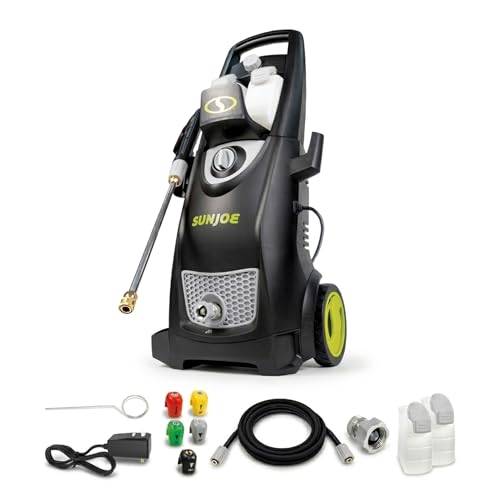
| Sun Joe SPX3000 | Balanced all-rounder | Mid | Mixed home job lists | Tiniest storage spaces |
| Kärcher K5 | Premium and composed | Premium | Frequent, long sessions | Occasional minimal use |
| Greenworks range | Ecosystem and accessories | Mid | Car and patio households | Buyers wanting zero extras |
| Ryobi range | Compact and friendly | Entry to mid | Flats, bikes, furniture | Vast weekly paving |
| Westinghouse ePX series | Low, following design | Entry to mid | Crowded garages, car work | Fans of tall trolleys |
| AR Blue Clean range | Pump-led smoothness | Mid | Long-term keepers | Accessory collectors |
Read the table as personalities rather than rankings. Every machine here cleans a patio; they differ in how the work feels, how the machine stores, which accessories court you, and which compromises you will meet every session. The reviews that follow take each personality in turn, then return to the surfaces, because a model that charms in the abstract still has to survive your decking.
What an Electric Pressure Washer Is and Where It Fits
For readers arriving fresh: the appliance is an electric pump that concentrates hose water through interchangeable nozzles into a controllable cleaning jet, with detergent systems that let chemistry share the work. It occupies the broad middle of home cleaning, between the hose-and-brush at the gentle extreme and engine-driven or professional machines at the restoration extreme. That middle is where patios green over, fences grey, cars film, and paths turn slippery, which is to say it is where the visible condition of a home is decided across a year. The models in this comparison all serve that territory; their differences are delivery quality, ergonomics, and ownership texture, and those are the terms on which they will be judged here.
the single-verdict version in our electric pressure washer review
Design, Build and Setup Across the Range
Set the six personalities next to each other and the design philosophies separate quickly. The upright all-rounders, Sun Joe’s SPX3000 being the archetype, organise everything vertically: wheels at the base, handle at the top, nozzles and tanks in moulded stations. They are the easiest to understand at a glance and the easiest to park. The Kärcher K5 shares the upright idea but polishes it, with the composed detailing and hose management thinking of a brand that treats pressure washing as its home subject. Greenworks uprights speak the visual language of modern garden tools, clean-lined and accessory-ready. Ryobi’s range stretches from uprights down to genuinely small units that one hand can carry to a balcony. The Westinghouse ePX abandons the tower entirely for a low four-wheeled puck that trails you, a design that sounds like a gimmick until you have walked around a car with it and realised the machine was simply always where you needed it. AR Blue Clean machines look the most industrial of the set, in keeping with their pump-making roots, and their casings suggest a workshop rather than a lifestyle catalogue.
Setup is a shared ritual with small personality notes. All want water running through before power so the pump primes wet; all connect through a ground fault circuit interrupter protected outlet; all purge air through the trigger before work begins. The differences are in the seconds: quick-connect tips on the all-rounders swap fastest, the premium machine’s connections feel the most machined, the compact designs are running soonest because there is simply less of them, and the ePX asks for a moment of hose-path awareness in exchange for its follow-me freedom. Storage reverses some rankings: compacts win outright, the ePX tucks into low spaces nothing else uses, uprights need their honest corner, and every model rewards the same ending, drained, coiled, nozzles home, indoors away from frost.
Performance in Real Use
Paving, paths, and driveways
On hard landscaping the whole line-up performs, and the separations are about pace and evenness rather than possibility. The premium and stronger mid-tier designs sustain the most composed fans through long lane work, which shows up as fewer stripes and less rework. The all-rounder is, true to its name, entirely convincing here, especially with a rotary tip or surface cleaner spreading its effort. The compacts clean paving properly but ask for more passes and more patience, which is a fair trade for their size and an unfair expectation to deny. Detergent pre-treatment narrows every gap in this section, because algae and leaf stain surrender to chemistry first and water second, on every badge in the table.
Decking, fencing, and wood
Wood separates operators more than machines, but machines still have voices in the outcome. The models with the smoothest, most predictable fan delivery, the Kärcher and AR Blue Clean in this set, make distance discipline easiest to hold, because the edge of the fan behaves the same on every pass. The all-rounder and Greenworks designs are close behind and entirely capable in patient hands. The compacts, often assumed too gentle for preparation work, are in fact lovely fence tools for small gardens, where their scale matches the panels. Across all six, the rules are identical and non-negotiable: wide fan, along the grain, constant motion, hidden test patch first, and stop the moment fibres begin to lift. The machine that damages your deck will be the one whose operator hurried, whatever its badge.
Cars, bikes, and gear
Vehicle work rewards the detergent story, and here the personalities diverge most usefully. The SPX3000’s dual-tank arrangement makes it the session-flow champion for households alternating products. Greenworks models court the accessory-minded with foam and surface gear compatibility. The ePX’s trailing design is a genuine car-work pleasure, circling the vehicle without a single tip-over or tug-of-war. Premium delivery smoothness flatters careful owners on cherished paint. Compact Ryobi-style units own the bicycle and balcony end of the spectrum. All of them rinse foam and film beautifully with a wide fan at distance; all of them will mark a badge or a stone chip if their operator closes in with a narrow jet, because physics does not read badges either.
Siding, brick, and elevations
On the house itself, the comparison becomes about reach management and composure. Uprights with generous hose runs let you work elevations in calm sections from the ground, which is the only place elevations should ever be worked from; the wand never goes up a ladder, recoil being what it is. Detergent applied bottom-up and rinsed top-down prevents streaking on every model. The premium machine’s steadiness helps on long runs, the all-rounder is unruffled, and the compacts simply take longer, which on a single shaded wall is no hardship at all. Every model demands the same exclusions: no jet into vents, behind boards, toward electrical boxes, outdoor lights, or outlets, ever.
Strengths and Trade-Offs of the Field
- Strength: Every model here starts instantly, runs quietly by category standards, and stores indoors without fuel or fumes.
- Strength: The spread of personalities is real, so households can match storage, session length, and job mix unusually precisely.
- Strength: Detergent systems across the field have matured to the point where gentle, chemistry-led cleaning is the default method.
- Trade-off: No model escapes the category ceiling on vast, heavily stained areas; they differ in pace, not in kind.
- Trade-off: Accessory ecosystems vary, so a model bought for today’s list may court spending tomorrow, wisely or otherwise.
- Trade-off: All six demand the same safety and storage discipline; the comparison cannot shop your way out of the drain-and-store ritual.
Model Reviews in Detail

Sun Joe SPX3000 — the all-rounder benchmark
Design and build: an upright trolley with everything in its place and a dual detergent tank idea that proves genuinely useful in mixed sessions. Performance: convincing on paving, kind on vehicles with the fan, steady on fences with patience. Ownership: a large owner community, easy accessory availability, and a footprint that asks for a real corner. Strengths are versatility and approachability; the trade-off is that it is the master of the middle rather than the champion of any extreme. Best for: the typical house buying one machine. Not suited for: the smallest flats. The verdict across these reviews is that this is the correct default shortlist-topper, the machine against which specialisation must justify itself.
Kärcher K5 — the premium instrument
Design and build: the most polished detailing in the set, with handling that stays composed through the longest sessions and a design philosophy centred on durability. Performance: the smoothest sustained delivery here, flattering on large paving and kind on paint in careful hands. Ownership: premium tier, premium expectations, met by a machine that feels built for a decade of springs. Strengths are refinement and stamina; the trade-off is value extraction, occasional users will never collect what the machine offers. Best for: frequent washers and keepers. Not suited for: minimal twice-yearly use. Verdict: the connoisseur’s upright, bought with the calendar rather than the weekend in mind.

Greenworks Electric Pressure Washer Range — the ecosystem choice
Design and build: clean modern garden-tool styling, upright convenience, and an accessory-friendly outlook. Performance: smooth and willing on the car-and-patio circuit that defines most households, with surface cleaner compatibility for bigger areas. Ownership: the range spans tiers, so the exact configuration of a listing matters more here than with any single-model rival. Strengths are growth potential and friendly handling; the trade-off is homework, read the box contents like a contract. Best for: households building a kit over seasons. Not suited for: buyers who want one fixed, final specification. Verdict: the grow-with-you range, rewarding owners who enjoy a system.
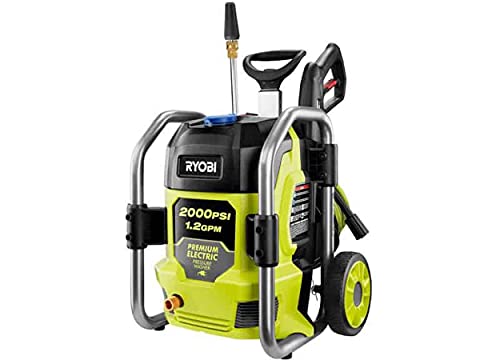
Ryobi Electric Pressure Washer Range — the compact champion
Design and build: the friendliest small designs in the comparison, including units that make balconies and townhouses full citizens of the pressure washing world. Performance: honest light-to-mid duty excellence on vehicles, bikes, furniture, and modest patios, with patience required on anything vast. Ownership: storage is the headline, a shelf instead of a corner, and setup is the quickest here. Strengths are participation and tidiness; the trade-off is working speed at scale. Best for: small homes and small-space lists. Not suited for: very large driveways as a weekly habit. Verdict: the range that gives the most households a machine they will actually use weekly.
Westinghouse ePX Series — the space-saving original
Design and build: a low four-wheeled unit that follows the operator, eliminating tip-overs and turning storage geometry inside out. Performance: mobile and willing, especially around vehicles and patios where constant repositioning is the job. Ownership: asks for hose-path awareness and rewards it with the easiest shelving in the set alongside the compacts. Strengths are form factor and stability; the trade-off is unfamiliarity, some buyers simply prefer a tower they can pull. Best for: crowded garages and mobile workers. Not suited for: long straight driveway traditionalists. Verdict: the cleverest answer to the storage question in the field.
AR Blue Clean Range — the pump-led keeper
Design and build: industrial honesty from a pump-making tradition, with delivery smoothness that experienced hands notice immediately. Performance: composed everywhere, with a mechanical calm that flatters long sessions and careful wood work. Ownership: a smaller range and accessory shelf, balanced by internals that inspire long-term confidence. Strengths are the pump and the feel; the trade-off is choice breadth. Best for: keepers who buy internals first. Not suited for: accessory collectors. Verdict: the quiet professional of the group, and the one most likely to be handed down still working.
rank them by job in the best electric pressure washers guide
Who Should Buy Which, and Who Should Skip
The typical suburban house with a drive, a patio, a fence, and a car should begin and often end with the all-rounder format. The frequent washer with long sessions and a keeper’s temperament should step to the premium instrument and never look back. The household that enjoys building a system across seasons belongs with the ecosystem range. The flat, the townhouse, and the balcony belong with the compacts, which will serve them better than any full-size machine gathering dust in a communal store. The crowded garage and the car devotee should seriously consider the following design. The buyer who reads pump histories for pleasure has already chosen the last entry, and correctly.
Skip the whole comparison, for now, if your property’s main story is acreage and restoration, if your surfaces are predominantly delicate or historic, if you have no protected outlet and no plan to arrange one, or if the safety culture described throughout these reviews, eye protection, closed shoes, no ladders, no aiming at people or pets, a closed work area, sounds like bureaucracy rather than sense. The category will wait, and the alternatives, professional help for the big restoration, a hose and brush for the delicate work, will serve you better in the meantime.
decide the head question in is an electric pressure washer worth it
Setup, Care and Maintenance Essentials
Every model in this comparison lives or dies by the same two rituals, which is why they close the reviews rather than any specification. Setup: level ground, hose on, water through the machine before power to prime the pump, starting nozzle fitted, connection through a ground fault circuit interrupter protected outlet, air purged until the stream steadies. Work: wide fan first on anything unfamiliar, hidden test patch, constant motion, detergent doing the loosening, and the jet never directed at people, pets, electrical fittings, or the machine itself. Shutdown: flush the detergent, release pressure, drain pump, hose, and lance completely, coil kindly, nozzles home, machine dry and indoors where frost cannot find trapped water.
Maintenance beyond the rituals is a short list shared by all six: rinse the inlet filter, keep nozzle tips clear using the maker’s method with the machine off and depressurised, inspect hose and cord before sessions, and keep detergent systems flushed so residues never set. The models differ in how gracefully they accept this care, the premium and pump-led designs feeling the most unbothered by years of it, but none of them survive its absence. Frost remains the category’s only true predator, and it hunts exclusively in sheds where machines were stored wet.
Final Verdict
Across six personalities, one conclusion survives every surface: the current electric field is strong enough that choosing by fit beats choosing by fear. Fit means your storage, your session length, your job mix, and your temperament, matched against the honest characters described above. The all-rounder is the default for a reason, the premium and pump-led designs reward the committed, the compacts and the follower liberate the space-poor, and the ecosystem range grows with its owner. Pick the personality that matches your property, learn the gentle end of its range first, keep the rituals, and any of these machines will make your home visibly more cared for, season after season.
weigh the balance in electric pressure washer pros and cons
Head-to-Head by Scenario
Scenario one: the spring driveway reveal
All six machines face the same green-black winter film. The premium K5 and the stronger mid-tier designs clear lanes with the fewest passes and the calmest fans, the SPX3000 matches them closely once a rotary tip joins the session, Greenworks uprights sit in the same honest group, the ePX works steadily and pleasantly, and the compacts finish the job last but finish it, which for a small drive is the only fact that matters. Ranking by scenario is therefore really ranking by driveway size: the bigger the slab, the more the field separates; the smaller the slab, the more storage and convenience should have decided the purchase instead.
Scenario two: the beloved car, weekly
Here the order reshuffles completely. The SPX3000’s detergent flexibility, the ePX’s circling mobility, and Greenworks’ foam-friendly ecosystem all outrank raw delivery, while the premium machine’s smoothness rewards the most careful owners and the compacts prove perfectly adequate for a single car on a small drive. The scenario’s lesson generalises: pressure washing excellence is contextual, and a comparison that crowns one machine for every driveway, deck, and driveway again has not understood the category. Your dominant scenario should choose your model, and your second scenario should merely be survivable by it, which in this field it always is.
Scenario three: the rental turnaround
A landlord cleaning between tenancies values speed of setup, durability, and indifference to being lent to a caretaker. The all-rounder and the pump-led designs lead here, with the premium machine close behind if the same owner does the work. Compacts lose on area pace, the follower loses nothing but wins nothing either, and the ecosystem range’s extra accessories are simply irrelevant in a context where the nozzle set and a bottle of paving cleaner are the whole story. Spares availability quietly becomes the deciding criterion, because a machine that works across tenancies is a machine whose worn lance or lost tip can be replaced in days, not mourned.
Ownership Texture: The Costs Nobody Lists
Beyond the purchase tier, ownership asks for detergent, occasional seals, a nozzle across the years, water and electricity in modest session-sized amounts, and one infrastructure item that outranks them all: a properly protected outdoor outlet if your home lacks one. It also asks for intangibles that reviews should price honestly: ten minutes of setup and pack-away per session, a shelf or corner of storage, a small store of patience for wood and paint, and the social cost of being the neighbour whose patio always looks recently forgiven, which reliably generates borrowing requests. Against those costs, set the avoided ones: no fuel runs, no engine servicing, no contractor bookings for the dozen small jobs a year that never justified one, and no annual reckoning with a patio that has slipped beyond home methods. On that full ledger, every model in this comparison is inexpensive to own; they differ in comfort and pace, not in the shape of the bill.
Notes on Method: How These Reviews Were Framed
These comparisons are written prose-first from the design records, owner experience patterns, and category knowledge of the leading ranges, deliberately avoiding invented laboratory figures. That restraint is a feature. Pressure washing outcomes in real gardens are dominated by variables no bench test captures: your water supply, your surfaces’ age, your detergent, your weather, and above all your technique. A review that pretends otherwise, with decimal places borrowed from a brochure, misleads more confidently than a review that describes character honestly. What can be stated firmly has been: the personalities are real, the trade-offs are real, the safety and storage disciplines are absolute, and the mid-market centre of this category is as strong as it has ever been. Readers who want the procedural version of the same knowledge will find it in this cluster’s choosing and using guides, and readers who want the value question isolated will find it in the worth-it analysis.
What Owners Argue About, and What the Arguments Teach
Owner discussions of these models circle a few eternal debates, and each debate teaches a buyer something. The first is tanks versus bottles for detergent, which is really a debate about session shape: short mixed sessions favour onboard convenience, long single-product runs favour external capacity, and neither camp is wrong about its own Saturdays. The second is whether premium smoothness is real or imagined; owners who wash weekly defend it like a religion, owners who wash twice a year cannot detect it, and both are reporting their calendars accurately. The third is the compact question, where small-home owners describe liberation and large-home owners describe a toy, and the resolution is simply that both properties exist. The fourth is brand loyalty itself, strongest around the pump-led and premium names, weakest around the all-rounder whose owners praise it warmly and replace it calmly. A new buyer should read these arguments as a mirror: whichever side sounds like your household is probably your household, and the model that side defends is probably your model.
The Accessories Verdict Across the Field
Accessories are where comparisons continue after purchase, so the reviews close the loop. Surface cleaners earn the strongest cross-field recommendation for anyone with real paving area, because they convert every model’s lane work into faster, evener, less splashy work. Foam cannons earn a strong recommendation for vehicle households and indifference elsewhere. Brushes earn a quiet, sincere recommendation for shaded decking and furniture, where agitation beats force. Extension lances earn a cautious mention for ground-level reach along fences and the lower storeys of siding, always from the ground, never as a ladder substitute. Spare nozzle sets earn the least glamorous and most practical recommendation of all, because the tip you lose in October is the session you lose in April. What no model needs is force-multiplying gadgetry beyond its design; the field’s engineering is balanced, and unbalancing it spends the longevity that made these machines worth reviewing kindly.
Safety and Suitability Notes That Apply to Every Model
Because comparison shopping can make powerful tools feel like appliances, this section restates the field-wide conditions plainly. Every machine reviewed here produces a jet that can cause serious injury; none of them may ever be pointed at a person or a pet, used to rinse anything being worn or held, or treated as a toy by any member of a household. Every session requires a ground fault circuit interrupter protected outlet, eye protection, and closed shoes with grip, and every session excludes ladders absolutely, because trigger recoil and height are a combination with one outcome. Children and animals stay out of the work area, the jet stays away from electrical fittings and the machine itself, and damaged cords or hoses retire the session until repaired. These rules are not model-specific fine print; they are the operating system of the entire category, and a household unwilling to run that system should choose the hose-and-brush life with this comparison’s blessing.
If Your Shortlist Is Still Three Models Long
Use the tie-breakers in order. First, storage: measure the actual shelf or corner, and eliminate any model that does not fit it with its hose coiled, because a machine stored badly is a machine ageing badly. Second, session shape: count your longest realistic job, and eliminate any model whose handling would make that job a chore rather than a pleasure. Third, detergent: if vehicles dominate, favour the tank and foam stories; if elevations dominate, favour capacity and flushing. Fourth, spares: check that the survivor’s nozzles, lance, and seals are easy to obtain where you live. Fifth, and only fifth, price tier within your comfort, because the difference between the finalists will be repaid or regretted weekly in handling, not once at the till. A shortlist processed this way almost always resolves itself, and the model that remains is the one these reviews would have chosen for you anyway.
The Regional and Seasonal Footnotes
Comparisons are usually written as if all readers share one climate, and pressure washing refuses to cooperate. In frost-prone regions, storage discipline dominates every other criterion, and the models with the easiest draining and the most compact indoor footprints gain a real, recurring advantage each winter. In hot, high-UV regions, hose and casing materials age faster, detergent dries on surfaces before it can dwell, and the winning technique is early-morning work in shade, a point in favour of the quietest machines. In hard-water districts, inlet filters and nozzle tips need more frequent attention, and the models whose filters rinse in seconds earn their keep monthly. In leafy, shaded suburbs, algae is the standing enemy and detergent systems matter more than anywhere else. None of this changes the personalities described in these reviews; it changes their weighting, and a thoughtful buyer will re-weight the table for their own postcode before crowning a winner.
What Changes Between Model Years, and What Does Not
Returning shoppers often ask whether last year’s version of a favourite is a bargain or a trap. In this category, model years tend to revise cosmetics, accessory bundles, hose lengths, and detergent arrangements, while pumps, motors, and core handling change slowly, because the engineering is mature. That pattern favours the informed bargain hunter: a previous version of a strong design, with its nozzle set complete and its spares still current, is usually the same ownership experience wearing older colours. The cautions are bundle-shaped rather than machine-shaped: confirm which tips and tanks are actually included, confirm the hose and cord lengths suit your plot, and confirm that the exact variant’s parts remain listed. What does not change between years at all is the part of ownership this comparison has stressed throughout: priming, protection, patience on wood and paint, draining, and dry storage. A buyer fluent in those will be satisfied by any strong vintage of any model reviewed here, which is perhaps the most reassuring sentence a comparison of a mature category can offer.
A Closing Note on Confidence
Comparisons exist to convert anxiety into a decision, so it is worth saying plainly what level of confidence a buyer in this category can reasonably feel. High. The field is mature, the designs are differentiated in ways that map cleanly onto real properties, the failure modes are known and mostly behavioural, and the ownership rituals are short and learnable. The remaining uncertainty in any purchase here is not whether the machine will clean, it will, but whether its personality will suit your Saturdays, and that is exactly the uncertainty the personality-first structure of these reviews was built to resolve. Trust the scenario that sounds like your life, buy the model that scenario crowns, protect the outlet, protect your eyes, drain the pump, and spend the confidence you saved on the pleasant part: watching a winter of grime leave a patio in clean, even lanes, and knowing the same result is available to you every season you own the machine.
Reading the Fine Print of Any Listing in This Field
Finish the comparison where purchases actually happen, on the listing page, with a checklist translated from everything above. Confirm the nozzle set by name and pattern, not by count. Confirm how detergent is delivered and what must be bought separately to foam a car if that is your ritual. Confirm hose and cord together against your tap-to-furthest-corner measurement. Confirm weight and stored dimensions against your actual shelf. Confirm that spare tips, a lance, and seals are listed somewhere you can buy them. Confirm the manual is available to read before purchase, because its tone will tell you more about the maker’s respect for owners than any advertisement. A listing that survives those six confirmations, attached to any personality in this comparison that matches your property, is a purchase you can make without crossing your fingers, and in a mature category that is the most any honest set of reviews can promise, and it is enough.
The Comparison in One Breath
If the whole field had to be carried in a single paragraph, it would read like this. Buy the all-rounder if you are most households, and stop reading with a clear conscience. Buy the premium instrument if your calendar is full of washing and your standards are set by feel. Buy the ecosystem range if your future includes accessories and your present includes a car you enjoy. Buy the compacts if your home is small and your jobs are honest, and enjoy being the proof that scale is not seriousness. Buy the follower if your garage is a puzzle and your car is a ritual. Buy the pump-led design if your affections run mechanical and your horizon is a decade. And whichever paragraph claimed you, hold the shared conditions as firmly as the differences: protected power, protected eyes, gentle first passes, chemistry before force, and a dry shelf at the end of every session, because those five habits are the real best-in-test, awarded jointly to every owner who practises them.
One more assurance belongs at the end of a long comparison, because buyers reasonably wonder whether they will feel the differences described here or whether they are connoisseur fiction. You will feel them, but in the right order: storage on the first day, setup speed in the first week, detergent convenience in the first month, handling in the first long session, and delivery smoothness across the first season. That is why these reviews are organised by personality rather than by a single podium. A podium would tell you which machine won a contest; a personality map tells you which machine will still feel like the right purchase on an ordinary wet Saturday in your third year of owning it, and that is the only victory that matters to the person paying for the machine and standing behind its wand.
Finally, a word to the reader who arrived here planning to buy nothing and simply wanted to understand a neighbour’s new enthusiasm. The enthusiasm is rational. Few household tools convert an hour of methodical work into so visible a transformation, and fewer still do it while asking so little in fuel, servicing, and storage. Whether the machine that eventually joins your own shelf is the all-rounder, the premium instrument, the compact, the follower, or the pump-led keeper matters less than that it joins a household ready to use it safely and store it dry. On that condition, this comparison’s welcome to the category is unqualified.
Comparisons in this cluster continue in the choosing guide, which converts these personalities into a step-by-step decision, and in the using guide, which assumes the decision is made and teaches the craft itself. Read in that order, a buyer moves from character, to choice, to competence, which is the natural biography of a good tool purchase and the intended journey of this whole series of articles on the electric pressure washer.
That journey, from character to choice to competence, is also how the manufacturers themselves seem to design these ranges when they are at their best: a clear personality, honestly specified, supported with parts and a decent manual, and priced in a tier that matches the calendar of the household it hopes to join. Judged by that standard across six ranges, the current field passes, and passes with enough variety that the phrase there is something here for almost every home is, for once, a finding rather than a slogan.
With the personalities mapped and the conditions stated clearly, the remaining work belongs to the reader’s own tape measure, calendar, and honest job list, the three documents that have quietly decided every single verdict in these reviews from the first table to this final paragraph of comparison and recommendation for buyers everywhere, in every kind of home, with every kind of driveway, deck, vehicle, fence, patio, and storage arrangement imaginable.
How to Read Electric Pressure Washer Listings Without Being Misled by Headlines
This section exists to look again after the first impression has faded, because the qualities that sell a product in the first hour are rarely the ones that decide whether it is still liked in month three. It adds a layer that a feature list cannot give you, grounded in the home cleaning context this electric pressure washer will actually live in. Where this guide names examples such as Sun Joe SPX3000, Karcher K5, Greenworks Electric Pressure Washer, use them as test cases for the checks below rather than as shortcuts past them.
It also helps to separate the problems a electric pressure washer can solve from the problems it merely moves. If the underlying difficulty is space, the answer may be a smaller format or a different location rather than a more elaborate model. If the difficulty is time, look for the option that removes steps rather than the one that performs each step slightly better. If the difficulty is that several people want different things, a compromise design that everyone rates as good enough will usually outlast a specialist design that one person loves and everyone else avoids. Naming the real problem in one sentence, out loud, before you order, is a surprisingly powerful filter, and many shoppers find that the sentence itself points at a different electric pressure washer than the one they started out researching.
Start with the unglamorous measurements. For a electric pressure washer, the numbers that decide satisfaction are rarely the headline ones in a listing; they are cupboard space between uses, cord or hose reach, noise in a real room and how heavy the job feels on the second flight of stairs. Write the real dimensions of your space down, including the awkward constraints you normally work around without thinking, and hold every contender up against that sheet rather than against a showroom photograph. Then walk the route the electric pressure washer will take on delivery day and during normal use. A choice that fits on paper but fights you every time it is moved, opened, cleaned or stored will lose its shine quickly, however strong its other qualities look in a comparison table.
Next, rehearse the week, not the ideal day. Picture the electric pressure washer inside a rushed weekday tidy, a deep weekend clean and the unexpected mess that arrives five minutes before guests. Most disappointment comes from buying for the best-case scenario: the tidy version of the household, the motivated version of yourself, the weather or the guest list you hope for rather than the one you usually get. If the electric pressure washer only makes sense when everything goes to plan, it is the wrong size, the wrong format or the wrong purchase for now. If it still looks useful on the tired, rushed, slightly chaotic version of the day, it has passed the most honest test there is, and the remaining questions are about detail rather than direction.
Pay close attention to the recurring friction points, because they compound. With a electric pressure washer, owners tend to run into filters forgotten until performance drops, attachments that live in a different room from the machine, and parts that are awkward to rinse and dry. None of these is dramatic on its own, and that is exactly why they get underestimated at buying time. Ask how the design you are considering handles each one: can the wearing part be replaced, can the awkward part be reached without tools, does the job take two minutes or twenty. A electric pressure washer that makes its own upkeep easy gets maintained; one that makes upkeep a project gets neglected, and neglected products perform badly in ways that then get blamed on the original purchase.
Use the listings as a checklist rather than as entertainment. For each electric pressure washer you shortlist, note the exact variant, the included parts, what is sold separately, and which photographs show the item in a setting like yours rather than in a studio. If a model named elsewhere in this guide catches your eye, treat it as a worked example for this process: run it through the same measurements, the same weekly rehearsal and the same friction list before letting familiarity turn into preference. Consistency is the whole trick. Shoppers go wrong not by choosing the objectively weaker electric pressure washer, but by judging one contender on features, the next on looks and the third on a single enthusiastic anecdote.
Think about who else has a vote. A electric pressure washer is usually shared, moved, cleaned or complained about by more than one person, and the second user’s priorities are often the ones that surface after the return window closes. Check height, weight, reach, noise, heat, sharp edges or sheer visual presence, whichever apply, against the smallest, oldest or least enthusiastic person who will live with it. If you are buying for a household that includes children, pets, elderly relatives or lodgers, run the clumsy scenario too: the spill, the knock, the curious tug, the door left open. A robust electric pressure washer choice survives other people; a fragile one only survives its buyer.
Consider the edge cases that sit just outside normal use, because a electric pressure washer will meet all of them eventually. The unusually large load, the unusually small task, the day you are in a hurry, the day something else in the room is broken and this has to cover for it. Versatility is not about a long feature list; it is about behaving predictably when conditions are imperfect. Where a design offers settings, modes, attachments or configurations, ask what each one is actually for in your home, and be suspicious of flexibility you cannot attach to a real occasion. One well-judged configuration used weekly beats five clever ones used once, and the honest electric pressure washer for your home is the one whose strengths line up with your most frequent edge case, not your rarest.
Build a simple decision checklist and score it in writing. Five lines are enough: fit in the space, fit with the routine, ease of cleaning or upkeep, quality of the parts that move or wear, and how the electric pressure washer will be stored or will look when it is not the centre of attention. Score each contender quickly, then look only at the lowest scores, because purchases are usually ruined by their weakest point rather than saved by their strongest. If two options tie, choose the one whose weakness is cheapest or easiest to live with. This sounds mechanical, and it is meant to: a written checklist is the best defence against the very human habit of falling for the last photograph you looked at.
Frequently Asked Questions
Which model is best overall for a typical house?
The upright mid-tier all-rounder, represented in these reviews by the Sun Joe SPX3000, is the safest overall answer for a typical house because it balances paving ability, vehicle kindness, detergent convenience, and storage without specialising away from any common job. Households should only depart from that default for a named reason: storage pressure toward the compacts or the ePX, session frequency toward the K5, system-building toward Greenworks, or internals toward AR Blue Clean. A departure with a reason is a good purchase; a departure without one is a gamble.
Is the premium model worth it over the mid tier?
It is worth it to the household that washes frequently and keeps machines for years, because what the premium tier buys, delivery smoothness, handling composure, durability thinking, is paid back in comfort and longevity across hundreds of sessions. It is not worth it to the twice-yearly user, whose mid-tier machine will still be asleep in its corner when the premium one would be. The honest test is your calendar: count last year’s outdoor cleaning sessions, and let that number, not aspiration, choose the tier.
Are compact models real pressure washers or toys?
They are real machines scaled to real jobs: vehicles, bicycles, furniture, balconies, bins, and modest patios, all of which they clean properly and conveniently. What they are not is fast on vast paving, and judging them by that standard is a category error, like judging a city car by its towing. For small homes they are frequently the best purchase in this entire comparison, because a machine that fits the shelf and sets up in minutes gets used weekly, and weekly use is where cleanliness actually comes from.
Which is kindest to cars and decking?
Kindness lives in the fan nozzle, the distance, and the operator more than in the badge, but the smoothest-delivering models, the premium Kärcher and the pump-led AR Blue Clean designs, make the gentle register easiest to hold consistently, with the all-rounder close behind in practised hands. In every case the method is identical: detergent or foam first, dwell, wide fan, respectful distance, constant movement, and never a narrow jet chasing a stubborn spot. Choose any model here and apply that method, and cars and decks will come to no harm.
How much do reviews agree on what actually matters?
Strikingly, the serious reviews of this category converge on the same short list: pump smoothness, hose and lance quality, an honest nozzle set, detergent convenience, and storage design, with headline output trailing far behind. That convergence is useful to a buyer because it tells you where to spend attention in a listing and where to relax. If a model gets the short list right for your property, small differences elsewhere will not decide your satisfaction; your technique and your storage shelf will, as they do for every owner in these reviews.
What is the most common buying mistake across all models?
Buying for the biggest job of the decade instead of the recurring jobs of the year. The oversized choice then punishes its owner weekly with bulk, storage pain, and delivery that must constantly be held back from delicate surfaces, while the one heroic job could have been rented or hired once. The second most common mistake is the mirror image, buying the very cheapest design for a heavy weekly list and discovering flimsiness as a lifestyle. Match the machine to the rhythm of your real life and both mistakes disappear.
Related Guides
the complete electric pressure washer buying guide
follow the routine in how to use an electric pressure washer