Disclosure: As an Amazon Associate, dailyhomedecorating.com earns from qualifying purchases. Links on this page are affiliate links; they cost you nothing extra. Prices and availability change often, so check the current Amazon listing before you buy.
Is a water bottle worth it? The short answer in this article is yes, for most people whose days move between home, work, the car and the outdoors, provided they choose a bottle that fits their routine and wash it every day. Working out whether is a water bottle worth it for you, specifically, takes a little more honesty than the short answer, because the value of a bottle lives entirely in how often it is carried, and that depends on your habits, your washing patience and the shape of your day.
Short Answer and Key Takeaways
Worth it if: you drink through the day away from one fixed tap, you refill from home, work or a cooler, and you will give the bottle a proper daily wash. Not worth it if: you work beside a sink with a glass you enjoy, you know the bottle would sit unwashed in a bag, or you are buying it as a gesture rather than a tool.
- Value equals use. A bottle carried daily is cheap at almost any sensible tier; a bottle left in a cupboard is dear at any tier.
- The hidden price is upkeep: a daily wash, drying space by the sink and a little carrying weight.
- Insulation, lid style and fit decide whether the bottle gets used, so they decide whether it was worth it.
- Replacing a gasket or lid can restore a good bottle for a fraction of starting again.
In this guide
What You Actually Get
At a desk, the ideal bottle is almost invisible until you want it. It sits stably, it does not sweat rings onto the desk, it opens quietly in a meeting and it encourages the small, regular sipping that actually keeps you hydrated through a working day. Straw lids shine here because you can drink without tipping your head back or breaking eye contact with a screen. Insulation helps because desk water is often filled once and sipped for hours. The desk is also where a bottle is most likely to be forgotten at night, so build the wash into the end of the working day: empty it, wash it, leave it drying, and start tomorrow with a bottle that tastes of nothing but water.
Insulation deserves honesty rather than slogans. An insulated bottle, usually a double-wall steel design, genuinely keeps a drink colder for longer than a single-wall bottle, and it also stops the outside of the bottle sweating condensation onto desks, papers and car seats. That is a real, everyday benefit, especially in warm weather or a hot car. What insulation does not do is make a drink cold that started warm, and it adds weight, bulk and cost compared with a simple single-wall bottle. If you mostly drink water soon after filling it, or you refill from a cool source through the day, you may never miss insulation. If you fill once in the morning and sip until evening, insulation is the feature most likely to change how the bottle feels to own.
Value in a bottle is measured in years of daily use, not in the moment of purchase. A bottle that suits your routine gets carried thousands of times, replaces countless single-use bottles and quietly becomes part of the furniture of your day. A bottle that almost suits you gets left behind, and a cheap bottle left in a cupboard is worse value than a dearer one that never leaves your bag. This is why fit, lid style and washing effort deserve as much thought as the purchase itself: they are what decide whether the bottle is used. When you judge value, judge the whole ownership picture, including replacement lids and gaskets, and the simple question of whether you will still enjoy using it in a year.
You also get a small measure of control. Your water, from your tap, at the temperature style you prefer, in a bottle whose cleanliness is your own work and therefore known to you. That last point cuts both ways and this article will not pretend otherwise: the bottle’s hygiene is entirely in your hands, which is a genuine benefit for the diligent and a genuine liability for the neglectful. Worth-it judgements that ignore that split are not worth much, so the next sections keep returning to it.
The Real Costs Beyond Money
The costs of owning a bottle are mostly not money. They are the couple of minutes of washing each day, the small space a drying bottle takes by the sink, the weight in your bag, and the mild discipline of remembering it in the morning. For some people those costs are trivial and quickly become habit. For others, honestly, they are the reason reusable bottles fail: the bottle sits unwashed, starts to taste stale, and gets quietly abandoned. Neither response is wrong, but knowing which person you are before you buy is the difference between a good purchase and a cupboard ornament. If you know washing will be your weak point, choose the simplest lid you can find, because simplicity is what makes the habit stick.
The single most important truth about any reusable bottle is also the least glamorous one: it needs washing every day it is used. A bottle is a warm, damp, enclosed space that your mouth touches repeatedly, and the residue from drinks, saliva and the air settles on its inner walls. Left alone, that residue feeds a slippery biofilm, and biofilm is what makes a bottle smell stale, taste faintly swampy and feel slick when you run a finger inside. Daily washing with hot soapy water, a bottle brush that reaches the base, and proper air drying breaks that cycle before it starts. It takes only a couple of minutes, and it matters far more than the brand printed on the side of the bottle.
The places mould and grime love most are the places you can least see. Straws hold a thin film along their inner wall. Bite valves and flip spouts trap moisture in their folds. Silicone gaskets under lids sit in a permanent damp shadow, and the threads of a screw cap collect residue in every groove. A quick rinse under the tap does almost nothing for any of these spots. The honest routine is to take the lid apart as far as the maker allows, wash each piece separately, scrub straws with a thin straw brush, lift or remove gaskets where the design permits, and let everything dry fully, separated, before you put the bottle back together. A bottle reassembled while damp starts the next day already stale.
There is also a learning curve, a gentle one. The first week teaches you how your lid really works, where the bottle fits, how much you actually drink and whether your chosen size was honest. Most people adjust once, perhaps with a different lid style or a second bottle for a second setting, and then the routine disappears into the background. Budget a little patience for that first week when you judge the purchase, because day one is the worst a good bottle will ever feel, and day thirty is the truest measure of whether it was worth it.
Who It Pays Off For
The Desk Worker Who Forgets to Drink
At a desk, the ideal bottle is almost invisible until you want it. It sits stably, it does not sweat rings onto the desk, it opens quietly in a meeting and it encourages the small, regular sipping that actually keeps you hydrated through a working day. Straw lids shine here because you can drink without tipping your head back or breaking eye contact with a screen. Insulation helps because desk water is often filled once and sipped for hours. The desk is also where a bottle is most likely to be forgotten at night, so build the wash into the end of the working day: empty it, wash it, leave it drying, and start tomorrow with a bottle that tastes of nothing but water.
The Commuter and the Traveller
Commuting is a leak test conducted twice a day in public. The bottle rides in a bag or a cup holder, gets jostled, tipped and occasionally dropped, and shares space with things that must stay dry. For this life, a locking lid or a cap you can verify is closed matters more than almost any other feature, and a size that fits your vehicle’s cup holder saves daily irritation. Insulated steel suits commuters who fill at home and drink through the morning, while lighter plastic suits those who walk or cycle part of the way. Whatever you choose, test the seal at home over a sink before trusting it in a bag, and keep the washing routine non-negotiable, because a commuter bottle lives a warm, enclosed life.
Travel exposes every weakness a bottle has. It must be empty to pass through airport security, tough enough for overhead lockers and day bags, and pleasant to drink from during long waits. Travellers often fill on the far side of security and then rely on the bottle for hours, which is where insulation earns its place. A leakproof lid is essential around electronics and documents, and a size that fits a seat-back or day-bag pocket saves constant juggling. Travel bottles also face unfamiliar water sources and long, warm hours between washes, so a bottle you can scrub properly in a hotel sink, with a brush you packed, is worth more than one that needs special care you cannot give it on the road.
The Active and the Outdoors-Minded
In the gym, drinking happens in short gaps between efforts, often with one hand and not much patience. Spout and chug lids earn their keep here because they deliver water quickly without a fiddly cap, and a bottle that stands stable on the floor and survives being knocked over will outlast a delicate one. Gym bottles also live hard hygiene lives: they are filled from communal fountains, left in warm kit bags and sipped from mid-workout with gym-floor hands. That makes the daily wash even less optional, and it favours bottles whose lids come apart easily. If your bottle shares a bag with damp kit, wash it the moment you get home rather than letting it sit overnight.
For walking and hiking, every gram and every sip counts differently. Weight matters more the longer the walk, which is why lightweight bottles, including lighter insulated designs and simple plastic ones, have such a loyal following outdoors. A wide mouth helps when you are filling from a tap, a fountain or a stream-side source with a filter, and a loop or handle helps when the bottle is clipped to a pack. Insulation is a judgement call outdoors: it keeps water pleasant on a hot day but adds carry weight, and many walkers prefer to save that weight and refill more often. Durability matters too, because trail bottles get dropped on rock and gravel in a way desk bottles never do.
Who Should Skip It
The Home-Based and Happy With a Glass
It is worth remembering that a reusable bottle is not the only way to drink well through a day. A simple glass or jug at a desk suits someone who works in one place and has a tap nearby. A basic cup with a lid can serve a home worker perfectly well. Single-use bottles still have a place in emergencies and travel disruptions, whatever we think of them generally. The reusable bottle wins when your day moves: between rooms, buildings, vehicles and the outdoors, carrying your water with you in something you trust not to leak. Framing the choice that way keeps the decision honest. You are not buying a symbol; you are choosing the tool that fits the shape of your day.
The Honest Non-Washer
Replacing a bottle at the right moment is part of owning one well. Deep scratches inside plastic can shelter residue that washing struggles to shift. A cracked body, a lid that no longer seals, a gasket that stays slimy or smells even after a thorough wash, or a valve that has split are all honest end-of-life signals. Replacement gaskets and lids can extend the life of many bottles and are worth trying first when the body itself is sound. What you should not do is keep drinking from a bottle you privately know you cannot get clean any more. The bottle you never wash, or can no longer wash properly, is the real risk in this whole category, and retiring it is a small, sensible cost.
The Collector of Nearly Right Bottles
The most common buying mistake is choosing a bottle for an imaginary life instead of the real one: the huge bottle for hikes you rarely take, the delicate glass bottle for a bag it will never survive, the complicated straw lid bought by someone who knows they hate washing up. Close behind is buying on looks alone, ignoring cup-holder fit, bag fit and whether the lid can be opened with one hand. Another classic is assuming every part can go in the dishwasher without reading the label, and discovering the hard way that a finish or a seal disagrees. Finally, many people buy a second bottle to solve a problem that was actually a washing problem: the old bottle tasted bad because it was never properly cleaned, not because it was the wrong bottle.
The environmental case for a reusable bottle is real but depends entirely on use. A bottle carried daily for years replaces a large number of single-use bottles, and that arithmetic is not close. A bottle bought, used twice and abandoned replaces almost nothing and adds its own footprint to the cupboard. That is why this guide keeps returning to fit, lids and washing: they are not fussy details, they are what make the environmental promise true. Buying one bottle you will genuinely keep, rather than a succession of nearly right ones, is both the economical and the sustainable choice. If you already own a bottle that works, the greenest purchase is usually no purchase, plus a thorough wash and a new gasket.
Strengths and Trade-Offs of Owning One
Strengths
- Water within reach all day, in the style and at the pace you prefer.
- A one-time purchase that replaces a long stream of bought drinks and disposable bottles.
- A design exists for nearly every routine, from desk sipping to trail carrying.
Trade-offs
- A daily wash is compulsory, and complex lids make it a real chore.
- Carrying weight and bag space are spent every day, whether you drink or not.
- The wrong size or lid quietly converts a good idea into cupboard clutter.
Alternatives to Consider
Glass is the purist’s material. It adds nothing to the taste of water, it does not hold yesterday’s flavours, and it washes up beautifully, which is why some people keep a glass bottle at a desk or at home even if they would never take one hiking. The trade-off is exactly the one you would expect: fragility. A glass bottle dropped on tile or concrete is usually finished, protective sleeves only soften smaller knocks, and glass is heavy for its size. As a home and office bottle, where it moves between a desk, a table and a sink, glass can be a genuine pleasure. As a travel, gym or trail bottle, it asks you to accept a risk that steel and plastic simply do not carry. Choose it for the setting it suits, not for everywhere.
Lightweight plastic bottles earn their place by being easy to carry and easy to live with. They weigh very little, they are comfortable on walks and rides, and wide-mouth versions are the simplest bottles in the world to fill, add ice to and scrub clean. Many everyday plastic bottles are made to be durable and dishwasher friendly according to their labels, which suits a low-fuss routine. The honest trade-offs are that plastic holds onto flavours and odours more readily than steel or glass, it offers no insulation in single-wall form, and it can look tired sooner as it scuffs. None of that makes plastic a poor choice. It makes it a choice that rewards daily washing and suits people who value lightness and simplicity over cold retention.
Stainless steel is the material most buyers picture when they want a bottle for the long haul. It resists flavour carry-over better than most plastics, so yesterday’s coffee or sports drink is less likely to haunt today’s water. In insulated form it keeps drinks colder for longer through a workday, a commute or a day outdoors, and it shrugs off the knocks of bag life with dents rather than cracks. The trade-offs are weight and feel: a steel bottle is noticeably heavier than a plastic one of similar size, it can be noisy on a hard desk, and dents are a normal part of its life story. For desk, car and gym routines, where the bottle travels in a vehicle or sits within reach, that weight is rarely a problem. For long walks, it is worth thinking about honestly.
Within the reusable world, the well-known bottles below show how the worth-it answer changes with design. Each is described in prose and tier, so you can weigh the version of ownership it offers.
Hydro Flask Trail Series
The lightweight insulated route. A lightweight insulated stainless steel bottle aimed at walkers and travellers who find standard insulated bottles heavy in a bag. In tier terms it sits at the mid to premium end of the reusable bottle market, so judge it against bottles of a similar standing rather than against the cheapest bottle on the shelf. Check price on Amazon when you are ready to compare, and read the current listing carefully for the exact lid and size on offer, because bottle families often include several versions.
Best for: carrying water on trails, long walks and travel days where pack weight matters and a lighter insulated bottle is easier to keep with you.
Not suited for: anyone who wants the simplest possible lid to scrub, because lighter trail designs still have seals and threads that need proper attention, and anyone who prefers a very wide opening for fast filling.
Living with the Hydro day to day comes down to the same questions as any bottle in this guide. Does its lid match how you drink? Does it fit your car, bag and desk? And, above all, will you wash it properly every day, including the gasket, threads and any straw or valve parts? A bottle that passes those three tests in your real routine is a bottle you will still be using long after the newness has worn off.

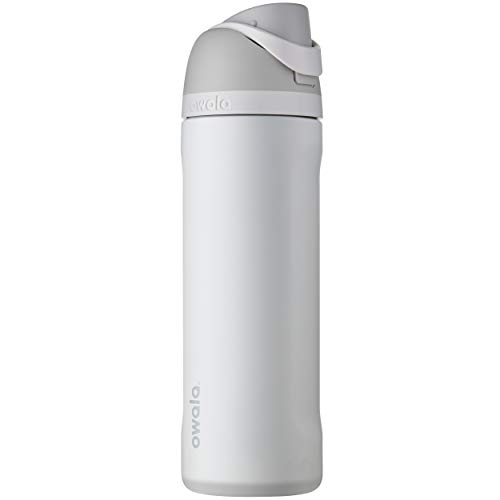
Owala FreeSip
The convenient dual-lid route. An insulated stainless steel bottle built around a dual-purpose spout that lets you sip through a built-in straw or swig through a wider opening, with a locking lid and a carry loop. In tier terms it sits at the mid end of the reusable bottle market, so judge it against bottles of a similar standing rather than against the cheapest bottle on the shelf. Check price on Amazon when you are ready to compare, and read the current listing carefully for the exact lid and size on offer, because bottle families often include several versions.
Best for: desk workers, students and commuters who like having two drinking styles in one lid and who want a bottle that feels friendly to use all day.
Not suited for: anyone who dislikes cleaning around straws and valves, because that convenience comes with more small parts to wash, and anyone who wants a completely open, chug-style mouth.
Living with the Owala day to day comes down to the same questions as any bottle in this guide. Does its lid match how you drink? Does it fit your car, bag and desk? And, above all, will you wash it properly every day, including the gasket, threads and any straw or valve parts? A bottle that passes those three tests in your real routine is a bottle you will still be using long after the newness has worn off.

Takeya Actives
The active-day route. An insulated stainless steel bottle with a spout lid, a protective bumper on many versions and a shape made for cup holders, gym bags and active routines. In tier terms it sits at the mid end of the reusable bottle market, so judge it against bottles of a similar standing rather than against the cheapest bottle on the shelf. Check price on Amazon when you are ready to compare, and read the current listing carefully for the exact lid and size on offer, because bottle families often include several versions.
Best for: gym sessions, training days and car-based commutes where a spout lid, a secure cap and cup-holder manners matter more than ultralight weight.
Not suited for: anyone chasing the lightest possible carry for long hikes, and anyone who wants a straw lid rather than a spout they tip back.
Living with the Takeya day to day comes down to the same questions as any bottle in this guide. Does its lid match how you drink? Does it fit your car, bag and desk? And, above all, will you wash it properly every day, including the gasket, threads and any straw or valve parts? A bottle that passes those three tests in your real routine is a bottle you will still be using long after the newness has worn off.

CamelBak Eddy+
The light and simple sipping route. A lightweight plastic bottle with a bite-valve straw that lets you drink without tipping the bottle back, long associated with desks, bikes and everyday carry. In tier terms it sits at the entry to mid end of the reusable bottle market, so judge it against bottles of a similar standing rather than against the cheapest bottle on the shelf. Check price on Amazon when you are ready to compare, and read the current listing carefully for the exact lid and size on offer, because bottle families often include several versions.
Best for: people who drink most while typing, driving or riding and who want lightweight, one-handed sipping without unscrewing a cap.
Not suited for: anyone who will not commit to washing a bite valve and straw properly, because that valve is exactly where residue and mould like to gather if it is neglected.
Living with the CamelBak day to day comes down to the same questions as any bottle in this guide. Does its lid match how you drink? Does it fit your car, bag and desk? And, above all, will you wash it properly every day, including the gasket, threads and any straw or valve parts? A bottle that passes those three tests in your real routine is a bottle you will still be using long after the newness has worn off.

Nalgene Wide Mouth
The minimal-upkeep route. A simple, durable plastic bottle with a very wide opening, a loop-top cap and a reputation for shrugging off drops, freezing routines and rough treatment. In tier terms it sits at the entry end of the reusable bottle market, so judge it against bottles of a similar standing rather than against the cheapest bottle on the shelf. Check price on Amazon when you are ready to compare, and read the current listing carefully for the exact lid and size on offer, because bottle families often include several versions.
Best for: campers, hikers and practical buyers who want easy filling, easy ice, easy scrubbing and a bottle that is simple enough to clean properly every day.
Not suited for: anyone who wants insulation, because this is a single-wall design, and anyone who needs a bottle to slide into a narrow cup holder or slim bag pocket.
Living with the Nalgene day to day comes down to the same questions as any bottle in this guide. Does its lid match how you drink? Does it fit your car, bag and desk? And, above all, will you wash it properly every day, including the gasket, threads and any straw or valve parts? A bottle that passes those three tests in your real routine is a bottle you will still be using long after the newness has worn off.
Stanley IceFlow
The insulated flip-straw route. An insulated stainless steel bottle family with flip-straw and fast-flow style lids, made for people who want cold water within easy reach through a busy day. In tier terms it sits at the mid to premium end of the reusable bottle market, so judge it against bottles of a similar standing rather than against the cheapest bottle on the shelf. Check price on Amazon when you are ready to compare, and read the current listing carefully for the exact lid and size on offer, because bottle families often include several versions.
Best for: commuters, drivers and active users who like a flip straw, a sturdy handle feel and an insulated bottle that suits a car-and-desk routine.
Not suited for: anyone who wants the fewest possible lid parts to wash, and anyone who finds larger insulated bottles too bulky for a small bag.
Living with the Stanley day to day comes down to the same questions as any bottle in this guide. Does its lid match how you drink? Does it fit your car, bag and desk? And, above all, will you wash it properly every day, including the gasket, threads and any straw or valve parts? A bottle that passes those three tests in your real routine is a bottle you will still be using long after the newness has worn off.
How to Get the Most Value If You Buy
Whatever bottle you bring home, wash it thoroughly before the first use, including every lid part, gasket and straw, exactly as you will wash it daily afterwards. New bottles can carry manufacturing and packaging residues, and a first proper wash sets the routine you mean to keep. Fill it, test the seal over the sink, check for leaks with the bottle tipped and shaken gently, and practise opening and closing the lid until it is second nature. This small rehearsal prevents the two classic first-week disasters: a bag soaked by a lid you had not closed properly, and a bottle abandoned because its drinking style felt awkward. Ten unhurried minutes at the start saves the whole purchase.
Dishwasher promises deserve a careful reading of the label rather than a hopeful guess. Some bottles and lids are sold as dishwasher safe throughout, some are safe only on a top rack, and some insulated bodies should never go in at all because heat and harsh cycles can damage the finish or the vacuum seal. The label on your specific bottle is the authority, not a general habit. Where hand washing is required, treat it as part of the design rather than a flaw: a bottle you can take apart and scrub confidently is easier to live with than a complicated lid that technically tolerates a dishwasher but hides grime in places no spray arm reaches. When in doubt, hand wash the lid parts and follow the maker guidance for the body.
Capacity is a decision about your day, not a contest. A bottle that is too small leaves you refilling constantly, which sounds trivial until refills are hard to find, at which point you simply drink less. A bottle that is too large becomes heavy when full, awkward in smaller bags and easy to leave behind, which defeats the entire purpose. Think about the longest stretch you regularly go between chances to refill: a desk worker with a tap nearby needs far less than a driver, a site worker or a hiker. Many people find a middle size the sweet spot for daily carry, with a larger bottle kept for the car or long days out. Matching capacity to your longest normal gap, rather than your most extreme day, is the reliable way to choose.
Fit sounds like a small detail until a bottle fails it. Cup holders differ, bag pockets differ, and a bottle that fits neither ends up rolling around a footwell or left at home. Before buying, picture the three places the bottle will live most: the car, the bag and the desk or gym floor. A tapered base helps with cup holders, a loop or handle helps with carrying when your hands are full, and a leakproof seal you trust is what makes it safe to drop the bottle into a bag beside a laptop or notebook. If you cycle, bottle-cage fit is its own world and most lifestyle bottles are too wide for it. Checking these ordinary details in advance prevents the most common reason good bottles end up unused in a cupboard.
The Decision Checklist
- Do you regularly spend hours away from a tap you control?
- Will you wash the bottle, fully, every day you use it?
- Do you know which lid style matches how you drink?
- Have you checked the bottle fits your car, bag and daily spaces?
- Is your chosen size matched to your longest normal gap between refills?
- Would you still be pleased to carry this bottle in a year?
Mostly yeses mean the bottle will almost certainly be worth it for you. Several noes are not a failure; they are information. Fix the fixable ones, perhaps with a simpler lid or a better-fitting size, and let the rest tell you to wait.
Final Verdict
A water bottle is worth it when it disappears into your day: filled without thinking, sipped without noticing, washed without resentment. Buy for that outcome, with the simplest design that achieves it, and the question answers itself within a month.
The One-Year Test
The fairest way to judge whether a bottle was worth it is to look back after a year and ask three questions. First, how many days did it actually travel with you? A bottle that made most working days, most trips and most walks has repaid its cost many times over in bought drinks avoided and single-use bottles never purchased. Second, what condition is it in, and what did keeping it that way cost you in replacement lids or gaskets? For most owners the answer is one small part at most, which keeps the year’s arithmetic strongly positive. Third, and most revealingly, how would you feel if it were lost tomorrow? If the honest answer is that you would replace it with the same bottle within the week, it was worth it. If you would shrug, it never was, whatever it cost.
That test also explains why the worth-it answer is so personal. Two people can buy the same bottle on the same day and reach opposite verdicts a year later, and both can be right, because the variable was never the bottle. It was the match between the bottle and a life: the commute it survived, the desk it suited, the sink routine it either joined or fought. When friends ask whether a bottle is worth it, the useful answer is therefore a question back: worth it for which day, and washed by which person? Get those two answers and the verdict writes itself.
What If You Already Own a Bottle You Barely Use?
Many readers asking whether a water bottle is worth it already own one that lives in a cupboard, and for them the first move is not a purchase at all. Take the bottle you have, wash it thoroughly, lid apart, gaskets out where the design allows, and carry it for one honest week. If it returns to daily use, the worth-it question has been answered for the price of a wash, and the cupboard bottle was never the problem: the routine was. If the week reveals a specific failure, a lid you dread, a size that fits nothing, a seal you cannot trust, then you have learned exactly which single thing a replacement must fix, and a purchase made on that knowledge is a very different gamble from a purchase made on hope.
That experiment also protects you from the most common worth-it trap, which is buying a new bottle to solve a washing problem. A bottle that tastes stale because it was never cleaned will be followed, within weeks, by a new bottle that tastes stale for the same reason. The fix travels with the habit, not the product. So before any money moves, give the bottle you own its fair week, properly washed. Either it earns its place back, or it tells you precisely what to buy. Both outcomes are worth more than the week costs.
Is a Water Bottle Worth It? The Final Word
So, is a water bottle worth it, finally? For the reader whose day moves, whose refills are free and whose sink routine can absorb two honest minutes, yes, comfortably, and the margin grows with every month the bottle stays in service. For the reader whose day is anchored beside a tap, or whose bottle would live unwashed in a bag, the honest answer is no, and reaching that answer before buying is itself a saving. Between those poles sits the majority, for whom the verdict depends on one decision made at the point of purchase: choosing the simplest bottle that fits their day, so that the daily wash stays easy enough to remain a habit rather than hardening into a reason to quit. Make that choice well, and a year from now the question will feel faintly odd, because the bottle will simply be part of how your day works.
The Break-Even Question in Real Life: When a Water Bottle Pays Its Way
This section exists to ask the break-even question honestly, counting not just the purchase but the space, upkeep and attention the item will claim for as long as it is owned. It adds a layer that a feature list cannot give you, grounded in the food storage & organization context this water bottle will actually live in. Where this guide names examples such as Hydro Flask Trail Series, Owala FreeSip, Takeya Actives, use them as test cases for the checks below rather than as shortcuts past them.
Use the listings as a checklist rather than as entertainment. For each water bottle you shortlist, note the exact variant, the included parts, what is sold separately, and which photographs show the item in a setting like yours rather than in a studio. If a model named elsewhere in this guide catches your eye, treat it as a worked example for this process: run it through the same measurements, the same weekly rehearsal and the same friction list before letting familiarity turn into preference. Consistency is the whole trick. Shoppers go wrong not by choosing the objectively weaker water bottle, but by judging one contender on features, the next on looks and the third on a single enthusiastic anecdote.
Think about who else has a vote. A water bottle is usually shared, moved, cleaned or complained about by more than one person, and the second user’s priorities are often the ones that surface after the return window closes. Check height, weight, reach, noise, heat, sharp edges or sheer visual presence, whichever apply, against the smallest, oldest or least enthusiastic person who will live with it. If you are buying for a household that includes children, pets, elderly relatives or lodgers, run the clumsy scenario too: the spill, the knock, the curious tug, the door left open. A robust water bottle choice survives other people; a fragile one only survives its buyer.
Consider the edge cases that sit just outside normal use, because a water bottle will meet all of them eventually. The unusually large load, the unusually small task, the day you are in a hurry, the day something else in the room is broken and this has to cover for it. Versatility is not about a long feature list; it is about behaving predictably when conditions are imperfect. Where a design offers settings, modes, attachments or configurations, ask what each one is actually for in your home, and be suspicious of flexibility you cannot attach to a real occasion. One well-judged configuration used weekly beats five clever ones used once, and the honest water bottle for your home is the one whose strengths line up with your most frequent edge case, not your rarest.
Build a simple decision checklist and score it in writing. Five lines are enough: fit in the space, fit with the routine, ease of cleaning or upkeep, quality of the parts that move or wear, and how the water bottle will be stored or will look when it is not the centre of attention. Score each contender quickly, then look only at the lowest scores, because purchases are usually ruined by their weakest point rather than saved by their strongest. If two options tie, choose the one whose weakness is cheapest or easiest to live with. This sounds mechanical, and it is meant to: a written checklist is the best defence against the very human habit of falling for the last photograph you looked at.
Finally, plan the first fortnight. Decide where the water bottle will live from day one, what it replaces, what accessory or companion it needs straight away and what small job you will use to learn its habits while returning it is still simple. Keep the packaging until that learning period is over, note anything that surprises you, and deal with a mismatch early rather than adapting yourself around a poor fit for years. The households that end up happiest with a water bottle are rarely the ones that researched longest; they are the ones that checked fit honestly, bought for the ordinary week, and paid attention during the first days instead of assuming the decision ended at checkout.
One more angle is worth your time: the second-order costs. A water bottle changes what happens around it. It can demand a different cleaning product, a new storage habit, a moved piece of furniture, a rearranged cupboard or a standing arrangement with the people you live with. List those knock-on effects before you buy and decide whether you accept them as part of the deal. Sometimes the answer is an easy yes, and the water bottle earns its place by improving the whole routine around it. Sometimes the honest answer is that the supporting changes are the real project, and the purchase should wait until you are ready for them. Either answer is useful; the only bad outcome is discovering the knock-on effects by accident, one irritation at a time, after the decision can no longer be revisited.
Frequently Asked Questions
How often should you wash a reusable water bottle?
Every day it is used, without exception. Wash the body with hot soapy water and a bottle brush, take the lid apart as far as the design allows, scrub straws, valves and gaskets separately, and let everything dry fully before reassembling. A quick rinse is not a wash: residue builds into biofilm quickly, and daily washing is what keeps a bottle tasting clean and smelling neutral week after week.
Can you put a water bottle in the dishwasher?
Only if the label on your specific bottle says so, and even then check which parts are approved and whether a top rack is specified. Some bodies and lids are dishwasher safe, while many insulated bottles should be hand washed to protect the finish and the vacuum seal. Lid parts with straws and gaskets often clean better by hand anyway, because you can scrub the folds and threads a dishwasher spray may miss.
Why does my water bottle smell even after rinsing?
Because rinsing does not remove the biofilm that forms on inner walls, under gaskets and inside straws and valves. The smell lives in that film and in damp lid parts that were reassembled before drying. Take the lid fully apart, scrub every piece with hot soapy water and the right brushes, let it all dry separated, and the smell usually goes. If a gasket still smells after a thorough wash, replacing the gasket is the sensible next step.
Is stainless steel better than plastic for a water bottle?
Neither is simply better; they suit different days. Steel, especially insulated steel, keeps drinks colder for longer and resists flavour carry-over, but it is heavier. Plastic is light, simple and often easier to scrub, especially in wide-mouth designs, but single-wall plastic does not insulate and can hold odours more readily. Glass tastes purest of all but is fragile. Choose by your routine, your carry weight and how you drink, not by a league table.
When should you replace a water bottle?
Replace it when you can no longer get it properly clean or trust it to seal: a cracked body, deep internal scratching that shelters residue, a lid that leaks, a split valve, or a gasket that stays slimy or smelly after thorough washing. Try replacement lids and gaskets first when the body is sound, since those parts wear fastest. A bottle you cannot clean is a bottle you should stop drinking from.
Does an insulated bottle keep drinks cold all day?
An insulated bottle keeps a cold drink colder for longer than a single-wall bottle, and it stops condensation wetting your desk or bag, which many owners value just as much. It will not chill a warm drink, and performance depends on how full the bottle is, how often you open it and how hot the surroundings are. Treat insulation as a genuine comfort advantage for long days between refills, not as a magic promise, and be wary of any listing that leans on dramatic claims.
Related Guides
Keep reading with these guides from the same collection: our full water bottle review our water bottle reviews round-up the water bottle buying guide water bottle pros and cons in full how to choose a water bottle step by step how to clean a water cooler the best water coolers for camping stainless steel water coolers for home use the best office water coolers.