Disclosure: As an Amazon Associate, dailyhomedecorating.com earns from qualifying purchases. Links on this page are affiliate links; they cost you nothing extra. Prices and availability change often, so check the current Amazon listing before you buy.
Learning how to choose a water bottle is mostly learning to ask the right questions in the right order, and this guide asks them one step at a time. If you have ever wondered how to choose a water bottle without ending up with a cupboard of nearly right ones, the answer is to decide material before looks, lid before colour, and size before brand, while keeping one unglamorous question in view throughout: how will this bottle be washed, every day, by you, at your sink?
Key Takeaways
- Start with your routine, not with a product page: where you drink decides almost everything else.
- Choose material for the setting, the lid for your drinking style and your washing patience, and the size for your longest normal gap between refills.
- Check fit physically where you can: cup holder, bag pocket, desk and gym floor are the four homes of a bottle.
- The simplest bottle you will wash daily beats the cleverest bottle you will avoid cleaning.
The short answer is that the deciding criteria are routine, material, lid, size and cleanability, in that order. Everything else, colour, finish and brand among them, is a tiebreaker between bottles that already pass those five tests. The steps below work through them slowly, with the reasoning attached, so you can repeat the process for a child, a partner or a second bottle for a second setting.
In this guide
What You Need to Know Before Comparing
Stainless steel is the material most buyers picture when they want a bottle for the long haul. It resists flavour carry-over better than most plastics, so yesterday’s coffee or sports drink is less likely to haunt today’s water. In insulated form it keeps drinks colder for longer through a workday, a commute or a day outdoors, and it shrugs off the knocks of bag life with dents rather than cracks. The trade-offs are weight and feel: a steel bottle is noticeably heavier than a plastic one of similar size, it can be noisy on a hard desk, and dents are a normal part of its life story. For desk, car and gym routines, where the bottle travels in a vehicle or sits within reach, that weight is rarely a problem. For long walks, it is worth thinking about honestly.
Lightweight plastic bottles earn their place by being easy to carry and easy to live with. They weigh very little, they are comfortable on walks and rides, and wide-mouth versions are the simplest bottles in the world to fill, add ice to and scrub clean. Many everyday plastic bottles are made to be durable and dishwasher friendly according to their labels, which suits a low-fuss routine. The honest trade-offs are that plastic holds onto flavours and odours more readily than steel or glass, it offers no insulation in single-wall form, and it can look tired sooner as it scuffs. None of that makes plastic a poor choice. It makes it a choice that rewards daily washing and suits people who value lightness and simplicity over cold retention.
Glass is the purist’s material. It adds nothing to the taste of water, it does not hold yesterday’s flavours, and it washes up beautifully, which is why some people keep a glass bottle at a desk or at home even if they would never take one hiking. The trade-off is exactly the one you would expect: fragility. A glass bottle dropped on tile or concrete is usually finished, protective sleeves only soften smaller knocks, and glass is heavy for its size. As a home and office bottle, where it moves between a desk, a table and a sink, glass can be a genuine pleasure. As a travel, gym or trail bottle, it asks you to accept a risk that steel and plastic simply do not carry. Choose it for the setting it suits, not for everywhere.
Insulation deserves honesty rather than slogans. An insulated bottle, usually a double-wall steel design, genuinely keeps a drink colder for longer than a single-wall bottle, and it also stops the outside of the bottle sweating condensation onto desks, papers and car seats. That is a real, everyday benefit, especially in warm weather or a hot car. What insulation does not do is make a drink cold that started warm, and it adds weight, bulk and cost compared with a simple single-wall bottle. If you mostly drink water soon after filling it, or you refill from a cool source through the day, you may never miss insulation. If you fill once in the morning and sip until evening, insulation is the feature most likely to change how the bottle feels to own.
How to Choose a Water Bottle in Seven Steps
Step One: Map Where You Actually Drink
At a desk, the ideal bottle is almost invisible until you want it. It sits stably, it does not sweat rings onto the desk, it opens quietly in a meeting and it encourages the small, regular sipping that actually keeps you hydrated through a working day. Straw lids shine here because you can drink without tipping your head back or breaking eye contact with a screen. Insulation helps because desk water is often filled once and sipped for hours. The desk is also where a bottle is most likely to be forgotten at night, so build the wash into the end of the working day: empty it, wash it, leave it drying, and start tomorrow with a bottle that tastes of nothing but water.
Write down, honestly, the three places you drink most. For many people that is a desk, a car and a gym or a walk; for others it is a classroom, a site or a pushchair-side pocket. This map is the specification sheet for your bottle, and every later step is checked against it. A bottle chosen for a life you do not lead will fail you politely and completely, so spend two minutes here before spending anything anywhere else.
Step Two: Choose the Material for That Map
Stainless steel is the material most buyers picture when they want a bottle for the long haul. It resists flavour carry-over better than most plastics, so yesterday’s coffee or sports drink is less likely to haunt today’s water. In insulated form it keeps drinks colder for longer through a workday, a commute or a day outdoors, and it shrugs off the knocks of bag life with dents rather than cracks. The trade-offs are weight and feel: a steel bottle is noticeably heavier than a plastic one of similar size, it can be noisy on a hard desk, and dents are a normal part of its life story. For desk, car and gym routines, where the bottle travels in a vehicle or sits within reach, that weight is rarely a problem. For long walks, it is worth thinking about honestly.
With the map in hand, the material usually chooses itself. Long, warm, mobile days point to insulated steel. Light carry and easy scrubbing point to plastic, especially in a wide-mouth form. A fixed desk or home setting opens the door to glass and its pure taste. There is no hierarchy here, only fit, and choosing against your map, buying glass for a gym bag or a heavy bottle for long walks, is how good money becomes clutter.
Step Three: Pick the Lid You Will Enjoy and Wash
The lid is the part of the bottle you interact with most, and it quietly decides whether you love or abandon the bottle. A screw cap is simple, seals well and is easy to clean, but needs two hands and a moment of attention. A straw lid lets you sip without tipping, which suits desks, driving and exercise, but adds a straw and valve to your washing routine. A spout or chug lid pours fast and suits training and thirsty moments, while a flip lid balances speed with a cover that keeps the mouthpiece cleaner in a bag. None of these is best in the abstract. The right lid is the one that matches how you actually drink, and that you are genuinely willing to take apart and wash.
Now rehearse drinking. Straw, spout, bite valve, flip lid or plain cap: picture each in your map’s real moments and notice which one you reach for. Then perform the second rehearsal, at the sink, taking that lid apart in your imagination and scrubbing its straw, valve and gasket. The lid you choose must pass both rehearsals. A lid that delights at noon and daunts at nine in the evening will be abandoned by the end of the month.
Step Four: Size It to Your Longest Normal Gap
Capacity is a decision about your day, not a contest. A bottle that is too small leaves you refilling constantly, which sounds trivial until refills are hard to find, at which point you simply drink less. A bottle that is too large becomes heavy when full, awkward in smaller bags and easy to leave behind, which defeats the entire purpose. Think about the longest stretch you regularly go between chances to refill: a desk worker with a tap nearby needs far less than a driver, a site worker or a hiker. Many people find a middle size the sweet spot for daily carry, with a larger bottle kept for the car or long days out. Matching capacity to your longest normal gap, rather than your most extreme day, is the reliable way to choose.
Measure your day in gaps, not in thirst. The longest stretch you normally go without a chance to refill is the number your bottle must cover; your most extreme day is not, because a bottle sized for extremes is a burden on all the ordinary days in between. If two very different gaps recur, at a desk and on days out, two sizes are a reasonable answer, and the smaller one will usually become the favourite.
Step Five: Check the Physical Fit
Fit sounds like a small detail until a bottle fails it. Cup holders differ, bag pockets differ, and a bottle that fits neither ends up rolling around a footwell or left at home. Before buying, picture the three places the bottle will live most: the car, the bag and the desk or gym floor. A tapered base helps with cup holders, a loop or handle helps with carrying when your hands are full, and a leakproof seal you trust is what makes it safe to drop the bottle into a bag beside a laptop or notebook. If you cycle, bottle-cage fit is its own world and most lifestyle bottles are too wide for it. Checking these ordinary details in advance prevents the most common reason good bottles end up unused in a cupboard.
Take the bottle’s measurements seriously, because your car and your bag certainly will. Compare the base with your cup holder, the height with your bag’s pocket, and the weight, mentally filled, with your shoulder’s opinion. If you can, test a similar bottle from a friend or a shop shelf in your actual car. Fit failures are the most preventable disappointment in this category, and five minutes with a tape measure prevents nearly all of them.
Step Six: Interrogate the Cleaning
The places mould and grime love most are the places you can least see. Straws hold a thin film along their inner wall. Bite valves and flip spouts trap moisture in their folds. Silicone gaskets under lids sit in a permanent damp shadow, and the threads of a screw cap collect residue in every groove. A quick rinse under the tap does almost nothing for any of these spots. The honest routine is to take the lid apart as far as the maker allows, wash each piece separately, scrub straws with a thin straw brush, lift or remove gaskets where the design permits, and let everything dry fully, separated, before you put the bottle back together. A bottle reassembled while damp starts the next day already stale.
Read the care label before the feature list. Which parts can go in the dishwasher, if any, and on which rack? Does the lid come fully apart? Can a brush reach the base? Are replacement gaskets and lids available for when the first set wears out? A bottle whose cleaning story is clear and simple is a bottle with a future. A bottle whose cleaning story is vague will tell you its story later, in smells.
Step Seven: Buy Once, at the Right Tier
Value in a bottle is measured in years of daily use, not in the moment of purchase. A bottle that suits your routine gets carried thousands of times, replaces countless single-use bottles and quietly becomes part of the furniture of your day. A bottle that almost suits you gets left behind, and a cheap bottle left in a cupboard is worse value than a dearer one that never leaves your bag. This is why fit, lid style and washing effort deserve as much thought as the purchase itself: they are what decide whether the bottle is used. When you judge value, judge the whole ownership picture, including replacement lids and gaskets, and the simple question of whether you will still enjoy using it in a year.
Finally, buy the best-fitting bottle at a tier you are comfortable with, rather than the cheapest approximation of it. Bottles are bought rarely and used daily, which is exactly the profile where buying right once beats buying cheaply twice. Keep the receipt, test the seal and the lid through one real week, and use the return window honestly if the map and the bottle disagree. After that week, commit: wash it, carry it, and let the habit form.
Gear for This Guide
Four bottles illustrate the steps particularly well, each representing a different answer to the material and lid questions. They are described in prose, with tiers, to help you place your own shortlist.
Hydro Flask Trail Series
For the lightweight insulated answer. A lightweight insulated stainless steel bottle aimed at walkers and travellers who find standard insulated bottles heavy in a bag. In tier terms it sits at the mid to premium end of the reusable bottle market, so judge it against bottles of a similar standing rather than against the cheapest bottle on the shelf. Check price on Amazon when you are ready to compare, and read the current listing carefully for the exact lid and size on offer, because bottle families often include several versions.
Best for: carrying water on trails, long walks and travel days where pack weight matters and a lighter insulated bottle is easier to keep with you.
Not suited for: anyone who wants the simplest possible lid to scrub, because lighter trail designs still have seals and threads that need proper attention, and anyone who prefers a very wide opening for fast filling.
Living with the Hydro day to day comes down to the same questions as any bottle in this guide. Does its lid match how you drink? Does it fit your car, bag and desk? And, above all, will you wash it properly every day, including the gasket, threads and any straw or valve parts? A bottle that passes those three tests in your real routine is a bottle you will still be using long after the newness has worn off.

Owala FreeSip
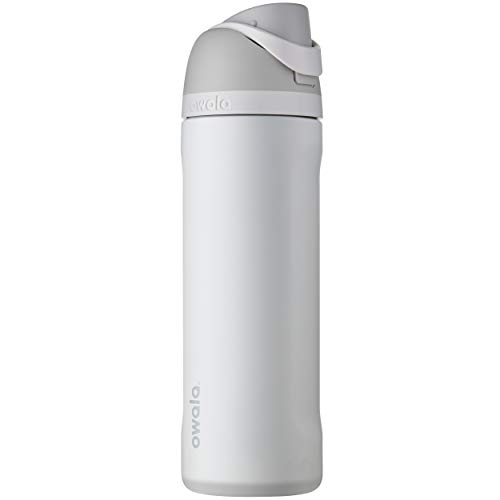
For the two-ways-to-drink answer. An insulated stainless steel bottle built around a dual-purpose spout that lets you sip through a built-in straw or swig through a wider opening, with a locking lid and a carry loop. In tier terms it sits at the mid end of the reusable bottle market, so judge it against bottles of a similar standing rather than against the cheapest bottle on the shelf. Check price on Amazon when you are ready to compare, and read the current listing carefully for the exact lid and size on offer, because bottle families often include several versions.
Best for: desk workers, students and commuters who like having two drinking styles in one lid and who want a bottle that feels friendly to use all day.
Not suited for: anyone who dislikes cleaning around straws and valves, because that convenience comes with more small parts to wash, and anyone who wants a completely open, chug-style mouth.
Living with the Owala day to day comes down to the same questions as any bottle in this guide. Does its lid match how you drink? Does it fit your car, bag and desk? And, above all, will you wash it properly every day, including the gasket, threads and any straw or valve parts? A bottle that passes those three tests in your real routine is a bottle you will still be using long after the newness has worn off.

CamelBak Eddy+
For the light plastic sipping answer. A lightweight plastic bottle with a bite-valve straw that lets you drink without tipping the bottle back, long associated with desks, bikes and everyday carry. In tier terms it sits at the entry to mid end of the reusable bottle market, so judge it against bottles of a similar standing rather than against the cheapest bottle on the shelf. Check price on Amazon when you are ready to compare, and read the current listing carefully for the exact lid and size on offer, because bottle families often include several versions.
Best for: people who drink most while typing, driving or riding and who want lightweight, one-handed sipping without unscrewing a cap.
Not suited for: anyone who will not commit to washing a bite valve and straw properly, because that valve is exactly where residue and mould like to gather if it is neglected.
Living with the CamelBak day to day comes down to the same questions as any bottle in this guide. Does its lid match how you drink? Does it fit your car, bag and desk? And, above all, will you wash it properly every day, including the gasket, threads and any straw or valve parts? A bottle that passes those three tests in your real routine is a bottle you will still be using long after the newness has worn off.

Nalgene Wide Mouth
For the simplest possible answer. A simple, durable plastic bottle with a very wide opening, a loop-top cap and a reputation for shrugging off drops, freezing routines and rough treatment. In tier terms it sits at the entry end of the reusable bottle market, so judge it against bottles of a similar standing rather than against the cheapest bottle on the shelf. Check price on Amazon when you are ready to compare, and read the current listing carefully for the exact lid and size on offer, because bottle families often include several versions.
Best for: campers, hikers and practical buyers who want easy filling, easy ice, easy scrubbing and a bottle that is simple enough to clean properly every day.
Not suited for: anyone who wants insulation, because this is a single-wall design, and anyone who needs a bottle to slide into a narrow cup holder or slim bag pocket.
Living with the Nalgene day to day comes down to the same questions as any bottle in this guide. Does its lid match how you drink? Does it fit your car, bag and desk? And, above all, will you wash it properly every day, including the gasket, threads and any straw or valve parts? A bottle that passes those three tests in your real routine is a bottle you will still be using long after the newness has worn off.
Two more names complete the picture for active and commuting routines, and they are worth a look once your steps are done.

Takeya Actives
For the training-day answer. An insulated stainless steel bottle with a spout lid, a protective bumper on many versions and a shape made for cup holders, gym bags and active routines. In tier terms it sits at the mid end of the reusable bottle market, so judge it against bottles of a similar standing rather than against the cheapest bottle on the shelf. Check price on Amazon when you are ready to compare, and read the current listing carefully for the exact lid and size on offer, because bottle families often include several versions.
Best for: gym sessions, training days and car-based commutes where a spout lid, a secure cap and cup-holder manners matter more than ultralight weight.
Not suited for: anyone chasing the lightest possible carry for long hikes, and anyone who wants a straw lid rather than a spout they tip back.
Living with the Takeya day to day comes down to the same questions as any bottle in this guide. Does its lid match how you drink? Does it fit your car, bag and desk? And, above all, will you wash it properly every day, including the gasket, threads and any straw or valve parts? A bottle that passes those three tests in your real routine is a bottle you will still be using long after the newness has worn off.
Stanley IceFlow
For the flip-straw commuting answer. An insulated stainless steel bottle family with flip-straw and fast-flow style lids, made for people who want cold water within easy reach through a busy day. In tier terms it sits at the mid to premium end of the reusable bottle market, so judge it against bottles of a similar standing rather than against the cheapest bottle on the shelf. Check price on Amazon when you are ready to compare, and read the current listing carefully for the exact lid and size on offer, because bottle families often include several versions.
Best for: commuters, drivers and active users who like a flip straw, a sturdy handle feel and an insulated bottle that suits a car-and-desk routine.
Not suited for: anyone who wants the fewest possible lid parts to wash, and anyone who finds larger insulated bottles too bulky for a small bag.
Living with the Stanley day to day comes down to the same questions as any bottle in this guide. Does its lid match how you drink? Does it fit your car, bag and desk? And, above all, will you wash it properly every day, including the gasket, threads and any straw or valve parts? A bottle that passes those three tests in your real routine is a bottle you will still be using long after the newness has worn off.
Common Mistakes
The most common buying mistake is choosing a bottle for an imaginary life instead of the real one: the huge bottle for hikes you rarely take, the delicate glass bottle for a bag it will never survive, the complicated straw lid bought by someone who knows they hate washing up. Close behind is buying on looks alone, ignoring cup-holder fit, bag fit and whether the lid can be opened with one hand. Another classic is assuming every part can go in the dishwasher without reading the label, and discovering the hard way that a finish or a seal disagrees. Finally, many people buy a second bottle to solve a problem that was actually a washing problem: the old bottle tasted bad because it was never properly cleaned, not because it was the wrong bottle.
Pro Tips
The single most important truth about any reusable bottle is also the least glamorous one: it needs washing every day it is used. A bottle is a warm, damp, enclosed space that your mouth touches repeatedly, and the residue from drinks, saliva and the air settles on its inner walls. Left alone, that residue feeds a slippery biofilm, and biofilm is what makes a bottle smell stale, taste faintly swampy and feel slick when you run a finger inside. Daily washing with hot soapy water, a bottle brush that reaches the base, and proper air drying breaks that cycle before it starts. It takes only a couple of minutes, and it matters far more than the brand printed on the side of the bottle.
Dishwasher promises deserve a careful reading of the label rather than a hopeful guess. Some bottles and lids are sold as dishwasher safe throughout, some are safe only on a top rack, and some insulated bodies should never go in at all because heat and harsh cycles can damage the finish or the vacuum seal. The label on your specific bottle is the authority, not a general habit. Where hand washing is required, treat it as part of the design rather than a flaw: a bottle you can take apart and scrub confidently is easier to live with than a complicated lid that technically tolerates a dishwasher but hides grime in places no spray arm reaches. When in doubt, hand wash the lid parts and follow the maker guidance for the body.
The environmental case for a reusable bottle is real but depends entirely on use. A bottle carried daily for years replaces a large number of single-use bottles, and that arithmetic is not close. A bottle bought, used twice and abandoned replaces almost nothing and adds its own footprint to the cupboard. That is why this guide keeps returning to fit, lids and washing: they are not fussy details, they are what make the environmental promise true. Buying one bottle you will genuinely keep, rather than a succession of nearly right ones, is both the economical and the sustainable choice. If you already own a bottle that works, the greenest purchase is usually no purchase, plus a thorough wash and a new gasket.
Worked Examples
The Hybrid Worker
Commuting is a leak test conducted twice a day in public. The bottle rides in a bag or a cup holder, gets jostled, tipped and occasionally dropped, and shares space with things that must stay dry. For this life, a locking lid or a cap you can verify is closed matters more than almost any other feature, and a size that fits your vehicle’s cup holder saves daily irritation. Insulated steel suits commuters who fill at home and drink through the morning, while lighter plastic suits those who walk or cycle part of the way. Whatever you choose, test the seal at home over a sink before trusting it in a bag, and keep the washing routine non-negotiable, because a commuter bottle lives a warm, enclosed life.
For this reader the steps land on an insulated bottle with a locking or well-sealed lid, sized for the morning and the commute, that fits the car. The desk days forgive almost anything, so the car days decide, and the washing routine is anchored to arriving home.
The Walker and Gym Member
For walking and hiking, every gram and every sip counts differently. Weight matters more the longer the walk, which is why lightweight bottles, including lighter insulated designs and simple plastic ones, have such a loyal following outdoors. A wide mouth helps when you are filling from a tap, a fountain or a stream-side source with a filter, and a loop or handle helps when the bottle is clipped to a pack. Insulation is a judgement call outdoors: it keeps water pleasant on a hot day but adds carry weight, and many walkers prefer to save that weight and refill more often. Durability matters too, because trail bottles get dropped on rock and gravel in a way desk bottles never do.
In the gym, drinking happens in short gaps between efforts, often with one hand and not much patience. Spout and chug lids earn their keep here because they deliver water quickly without a fiddly cap, and a bottle that stands stable on the floor and survives being knocked over will outlast a delicate one. Gym bottles also live hard hygiene lives: they are filled from communal fountains, left in warm kit bags and sipped from mid-workout with gym-floor hands. That makes the daily wash even less optional, and it favours bottles whose lids come apart easily. If your bottle shares a bag with damp kit, wash it the moment you get home rather than letting it sit overnight.
Here the steps split: lightness and a fast spout win, and many such readers end with a lighter bottle for the trail and a training bottle for the gym floor, each simple enough to wash without thinking.
The Parent Buying for School
For school and family life, the winning bottle is the one a child will actually use, carry and bring home. That usually means a size they can lift when full, a lid they can open themselves, a design that survives the daily drop test of playgrounds and corridors, and a shape that fits a school bag’s side pocket. Parents should be honest about the washing, too: a bottle with a simple lid that a busy household can wash quickly every evening will stay cleaner than a clever lid that everyone avoids taking apart. Lost bottles are a fact of school life, which is a fair argument for keeping school bottles at the sensible end of the range and saving premium bottles for adults.
The parent’s steps end at durability, a lid small hands can manage, and the simplest possible wash, at a tier where a lost bottle is an annoyance rather than a disaster. That is not a lesser choice; it is the steps working exactly as intended.
A Final Word Before You Buy
Whatever bottle you bring home, wash it thoroughly before the first use, including every lid part, gasket and straw, exactly as you will wash it daily afterwards. New bottles can carry manufacturing and packaging residues, and a first proper wash sets the routine you mean to keep. Fill it, test the seal over the sink, check for leaks with the bottle tipped and shaken gently, and practise opening and closing the lid until it is second nature. This small rehearsal prevents the two classic first-week disasters: a bag soaked by a lid you had not closed properly, and a bottle abandoned because its drinking style felt awkward. Ten unhurried minutes at the start saves the whole purchase.
Replacing a bottle at the right moment is part of owning one well. Deep scratches inside plastic can shelter residue that washing struggles to shift. A cracked body, a lid that no longer seals, a gasket that stays slimy or smells even after a thorough wash, or a valve that has split are all honest end-of-life signals. Replacement gaskets and lids can extend the life of many bottles and are worth trying first when the body itself is sound. What you should not do is keep drinking from a bottle you privately know you cannot get clean any more. The bottle you never wash, or can no longer wash properly, is the real risk in this whole category, and retiring it is a small, sensible cost.
It is worth remembering that a reusable bottle is not the only way to drink well through a day. A simple glass or jug at a desk suits someone who works in one place and has a tap nearby. A basic cup with a lid can serve a home worker perfectly well. Single-use bottles still have a place in emergencies and travel disruptions, whatever we think of them generally. The reusable bottle wins when your day moves: between rooms, buildings, vehicles and the outdoors, carrying your water with you in something you trust not to leak. Framing the choice that way keeps the decision honest. You are not buying a symbol; you are choosing the tool that fits the shape of your day.
Choosing for Someone Else
Choosing a bottle as a gift, or for a child or partner, adds one difficulty: you know your own habits well and theirs only approximately. The steps still work, but they should be run on your best observation of their day rather than on their stated wishes, because people ask for the bottle they have seen advertised and use the bottle that fits their routine. Watch where their current bottle, cup or bought drinks actually travel. Notice whether they drink in sips or in long draughts. Above all, be conservative with lid complexity when the washing will be theirs: a simple, sturdy bottle that a busy person keeps clean is a kinder gift than a clever one that quietly becomes unhygienic in a gym bag. When in doubt, choose the bottle you would be willing to wash for them, because that is roughly the effort you are asking them to give it.
A Quick Recap Before the Shops
If you read nothing else, keep the order: routine, material, lid, size, cleanability, and only then everything else. The order matters because each step narrows the next, and because reversing it, starting with a brand or a colour, leaves the important questions to be answered by accident. Your routine is a fact you already know. Your material follows from where that routine happens. Your lid follows from how you drink and how you wash. Your size follows from your longest ordinary gap. Your cleaning check is a label read and a moment of honesty. Five steps, none of them difficult, and the bottle that survives all five will feel, within a month, less like a purchase and more like something you have owned for years.
How to Choose a Water Bottle: The Method in One Paragraph
The whole method of this guide fits in a single breath: know your day, let the day choose the material, let your drinking and your washing choose the lid, let your longest ordinary gap choose the size, and let the care label have the final veto. Readers who follow that order find that the market’s enormous choice collapses quickly into two or three serious candidates, and choosing between near-equals is easy because any of them will serve. That collapse, from hundreds of bottles to a confident few, is the real product of learning how to choose, and it is why the steps were worth taking slowly.
Measuring and Checking Before You Order: A Pre-Purchase Walkthrough for a Water Bottle
This section exists to turn the advice into a sequence you can follow with a tape measure, a phone for notes, and ten unhurried minutes before you commit. It adds a layer that a feature list cannot give you, grounded in the food storage & organization context this water bottle will actually live in. Where this guide names examples such as Hydro Flask Trail Series, Owala FreeSip, CamelBak Eddy+, use them as test cases for the checks below rather than as shortcuts past them.
Use the listings as a checklist rather than as entertainment. For each water bottle you shortlist, note the exact variant, the included parts, what is sold separately, and which photographs show the item in a setting like yours rather than in a studio. If a model named elsewhere in this guide catches your eye, treat it as a worked example for this process: run it through the same measurements, the same weekly rehearsal and the same friction list before letting familiarity turn into preference. Consistency is the whole trick. Shoppers go wrong not by choosing the objectively weaker water bottle, but by judging one contender on features, the next on looks and the third on a single enthusiastic anecdote.
Think about who else has a vote. A water bottle is usually shared, moved, cleaned or complained about by more than one person, and the second user’s priorities are often the ones that surface after the return window closes. Check height, weight, reach, noise, heat, sharp edges or sheer visual presence, whichever apply, against the smallest, oldest or least enthusiastic person who will live with it. If you are buying for a household that includes children, pets, elderly relatives or lodgers, run the clumsy scenario too: the spill, the knock, the curious tug, the door left open. A robust water bottle choice survives other people; a fragile one only survives its buyer.
Consider the edge cases that sit just outside normal use, because a water bottle will meet all of them eventually. The unusually large load, the unusually small task, the day you are in a hurry, the day something else in the room is broken and this has to cover for it. Versatility is not about a long feature list; it is about behaving predictably when conditions are imperfect. Where a design offers settings, modes, attachments or configurations, ask what each one is actually for in your home, and be suspicious of flexibility you cannot attach to a real occasion. One well-judged configuration used weekly beats five clever ones used once, and the honest water bottle for your home is the one whose strengths line up with your most frequent edge case, not your rarest.
Build a simple decision checklist and score it in writing. Five lines are enough: fit in the space, fit with the routine, ease of cleaning or upkeep, quality of the parts that move or wear, and how the water bottle will be stored or will look when it is not the centre of attention. Score each contender quickly, then look only at the lowest scores, because purchases are usually ruined by their weakest point rather than saved by their strongest. If two options tie, choose the one whose weakness is cheapest or easiest to live with. This sounds mechanical, and it is meant to: a written checklist is the best defence against the very human habit of falling for the last photograph you looked at.
Finally, plan the first fortnight. Decide where the water bottle will live from day one, what it replaces, what accessory or companion it needs straight away and what small job you will use to learn its habits while returning it is still simple. Keep the packaging until that learning period is over, note anything that surprises you, and deal with a mismatch early rather than adapting yourself around a poor fit for years. The households that end up happiest with a water bottle are rarely the ones that researched longest; they are the ones that checked fit honestly, bought for the ordinary week, and paid attention during the first days instead of assuming the decision ended at checkout.
Frequently Asked Questions
How often should you wash a reusable water bottle?
Every day it is used, without exception. Wash the body with hot soapy water and a bottle brush, take the lid apart as far as the design allows, scrub straws, valves and gaskets separately, and let everything dry fully before reassembling. A quick rinse is not a wash: residue builds into biofilm quickly, and daily washing is what keeps a bottle tasting clean and smelling neutral week after week.
Can you put a water bottle in the dishwasher?
Only if the label on your specific bottle says so, and even then check which parts are approved and whether a top rack is specified. Some bodies and lids are dishwasher safe, while many insulated bottles should be hand washed to protect the finish and the vacuum seal. Lid parts with straws and gaskets often clean better by hand anyway, because you can scrub the folds and threads a dishwasher spray may miss.
Why does my water bottle smell even after rinsing?
Because rinsing does not remove the biofilm that forms on inner walls, under gaskets and inside straws and valves. The smell lives in that film and in damp lid parts that were reassembled before drying. Take the lid fully apart, scrub every piece with hot soapy water and the right brushes, let it all dry separated, and the smell usually goes. If a gasket still smells after a thorough wash, replacing the gasket is the sensible next step.
Is stainless steel better than plastic for a water bottle?
Neither is simply better; they suit different days. Steel, especially insulated steel, keeps drinks colder for longer and resists flavour carry-over, but it is heavier. Plastic is light, simple and often easier to scrub, especially in wide-mouth designs, but single-wall plastic does not insulate and can hold odours more readily. Glass tastes purest of all but is fragile. Choose by your routine, your carry weight and how you drink, not by a league table.
When should you replace a water bottle?
Replace it when you can no longer get it properly clean or trust it to seal: a cracked body, deep internal scratching that shelters residue, a lid that leaks, a split valve, or a gasket that stays slimy or smelly after thorough washing. Try replacement lids and gaskets first when the body is sound, since those parts wear fastest. A bottle you cannot clean is a bottle you should stop drinking from.
Does an insulated bottle keep drinks cold all day?
An insulated bottle keeps a cold drink colder for longer than a single-wall bottle, and it stops condensation wetting your desk or bag, which many owners value just as much. It will not chill a warm drink, and performance depends on how full the bottle is, how often you open it and how hot the surroundings are. Treat insulation as a genuine comfort advantage for long days between refills, not as a magic promise, and be wary of any listing that leans on dramatic claims.
Related Guides
Keep reading with these guides from the same collection: our full water bottle review our water bottle reviews round-up the water bottle buying guide water bottle pros and cons in full is a water bottle worth it how to clean a water cooler the best water coolers for camping stainless steel water coolers for home use the best office water coolers.