Disclosure: As an Amazon Associate, dailyhomedecorating.com earns from qualifying purchases. Links on this page are affiliate links; they cost you nothing extra. Prices and availability change often, so check the current Amazon listing before you buy.
Key Takeaways
Learning how to choose a shop vac comes down to five decisions made in the right order: your dominant mess, your finest dust, your storage reality, your noise tolerance and your attachment needs. This guide on how to choose a shop vac walks through each decision as a step, because readers who settle them in sequence rarely regret the purchase, while readers who start from a product list often buy a machine shaped for someone else’s home. The keyword question is not which model is strongest; it is which trade-offs you can live with happily.
In this guide
What You Need to Know Before Comparing
Beyond the purchase itself, ownership asks for filters, bags where you use them, occasional replacement hoses or tools, and the storage space a bulky machine occupies. None of these is a reason to avoid the category, but all of them belong in an honest decision. A machine whose filters are easy to find and simple to fit will be maintained; one with obscure consumables will quietly be neglected until its performance disappoints.
How you handle the hose matters more than most owners expect. Sharp bends, kinks and dragging the machine by the hose all shorten its life and reduce suction at the tool. Give the vacuum a clear rolling path, move the machine rather than stretching the hose to its limit, and coil the hose loosely for storage instead of crushing it into a tight space. Small habits like these are the difference between a machine that feels strong for years and one that fades within a season.
The right purchase starts with your rooms, not with a showroom. List the jobs you actually face monthly: garage floor, car, workshop bench, utility spills, renovation aftermath. Match the machine to the two or three most frequent jobs and let the rare ones be slower rather than buying for a worst case you may meet once. Readers who buy for their real routine almost always end up happier than readers who buy the biggest tank on the shelf.
Attachments are not filler in the box; they are what turn one suction source into a cleaning system. A wide utility nozzle covers floors, a crevice tool reaches the gaps machines miss, a brush loosens dust without scratching, and an extension wand saves your back on floors and high corners. Judge any model partly by whether its tools match your real jobs, and remember that a missing attachment usually matters more day to day than a small difference in headline power.
Renovation mess is where a shop vac proves its worth most clearly. Plaster crumbs, tile chips, stripped wallpaper and tracked dust spread through a home quickly if they are left for a broom, which mostly pushes fine material into the air. Vacuuming in stages, room by room as work finishes, keeps dust from migrating onto furniture and floors you have already cleaned. Bagging fine debris at the machine keeps the tank cleaner and makes emptying far less dusty for whoever does it.
Never use any shop vac on flammable or combustible liquids, and never pick up hot ashes, embers or anything that is still smouldering. Fuel, solvents and hot debris belong nowhere near a vacuum motor, a paper filter or a plastic tank, no matter how urgent the mess feels. Let fireplaces and stoves cool completely and let a professional handle anything you are unsure about.
For wet pickup, follow the manual for your exact model: remove the dry filter before vacuuming liquids unless the maker explicitly says otherwise, and keep the float shutoff working so the motor stops drawing when the tank reaches its safe liquid level. A blocked or missing float turns a simple spill job into a motor-damaging overflow.
Electricity and water demand respect. Plug the vacuum into a GFCI outlet whenever you work around liquids, keep connections dry, and never use a machine with a damaged cord, cracked plug or exposed wiring. If the cord is damaged, stop using the vacuum until it is properly repaired or replaced; do not tape over damage and carry on.
Fine dust changes the filter conversation completely. Drywall dust, cement dust and similar fine material clog standard filters quickly and can pass through them, so use the filter bags and fine-dust filtration the manufacturer recommends for that material, and empty or replace them before suction falls away.
If you suspect lead paint dust or asbestos in an older home, do not vacuum it yourself with a household or shop machine. Disturbing that material is a health risk that calls for professional remediation with the right containment and equipment. Stop, leave the area alone, and get qualified advice before any cleaning continues.
After any wet job, empty the tank, rinse away residue if the manual allows it, and leave the tank dry before storage. A sealed, damp tank grows mould and odour surprisingly fast, and that smell will greet you on the next job. Drying the tank and accessories is a small habit that protects both the machine and your home.
How to Choose a Shop Vac in 7 Steps
Step 1: Name Your Dominant Mess
Emptying the tank sounds trivial until you do it badly in a clean room. Take the machine outside or to a utility area, unclip the lid slowly so settled dust does not puff upward, and tip debris straight into a bag you can seal. If you use collection bags, the job is cleaner still: lift the bag out, seal it, and the tank stays close to clean. Wipe the tank rim before refitting the lid so the seal seats properly and suction stays strong.
How you handle the hose matters more than most owners expect. Sharp bends, kinks and dragging the machine by the hose all shorten its life and reduce suction at the tool. Give the vacuum a clear rolling path, move the machine rather than stretching the hose to its limit, and coil the hose loosely for storage instead of crushing it into a tight space. Small habits like these are the difference between a machine that feels strong for years and one that fades within a season.
Step 2: Match Filtration to Your Finest Dust
Beyond the purchase itself, ownership asks for filters, bags where you use them, occasional replacement hoses or tools, and the storage space a bulky machine occupies. None of these is a reason to avoid the category, but all of them belong in an honest decision. A machine whose filters are easy to find and simple to fit will be maintained; one with obscure consumables will quietly be neglected until its performance disappoints.
Around a bench, the mess is a mixture of fine dust and sharp offcuts, and the two behave very differently in a hose. Coarse debris needs an open path and a filter that is not already blinded by dust, while fine material needs proper filtration so it stays in the tank or bag instead of blowing back into the room. Clearing the bench and floor in short passes, then wiping surfaces down afterwards, leaves a workspace that is genuinely clean rather than merely rearranged.
Step 3: Size the Machine to the Job, Not the Ego
Homes with pets generate a particular mix of hair, litter scatter, kibble and the occasional water-bowl flood. A shop vac handles the hard-floor scatter around litter trays and feeding stations quickly, and it does not mind the odd pebble or toy fragment. Hair on hard floors lifts easily; hair worked into rugs needs slower passes and realistic expectations. Rinsing and drying the tank after any damp pickup keeps pet odours from settling into the machine itself.
Seasonal jobs, from clearing a porch before guests arrive to cleaning a utility room at the start of winter, suit a machine that tolerates variety. One session might cover cobwebs in corners, grit by the door, a spilled bag of compost and dust on stored items. Moving methodically, emptying the tank between heavy stages, and checking the filter before the final room keeps performance steady from the first pass to the last.
Step 4: Check Attachments Against Your Rooms
Shop vacs are not quiet machines, and honest ownership means planning around that fact. Run longer sessions at reasonable hours, keep doors and windows in mind if neighbours are close, and consider hearing protection for extended workshop use. Short, planned sessions also tend to clean better than marathon ones, because filters, tanks and patience all hold up. If noise is a deciding concern in a flat or shared building, weigh that honestly before buying the largest machine you can find.
Attachments are not filler in the box; they are what turn one suction source into a cleaning system. A wide utility nozzle covers floors, a crevice tool reaches the gaps machines miss, a brush loosens dust without scratching, and an extension wand saves your back on floors and high corners. Judge any model partly by whether its tools match your real jobs, and remember that a missing attachment usually matters more day to day than a small difference in headline power.
Step 5: Measure Your Storage Honestly
Beyond the purchase itself, ownership asks for filters, bags where you use them, occasional replacement hoses or tools, and the storage space a bulky machine occupies. None of these is a reason to avoid the category, but all of them belong in an honest decision. A machine whose filters are easy to find and simple to fit will be maintained; one with obscure consumables will quietly be neglected until its performance disappoints.
Seasonal jobs, from clearing a porch before guests arrive to cleaning a utility room at the start of winter, suit a machine that tolerates variety. One session might cover cobwebs in corners, grit by the door, a spilled bag of compost and dust on stored items. Moving methodically, emptying the tank between heavy stages, and checking the filter before the final room keeps performance steady from the first pass to the last.
Step 6: Weigh Noise and Weight
Wet pickup rewards calm preparation. Clear dry debris first so it does not turn to sludge in the tank, set the machine up for liquids as the manual directs, protect the outlet, and work in small sections so you always know how full the tank is getting. Listen for the change in sound as the float rises, and stop to empty rather than pushing on. Afterwards, the dry-out routine matters as much as the pickup itself, because a stored damp tank is where odours begin.
Fair comparison means testing the same mess with the same setup. A machine judged on loose sawdust will feel heroic, while the same machine on fine drywall dust is a filtration test, not a power test. Compare how each option handles your dominant mess, how its filter system copes, how it empties, and how it stores. Those four answers predict satisfaction far better than any single headline figure or showroom demonstration.
Step 7: Confirm Consumables Are Easy to Live With
Dry pickup looks simple, yet technique still shows. Overlap passes slightly on dusty floors, slow down over fine material so the filter is not overwhelmed in one gulp, and give edges and corners their own pass with the crevice tool. On rugs, expect a shop vac to lift surface debris brilliantly while leaving deep, embedded grit for a household machine with a rotating brush. Using each tool for what it does best is not a compromise; it is how a home stays genuinely clean.
Sawdust, tracked-in grit, dropped screws and leaves collect in a garage faster than any other room in the house. A shop vac earns its place here because it swallows chunky debris that would choke a household vacuum and clog a broom-and-dustpan routine. Work from the far corner toward the door, use a wide floor nozzle for open areas, and switch to a crevice tool along wall edges and under shelving where grit hides. Finish by checking corners for small hardware before it migrates into tyres or shoes.
Gear for This Guide
These prose-only representatives span the main decision outcomes: a workshop anchor, a balanced all-rounder, a versatile household option and a compact car-and-spill choice, presented while verification is pending and without invented specifications.
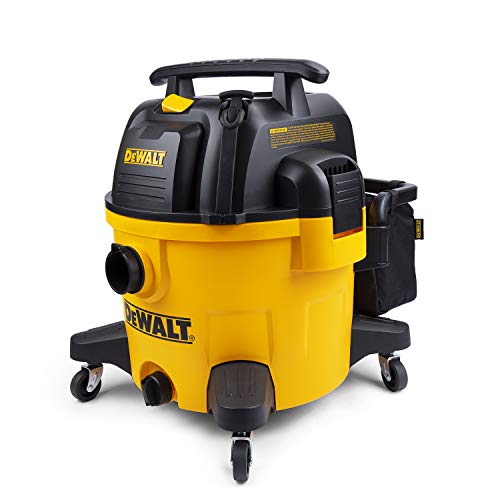
DEWALT Wet Dry Vacuum
Best for: readers whose routine matches a jobsite-minded choice for readers who already work with rugged tools and want a vacuum that tolerates dust, debris and regular hauling between rooms. This is a prose-only pick in this guide, positioned by role rather than by a static price, so compare the current listing, the included attachments and the filter system before deciding.
In daily use, judge the DEWALT Wet Dry Vacuum by how it handles your dominant mess, how cleanly the tank empties, and whether its tools reach the corners your home actually has. Strengths in this class tend to be straightforward wet and dry flexibility and tolerance for chunky debris. The honest trade-off is bulk: every machine in this category asks for storage space and makes real noise, and this one is no exception. Not suited for: anyone expecting a quiet, carpet-deep-cleaning household vacuum.
Attachments are not filler in the box; they are what turn one suction source into a cleaning system. A wide utility nozzle covers floors, a crevice tool reaches the gaps machines miss, a brush loosens dust without scratching, and an extension wand saves your back on floors and high corners. Judge any model partly by whether its tools match your real jobs, and remember that a missing attachment usually matters more day to day than a small difference in headline power.

Craftsman Wet Dry Vac
Best for: readers whose routine matches a familiar workshop name that suits garages, basements and renovation clean-up where one machine has to handle sawdust, drywall scraps and the occasional puddle. This is a prose-only pick in this guide, positioned by role rather than by a static price, so compare the current listing, the included attachments and the filter system before deciding.
In daily use, judge the Craftsman Wet Dry Vac by how it handles your dominant mess, how cleanly the tank empties, and whether its tools reach the corners your home actually has. Strengths in this class tend to be straightforward wet and dry flexibility and tolerance for chunky debris. The honest trade-off is bulk: every machine in this category asks for storage space and makes real noise, and this one is no exception. Not suited for: anyone expecting a quiet, carpet-deep-cleaning household vacuum.
Car interiors reward a smaller nozzle and a patient approach. Grit under seats, crumbs in seams and pet hair on upholstery all respond better to slow passes with the right attachment than to fast, forceful scrubbing with a wide tool. A utility nozzle lifts loose material, a crevice tool reaches seat rails and door pockets, and a brush helps loosen hair before suction takes it. Working in daylight, with doors open, makes it far easier to see what you have missed.
Vacmaster Wet Dry Vac
Best for: readers whose routine matches a versatile household option that often appeals to readers balancing garage messes, pet areas and seasonal deep cleaning in one purchase. This is a prose-only pick in this guide, positioned by role rather than by a static price, so compare the current listing, the included attachments and the filter system before deciding.
In daily use, judge the Vacmaster Wet Dry Vac by how it handles your dominant mess, how cleanly the tank empties, and whether its tools reach the corners your home actually has. Strengths in this class tend to be straightforward wet and dry flexibility and tolerance for chunky debris. The honest trade-off is bulk: every machine in this category asks for storage space and makes real noise, and this one is no exception. Not suited for: anyone expecting a quiet, carpet-deep-cleaning household vacuum.
Beyond the purchase itself, ownership asks for filters, bags where you use them, occasional replacement hoses or tools, and the storage space a bulky machine occupies. None of these is a reason to avoid the category, but all of them belong in an honest decision. A machine whose filters are easy to find and simple to fit will be maintained; one with obscure consumables will quietly be neglected until its performance disappoints.

Stanley Wet Dry Vacuum
Best for: readers whose routine matches a practical option for car cleaning, utility rooms and smaller workshops where easy carrying and simple storage matter as much as raw pulling power. This is a prose-only pick in this guide, positioned by role rather than by a static price, so compare the current listing, the included attachments and the filter system before deciding.
In daily use, judge the Stanley Wet Dry Vacuum by how it handles your dominant mess, how cleanly the tank empties, and whether its tools reach the corners your home actually has. Strengths in this class tend to be straightforward wet and dry flexibility and tolerance for chunky debris. The honest trade-off is bulk: every machine in this category asks for storage space and makes real noise, and this one is no exception. Not suited for: anyone expecting a quiet, carpet-deep-cleaning household vacuum.
Basements combine two jobs in one space: dry storage dust most of the year, and the occasional water incident that needs calm, safe handling. For a minor clean-water spill on a hard floor, wet pickup can save mopping time, provided the machine is set up for liquids and plugged into a protected outlet. For anything involving sewage, chemicals or a large volume of water, stop and call a professional rather than improvising with a household machine.
Common Mistakes
Emptying the tank sounds trivial until you do it badly in a clean room. Take the machine outside or to a utility area, unclip the lid slowly so settled dust does not puff upward, and tip debris straight into a bag you can seal. If you use collection bags, the job is cleaner still: lift the bag out, seal it, and the tank stays close to clean. Wipe the tank rim before refitting the lid so the seal seats properly and suction stays strong.
Homes with pets generate a particular mix of hair, litter scatter, kibble and the occasional water-bowl flood. A shop vac handles the hard-floor scatter around litter trays and feeding stations quickly, and it does not mind the odd pebble or toy fragment. Hair on hard floors lifts easily; hair worked into rugs needs slower passes and realistic expectations. Rinsing and drying the tank after any damp pickup keeps pet odours from settling into the machine itself.
Renovation mess is where a shop vac proves its worth most clearly. Plaster crumbs, tile chips, stripped wallpaper and tracked dust spread through a home quickly if they are left for a broom, which mostly pushes fine material into the air. Vacuuming in stages, room by room as work finishes, keeps dust from migrating onto furniture and floors you have already cleaned. Bagging fine debris at the machine keeps the tank cleaner and makes emptying far less dusty for whoever does it.
Pro Tips
Attachments are not filler in the box; they are what turn one suction source into a cleaning system. A wide utility nozzle covers floors, a crevice tool reaches the gaps machines miss, a brush loosens dust without scratching, and an extension wand saves your back on floors and high corners. Judge any model partly by whether its tools match your real jobs, and remember that a missing attachment usually matters more day to day than a small difference in headline power.
Basements combine two jobs in one space: dry storage dust most of the year, and the occasional water incident that needs calm, safe handling. For a minor clean-water spill on a hard floor, wet pickup can save mopping time, provided the machine is set up for liquids and plugged into a protected outlet. For anything involving sewage, chemicals or a large volume of water, stop and call a professional rather than improvising with a household machine.
Filters are the quiet centre of shop vac ownership. A clogged filter makes a strong motor feel weak, pushes fine dust back into the room and forces the machine to work harder on every job. Check the filter after dusty work, tap or brush loose dust away outdoors where the manual allows, wash only filters the maker labels washable, and let any washed filter dry completely before refitting it. Keeping a spare filter means a wet or washed one never has to go back in damp.
Worked Examples
Profile one, the renovating homeowner: fine dust and debris dominate, so filtration and bag use decide the shortlist. Profile two, the garage-and-car household: coarse debris and weekly use favour a balanced machine with good tools. Profile three, the flat dweller with a utility cupboard: compact size and spill duty matter more than workshop strength, and a smaller machine wins honestly.
Attachments are not filler in the box; they are what turn one suction source into a cleaning system. A wide utility nozzle covers floors, a crevice tool reaches the gaps machines miss, a brush loosens dust without scratching, and an extension wand saves your back on floors and high corners. Judge any model partly by whether its tools match your real jobs, and remember that a missing attachment usually matters more day to day than a small difference in headline power.
Suction on paper and suction at the end of a hose are different things. Long hoses, clogged filters, full tanks and leaking seals all chip away at real performance, which is why a well-maintained mid-range machine often out-cleans a neglected stronger one. When pickup fades, work through the simple causes first: empty the tank, check the filter and bags, clear the hose, and confirm the lid and seals are seated. Most disappointing sessions trace back to one of those four, not to the motor.
Where the vacuum lives decides how often you actually use it. A machine buried behind paint tins and seasonal boxes will be skipped in favour of a broom, while one parked within easy reach of the garage or utility room gets used weekly. Store attachments with the machine, ideally in an onboard holder or a single small bin, so the crevice tool is not in a different room from the job. Keep the cord loosely coiled and the tank empty and dry.
Related Guides
Keep exploring with these guides from the same cluster and the wider cleaning library.
Measuring and Checking Before You Order: A Pre-Purchase Walkthrough for a Shop Vac
This section exists to turn the advice into a sequence you can follow with a tape measure, a phone for notes, and ten unhurried minutes before you commit. It adds a layer that a feature list cannot give you, grounded in the home cleaning context this shop vac will actually live in. Where this guide names examples such as DEWALT Wet Dry Vacuum, Craftsman Wet Dry Vac, Vacmaster Wet Dry Vac, use them as test cases for the checks below rather than as shortcuts past them.
Consider the edge cases that sit just outside normal use, because a shop vac will meet all of them eventually. The unusually large load, the unusually small task, the day you are in a hurry, the day something else in the room is broken and this has to cover for it. Versatility is not about a long feature list; it is about behaving predictably when conditions are imperfect. Where a design offers settings, modes, attachments or configurations, ask what each one is actually for in your home, and be suspicious of flexibility you cannot attach to a real occasion. One well-judged configuration used weekly beats five clever ones used once, and the honest shop vac for your home is the one whose strengths line up with your most frequent edge case, not your rarest.
Build a simple decision checklist and score it in writing. Five lines are enough: fit in the space, fit with the routine, ease of cleaning or upkeep, quality of the parts that move or wear, and how the shop vac will be stored or will look when it is not the centre of attention. Score each contender quickly, then look only at the lowest scores, because purchases are usually ruined by their weakest point rather than saved by their strongest. If two options tie, choose the one whose weakness is cheapest or easiest to live with. This sounds mechanical, and it is meant to: a written checklist is the best defence against the very human habit of falling for the last photograph you looked at.
Finally, plan the first fortnight. Decide where the shop vac will live from day one, what it replaces, what accessory or companion it needs straight away and what small job you will use to learn its habits while returning it is still simple. Keep the packaging until that learning period is over, note anything that surprises you, and deal with a mismatch early rather than adapting yourself around a poor fit for years. The households that end up happiest with a shop vac are rarely the ones that researched longest; they are the ones that checked fit honestly, bought for the ordinary week, and paid attention during the first days instead of assuming the decision ended at checkout.
One more angle is worth your time: the second-order costs. A shop vac changes what happens around it. It can demand a different cleaning product, a new storage habit, a moved piece of furniture, a rearranged cupboard or a standing arrangement with the people you live with. List those knock-on effects before you buy and decide whether you accept them as part of the deal. Sometimes the answer is an easy yes, and the shop vac earns its place by improving the whole routine around it. Sometimes the honest answer is that the supporting changes are the real project, and the purchase should wait until you are ready for them. Either answer is useful; the only bad outcome is discovering the knock-on effects by accident, one irritation at a time, after the decision can no longer be revisited.
It also helps to separate the problems a shop vac can solve from the problems it merely moves. If the underlying difficulty is space, the answer may be a smaller format or a different location rather than a more elaborate model. If the difficulty is time, look for the option that removes steps rather than the one that performs each step slightly better. If the difficulty is that several people want different things, a compromise design that everyone rates as good enough will usually outlast a specialist design that one person loves and everyone else avoids.
Frequently Asked Questions
Can a shop vac replace a household vacuum?
For garages, workshops, cars and hard floors, largely yes, because it tolerates chunky debris and liquids that a household machine cannot. For deep carpet cleaning, a household vacuum with a rotating brush still does the better job. Most owners who keep both use each where it is strongest rather than forcing one machine to do everything, and that division of labour is the honest answer to the replacement question.
What should I never pick up with a shop vac?
Never vacuum flammable or combustible liquids, hot ashes, embers or anything smouldering, and never treat a shop vac as the answer to suspected lead paint dust or asbestos, which needs professional remediation. Sharp chemical spills and sewage also belong with professionals. When a mess involves fuel, heat, contamination or doubt, the safest and cheapest decision is to stop and get the right help.
Do I need to remove the filter for wet pickup?
Follow the manual for your exact model, because setups differ. In most cases the dry filter comes out before liquid pickup, and the float shutoff must be free to rise so the motor stops when the tank reaches its safe level. Never defeat or block the float. After the job, empty the tank and let everything dry before storage so mould and odour do not take hold.
How do I handle fine dust like drywall dust?
Fine dust needs the right filtration: use the filter bags and fine-dust filters the manufacturer recommends, change or empty them before they are packed, and expect suction to fall faster than it does on coarse debris. Work in smaller sections, check the filter between rooms, and wear suitable dust protection for the material you are cleaning, following local guidance for the job.
Why does my shop vac lose suction?
Work through the simple causes first: a full tank, a clogged filter or bag, a blocked hose or tool, and a lid or seal that is not seated. One of those four explains most disappointing sessions. Clear the blockage, clean or replace the filter as the manual allows, reseat the lid, and test again on a small area before assuming the motor itself is failing.
How should I store a shop vac between jobs?
Store it empty, clean and dry, with the tank lid seated, the hose loosely coiled without kinks, the cord untangled, and attachments kept with the machine. A dry utility corner or garage spot within easy reach means the vacuum actually gets used. Leaving liquid or damp debris sealed inside is the fastest route to odour, mould and a machine you dread opening next time.
Extra Notes on Hose Handling and How To Choose A Shop Vac Ownership
How you handle the hose matters more than most owners expect. Sharp bends, kinks and dragging the machine by the hose all shorten its life and reduce suction at the tool. Give the vacuum a clear rolling path, move the machine rather than stretching the hose to its limit, and coil the hose loosely for storage instead of crushing it into a tight space. Small habits like these are the difference between a machine that feels strong for years and one that fades within a season.
Ownership also rewards a simple routine after every session: shake loose dust from the filter area outdoors, check the tank for anything damp, confirm the float moves freely, and park the machine somewhere dry with its hose un-kinked. Readers who build that two-minute habit into the end of a job rarely face the slow decline in suction that makes owners blame a motor when the real cause was maintenance. It is unglamorous advice, and it is also the advice that keeps a purchase feeling worthwhile years later, long after the first impressive clean-up has been forgotten.
Extra Notes on Filter Care and How To Choose A Shop Vac Ownership
Filters are the quiet centre of shop vac ownership. A clogged filter makes a strong motor feel weak, pushes fine dust back into the room and forces the machine to work harder on every job. Check the filter after dusty work, tap or brush loose dust away outdoors where the manual allows, wash only filters the maker labels washable, and let any washed filter dry completely before refitting it. Keeping a spare filter means a wet or washed one never has to go back in damp.
Ownership also rewards a simple routine after every session: shake loose dust from the filter area outdoors, check the tank for anything damp, confirm the float moves freely, and park the machine somewhere dry with its hose un-kinked. Readers who build that two-minute habit into the end of a job rarely face the slow decline in suction that makes owners blame a motor when the real cause was maintenance. It is unglamorous advice, and it is also the advice that keeps a purchase feeling worthwhile years later, long after the first impressive clean-up has been forgotten.
Extra Notes on Emptying Well and How To Choose A Shop Vac Ownership
Emptying the tank sounds trivial until you do it badly in a clean room. Take the machine outside or to a utility area, unclip the lid slowly so settled dust does not puff upward, and tip debris straight into a bag you can seal. If you use collection bags, the job is cleaner still: lift the bag out, seal it, and the tank stays close to clean. Wipe the tank rim before refitting the lid so the seal seats properly and suction stays strong.
Ownership also rewards a simple routine after every session: shake loose dust from the filter area outdoors, check the tank for anything damp, confirm the float moves freely, and park the machine somewhere dry with its hose un-kinked. Readers who build that two-minute habit into the end of a job rarely face the slow decline in suction that makes owners blame a motor when the real cause was maintenance. It is unglamorous advice, and it is also the advice that keeps a purchase feeling worthwhile years later, long after the first impressive clean-up has been forgotten.
Extra Notes on Noise And Neighbours and How To Choose A Shop Vac Ownership
Shop vacs are not quiet machines, and honest ownership means planning around that fact. Run longer sessions at reasonable hours, keep doors and windows in mind if neighbours are close, and consider hearing protection for extended workshop use. Short, planned sessions also tend to clean better than marathon ones, because filters, tanks and patience all hold up. If noise is a deciding concern in a flat or shared building, weigh that honestly before buying the largest machine you can find.
Ownership also rewards a simple routine after every session: shake loose dust from the filter area outdoors, check the tank for anything damp, confirm the float moves freely, and park the machine somewhere dry with its hose un-kinked. Readers who build that two-minute habit into the end of a job rarely face the slow decline in suction that makes owners blame a motor when the real cause was maintenance. It is unglamorous advice, and it is also the advice that keeps a purchase feeling worthwhile years later, long after the first impressive clean-up has been forgotten.
Extra Notes on Storage Sense and How To Choose A Shop Vac Ownership
Where the vacuum lives decides how often you actually use it. A machine buried behind paint tins and seasonal boxes will be skipped in favour of a broom, while one parked within easy reach of the garage or utility room gets used weekly. Store attachments with the machine, ideally in an onboard holder or a single small bin, so the crevice tool is not in a different room from the job. Keep the cord loosely coiled and the tank empty and dry.
Ownership also rewards a simple routine after every session: shake loose dust from the filter area outdoors, check the tank for anything damp, confirm the float moves freely, and park the machine somewhere dry with its hose un-kinked. Readers who build that two-minute habit into the end of a job rarely face the slow decline in suction that makes owners blame a motor when the real cause was maintenance. It is unglamorous advice, and it is also the advice that keeps a purchase feeling worthwhile years later, long after the first impressive clean-up has been forgotten.
Extra Notes on Attachments Matter and How To Choose A Shop Vac Ownership
Attachments are not filler in the box; they are what turn one suction source into a cleaning system. A wide utility nozzle covers floors, a crevice tool reaches the gaps machines miss, a brush loosens dust without scratching, and an extension wand saves your back on floors and high corners. Judge any model partly by whether its tools match your real jobs, and remember that a missing attachment usually matters more day to day than a small difference in headline power.
Ownership also rewards a simple routine after every session: shake loose dust from the filter area outdoors, check the tank for anything damp, confirm the float moves freely, and park the machine somewhere dry with its hose un-kinked. Readers who build that two-minute habit into the end of a job rarely face the slow decline in suction that makes owners blame a motor when the real cause was maintenance. It is unglamorous advice, and it is also the advice that keeps a purchase feeling worthwhile years later, long after the first impressive clean-up has been forgotten.
Extra Notes on Suction In Practice and How To Choose A Shop Vac Ownership
Suction on paper and suction at the end of a hose are different things. Long hoses, clogged filters, full tanks and leaking seals all chip away at real performance, which is why a well-maintained mid-range machine often out-cleans a neglected stronger one. When pickup fades, work through the simple causes first: empty the tank, check the filter and bags, clear the hose, and confirm the lid and seals are seated. Most disappointing sessions trace back to one of those four, not to the motor.
Ownership also rewards a simple routine after every session: shake loose dust from the filter area outdoors, check the tank for anything damp, confirm the float moves freely, and park the machine somewhere dry with its hose un-kinked. Readers who build that two-minute habit into the end of a job rarely face the slow decline in suction that makes owners blame a motor when the real cause was maintenance. It is unglamorous advice, and it is also the advice that keeps a purchase feeling worthwhile years later, long after the first impressive clean-up has been forgotten.
Extra Notes on Wet Jobs Done Calmly and How To Choose A Shop Vac Ownership
Wet pickup rewards calm preparation. Clear dry debris first so it does not turn to sludge in the tank, set the machine up for liquids as the manual directs, protect the outlet, and work in small sections so you always know how full the tank is getting. Listen for the change in sound as the float rises, and stop to empty rather than pushing on. Afterwards, the dry-out routine matters as much as the pickup itself, because a stored damp tank is where odours begin.
Ownership also rewards a simple routine after every session: shake loose dust from the filter area outdoors, check the tank for anything damp, confirm the float moves freely, and park the machine somewhere dry with its hose un-kinked. Readers who build that two-minute habit into the end of a job rarely face the slow decline in suction that makes owners blame a motor when the real cause was maintenance. It is unglamorous advice, and it is also the advice that keeps a purchase feeling worthwhile years later, long after the first impressive clean-up has been forgotten.
Extra Notes on Dry Jobs Done Thoroughly and How To Choose A Shop Vac Ownership
Dry pickup looks simple, yet technique still shows. Overlap passes slightly on dusty floors, slow down over fine material so the filter is not overwhelmed in one gulp, and give edges and corners their own pass with the crevice tool. On rugs, expect a shop vac to lift surface debris brilliantly while leaving deep, embedded grit for a household machine with a rotating brush. Using each tool for what it does best is not a compromise; it is how a home stays genuinely clean.
Ownership also rewards a simple routine after every session: shake loose dust from the filter area outdoors, check the tank for anything damp, confirm the float moves freely, and park the machine somewhere dry with its hose un-kinked. Readers who build that two-minute habit into the end of a job rarely face the slow decline in suction that makes owners blame a motor when the real cause was maintenance. It is unglamorous advice, and it is also the advice that keeps a purchase feeling worthwhile years later, long after the first impressive clean-up has been forgotten.
Extra Notes on Buying For Your Home and How To Choose A Shop Vac Ownership
The right purchase starts with your rooms, not with a showroom. List the jobs you actually face monthly: garage floor, car, workshop bench, utility spills, renovation aftermath. Match the machine to the two or three most frequent jobs and let the rare ones be slower rather than buying for a worst case you may meet once. Readers who buy for their real routine almost always end up happier than readers who buy the biggest tank on the shelf.
Ownership also rewards a simple routine after every session: shake loose dust from the filter area outdoors, check the tank for anything damp, confirm the float moves freely, and park the machine somewhere dry with its hose un-kinked. Readers who build that two-minute habit into the end of a job rarely face the slow decline in suction that makes owners blame a motor when the real cause was maintenance. It is unglamorous advice, and it is also the advice that keeps a purchase feeling worthwhile years later, long after the first impressive clean-up has been forgotten.
Extra Notes on Ownership Costs and How To Choose A Shop Vac Ownership
Beyond the purchase itself, ownership asks for filters, bags where you use them, occasional replacement hoses or tools, and the storage space a bulky machine occupies. None of these is a reason to avoid the category, but all of them belong in an honest decision. A machine whose filters are easy to find and simple to fit will be maintained; one with obscure consumables will quietly be neglected until its performance disappoints.
Ownership also rewards a simple routine after every session: shake loose dust from the filter area outdoors, check the tank for anything damp, confirm the float moves freely, and park the machine somewhere dry with its hose un-kinked. Readers who build that two-minute habit into the end of a job rarely face the slow decline in suction that makes owners blame a motor when the real cause was maintenance. It is unglamorous advice, and it is also the advice that keeps a purchase feeling worthwhile years later, long after the first impressive clean-up has been forgotten.