Disclosure: As an Amazon Associate, dailyhomedecorating.com earns from qualifying purchases. Links on this page are affiliate links; they cost you nothing extra. Prices and availability change often, so check the current Amazon listing before you buy.
Short answer: is a patio umbrella worth it? For most households with a sunny patio they actually use, yes — provided you buy the right type, weight the base properly, and accept the closing, covering, and cleaning habits that ownership involves. It is not worth it if your outdoor space is already shaded, if wind makes your patio a place umbrellas cannot safely live, or if you want a fit-and-forget structure. This article works through the value, the real costs, who benefits, who should skip it, and how to get full value if you buy.
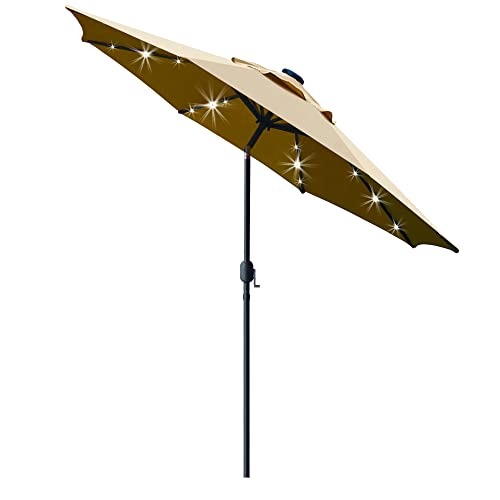
Key Takeaways
- Worth it if you regularly sit, eat, or work on a sunny patio and the heat or glare cuts that time short.
- Not worth it if natural shade, a roof, or a pergola already does the job, or if your site is so windy an umbrella would spend its life closed.
- The base is part of the purchase, not an extra: an adequately weighted base is mandatory for safety.
- Shade depends on sun angle and placement, not canopy diameter alone — measure honestly before buying.
- No canopy fabric is maintenance-free; covering, drying, and cleaning decide how it ages.
In this guide
Is a Patio Umbrella Worth It? The Short Verdict by Household
Worth it, clearly, for the family whose south- or west-facing patio becomes unusable between late morning and mid-afternoon in summer. A good umbrella returns those hours: meals outside, children playing without squinting, a laptop or book that can actually be read, cushions and furniture that are not baking in direct sun. The value is measured in use, and for a space used daily in season, even a mid-tier umbrella earns its place quickly.
Not worth it, equally clearly, for the household that eats outside twice a month, whose garden is already shaded by trees or buildings at the hours they use it, or whose patio funnels wind between houses. In those cases the umbrella becomes an object to store, a base to trip over, and a canopy to worry about in every forecast. A movable chair, a small shade sail in the one hot corner, or simply shifting mealtimes may serve better, and there is no virtue in owning equipment your site cannot support.
The households in between — most of us — should judge by one test: in the last sunny month, how many times did you abandon or avoid the patio because of sun? If the answer is often, an umbrella is likely worth it, sized and weighted correctly. If you cannot remember a single occasion, save the money and the storage space. That honest count is worth more than any feature list, because features only matter on days the umbrella is actually open above you.
What You Actually Get When You Buy One
You get movable, adjustable shade without building work. Unlike a pergola or an awning fixed to the house, an umbrella can be tilted through the day, rotated if it is a cantilever, moved between a dining table and a lounger (base permitting), and removed entirely for winter. That flexibility is its core value, and it is why umbrellas remain the default answer for rented homes, small patios, and anyone unwilling to commit to a permanent structure.
You also get protection for more than people. Direct sun fades cushions, dries wooden furniture, overheats dark table tops until they are unpleasant to touch, and makes pale stone glare. Shading the seating zone slows all of that. It will not preserve outdoor furniture forever — covers and storage still matter — but a shaded table and chairs age visibly more gracefully than the same set left in full sun season after season.
What you do not get is cooling in the way a fan or air conditioning cools. Shade lowers the radiant heat on your skin and makes a seat feel dramatically more comfortable, but on a still, humid day the air under the canopy is the same air as outside it. Households in very hot climates should see an umbrella as one layer — alongside timing, airflow, light-coloured surfaces, and cold drinks — not as a complete answer to summer heat.
Measure Shade Honestly: Canopy Size Is Not Shade Size
Measure shade coverage honestly against the sun angle in your garden, because the circle printed on a box is the canopy, not the shadow. At midday in midsummer the sun is high and the shadow sits close to the canopy outline. In the morning, in the late afternoon, and in spring and autumn, the sun is lower, the shadow is thrown well to one side, and a table that was shaded at noon can be in full sun by the time you sit down to eat. The useful question is not how wide the canopy is, but where its shadow falls at the hours you actually use the space. Do a simple paper exercise before you buy. Note the width of your table plus the chairs pulled out, then add room for people to lean back. Sketch where the sun comes from at breakfast, lunch, and late afternoon in the month you use the patio most. If one fixed position cannot cover those hours, a tilting centre-pole model helps for part of the day, and a cantilever helps more, because you can swing or rotate the canopy to chase the shadow without moving the base or the table. Bigger is not automatically better. An oversized canopy over a small terrace can dominate the space, catch more wind, demand a much heavier base, and shade a neighbourly strip of lawn while leaving your chairs at the edge. A slightly smaller canopy, well placed and tilted at the right hour, often delivers more usable shade. Equally, buying small to save money and then huddling at one end of the table is a false economy that ends in a second purchase. Height matters as well as width. The canopy must clear heads, chair backs, and door swings, while sitting low enough that low sun does not simply pour underneath it. Check the clearance under the canopy edge when it is tilted, not only when it is level, and check that a cantilever arm clears fences, shrubs, and the house wall through its full arc of rotation.
The Real Costs Beyond Money
The first hidden cost is the base, in money, space, and effort. Many umbrellas are sold without an adequate base, or with a token stand that is not sufficient outdoors. A proper filled or slab base costs extra, occupies floor space, and is heavy enough that repositioning becomes a planned job rather than an impulse. Cantilevers multiply all of this. None of it is a reason not to buy; all of it belongs in the decision, because buyers who discover it afterwards are the ones who end up under-weighting the base — the one shortcut that is genuinely unsafe.
The second cost is a daily habit: open, adjust, close, tie, cover. It takes minutes, but it is non-negotiable. An umbrella left open unattended is an accident and a repair bill waiting for a gust. If your household routine means the umbrella would regularly be left open while everyone is at work or asleep, factor that honestly — either the habit changes, or a fixed shade structure that does not need closing may suit you better.
The third cost is seasonal care and storage. The canopy needs brushing, occasional washing, and complete drying before storage; the frame needs its clamps checked and its joints kept clean; a water- or sand-filled base needs attention so it does not go green or crack in a freeze. You also need a dry corner, roughly the length of the closed umbrella, for half the year in cooler climates. Households with no storage at all should think twice, or choose a compact model they can genuinely put away.
Who It Pays Off For: Three Households
The Daily Outdoor Eaters
If breakfast, lunch, or dinner regularly happens outside in season, an umbrella pays off fastest here. A tilting centre-pole model over the table, or a cantilever that clears the whole setting, turns a sun-trap table into the default dining room for months. Choose shade coverage at your actual mealtimes, weight the base once and properly, and the daily value compounds quietly all summer.
The Sun-Sensitive and the Fair-Skinned
For anyone who burns quickly, minds glare, or supervises small children outdoors, reliable shade is not a luxury but the condition that makes the patio usable at all. An umbrella gives a defined shaded zone you control, unlike the moving shade of a tree. Pair it with sensible sun habits — shade is a supplement to, not a replacement for, sunscreen and hats — and choose a canopy large enough that the shaded zone fits people, not just furniture.
The Home Worker and Reader
Glare is the enemy of screens and pages. A shaded corner with a chair, a small table, and an adjustable canopy can become the best seat in the house for calls, reading, and quiet work. Cantilevers excel here because there is no pole dictating where the chair goes, and tilt lets you cut low sun without retreating indoors. If this is your main use, prioritise adjustability over maximum canopy size.
Who Should Skip It
Skip it if your patio is a wind corridor. Some plots — coastal, hilltop, or funnelled between buildings — simply punish umbrellas. If neighbours’ umbrellas regularly invert, if cushions migrate on breezy days, or if you would spend the season anxious about the forecast, a fixed, professionally anchored structure or a shade sail rated and installed for your conditions is the safer spend. An umbrella you can never safely open has no value at any tier.
Skip it, too, if the space is tiny and already contested. A base, a pole, and a canopy footprint can consume a small balcony and make it feel smaller, and a cantilever is out of the question in genuinely tight spaces. A wall-mounted or half-canopy design made for balconies, or a simple parasol for a single chair used occasionally, may fit reality better than a full patio umbrella bought on optimism.
Finally, skip the premium tiers if your use is occasional. A top-tier cantilever bought for three barbecues a year is poor value however well made it is. An honest entry or mid-tier centre-pole model, properly based and stored, will shade those afternoons perfectly well, and the money saved can go on the chairs people will actually sit in.
Strengths and Trade-Offs of Owning One
Strengths
- Adjustable shade that follows your day — tilt and rotation beat any fixed shadow.
- No building work, no fixings into the house, and suitable for rented homes.
- Removable and storable: the patio returns to open sky in minutes, and to storage in winter.
- Protects furniture and cushions in the shaded zone from the worst of sun fade.
Trade-offs
- Demands a heavy base and floor space, especially in cantilever form.
- Must be closed in wind and never left open unattended — a permanent daily habit.
- Fabric fades and can mould if neglected; no canopy is maintenance-free.
- Shade moves with the sun; one position rarely covers every hour perfectly.
Safety First: A Weighted Base Is Not Optional
An adequately weighted base is mandatory, not an accessory you can skip for a season. A patio umbrella is, in physical terms, a lever topped with a sail. The canopy catches wind across a wide surface, the pole multiplies that force at the base, and the whole assembly can tip over, lift out of its stand, slide across a deck, or snap at a joint. That risk is present even on days that feel merely breezy at ground level, because wind moves faster and gusts harder a few feet up where the canopy sits. Close the umbrella in wind and in storms, and never leave it open unattended. That single habit prevents most damage and most accidents. An open canopy left alone during a passing squall can be dragged, inverted, or pulled clean out of a light base, and it can strike furniture, railings, windows, or people on the way. When you go indoors, when you leave the house, and when a forecast mentions gusts, close it, secure the canopy with its tie, and, if the spot is exposed, lay it down or move it under cover. Cantilever frames need even heavier ballast than centre-pole models. Because the canopy hangs to one side of the mast, the overturning moment is larger and more constant, even without wind. Use the full ballast the maker specifies for that frame — filled base sections, slabs, or a properly filled cross base — and treat a half-filled cantilever base as an unfinished installation, not a saving. If a cantilever rocks, creeps, or lifts a corner of its base in a light breeze, add ballast and recheck the ground is level before using it again. Place the base on flat, firm ground, check that the pole sits vertically, and tighten every clamp and knob before the first use and periodically through the season. On decking, confirm boards are sound under the base. On pavers, avoid rocking on a raised edge. Around pools and play areas, keep the fall zone in mind: if the worst happened, where would the canopy land? A few minutes of placement thought is worth far more than any claim about a frame being sturdy.
Alternatives to Consider Before You Decide
A shade sail covers a wide area with no pole and no daily closing ritual, but it needs strong anchor points, correct tension and slope for rain runoff, and it stays where you put it. It suits a fixed seating zone on a breezy plot better than an umbrella in some cases, and worse in others — it cannot be tilted toward evening sun or taken down for a starlit night. Compare the shape of your shade problem, not just the products.
A pergola or gazebo is the permanent answer: real structure, real cost, and often planning or landlord considerations, in exchange for a defined outdoor room that shrugs off weather an umbrella cannot. If you are certain about the layout of your garden for years ahead and you entertain often, the structure may be better value per year than replacing light umbrellas. If you are still experimenting with where you like to sit, an umbrella is the reversible first step.
Natural shade and simple timing cost nothing. A deciduous tree planted now is a long project, but arranging seating to use the shade you already have — the house wall in the afternoon, a fence in the morning — solves more gardens than owners expect. Many households end up with a hybrid: natural shade for part of the day, and a modest umbrella for the exposed hours. That combination is often the best value of all.
Example Models, in Prose, to Anchor the Decision
The models below are named in prose so you can compare real, widely sold designs by type and tier. No model here carries a link, a price, or a specification stated as fact in this draft, because each one still needs verification against the retailer listing at publishing time. Use the descriptions to shortlist by design and tier, then confirm the exact canopy size, frame material, base requirements, and included parts on the current listing before you buy — and remember that the base is usually a separate, essential purchase.

Sunnyglade 9ft Patio Umbrella
Best for: a first umbrella over a modest dining table, where simple centre-pole shade at a gentle tier matters most
Not suited for: windy, exposed terraces, or anyone expecting premium fabric longevity from an entry design
The Sunnyglade design is the classic starter pattern in this category: a centre pole, a crank to raise the canopy, a tilt function for lower sun, and a vented top. For a small table and a sheltered patio, that combination covers the core job without the footprint or ballast demands of an offset frame, and it is easy for one person to open, close, and store.
Treat it as a fair-weather, supervised umbrella. Its appeal is simplicity and tier, not storm tolerance. Pair it with a properly weighted base, close it when the breeze picks up, and cover it when not in use, and it can serve a household well. Expect the fabric care and fading discussion elsewhere in this article to apply in full — at this tier, your cover and cleaning habits will decide how it looks in year three.
Tier positioning: entry tier. Check price on Amazon for the current listing, and confirm whether a base is included or must be bought separately before you compare totals with other models.

Best Choice Products 10ft Cantilever Patio Umbrella
Best for: households who want the clear space underneath an offset canopy without stepping straight to premium cantilever pricing
Not suited for: anyone unwilling to fill and place the full cross-base ballast a cantilever requires
An offset canopy changes how a patio feels: no pole in the middle of the table, no leaning around a mast to talk, and the freedom to shade a lounge chair or a corner sofa. This Best Choice Products design is a common entry point into that layout, typically offered with tilt adjustment and a crank, on a cross base that must be weighted down with slabs or filled weights.
The honest warning belongs right here: a cantilever on an under-weighted base is the most common unhappy purchase in this whole category. Budget the ballast, the ground space, and a few extra minutes of setup into the decision. If your patio is small or very exposed, a centre-pole model may honestly suit you better, even though the offset idea is more attractive in photographs.
Tier positioning: entry-to-mid tier for an offset design. Check price on Amazon for the current listing, and confirm whether a base is included or must be bought separately before you compare totals with other models.
Purple Leaf Cantilever Patio Umbrella
Best for: larger patios, lounge sets, and buyers who expect to rotate and adjust shade through the day and keep the frame for many seasons
Not suited for: small balconies, tight terraces, or anyone short on floor space for a large ballasted base
Purple Leaf has built its name in this category on substantial cantilever designs, with larger canopies, rotation at the base on many models, and a more engineered feel to the mast and arm. For a big seating area that moves between morning coffee and evening drinks, that adjustability is not a gimmick: rotating the canopy is far easier than moving furniture or a filled base.
Premium here should buy you smoother mechanisms, a sturdier arm, and better fabric options — confirm exactly which fabric and rotation features the current listing describes, because the range spans several sizes and configurations. The ballast rule does not soften at this tier; if anything, a larger canopy demands more respect for wind, weight, and the close-when-away habit.
Tier positioning: premium tier. Check price on Amazon for the current listing, and confirm whether a base is included or must be bought separately before you compare totals with other models.

Abba Patio 11ft Patio Umbrella
Best for: a big dining table or a wide seating area that needs a large centre-pole canopy without moving to an offset frame
Not suited for: compact patios where an eleven-foot canopy would overwhelm the space and catch unnecessary wind
A large centre-pole design like this Abba Patio model suits the classic setup — pole through the table, canopy above everyone — scaled up for a bigger table or a combined dining and lounging zone. The larger canopy gives a genuinely wider pool of midday shade, and a tilt function helps at the edges of the day, provided the table and base are up to supporting it.
Scale brings responsibilities. A canopy of this size needs a seriously weighted base, clear space to tilt without striking walls or shrubs, and disciplined closing in gusts. Measure your table, your chair pull-out space, and your storage corner before choosing the largest canopy on a list; the right size is the one that shades your seats and still stores neatly in winter.
Tier positioning: mid tier for a large centre-pole canopy. Check price on Amazon for the current listing, and confirm whether a base is included or must be bought separately before you compare totals with other models.

Grand Patio Deluxe Patio Umbrella
Best for: buyers who care about a more finished, furniture-like look and smoother everyday operation over a dining set
Not suited for: shoppers who want the cheapest route to shade, or a featherweight umbrella to move daily between spots
Grand Patio tends to present its umbrellas as part of the furniture rather than as camping equipment, with an emphasis on finish, canopy presentation, and a sturdier feel in hand. In a garden that is used as an outdoor room — matching chairs, cushions, planters — that coherence has real value, and a well-finished frame is also more pleasant to open and close every day.
Judge it on the same fundamentals as everything else here: base weight, fabric care, tilt behaviour, and spare canopy availability. A handsome umbrella that is left open in storms will fail just as completely as a plain one. If you will use and cover it daily in season, the step up in finish can be money well spent; if it will live in a shed eleven months a year, a simpler tier may be the honest choice.
Tier positioning: mid-to-premium tier. Check price on Amazon for the current listing, and confirm whether a base is included or must be bought separately before you compare totals with other models.
Blissun 9ft Patio Umbrella
Best for: a straightforward second umbrella, a rental property, or a small table that needs simple shade with a tilt for late sun
Not suited for: buyers seeking a long-service premium canopy, or very exposed sites where any entry frame will be stressed
The Blissun nine-foot pattern is another widely sold expression of the standard design: centre pole, crank lift, push-button style tilt on typical listings, and a vented canopy in a wide choice of colours. As a first or additional umbrella — over a bistro set, beside a lounger, at the shallow end of a pool deck — that simplicity is exactly the point.
Go in with clear expectations and you are unlikely to be disappointed: weight the base properly, keep the canopy covered when idle, wash off pollen and dust through the season, and store it dry. Where this tier shows its limits is in fabric fade over several sunny seasons and in hardware that rewards gentle handling, so operate the crank and tilt smoothly rather than forcing them.
Tier positioning: entry tier. Check price on Amazon for the current listing, and confirm whether a base is included or must be bought separately before you compare totals with other models.
How to Get the Most Value If You Buy
Buy the base with the umbrella, in the same decision, at the weight the maker specifies — and if your site is exposed, go above the minimum. Position the umbrella for your most-valued hour first (for most households, the evening meal or the midday weekend), and accept that a secondary hour may need a tilt or a moved chair. Fit the cover every evening for the first fortnight; habits formed early are the ones that survive August.
Keep a tiny routine: brush the canopy when you notice pollen, rinse bird spots promptly, let rain dry off before closing for long, and check clamps monthly. Photograph your setup once it works — base position, tilt angle, chair layout — so anyone in the household can recreate it. Value in this category is almost entirely about consistent small behaviours, not about buying the most elaborate frame.
Fabric, Honestly: Fade, Mould and Upkeep
No fabric is maintenance-free, and any suggestion otherwise should make you cautious. Outdoor canopy fabrics live in ultraviolet light, rain, pollen, dust, and bird visits. Colours will fade over time — deeper and brighter colours usually show fading sooner than pale neutrals — and the rate depends on how many hours of direct sun your patio receives and whether the canopy is closed and covered when not in use. A cover, used consistently, slows fading and keeps the canopy cleaner more effectively than any single fabric upgrade. Mould and mildew are the other honest cost. A canopy closed while damp, or stored while dirty, can develop spots and odours, especially in humid climates and shaded gardens where it dries slowly. The prevention is unglamorous: let the canopy dry open after rain before closing it for any length of time, brush off leaves and debris, wash it gently during the season, and never pack it away for winter until it is clean and fully dry. Spots caught early are usually a cleaning job; spots left for a season can become permanent staining. Understand the broad fabric families in plain terms. Standard polyester is common on entry-level models, light and widely available in many colours, and generally the fastest to fade. Heavier solution-dyed and branded outdoor acrylic and olefin fabrics are typically offered on mid-range and premium models and are generally marketed for better colour retention and weather resistance. Whichever family you choose, the care routine is the same, and a mid-range fabric that is covered and cleaned will often look better after three seasons than a premium fabric left open through every storm. Inspect the canopy as you would a tent: even stitching, reinforced corners where the ribs meet the fabric, a vent at the top that is properly finished, and no thin or shiny patches. The vent is functional, not decorative — it lets some wind pressure escape and helps hot air rise — but it does not make an umbrella safe to leave open in strong wind. Nothing does.
The Decision Checklist
- Did sun drive you off the patio at least several times last sunny month?
- Do you have flat, firm space for a properly weighted base — and, for a cantilever, much more of it?
- Will someone close and cover the umbrella every day it is used, without exception?
- Have you measured shade at your real hours of use, allowing for sun angle?
- Do you have dry storage for the closed umbrella out of season?
- Is your site calm enough, most days, for an umbrella to be open safely?
Four or more confident yes answers, and a patio umbrella is very likely worth it for your household. Two or fewer, and the honest answer is to solve shade another way. In between, choose a modest centre-pole model, base it properly, and let one season of real use tell you whether to step up to a cantilever or a larger canopy.
Planning Placement Like an Owner, Not a Photograph
Start placement planning with the furniture fixed and the people imagined, not with the umbrella. Put the table and chairs exactly where you eat, pull the chairs out as if someone were about to sit, and stand where the server or parent needs to pass. The base must fit inside that lived geometry without stealing the passing lane, and the pole or mast must not sit where elbows, chair backs, or a highchair need to be. Photographs hide all of this because nobody is sitting in them; your patio will be occupied, and occupied space is the only honest plan. Next, track the sun for one ordinary day before you commit to a position. Note, at the hours you use the patio, where the bright patch and the shadow of the house, fence, or trees actually fall. Chalk marks on paving are a wonderfully low-technology tool here. Many households discover their patio already has natural shade for one prized hour and brutal exposure for another, which means the umbrella only has to solve part of the day — and can be smaller, better placed, and tilted for that specific window rather than bought huge to fight the whole sky. Think about wind at the placement stage too, because position is a safety feature. A corner sheltered by the house wall experiences a different summer from an open edge aligned with the gap between two buildings. If you have a choice of two otherwise equal spots, choose the sheltered one, keep the canopy’s fall zone away from windows, glass doors, and the pool, and make sure the closed umbrella does not drip roof-like onto a doorway after rain. Small placement decisions, made once, pay out every single day of the season. Finally, plan the closed state, not just the open one. Where does the tied canopy sit relative to the door swing and the barbecue? Can you walk past the base at night without catching it? Is there a cover within reach, and a dry route to storage in autumn? An umbrella whose closed life is awkward will be left open to avoid the awkwardness — and that is precisely how the wind finds it. Design the boring states and the pleasant ones will follow.
A Season-by-Season View of Ownership
Spring is for inspection and honesty. Open the umbrella slowly the first time, watch every rib, and look for the winter’s quiet damage: frayed cords, a stiff crank, canopy ties perished, rust freckles at joints, a base that lost fill or cracked in a freeze. Fix the small list now, while parts and patience are available. Wash off storage dust, let everything dry in the open position, and re-establish the closing and covering routine with the whole household before the first hot weekend makes it urgent. Summer is for rhythm rather than projects. Brush the canopy when pollen films it, rinse bird spots before they bake, let rain dry before long closures, and glance at clamps and ballast monthly — a thirty-second check folded into watering the pots. Adjust tilt and, on a cantilever, rotation as the sun’s path shifts through the season; the position that was perfect in May will be a few degrees wrong in August, and the mechanism exists precisely to absorb that drift. Autumn is where lifespans are decided. Give the canopy its proper wash, dry it completely — completely, not nearly — and store it clean under a cover in a dry place, with the base emptied if it is water-filled and frost is possible. Note any part that will need replacing and order it in the quiet months if you can. The households whose umbrellas look good in year four are rarely doing anything exotic; they are simply the ones who treated autumn as part of ownership rather than as an afterthought. Winter asks only that storage stays dry and undisturbed. Check once, mid-winter, that nothing has leaked onto the stored canopy and that it has not been crushed under heavier garden gear. If you use a mild winter day to sit out — and many owners do — run the full routine even for an hour’s use: open, enjoy, dry if damp, close, cover. The routine does not scale down with the occasion, because the wind does not either.
Questions Worth Asking Before Any Money Moves
Ask where the shade will be at the hour you care about most, and make the answer a place and a time, not a diameter. Ask what the base weighs when filled as the maker directs, where it will stand, and what stands there now. Ask who will close the umbrella on the day everyone comes home late and tired, and listen carefully to whether the answer is a name or a silence. Ask where it will sleep in January, measured, not guessed. Ask whether a replacement canopy exists for the model in front of you, because that single answer separates a purchase from a rental measured in summers. Ask, too, what problem the umbrella is solving that a moved chair, a different mealtime, or the shade you already own cannot solve more cheaply. Sometimes the honest answer is glare on a screen, or a grandparent who cannot sit in sun, or a table that bakes too hot to touch — specific problems with specific hours, all excellent reasons to buy. Sometimes the answer dissolves under questioning, and the money is better kept for the chairs, the plants, or the meal itself. A good purchase survives these questions easily; a weak one relies on them never being asked. Finally, ask how the household will behave in the first storm, because that behaviour is the product’s real specification. If the answer is a shrug, no tier of umbrella is the right purchase yet — agree the rule first, then buy the equipment the rule protects. If the answer is a person, a routine, and a cover hanging by the door, then almost any sensibly chosen, properly weighted model in this article will serve you well, and the remaining choice is simply which pattern your patio prefers.
One last practical note belongs in every version of this discussion, because it is where good intentions most often leak away: involve the whole household in the routine before the umbrella arrives, not after the first storm. The person who cooks, the teenager who clears the table, and the grandparent who takes morning coffee outside all need the same simple picture — the base stays weighted, the canopy comes down when the day ends or the wind rises, the cover lives in one known place, and a damp canopy gets opened again to dry rather than forgotten. Written nowhere and agreed by everyone, that picture is worth more than any single upgrade in frame or fabric, because equipment only ever performs as well as the habits around it. Households that treat these few behaviours as part of the furniture, rather than as chores attached to it, are the ones still pleased with their purchase when the third and fourth summers arrive.
patio umbrella reviews compared
comfortable outdoor chairs for a patio
patio chaise lounge chairs for longer afternoons
wicker patio sofas and loveseats
cleaner for patio furniture cushions
Earning Its Keep: The Long View on Owning a Patio Umbrella
Whether a patio umbrella is worth it is rarely settled on the day it arrives, so this section judges value across ordinary weeks of ownership: how often it is used, what it replaces, what it costs in space and upkeep, and the point at which it has quietly paid for its place in the home.
Start With Your Space and Your Routine
If the patio umbrella needs assembly, read the instruction preview if one is offered, count the steps honestly against the time you have, and check whether a second pair of hands is recommended. If a part of the patio umbrella can be replaced, refreshed or re-covered separately, that option can extend its useful life well beyond the point where a sealed design would be thrown out. Guests notice different things than owners do, so if the patio umbrella will be used by visitors, test it from a fresh user’s point of view, without the habits you have already built around it. Ask how the patio umbrella will be cleaned on an ordinary week, with the products and time you actually have, not with a special routine you are unlikely to keep up.
The worth question changes with the household, so revisit it whenever your space, routine or family changes rather than treating today’s verdict on the patio umbrella as permanent. Think about the season in which the patio umbrella will work hardest, and judge it against that season rather than the mild week in which you happen to be shopping. Apply the same checks to each shortlisted example, whether that is the Blissun 9ft Patio Umbrella; the Sunnyglade 9ft Patio Umbrella; the Grand Patio Deluxe Patio Umbrella, because consistent testing is what makes the differences between models visible. A good test is the two-week question: imagine the patio umbrella after a fortnight of ordinary use, with no special effort from you, and ask whether you would still choose it.
When Small Problems Appear
If you are replacing an older patio umbrella, list what failed or frustrated you about it, and check each item on that list against the new listing before you order its successor. Look for the detail photographs in the listing, not just the wide shots, and zoom in on edges, joints, fasteners, controls and finishes, which is where build quality usually shows itself first. If two options look nearly identical, compare the parts you will touch every day, since those contact points decide whether a patio umbrella feels solid or flimsy after the novelty wears off. The best patio umbrella for a rented home may differ from the best for an owned one, because fixings, marks and alterations carry different consequences in each case.
Finally, judge the patio umbrella against the life you actually lead this year, not the tidier or more ambitious life in the listing photographs, and the choice will usually make itself. Count the hidden costs of owning the patio umbrella as part of the worth question: the space it occupies, the accessories it needs, the cleaning it demands and the storage it takes when idle.
A Short Decision Checklist
- How the patio umbrella will be cleaned in an ordinary week
- What your current arrangement does well that the patio umbrella must not lose
- The main job the patio umbrella must do, written in one sentence
- The material and finish, matched to light, moisture and wear in its spot
- What your current arrangement does badly that the patio umbrella must fix
- Packaging kept until the patio umbrella has passed its first trial in place
- Where the patio umbrella and its accessories will be stored when not in use
- Who will use the patio umbrella most, and any limits they have
Taken together, these checks take only a little time, yet they answer the questions that decide whether the patio umbrella suits your home, your household and your routine, and they do so before money changes hands rather than after.
Frequently Asked Questions
Is a patio umbrella worth it for a small patio?
It can be, if sun is what stops you using the space and you choose a compact centre-pole model with a base sized to the spot. On a very small balcony the base footprint may eat the space it was meant to improve, so measure the base as carefully as the canopy. If a standard base does not fit, look at balcony-specific designs rather than under-weighting a full-size umbrella to squeeze it in.
How much base weight does a patio umbrella really need?
More than most first-time buyers expect, and the maker’s specification for your exact model is the starting point, not a suggestion to halve. Centre-pole umbrellas need a base heavy enough to resist both tipping and lifting, and cantilevers need substantially more because the canopy hangs off-centre. If the umbrella rocks, creeps, or lifts in a light breeze, it is under-weighted for your site, whatever the box said. Add ballast, check the ground is level, and never solve the problem by wedging the pole.
Can I leave a patio umbrella open overnight?
You should not. Overnight weather is unsupervised weather: a calm evening can turn into a gusty front while you sleep, and an open canopy can tip, lift out, or be damaged before anyone can close it. Close it, tie it, and cover it when you finish for the day. The habit takes a minute, protects the frame and fabric, keeps the canopy cleaner, and removes the most common cause of broken ribs and bent poles in home use.
Why does my umbrella shade the table at noon but not at dinner?
Because the shadow moves with the sun angle. At midday the sun is high and the shadow sits under the canopy; later, lower sun throws the shadow sideways and light pours in under the canopy edge. Tilt helps for part of that movement, a rotating cantilever helps more, and repositioning chairs is sometimes the simplest fix. When you buy, judge shade at the hours you actually eat and sit, not by the canopy diameter alone.
Is a cantilever umbrella worth the extra over a centre-pole model?
Worth it when the clear space underneath matters — over a lounge set, a table without a centre hole, or seating you rearrange — and when you have the floor space and will install the full ballast. Not worth it on a small or very exposed patio, where a centre-pole model is simpler, lighter, and easier to live with. The premium buys geometry and adjustability, not immunity from wind.
How long should a patio umbrella last if I look after it?
A cared-for mid-tier umbrella should give several seasons of service, and premium frames longer, provided it is closed in wind, covered when idle, cleaned gently, and stored dry. The canopy is usually the first part to age through fading or staining; models with replacement canopies available extend useful life considerably. Neglect — especially leaving it open in storms or storing it damp — can ruin any tier within a single season.