Disclosure: As an Amazon Associate, reviewstook.com earns from qualifying purchases. Links to Amazon on this page are affiliate links; they cost you nothing extra. Listing details such as price and availability change often, so check the current Amazon listing before you buy.
A chaise lounge turns a patch of deck into a place to unwind. You stretch out, adjust the back to the angle you like and take in the garden, the pool or the sky. The best patio chaise lounge chairs pair a weather-ready frame with a back that adjusts smoothly, so the same chair works for reading, sunning and napping.
We compared five outdoor chaises that shoppers can find on Amazon, from a folding steel lounger to a wicker-style frame with cushions. Each entry covers what the maker lists, the kind of patio it suits and the compromises you should expect. Because adjustable backs work in different ways, we explain the common mechanisms in the buying section.
Outdoor claims differ from one listing to the next, so read the materials and care lines before you order, and check the finished dimensions against the space you have.
Quick Comparison
| Product | Best for | Main point | Link |
|---|---|---|---|
| Giantex Patio Chaise Lounge | Poolside decks | Adjustable back and a reclining frame | Check on Amazon |
| Best Choice Products Adjustable Chaise Lounge | Easy storage | Folding frame with a multi-position back | Check on Amazon |
| Crosley Furniture Palm Harbor Chaise Lounge | Wicker style | Woven look with cushions | Check on Amazon |
| Devoko Patio Reclining Chaise Lounge | Quick setup | Straightforward recliner for everyday use | Check on Amazon |
| Christopher Knight Home Outdoor Chaise Lounge | Designed patios | Decor-led look with soft cushions | Check on Amazon |
In this guide
How These Options Were Chosen
This list comes from manufacturer listings and published specifications. We have not placed these loungers on a patio or reclined in them, so there are no personal impressions in what follows.
We picked chaises sold for outdoor use that clearly mention an adjustable back, and we sought a spread of materials, from steel to woven resin. None of these chaises appears in our other chair guides.
5 Best Patio Chaise Lounge Chairs

Giantex Patio Chaise Lounge
Giantex sells a broad range of home and garden furniture, and its patio chaise is built around a reclining frame with an adjustable back. It is the traditional poolside format, with a long seat and a back that tilts.
It suits a deck or a pool surround where you want a sun lounger to stretch out on. The shape provides a long, flat surface for reading or resting.
As with most accessible outdoor furniture, the details matter. Check the frame material, the cushion or fabric description and the number of back positions on the listing, since these vary by version.

Best Choice Products Adjustable Chaise Lounge
Best Choice Products makes patio furniture designed to be simple to store. The adjustable chaise uses a folding frame, so you can fold it flat at the end of the season.
This is a smart pick for a small patio or a balcony where space matters. It stores in a closet or a shed without taking much room.
Folding frames can feel less solid than fixed ones, and hinge points need care. Check the position count on the back and read the cushion details if any are offered.
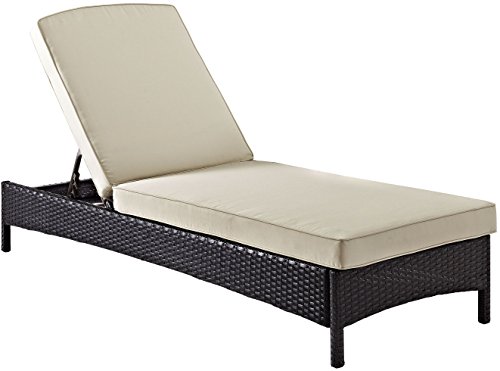
Crosley Furniture Palm Harbor Chaise Lounge
Crosley offers outdoor lines with a relaxed, retro-resort feel. The Palm Harbor chaise uses a woven-look design with cushions, which gives a warmer visual than a plain metal frame.
It suits a covered patio or a sunroom doorway, where the woven style fits the setting. Cushions make it more inviting for long afternoons.
Woven materials and fabric need shelter, and cushions should be stored in wet weather. Read the weather and cleaning notes on the listing.

Devoko Patio Reclining Chaise Lounge
Devoko sells practical outdoor furniture aimed at quick setup. This reclining chaise is simple and functional, with an adjustable back and a straightforward frame.
It works for a household that wants a lounger without fuss. Place it on a lawn edge, a deck or a paved patio and move it as the sun shifts.
Simple designs have fewer comfort extras, so you may add a pillow or pad. Check the listing for assembly steps and the material of the seat.

Christopher Knight Home Outdoor Chaise Lounge
Christopher Knight Home leans toward decor, and its outdoor chaise offers a more styled look than a basic folding lounger. Soft cushions and a designed frame make it feel like part of a living space.
It fits patios that are styled with rugs, planters and side tables. A pair beside a low table turns a corner into a lounge.
Style-led pieces can come with less flexibility in positions, so read how the back adjusts. Cushions need care, and the chaise may need a cover outside the season.
Arranging Loungers on a Patio
Chaises work best when the layout gives each one room to move. Allow enough space at the foot end so a person can step around the chair, and leave a gap between two loungers for a small table. A side table with a drink and a book within reach turns a basic chair into a proper retreat.
Orientation matters. Point the foot of the chair toward the view or the sun, depending on how you use it, and keep the back end near shade or a wall. Under a pergola or a parasol, the back of the chaise sits in the shadow and the legs catch the light, which is a pleasant arrangement for reading.
Around a pool, keep chaises a short distance from the edge so walkways stay clear. A line of two or three loungers along one side looks neat, and a different grouping on the other side can create a place for conversation.
On smaller patios, a single chaise in a corner with a plant and a lamp can be the whole story. Folding versions make it easy to fold away for gatherings and bring back out later. These small layout choices make any chaise feel more at home.
Best for Poolside Decks
The Giantex chaise has the long, reclining shape that suits a pool surround, and its adjustable back lets you change position as the day goes on.
Best for Small Balconies
The Best Choice Products folding chaise stores flat, so it fits where a fixed lounger would not.
Best for Styled Patios
The Christopher Knight Home chaise brings soft cushions and a designed look, which suits patios arranged like outdoor living rooms.
Best for Covered Porches
The Crosley Palm Harbor works in sheltered spots, where its woven look and cushions are protected from heavy weather.
How Adjustable Backs Work
Chaise backs adjust in a few common ways. A ratchet-style back, often a metal bar behind the cushion, lets you lift the back to one of several fixed positions and lower it by lifting past the last notch. A strap or chain system, found on some folding loungers, allows you to set the angle by moving a clip or a link.
Some chaises use a gas strut or lever, which gives a smoother transition between positions. These systems are less common at the entry level and tend to be described in the listing as easy adjust or one-touch.
When you read a listing, find the number of positions and the way the back is held. More positions give finer control, but simpler mechanisms are easier to maintain. If you share the chaise with several people, prefer a system that is easy to operate with one hand.
Look at how the back and the seat meet. A lounger with a separate seat and back lets you bend your knees, while a one-piece style stays flat. Think about whether you prefer to read upright or to lie almost flat.
How to Choose a Patio Chaise Lounge
Begin with the footprint. A chaise is long, so measure the area where it will sit and add space on each side for walking. Check the folded size if you plan to put it away each season.
Look at the frame material. Aluminum is described as light and resistant to rust. Powder-coated steel is strong but needs attention if the coating chips. Resin wicker over a metal frame gives a woven look and suits covered areas. Teak and acacia wood bring a natural feel but need occasional care.
Consider the seat surface. Cushioned versions are more inviting, but cushions need storage in wet weather. Sling or textilene fabric dries quickly and handles outdoor conditions better, though it feels firmer. Check that cushions have covers meant for outdoor use.
Wheels are a useful feature. A chaise on wheels can be moved to follow the shade, while chaises without wheels must be lifted. If you plan to move the lounger often, check for wheels or handles.
Think about colour. Light colours stay cooler in the sun, while dark colours hide dirt but warm up. Neutral shades suit most patios.
Common mistakes include buying a chaise too long for the space, ignoring the cleaning needs of cushions and assuming that all adjustable backs offer the same range. Another is overlooking assembly: check how many parts there are and which tools come in the box.
It also helps to match the chaise with the rest of your patio. A single lounger beside a small table suits a quiet corner, and a pair works for couples. For larger groups, consider a mix of chaises and chairs, so that the seating adapts to the number of guests.
Pay attention to sun and weather as well. Dark cushions and bare metal heat up in direct sun, so a lighter colour or a towel over the seat helps. Wind can tip a lightweight folding frame, so check the weight of the chaise and think about where it sits on a breezy deck. Rain exposure is another factor: if you cannot bring cushions inside quickly, pick a sling or mesh seat that drains and dries.
Finally, decide on a tidy storage plan before you buy. A folding chaise slides behind a sofa or into a shed, whereas a fixed wicker lounger needs a cover and a permanent corner. Matching the storage habits of your household to the chair is the quickest way to avoid regret.
Because this list leans on listing details, take a minute to read a handful of questions and answers on each product page. Shoppers often ask about colour accuracy, assembly time and fabric feel there, and the replies add useful context to the maker’s description.
Assembly and Placement Notes
Follow the maker’s instructions when assembling the chaise and when adjusting the back. Place it on a flat surface, and keep the feet off soft ground that may sink. If you plan to put it near a pool, keep walkways clear. Any structural or electrical work on the patio should be left to a qualified professional.
Care and Troubleshooting
Wipe frames with a soft cloth and mild soapy water, and brush off debris from joints. Store cushions in wet weather and use a cover in the off season.
| Issue | What to try |
|---|---|
| Back will not hold | Check the mechanism and follow the manual |
| Squeaking joints | Clear dirt and check the fittings |
| Mildew on cushions | Clean as the care label allows and dry fully |
| Rust spots | Clean the area and follow the care guide |
If the back adjuster feels loose out of the box, contact the seller.
Frame Materials Compared
The frame decides how long a lounger lasts outdoors, how heavy it is to move, and how much care it needs. The common choices come with clear trade-offs.
- Powder-coated steel: strong and affordable, but heavier. The coating protects against rust until it chips, so touch up scratches promptly. It suits sheltered patios better than constantly wet poolsides.
- Aluminum: lighter and naturally rust-resistant, which makes it easy to move around a deck. The trade-off is that very light frames can feel less planted in wind.
- Wicker and rattan-style resin: resin woven over a metal frame gives a styled look. Quality varies, and the weave can fade or crack in strong sun over time.
- Wood, such as acacia or teak: attractive and sturdy, but needs periodic oiling or sealing to keep its color. Untreated wood weathers to gray, which some owners like.
The right pick depends on climate. In coastal air, aluminum and resin tend to handle salt better than bare steel. In dry, sunny regions, UV resistance matters more than rust. A product listing that names the frame material and finish is a good sign. One that is vague deserves caution.
Weight Capacity and Stability
A chaise supports a whole body stretched over a long span, so weight ratings matter more than they do on a dining chair. Look for a stated capacity and keep a margin; if the limit is close to your weight, the chair may feel flexy and wear faster. The rating assumes even load distribution, so sitting on the end or leaning on one arm can stress joints beyond what the number suggests.
Stability also depends on the footprint. A wider base resists tipping when someone sits up from a reclined position, and rubber or plastic feet protect decking while adding grip. Place the chair on a flat surface. A slight tilt from uneven pavers forces the frame to flex, loosens fasteners, and creates a wobble that is hard to ignore.
Check the adjustment mechanism, too. Ratchet bars, notched supports, and pull-and-lock designs all hold the back at a set angle, but each can wear differently. A smooth, deliberate click into position suggests a mechanism that engages securely.
Sun, Shade and Comfort Planning
Where you place a chaise changes how often you use it. Full sun feels great in spring and unbearable in July, especially on dark metal or dark cushions that absorb heat. If your patio gets strong afternoon sun, consider a lighter finish, a shade sail, or an umbrella that can be tilted as the sun moves.
Think about the angle of the sun relative to the seat. Facing west puts the sun in your eyes late in the day, while facing east gives morning light and afternoon shade. A lounger that sits close to a wall can trap heat, so allow a little breathing room.
Wind is the other factor. Light frames can slide or tip in gusts, so a balcony on a high floor may call for weighted feet or a quick tie-down. If you share the space with a grill or fire feature, keep the chaise at a safe distance.
Preparing for Off-Season Storage
Even an all-weather chaise lasts longer if it is protected during the off-season. Clean the frame and cushions, dry them completely, and store them in a garage, shed, or covered area. If you leave it outdoors, use a fitted, breathable cover that reaches the ground to keep rain out without trapping condensation.
Before putting it away, check hardware. Tighten bolts, inspect welds and joints, and lightly lubricate moving parts such as the back hinge. Resolving a small issue in autumn is easier than discovering it at the start of spring.
Questions to Ask Before You Order
Because a chaise is large, ask practical questions first. Will it fit through the doors and gates between delivery and the patio? Many arrive in a box over five feet long, and carrying it up stairs is easier if you know the weight in advance. Do you want a chair that folds flat for storage, or are you comfortable leaving it assembled on the patio all season?
Consider the cushion situation. If cushions are included, check their thickness and whether the covers are removable, because a cushion that cannot be washed becomes unpleasant after a summer of sunscreen. If cushions are sold separately, make sure the dimensions match the frame. Look at the number of recline positions and whether the leg section adjusts too.
Finally, look for warranty terms and the availability of replacement parts. Even a short warranty signals that the seller expects the chair to hold up, and spare parts can rescue an otherwise sound frame after a lost bolt or a worn foot.
The Anatomy of a Perfect Afternoon: Angles, Shade and Stillness
A chaise lounge is an instrument for doing nothing, and like any instrument it rewards being set up properly. The back angle that flatters a photograph, bolt upright or flat as a board, is rarely the angle a body chooses for an hour; most people live in the middle range, reclined enough to unload the spine, raised enough to read, sip and watch the garden without a strain. This is why the adjustability in this guide matters more than the number of positions a listing can claim: what counts is whether the angles you actually use are available, stable and changeable without a wrestling match, ideally with one hand while the other holds the book.
Shade is the second instrument setting. A chaise in full sun is a morning pleasure and a midday punishment, and the lounge that earns its keep is the one whose position, or whose owner’s habits, tracks the shade: a morning spot by the east wall, an afternoon retreat under the tree, or a canopy and umbrella arrangement that lets the chair stay put while the shadow moves. Plan the chair’s day when you place it, walking the yard at two or three hours to see where the shade actually falls, because gardens cast very different maps than their owners imagine from the kitchen window.
Surfaces Under the Chaise: Decks, Lawns and Pool Aprons
Where a chaise stands decides how it feels and how it ages. On a deck, its feet or wheels concentrate weight on boards that may flex, and a long lounge can develop a subtle rock that owners blame on the frame; pads or a reposition to a firmer span usually cure it. On a lawn, the frame’s feet will sink their slow way into soft ground across an afternoon, changing the chair’s angle by degrees, which wide feet or a simple outdoor mat beneath prevents. By a pool, the chaise lives in a splash zone of treated water, and its materials should be read with that chemistry in mind, rinsed as part of the pool’s own routine so residues never get a season to work on joints and fabrics. Each surface is manageable; the only true mistake is placing the chair as if the ground were a showroom floor and then blaming the lounge for the difference.
Comparing the Five Chaises in This Guide by Afternoon
The Giantex chaise is the accessible all-rounder, the lounge for households equipping a first real patio and wanting adjustability without ceremony. The Best Choice Products adjustable chaise emphasizes exactly that adjustability, suiting readers and sun-followers who change position as often as they change chapters. The Crosley Palm Harbor brings the resort register, a styled presence for patios that entertain and want their furniture to look like a destination. The Devoko reclining chaise serves the value-minded sunbather who still expects the chair to lock its angles honestly and survive being moved around the yard in pursuit of the light. The Christopher Knight Home chaise is the design-led member, the lounge chosen when the patio’s look matters as much as the lying, and when the chair will be seen from the house all year, earning its keep as garden sculpture through the months it is not being lain upon.
Choosing among them is choosing which afternoons you actually have. Daily short sessions favor the quick, light adjusters; long weekend sessions favor the sturdier, more composed frames; households whose patios are stages for company favor the styled pair, Crosley and Christopher Knight Home, whose looks work even when nobody is lounging. And households in doubt should remember the chaise’s oldest truth: the best lounge is the one positioned where you will actually use it, twenty steps from the door rather than at the garden’s prettiest and most distant corner.
More Questions Worth Asking About a Patio Chaise
How many chaises does a patio actually need?
Fewer than the photographs suggest, because a chaise is single-occupancy territory in a way a bench or a sofa is not. Count the people who genuinely lounge at the same time on an ordinary weekend, not at the year’s biggest party, and buy for that number, letting party guests colonize the dining chairs and the lawn. Most households land on two, a pair being the natural unit of shared leisure, and discover that a third chaise spends its life as an expensive towel rack. If your household lounges in shifts, one excellent chaise, well placed, beats two mediocre ones parked in a row.
Can I leave a chaise by the pool all season?
The frames in this guide are built with outdoor life in mind, but a poolside season is a specific chemical and solar regime, and the chair will live it best with small regular kindnesses: a rinse when the pool deck is hosed, cushions stored or tilted to dry rather than left holding water, and a check of the adjustment mechanism whenever it begins to feel gritty rather than after it jams. At the season’s end, a cleaned, dried chaise stored under cover will start the next summer as last summer’s chair; one abandoned to winter will start it as a project.
What makes a chaise comfortable for reading?
An angle that holds the upper body in the reading range without the sitter sliding slowly toward horizontal, an arm or side surface for the book and the drink, and a head area that supports without pushing the chin down. Test a new chaise with a real book for a real half hour during the return window, because reading comfort is where small geometry errors compound: a back a touch too reclined, a seat a touch too long, and the reader spends the session renegotiating instead of reading. The chaise that disappears under a reader for a whole chapter is the chaise that was built correctly.
Are wheels worth it on a chaise?
If the chair will chase the sun or the shade, absolutely: a chaise heavy enough to be stable is heavy enough to make dragging it across a deck an unwelcome chore, and wheels turn repositioning into a one-handed afterthought, which means it actually happens. If the chair has one appointed place and the shade comes to it, wheels are an ornament that can even annoy, letting the chair creep on slopes. Match the feature to the yard’s reality, sun path, surfaces and your own habits, rather than to the feature list’s length.
Cushions, Towels and the Layered Chaise
Bare-frame lounging suits some bodies and some climates, but most chaise owners eventually dress the chair, and the dressing is a small craft of its own. A full-length cushion changes the chaise from equipment into furniture, softening the frame’s geometry and inviting the long, settled session, at the price of a cushion that must dry, store and occasionally be cleaned with the seriousness its size deserves. The lighter school uses towels as the upholstery, fresh ones each session, doing triple duty as padding, hygiene and laundry, and suits households whose chaises live by pools and see heavy, wet traffic. Between the schools sits the hybrid, a thin, quick-drying pad that takes the frame’s edge off without becoming a sponge or a storage problem, and it is where most experienced owners eventually land.
Color and pattern do quiet work here. The chaise is the largest reclining surface in the garden, and its dressed color will be the patio’s biggest single statement after the planting. Calm tones let the garden star; a bold stripe makes the loungers the garden’s festival. Neither is wrong, but the choice should be made with the view from the house in mind, because the household will look at these chairs far more hours than it will lie in them, across every season including the ones where the chaises stand empty and purely decorative. A chaise that pleases the eye from the kitchen window in February has earned its place twice over.
Pairs, Rows and the Sociology of Lounging
How chaises are arranged decides whether a patio lounges together or merely adjacently. A pair angled slightly toward each other invites conversation at reclining range, the special, lazy talk that happens when nobody is sitting up to perform it. A straight row facing a view or a pool declares a shared spectacle, everyone watching the same water, the same sunset, the same children, and suits households whose leisure is spectatorial. Single chaises in separate corners serve the readers and the nappers, the household members whose luxury is solitude in the open air. Most patios end up with a small mixture, a sociable pair and one hermit’s chair in the quiet corner, and the mixture is not indecision but an accurate map of how the family actually rests.
The Chaise Through the Year: A Seasonal Companion
A patio chaise lives four different lives a year, and owners who anticipate them get a better chair’s worth of service from the same purchase. Spring’s chaise is an optimist’s seat, dragged out early for the first warm hour, used with a blanket and a certain defiance, and it asks only to have survived its winter storage clean and working. Summer’s chaise is the hardest-worked furniture the household owns, in daily service from morning coffee at a raised back to the flat-out afternoon nap, and it earns a mid-season check, mechanism rinsed, fasteners confirmed, fabric inspected where the sun has been writing on it. Autumn’s chaise becomes an evening chair, angled for the low sun, paired with the fire pit’s warmth, used in shorter, richer sessions. Winter’s chaise is either a stored promise or, in kind climates, the garden’s bravest seat, and which of those it is should be decided by its materials rather than by neglect.
That seasonal rhythm is also the honest way to judge value in this category. A chaise is not bought for the summer in the brochure; it is bought for the sum of its springs, summers and autumns across years, and the constructions in this guide that repay their owners are the ones whose adjustments still click, whose frames still sit true and whose fabrics still invite, in their fifth season as in their first. Buy the chaise whose fifth summer you can picture, store it like you mean to see that summer, and the chair will keep its side of the arrangement.
When the Chaise Comes Indoors
Sunrooms, conservatories and bright spare rooms often adopt the patio chaise for the cold months, and the adoption usually succeeds: the chair’s whole purpose, reclined daylight rest, is exactly what those rooms are for. Give the indoor chaise the full cleaning its outdoor season earned it before it crosses the threshold, check its feet for the grit that would write on indoor floors, and place it by the best window with the same shade logic the garden taught you. Many households find the winter migration becomes the chair’s favorite season, and a few find the chaise never goes back outside at all, having been promoted, which is as good an ending as any piece of furniture in this guide can hope for.
Troubleshooting the Lounging Life: Small Problems, Honest Fixes
Most chaise disappointments arrive as small mysteries, and most have household explanations rather than manufacturing ones. A lounge that will not hold its angle under a heavier sitter may be a mechanism fouled with the yard’s grit, a catch only half-engaged because the adjustment was made too gently, or a chair asked to work on a slope that keeps voting against the setting. A chaise that feels unstable is often standing on the ground’s secret, one foot on a settled paver or a lawn’s hidden dip, and a hand’s breadth of repositioning restores its confidence. Fabric that looks tired by midsummer is usually reporting the sun’s address rather than its own quality, and rotating the chair’s orientation, or its partnership with the umbrella, evens the report across the whole surface.
The discipline that solves all of these is the same: change one thing, then lounge honestly and judge. Owners who adjust, test and adjust again learn their chair’s actual character within a month, and the character is almost always better than the first week’s impression, because a chaise, like a hammock or a good pair of boots, is equipment that fits its user gradually. Reserve judgment for the chair that still disappoints after the ground, the grit and the angles have all been given their fair chance; that chair has told you the truth, and the return window exists to be used by people who listened carefully.
The Borrowed Chaise and Other Hospitality
A chaise is single-occupancy by design, which makes it the one piece of patio furniture a host cannot easily share, and households that entertain should plan the overflow honestly: a couple of folding loungers or good reclining camp chairs in reserve will save the awkward hour when more guests than chaises want the sun at once. The reserve chairs need not match; hospitality is measured in whether everyone gets to recline, not in whether the reclining furniture forms a set. And when the party is over, the main chaises resume their quiet posts, having survived the gathering precisely because they were not asked to seat it.
The Nap Standard: Judging a Chaise by Its Deepest Use
Every chaise is eventually judged by the nap, because the afternoon sleep it hosts is the purest test of everything it claims: the flat position must be truly flat or honestly near it, without a ridge at the hinge or a sag at the middle writing their opinions across the sleeper’s back; the surface must breathe or be dressed in something that does; and the chair must hold its stillness, no creaks at every breath, no slow surrender of the chosen angle. A chaise that naps well reads well, sunbathes well and converses well, because all of those are lesser demands on the same virtues. When you test a new lounge during its first weeks, do not only sit in it with a drink and an opinion; give it the nap, the full, unguarded, twenty-minute examination, and let the result carry the deciding vote. The chair that passes asleep will never be argued with awake, and the one that fails will fail more honestly there than anywhere else, while the return window still stands open and the summer is still young.
Arrange for the nap’s success the way you would arrange for a guest’s: shade that will still be shade in half an hour, a surface layer soft where the frame is honest, a small table for the book that will slide from the hand, and the household’s understanding that a person asleep in a chaise is a person the chair is working for. Houses that protect the patio nap tend to keep their chaises for decades, because the chair becomes associated with the deepest rest the home offers, and furniture with that association is never merely furniture again.
The Measure of a Summer
By September, a household knows exactly what its chaise was worth, and the accounting is never done in specifications. It is done in afternoons: the mornings it held a coffee and a newspaper at exactly the right angle, the evenings it was carried, wheels humming, to the last patch of sun, the naps it passed and the guests it impressed without trying. A chaise chosen for its angles, its honesty under weight and its behavior on your own ground will have accumulated that ledger quietly all season, and the balance will be so obviously positive that the purchase price will have stopped seeming like a number and started seeming like a bargain. That is the standard the chairs in this guide are competing against, not each other’s feature lists, and it is why the final advice is so simple: choose the lounge that fits your yard, your body and your shade, place it where the afternoons actually happen, and then go outside and begin the accounting.
A Note for Balcony Loungers
Small outdoor spaces deserve a word of their own, because a chaise on a balcony lives by different rules: the floor is measured in inches, the neighbors are close, and the chair’s folded or stored position matters as much as its lounging one. Measure the balcony’s depth with the chaise at its most useful angle rather than flat, since that is the geometry you will actually live in, and favor the designs in this guide that move and store gracefully over the ones that merely photograph spaciously. A single well-fitted chaise, a small table and a plant for company make a balcony into the best room of a small home for half the year, and the household that treats the little space with that seriousness will use it daily.
Frequently Asked Questions
What is a chaise lounge?
It is a long reclining chair that supports the legs as well as the back, often used for sunning and reading.
How many back positions do I need?
Three to five positions cover most uses. More give finer control but are not always necessary.
Can I leave a chaise outdoors all year?
That depends on the material and the climate. Follow the maker’s advice and use covers when needed.
Are cushions necessary?
No. Sling and mesh seats work without them, though cushions feel softer.
Do chaises come assembled?
Most need some assembly. The listing and manual explain the steps.
What is the best material for a poolside lounger?
Quick-drying fabrics and rust-resistant frames suit wet areas. Check the listing for details.
How much space does a patio chaise lounge need?
Allow roughly six to seven feet of length when reclined, plus two to three feet at the side for walking and getting up. If you want to place two loungers together, leave room for a small table between them so each person can reach a drink.
Can a chaise lounge be left in the rain?
Many are designed for outdoor use, but long exposure shortens their life. Water can pool in cushions and seams, and steel finishes can chip over time. Cover the chair or move it under shelter during prolonged wet weather and always dry the cushions fully.
Why does my chaise lounge wobble?
Wobble usually comes from an uneven surface, loose bolts, or feet that do not sit evenly. Move the chair to a flat spot, tighten all hardware, and check for a bent leg or worn foot pad. Adding furniture glides or shims can level it.
Is a chaise lounge comfortable for sleeping outdoors?
It works for a nap, especially with a cushion and a back angle that supports your spine. For full nights, a proper bed is better. If you doze outside, keep skin out of direct midday sun and make sure the chair is stable and well locked in position.
Bottom Line
The Giantex suits poolside decks, the Best Choice Products folding chaise saves space, the Crosley Palm Harbor adds a woven look and the Christopher Knight Home chaise brings a styled feel. The Devoko offers a simple recliner. Check the back mechanism and the materials before ordering.