Disclosure: As an Amazon Associate, dailyhomedecorating.com earns from qualifying purchases. Links on this page are affiliate links; they cost you nothing extra. Prices and availability change often, so check the current Amazon listing before you buy.
This patio umbrella review takes the category apart the way a careful owner experiences it: design and build first, then performance across real uses — dining, lounging, poolside, and low evening sun — then an honest strengths and trade-offs account, comparisons between the main designs, and the buying and care guidance that decides whether a good umbrella stays good. Named models appear in prose throughout, each in its own pick slot, so you can match a design pattern to your patio without this draft pretending to laboratory measurements it does not have.
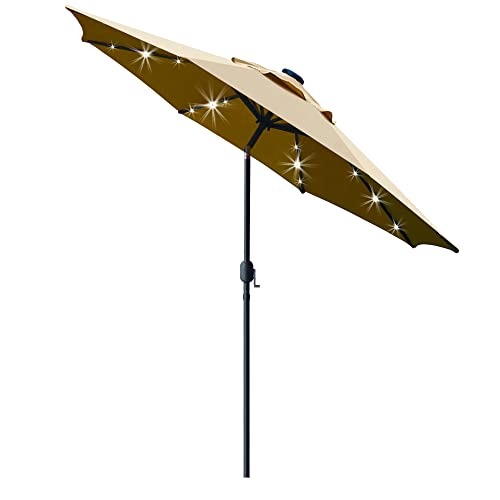
Key Takeaways
- Centre-pole designs remain the best all-round review verdict for a dining patio; cantilevers win for lounge layouts.
- Performance is decided by base weight, tilt range, and fabric care as much as by the canopy itself.
- The vent helps with heat and light gusts; it does not make any umbrella safe in strong wind.
- Buy the design whose weaknesses your patio and habits can absorb — every type has one.
In this guide
Patio Umbrella Review: Verdict in Brief
Suits: households with a defined seating or dining zone, a reasonably sheltered patio, and the willingness to close and cover the umbrella daily. Does not suit: exposed, gusty plots; anyone wanting permanent, think-free shade; or a space too small for a properly weighted base. Within those bounds, a well-chosen patio umbrella is one of the highest-value outdoor purchases a household can make, because it is used for hours at a time, all season, in the exact spot where the household already wants to be.
What a Patio Umbrella Is and Where It Fits
At its simplest it is a canopy on ribs, raised on a pole, held down by weight, and adjusted by tilt and sometimes rotation. Around that simple idea the market has built centre-pole, cantilever, wall-mounted, and commercial market variants, in sizes from small bistro canopies to structures that shade a whole lounge set. This review treats the mainstream home category: nine-to-eleven-foot centre-pole models and ten-to-thirteen-foot class cantilevers, the sizes that cover the great majority of patios.
Where it fits in the garden’s hierarchy is below permanent structures and above portable shade. It asks more commitment than a beach parasol — a real base, a storage corner, a care routine — and returns proportionally more: stable, adjustable, furniture-scale shade. Households upgrading from a flimsy starter umbrella usually find the step up is less about canopy size and more about mechanisms that work smoothly and a base that finally stays put.
Design, Build and Setup
Frames, Poles, Tilt and Crank: What Actually Differs
Centre-pole models put the pole through the middle of the table or into a base between chairs. They are the simplest, usually the lightest, and often the easiest to store. Their limitation is geometry: the pole occupies the centre of the conversation, and the shade moves only as far as the tilt allows. Cantilever, or offset, models hang the canopy from a side mast, leaving the space underneath completely clear. That freedom is genuinely useful over a lounge set, a hot tub surround, or a table you cannot put a pole through, but it comes with a larger footprint, a heavier ballast requirement, and more moving parts. Tilt mechanisms earn their keep in the morning and late afternoon. A simple push-button tilt gives a few set angles; a collar or auto-tilt linked to the crank gives finer control as you open the canopy. Whichever style you choose, tilt gently, support the canopy while you adjust it, and never force a joint that has stiffened — clean it, check for grit, and consult the manual before applying leverage. A tilt joint is a common failure point precisely because people adjust it under full wind load. Crank opening should feel smooth through the whole travel. A crank that grinds, slips, or needs two hands and a lean is a warning sign on a new product and a maintenance flag on an older one. Pulley-and-pin systems on simpler models are slower but have less to go wrong. Check rib construction too: flexible ribs that bow slightly under pressure can survive a gust better than brittle ones, while very thin ribs can take a permanent bend. Spare ribs, spare finials, and replacement canopies being available from the maker is a quiet but important sign of a product meant to be kept. Pole and frame finishes matter outdoors. Powder-coated metal and aluminium resist rust better than bare or lightly finished steel, and wooden poles look handsome but need their own care and can swell or split if neglected. Whatever the material, rinse off salt air and pool chemicals, dry joints before storage, and touch up chips in coated metal before they become rust spots that weaken a section.
In setup, the designs separate quickly. A centre-pole model can be standing and shading within minutes of the base being filled and levelled. A cantilever asks for assembly time, a level patch of floor for its ballasted base, and a check of its rotation arc against walls and shrubs. Neither is difficult; the cantilever simply punishes rushing. In this review’s judgement, buyers should allocate a calm hour for a cantilever’s first setup and treat the manual’s ballast figures as instructions, not guidance.
Build quality shows in predictable places: the hub where ribs meet the pole, the finish inside the tilt joint, the stitching at canopy corners, the feel of the crank at full extension, and the weight and flatness of the base. A canopy that opens with one rib lagging, a pole that flexes alarmingly when tilted, or a base that rocks on flat ground are all reasons to stop and correct — or return — rather than hope. Good examples of every design pattern feel boringly solid in these checks, and boring is exactly what you want.
Performance in Real Use
Over a Dining Table
This is the centre-pole’s home fixture, and it performs superbly: conversation flows around a slim pole more easily than folklore suggests, the canopy centres naturally over the food, and tilt rescues the last hour of a long lunch. Cantilevers perform equally well for shade and better for elbow room, provided the canopy is large enough to cover the table from its offset position at all sun angles you care about. The dining test that matters is the evening one — sit down at your usual dinner time and see whose shoulders are still in sun.
Over Loungers and a Reading Chair
Lounging exposes the centre-pole’s limit: the pole dictates the layout, and a reclined reader drifts out of the moving shadow. A rotating cantilever is the outstanding performer here, swung a few degrees at a time to keep one or two chairs shaded for hours. Tilt matters as much as size in this use, because the reader’s sun is usually low. If lounging is your main use, this review’s advice is unambiguous: prioritise rotation and tilt over an extra foot of canopy.
Poolside
By the water, priorities reorder: corrosion resistance, a base nobody can knock over mid-game, and a canopy that is closed the moment swimming ends. Performance is good from both main types in calm conditions, but the fall zone must be planned — an umbrella beside a pool should never be able to reach the water. Fabric gets splashed and dries repeatedly, so the rinse-and-dry routine matters more here than anywhere, and mould vigilance doubles in the humid poolside microclimate.
In Low Sun and Light Breeze
Low sun is where tilt earns its price and where honest reviews separate from brochures: a canopy that cannot tilt enough, or whose tilt joint slips under load, fails the evening test whatever its midday performance. In a light breeze, a vented canopy on a properly weighted base sits calmly; the same umbrella on a light base begins its slow creep and rock. Performance in wind should never be a selling point beyond this: in real wind, the correct performance is closed, tied, and covered.
Safety First: A Weighted Base Is Not Optional
An adequately weighted base is mandatory, not an accessory you can skip for a season. A patio umbrella is, in physical terms, a lever topped with a sail. The canopy catches wind across a wide surface, the pole multiplies that force at the base, and the whole assembly can tip over, lift out of its stand, slide across a deck, or snap at a joint. That risk is present even on days that feel merely breezy at ground level, because wind moves faster and gusts harder a few feet up where the canopy sits. Close the umbrella in wind and in storms, and never leave it open unattended. That single habit prevents most damage and most accidents. An open canopy left alone during a passing squall can be dragged, inverted, or pulled clean out of a light base, and it can strike furniture, railings, windows, or people on the way. When you go indoors, when you leave the house, and when a forecast mentions gusts, close it, secure the canopy with its tie, and, if the spot is exposed, lay it down or move it under cover. Cantilever frames need even heavier ballast than centre-pole models. Because the canopy hangs to one side of the mast, the overturning moment is larger and more constant, even without wind. Use the full ballast the maker specifies for that frame — filled base sections, slabs, or a properly filled cross base — and treat a half-filled cantilever base as an unfinished installation, not a saving. If a cantilever rocks, creeps, or lifts a corner of its base in a light breeze, add ballast and recheck the ground is level before using it again. Place the base on flat, firm ground, check that the pole sits vertically, and tighten every clamp and knob before the first use and periodically through the season. On decking, confirm boards are sound under the base. On pavers, avoid rocking on a raised edge. Around pools and play areas, keep the fall zone in mind: if the worst happened, where would the canopy land? A few minutes of placement thought is worth far more than any claim about a frame being sturdy.
Strengths and Trade-Offs
Strengths
- Adjustable, movable shade matched to hour and activity, with no building work.
- Wide range of types, sizes, and tiers, with replacement canopies on better models.
- Immediate comfort gain for dining, lounging, and children’s play on sunny patios.
Trade-offs
- Wind vulnerability governs ownership: weighted base, closing rule, no exceptions.
- Fabric fades over seasons and moulds if stored damp; upkeep is part of the product.
- Shade migrates with the sun; no single position covers every hour.
How It Compares: The Named Designs in Prose
The models below are named in prose so you can compare real, widely sold designs by type and tier. No model here carries a link, a price, or a specification stated as fact in this draft, because each one still needs verification against the retailer listing at publishing time. Use the descriptions to shortlist by design and tier, then confirm the exact canopy size, frame material, base requirements, and included parts on the current listing before you buy — and remember that the base is usually a separate, essential purchase.

Sunnyglade 9ft Patio Umbrella
Best for: a first umbrella over a modest dining table, where simple centre-pole shade at a gentle tier matters most
Not suited for: windy, exposed terraces, or anyone expecting premium fabric longevity from an entry design
The Sunnyglade design is the classic starter pattern in this category: a centre pole, a crank to raise the canopy, a tilt function for lower sun, and a vented top. For a small table and a sheltered patio, that combination covers the core job without the footprint or ballast demands of an offset frame, and it is easy for one person to open, close, and store.
Treat it as a fair-weather, supervised umbrella. Its appeal is simplicity and tier, not storm tolerance. Pair it with a properly weighted base, close it when the breeze picks up, and cover it when not in use, and it can serve a household well. Expect the fabric care and fading discussion elsewhere in this article to apply in full — at this tier, your cover and cleaning habits will decide how it looks in year three.
Tier positioning: entry tier. Check price on Amazon for the current listing, and confirm whether a base is included or must be bought separately before you compare totals with other models.

Best Choice Products 10ft Cantilever Patio Umbrella
Best for: households who want the clear space underneath an offset canopy without stepping straight to premium cantilever pricing
Not suited for: anyone unwilling to fill and place the full cross-base ballast a cantilever requires
An offset canopy changes how a patio feels: no pole in the middle of the table, no leaning around a mast to talk, and the freedom to shade a lounge chair or a corner sofa. This Best Choice Products design is a common entry point into that layout, typically offered with tilt adjustment and a crank, on a cross base that must be weighted down with slabs or filled weights.
The honest warning belongs right here: a cantilever on an under-weighted base is the most common unhappy purchase in this whole category. Budget the ballast, the ground space, and a few extra minutes of setup into the decision. If your patio is small or very exposed, a centre-pole model may honestly suit you better, even though the offset idea is more attractive in photographs.
Tier positioning: entry-to-mid tier for an offset design. Check price on Amazon for the current listing, and confirm whether a base is included or must be bought separately before you compare totals with other models.
Purple Leaf Cantilever Patio Umbrella
Best for: larger patios, lounge sets, and buyers who expect to rotate and adjust shade through the day and keep the frame for many seasons
Not suited for: small balconies, tight terraces, or anyone short on floor space for a large ballasted base
Purple Leaf has built its name in this category on substantial cantilever designs, with larger canopies, rotation at the base on many models, and a more engineered feel to the mast and arm. For a big seating area that moves between morning coffee and evening drinks, that adjustability is not a gimmick: rotating the canopy is far easier than moving furniture or a filled base.
Premium here should buy you smoother mechanisms, a sturdier arm, and better fabric options — confirm exactly which fabric and rotation features the current listing describes, because the range spans several sizes and configurations. The ballast rule does not soften at this tier; if anything, a larger canopy demands more respect for wind, weight, and the close-when-away habit.
Tier positioning: premium tier. Check price on Amazon for the current listing, and confirm whether a base is included or must be bought separately before you compare totals with other models.

Abba Patio 11ft Patio Umbrella
Best for: a big dining table or a wide seating area that needs a large centre-pole canopy without moving to an offset frame
Not suited for: compact patios where an eleven-foot canopy would overwhelm the space and catch unnecessary wind
A large centre-pole design like this Abba Patio model suits the classic setup — pole through the table, canopy above everyone — scaled up for a bigger table or a combined dining and lounging zone. The larger canopy gives a genuinely wider pool of midday shade, and a tilt function helps at the edges of the day, provided the table and base are up to supporting it.
Scale brings responsibilities. A canopy of this size needs a seriously weighted base, clear space to tilt without striking walls or shrubs, and disciplined closing in gusts. Measure your table, your chair pull-out space, and your storage corner before choosing the largest canopy on a list; the right size is the one that shades your seats and still stores neatly in winter.
Tier positioning: mid tier for a large centre-pole canopy. Check price on Amazon for the current listing, and confirm whether a base is included or must be bought separately before you compare totals with other models.

Grand Patio Deluxe Patio Umbrella
Best for: buyers who care about a more finished, furniture-like look and smoother everyday operation over a dining set
Not suited for: shoppers who want the cheapest route to shade, or a featherweight umbrella to move daily between spots
Grand Patio tends to present its umbrellas as part of the furniture rather than as camping equipment, with an emphasis on finish, canopy presentation, and a sturdier feel in hand. In a garden that is used as an outdoor room — matching chairs, cushions, planters — that coherence has real value, and a well-finished frame is also more pleasant to open and close every day.
Judge it on the same fundamentals as everything else here: base weight, fabric care, tilt behaviour, and spare canopy availability. A handsome umbrella that is left open in storms will fail just as completely as a plain one. If you will use and cover it daily in season, the step up in finish can be money well spent; if it will live in a shed eleven months a year, a simpler tier may be the honest choice.
Tier positioning: mid-to-premium tier. Check price on Amazon for the current listing, and confirm whether a base is included or must be bought separately before you compare totals with other models.
Blissun 9ft Patio Umbrella
Best for: a straightforward second umbrella, a rental property, or a small table that needs simple shade with a tilt for late sun
Not suited for: buyers seeking a long-service premium canopy, or very exposed sites where any entry frame will be stressed
The Blissun nine-foot pattern is another widely sold expression of the standard design: centre pole, crank lift, push-button style tilt on typical listings, and a vented canopy in a wide choice of colours. As a first or additional umbrella — over a bistro set, beside a lounger, at the shallow end of a pool deck — that simplicity is exactly the point.
Go in with clear expectations and you are unlikely to be disappointed: weight the base properly, keep the canopy covered when idle, wash off pollen and dust through the season, and store it dry. Where this tier shows its limits is in fabric fade over several sunny seasons and in hardware that rewards gentle handling, so operate the crank and tilt smoothly rather than forcing them.
Tier positioning: entry tier. Check price on Amazon for the current listing, and confirm whether a base is included or must be bought separately before you compare totals with other models.
Who Should Buy It and Who Should Skip It
Buy the centre-pole pattern if you dine at a table with a centre hole, want the simplest ownership, and have moderate space. Buy the cantilever pattern if you lounge, entertain across a wide set, or need shade where no pole can go, and you have the floor and the discipline for its ballast. Buy premium tiers if the umbrella will be operated daily for years; buy entry tiers for occasional, supervised use with eyes open about fabric ageing. Skip the category entirely if your plot is a wind tunnel or the umbrella would routinely stand open and unattended — a fixed structure is the honest alternative.
Before buying, run this checklist: measured furniture footprint and chair pull-out; shadow checked at your main hours; base weight and footprint confirmed for the exact model; storage length measured; mechanism operated, in a showroom or by a household member’s honest report; replacement canopy availability confirmed; and the household closing rule agreed out loud. Seven small checks that prevent nearly every disappointed review this category produces.
Setup, Care and Maintenance Essentials
Setup, Cleaning, Storage and Care That Prevent Most Problems
Set up in the right order: position and fill or weight the base first, confirm it is level and cannot rock, insert and secure the pole, and only then open the canopy — gradually, watching that ribs unfold evenly. If one rib sticks, close the canopy partway and free it by hand rather than cranking harder. Walk the full circle once opened: check head clearance, door swings, and where the shadow actually falls, and adjust position now, while everything is still easy to move. Clean little and often. Brush the canopy down when dry, wash with mild soap and lukewarm water and a soft brush or cloth, rinse thoroughly, and let it dry fully in the open position. Avoid harsh detergents, bleach mixtures, and pressure washers on canopy fabric unless the maker explicitly allows them; they can strip coatings, weaken fibres, and force water through seams. Clean the pole and base at the same time, empty and refresh sand or water ballast that has gone green or gritty, and check every bolt and clamp. Storage decides lifespan as much as summer use does. At the end of the season, clean and dry the canopy, close it, fit a breathable cover, and store the umbrella in a dry shed, garage, or indoor corner where it will not be crushed or left standing in pooled water. Store cantilever frames with the canopy lowered and secured and the base emptied if freezing temperatures could crack a water-filled section. Keep the manual and any spare parts with it, so spring setup is a check rather than a puzzle. Do a short start-of-season inspection every year: open slowly, look for frayed cords, cracked hubs, bent ribs, perished canopy ties, and rust at joints. Fix small things immediately. A frayed lift cord replaced in spring is a minor job; the same cord snapping under a raised canopy in July is a much worse afternoon. This routine, honestly followed, is what separates an umbrella that lasts many seasons from one that disappoints in its second summer.
Fabric, Honestly: Fade, Mould and Upkeep
No fabric is maintenance-free, and any suggestion otherwise should make you cautious. Outdoor canopy fabrics live in ultraviolet light, rain, pollen, dust, and bird visits. Colours will fade over time — deeper and brighter colours usually show fading sooner than pale neutrals — and the rate depends on how many hours of direct sun your patio receives and whether the canopy is closed and covered when not in use. A cover, used consistently, slows fading and keeps the canopy cleaner more effectively than any single fabric upgrade. Mould and mildew are the other honest cost. A canopy closed while damp, or stored while dirty, can develop spots and odours, especially in humid climates and shaded gardens where it dries slowly. The prevention is unglamorous: let the canopy dry open after rain before closing it for any length of time, brush off leaves and debris, wash it gently during the season, and never pack it away for winter until it is clean and fully dry. Spots caught early are usually a cleaning job; spots left for a season can become permanent staining. Understand the broad fabric families in plain terms. Standard polyester is common on entry-level models, light and widely available in many colours, and generally the fastest to fade. Heavier solution-dyed and branded outdoor acrylic and olefin fabrics are typically offered on mid-range and premium models and are generally marketed for better colour retention and weather resistance. Whichever family you choose, the care routine is the same, and a mid-range fabric that is covered and cleaned will often look better after three seasons than a premium fabric left open through every storm. Inspect the canopy as you would a tent: even stitching, reinforced corners where the ribs meet the fabric, a vent at the top that is properly finished, and no thin or shiny patches. The vent is functional, not decorative — it lets some wind pressure escape and helps hot air rise — but it does not make an umbrella safe to leave open in strong wind. Nothing does.
Final Verdict
Reviewed as a category, the patio umbrella earns a strong recommendation with explicit conditions. It is not the strongest shade structure, the most permanent, or the most carefree — it is the most adaptable, and for most patios adaptability is what gets used. Choose the type by layout, size it by shadow, weight it by instruction and then some, and operate it by the closing rule, and the design in this review will repay you in seasons of comfortable hours outside.
Planning Placement Like an Owner, Not a Photograph
Start placement planning with the furniture fixed and the people imagined, not with the umbrella. Put the table and chairs exactly where you eat, pull the chairs out as if someone were about to sit, and stand where the server or parent needs to pass. The base must fit inside that lived geometry without stealing the passing lane, and the pole or mast must not sit where elbows, chair backs, or a highchair need to be. Photographs hide all of this because nobody is sitting in them; your patio will be occupied, and occupied space is the only honest plan. Next, track the sun for one ordinary day before you commit to a position. Note, at the hours you use the patio, where the bright patch and the shadow of the house, fence, or trees actually fall. Chalk marks on paving are a wonderfully low-technology tool here. Many households discover their patio already has natural shade for one prized hour and brutal exposure for another, which means the umbrella only has to solve part of the day — and can be smaller, better placed, and tilted for that specific window rather than bought huge to fight the whole sky. Think about wind at the placement stage too, because position is a safety feature. A corner sheltered by the house wall experiences a different summer from an open edge aligned with the gap between two buildings. If you have a choice of two otherwise equal spots, choose the sheltered one, keep the canopy’s fall zone away from windows, glass doors, and the pool, and make sure the closed umbrella does not drip roof-like onto a doorway after rain. Small placement decisions, made once, pay out every single day of the season. Finally, plan the closed state, not just the open one. Where does the tied canopy sit relative to the door swing and the barbecue? Can you walk past the base at night without catching it? Is there a cover within reach, and a dry route to storage in autumn? An umbrella whose closed life is awkward will be left open to avoid the awkwardness — and that is precisely how the wind finds it. Design the boring states and the pleasant ones will follow.
Troubleshooting: The Problems Owners Actually Meet
A canopy that will not stay tilted usually has a worn or gritty tilt joint, or is being asked to hold an angle in wind it should not be open in at all. Clean the joint, check the button or collar engages fully, and support the canopy while adjusting so the mechanism is not fighting the full load. If the joint still slips on a calm day, treat it as a parts question — a model with manufacturer support turns this into a repair, while a model without support turns it into a countdown. A crank that grinds or a cord that frays is the umbrella asking for attention before it fails. Stop forcing it. Lower the canopy if you safely can, inspect the cord path for grit, twists, or a rib caught on fabric, and clean what you can reach. Fraying is not a cosmetic stage; a lift cord under load that parts suddenly drops a canopy, and replacing a cord at leisure is a different class of job from retrieving one in July. Keep the manual’s parts diagram — this is the moment it earns its drawer space. Rocking, creeping, or a pole that leans a little more each week is a base problem, never a personality trait. Recheck level ground, refill or add ballast, tighten clamps, and inspect the base for cracks or a slow leak if it is water-filled. On decking, confirm the boards beneath have not softened. If a cantilever’s base lifts a corner under its own canopy weight on a still day, the installation is under-ballasted by definition, whatever was printed on the carton, and the fix is weight, not hope. Spots, smells, and a canopy that stays damp point to the drying routine, not to mysterious fabric failure. Open the canopy fully on the next dry, breezy day, brush it down, wash gently if needed, and let it dry completely before closing. Check the storage corner for damp while you are at it. Most early mould is a timetable problem — closed wet on Sunday, opened spotted in June — and timetables are free to fix once you see them clearly.
Worked Examples: Three Patios, Three Right Answers
The first patio is a modest rectangle behind a terraced house: a four-person table, two loungers on Sundays, sun from late morning, and a fence that shelters the far end. The right answer here was the unglamorous one — a nine-foot class centre-pole umbrella through the table, on a properly filled base, with a cover used nightly. The loungers live in the fence’s afternoon shade, so the umbrella only had to win the lunch hours, which it does completely. A cantilever would have shaded everything and fitted nothing, its ballast island consuming the passing lane to the kitchen door. The second patio wraps a corner lounge set on a larger, open plot, used from morning coffee to evening drinks, with no table hole and no natural shade until late. Here the premium cantilever pattern earned its review: rotation followed the sun across the L-shaped seating, the mast stood outside the conversation, and the ballasted base doubled as the boundary of the seating zone. The owners’ discipline is the invisible feature — it is closed every night without exception — and their one regret is sizing the storage corner by optimism rather than by tape measure. The third case is a cautionary one: a wide, exposed deck where a large canopy was bought for its looks and based lightly to keep the deck clear. It rocked in ordinary breezes, was left open because closing it felt like admitting defeat, and a summer gust bent two ribs and scarred the deck. The replacement decision was smaller and smarter: a mid-size centre-pole design in the sheltered corner, honestly weighted, plus a shade sail over the exposed seating that never needs closing. The lesson generalises — when one product is asked to defeat a site’s physics, two humbler solutions usually beat it.
Questions Worth Asking Before Any Money Moves
Ask where the shade will be at the hour you care about most, and make the answer a place and a time, not a diameter. Ask what the base weighs when filled as the maker directs, where it will stand, and what stands there now. Ask who will close the umbrella on the day everyone comes home late and tired, and listen carefully to whether the answer is a name or a silence. Ask where it will sleep in January, measured, not guessed. Ask whether a replacement canopy exists for the model in front of you, because that single answer separates a purchase from a rental measured in summers. Ask, too, what problem the umbrella is solving that a moved chair, a different mealtime, or the shade you already own cannot solve more cheaply. Sometimes the honest answer is glare on a screen, or a grandparent who cannot sit in sun, or a table that bakes too hot to touch — specific problems with specific hours, all excellent reasons to buy. Sometimes the answer dissolves under questioning, and the money is better kept for the chairs, the plants, or the meal itself. A good purchase survives these questions easily; a weak one relies on them never being asked. Finally, ask how the household will behave in the first storm, because that behaviour is the product’s real specification. If the answer is a shrug, no tier of umbrella is the right purchase yet — agree the rule first, then buy the equipment the rule protects. If the answer is a person, a routine, and a cover hanging by the door, then almost any sensibly chosen, properly weighted model in this article will serve you well, and the remaining choice is simply which pattern your patio prefers.
One last practical note belongs in every version of this discussion, because it is where good intentions most often leak away: involve the whole household in the routine before the umbrella arrives, not after the first storm. The person who cooks, the teenager who clears the table, and the grandparent who takes morning coffee outside all need the same simple picture — the base stays weighted, the canopy comes down when the day ends or the wind rises, the cover lives in one known place, and a damp canopy gets opened again to dry rather than forgotten. Written nowhere and agreed by everyone, that picture is worth more than any single upgrade in frame or fabric, because equipment only ever performs as well as the habits around it. Households that treat these few behaviours as part of the furniture, rather than as chores attached to it, are the ones still pleased with their purchase when the third and fourth summers arrive.
patio umbrella reviews compared
comfortable outdoor chairs for a patio
patio chaise lounge chairs for longer afternoons
wicker patio sofas and loveseats
cleaner for patio furniture cushions
deck box for cushions and off-season storage
Detail by Detail: Reading a Patio Umbrella Listing Like an Inspector
Listings present a patio umbrella at its best, so this section slows the assessment down and looks at the evidence an individual model offers: its construction, its finish, its listing detail and the checks you can run before and just after it arrives. The aim is a verdict based on inspection rather than impression.
Start With Your Space and Your Routine
When you compare delivery options for a patio umbrella, factor in where the item will be left and who will move it to its final spot, since the last few metres are where damage and strained backs happen. Start by writing down the job the patio umbrella has to do in your home, in one plain sentence, before you look at another listing, because a clear job statement turns a long shortlist into a short one. Finally, judge the patio umbrella against the life you actually lead this year, not the tidier or more ambitious life in the listing photographs, and the choice will usually make itself. If a part of the patio umbrella can be replaced, refreshed or re-covered separately, that option can extend its useful life well beyond the point where a sealed design would be thrown out.
A closer look at any single patio umbrella should start with the unglamorous evidence: the underside, the back, the inside and the fittings, because review photographs concentrate on the angles that flatter it most. Seasonal checks suit most Garden & Lawn items well, so tie a quick inspection of the patio umbrella to a job you already do, such as changing clocks or clearing gutters. Apply the same checks to each shortlisted example, whether that is the Purple Leaf Cantilever Patio Umbrella; the Sunnyglade 9ft Patio Umbrella; the Grand Patio Deluxe Patio Umbrella, because consistent testing is what makes the differences between models visible. A patio umbrella that fits on paper can still fail in daily use if a doorway, a corner, a cupboard door or a walkway cuts into the space it needs, so trace the full path from delivery to final position.
When Small Problems Appear
A return is easiest when you have kept the packaging until you are sure, so give the patio umbrella a fair trial period in its real position before you break down boxes and dispose of padding. If you shop with someone else, agree the must-haves together before looking, so that the patio umbrella you choose is a shared decision rather than one person’s compromise discovered later. Guests notice different things than owners do, so if the patio umbrella will be used by visitors, test it from a fresh user’s point of view, without the habits you have already built around it. Where the patio umbrella has moving parts, work them through their full range during your first checks, listening and feeling for roughness that a photograph cannot show.
Take a break between shortlisting and ordering if you can, and return to the listings with fresh eyes, because fatigue makes almost any patio umbrella look acceptable late in a long search. Pay attention to how the patio umbrella is described for the parts you cannot see, and treat vague language there as a reason to ask questions rather than as reassurance. Check the dimensions given in the listing against your own measurements rather than relying on the room name in a photograph, since staged photos routinely make Garden & Lawn pieces look smaller than they are. Write down the three tasks you will do most often with the patio umbrella and score each shortlisted option against those tasks alone, ignoring features you are unlikely to touch.
Households with children or pets put different demands on a patio umbrella than the listing photographs suggest, so judge edges, stability and cleanability against your real household, not a styled one. Plan where the packaging and any old item being replaced will go on delivery day, a small step that prevents a rushed, careless first setup of the new patio umbrella.
A Short Decision Checklist
- What your current arrangement does badly that the patio umbrella must fix
- Packaging kept until the patio umbrella has passed its first trial in place
- Delivery path, from the door to the final position
- The one feature you will not compromise on
- The measured space, including clearance to use and clean around the patio umbrella
- Who will use the patio umbrella most, and any limits they have
- Where the patio umbrella and its accessories will be stored when not in use
- Assembly needs, tools required and whether help is needed
Taken together, these checks take only a little time, yet they answer the questions that decide whether the patio umbrella suits your home, your household and your routine, and they do so before money changes hands rather than after.
Frequently Asked Questions
How much base weight does a patio umbrella really need?
More than most first-time buyers expect, and the maker’s specification for your exact model is the starting point, not a suggestion to halve. Centre-pole umbrellas need a base heavy enough to resist both tipping and lifting, and cantilevers need substantially more because the canopy hangs off-centre. If the umbrella rocks, creeps, or lifts in a light breeze, it is under-weighted for your site, whatever the box said. Add ballast, check the ground is level, and never solve the problem by wedging the pole.
Can I leave a patio umbrella open overnight?
You should not. Overnight weather is unsupervised weather: a calm evening can turn into a gusty front while you sleep, and an open canopy can tip, lift out, or be damaged before anyone can close it. Close it, tie it, and cover it when you finish for the day. The habit takes a minute, protects the frame and fabric, keeps the canopy cleaner, and removes the most common cause of broken ribs and bent poles in home use.
Why does my umbrella shade the table at noon but not at dinner?
Because the shadow moves with the sun angle. At midday the sun is high and the shadow sits under the canopy; later, lower sun throws the shadow sideways and light pours in under the canopy edge. Tilt helps for part of that movement, a rotating cantilever helps more, and repositioning chairs is sometimes the simplest fix. When you buy, judge shade at the hours you actually eat and sit, not by the canopy diameter alone.
What should I check first when reviewing a patio umbrella in a store?
Operate it. Open and close the canopy fully, work the tilt through its range, and feel for grinding, slipping, or lagging ribs. Then inspect the hub, the canopy corners, and the stitching, and lift or rock the intended base. Mechanisms and joints reveal quality faster than any fabric label, and an umbrella that feels awkward new will not improve with a summer of use.
Is a vented canopy worth choosing?
Yes, as a standard feature rather than a premium one. The vent releases rising hot air and reduces pressure in light gusts, making the canopy sit more calmly in ordinary breezy moments. What it does not do is extend the safe wind limit in any meaningful way for home use — the umbrella still comes down in wind, vent or no vent.
Centre-pole or cantilever: which reviews better for most homes?
For a single dining table, the centre-pole reviews better on simplicity, tier, storage, and ease of living. For lounge sets, poolside seating, and tables without a centre hole, the cantilever reviews better on the shade it actually delivers. Most homes is doing real work in that question — your dominant activity, honestly named, picks the winner.