Affiliate disclosure: Daily Home Decorating participates in the Amazon Associates program and may earn from qualifying purchases through links in this guide, at no extra cost to you. Product images and listing details below were retrieved through Amazon Creators API. We have not physically tested these patio sets. Verify the current materials, dimensions, cushion covers, included pieces, care instructions, seller, and delivery terms before ordering.
The best wicker patio sofas and loveseats combine a frame and weave that suit your outdoor space with cushions you can care for through the seasons. “Wicker” describes a woven look, not one specific material. A patio set may use synthetic resin wicker, natural rattan, or another weave over a metal or wood frame. The name alone does not establish weather resistance, UV performance, or how the furniture should be stored.
Start by checking where the sofa will sit, how much sun and rain it receives, and whether you can cover or store it during rough weather. Then compare the frame, weave, cushions, dimensions, and included pieces. This guide explains the differences and shows three current marketplace listings to inspect. They are examples, not tested rankings or guarantees of outdoor durability.
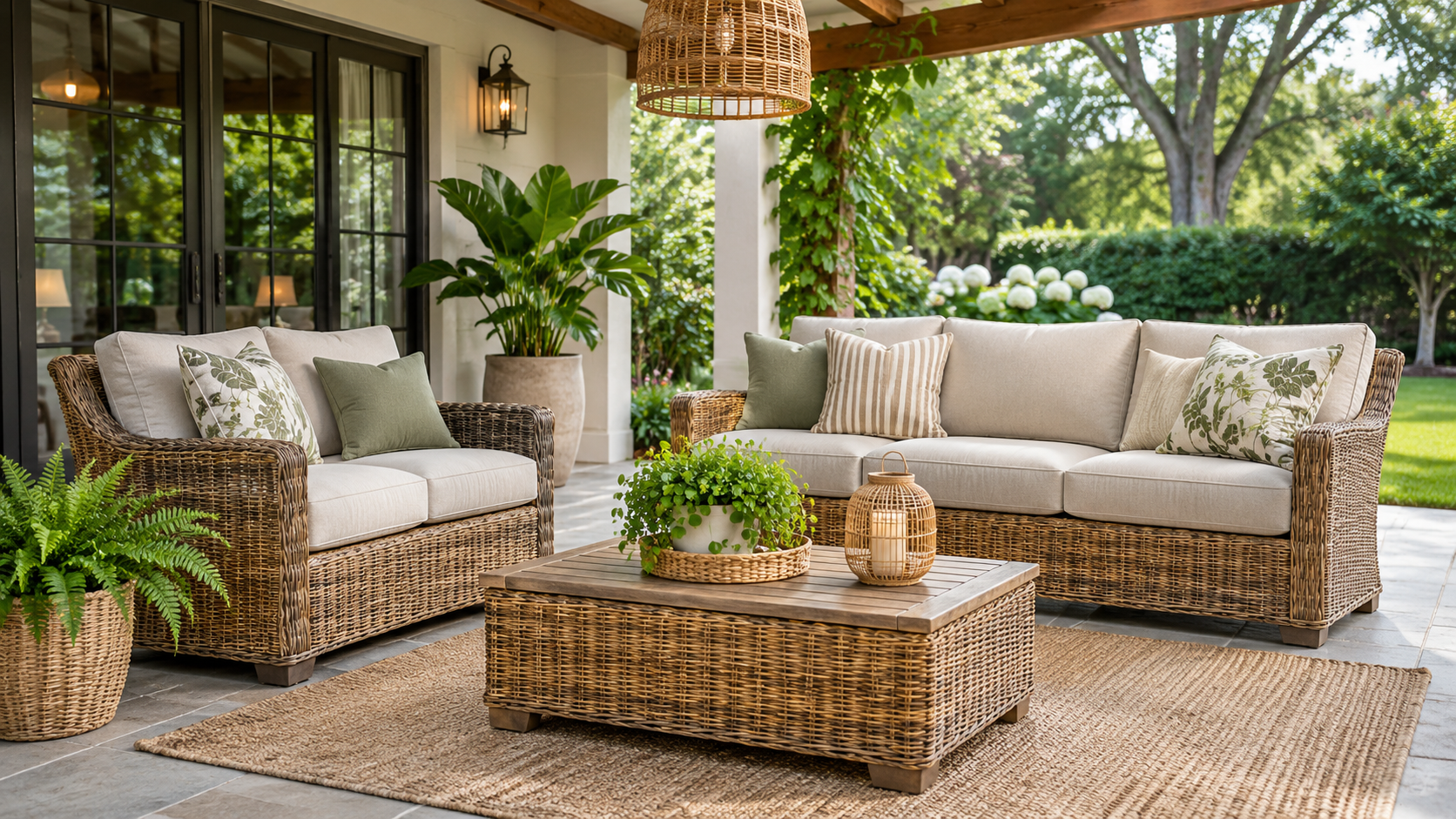
What “wicker” means for patio furniture
Wicker refers to a woven construction or appearance. Outdoor furniture marketed as wicker often uses synthetic resin strands woven around a frame, while natural rattan and other plant-based materials may be intended primarily for covered areas. Product listings can use the terms loosely, so read the full materials description. Ask whether the weave is natural or synthetic and what the manufacturer recommends for exposure to sun, rain, and temperature changes.
Synthetic resin wicker can be designed for outdoor use, but its performance depends on the resin, weave, frame, and manufacturing. Do not assume every resin weave has the same UV or weather resistance. Check the warranty and care directions for the exact product. If the set will sit in full sun or uncovered weather, confirm that the manufacturer permits that use.
Natural rattan has a different care profile from synthetic outdoor weave. It may be more appropriate for a covered porch or sunroom than an exposed patio, depending on the maker’s instructions. Confirm whether it can tolerate moisture and direct sun. If the product listing does not say, contact the seller before placing it outdoors.
Compare the frame under the weave
The frame supports the seat and the woven strands. It may be aluminum, steel, wood, or another material. Ask whether the frame is powder-coated or otherwise protected and how to maintain it. A product title that says “weatherproof” or “rust-resistant” should be checked against the full specification and warranty. The frame material matters, but joints, fasteners, and construction also affect how the set feels.
Inspect the weave for even spacing and secure ends. The listing images may show a close-up, but they do not prove how the product performs over time. Look for product details about strand thickness, frame construction, and weight capacity. Read reviews for repeated reports of loose strands, rattling, frame movement, or missing parts.
Check the legs and foot design for the surface where the sofa will sit. A patio set may rest on concrete, pavers, a deck, or a covered porch. Use manufacturer-approved pads if needed to protect decking or prevent movement. Do not place furniture where it blocks drainage or access to exterior doors.
Three API-listed wicker patio examples
These Creator API results show different outdoor wicker configurations. Listing titles describe the items but are not independent performance tests. Open the live page to verify the current material, frame, cushion fabric, exact set contents, dimensions, available color, and seller terms. Some marketplace listings group multiple variants or sets, so confirm that the selected option includes the sofa pieces shown.

This listing describes a three-piece patio set with a wicker loveseat configuration. Confirm whether chairs, a table, or a furniture cover are included in the selected option. Check frame material, cushion fabric, and whether the cover shown is part of the purchase. Compare the sofa dimensions with the patio before ordering.

This listing describes a five-piece outdoor wicker sectional set with a storage table and cushions. Verify the number of pieces, connector system, assembled dimensions, and whether the cushions have removable covers. A larger set may need more floor area than its main product image suggests. Leave enough space to walk around it and open doors.

This listing describes a two-seat outdoor wicker loveseat with a table. Check which parts are included, the frame and weave materials, and cushion-cover care. A compact loveseat may suit a small balcony or porch, but measure both the furniture footprint and the path to the seating area.
Measure the patio and access route
Measure the available length and depth, then mark the sofa or sectional footprint with tape. Include end tables, chaise modules, and space to pull chairs away from a table. Leave a practical path from the door to the yard or stairs. If the set includes several pieces, plan the layout before deciding whether the largest set is the best value.
Check the door opening, porch steps, gate, and any narrow path the delivery team must use. Ask for package dimensions and weight. Sectional sets may come in several boxes, but each one still needs to fit through the route. Confirm whether delivery is curbside or includes placement, and understand the return terms for oversized furniture.
Consider sun direction throughout the day. A sofa placed in direct afternoon sun may need more protection or a different cushion fabric than one kept under a roof. Keep the furniture away from drainage outlets and door swings. Do not block access to a grill, electrical panel, hose, or other outdoor utility.
Choose a loveseat, sofa, or sectional
A loveseat can be a good fit for a balcony, small porch, or compact seating area. It leaves room for plants or a side table. A straight sofa works well when several people need a shared seat along one wall. A sectional can create a conversation area in a larger patio, but its L shape may occupy more of the walking path.
Consider how many people use the patio and what they do there. If you serve meals outdoors, a conversation set with a table may be more useful than a deep sectional. If you read or lounge, a wider seat and cushions may matter more. Check whether the set’s tables are at the right height for drinks or snacks.
Modular pieces can be arranged in different ways, but verify how they connect and whether individual seats can stand alone. A set may look flexible in promotional photos while requiring a specific connector layout. Ask whether replacement pieces are available if you want to add seating later.
Cushions: comfort, covers, and storage
Check cushion thickness, fill, seat depth, and whether the cushions attach to the frame. A thicker cushion may feel comfortable but can take longer to dry if it gets wet. Ask what the cover fabric is made from and whether it can be removed and washed. A zipper does not automatically mean the cover is machine washable.
Some patio cushions are water-resistant, while others are designed to be stored when not in use. Water-resistant fabric does not necessarily mean the cushion is waterproof or suitable for prolonged rain. Read the care directions and dry cushions after they get wet. Store them in a ventilated, dry place when the manufacturer recommends.
Replacement cushion availability can affect long-term value. Check whether the set maker offers compatible replacement covers or cushions. If a cushion wears out, a nonstandard size may be difficult to replace. Measure the seat and back cushions and keep the model number with your purchase records.
For replacement cushion selection, see our guide to four-inch outdoor furniture cushions. For patio sofas that focus on cushion fabric, read our Sunbrella patio sofa guide. Verify whether a listing sells complete furniture or replacement cushions only.
Weather care and seasonal storage
Follow the manufacturer’s instructions for rain, sun, snow, and storage. A furniture cover can reduce exposure to dust and debris, but it should fit securely and allow ventilation as directed. Trapped moisture can encourage mildew or affect cushions. Remove and dry covers or cushions when required by the product instructions.
In windy areas, secure lightweight furniture or store it when strong winds are forecast. Do not rely on a cover to anchor the furniture. Check the frame and connectors periodically and tighten parts only as the maker allows. If the weave loosens or the frame becomes unstable, stop using the item and contact the seller.
At the end of the season, clean the sofa according to its care instructions and let it dry before storage. Store cushions separately if recommended. Keep the hardware and assembly guide in a dry place. If the furniture remains outdoors year-round, confirm the warranty explicitly covers that use and climate.
Cleaning wicker without damaging it
Dust the weave regularly with a soft brush or vacuum attachment if the manufacturer permits. Dirt can collect in the gaps between strands. Use only an approved cleaner and avoid pressure washing unless the maker specifically allows it. Strong jets or solvents may damage the finish, loosen strands, or affect the frame.
Clean spills on cushions promptly according to their care labels. Do not leave damp cushions stacked, because they may dry unevenly. If mildew appears, consult the manufacturer for the right cleaning method rather than applying bleach or a household product without checking compatibility.
Inspect the underside and frame joints occasionally. Look for corrosion, loose fasteners, cracked resin, or frayed weave. Keep a record of any repair and use replacement parts specified by the maker. A small issue may be easier to address before a strand loosens further.
Style wicker patio seating with the rest of the space
Wicker has a visible texture, so balance it with simpler surfaces nearby. A solid-color cushion can let the weave stand out, while patterned pillows can add color if the rest of the patio is quiet. Choose outdoor textiles intended for the conditions they will face and read their care directions. Do not assume an indoor pillow can stay outside.
Plants and planters can soften the seating area, but keep leaves and water away from cushions if they leave stains or moisture. Use side tables that are stable and appropriately sized. Keep the route to doors open and avoid overcrowding the patio with accessories.
Color choice can connect wicker with the house exterior, deck, and garden. Dark frames may create contrast; natural tones can blend with wood and landscaping. View swatches outdoors if available, because natural light can make a color look different than it does online. Check the product’s actual selected color before checkout.
Questions to ask before ordering
Ask what the weave and frame are made from, whether the set is intended for uncovered outdoor use, how the cushions should be stored, and what the warranty covers. Confirm the exact number of pieces, assembled dimensions, package dimensions, and whether the cushion covers are removable and washable.
For a sectional, ask whether modules connect, whether the layout can be reversed, and whether replacement modules are available. For a loveseat, check seat width and capacity. For a set with a table, confirm its dimensions and whether the tabletop material needs special care.
Get delivery details in writing. Ask whether the carrier brings the boxes to the patio or leaves them at the curb. Confirm the return window, return freight, and how to report shipping damage. Save the current product page and photograph the item when it arrives.
Common wicker patio sofa buying mistakes
- Assuming wicker is a single material with uniform weather resistance.
- Buying natural rattan for an exposed patio without checking care guidance.
- Comparing a loveseat set with a full sectional without checking included pieces.
- Ignoring cushion covers, drying, and replacement availability.
- Measuring only the patio and forgetting gates, steps, and delivery access.
- Leaving furniture in sun or rain beyond the manufacturer’s recommended use.
- Using pressure washing or harsh cleaners without approval.
- Assuming a “weatherproof” label covers every climate and season.
These issues can lead to poor fit, damaged cushions, or difficult returns. Check the exact materials and care instructions before deciding. A little planning makes it easier to choose a set that suits your outdoor space and maintenance routine.
Final checklist
Measure the patio and delivery route, choose the seating format, verify the weave and frame materials, check cushion care and replacement options, and read the warranty and return terms. Decide where cushions and covers will be stored. Follow the manufacturer’s guidance for weather exposure and cleaning.
The best wicker patio sofa is a set that fits the space and matches how you can care for it. Compare the exact construction, cushion details, dimensions, and delivery rather than relying on a product image or a general “outdoor” label. That makes it easier to enjoy the seating and maintain it through the season.
Understand synthetic wicker and natural weave labels
Retail listings may use “wicker,” “rattan,” “resin wicker,” and “PE wicker” in titles or bullets. These words do not always identify the full construction. Ask whether the strands are synthetic or natural and what the frame is made from. A synthetic woven look over an aluminum frame differs from a natural rattan chair or a product with a wood base. The exact combination affects care and placement.
Some manufacturers describe resin wicker as suitable for outdoor use, but exposure conditions still matter. A covered porch, a shaded patio, and an open rooftop receive different amounts of sun, rain, and wind. Check the product instructions for the intended setting. If the seller cannot confirm whether the furniture can stay uncovered, plan to store or cover it until you have an answer.
Look at how the weave ends are finished around corners and seat frames. The product photo may not show the underside or hidden joins. Ask if the manufacturer provides replacement strands or repair guidance. If the weave is damaged, a repair may require a matching material and specific technique.
Check how the sofa is assembled
Outdoor sofa sets may require attaching arms, legs, tables, or sectional connectors. Read the assembly instructions before ordering and confirm what tools are included. Keep hardware out of the grass and store it in a labeled bag while assembling. Do not overtighten fasteners or substitute parts that do not match the manual.
For modular sets, connect pieces only in the positions described by the manufacturer. A connector helps keep sections aligned but may not be designed to anchor the furniture against wind. If the set shifts on a slick deck, ask the maker about approved pads or restraints. Do not drill into a deck or patio without checking the surface requirements and obtaining any needed permission.
After assembly, check that the legs sit evenly and the set does not rock. Test the seating with gradual pressure and check the fasteners again after initial use if the manual recommends it. Stop using a seat if the frame flexes abnormally or a connection loosens.
Plan for cushions in changing weather
Even a patio cushion sold with outdoor furniture may need to be brought inside during rain or seasonal storage. Ask whether the cover fabric is water-repellent, quick-drying, or designed for a particular exposure. These labels describe different qualities and should not be treated as interchangeable. Follow the cleaning label and store cushions in a dry, ventilated location when recommended.
Choose a storage box or closet with enough space for cushions without compressing them. Avoid sealing damp cushions in a plastic container. If cushions are wet, stand them upright or lay them out to dry according to the maker’s instructions. Do not return them to the seat while moisture remains in the filling.
If the product includes a cover, confirm whether it is a weather cover for the whole sofa or a set of cushion covers. A furniture cover should be sized for the exact layout and secured as directed. Check it after windy weather and make sure it does not trap moisture against the furniture.
Think about shade and heat
Patio furniture may become hot in direct sun, particularly dark frames and surfaces. Observe the patio during the times your household uses it and consider an umbrella, awning, or pergola if shade is needed. Confirm that any shade structure is installed according to its own instructions and does not create a hazard in wind.
Place the sofa so that sunlight does not make the seating uncomfortable at the hours you expect to use it. A shaded location may also reduce exposure to outdoor elements, though it does not eliminate the need for maintenance. If you move the set seasonally, make sure the new layout still leaves a path to the door and garden.
Consider evening lighting too. A porch light or low-voltage path light can make the seating easier to use after dark. Keep electrical cords out of walkways and follow the product instructions. Do not run indoor-rated extension cords outdoors.
Compare furniture sets by actual included pieces
A product page may show chairs, a sofa, a coffee table, and decorative accessories together. Confirm which pieces are included in the selected variant and whether cushions come with each seat. Some pages let buyers choose a loveseat, sectional, or full set from one menu. The default selection may not match the photo.
Write down the piece count and each item’s dimensions. If the table is separate, include its cost and delivery. Check whether cushion color changes with the configuration. A complete conversation set may be a better value than buying pieces separately, but only if the included layout suits the patio.
Compare the return policy for each item in the set. A missing cushion or damaged table may have a different remedy from a problem with the sofa. Keep the cartons until you have inspected all pieces and confirmed that the assembly parts are present.