Disclosure: As an Amazon Associate, dailyhomedecorating.com earns from qualifying purchases. Links on this page are affiliate links; they cost you nothing extra. Prices and availability change often, so check the current Amazon listing before you buy.
So, is a loveseat worth it? Short answer: worth it if your room is small, your household sits in twos, and you want a real, lasting seat rather than a placeholder — not worth it if you regularly host a crowd, nap stretched out daily, or are buying it as a cheap stand-in for the sofa you actually need. The longer answer, with the real costs and the households that win and lose, follows in full.
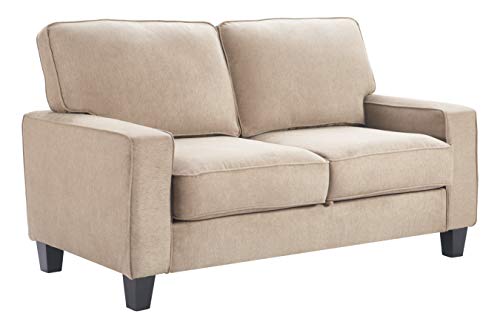
Key Takeaways
- Worth it for: couples, small rooms, second-seat roles, reading corners and guest-friendly sleeper versions.
- Not worth it for: large households, daily full-length napping, or anyone who needs a third seat every week.
- The hidden costs are space discipline, cushion care and delivery logistics — not money alone.
- A loveseat bought for a defined job repays its cost in daily use; a vague compromise repays nobody.
In this guide
What You Actually Get When You Buy a Loveseat
A loveseat earns its keep in more roles than any other seat in the house. It is the apartment sofa, the second seat in a family room, the reading perch in a bedroom corner, the waiting bench in a wide hallway, and the conversation pair-maker opposite a full-size sofa. That versatility is exactly why honest sizing matters: a piece bought to do everything often does the main job worst. Decide the primary role first — daily main seating for two, occasional guest seating, or a decorative anchor that gets used lightly — and let every later decision about depth, fill and fabric serve that role before the secondary ones.
Two people sharing a loveseat is an intimate arrangement, and that is both the charm and the catch. There is no spare middle seat to absorb a handbag, a sleeping cat or a teenager’s sprawl. Couples who like sitting close call this the whole point; households who value personal space during long films may find a small sofa kinder. Seat width per person, arm height and cushion division all shape the truce: a single bench cushion feels roomier and more modern, while two defined seat cushions give each sitter a clear territory and stop the slow slide toward the middle.
Sleepers and recliners add machinery, and machinery adds rules. A sleeper loveseat turns a small room into a guest room, but the mattress, mechanism and folded bedding all compete for the same compact frame. Always check a sleeper-sofa mechanism before folding it away with bedding inside — trapped bedding strains hinges and can tear fabric — and fold sheets flat or store them separately if the maker advises it. Reclining mechanisms have pinch points, so keep children’s and pets’ hands and paws clear of the moving parts, operate the recline slowly, and never let anyone reach under a raised footrest. Test the full open-and-close cycle while the room is empty and calm, not with an audience perched on the arms.
What you actually get, beyond two seats, is proportion. A loveseat gives a small room a genuine focal point without consuming it, gives a large room a flexible second act, and gives two people a seat that encourages conversation rather than parallel screen-watching from opposite ends of a long sofa. You also get manoeuvrability: a loveseat can move rooms, survive a house move and find a second life in a bedroom or office in a way a full sofa rarely does. That second-life value is real money over a decade, even though it never appears in a listing.
The Real Costs Beyond Money
Tipping and stability deserve a calm sentence in every furniture plan. A tall, narrow piece — a high-backed loveseat pushed into service as a room divider, or any seat a child might climb — should be anchored or positioned so tipping is not a risk, following the principle that if it can rock, it can fall. Keep heavy objects off high backs and arms, teach children that arms are not steps, and place the piece on a level floor so all feet share the load. On uneven floors, shim or adjust until the frame sits square; a loveseat that rocks will loosen its own joints over time.
Moving a loveseat is a two-person job, full stop. Plan the route, clear it, remove cushions and legs where the design allows, and lift with two people sharing the weight evenly rather than dragging the piece by an arm, which twists the frame and can tear upholstery. Use sliders on hard floors and a blanket on corners for tight turns. A two-person lift protects backs as much as furniture: bend at the knees, agree the route and the resting spots in advance, and set the piece down rather than pushing on if a doorway fights back. Doors come off hinges more easily than loveseats come apart, and a calm ten minutes of preparation beats a scratched wall and a strained shoulder.
Care is mostly rhythm, not effort. Vacuum upholstery weekly with a soft brush attachment, working into the creases where grit collects and quietly saws at fibres. Rotate and plump cushions on the same schedule so wear stays even. Blot spills immediately rather than rubbing them, test any cleaner on a hidden patch first, and keep strong sunlight from camping on one arm all summer — a curtain, a throw or a seasonal shuffle of position all help. Wooden legs appreciate a dust and an occasional wipe; metal mechanisms appreciate being kept free of crumbs and pet hair. Small, regular attention is what separates a loveseat that looks loved at year five from one that looks tired at year two.
The non-money costs deserve plain speech. A loveseat demands honesty about capacity: guests perch on arms, teenagers overflow onto the floor, and the household must accept that this seat serves two. It asks for rhythm in care — cushion rotation, prompt spill blotting, a weekly vacuum — because two seats show wear faster than three sharing the same use. And it asks for delivery discipline: measuring doorways and stairs before ordering, planning a two-person lift for every future move, and checking any reclining or sleeper mechanism with hands and paws kept clear of pinch points. None of these costs is large; all of them are real, and households that resent them should buy something else.
Is A Loveseat Worth It for These Households?
The Couple in a Small Home
For two people whose main seat this will be, a well-chosen loveseat is not a compromise at all — it is the correct size of sofa, with money and floor space left over for the table, lamp and rug that make a room feel finished. The worth-it case is strongest here, provided the pair chooses comfort honestly: supportive enough for long evenings, with fabric that forgives their real habits.
The Family Adding a Second Seat
Opposite a main sofa, a loveseat completes a conversation layout and absorbs overflow without another bulky three-seat. Families report the loveseat becoming the contested favourite — close enough for two, defined enough to feel like your own spot. It earns its place if the room passes the tape test with both pieces in it; if the layout only works by squeezing, a single good armchair serves better.
The Reader, the Renter and the Guest-Host
A bedroom or study loveseat turns dead corner space into the most-used seat in the home for readers. Renters gain a seat that moves house gracefully — two-person lift, fits most doorways, works in the next flat too. Occasional hosts gain real value from a sleeper version, provided they test the mechanism, fold bedding correctly and check the mechanism before folding it away with bedding inside. Each of these roles has a clear job, and clear jobs are where loveseats shine.
Who Should Skip a Loveseat
Skip it if your evenings regularly involve three or more people wanting the good seats, because a loveseat plus apologies is worse than a sofa that fits everyone. Skip it if your main relaxation is stretched out full-length every night; a chaise or a sofa with a chaise end serves that body honestly. Skip it, too, if you are furnishing a cavernous room as the only seat — a lone loveseat in a large space looks lost and seats too few, and no styling trick fully rescues the mismatch. Finally, skip the cheapest tier if the piece will be your main daily seat; heavy daily use is exactly where entry construction shows its limits first.
Start with the room, not the catalogue photo. A loveseat lives or dies on proportion: how much wall it takes, how much floor it leaves for movement, and whether two people can sit down without negotiating for elbow room every single evening. Photograph your room from the doorway, note where people naturally walk, and mark the footprint on the floor with painter’s tape before you fall for any particular style. Living with the tape outline for a day teaches you more than an afternoon of scrolling, because you feel the pinch points — the corner that catches your hip, the coffee table that suddenly sits too close, the door swing that now clips the arm.
Measure three separate things and write them down. First, the space itself: wall length, depth available once walkways are respected, and the distance to the nearest facing seat or table. Second, the delivery path: every doorway, hallway turn, stairwell and landing between the street and the final spot, measured at its narrowest point. Third, the piece itself, using the maker’s stated overall width, depth and height rather than the seat dimensions alone. Measure doorways and stairs before ordering, not on delivery day, and compare the tightest point on the route with the smallest dimension of the packed or unpacked piece. If the numbers are close, choose a design with removable legs or a knock-down back, and keep the original packaging until the loveseat is in place and you are sure it stays.
Frames decide lifespan more than fabric does. A well-built frame feels planted: no creak when you sit on one corner, no wobble when you lean on an arm, and joints that stay silent when two people shift at once. Hardwood and properly engineered frames generally hold their shape longer than soft, fast-grown timber, while corner blocking and reinforced joints resist the racking forces that moving day and daily use apply. You cannot see most of this in a listing photo, so read the construction description carefully, favour makers who describe their joinery plainly, and treat vague language about sturdiness as a prompt to keep looking rather than as reassurance.
Strengths and Trade-Offs of Owning One
Strengths.
- Right-sized comfort for two, without the floor footprint of a full sofa.
- Flexible across rooms and house moves — a genuine second life in bedrooms, offices and hallways.
- Anchors small rooms and completes conversation layouts in large ones.
Trade-offs.
- Capacity stops at two; a third sitter is always improvising.
- Wear concentrates on two seats, so care and cushion rotation matter more.
- Compact frames leave less room for deep lounging, thick mechanisms or sprawling postures.
Alternatives to Consider Before You Decide
A small three-seat sofa is the obvious rival: a little more floor, a lot more forgiveness for guests and nappers. A pair of generous armchairs offers flexible layout and personal space, at the cost of the shared closeness that defines a loveseat. A sofa bed in full size suits hosts whose guests stay often and long. A sectional suits corner-driven family rooms — a comparison this cluster examines directly in its loveseat versus sectional guide. None of these is better in the abstract; each is better for a specific household, which is why the decision checklist below matters more than any verdict.

Serta Palisades Loveseat — Plush Everyday Comfort
The Serta Palisades loveseat line is a comfort-led line from a brand better known for mattresses, generally positioned around plush everyday sitting and straightforward apartment-friendly assembly. Treat it here as a prose reference point rather than a linked recommendation: availability, colours and construction details change, and this guide deliberately makes no claim about its current listing until verification is complete. Judge it the way this guide judges every candidate — by the frame description, the cushion construction, the fabric in your hand as a swatch, and the fit against your taped floor outline.
Best for: households whose priorities match plush everyday comfort. Not suited for: anyone expecting it to solve a problem it was never sized for — a compact two-seat cannot host a crowd, and a formal silhouette will not turn into a lounger because you wish it would. If this line makes your shortlist, measure your delivery route against its stated overall dimensions, order the swatch, and check the current Amazon listing before you buy.
Stone & Beam Bradbury Loveseat — Formal Classic Styling
The Stone & Beam Bradbury loveseat line is a classic Chesterfield-inspired line with tufting and rolled arms, positioned as a more formal, premium-feeling centrepiece for traditional rooms. Treat it here as a prose reference point rather than a linked recommendation: availability, colours and construction details change, and this guide deliberately makes no claim about its current listing until verification is complete. Judge it the way this guide judges every candidate — by the frame description, the cushion construction, the fabric in your hand as a swatch, and the fit against your taped floor outline.
Best for: households whose priorities match formal classic styling. Not suited for: anyone expecting it to solve a problem it was never sized for — a compact two-seat cannot host a crowd, and a formal silhouette will not turn into a lounger because you wish it would. If this line makes your shortlist, measure your delivery route against its stated overall dimensions, order the swatch, and check the current Amazon listing before you buy.
How to Get the Most Value If You Buy
Styling a loveseat is an exercise in scale. A pair of cushions in a contrasting texture usually beats a crowd of small ones that leave nowhere to sit. A throw belongs folded over one arm, ready for use, not arranged like a shop display nobody may touch. Side tables should sit roughly level with the arm so a drink lands safely, and a lamp behind or beside the seat turns it into a reading corner rather than a waiting area. Rugs should reach at least under the front legs so the piece feels anchored to the room instead of parked on it. Leave breathing room around the piece where you can; a loveseat with a little air on each side looks intentional, while one wedged wall-to-wall looks like a measuring mistake.
Budget thinking works best in tiers rather than fixed numbers. Entry-tier loveseats prioritise getting a presentable, comfortable two-seat into the room and often ask for assembly at home. Mid-tier pieces usually spend the extra on frame construction, denser cushions and fabrics that age more gracefully. Premium tiers buy joinery, upholstery tailoring and design detail you feel in daily use rather than see in photos. Whichever tier you choose, reserve a little of the budget for the unglamorous essentials: swatches, delivery that includes placement rather than doorstep drop-off where you need it, protective pads, and a throw or cover if your household includes muddy paws. Check the current listing before you buy, since ranges, colours and availability change often.
Delivery day rewards preparation. Clear the route, prop doors open, protect floors and corners, and have the tape outline waiting so the piece lands in the right spot the first time. Inspect the loveseat before signing anything: sit on both seats, check seams and legs, work any mechanism through its full cycle, and photograph anything that looks off while the delivery team is still present. Keep packaging until you have lived with the piece for a few days and passed the return window’s early tests, because repacking a loveseat from scratch is a puzzle nobody enjoys. Once it is placed, resist rearranging everything else the same evening; live with the new anchor for a week and let the room settle around it.
Value multiplies with small disciplines: swatches before ordering, the tape test before committing, packaging kept until the trial week passes, and a two-person lift — never a solo drag — for every rearrangement. Place the loveseat where it will genuinely be used daily rather than where it photographs best, anchor or position any tall, narrow arrangement so tipping is not a risk, and let the first month teach you where the lamp, table and throw actually belong.
The Decision Checklist
- Do exactly two people use the main seat most evenings?
- Does the taped footprint leave walkways genuinely comfortable?
- Does the delivery route pass the measurement test with margin?
- Is daily full-length napping rare enough to ignore?
- Will the fabric forgive your household’s real mess?
- Does the budget tier match how hard this seat will work?
- If two or more answers are no, is a small sofa honestly the better buy?
Score it plainly: five or more yes answers and a loveseat is very likely worth it for your home. Three or four, and the worked examples earlier in this guide probably contain your household — read them again before deciding. Fewer than three, and the kindest purchase is the sofa, chairs or sectional your answers keep pointing to.
Sustainability and longevity are the same conversation here. The loveseat that serves ten years beats three cheap replacements on every measure that matters: cost over time, waste, and the daily pleasure of sitting on something that still feels solid. Repairable designs, replaceable covers and makers who sell spare legs or cushions extend that life further. When a loveseat does reach the end, donate, sell or pass it on if it is sound, and recycle textiles where facilities exist. Buying once and buying well is not a slogan; for the biggest soft furnishing in a small room, it is simply arithmetic.
Small rooms ask the most of a loveseat, and reward it the most. In a studio or small apartment, the loveseat is often the entire sofa, the guest seat and the visual anchor at once, so every compromise shows. Raised legs, lighter colours and a shallower depth keep the room breathing, while storage arms or a sleeper mechanism can earn back the inches elsewhere. Resist the urge to pair a loveseat with two bulky armchairs in a small space; one loveseat, one light chair and open floor will feel more generous than a full suite squeezed in. The goal is a room that invites sitting, not a furniture showroom that forbids walking.
In larger rooms the loveseat changes jobs. It becomes the supporting seat: opposite the main sofa for conversation, angled by a fireplace, paired with its twin across a rug, or standing alone as a bedroom or library perch. Here the risk is not crowding but insignificance — a small piece adrift in a big room needs anchoring with a rug, a table and lighting that define its territory. Matching the main sofa exactly is optional; echoing a colour, a leg finish or a fabric family is usually enough to make the pairing look chosen rather than accidental.
best apartment sectional sofas
best sofas for homes with kids
Worth It, Revisited: The Everyday Evidence
Hosts should think about the geometry of offering a seat. A loveseat invites a guest to sit beside you, which is warm for friends and family and occasionally presumptuous for a new acquaintance who would prefer their own chair. Rooms that regularly receive mixed company do well to pair the loveseat with at least one independent seat, so guests can choose their own degree of closeness. That choice is a small courtesy that good hosts engineer into a room without ever mentioning it. The loveseat remains the favourite seat for the people who know each other best, which is exactly the hierarchy most households want.
Children change the calculation in predictable ways. A loveseat at child scale is a sofa a small person can climb onto, curl across and claim entirely, and many families find it becomes the children’s seat by popular vote. Choose accordingly: forgiving fabric, cushions that survive being rearranged into forts, and a frame that tolerates being a landscape. Keep the standing safety rules in view — mechanisms and pinch points are adult territory, tall narrow pieces get anchored or positioned so tipping is not a risk, and arms are for arms, not for standing on, however often the rule needs restating in the early weeks.
Dogs and cats cast their own votes. Dogs tend to claim one end of a loveseat and defend it as ancestral land; a washable throw stationed at that end converts the claim into a manageable arrangement. Cats prefer height and texture, and a loveseat back in a sunny spot will be occupied territory within the week — a fabric that releases hair under a brush or vacuum is the pragmatic response. In both cases the household that plans for the animal’s actual behaviour, rather than the behaviour in the training manual, keeps both the furniture and the peace in better condition.
Seasonality is an underrated test. A loveseat that is perfect in January — deep, warm, layered with throws — should still be pleasant in July, when the same depth can feel like a wool coat. Removable layers are the answer: throws and cushion covers that rotate with the seasons let one piece serve both. Light-coloured summer covers over a darker base, or simply stripping the piece back to its clean lines in hot months, refreshes a room for the cost of storage space. Households in strongly seasonal climates should ask, before buying, how the candidate will feel at the opposite end of the year from the purchase date.
Think about the view from the loveseat, not just the view of it. The seat you use daily deserves the room’s best outlook — a window, a fireplace, artwork, or at least the room itself — rather than a blank wall and the back of a door. When you tape the footprint, sit on the floor inside the outline and look where your eyes will actually rest. This ten-second test has redirected more loveseat placements than any styling rule, and it explains why some beautifully arranged rooms feel oddly unrewarding to sit in while plainer rooms become favourites.
Electrical reality deserves one practical paragraph. Lamps, chargers and the occasional recliner motor all need sockets, and a loveseat floated in the middle of a room can strand its sitters far from power. Plan the lighting and charging around the placement before the piece arrives: a floor lamp with its own presence, a side table that hides a charging cable gracefully, and no cords trailing across walkways where feet and vacuum cleaners will find them. Reclining models need their power or battery arrangements understood in advance, so the mechanism never sits idle for want of a socket nobody planned.
The second-hand and hand-me-down route deserves respect in any honest guide. A sound used loveseat with a good frame can be the smartest seat in the house, especially for spare rooms, first homes and children’s eventual flats. Inspect it like a new purchase: sit on both seats, check the frame for creaks and wobble, smell the upholstery with your guard down, and ask about pets, smokers and mechanism history where relevant. Budget for a professional clean and possibly new cushion inserts, plan the two-person lift and route measurement exactly as for a delivery, and a used loveseat can deliver years of service that shame many new purchases.
Renters face a specific version of every question in this guide, sharpened by deposits and doorways. A loveseat is often the largest seat that reliably survives a rental career: it passes most stairwells once measured, fits most living rooms once taped, and leaves with you intact. Protect the landlord’s floors with pads from day one, keep wall clearance so backs do not scuff paint, and photograph the room’s condition around the placement. When the next home is bigger, the loveseat graduates to second-seat duty rather than the skip, which is the renter’s version of a pension plan for furniture.
A word about trends, because loveseat silhouettes cycle like everything else. Curved backs, boucle textures, low-slung profiles and statement colours each have their season, and each season’s photographs look dated on a schedule nobody controls. The households that stay happiest longest tend to buy the silhouette and fabric as durable neutrals and let cushions, throws and art carry the trend of the moment — the replaceable layers absorb fashion’s churn while the expensive frame stays out of it. If you love a bold current style, buy it knowingly and enjoy it fully; just do not mistake a trend purchase for a decade purchase, because the care and budget decisions differ.
Accessibility is a genuine design consideration, not an afterthought. A seat that is too low or too deep can turn sitting down and standing up into a daily negotiation for older sitters or anyone with limited mobility. Firmer cushions, supportive arms at a helpful height and a seat that lets feet rest flat make a loveseat welcoming across generations. If grandparents are regular and beloved guests, include their sit — and their rise — in your trial week, because a loveseat that works for every generation in the family earns a kind of value no specification sheet captures.
Finally, remember that a loveseat is bought for evenings, not for photographs. The right test of every claim in this guide is a Tuesday: work done, light fading, two people or one settling into the seat with a drink and nowhere to be. Furniture that serves Tuesdays faithfully will serve celebrations without trying. Keep that ordinary evening in mind through every measurement, swatch and comparison, and the purchase tends to make itself — calmly, correctly, and without a return label in sight.
Consider the light in the room before you finalise anything. A loveseat placed opposite a window lives in silhouette for half the day and in glare for the other half, and fabrics read a full shade darker or lighter depending on where the piece sits. Move the tape outline, not just the colour swatch, through the room’s light: morning, midday and lamplight each cast a vote. Deep colours anchor bright rooms beautifully and can swallow a dim one, while pale upholstery in a sun-washed room may need texture — a weave, a cushion, a throw — to keep it from reading flat. The loveseat you see in the listing was photographed under studio light that your room will never reproduce, so your own room’s light is the only honest showroom you have.
Think about sound, too, because soft furniture is acoustic furniture. A loveseat absorbs the echo that makes small hard rooms feel restless, and a room with a rug, curtains and an upholstered two-seat simply sounds calmer than the same room with hard seating alone. If your living room rings when people talk, a fabric loveseat is part of the cure. Leather and tight weaves reflect a little more sound than deep fabric upholstery, a small point that matters in media rooms and open-plan spaces where the television and conversation compete. None of this appears in a specification list, yet households notice it within the first evening and appreciate it for years.
The Long View: Years Two to Ten
Noise from mechanisms and frames tells a story over time. A new loveseat should sit silently: no creak at the corner, no spring complaint when the heavier sitter lands, no mechanism clunk that startles the room. Small sounds in week one rarely shrink; they are the frame’s early autobiography. During the trial period, sit deliberately on every part of the piece, work recliners and sleepers through quiet cycles, and listen the way you would in a silent house at midnight. Reporting a noise inside the return window is a simple conversation; living with it for a decade because the window quietly closed is a familiar and avoidable regret.
The relationship between a loveseat and its rug deserves precision. The rug should extend beyond the loveseat’s footprint on the sides your feet use, so heels rest on softness rather than a hard edge, and the front legs at minimum should stand on the rug to anchor the grouping. A rug that is too small makes even a good loveseat look provisional, as if it were visiting the room. If a new rug is not in the budget, rotating an existing rug or borrowing one from a quieter room often solves the geometry for free. Proportion here is not decoration; it is the difference between a seat that belongs and a seat that is merely present.
Wall art and shelving above a loveseat follow the same proportion logic. A single wide piece or a balanced grouping that spans most of the loveseat’s width ties the seat to the wall and completes the zone; a small lonely frame floating high above achieves the opposite. Keep the bottom of any arrangement high enough that a tall sitter’s head never threatens it, and anchor anything heavy with proper fixings rather than optimism. In homes with children, treat the wall above a climbable seat with the same caution as the piece itself — what hangs above furniture should be as secure as the furniture is stable.
Temperature comfort is a fabric story too. Leather feels cool at first touch in summer and chilly in an unheated winter room until body warmth wins; deep fabric upholstery feels neutral year-round but holds warmth on hot evenings; textured weaves breathe a little better than flat ones. None of this decides a purchase alone, yet households in extreme climates feel it daily. A throw is the great equaliser in winter, and a light cotton cover or simply choosing the shadier placement answers most summer complaints. Buy for your climate’s majority, and layer for its extremes.
Consider the loveseat’s role in the room’s traffic of objects. Coffee reaches it, books accumulate on it, remotes migrate into its creases and chargers colonise its arms. A small tray on the seat is a losing strategy; a side table at arm height, a basket for the migrating objects and a weekly crease-check during vacuuming keep the ecosystem tidy. Households that design for the objects’ real behaviour, rather than issuing rules the objects will ignore, keep a loveseat looking composed with far less effort. This is interior design at its most honest: logistics wearing a pleasant face.
When two households merge, furniture negotiates the peace. A loveseat brought from a previous home carries proportions and memories that may not match the new room, and the tape test applies to heirlooms and beloved pieces exactly as it does to new purchases. Sometimes the answer is a new room role — the living-room loveseat becomes the bedroom’s reading seat and harmony is restored. Sometimes a slipcover in a unifying fabric settles the visual argument while the frame argument was never real. Treat inherited and carried-over pieces with the same clear eyes as a listing, and they will usually find their correct place in the merged home.
Photographs lie about scale in a specific, correctable way: wide lenses stretch rooms and shrink furniture, so a loveseat that looks delicate online may land with real presence, and a room that looks generous may be a lens effect. Counter the distortion with numbers — the maker’s overall dimensions against your tape outline — and with any photograph that includes a door, a person or a standard chair for scale. Makers who show their pieces in real rooms with real references are doing you a measurable favour. Trust dimensions over images every time the two disagree, because dimensions are the part of the listing that cannot be art-directed.
The ethics and economics of delivery deserve a calm look. Doorstep delivery is cheaper and, for a loveseat, often entirely manageable with two able people, a measured route and sliders ready. Room-of-choice and packaging-removal services cost more and earn it when stairs, tight turns or limited help enter the picture. Decide which you need before checkout rather than during a doorstep negotiation, and remember the standing rules either way: inspect before signing where the service allows, photograph anything amiss immediately, and keep packaging until the trial verdict is in. Delivery is part of the product experience, and planning it is part of buying well.
A loveseat can be a deliberate step in a longer furnishing plan rather than a final answer. Households furnishing gradually often buy the loveseat first — it is the most versatile seat, serves immediately as the main seat, and later steps sideways into a partner or corner role when the larger sofa arrives. Planned this way, today’s purchase should anticipate tomorrow’s: a fabric family that will welcome company, a silhouette that pairs rather than competes, and construction good enough to still deserve its place in phase two. Furniture bought as a chapter, not a sentence, tends to be kept, used and liked for far longer.
Sleep quality enters the loveseat conversation through the sleeper variants, and honesty matters here. A sleeper loveseat serves occasional guests kindly and nobody should promise it rivals a real bed for a fortnight’s stay. Improve what can be improved: air the mechanism and mattress before the visit, use proper bedding rather than a sleeping bag apology, and check the mechanism before folding bedding inside when the visit ends. Hosts who perform this small theatre of care find guests sleep better than the hardware alone would predict — hospitality, like comfort, is partly engineering and partly attention.
Allergies and air quality are practical selection criteria for some households. Smooth upholstery that wipes clean and releases dust easily can suit allergy-conscious homes better than deep pile fabrics that harbour what vacuuming misses, while removable washable covers serve both camps. Keep mechanisms and under-seat spaces on the cleaning rota, because the dust a loveseat collects out of sight still shares the room’s air. None of this requires specialist products — it requires choosing the surface your cleaning habits can genuinely keep on top of, and then keeping the rhythm the choice assumes.
In the end, every loveseat decision in this guide reduces to fit: fit the room, fit the route, fit the bodies, fit the habits, fit the years you intend to keep it. Pieces that fit on all five counts stop being furniture you evaluate and become furniture you simply live with, which is the highest state household objects achieve. Pieces that fail one count tend to be forgiven when the other four are strong; pieces that fail three are replaced, whatever they cost. Run the five fits honestly and the market’s enormous choice narrows, calmly, to the handful of loveseats that were always actually for you.
Storage is the loveseat’s quiet subplot. Most designs offer none, which is why the space beneath and beside the piece matters: a low base wastes the under-seat void, while raised legs at least let flat items, a board-game box or a folded throw live underneath without visual clutter. Side tables with drawers, a lidded basket at one end and a console behind a floated loveseat all compensate gracefully. Households short on storage should count this honestly before choosing a sleeper mechanism, which occupies the under-seat space entirely — the bed you gain costs the storage you might have had, and in a small home that trade deserves a conscious decision rather than a delivery-day discovery.
The Break-Even Question in Real Life: When a Loveseat Pays Its Way
This section exists to ask the break-even question honestly, counting not just the purchase but the space, upkeep and attention the item will claim for as long as it is owned. It adds a layer that a feature list cannot give you, grounded in the living room furniture context this loveseat will actually live in. Where this guide names examples such as Serta Palisades loveseat line, Stone & Beam Bradbury loveseat line, use them as test cases for the checks below rather than as shortcuts past them.
Use the listings as a checklist rather than as entertainment. For each loveseat you shortlist, note the exact variant, the included parts, what is sold separately, and which photographs show the item in a setting like yours rather than in a studio. If a model named elsewhere in this guide catches your eye, treat it as a worked example for this process: run it through the same measurements, the same weekly rehearsal and the same friction list before letting familiarity turn into preference. Consistency is the whole trick. Shoppers go wrong not by choosing the objectively weaker loveseat, but by judging one contender on features, the next on looks and the third on a single enthusiastic anecdote.
Think about who else has a vote. A loveseat is usually shared, moved, cleaned or complained about by more than one person, and the second user’s priorities are often the ones that surface after the return window closes. Check height, weight, reach, noise, heat, sharp edges or sheer visual presence, whichever apply, against the smallest, oldest or least enthusiastic person who will live with it. If you are buying for a household that includes children, pets, elderly relatives or lodgers, run the clumsy scenario too: the spill, the knock, the curious tug, the door left open. A robust loveseat choice survives other people; a fragile one only survives its buyer.
Consider the edge cases that sit just outside normal use, because a loveseat will meet all of them eventually. The unusually large load, the unusually small task, the day you are in a hurry, the day something else in the room is broken and this has to cover for it. Versatility is not about a long feature list; it is about behaving predictably when conditions are imperfect. Where a design offers settings, modes, attachments or configurations, ask what each one is actually for in your home, and be suspicious of flexibility you cannot attach to a real occasion. One well-judged configuration used weekly beats five clever ones used once, and the honest loveseat for your home is the one whose strengths line up with your most frequent edge case, not your rarest.
Build a simple decision checklist and score it in writing. Five lines are enough: fit in the space, fit with the routine, ease of cleaning or upkeep, quality of the parts that move or wear, and how the loveseat will be stored or will look when it is not the centre of attention. Score each contender quickly, then look only at the lowest scores, because purchases are usually ruined by their weakest point rather than saved by their strongest. If two options tie, choose the one whose weakness is cheapest or easiest to live with. This sounds mechanical, and it is meant to: a written checklist is the best defence against the very human habit of falling for the last photograph you looked at.
Frequently Asked Questions
Is a loveseat worth it for a couple?
Usually yes, and often it is the ideal main seat: right-sized, close and comfortable, leaving floor and budget for the rest of the room. The case weakens only if one partner regularly stretches out full-length or guests join most evenings. Choose supportive cushions and a forgiving fabric, and a couple’s loveseat can serve happily for years as the heart of a small home.
Is a loveseat worth it in a large living room?
As the only seat, no — it will look and feel lost. As a second seat opposite or beside a main sofa, yes: it completes conversation layouts and adds flexible seating without another bulky piece. Anchor it with a rug, table and lamp so it reads as a deliberate zone rather than an afterthought, and the pairing usually feels designed rather than accumulated.
Do loveseats last as long as sofas?
Construction, not size, decides lifespan. A well-framed loveseat with quality cushions outlasts a poorly built sofa, though its two seats absorb concentrated wear, so rotation and care matter more. Expect the frame to outlive the first set of cushions on any heavily used piece, and favour designs with replaceable covers or inserts to extend the comfortable years.
Is a sleeper loveseat worth the extra complexity?
For occasional guests in a small home, yes — it converts a seat you use daily into a bed you need monthly, which is efficient use of both space and money. Test the mechanism on delivery, keep hands and paws clear of pinch points, and check the mechanism before folding bedding inside it. For frequent guests, a real bed remains kinder to everyone’s sleep.
What is the biggest regret loveseat owners report?
Buying by looks without the tape test, then discovering the room feels pinched or the delivery route fights back. The second regret is choosing a delicate fabric for an indelicate household. Both are avoidable in an afternoon: tape the footprint, measure the route, order swatches, and be honest about who sits and how. Regret-free loveseats are almost always process purchases, not impulse purchases.
Can a loveseat work as my only sofa in a studio?
Yes — for one or two people it is often the smartest main seat in a studio, especially with raised legs and a lighter visual profile. Prioritise everyday sitting comfort over a sleeper mechanism unless guests are frequent, keep companions light, and let open floor do the spaciousness work. Many studio dwellers find a loveseat plus one light chair feels more generous than a full sofa wedged in.


