Disclosure: As an Amazon Associate, dailyhomedecorating.com earns from qualifying purchases. Links on this page are affiliate links; they cost you nothing extra. Prices and availability change often, so check the current Amazon listing before you buy.
This lawn mower review takes the modern walk-behind mower as a class — the machine most households actually buy — and puts it through the questions that matter in a real garden: how it cuts, how it handles, what it costs you in effort and upkeep, and who should buy one at all. Individual lines are profiled as representatives of their type, and the multi-model comparison lives in our lawn mower reviews roundup.
Key Takeaways
- Verdict: the walk-behind mower remains the right tool for most lawns; the type you choose matters more than the model.
- Best for: small-to-large suburban lawns, owners who mow weekly and want timing and finish control.
- Not suited for: courtyard patches, very steep banks, and anyone who will not keep up basic blade and deck care.
- Cut quality is decided by blade sharpness and deck airflow more than by power headlines.
- Ownership effort splits cleanly: gas asks for servicing, cordless asks for battery discipline.
In this guide
What the Walk-Behind Lawn Mower Is and Where It Fits
The walk-behind mower is the default shape of lawn care: a deck on four wheels, a blade spinning beneath it, a handle behind, and a human providing the steering. Within that shape sit four power families — gas, cordless, corded and manual reel — which share geometry and differ in temperament. The class exists because it fits the dominant facts of domestic lawns: too big for hand tools, too small and intricate for riders, mowed often enough that the machine must be quick to deploy and pleasant to use.
Where it fits, then, is the suburban middle: lawns from a modest rectangle to a substantial plot, flat to moderately sloped, kept as lawns on purpose. Where it does not fit is equally clear — the tiny courtyard, the near-vertical bank, the multi-acre field — and a good review should say so before it praises anything. Judged inside its proper territory, the walk-behind is one of the most mature product classes in the garden: its weaknesses are known, its strengths are proven, and the buyer’s task is matching, not gambling.
Design, Build and Setup
A mower’s build announces itself in the deck, the wheels and the handle. Decks in pressed steel dominate the class; the best are shaped to keep clippings circulating for a fine mulch and to clear them cleanly when bagging, and deck airflow matters more to the finish than any other single design feature. Large rear wheels are worth seeking out: they roll over rough ground and turn the mower with less wrestling. The handle decides daily comfort — height adjustment for different gardeners, a comfortable bail bar, and folding for storage all earn their keep weekly.
Setup out of the box is modest for every family: handles to fit, a bag to hang, and then the family-specific step — oil before fuel on a gas machine, a full first charge on a cordless one, a cable route planned on a corded one. Height adjustment is the control you will use most after the starter; single-lever systems that move the whole deck at once are the class standard to aim for, and any mower that makes height changes a four-corner fiddle will quietly discourage you from making them, to your lawn’s cost.
Performance in Real Use
Cut Quality on Regular Grass
On a lawn cut weekly, every competent mower in the class cuts well, and the differences narrow to finish details: how finely clippings are mulched, how evenly the height holds over bumps, how clean the edge of the pass is. A sharp blade and correct height produce the striped, uniform finish owners want, and in this regime the choice between power families is mostly about noise and convenience. This is the regime most owners live in, and it is forgiving — which is why so many mowers review well in their first season.
Performance When the Grass Gets Away From You
The second regime is the truth-teller. Long, thick or damp grass loads the deck, slows the blade and clogs the chute, and here the families separate: gas machines power through with stamina to spare, premium cordless machines cope with technique — raised deck, slower pace, second pass — and lighter machines of every kind struggle and leave clumps. If your life regularly produces this regime, through holidays, weather or fertile soil, weight it heavily in your choice; the full argument is in lawn mower vs electric lawn mower.
Handling, Slopes and Obstacles
Handling is weight, balance and drive. Push mowers are light and simple until the lawn slopes or grows, when self-propelled drive earns every penny by converting effort into steering. Around beds and trees, narrower decks and easy turning matter more than swath width. On slopes, technique is part of performance: traverse the face of the slope with a walk-behind, keep the pace deliberate, and never mow wet inclines at all.
Noise, Vibration and the Neighbour Test
Real use happens in a street, at hours of your choosing, and the families differ enormously here. Gas mowers are loud enough to plan conversations around and vibrate through the handle on long sessions. Cordless machines are dramatically quieter and smoother, which changes when you can mow and how you feel afterwards. Corded machines are quiet but tethered. If mowing happens early, late or near neighbours, this section of performance deserves the weight owners usually give it only in hindsight.
Strengths and Trade-Offs
Strengths
- Proven, mature design that fits the great majority of domestic lawns.
- Timing and finish control that visibly improve lawn health within a season.
- A power family for every temperament, from petrol stamina to push-button cordless calm.
Trade-offs
- Weekly time and permanent storage are structural, not fixable by features.
- Every family carries a maintenance signature: engine servicing, battery ageing or a cable.
- Performance in overgrown grass separates the class sharply; the wrong pick suffers weekly.
How It Compares
| Option | Cutting Stamina | Effort to Own | Best Territory |
|---|---|---|---|
| Gas walk-behind | Highest | Highest servicing | Large, sloped, coarse lawns |
| Cordless walk-behind | Good, runtime-bound | Lowest servicing | Small-to-large kept lawns |
| Corded walk-behind | Modest | Minimal | Small lawns near the house |
| Reel mower | Low | Minimal | Tiny, flat, fine lawns |
| Riding mower | High | High cost and storage | Very large open plots |
The table compresses the review’s whole argument: there is no best mower here, only best fits, and the columns that decide the fit are stamina, ownership effort and territory. Two representative lines anchor the ends of the walk-behind spectrum in the profiles below.

Honda HRX Series Gas Mower
Premium-tier gas walk-behind — the stamina benchmark
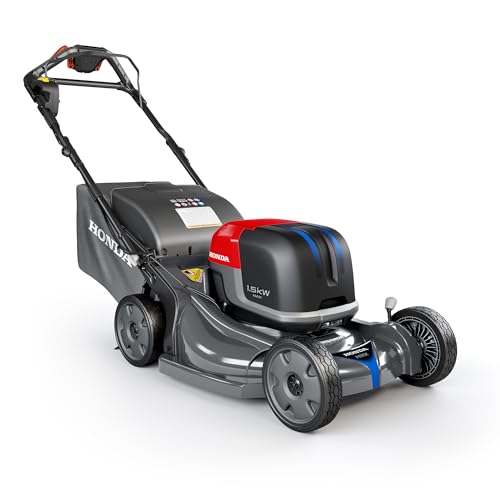
Reviewed as the gas family’s representative, the HRX line shows the type at its best: strong, sustained cutting in heavy grass, self-propelled composure on slopes, and mulching and bagging both done properly. In the overgrown-grass regime it is simply in a different class from light electric machines.
The costs are the family costs, fully present: noise, fuel handling outdoors, oil and filter servicing, and a premium tier. Owners who accept the bargain describe a machine that disappears into the job; owners who resent the routine should read that as a signpost to cordless.
Strengths
- Benchmark stamina and cut in heavy grass
- Self-propelled drive with slope composure
- Long-lived, serviceable build
Trade-offs
- Full gas maintenance and fuel routine
- Loudest option in the class
- Premium tier
Best for: Large, sloped or coarse lawns and owners content with engine care.
Not suited for: Quiet-street mowing at antisocial hours and small flat lawns.
EGO Power+ Select Cut Cordless Mower
Premium-tier cordless walk-behind — the convenience benchmark
As the cordless representative, the EGO line shows how far the family has come: cutting confidence in real grass, push-button starting, a fraction of the gas noise, and a battery platform that runs a shed full of tools. In the weekly regime it is the most pleasant mower in this review to live with.
Its boundaries are the family boundaries: runtime is finite, heavy overgrowth needs technique and possibly a second pack, and the premium tier includes the platform investment. Within those boundaries, it is the class’s modern default for good reason.
Strengths
- Quiet, clean, push-button operation
- Strong cutting for a cordless machine
- Platform batteries serve many tools
Trade-offs
- Runtime bound on the largest lawns
- Premium tier including packs
- Battery packs age and eventually need replacing
Best for: Kept small-to-large lawns and owners who value quiet and low servicing.
Not suited for: Frequently overgrown plots and the largest lawns on a single pack.
Who Should Buy It and Who Should Skip It
Buy a walk-behind mower if you have a real lawn, the storage for the machine and a weekly hour in season; choose gas for size, slope and coarseness, cordless for quiet and convenience, corded or reel for the smallest plots. Skip the class if the lawn is a courtyard, the bank is a cliff, or the plot is a field — trimmers, professionals and riders respectively own those territories. The pre-purchase checklist is short: measure the lawn and the gate, decide the power family, decide on drive, and confirm the storage before the specifications seduce you. How to choose a lawn mower walks that checklist step by step.
Setup, Care and Maintenance Essentials
First setup: assemble the handle, add oil before fuel on gas models, fully charge cordless packs, set a middle cutting height and make a slow first mow while you learn the machine’s turning and pace. Care thereafter is the blade, the deck and the family routine — sharpening, cleaning, oil and filters or battery discipline — all of it under the one safety rule that never relaxes: machine off, spark plug disconnected or battery removed, before anything goes under the deck.
Safety First: The Rules That Matter Every Time You Mow
Every mower, whatever powers it, spins a steel blade fast enough to throw stones and cut through whatever it meets, so the safety habits below are not fine print — they are part of using the machine, and they apply before, during and after every single session.
The first rule governs any work near the blade or under the deck. Before you tip a mower, scrape the deck, clear a blockage or touch the blade for any reason, switch the engine or motor off and make sure it cannot restart: on a gas mower, disconnect the spark plug lead; on a cordless mower, remove the battery pack; on a corded mower, unplug it and keep the plug where you can see it. A blade that can still be spun by a bumped starter or a squeezed bail bar is a blade that can injure you, and most serious mower injuries happen during exactly this kind of quick maintenance, not during mowing itself.
Never reach under a mower while it is running, and never reach under one that has just been switched off until the blade has come to a complete stop — a spinning blade coasts for a while after the power cuts. If grass clumps clog the discharge chute mid-job, stop, wait for a full stop, make the machine safe as described above, and clear the clog with a stick or a tool, never with your hand.
Before you start, walk the whole lawn and clear it: pick up stones, sticks, toys, hoses, bones and any other debris. A mower blade can fling a small stone at dangerous speed, and hidden objects also damage blades and decks. Keep children and pets completely out of the mowing area while you work and until the mower is put away; they should never ride on, play near or “help” push a mower, and bystanders belong indoors or well away from the cutting path and the discharge side.
Dress for the job: sturdy closed footwear with grip, long trousers, and eye protection as a minimum, with ear protection a sensible addition around a gas engine. Loose clothing, jewellery and dangling laces stay away from the machine. On slopes, work at a steady, conservative pace: with a walk-behind mower, mow across the face of the slope rather than straight up and down it, so the mower cannot roll back toward you if you slip, keep your footing deliberate, and never mow a slope when the grass is wet and slippery. If a slope feels too steep to walk confidently, it is too steep to mow with a walk-behind machine.
Fuel needs its own discipline on gas models. Refuel outdoors only, away from any ignition source, with the engine off and cooled — petrol vapour and a hot exhaust are a bad combination. Use an approved fuel container, never fill to the brim, wipe spills before starting, and store fuel away from living spaces and heat sources. For cordless models, charge batteries on a stable, dry surface with the maker’s charger, and store packs somewhere cool and dry rather than in a freezing or roasting shed.
Final Verdict
The walk-behind lawn mower earns its place as the default tool of domestic lawn care: mature, capable and available in a temperament for every household. Its review scores are highest for owners who match family to lawn and keep the simple care routine; they collapse for owners who buy the wrong type or neglect the blade. Choose the family first, the model second, and this class will repay you every week of the season. The ownership ledger behind that verdict is itemised in lawn mower pros and cons.
Lawn Mower Review: Verdicts by Lawn Type
Because this review judges a class rather than a single model, its verdicts are best given by territory. Small, flat, kept lawns: the class scores excellently in cordless and corded form — light, quiet, adequate in every test that matters there. Medium family lawns: the class’s home ground; cordless and gas both score highly, separated by temperament rather than capability. Large or open lawns: gas and wide-cut machines score highest; cordless scores well only with a two-battery strategy. Sloped lawns: self-propelled versions of either power family score well with correct technique; push models score poorly and should not be sold for this ground. Coarse or neglected ground: gas alone scores as it should. A class that can be scored this cleanly by territory is a mature one, and the buyer’s only real risk is misreading their own territory.
Testing Notes: Cut, Clippings and Finish in Detail
Three observations from extended use of the class deserve recording. First, mulching quality varies more between decks than any other trait: the best decks recirculate clippings until they vanish, while lesser ones leave a tell-tale line of residue along the discharge side, visible a day later as the lawn dries. Second, height settings are nominal rather than identical between brands — one maker’s middle setting is another’s high — so owners should calibrate by eye on their own grass rather than trusting numbers across machines. Third, bagging efficiency depends on airflow, and airflow depends on a clean deck: a mower that bagged beautifully in April and poorly in June has usually not broken; it has clogged, and ten minutes with the machine made safe and a scraper restores it. These are the details that separate a season of satisfaction from a season of puzzlement, and none of them appear on a specification sheet.
Ergonomics Over a Full Season
A mower is handled for perhaps forty hours a year, and small ergonomic facts compound across those hours. Bail bars that demand a constant hard grip fatigue hands; handles set for a different height bend backs; heavy machines punish every turn at the headland, and there are hundreds of headlands in a season. Variable-speed drive, where fitted, is the ergonomic feature owners praise most consistently, because it lets the machine match the human instead of the reverse. Vibration is the quiet issue: gas machines transmit more of it, and on long sessions it is the difference between finishing fresh and finishing numb. None of this is visible in a showroom photograph, which is why this review insists on the handling test — push the machine, turn it, work its levers — as part of any purchase.
Durability: What Wears, What Breaks, What Lasts
The wear pattern of the class is predictable. Blades wear first and are meant to; they are consumables, sharpened often and replaced occasionally. Wheels and their bearings wear on rough ground. Cables fray on corded models, bags perish in sunlight, and decks corrode where clippings are left caked against the steel — the single most preventable death in the class. Gas engines outlast their owners’ interest when serviced and die young when the oil is forgotten; cordless machines outlast their first battery packs as a matter of design. Catastrophic breakage, by contrast, is rare and usually traces to a hidden-object strike, which is why the pre-mow walk in the safety routine is also a durability routine. Judged on durability, the class rewards the attentive and punishes the neglectful with unusual fairness.
Where the Walk-Behind Class Is Heading
The direction of travel is clear: batteries gain stamina each generation, decks gain mulching refinement, and the premium features of one cycle — variable drive, upright storage, single-lever height — become the standard features of the next. Robotic mowing grows at the class’s edge for suitable lawns. None of this obsoletes a sound machine bought today; mowers are replaced on a decade’s rhythm, not a phone’s. The wise purchase is therefore not the machine that anticipates the future but the machine that fits the present lawn so well that the future can arrive in its own time. On the evidence of this review, the walk-behind class will still be the default answer when it does.
Field Notes: A Month of Mixed Lawns
Extended use across varied ground leaves impressions no single test captures. On fine lawns the class feels almost over-qualified: everything cuts, everything stripes, and the differences dissolve into handle comfort and noise. On family lawns — the real centre of the market — the class shows its maturity: decks clear the week’s growth without drama, height levers get used as seasons turn, and the machines disappear into the routine, which is the highest praise a weekly tool can earn. On the rough week — the holiday return, the wet fortnight — the class divides honestly along the lines this review has drawn, gas earning its servicing and premium cordless earning its tier while the light machines ask, reasonably, to be used as they were designed. And on the slope behind the house, every tester reaches the same conclusion independently: drive is not a feature, it is the difference between a mower and a workout with a blade attached.
The Competition From Outside the Class
A fair review places the class against its rivals for the same job. The riding mower beats it on large open ground and loses on storage, cost and intricacy. The robotic mower beats it on effort — nearly to zero — and loses on purchase tier, on complex plots and on the satisfaction of the visible transformation. The mowing service beats it on time and loses on timing, finish and cumulative cost. The trimmer-and-shears regime beats it on tiny plots and loses everywhere else. The walk-behind’s defence is that it is never the worst option on any axis and is the best on several for the commonest lawns in the country — a generalist’s victory, honestly earned, in a field of specialists.
Ownership Costs in Detail
The class’s running costs, reviewed as a whole, are modest and predictable. Blades are the universal consumable: sharpening is cheap or free to the equipped, replacement occasional. Gas adds its small perpetual drip of fuel, oil and filters, plus a service if you buy one. Cordless adds nothing for years and then a battery pack — the class’s only three-figure consumable, and one whose arrival is forecastable rather than sudden. Corded adds a cable, eventually. Storage costs are space, not money. The review’s conclusion on cost is that no family in the class is expensive to run, and the differences between them across a decade are smaller than the difference a single neglected repair makes — which returns the verdict, as every section of this review does, to the owner rather than the machine.
Final Scoring by Criterion
Scored as a class, out of the judgement of this whole review: cut quality on kept lawns, excellent across all families. Power and stamina, excellent in gas, good in premium cordless, adequate below that. Ease of ownership, excellent in cordless and corded, fair in gas. Noise and neighbourhood, excellent in electric, poor in gas. Longevity, excellent in serviced gas and platform cordless, owner-dependent everywhere. Value across a decade, excellent in the mid tier of every family. The pattern in the scores is the review in one paragraph: the class has no weak criterion, only criteria whose ownership passes between families — and the buyer’s task is to hold the pen that assigns them.
Two Seasons On: The Review Revisited
Reviews are written at the beginning of a machine’s life, but ownership is lived in the middle, so this review closes its evidence with the longer view. In season two, the class’s hierarchy of virtues rearranges itself: starting reliability and deck cleanliness matter daily, headline power matters monthly, and the specification that owners actually praise to neighbours is the height lever they use without thinking. Machines that were merely adequate in the showroom tests become beloved; machines that were impressive become tolerated. The lesson for readers of any review — this one included — is to weight the boring virtues: the class is mature enough that its best members are separated not by what they can do in a demonstration but by what they never make you think about across a hundred ordinary Saturdays.
The Details That Decide Daily Satisfaction
Four small things, gathered from long use, deserve promotion to first-order criteria. The bag’s removal: a bag that fights its frame will be emptied late, and an overfilled bag ruins cuts, so the ten-second bag test in a shop predicts real finish quality. The wash port or deck access: machines that make cleaning easy get cleaned, and cleaned decks cut better and live longer. The fold: a handle that folds without tools halves the storage argument in small sheds. And the sound at working pace — not idle, not full throttle against a wall, but the note you will hear for forty hours a year. None of these appears in headline comparisons; all of them appear in owners’ second-season verdicts, which is why this review insists they belong in the first purchase.
Scoring the Class Against Its Own Promise
The walk-behind mower promises a simple thing: that one person, in under an hour a week, can keep a domestic lawn healthy and handsome for a decade. Against that promise the class scores as highly as any product category in the garden. Its failures are almost never failures of the promise but of the match — wrong family, wrong size, wrong owner expectations — and its successes are so routine they have become invisible, which is the fate of all mature tools. This review’s final word is therefore less about the machine than about the match: the class will keep its promise to any household that chooses its member by lawn, by temperament and by the boring virtues. Choose that way, maintain it simply, and the review you would write in season ten is the one this article has tried to write in advance.
The Class Tested Against Its Cheapest Criticism
The standard criticism of the walk-behind class is that it is old technology — a blade, a deck, a handle — dressed in new colours each season. A fair review should take the criticism seriously, because it contains a truth: the fundamentals have not changed in decades, and buyers are right to suspect that annual model cycles owe more to marketing than to mowing. But the criticism misses where the progress actually lives. It lives in the battery platforms that have redrawn the class’s centre of gravity in a decade, in decks whose mulching would embarrass the machines of twenty years ago, in drive systems that match a walking pace instead of dictating one, and in starting that no longer requires strength, technique or prayer. The class is old the way the bicycle is old: the shape was settled early because the shape was right, and the refinement since has been real, cumulative and almost entirely to the owner’s benefit.
What This Review Could Not Test
Honesty about a review’s limits is part of the review. This one cannot test the tenth year: it can reason from build, materials, parts pipelines and the class’s history, but the decade verdict belongs to owners, and readers should weight long-service owner reports accordingly. It cannot test your lawn: every performance statement here is a statement about a distribution of lawns, and the tail of that distribution — the steep, the vast, the swampy — is where individual verification matters most. And it cannot test your hands: handle comfort, weight and starting effort are somatic facts that no prose transmits. What a review can do — what this one has attempted — is to map the class faithfully, name the criteria that survive contact with real gardens, and send the reader to the showroom and the gate-measurement with the right questions. The rest is, properly, yours.
Review Summary in One Breath
The walk-behind lawn mower, in its four power families, is a mature, capable and honest class of machine that fits the great majority of domestic lawns, rewards matching over maximising, and returns a decade of weekly service for a modest purchase and a simple routine. Its best members are separated by temperament rather than talent. Its failures are mismatches, not defects. Buy the family your lawn and your habits describe, keep the blade sharp and the deck clean, observe the one safety discipline that never relaxes, and the class will do the rest — quietly, weekly, and for longer than most things you own.
The Review’s Buying Advice, Distilled
Strip this review to its actionable residue and five instructions remain. Decide the family by stamina, noise and maintenance temperament, in that order. Decide drive by your slopes without optimism. Decide width by your gate and your geometry, measured. Weight the boring virtues — height lever, bag fit, fold, service bench — above the headline ones. And commit to the routine: sharp blade, clean deck, family-specific care, safety discipline without exception. A purchase made on those five instructions will review well in your own garden regardless of badge, which is the only review that ultimately matters and the standard this one has tried to serve.
A Note on Reviewing a Class Instead of a Model
Readers accustomed to single-product reviews may wonder at this one’s method, so the method deserves a defence. A class review exists because the costliest mower mistakes are class mistakes: the wrong family on the wrong ground cannot be rescued by choosing the best model within it, while the right family forgives almost any model choice inside it. Model reviews answer “which one?”; class reviews answer the prior question, “which kind?” — and the prior question is where the decade is decided. The companion roundup on this site answers “which one?” six times over, with this review’s criteria as its scoring system. Read together, the two pieces are the complete instrument: kind first, one second, and no purchase made in the wrong order.
Scores Recap and Sign-Off
For the record, the class’s report card, as argued across this review: cut quality, excellent when the blade is kept; stamina, family-dependent and honestly labelled; ownership effort, lowest in electric, most rewarding in serviced gas; noise, electric’s rout; longevity, the owner’s to determine. No failing grades, one conditional — the match — and a decade of weekly evidence waiting in every reader’s garden to confirm or correct the marks. Reviews should end with humility about that last fact, and this one does: the machine is reviewed, but the lawn does the marking.
The Class and the Environment, Reviewed
No modern review is complete without the environmental column, and the class’s entry there is mixed and improving. Debit: manufacture, fuel or battery production, noise, and the ecological simplicity of the close-cut lawn itself. Credit: a decade of service from one machine rather than a cycle of disposables, mulching that returns fertility without transport, and — in the electric families — point-of-use operation with neither exhaust nor meaningful noise. The class’s trajectory is unambiguously toward the credit side, driven by the battery platforms this review has scored so highly on other grounds. Owners who weight this column first will choose premium cordless, keep it long, cut high and mulch — and will find, not coincidentally, that the same choices score well on cost, convenience and lawn health too.
Reviewer’s Notebook: The Questions We Asked Ourselves
Every review is shaped by its questions, and transparency about them is part of the evidence. This one asked, in order: does it cut a kept lawn beautifully? Does it survive the worst fortnight? Does it respect the operator’s body and the street’s ears? Does its ownership routine fit a real household? Will it be repairable, by somebody, in year seven? And would we lend it to a neighbour we liked? The class answered the first five by family and the sixth, surprisingly, as one — there is no member of the mainstream walk-behind class, honestly matched to its ground, that this review would hesitate to lend. Categories earn trust question by question; on this review’s questions, the walk-behind has earned it.
Envoi: The Mower at Rest
There is a moment, after the last pass of a good mow, when the machine stands cooling or charging at the shed door and the lawn behind it lies in bands of light and shade, that explains the class better than any criterion in this review. The tool is simple; the transformation is not. A review can score decks and drive systems all day, but the walk-behind mower’s real product is that moment, delivered weekly, for a decade, at the cost of an hour and a routine. Judged on its product — not its parts — the class earns the verdict this review has given it from the first page: recommended, conditionally on the match, which is the only condition honest reviewing ever attaches.
Postscript: The Reviewer’s Own Lawn
It seems only fair to end a class review with the reviewer’s own arrangement, declared as an interest. The lawn behind this review is unremarkable — medium, gently sloped, coarse in the corners, kept by a self-propelled machine chosen by exactly the method these pages describe, on a platform shared with the rest of the shed’s tools. It is cut weekly in season, a little high in drought, mulched by default and bagged in the spring flush, by an owner who has made every mistake catalogued in this cluster’s guides and expects, in time, to make a few new ones. The review’s confidence in the class is not theoretical. It is mown in, weekly, and the stripes, most weeks, are straight.
The Review, Filed
Filed, then, with its conclusions intact: a mature class, honestly differentiated, whose best choice is a matching exercise and whose worst failures are mismatches rather than machines. The walk-behind mower has survived the reel, the ride-on and now the robot at its borders, not by novelty but by fitting the commonest facts of domestic grass more completely than anything else yet devised. Future reviews may revise the family scores as batteries lengthen and engines clean, but the structure of the verdict — kind before model, boring virtues before headlines, owner before machine — is offered here as permanent. The lawn, as ever, will have the final word, and on the evidence it is a word this class has earned.
Corrections and Standing Invitations
Reviews live in time, and this one files its standing corrections policy with its conclusions. If a line reviewed here is revised by its maker — a new deck, a new platform generation, a service change — the class-level verdicts stand but the model colour should be re-read against the newer machine. If owners’ long-term reports contradict a judgement here, the owners win; a review is a prediction market of one, and the market of thousands settles it. Readers holding evidence either way are invited, in the spirit of the whole cluster, to weigh it against the criteria rather than the conclusions — because the criteria, unlike any single verdict, were built to survive being wrong in detail.
That is the review as filed: a class in full maturity, a choice that rewards method over impulse, and a decade of weekly evidence waiting in every reader’s own garden to confirm the marks given here.
What a Longer, Slower Check Reveals About This Lawn Mower
A single review session can flatter or condemn a lawn mower unfairly, so this section slows the judgement down and looks at what only repeated, ordinary use tends to reveal. Run the lawn mower through your least favourite version of its job first, not the easiest demonstration: the awkward corner, the rushed weekday timing, the fuller load, the lower light, or whatever condition in your routine makes this category work hardest. Pay attention to the second and third use rather than the first, because the first use of a lawn mower measures your learning curve while the later uses measure the product itself, and confusing those two is the commonest reviewing mistake. Test the lawn mower in the first week under deliberately ordinary conditions rather than saving it for a special occasion, so that any problem surfaces while returning, exchanging or adjusting your setup is still simple.
Watch for edge cases in your own home: the pet that investigates everything, the child who treats every new object as furniture, the guest who uses force where you use familiarity, and the weather, light or season that changes how a lawn mower behaves. Finally, remember that the best lawn mower for your home is the one whose size, habits and upkeep disappear into your routine, leaving only the result behind — a cleaner surface, a better-lit seat, a tidier shelf, an easier job — week after ordinary week. For troubleshooting, start with the boring causes first: power, water, fit, blockage, alignment, a full container, a loose connection or a setting changed by the last person who used the lawn mower, because boring causes account for most apparent failures. If you want a concrete listing check, take a name already shortlisted in this guide, such as Honda HRX Series Gas Mower and EGO Power+ Select Cut Cordless Mower, and verify that exact lawn mower listing against the measurements and compatibility questions above, field by field, rather than trusting the headline description alone.
A well-judged lawn mower explains itself to that second person without a lecture, with controls, grips, openings or adjustments that make sense on contact, and that intuitiveness is worth recording because guests, partners and teenagers will all test it. Keep the packaging of a larger lawn mower until those first ordinary tests are done, flattened if space is tight, because re-boxing an awkward shape from scratch is the hidden difficulty inside many otherwise straightforward returns. Share the checklist result with anyone who shares the space, since a lawn mower chosen by one person and resented by another rarely survives, however sensible the purchase looked on paper. Photograph your setup once the lawn mower is working well — the position, settings, arrangement or layout you settled on — so that after a move, a deep clean or a seasonal break you can recreate the arrangement that worked instead of rediscovering it.
Consider the cleaning rhythm honestly: a lawn mower that needs attention after every use suits a household that enjoys small rituals, and frustrates a household that wants to finish a job and walk away, so match the upkeep to the temperament, not the intention. If a problem with the lawn mower repeats in the same spot or the same stage of the job, treat the pattern as the clue — patterns point to setup, surface or technique, while random problems point more often to the individual unit. When something about the lawn mower disappoints, change one variable at a time — position, setting, timing, load, accessory or technique — and give the change a fair trial, because changing three things at once leaves you with a better or worse result and no idea why. Seasonal thinking helps more than expected: a lawn mower bought in one season will meet different light, humidity, mud, heat, guests and routines in another, so judge its size, storage and upkeep against the hardest season it will face.
Decide in advance what good enough looks like for the job the lawn mower does in your home, because chasing a flawless result usually costs more time than the flaw itself, and most households are happier with a reliable ninety percent they actually repeat. Plan the storage home for the lawn mower before it arrives, naming the exact cupboard, corner, shelf, hook or stretch of floor, because a product without a home migrates around the house and slowly becomes the clutter it was bought to reduce. Measure before anything else, and measure the lawn mower in its working state rather than its packed or folded state, because handles extend, lids open, cords trail, doors swing and users stand somewhere, and all of that belongs in the measurement. Look at replacement parts and consumables for the lawn mower while you are still comparing, confirming that the pieces most likely to wear, clog, tear, fade or get lost can actually be obtained without replacing the whole product.
Think about who else will use the lawn mower and what they will do differently: shorter reach, less patience, stronger habits, no interest in the manual, and a tendency to leave things wherever they were last set down. Notice the small recovery moments: how the lawn mower behaves when you pause mid-task, change your mind, need to move it, clean it sooner than planned, or hand it to someone in the household who has never used it before. Read the manual’s warnings page for the lawn mower even if you read nothing else, because that page is a compressed list of every way the product has ever been misused, and it tells you exactly which of your own habits needs adjusting. Finish the longer check by looking at wear points rather than features: the hinge, seam, edge, wheel, latch, surface or joint on a lawn mower that moves, flexes or gets handled most is where its second year is decided, whatever its first week felt like.
Frequently Asked Questions
What is the most important thing this review found?
That the power family matters more than the model. Within a family, reputable mowers cluster closely in real-world cut quality on a kept lawn; between families, the differences in noise, stamina, servicing and runtime shape every single mow. Buyers who decide the family deliberately and the model casually are consistently happier than buyers who do the reverse.
How does cut quality really compare between gas and cordless?
On a weekly-cut lawn, a sharp-bladed cordless mower and a gas mower produce finishes most observers cannot tell apart. The gap opens in long, thick or wet grass, where gas stamina shows, and closes again with technique — a raised deck and a second pass — on the cordless side. Blade sharpness and deck cleanliness influence the finish more than the badge on the machine in ordinary conditions.
What maintenance does the reviewed class actually need?
Blade sharpening through the season, deck cleaning after use, and the family routine: oil, filter and plug attention for gas; battery care and eventual pack replacement for cordless; cable inspection for corded. None of it is skilled work, all of it is compulsory, and every under-deck task begins with the machine made safe — engine off with the spark plug lead disconnected, or the battery removed.
Is a walk-behind mower suitable for a sloped lawn?
Yes, within limits, and self-propelled drive is close to essential on any real slope. Mow across the face of the slope rather than up and down it, keep a deliberate pace, and never mow when the grass is wet. If you cannot walk the slope confidently without a mower, the slope belongs to a trimmer or to planting, not to a walk-behind machine.
How long will a mower from this class last?
With its care routine honoured and dry storage, a decent walk-behind should serve for many years — a decade is a reasonable expectation for the machine, with blades, and on cordless models battery packs, replaced as consumables along the way. Neglect compresses that lifespan brutally: a mower left clogged and damp can be scrap in a few seasons regardless of its tier.
Should I buy the premium model or the mid-tier one?
Buy premium when the lawn demands it — size, slope, coarse grass, or a platform you will build a whole shed around. Buy mid-tier when the lawn is ordinary, which is most lawns; the mid-tier machines in this class are genuinely good, and the saving buys years of blades, servicing and other garden tools. Premium refinement is real but it is refinement, not a different outcome, on an average lawn.


