Disclosure: As an Amazon Associate, dailyhomedecorating.com earns from qualifying purchases. Links on this page are affiliate links; they cost you nothing extra. Prices and availability change often, so check the current Amazon listing before you buy.
The lawn mower vs electric lawn mower argument is really two questions wearing one coat: is a traditional gas mower still the right default, and has electric power — cordless above all — genuinely caught up? The fair answer is that each side wins outright on some criteria and loses outright on others, and this comparison scores them criterion by criterion so you can weight the result by your own lawn rather than by anyone’s fashion.
Key Takeaways
- Quick verdict: choose gas for size, slope and stamina; choose electric for quiet, cleanliness and convenience.
- Gas wins: runtime without limit, power in overgrown grass, refuelling in minutes.
- Electric wins: noise, starting, servicing, storage and running effort.
- The crossover is the lawn itself: small-to-medium and kept favours electric; large, steep or coarse favours gas.
- Neither side is the future or the past in general — each is the right answer to a different garden.
In this guide
The Side-by-Side Comparison
| Criterion | Gas Lawn Mower | Electric Lawn Mower |
|---|---|---|
| Runtime | Unlimited while fuel lasts | One charge (cordless) or tethered (corded) |
| Power in heavy grass | Strongest, sustained | Good; best models cope with technique |
| Noise | Loud | Much quieter |
| Starting | Pull cord, choke routine | Button or bar, instant |
| Maintenance | Oil, filter, plug, fuel care | Blade and battery care |
| Running effort | Fuel storage and handling | Charging; trivial energy cost |
| Storage | Ventilation and fuel separation | Compact; some store upright |
| Emissions at the mower | Exhaust while you walk behind it | None at point of use |
| Best territory | Large, sloped, coarse lawns | Small-to-large kept lawns |
Read the table row by row against your own garden rather than totalling it: a single row — the slope, the size, the neighbour — can outweigh the rest combined, and for most households two or three rows do all the deciding.
Power and Cutting Performance
Gas is the sustained-power champion. Its engine delivers the same muscle in the last minute of the job as the first, and in long, thick or damp grass that stamina is decisive: the deck keeps clearing, the blade keeps speed, the mower keeps moving. Electric power has closed most of the gap for ordinary grass — a modern premium cordless mower cuts a kept lawn indistinguishably from gas — but in the overgrown test it must manage a finite energy budget, and lighter models bog down where gas ploughs on. Corded electric sits between: unlimited runtime, modest muscle, a tether.
Verdict: gas, clearly, for heavy work; a draw on kept lawns.
Runtime and Refuelling
A gas mower runs until the lawn is done and refuels in a minute from a can — with the discipline that fuel is handled outdoors, away from ignition, into a cooled engine. A cordless mower runs until the pack fades, then waits for a charger unless a second pack is ready; on small and medium lawns that budget is ample, on large ones it becomes a planning exercise. A corded mower never runs out and never ranges free. The honest summary: runtime is gas’s home fixture, and electric’s answer — bigger packs, second packs, faster chargers — is good and improving but remains an answer to a question gas never asks.
Verdict: gas for large lawns; electric entirely sufficient below that scale.
Noise, Fumes and Neighbours
Here the comparison reverses completely. A gas mower is loud enough to end conversations and produces exhaust at the operator’s breathing height for the whole session. Electric mowers are dramatically quieter, fume-free at the point of use and socially invisible by comparison: early starts, late finishes and dense streets all become possible. For many households this criterion, not power, is the one they feel every single week, and it is the strongest single argument on the electric side.
Verdict: electric, by the widest margin in this comparison.
Maintenance and Ownership Effort
Gas ownership is a routine: oil checks and changes, air filter attention, an occasional spark plug, fuel that must be fresh, stored safely and managed over winter. None of it is hard; all of it is compulsory, and skipped maintenance is the leading cause of the mower that will not start in spring. Electric ownership replaces that list with blade care, a clean deck and battery discipline — charge sensibly, store packs cool and dry, accept that packs are consumables that will one day need replacing. Corded models add only a cable to inspect. Over a decade, electric is simply less work, and the gap is not close.
Verdict: electric, decisively.
Handling, Slopes and Storage
Both sides offer push and self-propelled machines, and drive matters more than fuel on a slope: a driven mower of either kind beats a pushed mower of the other. Gas machines tend to be heavier, which steadies them and tires you; cordless machines are lighter and often fold or stand upright for storage, a real advantage in a small shed. Gas storage carries the fuel question with it — ventilation, separation from living space, a can stored properly — while electric storage is mostly a matter of keeping the machine and its packs dry. On slopes themselves, both sides obey the same technique: traverse the face with a walk-behind, keep the pace deliberate, never mow wet inclines.
Verdict: electric on weight and storage; a draw on slopes, where drive and technique decide.
Running Costs and the Long View
Electric running costs are trivial in energy and modest in consumables until a battery pack eventually needs replacing, which is the one significant bill in cordless ownership. Gas running costs are a steady drip — fuel, oil, filters, plugs, servicing — small each time, perpetual in total. Purchase tiers overlap heavily: entry electric undercuts entry gas in effort if not always in tier, and premium lines on both sides converge. Over a decade the totals are closer than either camp admits, and the deciding factor is usually not money but which currency of effort — servicing or battery management — you would rather pay.
Verdict: a near draw, tilting electric for small lawns and gas for very large ones where packs multiply.
Strengths and Trade-Offs of Each Side
Gas — Strengths
- Unlimited runtime and instant refuelling.
- Sustained power that masters overgrown, thick or damp grass.
- No platform lock-in: any mower, any fuel can, any servicer.
Gas — Trade-offs
- Noise and exhaust on every session.
- The full engine maintenance and fuel-storage routine.
- Heavier machines and pull-cord starting.
Electric — Strengths
- Quiet, clean and instant-starting.
- Minimal maintenance and compact storage.
- Battery platforms that power a whole shed of tools.
Electric — Trade-offs
- Runtime bounded by the battery on cordless models.
- Less stamina in genuinely overgrown grass.
- Battery packs age and are a real replacement tier.
Who Each Option Suits — and Who Should Skip Each
Choose gas if your lawn is large, sloped or coarse, if it regularly gets away from you, if you are set up for fuel and servicing, and if noise carries no social cost on your plot. Skip gas if your street is dense, your hours are early or late, or you know in your heart the oil will never get changed. Choose electric — cordless for freedom, corded for the smallest plots — if your lawn is kept, your storage is tight, your neighbours are near and your appetite for maintenance is low. Skip electric if the lawn is a small field, the banks are steep and the grass is a jungle by July; that garden is gas country, as the profiles in our lawn mower reviews show line by line.
How to Decide: Questions That Settle It
Work through five questions. How big is the lawn, honestly? If it outlasts a comfortable single charge, gas leads. How steep and how coarse? Slope plus coarseness is gas’s strongest suit. How near are the neighbours and how odd are your mowing hours? Near and odd is electric’s. Which maintenance will you actually do — an engine routine, or battery discipline? Answer for the owner you are, not the owner you intend to become. And what else lives in your shed? A battery platform already owned is a vote for electric; a fuel can and a trusted servicer is a vote for gas. Three answers pointing one way settle it; the framework in the lawn mower buying guide then picks the machine.
Representative Models on Each Side

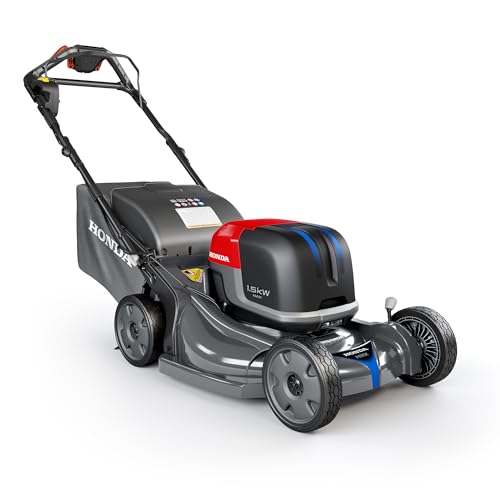
Honda HRX Series Gas Mower
Gas representative — Premium tier
The HRX line is gas at its most complete: sustained power, slope-ready drive, fine mulching and a build owners keep for years. It embodies the gas case — stamina and independence — and accepts the gas costs in full: noise, fuel handling and servicing.
Strengths
- Benchmark stamina and finish
- Self-propelled slope composure
- Long service life
Trade-offs
- Noise and full engine routine
- Premium tier
- Heaviest handling here
Best for: Large, sloped or coarse lawns.
Not suited for: Dense streets and maintenance-averse owners.
EGO Power+ Select Cut Cordless Mower
Electric representative — Premium tier
The EGO line is electric at its most complete: cutting confidence that satisfies on real lawns, silence that reclaims your mornings, and a platform that turns one purchase into a system. It embodies the electric case — convenience and cleanliness — within the electric boundary of finite runtime.
Strengths
- Quiet, clean, instant starting
- Strong cut for cordless
- Whole-shed battery platform
Trade-offs
- Runtime bound on big lawns
- Pack replacement is a future tier
- Premium tier
Best for: Kept small-to-large lawns in real neighbourhoods.
Not suited for: Habitually overgrown plots on a single pack.
Final Recommendation by Use Case
Small, flat, kept lawn: electric, and it is not close. Medium suburban lawn, mowed weekly: electric for most households now, gas for those who relish the machine and the ritual. Large, sloped or coarse lawn: gas, and it is not close either. The contested ground is the big-but-kept lawn, and there the decision belongs to your answers on noise and maintenance rather than to any specification. Both sides of this comparison are mature, capable technologies; the only losing move is buying one side’s machine for the other side’s garden. The balanced ledger of ownership itself is in lawn mower pros and cons, and the step-by-step choice is in how to choose a lawn mower.
Safety First: The Rules That Matter Every Time You Mow
Every mower, whatever powers it, spins a steel blade fast enough to throw stones and cut through whatever it meets, so the safety habits below are not fine print — they are part of using the machine, and they apply before, during and after every single session.
The first rule governs any work near the blade or under the deck. Before you tip a mower, scrape the deck, clear a blockage or touch the blade for any reason, switch the engine or motor off and make sure it cannot restart: on a gas mower, disconnect the spark plug lead; on a cordless mower, remove the battery pack; on a corded mower, unplug it and keep the plug where you can see it. A blade that can still be spun by a bumped starter or a squeezed bail bar is a blade that can injure you, and most serious mower injuries happen during exactly this kind of quick maintenance, not during mowing itself.
Never reach under a mower while it is running, and never reach under one that has just been switched off until the blade has come to a complete stop — a spinning blade coasts for a while after the power cuts. If grass clumps clog the discharge chute mid-job, stop, wait for a full stop, make the machine safe as described above, and clear the clog with a stick or a tool, never with your hand.
Before you start, walk the whole lawn and clear it: pick up stones, sticks, toys, hoses, bones and any other debris. A mower blade can fling a small stone at dangerous speed, and hidden objects also damage blades and decks. Keep children and pets completely out of the mowing area while you work and until the mower is put away; they should never ride on, play near or “help” push a mower, and bystanders belong indoors or well away from the cutting path and the discharge side.
Dress for the job: sturdy closed footwear with grip, long trousers, and eye protection as a minimum, with ear protection a sensible addition around a gas engine. Loose clothing, jewellery and dangling laces stay away from the machine. On slopes, work at a steady, conservative pace: with a walk-behind mower, mow across the face of the slope rather than straight up and down it, so the mower cannot roll back toward you if you slip, keep your footing deliberate, and never mow a slope when the grass is wet and slippery. If a slope feels too steep to walk confidently, it is too steep to mow with a walk-behind machine.
Fuel needs its own discipline on gas models. Refuel outdoors only, away from any ignition source, with the engine off and cooled — petrol vapour and a hot exhaust are a bad combination. Use an approved fuel container, never fill to the brim, wipe spills before starting, and store fuel away from living spaces and heat sources. For cordless models, charge batteries on a stable, dry surface with the maker’s charger, and store packs somewhere cool and dry rather than in a freezing or roasting shed.
Lawn Mower vs Electric Lawn Mower: The Short Version
For readers who will not weight five criteria, the compression is this. Gas is a stamina technology: unlimited, powerful, indifferent to neglect of schedule, and priced in noise, fumes and servicing. Electric is a convenience technology: quiet, clean, instant and nearly maintenance-free, and priced in runtime and battery mortality. Lawns that stress stamina choose gas; households that stress convenience choose electric; and the large middle of kept suburban lawns can choose either and be right, which is why the argument never settles in general and always settles in particular.
Environmental Impact, Honestly Weighed
The gas mower’s emissions are small in absolute terms and unusually personal: they occur at ground level, at the operator’s breathing height, for every hour of use, alongside noise that is itself a pollutant in a dense street. Electric mowing eliminates both at the point of use and moves its footprint upstream to electricity generation and battery manufacture — real costs, honestly counted, including the mining and eventual recycling of packs. The balanced verdict most lifecycle assessments reach is that electric wins clearly for typical domestic use, by more as grids clean up, while gas’s defenders correctly note that a durable machine kept for fifteen years amortises its manufacture better than a disposable anything. The greenest choice available to most readers is an electric mower kept for a decade — or a gas one kept for two.
Safety Compared
The blade does not care what spins it, so the core discipline is identical on both sides: engine or motor off and made safe — spark plug lead disconnected on gas, battery removed on cordless, plug out on corded — before any work under the deck; a cleared lawn; children and pets out of the area; slopes traversed with a walk-behind and never mowed wet. The differences sit at the margins. Gas adds fuel handling: refuelling outdoors, away from ignition, into a cooled engine, with storage discipline thereafter. Electric adds electrical discipline: cables inspected and routed away from the blade on corded models, chargers and packs kept dry and undamaged on cordless ones. Gas’s pull-cord starting strains shoulders; electric’s instant starting removes the strain and adds a different caution — a machine that starts at a button must be treated as always ready, with safety keys and packs removed when it is stored or carried. Neither side is safer in the round; each is safe exactly to the extent its own routine is kept.
The Ten-Year Ownership Story, Told Twice
The gas decade opens with a machine at full strength and a owner learning a routine: oil, filters, plugs, fuel. Years three to six are the plateau — the mower is simply there, starting, cutting, asking its small annual service. Years seven to ten test the owner’s fidelity: kept machines run on strongly, neglected ones begin the hard-starting, rough-running decline that ends at the kerb. The electric decade opens with silence and simplicity. The plateau arrives sooner and asks almost nothing. Somewhere in the middle years the first battery pack fades and is replaced — the decade’s one real bill — and the machine continues, its motor essentially unworn, until the second pack question or a platform’s obsolescence ends the story. Both decades are respectable; they differ in texture, the gas one artisanal and the electric one appliance-like, and temperament predicts satisfaction better than any criterion table.
Hybrid Households: Running Both
A substantial minority of households settle the argument by refusing it: a cordless mower for the weekly trim of the main lawn, and gas — often an older, kept machine — for the rough paddock, the orchard floor, the spring reclamation. The hybrid is not indecision; it is specialisation, and it works because the two technologies’ strengths are so cleanly complementary. It asks for two storage corners and two routines, which is why it suits larger properties with genuinely two kinds of ground. If your plot has a lawn and a wilderness, the hybrid may be the most honest answer in this entire comparison.
Where Both Sides Are Heading
Electric’s trajectory is steep: batteries gain stamina, motors gain efficiency, and each season the class of lawns for which cordless is the obvious answer grows. Gas’s trajectory is refinement at the margins — cleaner, quieter, easier-starting engines defending a shrinking but real territory of large, rough and remote ground. Nothing in either trajectory obsoletes a well-chosen machine today, because mowers are decade goods. Buy the side that fits your lawn now; the future will arrive in time for your next purchase, whichever side of this comparison it finds you on. The final tie-breaker, if the criteria leave you level, is the one in is a lawn mower worth it: buy the machine you will enjoy using, because the used mower is the only kind that ever earns its keep.
Starting and Stopping: The Daily Rituals Compared
Comparisons usually begin with power, but ownership begins with starting, fifty times a year. The gas ritual: check oil occasionally, mind the fuel’s freshness, set the choke or primer as the manual directs, hold the bar, pull the cord — a small ceremony that owners either find satisfying or faintly dread, and that becomes genuinely hostile when the machine is neglected and the cord must be pulled six times. The electric ritual: click in a charged pack, press a button. There is no third act. Stopping reverses the asymmetry slightly — a gas mower is simply released and cools where it stands, while a cordless mower’s pack should come out or be stored as the maker directs — but across a season the starting ritual alone converts many owners, and it deserves its place in a fair comparison because it is the interaction you will have most often with either machine.
Repairs and the Right to Fix
When things break, the sides diverge in an under-discussed way. A gas mower is one of the most repairable objects in domestic life: its faults are mechanical, its parts are standard, its knowledge is in every small-engine shop and a thousand driveways, and a handy owner can keep one alive almost indefinitely. A cordless mower’s mechanical parts — blade, wheels, deck — are equally repairable, but its heart is electronic: motors, controllers and battery packs are replace-or-return items, serviced by the maker rather than the bench. Neither position is dishonourable, but they suit different owners: the tinkerer keeps gas alive forever; the non-tinkerer prefers a machine whose failures are a warranty conversation. Factor your own hands into the comparison.
Resale and Second Life
Both sides resell, differently. A known-brand gas mower with a service history is liquid at almost any age, because its next owner’s mechanic can verify it in minutes; its value decays slowly and predictably. A cordless mower’s resale rides on its platform and its packs: a machine whose batteries are healthy and whose platform is current sells well, while one with tired packs sells as a project. For buyers of used machines the implication flips helpfully: tired-pack cordless mowers are the used market’s bargains for anyone already owning the platform’s batteries, and serviced gas mowers are its safest purchases. Either way, the kept machine with records beats the neglected one — the comparison’s most bipartisan conclusion.
The Criteria Nobody Mentions: Smell, Ritual and Identity
Underneath the criteria sits a layer comparisons rarely print. Gas mowing smells of petrol and hot oil and cut grass, and for a generation of gardeners that smell is summer itself; electric mowing smells of cut grass alone, which others call cleaner and progress. Gas mowing has a ritual — the checks, the pull, the roar — that some owners would not trade for silence; electric mowing has a different pleasure, closer to vacuuming a room into order. And there is identity: the keeper of a serviced engine and the adopter of a battery platform are both, in their way, describing themselves. A fair comparison should admit that these things move real buyers, because a mower you identify with gets maintained, and a mower that gets maintained wins every practical criterion in this article within five years.
Scorecard Revisited
Tally the criterion verdicts: gas takes power and runtime; electric takes noise, maintenance, starting and storage; handling and long-run cost score as draws shaded by lawn size. Two criteria to gas, four to electric, two shared — and yet this comparison refuses to declare electric the winner, because criteria are not votes. The gas criteria are the ones that decide whether the job can be done at all on large, steep and coarse ground; the electric criteria decide how pleasant the doing is everywhere else. Feasibility outranks pleasantness where feasibility is in question, and pleasantness decides where it is not. That sentence, applied to your own lawn, is the whole comparison.
The Test That Matters: Your Worst Fortnight
Comparisons are usually argued on averages, but mowers are bought for extremes, so run both sides through your lawn’s worst fortnight — the wet, fast-growing, holiday-interrupted stretch when the grass is long, damp and urgent. Gas walks that fortnight without thinking: full power, full runtime, clippings bagged by the barrowload. Premium cordless walks it with technique and a second pack, and emerges with its dignity intact. Light cordless and corded machines survive it slowly, in stages, with raised decks and patience. Now run the other extreme — the perfect fortnight, dry and slow-growing, mowing at dawn before work: electric wins it without a contest, silent and instant, while gas spends it announcing itself to a sleeping street. Whichever fortnight resembles your life is the comparison’s true result; the averages in between will look after themselves.
What the Professionals Use, and Why It Misleads
It is tempting to settle the argument by pointing at professional gardeners, who overwhelmingly run gas. Resist the temptation: the professional’s criteria are a business’s criteria — all-day runtime across multiple properties, power for unknown grass, machines serviced by the firm and written down as plant. Almost none of that maps onto a household with one lawn, a shed and neighbours. Where the professional example does instruct is durability: the brands on professional trailers earned their place by surviving commercial hours, and a domestic buyer choosing those badges is buying that evidence at one remove. But the fuel question itself must be answered domestically, and the growth of cordless equipment on professional trailers for smaller jobs suggests the trade itself now treats the answer as site-specific rather than settled.
The Last Word: A Tie-Breaker Hierarchy
If the criteria leave you level, break the tie in this order. First, the lawn’s feasibility: any doubt about size, slope or coarseness resolves toward gas. Second, the street’s tolerance: any doubt about noise resolves toward electric. Third, your own maintenance honesty: the routine you will actually keep beats the routine you admire. Fourth, the shed’s existing allegiance: a battery platform owned is a vote cast. Fifth, and only fifth, price tier and preference. Work down the hierarchy and stop at the first question that answers itself; in practice, most households are settled by the second. What remains after the hierarchy is not indecision — it is the genuine, honourable draw of two mature technologies, in which case buy the one you would rather push, because you will be pushing it for a decade.
The Comparison at the Extremes: Two Lawns That Settle It
Arguments persist in the middle ground, so visit the extremes where they die. The two-acre rough plot, sloping, coarse, an hour from the nearest neighbour: every criterion that matters points one way, and the electric case dissolves on contact — runtime, stamina and indifference to schedule are the whole game, and gas wins it walking away. The courtyard lawn in a dense terrace, twelve paces by eight, overlooked by six gardens: the gas case dissolves just as completely, because power and runtime are worthless currencies where the job takes four minutes and the noise reaches six households. Between those poles the comparison lives, and its honest geography is this: the extremes are large, the contested middle is smaller than the argument suggests, and most households, describing their ground truthfully, discover they live nearer an extreme than they supposed. Describe first, argue second — the order is the whole secret of this comparison.
What Swing Voters Actually Report
The most instructive witnesses in any comparison are the converts — owners who have lived on both sides. Gas-to-electric converts cite, in order, the silence, the starting and the vanished service routine; they concede the overgrown fortnight and plan around it. Electric-to-gas converts — fewer, and usually driven by a house move to bigger ground — cite stamina and the end of runtime arithmetic; they concede the noise and buy ear protection and a service plan with their eyes open. Almost no convert reports the cut itself as the reason for switching, which confirms this comparison’s recurring finding: on kept grass the two sides cut alike, and the argument is about everything around the cut — sound, effort, ritual, range. Choose the surroundings you want to live in; the grass will be cut either way.
If You Still Cannot Decide: The Borrowed Fortnight
The final tie-breaker is empirical. Borrow or hire one side for a fortnight in the growing season — a neighbour’s cordless, a hire-shop’s gas machine — and mow your own lawn with it twice. Notice what you notice: whether the noise followed you indoors afterwards, whether the starting ritual charmed or grated, whether the runtime or the fuel can entered your thoughts at all. Two mows of lived experience outweigh any comparison, including this one, because the comparison can only weight criteria in general while your hands weight them in particular. Then buy the side your fortnight described, with the model chosen by the buying guide, and let the argument continue without you — as it will, happily, in gardens where the ground is genuinely in between.
The Comparison in Other People’s Gardens: Three Streets
The new estate, dense, young, overlooked: electric has won it street by street, not by argument but by acoustics — the first cordless mower on a close sets the norm its neighbours follow. The older suburb, generous plots, established gardeners: the mixed street, gas veterans on the big corners, cordless converts on the kept middles, each side’s machines ageing in place. The rural lane: gas, unchallenged, with a cordless trimmer in every shed as the thin end of a wedge nobody there expects to widen soon. Three streets, three equilibria, zero arguments — because in real streets the comparison is never debated in general. It is settled, garden by garden, by the method this article has repeated until it became a refrain: describe the ground honestly, and the fuel chooses itself.
A Fair Hearing for the Losing Side, Whichever It Is
Every reader will finish this comparison on one side of it, so a word for the other. If you chose electric, respect what gas still does better: it remains the stamina champion, the repairable champion and the choice of nearly everyone whose living is grass. If you chose gas, respect what electric has achieved: in one decade it has taken the commonest lawns in the country from the petrol engine, not by fashion but by being quieter, cleaner and easier in every interaction except the two that matter on big ground. A comparison that ends with each side’s virtues intact has done its work; the loser in your garden is not a bad technology, merely the wrong answer to your particular acres — and in your neighbour’s garden, the verdict may quite properly be reversed.
The Comparison, Closed
Gas is stamina with a servicing bill and a soundtrack. Electric is convenience with a runtime budget and a battery’s mortality. Between them they cover every lawn in the country, and the border between their territories runs exactly where this article has drawn it: through lawn size, slope, coarseness, neighbourhood and the owner’s honest maintenance temperament. Readers who locate their garden on that map hold the answer; readers who argue the map in general will be arguing when both technologies are antiques. Choose your side, choose your model by the guides in this cluster, and mow — the grass, indifferent to fuel, rewards only the cutting.
The Comparison’s Small Print
Three qualifications belong on the record. First, “electric” in this comparison means chiefly cordless, the form that competes for the same lawns; corded is a niche within the niche, honoured in its own section. Second, both families contain weak members, and a poor electric mower loses to a good gas one on almost every criterion — the comparison is between the families competently embodied, which is why the representative profiles matter. Third, prices were deliberately excluded: tiers overlap, move with seasons and differ by market, and a comparison built on criteria outlasts one built on figures that expire. With those qualifications recorded, the verdicts stand as argued — by criterion, by lawn, and by the owner’s honest temperament.
One Comparison, Carried Home
If a single image may carry the argument, let it be the shed door at season’s end. Behind one door, the gas mower stands drained or stabilised, serviced, its can stored apart, ready to be woken by a ritual its owner knows by heart. Behind the other, the cordless mower stands folded, its packs resting at their winter charge in a cool corner, ready to be woken by a button. Both doors close on a machine that will cut beautifully in spring. The comparison was never really about which door is better; it is about which ritual you would rather perform for a decade — and that, in the end, is a question only the person holding the handle can answer.
Postscript: The Argument, Retired
Comparisons in print retire arguments that gardens settled long ago, and this one retires contentedly. Gas and electric are not rival futures; they are neighbouring territories with a well-mapped border, and the households on each side are, by the evidence of their own reports, mostly content — which suggests the border is drawn in roughly the right place. If this article has moved your household’s flag a few gardens in either direction, it has earned its keep. If it has merely confirmed the flag already flying, it has done the quieter service of telling you why. Either way, the next move belongs to the buying guide, the measuring tape and the gate — in that order, as always.
The Border, Surveyed One Last Time
Surveyors close a boundary by walking it, so walk it once more. On the gas side: the big, the steep, the coarse, the remote, the professionally kept — ground where stamina is the whole law. On the electric side: the kept, the quiet, the dense, the small-to-large suburban heartland — ground where convenience compounds weekly. The border between them is not a wall but a gradient, crossed daily by households whose lawns change, whose streets densify, whose platforms multiply. Wherever your garden sits on that gradient today, this comparison has tried to give you the instruments — criteria, verdicts, tie-breakers and a borrowed fortnight — to fix your own position rather than inherit one. Fix it, buy accordingly, and mow in peace on whichever side you land.
The Tie-Breaker Tests: Lawn Mower Against Electric Lawn Mower in the Same Room
Head-to-head comparisons of a lawn mower often end in a draw on paper, so this section offers tie-breaker tests you can run mentally against your own room before committing to either side. First tie-breaker: give each contender the worst realistic day in your routine — the biggest load, the tightest timing, the least convenient position — and ask which version of the lawn mower question copes with that day rather than with an average one. Keep a short note of what you adjusted on the lawn mower during the first month, even just a line on your phone, since those notes turn vague impressions into a setup you can repeat, share or troubleshoot months later. If the tie still will not break, choose the lawn mower option whose weakness you can fix with a habit — a mat, a timer, a different storage spot — over the one whose weakness is built into its shape, size or mechanism.
Consider the cleaning rhythm honestly: a lawn mower that needs attention after every use suits a household that enjoys small rituals, and frustrates a household that wants to finish a job and walk away, so match the upkeep to the temperament, not the intention. Watch for edge cases in your own home: the pet that investigates everything, the child who treats every new object as furniture, the guest who uses force where you use familiarity, and the weather, light or season that changes how a lawn mower behaves. Think about who else will use the lawn mower and what they will do differently: shorter reach, less patience, stronger habits, no interest in the manual, and a tendency to leave things wherever they were last set down. Finally, remember that the best lawn mower for your home is the one whose size, habits and upkeep disappear into your routine, leaving only the result behind — a cleaner surface, a better-lit seat, a tidier shelf, an easier job — week after ordinary week.
Third tie-breaker: imagine handing each option to the least patient person in your household, since the version of a lawn mower that survives being used carelessly, quickly and without instructions is usually the version still earning its place in year two. Measure before anything else, and measure the lawn mower in its working state rather than its packed or folded state, because handles extend, lids open, cords trail, doors swing and users stand somewhere, and all of that belongs in the measurement. When something about the lawn mower disappoints, change one variable at a time — position, setting, timing, load, accessory or technique — and give the change a fair trial, because changing three things at once leaves you with a better or worse result and no idea why. If a problem with the lawn mower repeats in the same spot or the same stage of the job, treat the pattern as the clue — patterns point to setup, surface or technique, while random problems point more often to the individual unit.
Fourth tie-breaker: picture removing it, because the option that is easier to clean around, move for guests, store out of season or pass on when you upgrade quietly wins arguments that feature lists never settle for a lawn mower. Keep the packaging of a larger lawn mower until those first ordinary tests are done, flattened if space is tight, because re-boxing an awkward shape from scratch is the hidden difficulty inside many otherwise straightforward returns. Read the manual’s warnings page for the lawn mower even if you read nothing else, because that page is a compressed list of every way the product has ever been misused, and it tells you exactly which of your own habits needs adjusting. For troubleshooting, start with the boring causes first: power, water, fit, blockage, alignment, a full container, a loose connection or a setting changed by the last person who used the lawn mower, because boring causes account for most apparent failures.
Share the checklist result with anyone who shares the space, since a lawn mower chosen by one person and resented by another rarely survives, however sensible the purchase looked on paper. Test the lawn mower in the first week under deliberately ordinary conditions rather than saving it for a special occasion, so that any problem surfaces while returning, exchanging or adjusting your setup is still simple. Second tie-breaker: count the supporting purchases and habits each side demands, because a lawn mower choice that also needs new storage, new accessories, a different cleaning routine or a moved piece of furniture costs more than its listing admits. Use a simple decision checklist at the end: the lawn mower fits the measured space, suits the real frequency of the job, matches the household’s cleaning temperament, has obtainable parts, and has a named storage home — five yeses make a confident order.
Photograph your setup once the lawn mower is working well — the position, settings, arrangement or layout you settled on — so that after a move, a deep clean or a seasonal break you can recreate the arrangement that worked instead of rediscovering it. Decide in advance what good enough looks like for the job the lawn mower does in your home, because chasing a flawless result usually costs more time than the flaw itself, and most households are happier with a reliable ninety percent they actually repeat. Check the floor, wall, ground or surface the lawn mower will meet, since level, texture, moisture and finish decide more about everyday performance in garden & lawn settings than most shoppers expect when they are comparing listings on a screen. Seasonal thinking helps more than expected: a lawn mower bought in one season will meet different light, humidity, mud, heat, guests and routines in another, so judge its size, storage and upkeep against the hardest season it will face.
Frequently Asked Questions
Is an electric mower powerful enough for a normal lawn?
Yes. On a lawn that is cut regularly, a modern cordless mower from a mainstream platform cuts with a finish indistinguishable from gas for most observers. The gap appears only when grass is long, thick or wet, where gas stamina tells. If your lawn lives in the normal regime — and most do — electric power is not a compromise you will notice in the cut itself.
How long does a cordless mower actually run?
Long enough for the small-to-medium lawns it is designed for, and the honest answer beyond that is: it depends on grass length, density, moisture and pace, which is why single figures mislead. Larger lawns are served by larger packs, a second pack on charge, or a mid-mow swap. Plan by lawn size rather than by minutes: if your plot is at the top of the walk-behind scale, budget for the two-pack strategy from the start.
Which is cheaper to own over ten years?
Closer than either camp claims. Electric spends little on energy and nothing on servicing, then faces a battery replacement at some point in the decade. Gas spends steadily on fuel, oil, filters and servicing, with no single large bill. Purchase tiers overlap. For most households the difference across ten years is smaller than the difference made by choosing the right type for the lawn in the first place.
Can an electric mower handle slopes?
A self-propelled electric mower handles moderate slopes well, and its lighter weight can be an advantage in handling. The limiting factors are drive and technique rather than fuel: traverse the face of the slope, keep the pace deliberate and never mow wet inclines. Very steep or very large sloped areas remain gas territory, chiefly because runtime and sustained power combine there.
Is gas being phased out — should that decide my purchase?
Some cities and product lines are shifting toward electric, and cordless technology improves yearly, but a gas mower bought today will be serviceable and fuelled for its whole working life in most places. Buy for your lawn and your decade, not for a headline. If the social and maintenance arguments already point you electric, the direction of travel is a comfortable extra reason; it is not a reason to misfit a large, coarse lawn with an underpowered machine.
What about corded electric — where does it fit?
Corded is the quiet third option: unlimited runtime, the lightest handling and the lowest running effort of all, exchanged for a tether that dictates your route and range. For a small lawn near the house it remains a rational, economical choice. For anything larger, or any plot where the cable must cross paths, beds or itself, cordless has simply made life easier.


